Good Stuff! The Highwayman by Alfred Noyes

Alfred Noyes (1880-1958) wrote poetry that thundered and sang. It’s the kind of stuff that begs to be read aloud. And I want to share with you one of my favorites–“The Highwayman.” I love it for the sound, the story, and the awesome images (note all the color).

All you need to know is that back in the 1600s and 1700s, a highwayman was a robber, often on horseback, who held up travelers. And that when it mentions “priming,” it’s talking about the charge of powder used to ignite a musket.

For maximum pleasure, let me suggest you start Loreena McKennitt’s killer ballad version I’ve embedded at the end, then scroll back up and read along as she sings.

THE HIGHWAYMAN
By Alfred Noyes

The wind was a torrent of darkness among the gusty trees.
The moon was a ghostly galleon tossed upon cloudy seas.
The road was a ribbon of moonlight over the purple moor,
And the highwayman came riding—
Riding—riding—
The highwayman came riding, up to the old inn-door.

He’d a French cocked-hat on his forehead, a bunch of lace at his chin,
A coat of the claret velvet, and breeches of brown doe-skin.
They fitted with never a wrinkle. His boots were up to the thigh.
And he rode with a jewelled twinkle,
His pistol butts a-twinkle,
His rapier hilt a-twinkle, under the jewelled sky.

Over the cobbles he clattered and clashed in the dark inn-yard.
He tapped with his whip on the shutters, but all was locked and barred.
He whistled a tune to the window, and who should be waiting there
But the landlord’s black-eyed daughter,
Bess, the landlord’s daughter,
Plaiting a dark red love-knot into her long black hair.

And dark in the dark old inn-yard a stable-wicket creaked
Where Tim the ostler listened. His face was white and peaked.
His eyes were hollows of madness, his hair like mouldy hay,
But he loved the landlord’s daughter,
The landlord’s red-lipped daughter.
Dumb as a dog he listened, and he heard the robber say—

“One kiss, my bonny sweetheart, I’m after a prize to-night,
But I shall be back with the yellow gold before the morning light;
Yet, if they press me sharply, and harry me through the day,
Then look for me by moonlight,
Watch for me by moonlight,
I’ll come to thee by moonlight, though hell should bar the way.”

He rose upright in the stirrups. He scarce could reach her hand,
But she loosened her hair in the casement. His face burnt like a brand
As the black cascade of perfume came tumbling over his breast;
And he kissed its waves in the moonlight,
(O, sweet black waves in the moonlight!)
Then he tugged at his rein in the moonlight, and galloped away to the west.

He did not come in the dawning. He did not come at noon;
And out of the tawny sunset, before the rise of the moon,
When the road was a gypsy’s ribbon, looping the purple moor,
A red-coat troop came marching—
Marching—marching—
King George’s men came marching, up to the old inn-door.

They said no word to the landlord. They drank his ale instead.
But they gagged his daughter, and bound her, to the foot of her narrow bed.
Two of them knelt at her casement, with muskets at their side!
There was death at every window;
And hell at one dark window;
For Bess could see, through her casement, the road that he would ride.

They had tied her up to attention, with many a sniggering jest.
They had bound a musket beside her, with the muzzle beneath her breast!
“Now, keep good watch!” and they kissed her. She heard the doomed man say—
Look for me by moonlight;
Watch for me by moonlight;
I’ll come to thee by moonlight, though hell should bar the way!

She twisted her hands behind her; but all the knots held good!
She writhed her hands till her fingers were wet with sweat or blood!
They stretched and strained in the darkness, and the hours crawled by like years
Till, now, on the stroke of midnight,
Cold, on the stroke of midnight,
The tip of one finger touched it! The trigger at least was hers!

The tip of one finger touched it. She strove no more for the rest.
Up, she stood up to attention, with the muzzle beneath her breast.
She would not risk their hearing; she would not strive again;
For the road lay bare in the moonlight;
Blank and bare in the moonlight;
And the blood of her veins, in the moonlight, throbbed to her love’s refrain.

Tlot-tlot; tlot-tlot! Had they heard it? The horsehoofs ringing clear;
Tlot-tlot; tlot-tlot, in the distance? Were they deaf that they did not hear?
Down the ribbon of moonlight, over the brow of the hill,
The highwayman came riding—
Riding—riding—
The red coats looked to their priming! She stood up, straight and still.

Tlot-tlot, in the frosty silence! Tlot-tlot, in the echoing night!
Nearer he came and nearer. Her face was like a light.
Her eyes grew wide for a moment; she drew one last deep breath,
Then her finger moved in the moonlight,
Her musket shattered the moonlight,
Shattered her breast in the moonlight and warned him—with her death.

He turned. He spurred to the west; he did not know who stood
Bowed, with her head o’er the musket, drenched with her own blood!
Not till the dawn he heard it, and his face grew grey to hear
How Bess, the landlord’s daughter,
The landlord’s black-eyed daughter,
Had watched for her love in the moonlight, and died in the darkness there.

Back, he spurred like a madman, shouting a curse to the sky,
With the white road smoking behind him and his rapier brandished high.
Blood red were his spurs in the golden noon; wine-red was his velvet coat;
When they shot him down on the highway,
Down like a dog on the highway,
And he lay in his blood on the highway, with a bunch of lace at his throat.

. . .

And still of a winter’s night, they say, when the wind is in the trees,
When the moon is a ghostly galleon tossed upon cloudy seas,
When the road is a ribbon of moonlight over the purple moor,
A highwayman comes riding—
Riding—riding—
A highwayman comes riding, up to the old inn-door.

Over the cobbles he clatters and clangs in the dark inn-yard.
He taps with his whip on the shutters, but all is locked and barred.
He whistles a tune to the window, and who should be waiting there
But the landlord’s black-eyed daughter,
Bess, the landlord’s daughter,
Plaiting a dark red love-knot into her long black hair.
 

Share

Similar Posts

  • Good Stuff! Two books, a movie, and a dinner

    Are you ready for a story that’s heroic and inspirational? And poignant. And action-packed. And all true.

    I just finished Fearless: The Undaunted Courage and Ultimate Sacrifice of Navy SEAL Team SIX Operator Adam Brown by Eric Blehm. And wow. I can’t tell you how happy I am to have read this book.

    It tells the story of Adam Brown who was killed while on assignment in 2010. But this book isn’t about a special operations battle in Afghanistan, although the battle is detailed. It’s not a war book. Although it tells about many episodes in the life of a Navy SEAL operator. No, this book starts when Adam was a kid.

    It like the story of Louis Zamperini that’s told in Unbroken by Laurel Hillenbrand (and, yes,the film adaptation missed so much of the story, including the most important part,that if you haven’t read that book, you are missing out on an absolute treat). In this one, Brown starts out as a boy with bright promise, but after he graduates from high school, he makes a number of bad choices and drives his life right off a cliff.

    You’ll be flipping the pages to see what helps him turn it around and whether he can make the change permanent, or if he’ll lose everything, including the love of his wife and kids. You’ll also be amazed at his grit. It’s a tremendous read. If you can listen to it on audio, you’ll enjoy the narration by Paul Michael. Either way, if you like stories about redemption and triumph amidst struggle, if you like books about special operations forces and elite soldiers, then you’re going to love this book. Highly recommended.

    *

    The 12th Man is a 2017 World War 2 historical drama based on the true story of Jan Baalsrud. He and eleven other Norwegian resistance fighters set off from the UK on board a fishing boat with six to seven tons of TNT to sabotage some German military facilities.

    However, their mission falls apart soon after reaching Norway. A German warship attacks. The resistance fighters set fire to the TNT on their boat and jumped into the water just off shore. Eleven of the fighters are caught by the Germans. The twelfth, Jan Baalsrud, gets shot in the toe, but still runs across land and manages to elude immediate capture by swimming across the fjord, in the dark, in the freezing, winter water.

    Yeah, and that’s just the beginning. The story is about his attempt to get to the safety of Sweden, a neutral country. I watched this with my teenage daughter, and we were riveted with the suspense and action. And we were amazed at what this guy endured.

    You will have to read English subtitles during a large parts, but we found that after a few minutes, we really didn’t notice it. It was a great date night. If you like war movies and action, I think you’ll love this movie.

    *

    Tonight I ate a dish that instantly became one of my favorites. My oldest daughter and her husband found it. They love it and shared it with Nellie. And since it was her night to cook, she decided to give it a try. My first bite was wow.

    It’s a baked casserole, a cross between lasagna and spaghetti, called “MillionDollar Spaghetti” from tastesbetterfromscratch.com. Just click on the link the get the recipe.

    Now, here’s the thing: you can use spaghetti pasta, or you can make it totally low carb by replacing the pasta with cooked spaghetti squash like we did. The low carb version was awesome. I can’t wait to heat up the leftovers tomorrow.

    By the way, here’s a quick way to cook spaghetti squash.

    First, cut the squash in half lengthwise. The easiest and safest way I’ve found to do this is to place the uncooked squash on a cutting board. Next, get a big knife and set it along the line you want to cut. Finally, rap the spine of the blade smartly with a thick stick or long block of wood until the knife cuts through all the way. Using a knife this way is called batoning because you’re using a baton, a stick. It’s a slick and safe way to cut a hard squash.

    Once you have cut the squash in half, scrape out the seeds with a large spoon.

    Next, pour about a quarter cup of water into the hollow of the squash, and then turn the squash hollow-side down on a plate or microwave dish. Microwave the half on high for five to six minutes. It’s done when you can easily pierce the outside with a fork.

    Remove the plate with hot pads and use a fork to scrape out the cooked squash. Voila! Cooked spaghetti squash in less than 10 minutes.

    You can also just bake the halves in the oven for 40 minutes on 375 degrees. Baking gives the squash a slightly richer flavor. In this method, you brush the halves with olive oil and sprinkle with salt and pepper then put the sides face-down on a baking sheet. Again, it’s done when you can easily pierce the outside with a fork.

    *

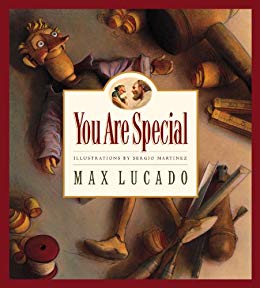
    And here’s one more because it’s Christmas. I attended a young women’s meeting for my local congregation not too long ago. As part of the program, one of the leaders read a picture book called You Are Special by Max Lucado.

    It’s about these small wooden people called Wemmicks who stick gold stars or gray dots on one another. The pretty or talented ones always get stars. The others, like Punchinello, get the ugly gray dots. And then one day Punchinello finds a happy Wemmick that has no dots at all. In fact, no dots stick to her. How does she manage it?

    It’s a great little tale with an important insight. After hearing it, I knew I needed a copy of the book to read to all my grown up kids. 

    Share
  • Where the Wild Things Were by William Stolzenburg

    I live among ranchers in northern Utah, people whose livelihood walks around on four legs. People who can lose thousands of dollars of future income if they lose one good cow or calf. People who think one of the dumbest things to happen in recent times in the West is the reintroduction of wolves to Yellowstone. Now, I don’t agree with them, but I do think they have good cause.

    Contrary to what people will tell you, wolves do not kill just for food. Wolves kill because they like killing. If you don’t believe me, then believe Temple Grandin, an expert on animals, who asks the question in her Animals in Translation: “Is it fun to kill a groundhog?” 

    She reviews a number of studies done on animals and answers with an unequivocal yes, predators love to kill. In fact:

    “Animals like having their predatory killing circuits turned on, and will turn them on themselves if you show them how. When you think about what predatory killing is all about, of course it ought to feel good, because predatory killing means dinner. Killing a mouse feels good to a cat the same way finding a luscious ripe banana feels good to a primate.” (p138)

    What this means is that when wolves come to kill sheep, they don’t just kill one old and decrepit ewe. No, they do what they did on a neighbor’s land a few miles from my home. They maim and kill five or six. Not because two wolves were that hungry, but because it was fun and they could.

    Sheep are like popcorn to wolves. Compare them to elk or other wild animals. The reason why wolves tend to indeed eliminate the young, weak, and old in the wild is that those poor specimens tend to run a bit slower than their brethren. In the wild, slow means dead. For the wolf, it’s hard work to run down an elk or buffalo. And if you’re a hungry son-of-a-gun, you’re not going to go chasing after another dinner while there’s fresh meat in front of you because the rest of the pack will eat it before you get back. And you ain’t going to catch one on your own anyway. But sheep aren’t elk. Cattle aren’t elk. They’re bred for meat, not sprinting. Sheep are easy meat. And the wolves can’t help themselves.

    But even if the wolves exercise restraint and eat just one, that’s cash. That’s clothes for the kids. That’s a mortgage. That’s heat. And it’s a danger for children as well (adults I don’t worry about: who cares about a few devoured adults?). My girls like to hike. And while I’m sure wolves will usually stay away, a sick or starving wolf will risk humans just as sick and starving mountain lions do. You get a different mindset about predators when you live up where I do. When they’re not something you see caged up in the zoo or on PBS.

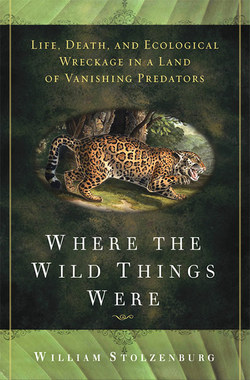
    For all these reasons and others, I couldn’t wait to read Where The Wild Things Were by William Stolzenburg. Folks, the book is fabulous–well-written and interesting from page one to the very end. The key point is that predators play a huge role in maintaining a healthy diversity of both plant and animal life in any given ecosystem. Stolzenburg begins with starfish and moves through otters, killer whales, jaguars, mountain lions, and wolves. Along the way he reveals just how important killing is.

    Yes, killing is critical to life as we know it.

    Because without it, the most dominant herbivores will end up eating all the food. And this will end up killing off most of the other herbivores. It will kill off the great variety of flora in any given system. It can turn a paradise into a hell as Stolzenburg illustrates with the islands of Lago Guri in Venezuela. 

    Of course, some people think the answer is to bring back all the big predators. The rewilding supporters want to populate the West not only with wolves, but also lions (African), jaguars, cheetahs. Heck, they salivate at the idea of giant Pleistocene bears that can run faster than a horse (yeah, I want one of those up where the Boy Scouts camp).  I think it’s good the wolves are back in Yellowstone. But I don’t want packs of wolves eating my friend’s herds and daughters (of course, maybe a few Boy Scouts are okay). Still, I believe there has to be another alternative. What that is I don’t know. But we all need to think about it. We do. And great way to start is by reading Stolzenburg’s book.

    Share
  • “Somewhere My Love” by Stephen Mark Rainey

    The latest issue of Intergalactic Medicine Show just hit the net. Of course, I don’t have time to read. But how can I help myself when Mark Rainey’s “Somewhere My Love”  starts with this line: “She lived in our town’s one and only haunted house.”
    What a hook!

    And soon I found myself reading a wonderful story about a boy and a teacher, who happens to be a witch.

    But the kind of witch Rainey writes about is not some gal with warts and a black hat. Nor is she some kind of Alice Hoffman Practical Magic type.

    She’s a Rainey witch.

    And this tale is about a boy caught in her class in school. I loved it. It evoked perfectly how some teachers affect us boys. I haven’t read any of the other stories in this issue yet. But I can still say the measley $2.50 subscription for issue 12 is worth it if only so you can read this one story. Besides, even if you don’t have time to read it, scroll down on the TOC and you’ll see you don’t have to–you can listen to Scott Card read the thing to you.

    Share
  • Good Stuff! The future, Service Depot, Bear Lake ice cream shops

    Huge changes are coming to our world soon.

    They’re going to affect your health, wealth, and job. They’re going to take us back into space and make us live longer. They are changes that almost blow the mind. And they’ve already begun.

    Michio Kaku is a world-renowned physicist that has always been fascinated with all sorts of science. And in Physics of the Future, he looks at what’s currently happening in computing, robotics, biotechnology, medicine, energy, and engineering, and explains how it’s going to affect our daily life between now and 2030, 2030 to 2070, and 2070 to 2100.

    The insights are awesome. The book’s a feast. Page after page.

    Did you know, for example, that there are parts of our DNA that have genes for certain traits, but those genes are turned off? For example, humans have genes for growing fur all over our bodies, but they’re turned off. Snakes have genes for legs that have been turned off. Chickens, one of the distant progeny of the dinosaurs, have genes for growing tooth buds in their beaks (imagine the grandchildren being chased by one of those bad boys). There are many more such dormant genes, and in the not too distant future, we’ll be able to turn them on.

    Did you know that today we can regrow organs? So far scientists can grow skin, blood, blood vessels, heart valves, cartilage, bone, noses, and ears from your own cells. They’ve be able to grow windpipes and bladders. Imagine damaging your eye and being able to grow a new one that your body won’t reject.

    Did you know that we’ve already been able to hook people up so they can move objects with their minds?

    And what about computers and robots? Many futurists fear the robots will become smarter than us and take over the world. Will they? Kaku explains why this isn’t likely with the technology we currently have and what really makes up intelligence.

    These are just a couple of the dozens of thrilling topics Kaku explores. And he makes it all so easy to understand and entertaining.

    A new world is coming, full of perils and exciting opportunities. An Kaku gives us an intelligent sneak peek.

    If you wonder what our world will be like in the near future, if you enjoy science and technology, if you want to be informed, then you will love this book. When you finish it, you can then move onto his book The Future of Humanity, which delves deeper into what we can expect in the near future in space. You can then move to The Future of the Mind, in which he explores in more detail what we can expect in understanding, enhancing, and empowering our minds.

    *

    I’m not a handy man. I’d like to be one. I respect folks who know how to fix things immensely. But I have a million other things on my plate and don’t have the time to learn how to be one. And so when our oven and gas range started having problems, I was staring at spending around $2,000 to replace it.

    But then I found Service Depot in Logan, Utah. They do handyman, appliance, HVAC, and plumbing repairs. I called them. They send out someone all the way to Bear Lake to look at the issue and give me a bid. He was clean-cut and smiling. When I invited him in, he stopped to put booties on to make sure he didn’t track dirt into my house. We arranged an appointment, and a few days later another fellow who was equally clean-cut and pleasant to deal with showed up and fixed the range for about one-fourth of what it would have cost to replace it.

    These folks were prompt to respond, friendly, and bootied. If you need repairs done around your house, my experience with them was great.

    *

    If you enjoy ice cream and are in the Utah Bear Lake area, I have two recommendations. For soft-serve shakes and cones, you can’t do better than Zipz in Garden City. Some soft-serve is icy and thin. Not enjoyable at all. But Zips uses a soft-serve ice cream with a higher fat content, which makes it deliciously smooth and creamy. And when you add flavors—oh baby! We recently went there as a family and got shakes. They have a lot of different flavors, but I got the Nutella and pretzel mix and floated up a bit toward heaven. If you like chocolate at all, you have to try that shake.

    The other place is in Laketown. The Sinclair gas station turned their old car wash into a hard ice cream shop called, ta-dum, The Car Wash Ice Cream Shop. It’s bright and clean. The youth scooping the ice cream there are smiling and friendly. And they have a flavor called Coconut Castaway that’s scrumptious. Think of a Mounds chocolate bar, but in ice cream. More heavenly floating. What makes it even better are the reasonable prices.

    If you’re in the mood for ice cream, if you want to get a bit closer to heaven, then do yourself a favor and get yourself to one of these shops.

    Share
  • “26 Monkeys, Also The Abyss” by Kij Johnson

    Why is Kij smiling?

    Because she knows how the blasted monkeys do it!

    And she’s not telling, neither. Neener-neener.

    I just read Johnson’s story and enjoyed it. I enjoyed the inexplicable trick, the narrator, the transport to this odd and wonderful traveling troupe, and dang it, even the ending. Furthermore, there are moments in the story that capture the wonderousness of these fellow animals so well that they shine like jewels.

    I always wanted a monkey friend. You can read about someone who has 26 of them.

     It’s on her website, free, just waiting to be enjoyed. Kind of like a delicous mango or bananna.
    .
    .
    .
    .

    Share
  • Good Stuff: For All Eternity

    This year I was introduced to a little gem of a book that has had a significant and pleasant impact on Nellie’s and my marriage.

    We heard about it from my newlywed daughter and her husband. Now you’d think that two people who, in just a few months, will have been married for twenty-nine years would know all the ropes of this marriage thing. You’d think they wouldn’t come across any real new ideas. But this little book proved that idea wrong.

    This book is For All Eternity by Dr. John L. Lund. At the time of its writing Lund had over forty years of experience as a counselor, college professor, and marriage educator. His focus is in interpersonal communication, and part of his background was working with John Gottman, one of the best marriage researchers of the last few decades.

    In this book, Lund shares what he’s learned with lots of humor and stories. Some of it will be familiar to you, but some of it will be refreshing and new. For example, one belief we frequently cherish is the idea that if someone really loves us, they will know our wants and needs. Their love will somehow endow them with superpowers so that we will never have to communicate our wants. Our loving spouses, if they have any love in them, will be able to discern our wants from the most subtle signs. A nod, a sigh, the wiggle of a nose. And if that doesn’t do it, then surely we will never need to drop more than the merest hint.

    Yeah, wrong.

    Lund explains why the whole notion of “If you have to ask, it doesn’t count” is not only unrealistic, it’s damaging. And that’s just one insight. There are many more. I will let you discover them. But I can tell you that I have found this book so useful and delightful that it will now be one of the two standard books I buy and give as gifts to those who are newly married. I wish I’d had these insights right from the beginning, but better late than never. I’m so happy to have them now.

    A little note. For those who are not members of the Mormon church, Lund is directing his teaching at that crowd. So you will find a sprinkling of quotes in here from church leaders that support what he’s learned in his practice and research. Don’t let that stop you. Mormon or non-Mormon, if you want to improve your marriage, you don’t want to miss this book.

    Share