Interview with Edmund Schubert, editor of IGMS
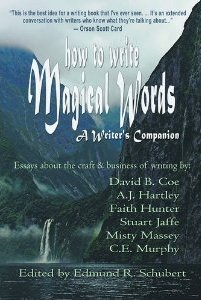
I recently had the wonderful opportunity to interview Edmund Schubert, the editor for Orson Scott Card’s Intergalactic Medicine Show, about How To Write Magical Works: A Writer’s Companion, a collection of essays about the craft and the business of writing that he edited. Ed’s someone to listen to. But so are the authors whose essays fill the book: Faith Hunter, David Coe, C.E. Murphy, Misty Massey, A.J. Hartley, and Stuart Jaffe. Here’s what he had to say about this book.

John: Edmund, you recently edited How To Write Magical Words: A Writer’s Companion. It’s chock full of advice from some pretty successful fiction authors, and an editor who, having purchased one of my stories, has shown exceptional taste (grin). But there are a lot of how-to’s by successful authors out there. What makes this book different, do you think? What’s the special value this book brings to the table?

Edmund: I think the biggest thing that differentiates this book from others on the subject is its diversity of opinions. Most how-to books are written by one person, giving on perspective, but the truth is that there are many paths to success in this business. The Magical Words book was intentionally designed to replicate the give-and-take that exists on the MW blog. Sometime the MW writers agree, sometimes they don’t. The other thing that makes this book different is that it also includes some of the follow-up questions asked by readers of the blog, and the accompanying reply. That makes this book feel/read more like a writer’s conference than your basic info-dump book.

John: I think the concept is great. And the contributors have quite a bit of experience. I know you can’t comment on every essay in the collection, but are there one or two that stood out to you while editing?

Edmund: There were a few that stood out to me. One by Catie and one by David, both on the subject of money/advances. Those stood out to me because of how very blunt and honest they were about finances, and it’s information I think more people need to be aware of.

The other one that stood out for me did so for personal reason. Catie’s essay about Visualizing The Story made me feel so much better about myself as a writer and my chances of success, because for years I’ve been hearing all these other writers at conventions talk about how their stories are like movies in their heads and all they have to do is record the action and the dialogue, and I used to hear that really worry because at best I might see a slide show of of bits and pieces of the action, but I’m totally making the rest up. Hearing Catie say that she didn’t/couldn’t visualize the story that way either gave me hope.

John: I’m sure aspiring authors are going to be very interested in what Catie and David say about money. It’s also interesting that sometimes we writers hear other successful writers talk about how the invention process works for them, compare our process with theirs, and assume we’re lacking. In reality, the way we approach it might be just as effective. That’s one of the things I like about this book—it has multiple contributors. Let me ask one more question. You see a lot of stories as editor of Intergalactic Medicine Show. What are some of the topics addressed in this book that, based on the biggest issues you encounter in submissions, authors would be wise to carefully consider?

Edmund: Magical Words as a group have two mantras: the first is that there is no one right way to do this crazy thing called writing, and the second is the exception that proves the rule: the one and only true answer to everything is BIC. Butt In Chair. You put your butt in the chair and you write. You figure it out as you go along. And the more you write, the more the other advice you hear will make sense. You want to be a writer? Write. The rest is details.

***

John sez, amen to that. And amen to this book. I really enjoyed the format and the insights shared. I never tire talking about craft and business with other writers. With over 100 essays and 313 pages, this book has lots to share. If you want to hear what some very smart and a few very published authors have to say about writing, you’ll want to pick up your own copy.


Share

Similar Posts

  • Good Stuff! The winning Lady Rebels and Lady Tigers

    RichRebelsBB360x240Cody Lundgren, Jesse Calder, and Louie Stewart led our Lady Rebel basketball team to a 10- 10 record in the regular season and a 2-2 performance at the state tournament that earned our girls second place in our region and sixth at state.

    It’s interesting that the wins and losses were split right down the middle, which means it wasn’t a losing season, but it wasn’t a winning season either.

    Or was it?

    Now, I love it when our kids win. But I’ve never believed that winning should be the ultimate measurement or objective of high school sports. In fact, I will go so far as to say that it’s possible to win every game and become the state champion and utterly fail. Because, for me, high school sports are not about winning games. They are about the lessons that can only be learned by striving for excellence through competition.

    Lessons such as learning to:

    • Work hard
    • Work smart
    • Push yourself over a long period to obtain something you desire
    • Not give up in the face of adversity
    • Not give up even when you’re behind or the odds are against you
    • Play on a team, including supporting other team members in their roles, especially during the bad times
    • See mistakes and losses as feedback and triggers for learning instead of labels
    • Exert control over your future instead of feeling nothing you do makes a difference
    • Deal with both success and defeat
    • Deal with competitors who haven’t quite yet caught the vision

    I could list many more. The opportunities for learning key lessons about winning in life litter the ground in our gyms and on our fields and on our mats.

    The question is: did our coaches help our kids seize those opportunities? Did they help them learn what really matters and have a good time doing it?

    I’m pleased to report from what I and others observed that the three amigos listed above helped our girls do just that.

    They built positive and fun relationships.

    They asked the girls to meet high standards of performance and kept the girls busy in practice with useful drills that built skills.

    They taught them instead of yelled at them, and they praised them when they did well and when they attempted to do well but weren’t yet able to execute the skills right.

    They taught them to play with skill, not with cheap shots, as was displayed by one team at the state tournament that had learned to punch the opposing team’s stomachs when they went up for shots.

    They demonstrated, by example, how to deal with losses and mistakes.

    Coach Lundgren also worked in a demonstration of how tricky the lines on the court can be for old guys, tripping them and causing them to slide across the floor (grin).

    This was a winning season for me. Coaches are really just a certain type of teacher, and I’m sure they have things they want to improve in their curriculum. But this was a fabulous season full of opportunities to learn the things that really matter in life.

    TabionaTigersBB360x240And it wasn’t just the Lady Rebels learning these kinds of lessons. For those of you that didn’t go to the tournament, you should know about the Lady Tigers from Tabiona. They’re one of our region opponents. One that we beat both times we met them in the regular season.


    In our second game of the tournament, one of our girls, one of our top rebounders, a demon under the basket, broke her hand. She knew it hurt like heck, enough to bring tears to her eyes, but didn’t know she’d broken it, and so she played the last quarter and a half with a broken hand. (Is there a lesson there?) Well, Tabiona was our next game.

    Now stop and think about this. We beat Tabiona both times this season. I think we’ve probably beaten them a lot more than they’ve beaten us these last few years. You know what you feel when a team keeps beating you.

    So the Lady Tigers found out that one of our starters, one of the players that was supposed to have played them the next day, had broken her hand. And the girls, not their coaches, decided to get her . . . flowers.

    Flowers. For a player on their region opponent’s team.

    Who does that?

    Well, the Lady Tigers do. I talked to their coach, and he said it was all the girls’ idea.

    They’re learning things down in Tabiona that go far beyond basketball.

    And they’re learning things that go far beyond basketball here, thanks to Lundgren, Calder, and Stuart.

    That’s good stuff, baby. That’s excellent stuff.

    Share
  • The Sing-Off, Sam’s Salmon, The Englishman Who Went Up A Hill

    One of the best TV programs this fall

    American Idol was good until the judges became irrelevant and annoying. Or maybe I was just tired of the format. I didn’t think I’d watch another singing show. But I tuned into the opener for The Sing-Off on NBC last week, and holy harmonies, Batman–it was wonderful.

    Ten of the best a’capella groups in the country compete for a $100,000 prize and a recording contract with Sony Music. Unlike American Idol, the groups represent a wide range of ages—from kids in high school to older adults—and backgrounds. They don’t use any instruments, just their voices, to sing incredible arrangements of modern songs with percussion, bass, and lovely vocals. This ain’t no choir music. And unlike American Idol, the judges actually have interesting and useful things to say. Also unlike American Idol, the judges eliminate the groups until three are left. Only then do the rest of get to call in and vote.

    We were glued to the TV watching each episode. The programs are all two hours long, but move like lightening. Our favorite groups at this point are Committed and The Backbeats.

    This whole show runs a total of three weeks, one episode each on Monday and Wednesday. It started last week, continues this, and finishes next week. Some of you might be depressed, feeling you’ve already missed it.

    Not so! You can watch all of the full episodes online at www.nbc.com/sing-off/ (with fewer commercials). Then tune in for the grand finale. I can’t wait. 

    Are you kidding? From a can?

    Canned tuna fish is one of those un-meats. It doesn’t taste like fish. It doesn’t taste like chicken. I guess the all-white albacore is okay. But tuna’s not one of those spectacular foods I crave.

    So you’d think, as I strolled the isles of Sam’s Club, that I would have passed up the canned Member’s Mark Atlantic Salmon. But one of my wild culinary urges, the ones that rarely pan out, overtook me.

    I purchased a pack of five, seven-ounce cans for $11.88. I brought the pack home put it on the shelf and didn’t dare open it. What was I thinking?

    Canned salmon? Canned meat?! When was the last time you had a steak out of a can?

    It couldn’t be good.

    Of course, my sensible hesitations only last so long. I broke down one afternoon when the cupboards were bare. I saw the salmon and thought that it might go well with a salad and baked potato.

    I opened the can. It was pink, like the trout I used to catch and immediately fry when I went camping as a boy. I tasted it. And it tasted like .  .  . fish. Real fish. The light delicious taste of those trout I caught so many years ago.

    I enjoyed a wonderful meal that day and have had several repeats since. Boneless, skinless filets in water, packed with omega-3 fats, all grown on fish farms in Chile. 

    Great movie set in Wales

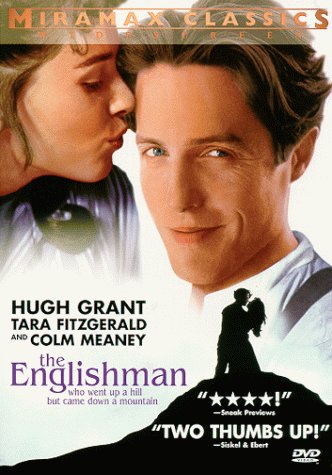
    I enjoy Hugh Grant as an actor. I loved him in Sense & Sensibility with Emma Thompson, one of my most favorite movies ever. And so I was curious about another movie with Grant that received two thumbs up from Siskel and Ebert. It’s called The Englishman Who Went Up A Hill And Came Down A Mountain.

    The setup is unusual. In 1917, with the war still raging in Europe, two English cartographers visit the small South Wales village to measure what is claimed to be the “first mountain inside of Wales.” The villagers are proud of their “mountain,” but become alarmed when the Englishmen measure it and find it’s not a mountain but a hill. The villagers are determined not to lose their status. Especially not to two Englishmen. What follows is good humor, drama, and a bit of romantic comedy. I think you’ll fall in love with the characters. It’s a wonderful tale. And it’s on DVD.

    As a little bonus, here are the opening lines, given to us by two narrators.

    “Narrator: For some odd reason, lost in the mists of time, there’s an extraordinary shortage of last names in Wales. Almost everyone seems to be a Williams, a Jones, or an Evans. To avoid widespread confusion, Welsh people often add an occupation to a name. For example, there was Williams the Petroleum, and Williams the Death. There was Jones the Bottle, and Jones the Prize Cabbage… which described his hobby and his personality. Evans the Bacon, and Evans the End of the World. But one man’s name was a puzzle, and it wasn’t until I was 10 years old that I asked my grandfather about the man with the longest and most enigmatic name of all.

    “Grandfather: The Englishman Who Went Up a Hill but Came Down a Mountain? Now there’s a long name for you. And a long story. You are not going to fidget, are you? For this is a story… an epic story. Yes, epic.”

    Share
  • Good Stuff! Wonder, Darkest Hour, Sea Wolves

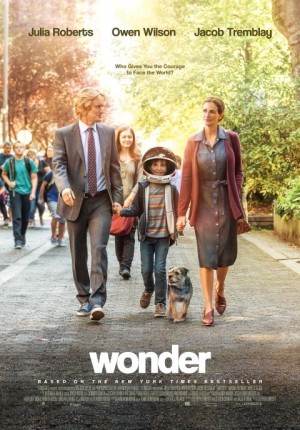
    I had seen a lot of good reviews of Wonder. My wife told me a lot of her students enjoyed the book. But I thought it was going to be a heavy topic, full of sadness and heart-wrenching drama. I’m happy to report that while Wonder does indeed have some difficult moments, it’s also full of humor. And triumph.

    It’s a story about Auggie, a boy with a rare medical deformity that has put him through multiple surgeries. His parents have homeschooled him, but now that he’s at the age where he could go to middle school, they feel it’s time for him to navigate the world. The perfect time, right?

    But it’s not just about Auggie. The film is also about Auggie’s sister, her former best friend, and Jack, Auggie’s classmate. We get to see their stories as well, and they are woven into a wonderful, poignant story.

    You’ll laugh and wince and cry and cheer. You’ll enjoy Julia Roberts and Owen Wilson, who do a wonderful job as Auggie’s parents. And you’ll enjoy the children and teens. Me, my wife, my married daughter, and my teen all loved this film. I will be watching it again. If you want a great movie to watch as a family, I think you’ll love this.

    *

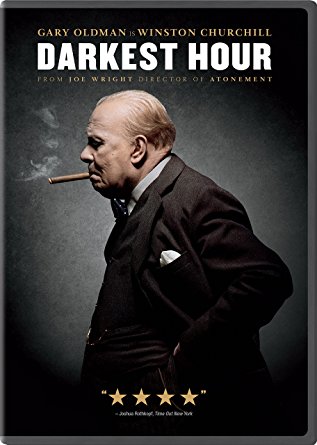
    As soon as I saw the preview for the Darkest Hour, I knew I had to see it. And, boy oh boy, this is yet another movie I can’t wait to watch again.

    The phrase “The Darkest Hour” is used in Britain to refer to the time when the United Kingdom appeared to be under direct threat of invasion from Germany at the beginning of World War 2. Germany had launched its attack on France, Belgium, and the Netherlands and had smashed their armies, sweeping all before them. The bulk of the British army was trapped at Dunkirk and looked like it would be annihilated.

    The British government was split between those who saw no path to victory and wanted to make a peace treaty with Hitler and those who wanted to resist him. The opposition party in parliament forced Neville Chamberlain to resign. And the only man they’d accept in his place is Winston Churchill. But Churchill was not the lion we think of him as today. He had a poor reputation among many of the leaders of his party and was not someone they wanted to elevate.

    So the film starts with the ouster of Chamberlain. We then get to watch how Churchill deals with the catastrophe of what’s happening just across the channel and all the voices pressuring him to make peace.

    There’s humor, suspense, and a number of one-liners that we all began repeating to each other immediately after the film ended. You get a feel for what it must have been like at the time and why so many wanted to sue for some peace treaty with the monster across the channel. You also get to see a slightly different picture of Churchill as a man. I particularly loved the exchanges between him and his wife.

    If you are interested in World War 2 or Britain in even the slightest degree, you simply must see this film.

    *

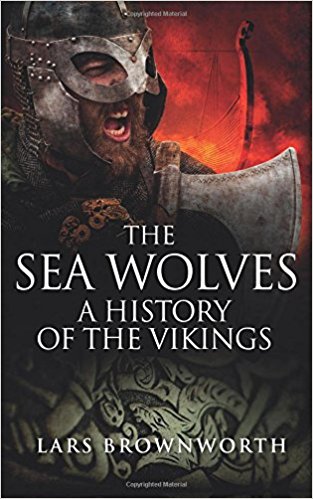
    I have now listed to the audio book of The Sea Wolves by Lars Brownworth twice.

    Yes, it’s that good.

    In this book, Brownworth tells the history of the Vikings. And he tells the history the way history should be told, bringing to life the old Norse world of epic poets, sea kings, and raiders, including Ivar the Boneless, Eric Bloodaxe, Harald Hardrada, Rollo the Walker—all the major figures.

    And Brownworth does it in a way that helps you understand how their dominance was possible and what their effect on the wider world was. Did you know, for example, that Russia comes from the word “Rus”, which was the name for the Swedish Vikings that started that nation?

    What? Russia was started by the Vikings?

    Yes.

    Read or listen to the book. You’ll learn that plus a whole bunch more that will make you look at that time in a different light.

    And if you want to get the other side of the tale, let me recommend reading Bernard Cornwell’s historical fiction series that starts with The Last Kingdom. The series tells the story of the invasion of the Danes during King Alfred’s rule from the point of view of Uhtred of Bebbanburg. It’s a terrific series.

    By the way, I do not recommend the TV series based on the books—too much sex for my tastes. But the books are fabulous. As are the audio versions. I’ve listened to six of them so far, and they have provided hours of enjoyment and interesting insights about the time and the events that took place.

    Share
  • Go Shoot Somebody, Feel like Captain Kirk

    Imagine running and dodging for thirty minutes through dimly lit corridors as kids with guns chase you down and shoot you with glee.

    That’s what happened to me recently.

    The kids were daughters 1, 2, and 3. On my team were dead-shot Nellie and daughter number 4. The dimly lit corridors were provided by the Cache Valley Fun Park. The guns were lasers.

    This was my first time playing laser tag, and I must report that we had an absolute blast. For twenty minutes we dodged and ran and shot with wild abandon. It’s like paintball without any of the pain, unless of course you crash into someone.

    Here’s how it works. You divide up into two, three, or four teams. The attendant gives each of you a vest and scans you onto the appropriate team (your laser has a bar code and is attached to the vest with a cord). There are markings on the front and back of each vest. If someone lasers those markings, you lose points. If you shoot someone else’s vest, you earn points. It’s that simple.

    All the teams go into the half-lit battle room–cut up with walls, corridors, and windows–and the game begins. You try to kill them. They try to kill you. You try to shoot their bases, but if you linger too long the bases shoot you. It quickly turns into chaos fun. You shoot someone only to have a daughter sneak up behind you and nail you in the back. You flee, waiting to regenerate, only to find that sneaking daughter has followed you through all the twists and curves and kills you the moment you come back to life. But the next time you escape, and you’re the one that’s got them running. It’s like a video game except better.

    The system automatically keeps score for each individual and each team so you can have a player on the losing team actually be the high scorer. We could have gone on for another hour.

    Of course, me and my exceedingly svelte figure might have had to take a breather. Or not. I don’t think twenty minutes of aerobics has ever passed so quickly. And I didn’t have to follow some gal in a pink leotard to do it.

    But you’re not there for the cardio-vascular benefit. Although I can see the ads now—the Laser Tag diet! Featuring Bob, a happy nerd who played laser tag for thirty minutes each day and lost 200 pounds. He could join up with Subway’s Jared so they could be geeky together. Hey, wait a minute. . . I’m smelling moo-lah!

    The only negative is that the game isn’t bargain basement cheap–$4/person for 10 minutes of play, $10/person for 30 minutes. So we might not do that every time we take the family to Logan for some fun, but you can bet we’ll be doing it again.

    Go shoot somebody. Feel like Captain Kirk. You’ll love it.

    Share
  • Good Stuff! 3 Books to Introduce You to the Middle East

    ISIS, the Taliban, Al Qaeda, the Muslim Brotherhood, Iran.

    What drives these groups?

    What are they really about?

    Why is there so much religious strife in the Middle East?

    For that matter, what is Islam actually about? Is the religion really defined by these violent actors, or are they just the most visible because they’re what’s reported on in the media?

    I set out to find the answers to these questions, and what I have found so far surprised me. If you are interested in understanding what’s going on in the Middle East today, you have to understand Islam. And it’s a fascinating story. There are a lot of books on the subject, but you don’t have to sift through all those I did. I want to share with you three slim books that I found to be the most clear and engaging introductions I’ve come across.

    The first is Understanding Islam: An Introduction to the Muslim World by Thomas W. Lippman, an award-winning author and journalist who specializes in the Middle East and spent years living in Egypt, covering the events, and traveling from Tunisia to Pakistan. Again, this is a slim, easy-to-read volume, but it is packed with information. If you want to know the basic beliefs of Islam, who Muhammad was, what all this business about Sharia is, and who the major Islamic groups of the Middle East are today, this is the book to start with. One note, you want to make sure you get the third edition of this book.

    Understanding Islam by Thomas Lippman

    The next book is by Bernard Lewis, a man internationally recognized as one of our century’s greatest historians of the Middle East. The book is called The Crisis of Islam: Holy War and Unholy Terror. Again, another slim, engaging, but information-packed volume. In it, Lewis explains what it is in Islam that is breeding these extremist groups. And what is leading them to target America, which is especially interesting because for most of the 1900s the United States was seen as the good guy by the Islamic world. What changed? Read this book to find out.

    The Crisis of Islam by Bernard Lewis

    The last book, a lively, engaging read, is called After the Prophet: The Epic Story of the Sunni-Shia Split by Lesley Hazleton, another veteran Middle East journalist. When you finish this book, you will understand why Saudi Arabia supported ISIS before they so recently turned against it. You’ll understand why they recently joined Israel, of all nations, in condemning Iran’s nuclear program. You will also understand one main reason why the Iraqis can’t seem to get along. In this book, Hazelton goes back to the beginning of the religion and tells the story of the splitting of Islam–the split between the Shias and Sunnis. It’s as significant a split as that of the Protestants from the Catholics in the time of Luther. But unlike that split, which has lost almost all of its heat, the antagonism between Sunni and Shia still leads to war. You cannot understand the Middle East today without understanding this.

    After the Prophet by Lesley Hazleton

    So there you have it. If you’ve been wanting to learn more about Islam and the Middle East, you’ll find these the perfect introduction. And if you’re religious at all, you’ll find much to ponder. There isn’t one god-fearing Christian, Jew, Hindu, or what have you who doesn’t think that submitting our will to God’s won’t help us build a better families, communities, nations–a better world. Would it surprise to you to know that Muslims believe the same thing? That Islam means “to submit” to God?

    There are of course many differences between Islam and my own Christian beliefs, but there are also many striking similarities. And the experience I kept having reading these books was seeing over and over again echoes of my own faith and the history of Christianity. There are cautions, to be sure, but also things worthy of emulation. If nothing else, it felt like it did when I learned Dutch. Yes, it was all foreign, but I saw the ties and the differences and, surprisingly, understood my language better than I ever had before.

    Now there are three other equally fascinating books I want recommend that focus on Al Qaeda, fighting terrorism, and Saudi Arabia, but I’ll save those for another time. Go treat yourself and read these fine introductions.


    Share
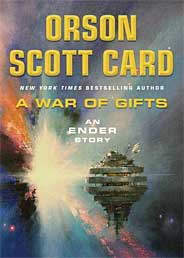
  • A War of Gifts by Orson Scott Card

    orson-card-war-of-giftsI think this has just become one of my favorite Card stories (note: like Stonefather, this is NOT a novel, but another novella). I’m sure part of the interest stemmed from the religious angle. Many people of many differing faiths will see their religion in it, but there were so many of my own beliefs twisted and made into frights that I felt Card was speaking directly to me. I’m sure another part was that I served my LDS mission in the Netherlands and the story revolves around a Dutch tradition. And it didn’t hurt that I listened to the audio version read by Scott Brick and Stefan Rudnicki. But there was more to it than that.  In the end, it was the saving of the main character, Zeck Morgan, that made me care.

    Because I should be working on my novel now, I’m going to simply quote the summary from Publisher’s Weekly review so you get an idea of what it’s about: “When Zeck Morgan, the young son of a puritanical minister, qualifies for admission into the International Fleet’s Battle School, he is brought to the school against his will. Citing his pacifist religious beliefs, Zeck refuses to participate in any simulated war games, but when he sees a Dutch student give a friend a small present in celebration of Sinterklaas Day, he [thinks he sees a way to be sent home].”

    Okay, so I shortened the PW summary. I did so because this isn’t about religious holidays, as their summary leads you to believe. It’s about something far more important, and Card does a great job writing about it.

    Share

2 Comments

  1. Looks like I need to grab a copy for myself!

    Sorry to nag you, John but I wondered if we could have an update on your writing. I’m dying for the next installment of the Dark God series!

Comments are closed.