|

Generating Story 1: Can You Create a Redneck Crapper?

Bugatti Veyron Super Sports $2,400,000

Almost everyone reading this knows what they like in a car. We know what we want a car to do. We can talk about acceleration, voom-voom styling, and handling. Some of us could talk about how engines and transmissions and tires all work together to create those things. We could get really technical.

But how many of us could then go manufacture a tire? Or the paint we’re going to put on the car? How about a windshield?

No?

Well, what about one little bolt? Just a little bolt. Can you do it?

There’s a difference between knowing what a thing is supposed to do, how it works, and actually building it. A lot of people can talk about the first two topics and have no idea at all about the third.

It’s the same with stories.

There are three things we have to learn to write killer stories.

  1. What a story is supposed to do.
  2. How the 5 parts of story—character, setting, problem, plot, and text–do that
  3. How to come up with and develop a story idea in the first place

We authors talk a lot about the second thing. You have books and blogs galore on dialogue, plot, characters, structure, grammar, world-building, setting—you name it. Heck, the big series I wrote last year about the key conditions for reader suspense was all about how story works.

Some of us talk about the first thing. And really there’s no point in blathering on about the how-to’s if we don’t know the what-for’s, which is why I tried to highlight one of the core what-for’s in my series on suspense.

But as important as those two things are, none of it matters if we don’t know how to put it to use. We’re not reviewers or editors. We’re creators. We’re writers—the ones that invent the story in the first place. And let me tell you, knowing how a story works and how to invent one are two very different things.  

I didn’t know the principles of invention when I was first starting out. And that gap in my knowledge was one of the things that held me back for years. In fact, I almost gave up my dream of writing stories because of it.

Very early in my attempts to start a career I wrote a story that won an award and $2,000. I was flown out to Cocoa Beach, Florida for a week-long workshop with amazing pros. Was published. And then I went home, finished another story (yea!), and proceeded not be able to finish another thing for five years.

Five years.

FIVE. YEARS!

And I tried.

After five years of failure you begin to wonder if maybe you didn’t get the wrong memo (what am I doing at this empty warehouse?). Your family begins to wonder that as well. You realize life is short and there are a lot of other things you could be spending your time on. You begin to think that only an idiot would spend more time on this. And you’d probably be right.

Unless, of course, you realize that what’s keeping you back isn’t a manifestation of cosmic will. Rather, it’s just a lack of understanding.

That’s what happened in my case. Just a few days before I gave up on all my dreams, the light was turned on for me. I learned some key, but simple, principles of invention that I hadn’t known. You can read the whole story here. After I learned these principles, my production took off like a rocket.

And so what I want to do in this series is share those principles with you. Hopefully, this will unleash your abilities. You might find a huge audience for your stories. You might find only the family dog will stick around to listen to them. The popularity of your stories is a separate matter. But you can’t even find out how big your audience will be if you don’t know how to finish.

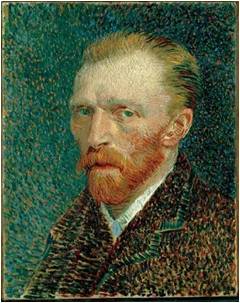
So let’s start. A lot of people think that creativity is about passion. When they think of creativity, they think of someone like this.

Look at him. Brushed velvet jacket. Beard. Rakish devil-may-care hair. And that gaze. Look at that gaze! It’s full of passion. It’s coming off him in waves. In fact, we all know his inner world is a vast tempestuous sea of passion that sends ideas crashing in great surges onto the rocky beaches of his soul. And those earthly forces cannot be contained. No, he must write them, write them, write them. That’s the face of a man who will channel fire onto the written page because if he didn’t, he would surely burn.

Or maybe not.

Maybe creativity is about being like this guy.
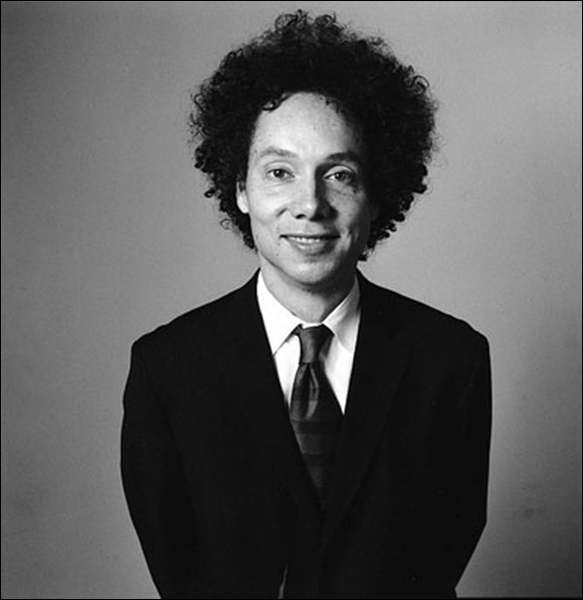
  

Hello, Malcolm Gladwell. Look at him. There are so many ideas in that great blaze of brains they trip over themselves trying to get out. There are so many they kinked his hair with their electric heat. Oh, fecund mind!

Or maybe not.

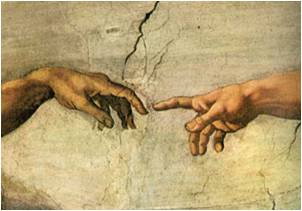
Maybe creativity is all a function of being blessed.
 

Or maybe it’s about alcohol (or some other chemical). After all, isn’t that how Ernest Hemmingway did it?

Booze Makes Ernie Reel Smart

Or it’s about being mentally unstable.
Or it’s about having the right personality type. I remember the day of woe when I learned that I was an ENFJ but that the “natural” writers were all ISFPs!
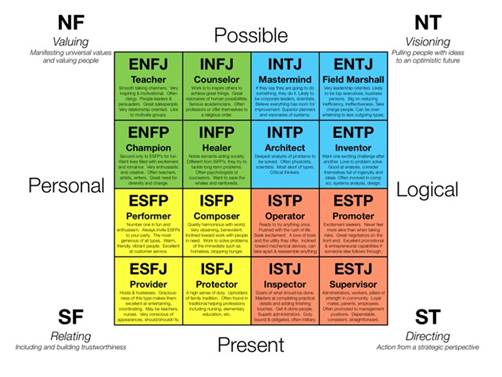
Alas, me being a blockhead was all scientific

Or it’s about being eccentric.

Patrick Rothfuss shows us the key is crazy beardage and an Alice in Wonderland chair

Or it’s none of that. It’s about being born to it.

I wrote my first novel when I was six

Right? All of those things are what creativity is about. And if, as so clearly demonstrated by those pictures, you don’t have passionate hair, well then, forget about it. Except here’s Larry Correia, a New York Times bestseller, who has no passionate hair whatsoever.

I keep guns in my basement

Huh?!

How could that be?

Here’s how. All those ideas above about creativity–they’re rubbish. Creativity has nothing to do with passion or hair or whether you wear Argyle socks.

Nothing.

Let me show you the face of creativity.
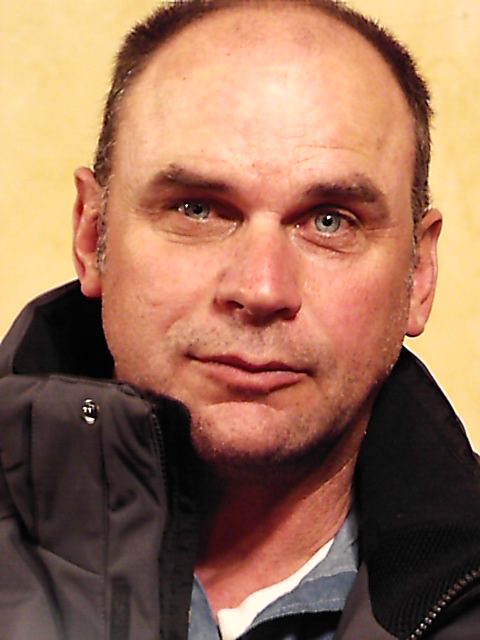
That is Warren Ellis. Warren is my brother-in-law, except when he’s not (do not ask me to explain this). One day our fridge started to drip. The freezer would cycle through its normal thawing, and all the water would drip down into the fridge and soak up our egg cartons and pool in the vegetable crispers. It was a mess.

We defrosted the freezer we weren’t supposed to ever have to defrost, but the problem persisted. So we called Warren because he fixes things.

Warren came to our house, looked the fridge over. He declared that the freezer’s drain tube was plugged. We thought up a few ideas for cleaning it out, none of which were any good, then Warren asked if we had an air compressor. We did and hauled it in.

Warren plugged it in, let it build up the pressure, and then held the compressor nozzle to the bottom end of the tube. The compressed air went in. The obstruction flew up and out and landed on the counter. The obstruction was a fat fly that had crawled in there, gotten stuck, and died.

We poured a quart of water into that freezer, and it all flowed down into the catch pan at the bottom. Warren fixed our freezer with an air compressor.

Folks, that is creativity.

What did Warren have? He didn’t have passionate hair; I can tell you that. No. He had an objective. He knew basically how fridges worked. And he came up with a couple of options to fix the issue.

Let’s look at another example. Here’s Ed Smylie.
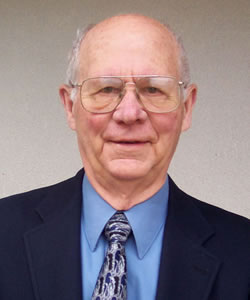
Ed was like Warren. He ran into some problems. Actually, the astronauts in Apollo 13 ran into some problems. Ed was tasked to help solve them.  One of those problems was the fact that the astronauts were running out of air.

Ed and the others designed the solution in two days. The ground crew relayed the instructions to the flight crew. The lunar module’s CO2 scrubbers started working again, saving the lives of the three astronauts on board.  Of the experience, Ed said that he knew the problem was solvable when it was confirmed that duct tape was on the spacecraft. “I felt like we were home free”, he said. “One thing a Southern boy will never say is: I don’t think duct tape will fix it.”

Ed and his crew saved the day. The made a round peg fit into a square hole. How did he come up with such a creative solution?  

Ed had an objective. He knew how the CO2 scrubbers and the shuttle worked. He knew about duct tape. He came up with options.

Let’s look at a few more examples of this. I know you’ve seen some of these.
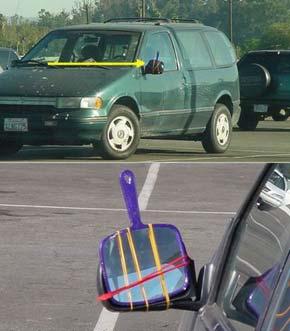
 

That is creativity. So is this.


And this . . .

 

And this . . .
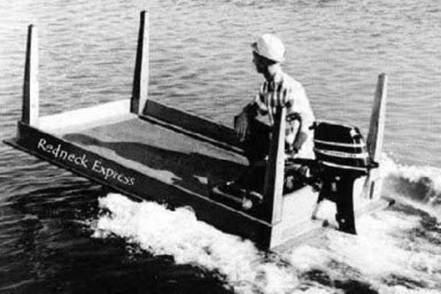
Or this, if you don’t need to go so fast . . .
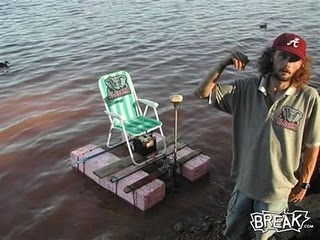
Smaller size, for trolling

And this . . .

And this, which is officially called a Bumper Dumper . . .

Do you really want to dig?

 These fine folks had a goal. They knew the basics of how things worked. They came up with some solutions.

That’s all there is to creativity. Three things. You need to have an idea of what you’re trying to do. You need to have a basic knowledge of how things work. And you have to know how to come up with some solutions to meet your objective. 

Not so mystical, is it?

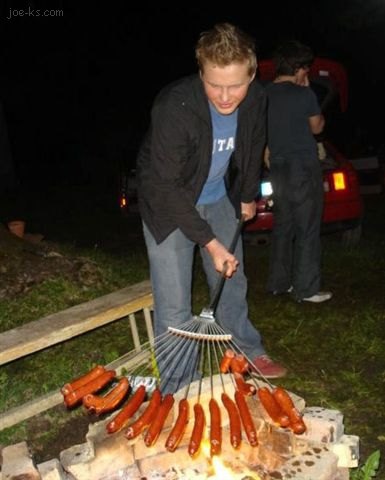
But I can hear some of you complaining. Writing is different. It’s a whole other world. It’s Fiction, which is so significant we must capitalize it. It’s passion. It IS mystical. This is a matter of the heart. It’s not a fridge or space ship or some dumb hotdog roast. You cannot compare these things.

Except I can because they’re the same. It doesn’t matter if you’re trying to invent a different recipe like the folks at Cook’s Illustrated, or decorate your house, or come up with a way to keep the squirrels out of your bird feeders, or make people weep in a movie theater.

What I’ve found is that when we have troubles coming up with ideas, we probably don’t know what our objectives are. Or we probably lack some understanding of how fiction works. Or we don’t know the principles of generating options.

And so we conclude it’s a mystery. It’s arcane lore.

But it just ain’t so. Can you create a redneck toilet? Then you can write a story.

Now, it’s true that a lot of people feel their way through this. They don’t know what they’re doing, but they do it. I did that. Remember: I won an award. But then I couldn’t repeat it. Couldn’t find that groove I’d stumbled into.

I don’t want to stumble around hoping to get lucky. I want to make a living at this. And if I’m going to make a living, I need to produce. Regularly. I can’t be bumbling around, hoping to create something by accident.

The good news is that we don’t have to create by accident.  We can create on purpose. There are principles to invention. When we learn them, our productivity will shoot through the roof.

Finding a solution to Apollo 13’s issues might seem impossible to us. But they weren’t impossible to Ed Smylie because Ed had an objective; he knew how things worked up there; and knew how to come up with options.

My intent is that when you finish this series, you’ll know what Ed Smylie knew, except for stories.

For more in this series, see How to Get and Develop Story Ideas

Share

Similar Posts

  • What Robinson Wells Learned Last Year

    Look, this is just an excellent post by Robinson Wells: Five Things I’ve Learned In The Last Year About Writing.

    I kept finding myself saying yes, yes, yes!

    Yes! I hate “networking” too. Icky, icky, icky. Like squishy underwear. Like buddying up to someone to get them into your network marketing downline. Like flies in soup. I love how Robinson replaces that with the real deal. I think I’m going to summarize him every time anyone asks me about networking. 

    One point. I do think he might be overstating the you-need-to-know someone deal. It’s easier, sure. But Larry Correia didn’t know anybody. He just wrote a book a lot of people in a certain demographic loved. I didn’t know my agent from Adam. Didn’t know my editor, but did have an endorsement from one of his authors. But that didn’t get me any deal. It probably got me, at most, a fair consideration. I can name others who didn’t know a soul. In fact, go to the facts and figures page in the On Writing section. Look at the author polls there. A lot of authors didn’t know a soul. Of course, knowing someone can help.

    Yes! Be cheerfully flexible. Oh, my gosh. This is such a good approach. And I’m living it right now, although there have been a few moments when I’ve had to regroup for a moment to capture the cheerful.

    Yes! Sometimes the thing you love doesn’t work for the project. Sometimes it does. I would advocate making sure you get to the root of the issue. But we’re artists. If the thing we don’t love doesn’t work, we can create a new thing to love. That’s what it means to be creative.

    Work! Yes! It’s amazing what happens when you work.

    Good stuff.  

    I’m so bullish on this, I say Robinson for President.

    Of what, I don’t know. But he should be President, of something.

    Share
  • Some lessons from Tom Clancy’s first novel

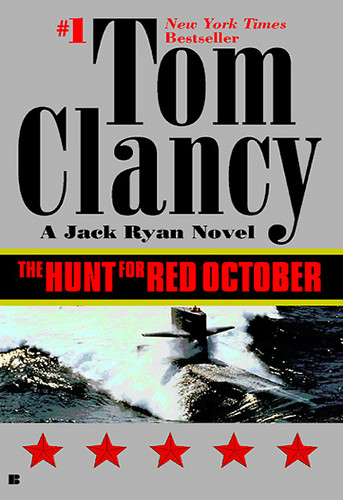
    tom-clancy-the-hunt-for-red-octoberTom Clancy is one of the biggest authors of our time. How did he break in? It’s an interesting story that Deborah Grosvenor, the editor who acquired The Hunt for Red October (Clancy’s first book), tells here.

    And this early interview provides more insights.

    So what conclusions can you draw from this? Here’s what I picked up.

    1. Writing a good book is one thing. That book finding success is quite another.

    2. Endorsements from the right people make a huge difference. More here in my blog Is Product Popularity Random?

    3. Know what you write. And if you don’t know it, do the research. And then invent what you have to.

    4. It’s not always a bad thing to start with a small press, especially if they’re going to put as much $$ into marketing and PR as this one did.

    5. To finish your novel, you’re going to have to set aside time and get it done.

    6. Finally, follow the zing. Clancy loved this stuff. Notice how his book was fed by the stories he heard and read.

    Share
  • |

    JB Speculates: eBooks, Book Contracts, Agents, and Libraries

    I’ve looked in the crystal ball I hide under my desk and caught a glimpse of what ebooks will change in the next few years. Specifically I saw what will happen to:

    • Book Contracts
    • Literary Agents
    • eBook Aggregators and Libraries

    After showing me the vision, the ball thanked me for shopping at Walmart. Weird.

    PRINT ONLY CONTRACTS

    The only reason to have a print publisher is to get distribution you cannot obtain on your own, or to get it more cheaply than it would cost you if you tried to get it on your own. That’s it. Now, it’s true publishers have excellent art departments and story editors. But you can contract out cover art, copy editing, formatting, and even story editing yourself.

    Distribution is the main thing publishers offer that you can’t get anywhere else.

    BTW, when I’m talking about distribution, I’m talking mostly about getting the books out to places people can see and purchase them. For example, publishers can get your book into hundreds or thousands of books stores all at the same time–Barnes & Noble, Hastings, Walmart, Costco, indie book stores, airport book stores, grocery stores, drug stores, etc. Publishers can get you display in those stores so consumers see your book. One form of that are the racks and new book displays. Another is one that Scholastic does so well, i.e. displaying and selling titles in tens of thousands of classrooms with its book catalogs. A single author just can’t do that. 

    It’s also true publishers can convince some platform venues, that would never look at a self-pubbed author, to spotlight your book.  For example, it’s unlikely a self-published author will be able to convince Booklist, Publishers Weekly, and Library Journal, which have huge platform for library book purchasers, to review a book.  But publishers have no problem getting their stuff in there. Likewise, it’s often much easier for publishers to get endorsements from other authors or people with platform than it is for a single author.  Of course, there are so many places that have some kind of platform, that publishers don’t have a lock on them all, e.g. Goodreads and Amazon reader reviews.  But for the sake of simplicity, let’s just look at the distribution end.  

    Because 90% of book sales are still hardcopy, the only way to have HUGE sales numbers, right now, is through a print publisher. I’m talking about the numbers you see in the Publishers Weekly top selling books, where you have to sell at least 100k copies in hard back, 500k copies in mass market, to even make the list.

    Publisher’s lock on this ability will erode. We can see signs of this in the USA Today Top 150 already. I consider this to be the most accurate picture of what truly is selling the most. Here’s why. And ebooks are starting to be the best selling format for a number of books. On that list, they add up sales of a title in all formats and then list the best-selling format. So when you see an (E) at the end of the listing, you know it’s selling more ebooks than any other format. E’s are starting to pop up all over and we’re still in the early adopter stage for ebooks and ereaders.

    So what does this mean?

    If I put on my author business slacks (why does it always have to be hats we change?), I’d be crazy to turn down a publisher that wanted to offer me monster distribution. A bird in the hand is worth two in the bush. You offer me $500k now, I’m taking the money and running all the way to the bank and then the $6.99 Indian all-you-can-eat buffet.

    Of course, I’m not likely to get that kind of an offer. We new writers are more likely to get an offer for, what were Hines’ numbers? $6k – $12k? And for that the publisher will want all our ebook rights and will tie them up for years and years and years. And then they’ll try to give us a fraction of what we could get selling directly. Furthermore, they don’t provide such books the same push to garner platform spotlight. They don’t spend the money to give them the prime display in bookstores. This means the difference between what they bring to the table for us smaller authors and what we can do on our own is much less. And the ebook has narrowed that even further.

    How much further? Well, how many books would you have to sell to make that advance of $6k – $12k? If you’re selling your books for $2.99 for the Kindle, you get about $2.00 a book. That means you’d have to sell 3k-6k copies of an ebook to earn as much as that average advance. 

    Do you think you can sell 3k – 6k copies of an ebook at $2.99?

    Some authors will be able to do this. Some won’t. If you wanted to do that in three years, you’d have to sell about 150-350 books per month. For a more in depth comparison between traditional publishing and self-publshing ebooks, see Dean Smith’s blog on cash flow.  

    Maybe you don’t think you can make those numbers. But maybe you can. The point is that if you think you can, then you can make as much on your own as you can with a publisher. This means there is absolutely no financial reason on earth to take the publisher’s deal. None. Now, if you have non-financial reasons, that’s another thing, but when looking at dollars and cents, it’s fairly clear the publisher’s ability to put you into their distribution channels isn’t worth what it will cost you. Especially since the ebook is forever and may keep selling for years to come AND because the market for ebooks is still in the early adopter phase–it’s only going to grow massively over these next years.

    But this doesn’t mean paper publishing is dead. It’s not. Nor will it be for some time. Just because SOME authors can make as much in the ebook market on their own as they can with a publisher through their distribution channels doesn’t mean all of them can. Furthermore, publishers with distribution have something to offer even those who successfully publish ebooks themselves.

    Let’s say you have an ebook series that starts to sell well for you, 1,000 per month. That’s $2k per month, $24k per year. If a publisher wanted to buy the rights to that from me, they would have to pay me MORE than $70k as an advance. MORE. Because I can make that on my own in three years selling it myself. In fact, since ebooks are forever, I have to look at the present value of all of those years of sales. That income stream is going to be a LOT MORE than $70k, even if we think sales will taper off after five or six years.

    How many big publishers are going to want to pay that?

    Probably none. Or, at least, I suspect those deals will be few and far between. But there is money to be made in paper, even if that market is shrinking. There will be some smaller publishers who, for the right price, will offer paper distribution. And if they can get me distribution that I couldn’t get myself for paper, or do it at a lower cost, then I’d want to sell them paper rights. Why not?

    And so what I see in the crystal ball are some authors, the ones who do well selling ebooks, being able to sign contracts with publishers that sell paper rights only. I know the big publishers probably won’t go for that in the near term, but smaller publishers will see the value and step up to the plate.

    AGENTS

    What about agents? Are they going to die?

    I think if we remember that literary agents are SALES agents, then their future becomes clear. The only reason to get a sales agent is because doing so makes my property worth more (same reason for getting a publisher, btw). If, by letting them focus on sales and letting me focus on getting more product out the door, I make more money than I would if I tried to do BOTH the selling and the producing, then I want an agent.

    I want to sell as many rights as I can to as many people as possible–gaming, film, audio, foreign, merchandise, etc. I’d be a fool to say, well, no, I’ve got this little ebook gig going. I’m not going to sell any of these many other rights to anybody. No, I’m just going to let them sit in my basket and earn me nothing. Let them go to waste.

    !?

    A good agent should be able to sell more than I could on my own because they have a better ability to reach AND close editors AND other people that are in the market for purchasing rights to my property. They’ll also allow me to sell more because all the time I would have spent selling, I can now use to create more product. So not only do I have more books, and therefore rights, to sell, I can hopefully sell them for a better price and terms than I could on my own.

    I’d be a fool not to increase my revenue. I’d be a fool not to have a good agent.

    So as long as there are people who want to purchase these non-ebook rights, and an agent can make a sale I couldn’t or can make it for less than what it would cost me to do it on my own, then agents will be useful. Because of this, because we’ll always have more than ebook rights to sell, I don’t see a role for good agents ever going away.

    EBOOK AGGREGATORS & LIBRARIES

    When more and more people begin reading ebooks what happens to the libraries?

    Ebooks cost less. So a lower price per book would simply allow libraries to purchase more books and expand the collection. But wait, they don’t need rooms and rooms to hold all the paper. You can store the world’s library in one computer room. Shoot, this means that housing the collection on a server instead of on the shelves would cost less. This would allow for an even bigger collection. But why maintain a server and manage your own collection if you can network to the collection down the road?

    In fact, what if there were a mega service with millions of titles you could subscribe to? That would be even cheaper. Then you wouldn’t have to pay book purchasing agents or IT folks to keep your server running.

    Enter the ebook aggregators–the Netflixes of ebooks (I know somebody somewhere is working on this business plan; is it you?)

    I’m betting the whole library system goes national. I’m betting you’ll have some government aggregators, but they’ll probably be dwarfed by the private companies. You’d subscribe to the aggregator’s service just as you do Netflix today and many university libraries currently subscribe to electronic periodical collections.

    The aggregators will probably charge users as Netflix does for a certain number of books checked out at the same time. If a large entity like a library wanted to subscribe, I bet the aggregator would charge access to the collection based on number of users at the library. The library would pass some of that fee onto patrons. The rest of the fee would be paid by the community’s tax dollars, just as those tax dollars pay for the current collections. You might even have device manufacturers coupling subscriptions with purchase of the product as incentives to buy their devices.

    When the aggregators step in, we suddenly end up with a different mix of distribution channels that will coexist:

    1. Author –> ebook retailer (Amazon Kindle, B&N Nook, etc.) –> reader
    2. Author –> subscription aggregator –> reader
    3. Author –> subscription aggregator –> public and school libraries –> reader
    4. Author –> publisher –> subscription aggregator –> then option 2 or 3 above
    5. Author –> publisher –> current distribution channels

    Surprised by #5? Well, the current distribution channels are not going away until every book can be read on an ereader and everyone who reads has and wants to read on such a device. That’s going to take some time, if it happens at all.

    Why would readers buy individual titles ala distribution channel 1 above? Some people just want to own. Other readers will be happy to purchase the books because they don’t want to wait for a checkout slot to open up, e.g. I already have my allotted number of books checked out and I really want this one on hand all the time because it’s Suzie’s favorite. Other readers will want to customize a book with highlights, margin notes, links, etc. just as many of us like to mark up paper texts. We’ll need our own copy for that. Still, I think the bulk of reading will move to the subscriptions. For example, right now I purchase DVDs I love, even though I can get them from Netflix. But the number of DVD’s I own are a fraction of those I watch. Most TV and film I watch once and it goes back to Netflix until I want to see it again. And this checking out becomes even easier where there’s nothing physical to send through the mail.

    Please note: there will probably be some form of gatekeeping with the aggregators. I doubt they will carry every scrap of anything ever written. They’ll carry a lot of stuff, but not every written word. Furthermore, when you have hundreds of thousands of titles, you’ll need mechanisms for helping your subscribers find great content suited to their tastes. A lot of “people who read this read that,” review services, etc.–the next generation of Netflix recommendations, Goodreads reviews, and Pandora like tools. 

    Aggregators won’t be the only gatekeepers, however. The key is in getting notice. And there will be many places with platform that will be able to shine a spotlight on a book. Think about all the places you find out about movies today—radio movie programs, TV movie reviews, Rotten Tomatoes, Newspaper Reviews, Yahoo viewer and critic review summaries, Kids-in-mind, and on and on. Look at all the ways you find music. There will be just as many ways to find books.

    As far as paying authors, I suspect aggregators will pay authors each time a book is checked out, or, if it’s a must-have name author, they will pay to list the title plus a per use payment.

    So that’s the future I saw in my strange little ball. Feel free to comment or add your own thoughts.

    Share
  • |

    Is Product Popularity Random?

    In Why Publishing is Making You Crazy—and What You Can Do About It: The Tao of Publishing, Steven Axelrod and Julie Anne Long write an interesting post that takes some findings made by Duncan Watts and attempts to explain why writers should only focus on the quality of their work because they cannot reliably affect popularity in any other way.

    I agree with them that social-influence seems like a good explanation for the sometimes unexplicable successes we see in publishing and the difficulty publishers have in both predicting and producing a steady stream of hits. However, I do not find support for their main conclusion that writers can do nothing but write.  In fact, I suggest that Watts’ findings show quite the opposite.

    Axelrod and Long base much of their argument on an experiment conducted by Duncan Watts that tested the power of social-influence on music selection in some controlled music websites. Watts summarizes his findings in the excellent Is Justin Timberlake a Product of Cumulative Advantage?.

    In his part of the post, Axelrod points out that the Watts findings indicate “50% of the factors affecting your career could be totally outside of your control—totally random” and that “unless we can separate out those random factors which contributed to an author’s past success [and we can’t, Axelrod suggests], anything we can say or predict about why she succeeded will invariably be way off-the-mark.” And therefore “what’s interesting—and chilling, as well—is that there’s evidence that the harder a person works to make sense of a random event, the farther they’ll end up from the truth.”

    In other words, the only thing an author can reliably do to improve the popularity of his stories is focus on their instrinsic quality. And get more stories out so he has more shots in the fickle social-influence game.

    I agree that having more product in the market increases your odds. I also agree that focusing on the intrinsic quality of the writing can do the same. I even agree that this is where authors should spend most of their time. However, Watts’ studies do not indicate other efforts are wasted. In fact, they suggest the opposite.

    Watts does not controvert anything we now know about marketing. What he does is clarify the power of social-influence in our decision making and the dynamics of ONE type of endorsement system. What Watts shows is:

    1. A perceived non-bias endorsement of your product can have a huge effect in the product’s popularity.
    2. The intrinsic quality of the product has an effect on popularity, but social-influence plays as large or larger role.
    3. Popularity in the system set up in the test websites depended on the decisions of a few early-arriving potential endorsers, i.e. good early reviews (downloads in this case) are amplified and lead to an effect he calls “the richer getting richer.”
    4. In this one endorsement system, neither a future endorsement nor the identity of the early endorser can be predicted.

    These findings, however, need to be put in context. From cars, to camcorders, to recipes, the popularity of a product depends on three main factors. These aren’t new ideas and publishing is no different than any other industry. The factors come from long-standing marketing practice:

    1. Visibility (people know about it)
    2. Endorsement (recommendation from an attractive person, trusted authority or friend, or trusted system like the perceived unbiased reviews on Amazon or “most downloads” stats)
    3. Attractiveness (intrinsic to the product, the perceived value offered the target market, and the social effect as pointed out by Watts)

    Each of these three affects the other two. Visibility makes endorsements and initial attractiveness possible. Endorsements make a product more attractive and more likely to be visible. Attractiveness makes something more visible and more likely to be endorsed. And round and round we go.

    It’s true that Watts shows 50% of the effect is due to endorsement. But nowhere does Watts suggest an author cannot increase the probability of visibility and endorsement.

    In the study, the endorsement method used was a counter showing the number of times the song had been downloaded. It was random, anonymous, and perceived as unbiased. That was a controlled environment. However, what if a singer had been able to ask all those he knew who loved his song to download it from the site? Or what if someone organized such a campaign independent of the singer? Both actions would immediately affect the probability of the song increasing in visiblity and endorsement and, hence, popularity.

    It’s too bad Watts didn’t test this in one of his sites to see if he could make a winner. As it was, all Watts was doing was seeing if he could predict a success by quality alone. He was passively observing, not actively taking measures to increase visibility and endorsement.

    Furthermore, the counter is just one type of endorsement system. There are a number of others. We’ve all seen how an Oprah endorsement can move the market. The identity of that endorser is NOT random and has great predictive value. Her decision to endorse is still random. But what if you have a way to make your book visible to her? Would it be a waste of time to do so?

    Robert Sawyer loves to tell of one action he took with someone with much less endorsement power than Oprah and the effect it had on his sales. Was Sawyer guaranteed visibility and endorsement from that action? No. However, he DID increase the probability, and it resulted in sales. Here’s his account.

    Watts confirms that endorsements have a mighty effect on popularity. Even something as simple as a “most downloads” counter can easily overwhelm a listener’s own reactions. But the logical conclusion is not to do nothing. The logical conclusion is that if authors want to increase their popularity, they must not rely only on the intrinsic value of their product, but they must also search for ways to increase visibility and endorsement.

    Axelrod is correct that it’s sometimes difficult to see the effect of any given marketing campaign or tactic. This is because marketing efforts are probabilistic, not deterministic. However, probabilistic does not mean random. Furthermore, it does not indicate you cannot increase the probability of success. While publishers may not be able to produce best sellers every time, I’m confident if they decided to stop marketing altogether, sales would drop.

    Will all efforts succeed? No. Any marketing progam needs to consider the effect of diminishing returns. The effectiveness of some actions may be difficult to test. Furthermore, authors may not have the budget to run a campaign large enough to increase their probabilities, although there are strategies to become a big fish in a small pond (see Geoffery Moore’s Crossing the Chasm).

    Despite all these issues, we know, in general, getting endorsements helps. In general, the right placement in book stores increases visibility. Author visits to schools, if done right for middle age readers, can also increase visibility. Radio interviews, if done right, do the same. There are many things that DO improve an author’s odds. We can increase the probability of visibility and endorsement by taking intelligence, consistent action.

    And that’s good news. We might not be able to guarantee a hit, but one thing IS certain—we’ll have no direct influence on visibility and endorsement if we do nothing.

    (BTW, for those interested, here’s a great presentation on a related idea:Six Degrees: The Science of the Connected Age a presentation by Duncan J. Watts.)

    Share
  • |

    The 3 Things You Must Learn to Write Killer Stories: Feb 20 @ BYU

    Mark your calendars!!

    The free, 2009 Life, the Universe, and Everything symposium at BYU will run Thursday – Saturday, February 19 – 21.

    The speical guests are Tracy & Laura Hickman (Dragonlance authors) and James C. Christensen (yes, the amazing fantasy artist). But there will be more than a dozen other authors there, including: L.E. Modesitt, Brandon Mull, James Dashner, Brandon Sanderson, David Farland, Mette Ivie Harrison, Eric James Stone, Howard Tayler, and a number of others.
     
    Here’s what I’ll be doing:

    1. Panel: The Principles of Suspense. Fri, Feb 20, 1:00 PM – 2:00 PM
    2. Workshop: The 3 Things You Must Learn to Write Killer Stories. Fri, Feb 20, 6:00 PM – 8:00 PM
    3. Panel: Myth and Mythology in SF&F. Sat, Feb 21, 1:00 PM – 2:00 PM
    4. Reading: from the forthcoming novel and a few of my other published works, Sat, Feb 21, 3:00 PM – 4:00 PM

    If you want to write fiction, you’ll want to attend the workshop. And if you’ve attended the workshop before, know that I’ve made some significant updates to the workshop content for 2009. I’m always learning, and so each time I teach this I’m able to provide more insight.

    You’ll also want to carefully review the whole schedule. There are tons of panels with professional authors on them that are going to be both useful and interesting to writers.

    My workshop focuses on three incredibly important things.  In the beginning, I didn’t know these key things, and that ignorance stymied all my writing efforts for years. Once I learned them, the way was opened. There was still a lot of work involved. But these principles increased my output of quality material 1000% (literally). The principles allowed me to write the story that got me my current three-book contract from Tor.

    I’ve taught it now more than a dozen times to all sorts of fiction writers and they’re telling me they’re finding it very useful. You’re going to love this stuff, and I always enjoy sharing what I’ve learned with other writers. The three things are:

    1. What a story really is. We’re not talking narrative taxonomy, although that’s included. It’s focused on the story effect upon the reader. And why this is one of the most important things you need to understand when writing fiction.
    2. Parts & principles. Key principles of character, problem, plot, setting, and text as they relate to #1.
    3. The creative process. The simple but powerful principles of how to get ideas. How to develop them into story. Why writer’s block is a gift and how to use it to produce MORE. Plus a number of other creative principles I wished I’d known.

    It’s a highly interactive workshop. Again, the whole symposium, including the workshop, is free. I don’t know another place where you can learn from so many professionals for such a great price.

    Hope to see you there!!

    Share

5 Comments

  1. YES! If there was a like button, I’d use it, even though I don’t use those buttons. Thanks! And don’t forget the deodorant for that crapper, okay?

Comments are closed.