Miss Potter, Downton Abbey, Human Planet

Miss Potter, a true romance
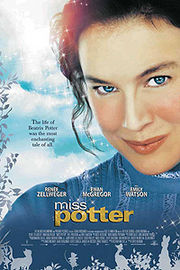
How many shows are good enough that you can walk into them partway through and within a minute become completely engrossed? I found two this week. The first is the 2006 film Miss Potter, which tells the story of Beatrix Potter (1866-1943), who is the best selling children’s author of all time. You might know her by the most famous of her 23 illustrated children’s stories: The Tale of Peter Rabbit.

As a side note, Potter spent a lot of time at her family’s country home in the Lake District. I was lucky enough to be able to vacation there once, but never knew until I saw this film that the gorgeous landscapes that had been preserved were partially due to her donation of 4,000 acres.  

The movie opens with the fact that Potter, who is played so well by Renée Zellweger, has missed her early chances of marriage. She’s a young spinster, and, having a number of her illustrations purchased, is determined to make some money publishing her own illustrated stories. The movie follows her journey to publication, which met with opposition from both publishers and her family, but the real heart of the film is the story of her meeting and falling in love with Norman Warne, whom her parents, especially her mother, don’t approve of because he’s a tradesman. The film is full of wonderful drama, humor, tragedy, and solace. I can’t recommend it highly enough. In fact, I found myself watching it a second time two days later with my girls with just as much enjoyment.

Downton Abbey, a period drama
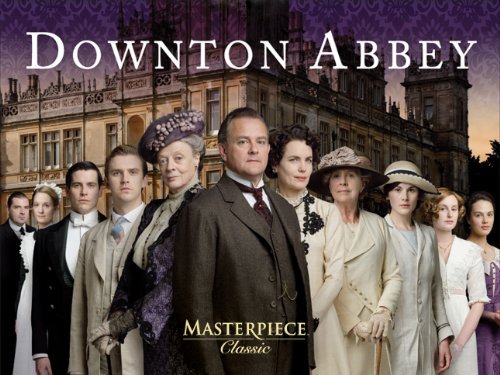
The second show is the BBC miniseries Downton Abbey.  Its first season of seven episodes aired last year in the USA on PBS’s Masterpiece Theater.  The second season will air at the beginning of 2012.  

The series is set in the fictional Downton Abbey and follows the lives of the aristocratic Crawley family and their servants. The stories take place over the time period that starts with the sinking of the Titanic in April 1912 to the outbreak of the First World War on 4 August 1914.

The main story line running through the episodes is the fact that the Crawley family must give up the estate to a distant relation because they have no male heir. But what I find so refreshing is that the stories of various servants are included. Some are funny. Some pull at your heart strings.

So far I’ve met and enjoyed some truly delightful characters as well as a couple of villains. If you enjoyed the BBC’s Pride & Prejudice or the Cranford series, I think you’ll enjoy this.

Human Planet, an amazing documentary
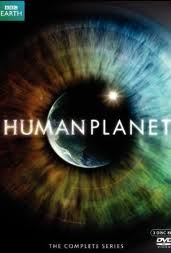
These last two weeks I’ve watched with fascination the eight episodes of the BBC and Discovery documentary series Human Planet. One species on our planet has adapted to every environment on earth—that’s us. The series looks at a number of remarkable ways humans have adapted to the various habitats.

You’ll see people from all over the globe who do things you never would imagine. Here’s just a small sample:


  • -Folks in Churchill, Manitoba Canada who trick or treat on Halloween with hungry polar bears stalking the streets
  • -A man in Papua New Guinea practicing the ancient art of shark calling in a small canoe
  • -Dolphins that help humans fish in Brazil
  • -A wild honeyguide bird working with Maasai boys to steal honey from wild African bees
  • -Mongolians using tamed golden eagles to hunt fox
  • -People in the eastern Amazon who love their pet monkeys so much they breastfeed them
  • -Inuit Canadians who risk death going under the arctic ice during low tide to gather mussels
  • -Three Dorobo in Kenya stealing food from a lion pride of more than twenty lions


Oh, and how could I not mention the three children who hunt tarantulas in Venezuela, roasting them up as tasty treats that taste a little like crab. I could go on and on. There are sixty-three of these stories in all, grouped into eight episodes that each focus on a certain habitat, including deserts, the Arctic, jungles, mountains, grasslands, rivers, and cities. Each episode also includes a behind-the-scenes story about the filming of one of the episodes. And some of these are as thrilling as the stories themselves.

In fact, that’s one of the things I love about this series. In addition to showing me fascinating things I’ve never seen, a number of the stories also raise the adrenaline just a bit. And yet, that’s not all. Because while presenting “strange” cultures, the stories humanize these folks so that instead of presenting aliens, these people feel more like fascinating distant relations. This is storytelling at its finest. If you like nature shows at all, you’ll be totally delighted with Human Planet.

Share

Similar Posts

  • |

    Dewitt Jones and Clear Vision

    Not many people understand creativity. Dewitt Jones, a National Geographic photographer, does. And this video on the creative process, HOLY COW, it’s so good I had to buy it so I could watch it whenever the yearning took me.

    Clear Vision

    But this isn’t just for artists. The principles of creativity apply to any creative endeavor–from writing and drawing to building microchips and parenting. 

    Go here. Watch the brief clip. Then watch the whole Clear Vision video. Tell me what  you think.  

    Capture the zing!

    Share
  • Good Stuff! Extinct, RadioWest, and Ruca’s

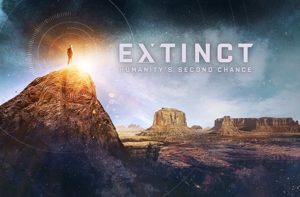
    I’ve been looking forward to watching Extinct, a brand-new TV series. I watched the pilot with my wife and teenage daughter, and we enjoyed it. I watched the next episode, and then a few days later couldn’t help but binge-watch three more. And I’m happy to report it’s full of good stuff and interesting stories.

    First of all, it starts with a killer concept. Aliens invade earth and wipe us out, but that’s been done to death. This story doesn’t start there. This story is set four hundred years in the future after the extinction of the human race, when a small group of humans is revived by an alien civilization.

    But this isn’t Star Wars, Star Trek, Blade Runner, Battlestar Glactica or anything like that. It feels more like the TV series Lost or The Maze Runner. The heroes are three humans who have been brought back and are trying to figure out what’s happening and how to survive in a place that’s low tech and is the home to a dangerous band of other humans that were also brought back. They’re dangerous, by the way, because they have been taken over by spores that latch other their nervous system and use their bodies as a host.

    This series transports you to a world of cool tech and alien stuff like the sparks that regenerate the humans in pools of water, two interesting drones, and alien ruins and glyphs. But the best part about this isn’t the spectacle of the technology. It’s the stories. There’s suspense and action, but also mystery and a lot of stuff that’s human and warm and, surprisingly enough, thought-provoking.

    We try to hold a family night once a week to have fun together and discuss important topics. And I can see us easily watching one of these episodes and finding ourselves in a deep discussion about free will, or the creation, or whether Duncan, one of the skin riders, looks like someone right out of The Hobbit.

    I liked episodes one and two, but it was episode three that kicked it into high gear for me. If you liked Lost or The Maze Runner or the series Once Upon a Time, I think you’ll really enjoy this. Right now you can stream the first eight episodes for free from byutv.org/extinct or extinct.tv.

    EDIT: I just finished episode 8. I really like this series.

    #

    Do you like listening to interesting ideas? If so, you will love tuning into RadioWest. It’s a daily program from KUER in Salt Lake City that features hour-long interviews of folks who are experts on some of the most interesting things or have an interesting story to tell.

    Doug Fabrizio is the host and has to be the best interviewer on the planet. I love his voice, but it’s his skill in drawing out the fascinating meat of the topic from his guests is what sets him apart. And unlike some interviewers who don’t even read the books they’re talking about, you can see that Fabrizio has done his homework. He’s really thought about what they have to say.

    For example, just this last week, I got to listen to compelling interviews of (1) Tom Christofferson, the gay brother of Elder Todd Christofferson, a Mormon apostle, (2) Ben Shapiro, an orthodox Jew who is an up and coming voice on the Right and was recently protested at Berkeley and the University of Utah, and (3) science writer Ben Mezrich who has written a book about the scientists and researchers who are trying to bring back the wooly mammoth.

    Week after week, Fabrizio brings amazing people and ideas into my car and home. You can listen to his interviews every morning at 11 a.m. and 8 p.m. on the radio at FM 90.1 (Salt Lake Area), FM 90.5 (Logan and Bear Lake), and FM 88.3 (Randolph and Woodruff). Or you can listen live online at radiowest.kuer.org, which is also where they keep all the recordings so you can catch up on any you miss.

    #

    New restaurants come and go all the time in Garden City, Utah. Most of them don’t last more than a few seasons. Often this is because they charge lots of money for food that’s really not worth it. So it’s with great delight that I tell you about Ruca’s, a little spot on the block between the city park and Bear Lake Pizza on the main drag.

    Not only are the prices reasonable, but the food is delicious. They have sandwiches and other stuff, but we have gone back multiple times for their ebleskivers (AY-bill SKEE-vurs). These are Danish pancakes in the shape of a ball that can be filled with all sorts of stuff. My wife and daughter love the ones filled with peaches and the others filled with Nutella and strawberries. I like the savory ones filled with bacon and cheese with eggs on top.

    They’re going to be closing up for the winter, so if you want some great food for a great price, get over there now and enjoy a new delight.

    Share
  • Interview with Edmund Schubert, editor of IGMS

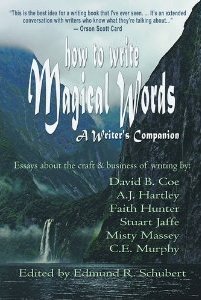
    I recently had the wonderful opportunity to interview Edmund Schubert, the editor for Orson Scott Card’s Intergalactic Medicine Show, about How To Write Magical Works: A Writer’s Companion, a collection of essays about the craft and the business of writing that he edited. Ed’s someone to listen to. But so are the authors whose essays fill the book: Faith Hunter, David Coe, C.E. Murphy, Misty Massey, A.J. Hartley, and Stuart Jaffe. Here’s what he had to say about this book.

    John: Edmund, you recently edited How To Write Magical Words: A Writer’s Companion. It’s chock full of advice from some pretty successful fiction authors, and an editor who, having purchased one of my stories, has shown exceptional taste (grin). But there are a lot of how-to’s by successful authors out there. What makes this book different, do you think? What’s the special value this book brings to the table?

    Edmund: I think the biggest thing that differentiates this book from others on the subject is its diversity of opinions. Most how-to books are written by one person, giving on perspective, but the truth is that there are many paths to success in this business. The Magical Words book was intentionally designed to replicate the give-and-take that exists on the MW blog. Sometime the MW writers agree, sometimes they don’t. The other thing that makes this book different is that it also includes some of the follow-up questions asked by readers of the blog, and the accompanying reply. That makes this book feel/read more like a writer’s conference than your basic info-dump book.

    John: I think the concept is great. And the contributors have quite a bit of experience. I know you can’t comment on every essay in the collection, but are there one or two that stood out to you while editing?

    Edmund: There were a few that stood out to me. One by Catie and one by David, both on the subject of money/advances. Those stood out to me because of how very blunt and honest they were about finances, and it’s information I think more people need to be aware of.

    The other one that stood out for me did so for personal reason. Catie’s essay about Visualizing The Story made me feel so much better about myself as a writer and my chances of success, because for years I’ve been hearing all these other writers at conventions talk about how their stories are like movies in their heads and all they have to do is record the action and the dialogue, and I used to hear that really worry because at best I might see a slide show of of bits and pieces of the action, but I’m totally making the rest up. Hearing Catie say that she didn’t/couldn’t visualize the story that way either gave me hope.

    John: I’m sure aspiring authors are going to be very interested in what Catie and David say about money. It’s also interesting that sometimes we writers hear other successful writers talk about how the invention process works for them, compare our process with theirs, and assume we’re lacking. In reality, the way we approach it might be just as effective. That’s one of the things I like about this book—it has multiple contributors. Let me ask one more question. You see a lot of stories as editor of Intergalactic Medicine Show. What are some of the topics addressed in this book that, based on the biggest issues you encounter in submissions, authors would be wise to carefully consider?

    Edmund: Magical Words as a group have two mantras: the first is that there is no one right way to do this crazy thing called writing, and the second is the exception that proves the rule: the one and only true answer to everything is BIC. Butt In Chair. You put your butt in the chair and you write. You figure it out as you go along. And the more you write, the more the other advice you hear will make sense. You want to be a writer? Write. The rest is details.

    ***

    John sez, amen to that. And amen to this book. I really enjoyed the format and the insights shared. I never tire talking about craft and business with other writers. With over 100 essays and 313 pages, this book has lots to share. If you want to hear what some very smart and a few very published authors have to say about writing, you’ll want to pick up your own copy.

    Share
  • Good Stuff! The Man Who Invented Christmas

    If you love funny, feel-good movies, today’s you’re lucky day.

    Because I’m going to tell you about one that will help brighten your Christmas season.

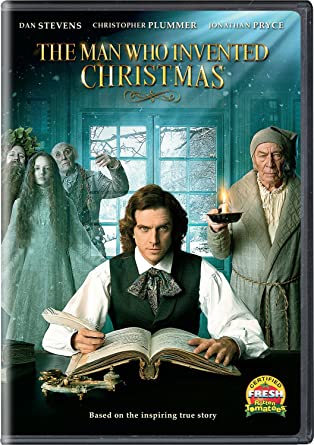
    The movie is The Man Who Invented Christmas.

    It’s about Charles Dickens, the author of A Christmas Carol.

    Now some of you might already be groaning. Please, no, not another story about Scrooge.

    I felt the same way. I haven’t enjoyed a movie about Scrooge for a long time. No, not even the one featuring Scrooge McDuck.

    So I didn’t want to watch this, but I kept hearing so many good reviews, I finally caved and gave it a shot. I’m so happy I did.

    This delightful movie reinvigorates the story with a whole new twist because it’s not about Scrooge. Not directly.

    Instead, it’s about Charles Dickens. It’s 1843 and Dickens is suffering financial hardship because his last three books bombed in the marketplace. He determines to write a new book and publish it himself to restore his finances. That book is A Christmas Carol.

    Dickens needs to finish it in six weeks so it can be ready for Christmas. That’s difficult enough, but will anyone read it? His friends and publishers keep telling him that the book will be a failure because, at the time, many thought Christmas irrelevant and didn’t celebrate it. Furthermore, the story isn’t developing as it should.

    Now the movie does take some dramatic license, but, by the end, I think you’ll agree the message of Scrooge is never more poignant. I watched the final scene with Scrooge multiple times and thought about it for days afterwards.

    If you want to laugh, be inspired, and feel the spirit of Christmas, I think you’ll love this movie.

    Share
  • Which Way Home, Tangled, Cafe Zupas

    Child Migrants

    Each year, thousands of Latin Americans travel hundreds of miles, hoping to enter the United States illegally. About five percent of those attempting to make the journey are children traveling alone, often on the tops of freight trains. Some of these children are in their teens. Some are as young as eight or nine.

    Some of them have had relatives (in their home country or in the U.S.) pay smugglers to bring them in. Others try to make it on their own. Some do make it across. Others are caught and deported in the U.S. or by the Mexican authorities. Others simply vanish or perish along the way.

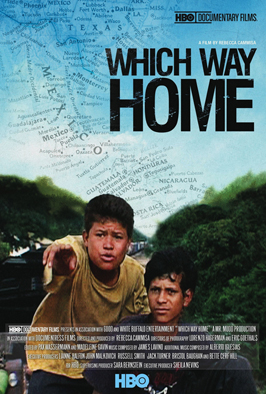
    The eye-opening documentary Which Way Home follows a number of these unaccompanied child migrants on their journey through Mexico as they try to reach the United States.

    There’s Olga and Freddy, nine-year old Hondurans. Olga is trying to reach her mother and sisters in Minnesota. Freddy wants to be reunited with his father.

    There’s fourteen-year old Jairo who was forced to live on the streets of Chiapas after his mother was killed. He wants an education but is too poor. So he thinks if he gets to Laredo, Texas, he can get a job, earn money, and come back to hire a tutor.

    There’s thirteen-year old Fito from Honduras whose mother abandoned him when he was very young. He lives with his impoverished grandmother, who has a job making cigars. He’s traveling to the U.S. to look for work and hopes to be adopted.

    Then there’s the thirteen-year old Eloy and his 16-year old cousin Rosario whose bodies were found in the desert.

    This film doesn’t propose any solutions or argue for or against immigration. It simply documents what’s happening. Anyone who has any interest at all in the issue will find this movie both fascinating and troubling. In fact, I think the whole family could watch this. For those who are concerned about language, there is one brief exchange where the one of the boys uses some high-grade curses. However, I wouldn’t let that hinder you. You can discuss it or easily fast forward those few seconds. These are just people. Don’t let a few foibles prevent you from learning about their plight.

    One of the best movies of 2010

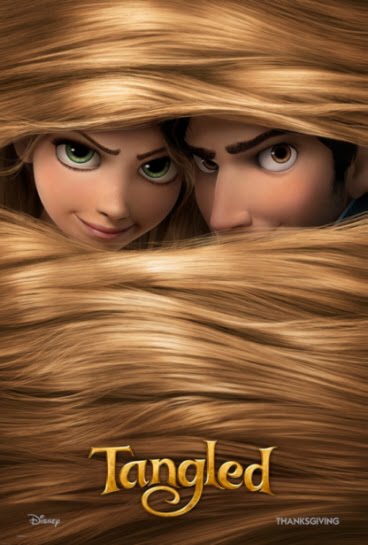
    Maybe you’re one of the few, like me, who didn’t see Tangled when it first came out. If so, you’re in for a treat. This is a great story about a girl whose mother, the queen, almost died giving birth to her. The magic used to save the mother and girl transferred into the child’s hair and gives her power to heal. Or to restore beauty and youth.

    And that’s too tempting for some. The princess is kidnapped by a woman who wants to maintain her youth. But this villainess doesn’t play the role of the bad guy. No, she plays the role of the loving mother, locking Rapunzel away in a tower to “protect her,” duping her into thinking she really is her mother and really cares. 

    It works for a number of years until Flynn Rider, a wanted thief running from the authorities, stumbles across Rapunzel’s tower. When he tries to take refuge, Rapunzel freaks, and then sees that Flynn just might be her ticket out. Of course, when the villainess returns and finds Rapunzel gone, she’s vows to lock Rapunzel up where nobody can find her. Unfortunately, poor Rapunzel has no clue what her “mother” really is—it’s hard to fight a villainess when you think she’s on your side.

    The animation is marvelous. The characters are fun. And the villainess is unlike any we’ve seen in a Disney film before. I recommend this film highly. I know I’ll be seeing it again. 

    Soup Heaven

    There’s nothing like an excellent soup and sandwich. And since my wife and a friend both raved about Cafe Zupas, I decided to give it a try.

    My first problem when I stood looking at the menu was that there were ten soups listed and they all sounded wonderful. There was Tomato Basil with Orzo Pasta, New England Clam Chowder, Thai Lobster Curry, Wild Mushroom Bisque, Yucatan Chicken Tortilla and five others. My second problem was that there were just as many delicious-sounding sandwiches to choose from, all grilled “panini style” on Italian Ciabatta bread. Should I get the Honey Bacon Club, Hawaiian Barbeque Chicken, Milano (ham, tomatoes, and pesto), or one of four others? And then there was a salad menu as well.

    Oye!

    I ended up ordering the turkey cranberry sandwich and a bowl of both the Thai Lobster Curry and the Tuscan White Bean and Vegetable. The staff was friendly. They served up my food quickly, and I sat down at a booth hoping I hadn’t just wasted my money.

    That fear was resolved with the first two sips. It was heaven. I oohed and aahed all the way through the meal until the last bite of the chocolate-dipped strawberry that comes with each sandwich. I cannot wait to go back and try another sandwich and bowl of soup. And the cool thing is that it appears even when I’ve tried all the menu items, I won’t run out of new options because Cafe Zupas rotates new soups into the menu. For example, right now they’re featuring a French Onion soup in addition to their normal menu items and have a Beef and Mushroom Goulash and Irish Stew “coming soon.”

    Cafe Zupas is a new chain that started in Utah. It currently has a total of nine locations from Layton to Provo. Next time you want to eat out, find the location nearest you at their website www.zupas.com and prepare yourself for a gustatory delight.

    Share
  • | |

    30 books you should read before you die

    An avid reader friend of mine began reading through the books in a list called “100 books you must read before you die.”

    She got to Jack Kerouac’s On The Road and went to Facebook and posted the following: “I don’t get the appeal. It’s about a group of boys/men who are irresponsible, drunks, whoring around taking advantage of others and being enabled by their women. Why is this a classic and why should I have wasted my time on it? Can some of my literary friends explain? I hated a brave new world and the handmaid’s tale too.”

    Is the book a classic?

    Should she read it before she dies?

    Is it really that important?

    Let me share an edited version of my response and then provide my list of 30 books you should read before you die.

    *

    Annette, the unfortunate truth is that these lists of “classics” are a sham because there is no objective criteria for determining literary excellence.

    Or maybe I should say that measuring quality in the arts isn’t like measuring the unambiguous, objective score of a baseball game. After books exhibit a certain level of proficiency, it becomes increasingly difficult to distinguish the quality of one book from another, especially because much of this depends on a reader’s interests and subjective experience of the story.

    When it becomes hard to rank performances, people rely on other measures. One of the most powerful is social networks.

    So if two readers find two different books that blow them away, one of the books might get all the attention because the one book gets picked up by a news service (The New York Times) or a platform (the Oprah Book Club effect) or some other social network of influence. A lot of the so-called literary classics only appear on various lists because they tapped into the academic network, which kept them alive far longer than they would have lasted otherwise.

    On The Road is simply a book that made a stir among some circles in the 1950s. That’s it.

    Was it more important or of higher quality than Exodus? The Chronicles of Narnia? Lord of the Rings? A Town Like Alice? All published in the 1950s as well.

    It depends.

    If you’re wanting to understand the 1950s beat culture, it would be an important book.

    But if you’re wanting to understand fantasy writing of the time, it wouldn’t.

    If you’re wanting to read a book that’s had a huge impact on popular culture, well, LOTR beats On The Road like a dog.

    Some people have the feeling that the so-called classics have some inherent medicinal value because someone put them on a list and called them classics.

    Nope. They’re just stories. Some of which can shed light on the issues and interests of a part of the culture in a given period. But if you’re not interested in that specific sub-culture, who cares?

    And if you’re reading to be entertained, moved, uplifted, or educated—which ones do that best for Annette is for you to decide.

    So all that to say I wouldn’t devalue your reaction to the book ?

    *

    I’m now going to give you my list.

    But it’s not going to be a list of titles. Nor will it focus on a book’s impact on some sub-culture of a given period.

    It’s going to be a real list. One that focuses on what so many of us go to stories for.

    1. The one that makes you weep.
    2. The one that makes you giggle and snort.
    3. The one that reminds you of what it’s like to fall in love.
    4. The one that gives you hope.
    5. The one that you begin to read more and more slowly because you don’t want it to end.
    6. The one that scares the soup out of you.
    7. The one that you can’t put down, even though you need to wake up early in the morning.
    8. The one that makes you wish you lived there.
    9. The one that’s so good that when you close it, you immediately start to read it a second time.
    10. The one that gives you and your child hours of pleasure together.
    11. The one that gives you a sacred, spiritual experience.
    12. The one that makes you reread some of the lines because the turns of phrase are just so delicious.
    13. The one that gives you courage.
    14. The one that takes you on an awesome adventure.
    15. The one that makes you want to be a better person.
    16. The one that bores you to tears (just so know you how good the others are).
    17. The one that introduces you to a different culture that delights you.
    18. The one that makes you think.
    19. The one that lingers with you for days.
    20. The one that gives you lovely insights.
    21. The one that inspires you to love your spouse more.
    22. The one that introduces you to the sorts of people you normally don’t like and makes you actually like them.
    23. The one that delights you with its characters.
    24. The one that whisks you away to a different historical period.
    25. The one that inspires you to give your children a hug.
    26. The one that gets your adrenaline pumping.
    27. The one that sparks all sorts of ideas in your head.
    28. The one that makes you wonder and start imagining what it would be like to be there.
    29. The one that blows your freaking mind.
    30. The one that makes you stand up in your living room and cheer.

    We could do more than 30, couldn’t we?

    Like the one that makes you think people from a different time period are just like us. And the one that makes you think people from that same period are completely alien.

    But I think we’ll stop. That there above is a list.

    Those are 30 books I think everyone will want to read before they die.

    Share