Good Stuff! Extinct, RadioWest, and Ruca’s

I’ve been looking forward to watching Extinct, a brand-new TV series. I watched the pilot with my wife and teenage daughter, and we enjoyed it. I watched the next episode, and then a few days later couldn’t help but binge-watch three more. And I’m happy to report it’s full of good stuff and interesting stories.

First of all, it starts with a killer concept. Aliens invade earth and wipe us out, but that’s been done to death. This story doesn’t start there. This story is set four hundred years in the future after the extinction of the human race, when a small group of humans is revived by an alien civilization.

But this isn’t Star Wars, Star Trek, Blade Runner, Battlestar Glactica or anything like that. It feels more like the TV series Lost or The Maze Runner. The heroes are three humans who have been brought back and are trying to figure out what’s happening and how to survive in a place that’s low tech and is the home to a dangerous band of other humans that were also brought back. They’re dangerous, by the way, because they have been taken over by spores that latch other their nervous system and use their bodies as a host.

This series transports you to a world of cool tech and alien stuff like the sparks that regenerate the humans in pools of water, two interesting drones, and alien ruins and glyphs. But the best part about this isn’t the spectacle of the technology. It’s the stories. There’s suspense and action, but also mystery and a lot of stuff that’s human and warm and, surprisingly enough, thought-provoking.

We try to hold a family night once a week to have fun together and discuss important topics. And I can see us easily watching one of these episodes and finding ourselves in a deep discussion about free will, or the creation, or whether Duncan, one of the skin riders, looks like someone right out of The Hobbit.

I liked episodes one and two, but it was episode three that kicked it into high gear for me. If you liked Lost or The Maze Runner or the series Once Upon a Time, I think you’ll really enjoy this. Right now you can stream the first eight episodes for free from byutv.org/extinct or extinct.tv.

EDIT: I just finished episode 8. I really like this series.

#

Do you like listening to interesting ideas? If so, you will love tuning into RadioWest. It’s a daily program from KUER in Salt Lake City that features hour-long interviews of folks who are experts on some of the most interesting things or have an interesting story to tell.

Doug Fabrizio is the host and has to be the best interviewer on the planet. I love his voice, but it’s his skill in drawing out the fascinating meat of the topic from his guests is what sets him apart. And unlike some interviewers who don’t even read the books they’re talking about, you can see that Fabrizio has done his homework. He’s really thought about what they have to say.

For example, just this last week, I got to listen to compelling interviews of (1) Tom Christofferson, the gay brother of Elder Todd Christofferson, a Mormon apostle, (2) Ben Shapiro, an orthodox Jew who is an up and coming voice on the Right and was recently protested at Berkeley and the University of Utah, and (3) science writer Ben Mezrich who has written a book about the scientists and researchers who are trying to bring back the wooly mammoth.

Week after week, Fabrizio brings amazing people and ideas into my car and home. You can listen to his interviews every morning at 11 a.m. and 8 p.m. on the radio at FM 90.1 (Salt Lake Area), FM 90.5 (Logan and Bear Lake), and FM 88.3 (Randolph and Woodruff). Or you can listen live online at radiowest.kuer.org, which is also where they keep all the recordings so you can catch up on any you miss.

#

New restaurants come and go all the time in Garden City, Utah. Most of them don’t last more than a few seasons. Often this is because they charge lots of money for food that’s really not worth it. So it’s with great delight that I tell you about Ruca’s, a little spot on the block between the city park and Bear Lake Pizza on the main drag.

Not only are the prices reasonable, but the food is delicious. They have sandwiches and other stuff, but we have gone back multiple times for their ebleskivers (AY-bill SKEE-vurs). These are Danish pancakes in the shape of a ball that can be filled with all sorts of stuff. My wife and daughter love the ones filled with peaches and the others filled with Nutella and strawberries. I like the savory ones filled with bacon and cheese with eggs on top.

They’re going to be closing up for the winter, so if you want some great food for a great price, get over there now and enjoy a new delight.

Share

Similar Posts

  • Murder, Courts, and Bart D. Ehrman

    I’m going to talk a bit about some murderers in Detroit, Jesus, and a couple of books I recently read that I think are just awesome.

    MURDER
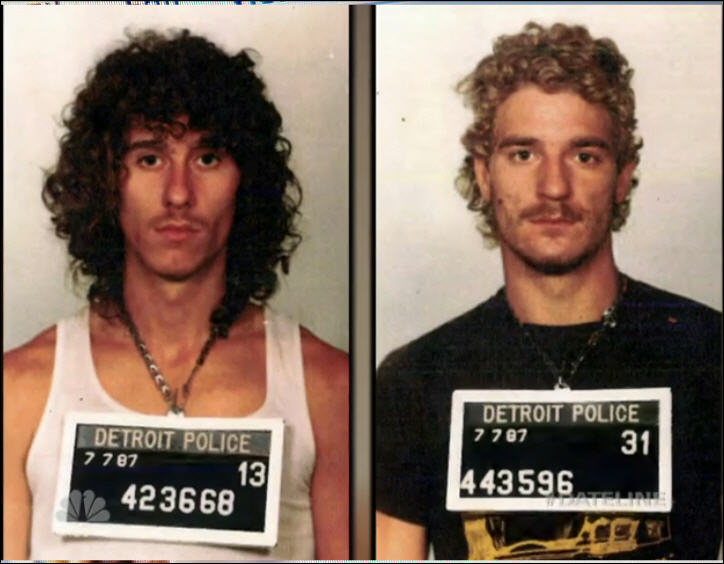
    Highers BrothersSo, the murderers.

    Let me start by asking this question: can you establish the truth in a court of law?

    Is that what the judge and jury are deciding? The Truth, with a capital T?

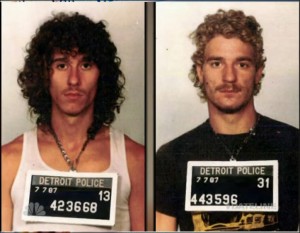
    Think about Tommy and Ray Highers, brothers from Detroit. They were convicted of murder. Open and shut case. No parole. They were two nasty buggers who shot a man down over some dope.

    But then twenty-five years later (last year, in fact) they were back in court because new evidence had come to light that undermined the original conviction. For the curious, this fascinating Dateline episode reveals the amazing way the evidence came to light and what happened because of it: http://www.nbcnews.com/dateline/full-episode-graduation-night-n72666. Watch it. You’ll be happy you did.

    So the Truth. Capital T. Can you establish that in a court of law?

    No.

    What the justice system does is try to determine which story about the evidence available is the most convincing.

    It’s about telling and judging stories.

    There are many types of evidence folks use when telling their stories. Some of it is very strong. Some is so unreliable, like hunches and hearsay, that the court won’t even allow it to be presented.

    Whatever the evidence, the fundamental nature of this is that you can often tell a number of different stories using the same set of data, the same evidence. Sometimes the stories are variations with minor differences. Sometimes the stories are radically different.

    It’s like having only some of the pieces of a 100 piece puzzle. You look at the four, twenty, or thirty pieces you have and imagine what the rest of the puzzle looks like. And then you invent something that seems reasonable.

    You invent it.

    And if that story meets certain standards of proof, then our system allows the authorities to take certain actions. If the standard of a “reasonable suspicion” is met, it allows a police officer to stop someone. If the standard of “probable cause” is met, a higher standard than reasonable suspicion, an officer can arrest you. If a jury in a criminal case decides the defendant is guilty “beyond a reasonable doubt,” an even higher standard of proof, then the justice system authorizes the authorities to sentence the defendant.

    But at no time does the system seek to establish the absolute truth, the truth with a capital T. It only seeks to establish some level of probability that the story being told about the evidence is true.

    All of this is made more complex because what’s “reasonable” is based on other people’s opinion. We have guidelines and rules to help folks be “reasonable.” But reasonableness is still affected by culture, background, history, etc.

    It’s still opinion.

    OTHER PUZZLES

    What other realm of knowledge works like the justice system and consists of inventing stories about missing parts of the puzzle?

    Well, history does.

    In fact, if you think about it, history is what courts do. The processes and principles of our justice system guide everyone involved in how they go about telling the stories that make up that specific type of history.

    And all historians (lawyers, judges, and juries included) have no means of establishing the absolute truth.

    They can’t use science. Science requires you conduct experiments and reproduce results. But how is a historian going to reproduce the same events? What, they’re going to get Lincoln shot all over again and let the rest of us watch it? Dang, John Wilkes Booth did shoot the man. We all saw it happen down in the lab.

    Sure, they can use science to date a manuscript, or determine what something is made of, or establish some other fact. But all science is doing is providing facts about the pieces of the puzzle you have. About the claims the evidence makes.

    But science can’t fill in the missing pieces of the puzzle. It can’t tell the story. The historian has to invent the story that makes the pieces all make sense.

    And then the rest of us determine if that story, that sketch of the full puzzle, is reasonable.

    But that isn’t all there is to it.

    STANDARDS OF PROOF

    Think about conspiracy theories like the ones that claim that the US government perpetrated the 9/11 bombings. Conspiracy theorists are practicing history. They are inventing a story that seems to fit the evidence available to them.

    But what happens when you have only five or ten pieces of a 1,000 piece puzzle? What happens when you don’t thoroughly vet the evidence? What happens when someone screws around with the evidence? And I’m not just talking about tampering or invalidating it by thoughtless handling (contaminating DNA, for example). Folks with the best intentions have biases. In fact, we all have biases that lead us to include and exclude various pieces of evidence based on whether they support or oppose the ideas we want to believe.

    Jonathan Haidt explains these biases in his excellent book The Righteous Mind. He explains that with things we want to believe, we often use the standard of “Can I Believe It”?  We look for anything at all that would allow us to believe our position. If we find it, even if it’s flimsy, we discount all the other evidence that may point another way and conclude we have met the burden of proof for our view.

    For things that we don’t want to believe, we often use the standard of “Must I Believe It”? When falling prey to this bias, we look for anything at all that would undermine the thing we don’t want to believe, even if that evidence is flimsy. If we find it, we ignore all the other evidence, even if there’s a mountain of it pointing another way, and claim we have met the necessary burden of proof.

    In court there are all sorts of procedures and standards that need to be followed to help us avoid invalidating evidence or falling prey to our biases. Those procedures and standards don’t remove all risk. But they do remove a lot.

    Which court system would you want to be processed through? The current American justice system or the medieval witch trials?

    Oh, for sure I’d want to be someone accused of witchcraft back when a claim of “I saw her as a witch in my dream” was admissible, as was the test of poking a mole on the accused’s body with a needle to see if said witch flinched enough. I’d be so happy to go back to the days when a confession obtained by torture was incontrovertible evidence.

    So when practicing history, it’s important to have some guidelines, some rules to establish which bits of evidence are more likely (not guaranteed, but more likely) to be reliable. And it’s important that when folks tell their story, they not only share the evidence, but also all the assumptions they’re making.

    JESUS

    Where does Jesus of Nazareth come into all of this?
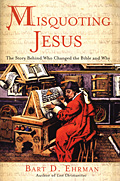
    Misquoting Jesus by Bart D Ehrman

    Well, Jesus has affected the world more than any other person who has lived on it. The stories we tell about him (the history we have practiced about him for the last 2,000+ years) have changed the world. And those stories will continue to affect us, especially folks in Western cultures, on everything from foreign policy to which clothes think are fit to be worn in public.

    Who was Jesus? Did he really exist? Was he a god? What did he really teach? Have his teachings been changed?

    These are all fundamental questions. And for the last two-hundred years historians have been re-examining the pieces of the puzzle, finding new pieces, and telling new stories to explain it all.

    Some of these historians believe in Jesus as a god. Some don’t. Either way, the conversation is fascinating.
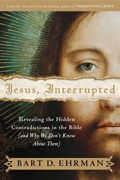
    Jesus Interrupted  Bart D Ehrman

    I just read three historical books about Jesus that were awesome. AWESOME. Not because I agreed with all of the author’s conclusions, i.e. his stories. I don’t. But because of the way he practiced his history. The way he told his stories. And because what he shared gave me new insights to my stories about Jesus.

    The three books, all by Bart D. Ehrman, a professor of religious studies at the University of North Carolina, Chapel Hill, are:

    1. Misquoting Jesus: The Story Behind Who Changed the Bible and Why
    2. Jesus Interrupted: Revealing the Hidden Contradictions in the Bible (And Why We Don’t Know About Them)
    3. Did Jesus Exist? The Historical Argument for Jesus of Nazareth

    I’ve read the Bible many times, and I’m a believer. Of course, the question is a believer in which story?

    Did Jesus Exist Bart D Ehrman

    What Ehrman so engagingly makes clear is that there have indeed been many stories about Jesus. In fact, the gospels (Matthew, Mark, Luke, and John) and the writings of Paul (most of the rest of the New Testament) seem to all portray a different man and message. Not only do they say things that flat out contradict each other on some details, but if you look at each book separately, each author seems to have a slightly different take on Jesus.

    Furthermore, it appears that what we now have has changed over time. For example, it seems the last twelve verses of Mark were not in the oldest manuscripts. There have been other changes. One of the more notable ones occurs in John 5:7-8.

    Our earliest texts say:

    “For there are three that bear record, the spirit, and the water, and the blood: and these three agree in one.”

    But later texts say:

    “For there are three that bear record in heaven, the Father, the Word, and the Holy Ghost: and these three are one. And there are three that bear witness in earth, the spirit, and the water, and the blood: and these three agree in one.”

    Nowhere else in the New Testament do we have anything that states that creedal doctrine so explicitly. Did John write that? Or was the extra material added to make the idea of the trinity scriptural?

    And what do we make of the fact that we have no manuscript that dates to anywhere close to when Jesus lived? We have some small fragments of manuscripts with a few verses of John, Revelation, and Matthew dated around 150 AD. But the oldest manuscripts we have that contain the majority of any of the gospels are for the gospels of Luke and John, and these are dated around 200 AD. The oldest manuscripts with the full New Testament are dated around 350 AD.

    That’s more than 300 years after Jesus died!

    Have you played the game of telephone? Are we sure that the oral traditions that were written down weren’t changed? What happened to the books mentioned in the Bible that we don’t have now? For example, Jude mentions a prophecy of Enoch that we don’t have in our current Bible. Are we sure that the copyists didn’t add to the text like it seems some did to John?

    And what about the term “Christ”? It’s actually the Greek word for “messiah” which just means one anointed with oil to perform a special service for god. Christ wasn’t Jesus’s last name. It was a title: Jesus the anointed one.

    The anointed ones in those days were kings and prophets and priests. It appears most of the historical sources suggest that a “messiah” to the Jews of that time was someone who would throw off foreign rule and establish the kingdom of Israel as David had. In fact, there were a whole bunch of people who claimed to be messiahs. Here’s a nice list: http://en.wikipedia.org/wiki/Jewish_Messiah_claimants.

    Judas Maccabeus was considered a messiah because he threw off Greek rule in 164 BC. But then around 63 BC Israel was taken over by Rome. And Rome wasn’t too keen on revolts, so around 4 BC they crucified Judas the Galilean for claiming to be the messiah, the king of the Jews. Crucifixion, it seems, was the punishment reserved for seditionists. They crucified Jesus and a whole bunch of other guys claiming to be the king of the Jews. And their crimes were written on a board above them, which is why they hung the words “King of the Jews” over Jesus’s head on the cross. Here’s the criminal, and here’s his crime. These other messiahs were not claiming to be a god that came to earth to atone for sins, but anointed by God to throw off foreign rule and establish his earthly kingdom again.

    Jesus talks a lot about the kingdom of God. Was Jesus just another one of the seditionists?

    Ehrman examines these and many other questions as a historian, providing all sorts of insights.

    But the fabulous thing is that he doesn’t just tell his story. He gives his evidence. Exposes his assumptions. And in all three books he explains the guidelines or “rules” historians use to when trying to determine which stories are more likely and which evidence is more reliable.

    I was enlightened, challenged, and delighted. I learned things about Jesus’s life and times that have helped me understand what I read in the Bible better.

    LIMITS

    Of course, the historical method has its limits.

    Historians, because they are looking for explanations (stories) that are more probable, automatically select against things that are improbable. They exclude miracles. They exclude any story that says Christ was actually resurrected.  They may establish that a lot of folks thought he was resurrected, but they don’t have any methods to establish something like a resurrection actually occurred. And so they ignore it. Historians exclude modern revelation. If someone today were to have a visitation from Jesus as Paul did, the historians would exclude that.

    But we all know that truth is sometimes stranger than fiction. We all know that sometimes the less likely thing is exactly what occurred.

    Historians are looking for what is most probable. Not what actually happened. Because they can’t go back and time and verify their story.

    Excluding “improbable” things changes the types of stories the pieces of the puzzle support. For many of us, me included, we do accept evidences many historians don’t as pieces of the puzzle. And because we have these pieces, we’re able to tell different types of stories.

    The cool thing about Ehrman is that he explains this. He’s not trying to hide anything. Instead, he’s explaining how to approach the Bible from a historical point of view, and where the principles of the historical method lead him.

    And I have found that those methods in his hands have a lot to offer.

    If you’re someone who is interested in religion–as a believer, agonistic, or atheist–you will love these books. Ehrman himself was once an ardent believer, but is now agnostic. However, his respect for believers, including other scholars in his field who believe in the divine Jesus, comes through loud and clear. Ehrman has no axe to grind. He is simply sharing the stories of Jesus that make sense to him and many other historians. And he does it in a very interesting and easy-to-read style.

    If these books sound like something you want to try, I’d start with Misquoting Jesus, move to Jesus Interrupted, and then finish with Did Jesus Exist? And if you enjoy those, let me recommend two more of Ehrman’s books. The first is The Lost Gospel of Judas Iscariot: A New Look at Betrayer and Betrayed, which looks at the discovery and content of a very ancient manuscript that calls itself The Gospel of Judas. The second is Lost Christianities: The Battles for Scripture and the Faiths We Never Knew, which explores the variety of Christian faiths that existed in the few hundred years after Jesus’s death.

    Happy reading!

    Share
  • Stonefather by Orson Scott Card

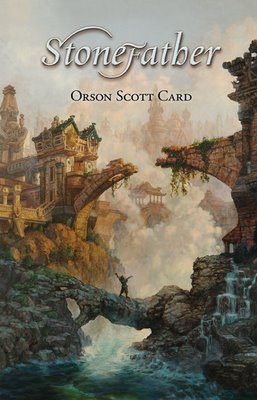
    stonefather_72dpi“When Runnel was born, he was given a water name even though there had never been a wetwizard in the family.

    In the old days such names were given only to those babies as would be sacrificed to Yeggut, the water god. Later, such names were given to those whould would live to serve as priests to Yeggut. Still later, wetnames went to children of families thath pretended they once had a watermage in their ancestry.

    But now, in the village o Farzibeck, wetnames were given because the mother was fond of a nearby brooklet or because the father had a freind with such a name.”

    So begins Stonefather by Orson Scott Card. It tells the tale of Runnel who is the ninth son and fifteenth child of a farmwife who likes all her children well enough but calls them all “by each other’s names and didn’t know enough numbers to take a census and notice when one or two were missing.”  He’s also the son a man who beats him. Eventually, Runnel leaves home and seeks his fortunes in Mitherhome, the big city far to the south.

    This isn’t a full novel, but a novella of 112 pages. However, the Subterranean Press edition has a glorious cover and ink illustrations inside. More importantly, the story tells a tale that’s full of wonder, humor, and a number of delightful characters. It reminded me of the best of Card’s Hatrack books. But, of course, this world is very different. It’s strange, and I was happy to explore it with Runnel as my guide. Take an hour to read this. You won’t be disappointed. Then you can look forward, as I do, to the first of the Mithermage novels based on this world.

    Share
  • Good Stuff: The Free State of Jones

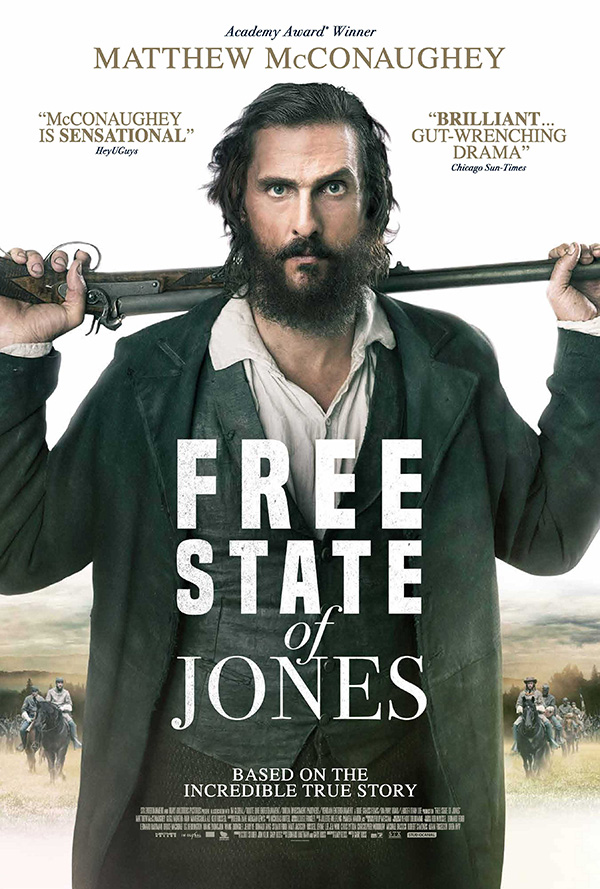
    I recently watched a moving and surprising film called The Free State of Jones, starring Matthew McConaughey. It’s about Newton Knight and how he led three counties in Mississippi to break away from the Confederacy during the Civil War.

    Think of that. On January 9, 1861, Mississippi declared it’s independence from the United States over the issue of slavery. They were the second state to do so. South Carolina was the first. On reflection, it makes sense these two states seceded first because they had the highest portion of the population as slaves. South Carolina’s population was 57% slave. Mississippi’s was 55%.

    Mississippi’s declaration of independence from the Unites States starts with this paragraph.

    “Our position is thoroughly identified with the institution of slavery—the greatest material interest of the world. Its labor supplies the product which constitutes by far the largest and most important portions of commerce of the earth. These products are peculiar to the climate verging on the tropical regions, and by an imperious law of nature, none but the black race can bear exposure to the tropical sun. These products have become necessities of the world, and a blow at slavery is a blow at commerce and civilization. That blow has been long aimed at the institution, and was at the point of reaching its consummation. There was no choice left us but submission to the mandates of abolition, or a dissolution of the Union, whose principles had been subverted to work out our ruin.”

    The rest of the declaration simply elaborates on that theme. However, not everyone in Mississippi agreed. The folks in Jones County, way down in the southeastern part, were mostly non-slave holders and cattle herders and had little use for a war over a state’s right to maintain the institution of slavery.

    Led by Knight, on October 13, 1863, with the war still raging, folks in Jones County and adjacent counties formed a separate government known as the “Free State of Jones”. They fought at least fourteen skirmishes with Confederate forces and went so far as to raise an American flag over the courthouse in Ellisville and send a letter to Union General William T. Sherman declaring Jones County’s independence from the Confederacy and asking for support.

    This movie is based on those events and, importantly, some that occurred after the war ended.

    The film is rated R for a scene with some Civil War battle injuries. And perhaps because of the use of the n-word. What it delivers is a powerful depiction of the issues of the time and the courage of one man who’d had enough. If you like history and action, I think you’ll enjoy this movie.

    Share
  • Ramsey’s Total Money Makeover & Brown Cow Yogurt

    Wear some financial underpants

    I graduated from BYU with a Master’s degree in accounting. BYU’s accounting program is regularly ranked as one of the top three schools in the nation.

    Whoa. Go, John. I ought to be some kind of financial superstar, right? You’d think I would have come out of that program with all my crap put together, living within my means, investing wisely, making a bundle of moo-lah. I’d have a tidy stash.

    Yeah, nope.

    That program taught me how to account for money, but not how to use it. Or maybe I was just too dumb to get it. We came rolling out of school with thousands of dollars of debt. So instead of graduating and building our wealth, we worked to pay off the man.

    Dumb, dumb, dumb.

    I can tell you right now my daughters aren’t going to do the same. They will pay as they go. I’m not co-signing any loans. They’re not going to use credit cards. If it takes them a few years longer to graduate, then it takes them a few years longer.

    But they’ll be free when they finish. No shackles for my girls.

    I always thought it was a good idea not to send them out into the world without underpants. Or knowing how to brush their teeth. It’s equally important I don’t send them out there not knowing how to build wealth and reap all the security and peace that comes with it.

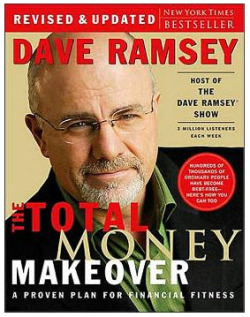
    This is why every child of mine is going to get a copy of Dave Ramsey’s The Total Money Makeover. It’s a goofy title, but the principles in it are sound. I can’t tell you how much I wished I’d known and followed the steps he outlines there on how to build wealth when I was just starting out.

    1. Save $1,000 in an emergency fund
    2. Pay off all your debt except the mortgage using the debt snowball (and don’t go into debt)
    3. Complete your emergency fund by saving three to six months’ expenses
    4. Maximize retirement investing
    5. Save for your kids’ college
    6. Pay off the home mortgage early
    7. Build wealth and give like crazy
    8. Live like no one else

    The book starts out by talking about the debt myth, i.e. debt is a great tool and should be used to create prosperity. Sometimes a little debt can be helpful. But in the vast majority of cases “debt adds considerable risk, most often doesn’t bring prosperity, and isn’t used by wealthy people nearly as much as we are led to believe.” Ramsey goes on to say, “Your largest wealth-building asset is your income. When you tie up your income, you lose. When you invest your income, you become wealthy and can do anything you want.  How much could you give every month, save every month, and spend every month if you had no payments? Your income is your greatest wealth-building tool, not debt. Your Total Money Makeover begins with a permanently changed view of the Debt Myths.”

    After tackling debt, Ramsey outlines other money myths and wealth-destroying attitudes and then explains each of the principles of the steps outlined above.

    I love this book so much it’s part of my gift package to every couple that invites me to their wedding reception. I hope those new couples follow his recommendations. It will bring them peace. If you want to give your children the gift of financial peace, if you want that peace yourself, I recommend you buy this book today and start following those baby steps. You can get the book for a mere $10 bucks at his website http://www.daveramsey.com.

    While you’re waiting for it to come, you might want to go over to Larry Correia’s site (another accountant and fiction author), and read his hilarious comments on some real folks who actually were sent out without any financial underwear: http://tinyurl.com/3zx9tbo.

    Thick and Creamy

    I love thick, creamy yogurt.

    Mix it with some raisins or fresh fruit, and I’m in heaven.

    The problem is that most of the yogurt on the shelves today is weird Splenda- or NutraSweet-filled crap. Or it’s full of sugar. And none of it has that thick mouth feel.

    I had some great yogurt up in Oregon a few years ago, but could never find anything like it here. Then a little while ago I hit the jackpot.

    Hello, Brown Cow Greek Yogurt.

    Thick. Oh, baby is it thick. Creamy. And full of goodness: 23 grams of protein, 9 grams of sugar, 0 grams of fat, and active cultures of more of our belly friends than any other yogurt I’ve found—give a big welcome to S. Thermophilus, L. Bulgaricus, L. Acidophilus, Bifidus, and L. Casei.

    I get the plain style. This allows me to mix it to my taste with fruit, granola, or a little bit of sugar or honey.

    If you’ve been looking for some good yogurt, let me recommend Brown Cow.

    Share
  • Good Stuff! Unbroken by Laura Hillenbrand

    hillenbrand-unbroken-4

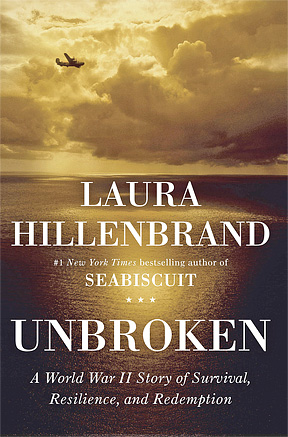
    Unbroken by Laura Hillenbrand is the finest book I’ve read in some time.

    It’s tells an engrossing and true World War 2 story about Louis Zamperini, who started out in life as a steal-and-run trouble-maker. He was a kid who’d try the patience of Job. His mother tried to reform him to no avail. His father administered spankings, but physical punishment seemed to have no effect. Louis was constantly in trouble with neighbors, school mates, cops, teachers, store owners.

    Louis’s older brother thought Louis would succeed if he were to just receive some positive attention. He thought track, a very popular sport at the time, was just the ticket. Louis loved his brother. In 9th grade he tried running, but the workouts chafed, and then one day he had an altercation with his parents. Louis figured the train would take him away from all his problems. So he ran away, hopped a boxcar, and very quickly learned the freedom of the rails wasn’t freedom at all. It sucked.

    When he returned home, defeated, he decided to submit to his brother’s plan. This time it was just what the doctor ordered. Louis ran like mad. He broke records. He got a scholarship to USC and broke more. Louis ran in the 1936 Olympic Games. He didn’t win, but he would the next time they came around. However, the world was in turmoil back then, and Germany and Japan had their own plans which changed Louis’s life forever. He became a bombardier in the Pacific theater.

    And that’s where I’m going to stop. The story that awaits you is truly amazing. And Hillenbrand brings it to life with surprising and powerful details. From start to last, I was enthralled. And towards the end, just when I thought the story was over, it took a turn that lifted it from being just another WW2 story with plenty of action to a tale that goes right to the heart of what it means to live. I wept, not for Louis’s pain, as awful as that was, but for something far more vital.

    When I first saw the book, its sepia-washed cover turned me away from the tale. But with so many folks talking about it, I thought I’d give the first pages a go. I was delighted, but didn’t make it a priority. Not long after that, my 10th grade nephew told me how much he enjoyed it, and that prompted me to go back (and I’m so glad I did). It’s not that this is a kid’s book or that my nephew has the maturity of an older man. He’s definitely got some reading chops, but it’s not about an advanced writing style either. What is enthralling old and young alike is Zamperini’s story and Hillebrand’s skills in telling it.

    How much do I like this book? I’m reading it again, slowly this time, so I can savor every word. Let me recommend you do yourself a favor. If you read one book this year, make it Unbroken.

    Share
  • Good Stuff! News of the World and two for the Downton Abbey crowd

    I recently watched a move and two British TV mini-series that were just terrific.

    The movie is News of the World. It’s a Western set in 1870, starring Tom Hanks as Captain Jefferson Kyle Kidd, a former Confederate officer who makes a living traveling from town to town in Texas and reading newspapers to local residents for an admission fee of ten cents.

    After departing Wichita Falls, Kidd comes across an overturned wagon on the road and finds the driver, a black freedman, had been lynched. He also finds the stray, young white girl who only speaks Kiowa (the language of an American Indian tribe), that the freedman has been transporting.

    Kidd learns from the girl’s paperwork that she is Johanna Leonberger, who had been kidnapped and by Kiowa six years earlier. She doesn’t speak English. Doesn’t want to go with Kidd. But Kidd is tasked with getting her to safety. Of course there are all sorts of perils and issues along the way that threaten that goal.

    There’s suspense, action, drama, bad guys, and some poignant moments that will move your heart strings. If you like westerns or Tom Hanks, I think you’ll love this movie. It’s the best western I’ve seen in a long time.

    ***

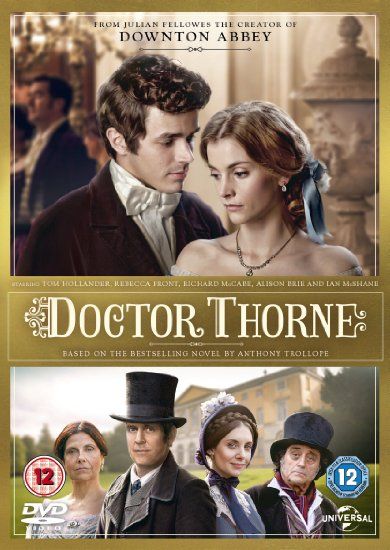
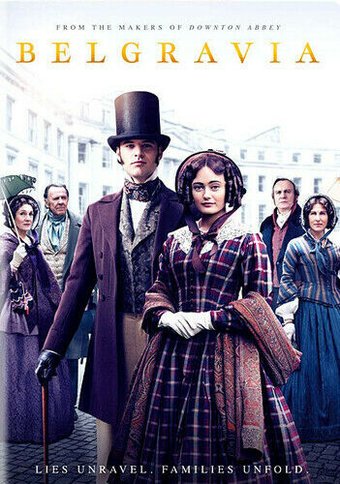
    Those of you enjoyed Downton Abbey will be very happy to hear that Julian Fellowes, who was the executive producer for that series and wrote many of the episodes, is back and has written two more historical dramas with that same type of feel.

    The first is Dr. Thorne,a three-episode miniseries based on the novel by Anthony Trollope.

    It’s set in the late 1800s. Mary Thorne and Frank Gresham, the only son and heir of the squire of Greshamsbury, fall in love. However, Frank’s parents want him to marry wealth because they have very little to leave their son. Mary is penniless and of suspicious birth. She’s not anything at all that would help Frank in the world. And so the drama begins. You get to enjoy the historical setting, the manners, and romantic suspense.

    The second is Belgravia, a six-episode miniseries set in the 1800s and based on the novel by Julian Fellowes himself.

    For you geography buffs, Belgravia is an actual place, an affluent district of London. And the story set there is about two couples. The first, the Richmonds, are part of the aristocracy. The other, the Trenchards, are from the business class.

    The Richmond’s had one child, a son. The Trenchards had one child, a daughter. The two fell in love. But the son was killed in the battle of Waterloo. And the daughter died in childbirth. However, it was an illegitimate childbirth that the Richmonds don’t know about. The Trenchards thought it best, to retain the reputation of their daughter, to have someone else raise him.

    Twenty-five years later, however, both couples still feel the hole those deaths left in their hearts. Mrs. Trenchard feels it’s time to reveal the truth to the Mrs. Richmond. But it does not go as planned. Especially not when the Richmond’s nephew wants the Richmond’s inheritance and is willing to remove all obstacles in his path.

    It’s a story full of manners, heartbreak, suspense, hope, and, well, I won’t tell you the ending. But I will say that if you like these types of historical dramas, you’ll probably love this.

    Share