Generating Story 7: Creative Q&A

Filling up your mind with wonderful things by hunting zing is a writer’s bread and butter.  But guess what?  You can’t develop a killer story by waiting to stumble across great story ideas.  So while you must deploy your drag net and hunt with a purpose, you must also learn how to develop your own zing.  And I haven’t found anything more productive for helping me do that than the process of creative question and answer.

If you refer back to the Story Development Framework download, you’ll see that Creative Q&A is one of the key tools used to develop every part of story.  So how does it work?

Do you remember my first and second posts where I talked about Ed Smiley and the folks at NASA who helped save Apollo 13?  They used this technique.  Here’s how it went down.

They had a problem: the astronauts were running out of oxygen because the CO2 scrubbers weren’t working in the module they were in.

The problem led to an objective: figure out a way to get the CO2 scrubbers working.

The objective led to a question: what are some options for getting those CO2 scrubbers working?

Then they began to generate possible answers.  Two days later they had one that would work.  Ed and his team saved the three astronauts aboard.

This same thing happens over and over again in any situation that requires some new solution.  Do you remember all those redneck solutions I shared in the first post?  They were practicing creative Q&A.

You know all those accountants generating various ways to do your taxes?  They’re practicing creative Q&A.  Mine did that this year; he figured out one legal way do our taxes that saved us some money, then figured out another legal way to do our taxes that saved us more than $1,500.  I’m so glad he looked for that second, actually third, right answer.

You see all those mothers and fathers generating ways to make ends meet?  They’re practicing creative Q&A.

It happens all the time.  It’s a key tool when trying to develop a story, and I’ve found a couple of guidelines when using this technique that seem to help quite a bit:

  1. Clearly identify the objective.
  2. Turn the objective into a “what” question.  For example, “I need a more interesting character” becomes “What are some things that would make my character more interesting?”  Likewise, “This scene is stupid, nobody would do that” becomes  “What would make this scene more believable?” When I’m stuck with plot, “My character isn’t facing any real problems” becomes “What are some killer troubles the character can run into?”
  3. Generate a list of good, dumb, and wacky options.  It seems the more ideas I generate, the better chance I have to come up with something really good, especially if I cherish the dumb and wacky ones by writing them down.
  4. Don’t hesitate to steal other ideas I’ve seen and modify them to make them my own.  Or to go search for how others dealt with issue.
  5. Try to generate more than one good or right answer.


I use creative Q&A to help me develop my key objectives all the time.  I state a question and use the principles to guide me in the options I generate.  For example, in the thriller I’m writing I started with a character, an ex-con trying to go straight.  I asked myself “What are some threats to his happiness?” and “What could go wrong?”  I started to generate options.  Some were mildly interesting; some were dumb.  One was that “some old associates come back, old prison buddies, and try to drag him back into the life he’s trying to escape.”  That one tingled my zing meter, and I started to generate more information about that.  “What would they drag him back into?”  “What kinds of crimes?”  “Who are they?” (Okay, not every objective can be turned into a “what” question.)

There are also ad hoc objectives, i.e. objectives that arise only in a particular situation that I can’t plan for.  I can use this with them as well.  For example, in Servant of a Dark God I wanted a henchman to have a cool weapon, something that I hadn’t seen before.  My question for that was “what are some cool new weapons for this henchman?”  I listed out some that were stupid and had been done before like “a big knife” and others that were wacky like “a chain.”  I generated a big old list.  As I generated options I suddenly generated the idea of “spikes.”  And then “spikes that were alive.”  That tickled my zing meter, and I followed that path and came up with the Ravelers, which I think are just awesome.

For more information about creative Q&A, I recommend you read Creative Problem Solving: An Introduction, Fourth Edition by Donald Treffinger.  It’s one of the most practical books on creativity around.

While you’re waiting for that to come in the mail or to get it from your library, I want you to watch something.  Dewitt Jones, a photographer for National Geographic, uses creative Q&A.  He made an incredible twenty-minute video explaining the principles of generating options.  Please watch Everyday Creativity .  It says “Preview,” but it’s the whole wonderful video.  Then go here and watch that same last bit plus some material not on the other one.  These are two versions of the same presentation.  Everyday Creativity is the commercial version used for training.  Clear Vision is the personal use one that includes some extra material.  Let me recommend you purchase the Clear Vision version. You will not regret the $45 dollars.  I promise you.

All of what he says applies to generating answers for our writing.

GO WATCH IT NOW.

Note what he says about these principles about generating options:

  1. Try different perspectives for stating a problem.
  2. Follow your zing, what you care about; figure out what’s exciting you about the thing.
  3. Look for more than one right answer.  Believe there IS more than one right answer.
  4. Don’t be afraid to make mistakes—you often must make them to get the good stuff!
  5. Try breaking a pattern, do something different.
  6. Train your technique.
  7. Put yourself in the place of most potential.
  8. Be patient, persevere.
  9. Relax and goof around.

One last thought on creative Q&A.  There are certain questions that seem to be more productive than others.  I find that those focused on the key objectives are usually very productive for me.  So give those a try, but there are others.  Furthermore, what might work for me might not work so well for you.  Don’t get stuck on using a specific question because someone else does.  The goal is not to use a specific tool, which in this case is a specific question.  The goal is to make the different parts of the story come to life in your mind.  Whatever question helps YOU do that best is the one to use.

Because creative Q&A is such a powerful tool, I want to make sure you see plenty of examples of authors using it in their writing.  To start, read chapter 2 of Orson Card’s Characters & Viewpoint and see what questions he finds useful and an example of  how he uses them.  Then come back here.  I’ve asked some other published authors to share how they use questions to help them generate story.  I’m going to start with Ian Creasey whose short fiction has appeared in magazines such as Asimov’s, Realms of Fantasy and Weird Tales, and has been reprinted in several Year’s Best SF anthologies.  He’s written a wonderful essay that I’ll use for the next post in the series.

For more in this series, see How to Get and Develop Story Ideas

Share

Similar Posts

  • Indie Thoughts: What drives book sales?

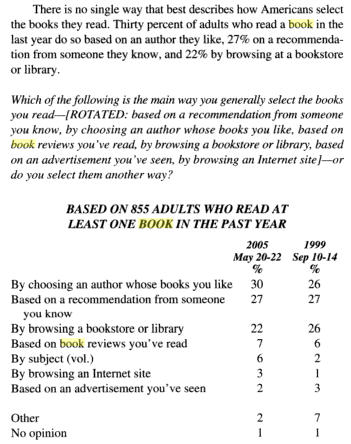
    gallup-poll-how-readers-select-booksWhat are the biggest factors influencing which book a person will read next?

    Many surveys have been conducted over the years to answer just that question. I’ve pasted one on the right and summarize the results of others here. One factor sits at the top of almost all of those surveys. Did you look at those other surveys? According to these surveys, folks tend to buy books by authors they already like.

    This phenomenon is called a lot of things. One of the most common is “brand loyalty.” Some might be wondering how you define a brand and what could be branded in publishing. KKR has a great piece here that answers those questions.

    So brand loyalty. How does it develop? Well, any time you please readers, their loyalty grows and inches them toward the loyal fan end of the spectrum. Your brand may not have the power of a Dean Koontz because you don’t have near the number of loyal customers as Koontz, but you still have a brand. And people who like your stuff are going to be loyal to some degree, but not the same degree.

    I think that last point is important to remember: readers that know and like your brand won’t all have the same degree of loyalty.

    You have hard-core fans who are totally dedicated to you and make an effort to know what’s happening. You’ve pleased them so much, your brand is gold to them.

    You have others who will buy your book the minute they hear it’s out, but don’t make an active effort to keep up to date on things.

    There are others who will mark it to be read when they hear about it, but don’t make a big effort to get it unless it’s convenient.

    You have others who like your stuff but are still in that period where they like but haven’t yet committed to being a fan. That sometimes may take a few books.

    That’s how it was with me and Lee Child. I read the first and liked it. Some time later I saw another and was predisposed to like it. I read that one and liked it too. I wasn’t a Child fan yet. But then I read the third. And that’s when I became a true fan. I’m not hard-core. But I now read everything he puts out within a few months of the release.

    From what I can see, branding and brand loyalty matter no less in publishing than they do in any business where you’re relying on repeat customers.

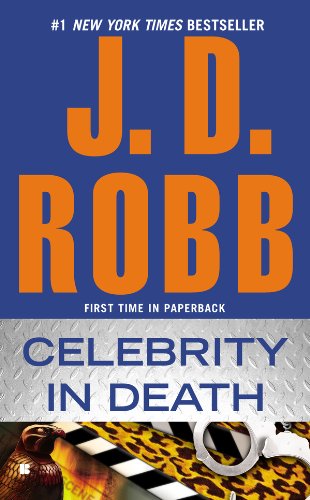
    JD Robb Celebrity in DeathI see the effect of brand loyalty all over. It was the force behind the dramatic explosion of sales when it was revealed that Robert Galbraith, the author of The Cuckoo’s Calling, was J.K. Rowling. It was the force behind the midnight book store events when Stephanie Meyer would release a Twilight book (and the Twilight balls). And other similar events with many other authors. It’s the reason why publishers make the names of a lot of authors so prominent on the cover. Good grief, sometimes that’s all you need. Look at some of the Nora Roberts or JD Robb covers. On many of those the name, the brand, takes up 75% of the cover. You can see customer loyalty blossoming in reviews on GoodReads and Amazon and elsewhere where readers say in essence, “I loved this author and I will be looking for the next book.”

    Building a base of loyal customers is they goal in businesses that rely on repeat sales. Because not only do those folks come back for more, but the also tell other folks about the product.

    Go back an look at those surveys. What was usually the number two reason someone selected a book?

    Word of mouth.

    Word of mouth comes in many forms. Recommendations from folks you know. Recommendations from other influencers–folks like Rush Limbaugh or review sites you frequent. Recommendations from some other type of social influence mechanism like a bestseller list on Amazon.

    The key takeaway for me is that top two factors driving book sales all stem from a loyal customer base. Which means building that base should be one of my main goals as a writer.

    So how do you do that?

    The same way everyone else in a repeat customer business does it. At a general level, you:

    1. Create a product (a book in this case) that’s likely to delight a certain set of consumers (readers).
    2. Let those consumers (readers) know about it.
    3. Make it enticing for them to give it a try.
    4. Make it easy for those who liked it to know when they can get another.
    5. Get more product (another book that’s similar to the last) out the door so your repeat customers can come back for more.

    I’ll be sharing more of my ideas about aspects of those five steps in upcoming posts. And I’ll be wanting to hear what you’ve found that works. Because ultimately we’re all testing various strategies. And the more we share with each other, the more we’ll each benefit.

    While you’re waiting, you might want to look at an awesome book on customer loyalty called The Loyalty Effect by Frederick F. Reichheld.

    Share
  • |

    Brain Nazis and Feeling Good by David D. Burns, M.D.

    Have You Got a Brain Nazi?

    If you’re conscious, you’re monitoring your environment. You have to. It’s how you survive. This is not something you can turn off. It’s just one of those systems that runs automatically, like your liver. You’re always appraising the situation.

    And as soon as you encounter something that’s likely to be of importance to you or yours, your monitor kicks off a physical response to prepare you to deal with or take advantage of it.

    The problem is that sometimes a Nazi propagandist worms his way into the monitoring station. And like any good Nazi, he distorts reality.

    Sometimes those distortions lead to burning resentment, sometimes to unwarranted shame or anxiety, sometimes to eating disorders, sometimes to grave depression. When I heard of the tragic suicide that occurred in our community a few months ago, my heart went out in sympathy to the girl, her family, and friends.  I’m not a doctor. I don’t know the situation. But I’m positive she was dealing with one of these villains.

    I wished I’d been able to share something that’s been a literal life saver to me. Now, it might not have changed anything. But hopefully it can change things in the future for you and others you know who may have to deal with a Nazi in the brain.

    And you will have to deal with a brain Nazi at some time.

    This is not something that affects a miniscule portion of the population. In any given year you can expect more than 15% of a population to experience some form of this [1]. That’s roughly 238 of the estimated 1,592 people 18 years and older in the little county where I live [2]. Rates for teens are similar [3]. Besides, you don’t have to have a full-blown case of a depression for distortions to affect you. How many of us haven’t made faulty comparisons with others? “Oh, she’s so thin and has such great hair; I’m so dumpy.” “Oh, he’s doing so well, and I’m not. I’ll never be a success.”

    The question is not whether you or someone important to you will have to deal with it. The question is how prepared you’ll be when you do. Everyone deals with distortions now and again.  Which means everyone can find a little more enjoyment in life by showing their brain Nazis the door.

    So how does it all work? How do you show the villain out?

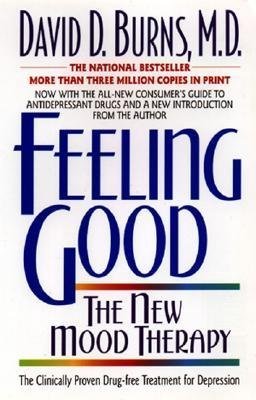
    I’m going to summarize it below, but I’ll tell you right now that the book that saved my life was Feeling Good by David D. Burns, MD. This isn’t positive mental attitude. It’s not neuro-linguistic programming. It’s not the mumbo jumbo of Freud and Jung. This is practical and proven. It is the most prescribed intervention for dealing with these issues in the current medical community. It’s prescribed because it works.

    Your Brilliant Appraisal-Emotion System

    To understand this, you have to understand how emotions work. As I said before, you’re always monitoring your situation. You hear a buzz and see a rattlesnake on the path two feet away. Your monitor immediately responds. Alarm, adrenaline, increased blood flow–all of that to get you ready to deal with the situation. Your monitor writes “alarm” on your face to communicate it to those around you–to warn and ask for help. This happens in less than a blink of an eye.

    But this doesn’t just happen with danger. It happens when we encounter unfamiliar things. When we encounter positive things. You see a great friend who makes you laugh all the time. Boom, your monitor responds. You smile. Feel. Focus. You do so because you not only want to avoid dangers, you also want to seek out the things that make you happy.

    Our emotions prepare us to fight, flee, seek, and pitch woo. Our little monitoring and physical response system is brilliant.

    But there’s more. We don’t rely on just the automatic subconscious monitoring. We also have a cognitive (conscious thinking) part. Let’s go back to the rattlesnake. You walk out into the garden, step on a slither, and immediately go into alarm mode. Then you look, consciously see the slithery thing is not a snake, but the garden hose. You relax. Laugh.

    The quick subconscious appraisals keep us alive, because with snakes and other things, if you’re slow, you’re dead. We don’t have time for thought. If you touch a hot stove, you want an immediate reflex. You don’t want to ponder it for a second or two. On the other hand, the cognitive appraisals help us further appraise a situation. They bring more of our resources to bear on the situation.

    How Does the Nazi Get In?

    So there are three parts of the appraisal-emotion system: the subconscious appraisal of the situation, the physical response, and the cognitive appraisal. Each of the three parts affects the other two. And when things are running smoothly, we don’t have problems. But sometimes we get a distortion mucking up the works. We make a faulty appraisal of the situation. And therefore have a faulty physical response.

    For example, you’re a mother. You’ve had a hard day. The kids make a huge mess with flour in the kitchen. You yell, freak out. When they’re cowering in their rooms and you’re cleaning up the flour, you think, “There I go again. I’m a total failure. I can’t stand it! I never do anything right! I’m a terrible mother.” These thoughts make you even sadder.

    And that’s the propaganda. That’s your brain Nazi with his all-or-nothing thinking, telling you that you either perform perfectly or you’re a failure.

    But is that true? No, it’s not. You might be a B+ mother, filling the lives of your kids with all sorts of goodness. You might have just had a great time reading with the kids not thirty minutes before. But the brain Nazi tells you to forget that. “Vatch dis film,” he says, “und see de horrors of vut you are!”    

    And the all-or-nothing thinking gambit is just one of ten common weapons he uses. Furthermore, this happens so quick that we often don’t notice it. In fact, we’ve often repeated some of these distortions so often than they’ve become almost automatic.

    Mr. Nazi, Meet Mr. Bazooka

    The good news is that you can pull the lid off the lies. You can open the door, spot the brain Nazi that slipped in, and take him out. You can do this because one of the three parts of the system is our cognitive appraisal. This means you can consciously stop the movie, pin the distortion on the wall, and uncover the truth. Once you do that, it’s like the rattlesnake scenario above—oh, it’s a hose, we realize, not a snake, and the appropriate emotions immediately follow.

    But you need to know how to stop the movie. You need to know how to spot the lies. David D. Burns, MD tells you exactly how to do this in his book Feeling Good. (By the way, DON’T get this book confused with his Feeling Good Handbook–you DON’T want the handbook; you want Feeling Good, the book.)  In the book, Burns talks about the theory, the results, and then gets right down to the practical techniques used to blow the brain Nazi to kingdom come.

    A few years ago I hit a bad patch with a brain Nazi that had taken up residence. A very bad patch. He’d been there for quite some time. This book and a good counselor saved me. I thank the Lord for that. By the time I went to see a medical doctor to assess whether chemical issues might be playing a role, I was stable. I wasn’t out of the woods yet, but I had opened the lid and found the villain at the controls. I used the techniques Burns gave me, and I’m happy to say that while the brain Nazi still comes round every once in a while, I can spot him. And I can take that sucker out.

    Go to the library and check out the book and take the assessment test. If you, or someone you know, scores in the mild range, maybe you’ve just experienced a very sad event. But maybe you’ve also got a villain in residence. Get the book. Read it. Be happy. Nobody needs to live with a Nazi at the controls.

    For Authors

    By the way, fiction authors should pay special attention to this stuff. Not because we’re more susceptible to brain Nazis than others, although we do have to deal with our fair share as we develop and share our stories. No, we should because the emotion process is exactly what we’re trying to tap into. Knowing the principles can be very useful indeed. Let me recommend you read the books on emotion listed on the Learning With Pros page.

    Sources

    1. 1. http://www.nimh.nih.gov/health/publications/the-numbers-count-mental-disorders-in-america/index.shtml
    2. 2. http://quickfacts.census.gov/qfd/states/49/49033.html (find your state and county and see how many folks are likely dealing with a brain Nazi in your area)
    3. 3. http://www.oas.samhsa.gov/2k5/youthDepression/youthDepression.htm
    Share
  • |

    Ira Glass on Story and Surprise

    I found this a fascinating talk. It’s Ira Glass who is the executive producer of the This American Life radio program from Chicago Public Radio. It’s a show that merges true stories (and some short fiction) of everyday people, surprise, humor, and meaning. There’s a structure to the types of stories that they produce. It’s not a new thing. It’s used all the time in a venue many of us are familiar with. Maybe you’ll identify that venue immediately. If not, it doesn’t matter. Watch and listen. This is a fascinating talk and it highlights just how much humor, curiosity, and insight depend on surprise.

    Ira Glass at Gel 2007 from Gel Conference on Vimeo.

    Share
  • |

    Presentation for Brandon Sanderson’s writing course

    PDF of the slides

    Brandon asked me to substitute for him on March 1st and teach the students about indie publishing. For those of you who were there, here are the slides.

    2018 Sanderson Class – Indie Publishing Final PDF

    “If I Were Published”

    To start the presentation, I regaled the students with a surprise: my epic-fantasy-BYU-newbie-author version of the classic Fiddler on the Roof song which I called “If I Were Published.” Dylan Rowe, a student in the class with some serious violin chops, practiced with me in secret, then accompanied me during the performance. He was great. And the performance went well. We all had a great time. There’s a recording. Once I get it, I’ll post it here.

    Here’s how it went.

    Isaac introduced me. I said how happy I was to be there. I then asked for a show of hands: who was hoping to be published. Not all did, BTW. Some were taking the course for other reasons. I then said that the sight of such a vast assemblage of unpublished writers made me think of someone else. I displayed the slide of Tevye dancing. They all laughed, and I knew this was going to be a good crowd.

    And then Dylan, who was hiding off to the side, played the phrase for “If I were a rich man” and I put on my own black Tevye hat. There was more laughter and surprise, and I began.

    Dear Lord, you made many, many unpublished writers.
    I realize, of course, that it’s no shame to be unpublished
    But it’s no great honor, either.
    So what would have been so terrible if I had one small best-selling series?

    [Dylan began to play and I began to sing]

    If I were published,
    Yaba dibba dibba dibba digguh deedle daidle dum.
    All day long I’d biddy-biddy-bum
    If I were a published man

    Wouldn’t have to work hard,
    Yaba dibba dibba dibba digguh deedle daidle dum.
    If I were a biddy biddy pub
    digguh deedle daidle published man

    I’d write a big long epic–hundreds of characters!
    Swords and dragons and a lot of gore
    A snot-nosed lad who was prophesied for the fight

    There’d be a quest to one far side of the map
    And one to find a lovely ancient lore
    And one more leading out into the blight

    [I paused here, to think, then sang the tune to the last line again with the first four of these]

    To meet a sprite,
    and a dark knight,
    with an old birth right,
    read by moon light,
    that … cures snake bite.

    [Dylan produced a big scratch. I covered my eyes in shame.]

    Oy! Bad story development.

    I’d see my wife, my Nellie,
    Looking like a rich man’s wife,
    with a proper golden skin,
    rolling out the yoga mats to her heart’s delight.

    I’d see her driving the kids
    in something other than a minivan
    Oy! What a happy mood she’s in!
    Posting perfect selfies to day and night.

    Hordes of bright-eyed zoobie writers will come to fawn on me.
    They will ask me to advise them,
    like Sanderson the Wise.
    “If you please, Mister Brown?”
    “Pardon me, Mister Brown?”
    Posing problems that would cross a Shakespeare’s eyes
    Ya da dee da dum, ya dah da dum

    And it won’t make one bit of difference
    if I answer right or wrong.
    When you’re published they think you really know.

    If I were published, I’d have the time that I lack
    to go to the temple and to pray,
    seated in a corner of the celestial room.
    And I would serve on projects building Enoch’s Zion
    from here to Africa and beyond.
    And that would be the sweetest thing of all

    Oy!

    If I were pub-lished.
    Yaba dibba dibba dibba digguh deedle daidle dum.
    All day long I’d biddy-biddy-bum
    if I were a published man.

    Wouldn’t have to work hard.
    Yaba dibba dibba dibba digguh deedle daidle dum.
    Lord who made the lion and the lamb,
    You decreed I should be what I am.
    Would it spoil some vast, eternal plan,
    if I were a pub-lished man?

    Limericks

    I took a bunch of copies as my books as gifts to support the good cause of entertaining hard-working students. But there was a twist. To get a book, they had to pay me one limerick. It could be about anything and of any quality. But it needed to be a limerick. They had, like, 5 minutes to write one at the end. Thirty-three souls came up with the payment. Here they are for your enjoyment.

    1.
    A writer, a publisher, and a poet,
    And now, wouldn’t you know it,
    They’re debating a comma,
    and imagine the drama,
    When they’re divided on just how to cull it

    2.
    There once was a class of fiction
    Which had a stranger take up his position
    He was quite amusing
    He kept them from snoozing
    For he had quite a talent for diction.

    3.
    John Brown’s book could be greatness
    I hope it’ll be a hit, not a miss
    Your lecture was great,
    It did not stagnate
    I hope you will great me my wish! (to get your book)

    4.
    I want to write a book that is fun
    where an evil something kills someone
    And the people will fail
    ‘Til the heroes prevail
    But I fear I will never be done.

    5.
    I’m trying to write my own book.
    But, if you now went to look
    I fear you will find
    It’s all in my mind
    But, oh – all the effort it took!

    6.
    There once was a poodle named Paddle
    whose fur was cut into a saddle
    until in the park
    he ate too much bark
    And now his tight fur is a battle.

    7.
    There was a young woman whose head
    Had eyes that looked dead
    As boys approached her,
    Her sharp tongue they started to stir
    Filling others with dread

    8.
    A poet sat twiddling his thumbs
    He felt his ideas were dumb.
    He was lacking in time
    But just couldn’t rhyme
    So he loosened his thoughts with some rum.

    9.
    “In honor of your song”
    “You know I’d really love to be published
    Oh, the glam and the glory I would relish
    The hordes of fans my mind’s eye can see-
    Sanderson with John Brown bowing to me –
    And don’t (?) tell me my dreams are embellished”

    10.
    Homework I do not much like, you see
    But for your book a lim’rick it be
    and so i must do,
    with great thanks to you,
    this my small bit of lame poetry

    11.
    There once was a boy named John
    Who needed to mow the lawn.
    He pulled on the rope
    But oh, what a dope!
    Alas, the gas was all gone!

    12.
    Guardian Angel Limerick
    I’ve struggled to write since the phone call,
    when the maybe’s, the what-if’s turned actual
    and the grieving stretched on
    till the morn she was gone
    and the world lost, but I gained, an angel.

    The note with that one: “I was the girl who asked if the limericks had to be funny. Thank you for coming to class and giving us the books. I’ve included my limerick below. My mother passed away a couple weeks ago. This is my tribute to my loudest cheerleader and my harshest critic.” Boy, I’m definitely honored to have this one.

    13.
    There was a young man from Pocatello
    Who thought that he was a brave fellow
    But one dark, dark night
    He took quite a fright,
    And found that he was quite, quite yellow.

    14.
    There once was a sorcerer bloke
    Who traveled outside for a smoke
    He yawned, “curse this day”
    And that is to say
    The incantation now was spoke

    15.
    There once was a ship fresh-moored
    With my favorite couple on board
    But despite the large fanon
    It was destroyed by the canon
    And my ship, sunk quick, sailed no more

    16.
    There once was a sad unicorn
    Who had tragically lost his gold horn
    And thus ran away
    and still to this day,
    He stands but a horse all forlorn

    17.
    There once was a grandma so old
    on her birthday she had a bad cold
    as she blew out her candles
    her kids yelled, “Mad scandal!”
    as her dentures flew into the mould

    18.
    There once was a cat named caterer
    who keeps running into the mirror
    we got her some glasses
    form the shopping masses
    and now she sees everything clearer

    19.
    There once was a dust speck named Mike
    Who lived on the edge of a spike.
    He was bumped off that edge,
    then snagged on some sedge,
    ending up on the wheel of a bike

    20.
    I am a cat who is hip.
    Who likes to shoot from the lip.
    My songs are all crude.
    My stories are lewd.
    I like to make reality flip.

    21.
    There once was a bunny named Mopey
    Who had friends that were silly and dopey.
    They hopped on a train
    That took them to Maine
    Where someone threw them in a bath that was soapy

    22.
    I want something to teach me to cook
    but this sure and that kind of a book
    but bore shadiz tes (yeah, couldn’t read it, dang it)
    and this sure seems fair
    So now I guess I should take a look

    23.
    There once was a man named John
    Who put his books out to pawn
    Some students one day,
    Wrote limericks to say,
    “We love your free books–give us one.”

    24.
    My mother wanted to get a book,
    And she gave me that terrible look.
    A limerick the price,
    I wrote one down twice,
    So please give me that sought after book.

    25.
    There once was a man named Lam
    Who like to eat lots of Spam.
    When the aliens came
    He cooked them a meal
    And so his soul they did not steal

    26.
    There once was a tiger named Ted
    He went to town in a bed.
    Jeep in the rustle
    He spotted a tussle
    And now he has bumps on his head.

    27.
    Once I tried writing haiku;
    it seemed like a fun thing to do.
    But I fumbled the timing,
    and couldn’t stop rhyming,
    and now this haiku is just poo.

    28.
    Once I was writing a sonnet
    But my paper hand not a word on it.
    I sat there confused,
    My talents unused,
    Because nothing else rhymes except “bonnet”.

    29.
    I love me a good paper book
    But the digital have a nice look
    Shopped for a kindle all day,
    Tried to buy on eBay,
    But, somehow I just have a Nook.

    30.
    There once was a man with pink hair
    And all he ever got were rude stares.
    He said, “I know that I’m hot.
    There’s no need to gawk.
    Goodbye.” And left with great flair.

    31.
    There once was a lobster named Clyde
    Who was inexplicably snide.
    But he had some bad luck,
    from the sea he was plucked
    and now he’s been battered and fried.

    32.
    I was once walking home on the street
    When a woman, I happened to meet
    I said to her, “Hey.”
    She said to me, “Nay.”
    So I went out and bought me a treat.

    33.
    Tetris is the very best game
    My playing will put you to shame
    See… I am the best
    Put it to the test
    One day it may lead me to fame.

    Share
  • Some lessons from Tom Clancy’s first novel

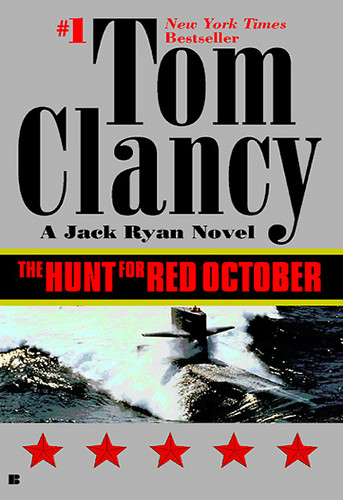
    tom-clancy-the-hunt-for-red-octoberTom Clancy is one of the biggest authors of our time. How did he break in? It’s an interesting story that Deborah Grosvenor, the editor who acquired The Hunt for Red October (Clancy’s first book), tells here.

    And this early interview provides more insights.

    So what conclusions can you draw from this? Here’s what I picked up.

    1. Writing a good book is one thing. That book finding success is quite another.

    2. Endorsements from the right people make a huge difference. More here in my blog Is Product Popularity Random?

    3. Know what you write. And if you don’t know it, do the research. And then invent what you have to.

    4. It’s not always a bad thing to start with a small press, especially if they’re going to put as much $$ into marketing and PR as this one did.

    5. To finish your novel, you’re going to have to set aside time and get it done.

    6. Finally, follow the zing. Clancy loved this stuff. Notice how his book was fed by the stories he heard and read.

    Share