A Wowser Mouse & Financial Peace

Dis Eez A Mouse

I’m a Luddite, which means that even though I work in the software industry, I do not rush out to purchase the latest and greatest gadget.  Our family computer, for example, is running Windows 98, primarily because we purchased the computer itself in 1999.  In human years that computer is like 432 years old.  Maybe we’ll retire the old boy this year.  The point is that I don’t like to churn through tons of gadgets.  I want something to work.  I want it to work well.  And then I want to use it for a long time. 

Recently, my mouse started acting up.  So I went out and found a new one.  I settled on a Microsoft Wireless Mobile Mouse 4000.  It comes with three parts: the mouse, an AA battery, which is supposed to last for up to ten months, and a tiny transceiver you insert into one of your computer’s USB ports.  The mouse has a great hand-feel.  The clicks are smooth.  If you want to take your mouse with you somewhere, there’s an easy storage slot inside the mouse for the transceiver.

But the best thing of all is its BlueTrack technology.  This is not an ancient mouse with a track ball that you have to clean every so often.  It’s an optical mouse.  But unlike earlier versions of optical mice (why do I have a terrible urge to use “mouses” or “meece”?) that didn’t work very well on a number of surfaces, this BlueTrack technology works like a charm on everything I’ve tried it on, including glass. 

You need a new mouse?  This is a good one.

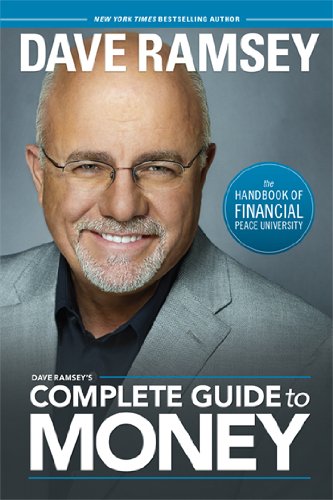
Dave Ramsey’s Complete Guide to Money
If you’re like 70% of America, you are living paycheck to paycheck, which means that if you or your spouse (assuming you have one) were laid off, you would probably have difficulties meeting your mortgage the next month.  If you didn’t go into default on the house, you certainly would on other payments and bills. 

You also have very little retirement. 

You probably have around $7,000 in credit card debt.  Maybe a lot more.

You also have a car payment or two.  Or, heaven forbid, a lease. 

You might be house poor—the house payment is so large you can’t seem to do anything else. 

You might have creditors hounding you. 

You might be one of those folks throwing their money away on the lotto instead of investing it. 

Did you know that if you invested $50 a month, an average of what many lotto players spend, in the stock market for 40 years, you’d very likely end up with $316,000 in the bank  (over the last 40 years of ups and downs, the annualized return of the market was almost 10%). You would have put in only $24,000 over that time period, which means you would have made $292,203!  But instead, if you’re a lotto player, you just throw all that out the window.  (No, you’re not going to win; not even maybe in your dreams.)

You probably think your kids will have to take out loans to go to college. And you think that’s a good idea.  In fact, you probably think it’s a good idea to have a credit card just in case there’s an emergency because you don’t have any savings to cover any emergencies.

The list goes on.  The sad part of this is that our finances cause us average Americans a lot of stress in our lives and marriages and families (even if we’re in denial) and very often heartbreak. 

I know that a lot of us look at our financial chains and throw our hands up in despair—what can I do?  The mountain of debt and bills are just too high.  Besides, this is how everybody lives.

But it’s not.

There is a way out.  And it doesn’t matter how old you are, it’s not too late.

Dave Ramsey has written his hands-down best book ever, which will take you step-by-step through the process of turning a financial mess into financial peace.  He’ll do it in a down-to-earth easy-to-read style. No confusing ten dollar words that make your head spin.

Ramsey himself went through financial hell.  He was the guy that made all the mistakes with his money.  Lost everything.  Had collection agencies coming after him.  Didn’t know how he was going to feed the family.  He turned that all around.  Yes, he’s a millionaire, but more importantly, he has been working for the last twenty years to teach regular people with regular jobs the simple principles that lead to financial peace.  They’re becoming debt free and working their way towards huge net-worth.  

You want a step-by-step plan?  You want to educate yourself about money and family finances from one of the nation’s leading experts?  Then go and purchase Dave Ramsey’s Complete Guide to Money today and start reading it.  You will not regret it.  If you already have his Total Money Makeover and don’t think this will be worth it, think again.  This goes into all sorts of things the Total Money Makeover doesn’t.

Be free, people.  Be free.


Related Stuff

Look at the links and the video.

Share

Similar Posts

  • “Wally” by Aslyn

    My daughter was playing this song on her internet list. The tune and singer’s voice grabbed me. I downloaded it based on that. Then I really listened.

    Oh, man.

    I cannot tell you how much I love this song. I love the melody and phrasing, Aslyn’s voice. I love the lyrics. I love the true story behind them. Gracious Lord, this is what it’s all about.

    This youtube is of a live performance. She gives a great into to the song. She tells how her grandfather Wally, who was in the Coast Guard when he young, met his wife Fae. They were married for 55 years. Then Aslyn tells how she found Wally, a few days after Grandma Fae died, sitting in his rocking chair holding a black and white picture of his wife, his eyes wet with tears. Fae had written on the picture: “to sweetest boy I’ve ever known.” You gotta listen to that intro. Then you have to get the Lemon Love album version of the song. It’s 99 cents on Amazon.

    Here are the lyrics. I’ve added the little spoken part you get on the Lemon Love version that’s not in the live performance.

    “Wally”

    [Aslyn’s grandfather]

    Hello, I’m Wally. I’m the man that had the good fortune of one day of finding a companion that would live with me for more than 55 years. No man could have ever asked for a better wife, or better friend, than the one I found across the dance floor at the USO.

    [Song begins]  

    Dear Wally, I’m writing this letter sincerely.
    To tell you you’re the “sweetest boy I’ve ever known.”
    Remember that USO when we met.
    You almost didnt go.
    Well, me and your two sons are very glad you did.
    Cause when your eyes found me I could hardly breathe.
    I wanted you.
    Glad you wanted me.

    I never stopped falling in love with you, Wally.
    From the first day I saw you
    I was sailor-bound, I just knew.
    You had me, I was yours.
    We danced out on the floor.
    And with each passing day.
    I only loved you more.

    That night was pure magic.
    Who would have imagined.
    It would become 55 loving wonderful years.
    Your job was not all easy.
    Those last years I could hardly speak.
    But when I looked at you I knew nothing had changed.
    And when I was leaving.
    I could feel you hurting.
    But then I saw those angels and I knew your love would want this for me.

    I never stopped falling in love with you, Wally.
    From the first day I saw you
    I was sailor-bound, I just knew.
    You had me, I was yours.
    We danced out on the floor.
    And with each passing day.
    I only loved you more…more… more…more… more

    So while you’re waiting
    Know that I’m saying I love you
    I love you………

    I never stopped falling in love with you, Wally.
    From the first day I saw you
    I was sailor-bound, I just knew.
    You had me, I was yours.
    We danced out on the floor.
    And with each passing day.
    I only loved you

    You had me, I was yours.
    We danced out on the floor.
    And with each passing day.
    I only loved you more..

    Dear Wally…

    Share
  • “Like Diamond Tears From Emerald Eyes” by Eric James Stone

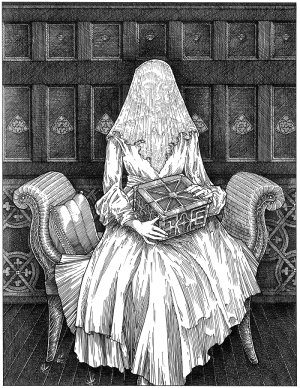
    Take a runty warrior and a slow-witted wizard who have been contracted by a veiled bride willing to pay diamonds to anyone who would fetch an oh so precious box from the castle of a dead wizard. A castle from which no adventurers have returned. Well, except for Thogar the Mighty. Of course, he’s now Thogar the One-Armed Madman. But let’s not quibble.
    At first blush you might think, whopee, another fantasy quest. But this isn’t another quest. This is an Eric James Stone quest, and it’s full of surprises.

    I was fortunate enough to hear Stone read his story at CONduit this May. He takes his listener on a ride full of humor and adventure. Then, if you’re like me, he will make your heart lurch. I loved this story down to the last line which is pure poetry.

    You can find it in issue 13 of Orson Card’s Intergalactic Medicine Show.

    Share
  • Teacher power, crawdad fun, and lemon bars

    Teacher Power

    When we find great teachers, we prize them not only because what we learn improves our lives but also because good learning can be one of the most exhilarating things we experience. Unfortunately, a lot of teaching stinks. It’s boring, misguided, useless.

    I’ve made a study of teaching. I’ve had to. For almost 20 years I’ve taught and designed courses in the private sector. And for many of those years, my work has been in a revenue-generating department. That means that my classes had better be effective and interesting, otherwise nobody signs up, revenue falls, and a lot of folks will stand around and wonder if it might not be better to just replace me with a potted plant.

    I kind of like having a job. And so I’ve tried my best to find the most effective methods for instruction. In the last few decades, education researchers have put many teaching techniques and principles to the test. We know better now than ever before how to structure learning that is effective and interesting. And I have yet to find a better explanation of the proven techniques and principles than Ruth Colvin Clark’s Building Expertise: Cognitive Methods for Training and Performance Improvement, 3rd Edition. 

    Don’t let the “training” part fool you. We often associate “training” with learning procedures and simple tasks, e.g. the State pays for “sex education” in our schools, not “sex training.” But Clark isn’t using the term that way. Clark’s “training” includes all types of learning.

    Two things separate Clark from so many others who would offer advice on teaching. First, she bases everything on tested principles and techniques. I’m not talking about tested as in some teacher somewhere tried it and was impressed. I’m talking about scientifically valid testing that controls for variables and shows causation. The methods she describes are practical and proven. Second, she writes clearly enough and uses enough examples so that I can read about the principle and immediately see how I can apply it in my own class.

    Among other things, you’ll learn:

    • Why working memory is key to instruction and how to overcome its limits
    • How to motivate learners
    • How to structure learning
    • When to use lecture and when to put learners into action
    • When taking notes can actually be counterproductive

    You’ll even learn why assigning lots of practice is NOT always the best way to learn. In fact, sometimes your child will learn more if you do half of their homework questions for them. Sound ridiculous? It’s not. It’s science.

    You’ll find that there is no yellow brick road in teaching. Instead, you’ll see that the effectiveness of any method depends on whether it’s suited to the specific situation. And Clark will explain what the key factors in any situation are so you know which methods to apply and the trade-offs you’ll make when you do.

    If you’re a teacher in any setting–family, job, church, school, or recreation–or if you’re trying to teach yourself, this book (specifically the 3rd edition) will be a goldmine. I can’t recommend it highly enough.

    Crawdads & the Bear River Greenway in Evanston

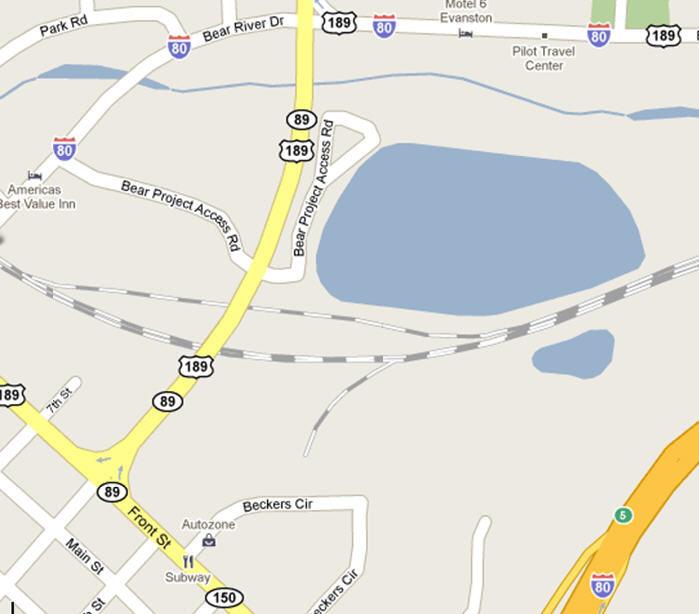
    Here’s a recipe for a whole lot of family or date fun. And it costs almost nothing. Drive to Evanston, Wyoming. Make sure you bring a bucket. Pick up a few pieces of fried chicken at Wal-Mart then picnic at the Bear River Pavilion park. It’s the one with the small lake west of Wal-Mart and east of the overpass on 89. Keep your chicken bones.

    When you finish eating, attach a length of about four feet of string or yarn to each chicken bone. Weight the bone down with some rocks or washers. You want it to sink deep. Tie a loop for your finger in the end of the string. Then go out to the pier or the cement box on the northwest side of the small lake and drop your bone in.

    Wait.

    Slowing bring your chicken bone up. You’ll find a crawdad clinging to it, thinking he’s gone to free lunch heaven. Use a net to snag the crawdad. A simple fish aquarium net will do. You can get them at Wal-Mart for a few bucks. Plop crawdad into the bucket. Ooh and aah appropriately. Make sure he’s got some water to swim around in.

    Drop your line in again and repeat until you and the kids or dates are bored. We had a bucketful in about twenty minutes. You might want to pick a few of the crustaceans up. Just grab them on the sides just behind the spot where the arms of their big pincers join the body. Wave the crawdad at a selected victim—wife, daughter, girlfriend–for special effects.

    When you’re done, dump the critters back into the water. But don’t go home yet. Take a stroll along the greenway that follows the river and enjoy the beautiful sights. If you walk east from the park, you might be able to be at the right spot at the right time to see a train up close as it thunders by.

    We just did this with family from Colorado and California and had a great time. Who would have thought Evanston had this gem?

    Crocker’s Luscious Lemon Bars

    I luv lemon in desserts. I especially love lemon pies, but they take too long to make. Plus you’ve got the meringue to whip up, and half the people hate that stuff anyway. I’ve found lemon bars taste just as good, probably better, and are far easier. Here’s a recipe I just tried and loved. It’s from our Betty Crocker cookbook. Please remember to include the sugar. My sister, bless her heart, attempted it without, and she can verify that, surprise surprise, it just doesn’t taste quite as good.

    STEP 1: Preheat oven to 350 degrees.

    STEP 2: Make pastry crust.

    1.   Combine: 2 C flour, ½ C powdered sugar, 2 T cornstarch, and ¼ t salt

    2.   Use pastry blender and cut in ¾ C butter until it mixture resembles coarse crumbs

    3.   Press mixture into bottom of greased 13x9x2 inch pan

    4.   Bake for 18-20 minutes or until edges are golden

    STEP 3: While crust is cooking, make filling by stirring together: 4 slightly beaten eggs, 1.5 C granulated sugar, 3 T flour, 1 t lemon peel (optional),  ¾ C lemon juice, ¼ C half-and-half (you can substitute with light cream or milk if needed)

    STEP 4: When crust finishes, pour filling over hot crust.

    STEP 5: Put it all back into oven and bake for 15-20 minutes or until center is set, i.e. it doesn’t jiggle and slosh.

    STEP 6: Cool on a wire rack for 20 minutes.

    STEP 7: Cut into bars, but DO NOT EAT IT YET! The lemon bars will taste 500% better if you totally chill them in fridge (the chill is the secret, folks). So put that pan in the fridge and wait! It will take a few hours.

    STEP 8: When TOTALLY chilled, take out of fridge, sift some powdered sugar over the top, and serve.

    Try to refrain from eating half of the pan.

    Share
  • |

    “The Fringe Benefits of Failure, and the Importance of Imagination” by J.K. Rowling

    This is J. K. Rowling’s 2008 Harvard commencement speech, “The Fringe Benefits of Failure, and the Importance of Imagination.” It’s one of the best speeches I’ve ever heard. Watch and then watch again. Read the full text here.

    Two quotes that in no way can do justice to the whole thing.

    And so rock bottom became the solid foundation on which I rebuilt my life.

    You might never fail on the scale I did, but some failure in life is inevitable. It is impossible to live without failing at something, unless you live so cautiously that you might as well not have lived at all – in which case, you fail by default.

    . . . 

    Though I personally will defend the value of bedtime stories to my last gasp, I have learned to value imagination in a much broader sense. Imagination is not only the uniquely human capacity to envision that which is not, and therefore the fount of all invention and innovation. In its arguably most transformative and revelatory capacity, it is the power that enables us to empathise with humans whose experiences we have never shared.

    One of the greatest formative experiences of my life preceded Harry Potter, though it informed much of what I subsequently wrote in those books.

    Share
  • Good Stuff! Some Calm on the Climate

    Is the sky falling?

    When we politicize science it sure seems that way.

    For example, a while back I reviewed The Big Fat Surprise by Nina Teicholz. What she found in her research about fat and sugar was that we followed the exact wrong diet path over the last 40 years by (1) rushing to judgment on the science in a field that was tricky and (2) politicizing it. This, in turn, affected the science. And not in a good way. Here’s a quote from the book.

    “Once ideas about fat and cholesterol became adopted by official institutions, even prominent experts in the field found it nearly impossible to challenge them. One of the twentieth century’s most revered nutrition scientists, the organic chemist David Krivtchesky, discovered this thirty years ago when on a panel of the National Academy of Sciences, he suggested loosening the restriction on dietary fat. “We were jumped on!” he told me. “People would spit on us!…they were so angry that we were going against the suggestions of the American Heart Association and the National Institutes of Health”

    “This kind of reaction met all experts who criticized the prevailing view on dietary fat, effectively silencing any opposition. Researchers who persisted in their challenges found themselves cut off from grants, unable to rise in their professional societies, without invitations to serve on expert panels, and at a loss to find scientific journals that would publish their papers. As a result, for many years the public has been presented with the appearance of a uniform scientific consensus on the subject of fat, especially saturated fat, but this outward unanimity was only made possible because opposing views were pushed aside.”

    For the rest of us, the result has been the highest obesity and diabetes rates we’ve ever seen. And it seems to me that we’ve been doing this same thing with climate science.

    Instead of vigorous and spirited debate and research, we’re rushing to judgment and politicizing it. The media, non-climate scientists, activists, politicians, and others have turned it into a religious eco frenzy. And so we end up with people like Bill Nye the science guy (who was a mechanical engineer and then TV host for a children’s science program, not a climate scientist) suggesting that “climate deniers” go to prison.

    Prison?

    I think Bill had a bad dream about Nazi Germany, socialist Russia, or ISIS.

    We all want clean air and water. We all want awesome rivers and lakes. We all want good science. Is it possible to remove the politics and frenzy so we don’t go off into the weeds again? I don’t know. But I did find these short videos helpful. If you’re interested in the climate, I think you’ll enjoy them.

    In the first one, Richard Lindzen, an MIT atmospheric physicist, addresses the politicization.

    In the one, Will Happer, emeritus professor of physics at Princeton University,  addresses whether we can actually accurately predict the climate.

    This one by Patrick Moore, an ecologist and one of the founders of Greenpeace who subsequently left the organization because of its anti-science activism, explains why CO2 is actually awesome.

    In this one Moore gives more details and argues that maybe we need more CO2.

    In this one, Bjorn Lomborg argues against climate alarmism. Of course, Lomborg isn’t a climate scientist. However, if his facts are correct, then he asks an important question.

    The other thing to ask is so what? So let’s say the seas rise a bit and it gets a bit warmer. We might lose some beach front properties over a number of years. That’s not new. It might accelerate and reach farther inland. Okay. But nobody is going to die. They’ll just rebuilt somewhere else.

    So let’s avoid prison and climate pogroms and disastrous dashes off into public policy like we did with fat and sugar. Let’s simply support our scientists in doing what they do best. Let’s promote a vigorous search for more insight.

    Notes

    Share
  • The Last Apprentice, Path Finder

    The Last Apprentice

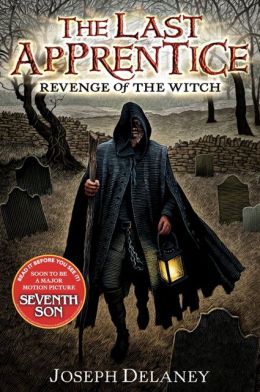
    Revenge of the Witch by Joseph DelaneyMy wife is always telling me I need to write a young adult or middle grade adventure series. One that’s directed at boys.

    Not because we have something against girls. We have four daughters, and my wife is adamantly pro-woman. But she finds very few books for her sixth-, seventh-, and eighth- grade male readers. I haven’t done a count, but I’m pretty sure that most YA is targeted at females. And this isn’t just me. I remember visiting a Barnes & Noble in Arizona with my voracious-reader nieces a few years ago and riding the escalator to the YA section. They told me that they called it the “girl-book section” because they figured that basically 90% of it was indeed for girls.

    Anyway, I think writing such an adventure would be a blast. I can already think of a number of near future or fantasy settings that would rock. But the time constraints I have right now just won’t allow me to start another series. Nevertheless, we sat down the other day and listed out all of the authors and books we knew that had a more male focus.

    For about the twentieth time she told me about Joseph Delaney’s The Last Apprentice series. It’s about a boy who apprenticed to the county Spook who is someone that takes care of witches, ghasts, ghosts, etc.  Her students love the stories. She loves them. She has bought the first ten volumes for her classroom. Why the heck wasn’t I reading them?

    Well, for starters, I just don’t like books about witches. And the first book in the series is called Revenge of the Witch. I don’t know what it is. Witches aren’t as bad a zombies–I am SO bored with zombies; I just don’t get the appeal. But even if they’re better than creatures that make no sense at all to me, I just don’t like spooky horror all that much. I loved to be scared, startled, and filled with dread. But not with witches.

    Witches? The gals with pointy hats?

    No.

    But this was, as I said, like the twentieth time she’d brought it up. We were driving over to Logan (that’s the big city for us), and stopped at the library, and we went over to the YA section. Unfortunately, they didn’t have volume one. But I did see many other volumes on the shelf and figured I needed to see what the competition was doing. So I perused. A few night later we went to her classroom, and there was volume one. The one about the witch.

    I sighed and opened it and began to read. And when I finished chapter one, I realized I kind of liked it. It was like the old Life cereal commercials—hey, Mikey!—and I wanted to read more. And so I took it home, read the whole book, and was delighted with the story. I liked it so much I promptly borrowed volume two, Curse of the Bane, from my wife’s classroom and read it as well. And I liked that one so much I checked out the third.

    The story is about Thomas Ward, the aforementioned apprentice. In book one, he is forced to face down some witches. But it’s Alice, the girl with pointy shoes, who made the story for me. Adding her as a character transformed it from a run-of-the-mill booger man story, into something special. No, I’m not going to give you a peek at the plot. Just know that this is the book where Thomas starts his apprentice, has to deal with that new life (and I thought Delaney captured that so well), and makes some apprentice mistakes that he then has to fix.

    In book two, we get to meet Alice and Thomas again, but this time they have to face down a different creature. And again, while the adventure is all cool, it’s the interactions with Alice that put it over the top.

    Having praised the books, I will say that I think Delaney has something against priests and religion in general because he paints it all with a negative broad brush. It’s too bad. Not only is such a view inaccurate, but showing the good and bad could add so many delicious dimensions to the tale. Maybe we’ll see that in later books. But even if we don’t, book two was still a great read.

    I’m looking forward to book three. If you’re in the mood to try something new, something about a young man and young girl that doesn’t revolve around romantic smoldering, something that a guy would like to read, let me recommend you join me in reading the volumes of The Last Apprentice.

    Pathfinder

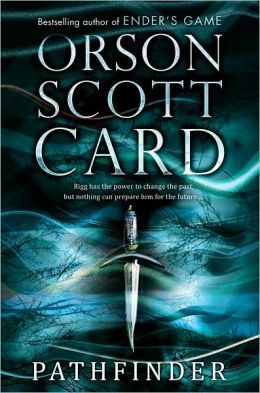
    Pathfinder by Orson Scott CardI was once in a discussion about religion with a friend who happens to be an atheist and fellow science fiction and fantasy writer. He’s a great guy. The blog posts he wrote about the passing of the woman he loved who was lost to cancer were poignant and wonderful–full of beauty. I read them and wanted to be a better man. Still, he and I disagree about God.

    I remember telling him that science fiction is the one genre that makes God more plausible than any other. At least, it makes my view of God more plausible.  Now, I do not want to talk religion in this essay. But it’s just hard for science fiction to leave the idea of creation and Adam and Eve alone. Witness the many stories over the years about these very things.

    Heck, even the recent movie Oblivion has references—are not Jack and Victoria much like Adam and Eve? Just think about it. Their paradise together as a team, the knowledge, the fall. The echoes are simply marvelous.

    Well, I just read another science fiction tale that provided a wonderful opportunity to think about these things. It’s Orson Scott Card’s novel Pathfinder. Now, the story isn’t about God. It’s not a biblical allegory. It’s not dressed-up doctrine. It’s a tale about a boy named Rigg with special abilities on a quest to find his real family and who he is. Along the way we meet some interesting people, especially one character named Loaf who leavened the whole tale. So there’s an interesting adventure and speculations about faster-than-light travel. But one of the chief delights for me was the questions and ideas this story raised in my mind about the creation of our own world—“Garden,” the name of the world, just begged for it.

    For example, a long-time staple of science fiction is the idea of terraforming—changing face of the flora, fauna, atmosphere, and climate of the planet to be hospitable to your species. If you believe in a God that is more a being of advanced technology than one of unknowable fantasy, doesn’t that present a new and interesting way of viewing the creation story? It does for me, and Pathfinder sparked ideas about this.

    The book also led me to think about life. First, Card has these characters called “Expendables.” They’re robots, but not really. They’re artificial intelligence. But not really. The way Card presents the expendables, you don’t think of silicon and steel and gears. You think of biology.

    You think of mosquitoes.

    You think about the fact that if we humans use intelligent machines, surely God must use intelligent machinery. So what kind of intelligent machinery does God employ? (Dude, that idea is just pregnant with stories!)

    Are viruses and bacteria machines? Are mosquitoes and beetles (please, let there be no mosquitoes in heaven)?

    The book prompts me to wonder. It prompts me to look at the life about me on our wonderful world with new eyes. It prompts me to think differently about some of my core definitions. In fact, there are some exchanges between a character and an expendable where they talk about the difference between humans and expendables and the definition of what it means to be human, especially given evolution.

    This is a book about an adventure, but also a book about ideas, which is as it should be. Science fiction is the one genre, more than any other, that marries character and plot with exploration of ideas. If you’re looking for an interesting tale that will make you think about our world differently, give Pathfinder a try.

    Share