Take a runty warrior and a slow-witted wizard who have been contracted by a veiled bride willing to pay diamonds to anyone who would fetch an oh so precious box from the castle of a dead wizard. A castle from which no adventurers have returned. Well, except for Thogar the Mighty. Of course, he’s now Thogar the One-Armed Madman. But let’s not quibble.
At first blush you might think, whopee, another fantasy quest. But this isn’t another quest. This is an Eric James Stone quest, and it’s full of surprises.
I was fortunate enough to hear Stone read his story at CONduit this May. He takes his listener on a ride full of humor and adventure. Then, if you’re like me, he will make your heart lurch. I loved this story down to the last line which is pure poetry.
I’ve been trying to increase my intake of vegetables and fruits because you are what you eat, and I think I’d like to look like a broccoli—long, sturdy, and with a lot of bushiness on top. So we’ve enjoyed our weekly box of fruits and veggies from the Bountiful Baskets co-op that we pick up in Garden City each Saturday.
And we’ve enjoyed the surprises. Because someone else orders the produce, we never know quite what we’re going to get. Of course, this also means we sometimes get things we don’t normally seek out. Take cauliflower, for instance. We received a number of heads three or four weeks in a row back in October.
Cauliflower?
Who eats cauliflower? You ever hear anyone say: “Cauliflower’s on—let’s make a run to Brigham City to get some,” or “LaVern, I believe I’m going to knock back another floret,” or “It’s a party! You bring the chips and soda, I’ll bring the cauliflower?”
No. We don’t hear those things because cauliflower is just weird. It’s the stuff that nobody eats on the vegetable tray. It looks like some growth spore from the planet Xenon. In fact, I want to know who started the rumor that aliens had big eyes and spindly limbs. That’s all propaganda. The aliens are already living among us, and cauliflower is their freaky pupal metamorphosis growth stage!
Or, at least, that’s what I thought. Then I ate a serving of creamy mashed cauliflower at Ruby Tuesday’s and gained a testimony of both Ruby Tuesday’s and the weird white cousin of cabbage.
So when we received our surprise veggie, did I despair or use it for target practice on the idiot orange tom cat that comes around our house? No. I went to search for that Ruby Tuesday’s recipe. And through the miracle of the internets, I found it. Or something close enough for government work.
Here it is. Enjoy.
CREAMY MASHED CAULIFLOWER
1 head cauliflower
¾ C water
1 T corn starch
1/3 C heavy cream
1 t granulated sugar
¾ t salt
Pepper to taste
1/8 t garlic powder
1/8 t onion powder
Divide the head of cauliflower into florets that are all roughly the same size. Steam or microwave until cauliflower is tender (we pressure cook it). Drain and toss it into a bowl of ice water to bring the cooking process to a screeching halt.
Put florets into a food processor along with ½ C water. Puree on high speed until smooth, but with some small bits for texture. Or you can simply mash it like you do potatoes.
Pour all the puree into a medium sauce pan. Dissolve the corn starch in the remaining ¼ cup of water and add to the puree.
Add the cream, salt, pepper, garlic powder, and onion powder to the mixture and stir. Set the saucepan over medium heat and cook, stirring often, for 5-10 minutes, or until thick.
You can experiment and switch the water for milk if you’d like, or if you don’t have cream. Leftovers are delicious. Of course, if I end up lumpy and round, you know it’s the cauliflower’s fault, or the alien’s that has set up shop in my chest cavity, whichever’s the truth.
“Cauliflower is low in fat, high in dietary fiber, folate, water and vitamin C, possessing a very high nutritional density. As a member of the brassica family, cauliflower shares with broccoli and cabbage several phytochemicals which are beneficial to human health, including sulforaphane, an anti-cancer compound released when cauliflower is chopped or chewed. Boiling reduces the levels of anti-cancer compounds, with losses of 20–30% after five minutes, 40–50% after ten minutes, and 75% after thirty minutes. However, other preparation methods such as steaming, microwaving, and stir frying had no significant effect on the compounds.
Along with other brassica vegetables, cauliflower is a source of indole-3-carbinol, a chemical which boosts DNA repair in cells and appears to block the growth of cancer cells. The compound also appears to work as an anti-estrogen, appearing to slow or prevent the growth of tumors of the breast and prostate. Cauliflower also contains other glucosinolates besides sulfurophane, substances which may improve the liver’s ability to detoxify carcinogenic substances. A high intake of cauliflower has been found to reduce the risk of aggressive prostate cancer. Cauliflower is also a good source of carotenoids.”
I guess the short version of all that is blah blah blah science says it’s good.
***
Nellie and I have been enjoying The Mentalist for two years now. It’s a CBS crime thriller mystery series about a “mentalist,” a guy named Patrick Jane, played wonderfully by Simon Baker, who used to be a professional mind-reader and psychic, and a very good one at that, but gave it up and came clean. All psychics, he says in the pilot episode, are either fakes or deluded.
But he was so good at it and made so much money–why would he give it up?
Because a serial killer named Red John murdered his wife and daughter. So Jane has dedicated his life to hunting down and killing the murderer. To do that, he becomes a consultant to the California Bureau of Investigation (CBI) and works with a team of investigators.
Some of the episodes are about the hunt for Red John. Many more are about other cases the team has to solve.
Patrick Jane is the main attraction of the series. His outrageous behavior, acute observation skills, and keen wit all fascinate and delight. As the series progresses, the other characters take on their own interesting personalities as well. Agent Cho, for example, provides many moments of laugh-out-loud deadpan humor.
The series is into its third season, but with the miracle of Netflix you can start at the beginning and watch them all commercial free at your own leisure.
An avid reader friend of mine began reading through the books in a list called “100 books you must read before you die.”
She got to Jack Kerouac’s On The Road and went to Facebook and posted the following: “I don’t get the appeal. It’s about a group of boys/men who are irresponsible, drunks, whoring around taking advantage of others and being enabled by their women. Why is this a classic and why should I have wasted my time on it? Can some of my literary friends explain? I hated a brave new world and the handmaid’s tale too.”
Is the book a classic?
Should she read it before she dies?
Is it really that important?
Let me share an edited version of my response and then provide my list of 30 books you should read before you die.
*
Annette, the unfortunate truth is that these lists of “classics” are a sham because there is no objective criteria for determining literary excellence.
Or maybe I should say that measuring quality in the arts isn’t like measuring the unambiguous, objective score of a baseball game. After books exhibit a certain level of proficiency, it becomes increasingly difficult to distinguish the quality of one book from another, especially because much of this depends on a reader’s interests and subjective experience of the story.
When it becomes hard to rank performances, people rely on other measures. One of the most powerful is social networks.
So if two readers find two different books that blow them away, one of the books might get all the attention because the one book gets picked up by a news service (The New York Times) or a platform (the Oprah Book Club effect) or some other social network of influence. A lot of the so-called literary classics only appear on various lists because they tapped into the academic network, which kept them alive far longer than they would have lasted otherwise.
On The Road is simply a book that made a stir among some circles in the 1950s. That’s it.
Was it more important or of higher quality than Exodus? The Chronicles of Narnia? Lord of the Rings? A Town Like Alice? All published in the 1950s as well.
It depends.
If you’re wanting to understand the 1950s beat culture, it would be an important book.
But if you’re wanting to understand fantasy writing of the time, it wouldn’t.
If you’re wanting to read a book that’s had a huge impact on popular culture, well, LOTR beats On The Road like a dog.
Some people have the feeling that the so-called classics have some inherent medicinal value because someone put them on a list and called them classics.
Nope. They’re just stories. Some of which can shed light on the issues and interests of a part of the culture in a given period. But if you’re not interested in that specific sub-culture, who cares?
And if you’re reading to be entertained, moved, uplifted, or educated—which ones do that best for Annette is for you to decide.
So all that to say I wouldn’t devalue your reaction to the book
*
I’m now going to give you my list.
But it’s not going to be a list of titles. Nor will it focus on a book’s impact on some sub-culture of a given period.
It’s going to be a real list. One that focuses on what so many of us go to stories for.
The one that makes you weep.
The one that makes you giggle and snort.
The one that reminds you of what it’s like to fall in love.
The one that gives you hope.
The one that you begin to read more and more slowly because you don’t want it to end.
The one that scares the soup out of you.
The one that you can’t put down, even though you need to wake up early in the morning.
The one that makes you wish you lived there.
The one that’s so good that when you close it, you immediately start to read it a second time.
The one that gives you and your child hours of pleasure together.
The one that gives you a sacred, spiritual experience.
The one that makes you reread some of the lines because the turns of phrase are just so delicious.
The one that gives you courage.
The one that takes you on an awesome adventure.
The one that makes you want to be a better person.
The one that bores you to tears (just so know you how good the others are).
The one that introduces you to a different culture that delights you.
The one that makes you think.
The one that lingers with you for days.
The one that gives you lovely insights.
The one that inspires you to love your spouse more.
The one that introduces you to the sorts of people you normally don’t like and makes you actually like them.
The one that delights you with its characters.
The one that whisks you away to a different historical period.
The one that inspires you to give your children a hug.
The one that gets your adrenaline pumping.
The one that sparks all sorts of ideas in your head.
The one that makes you wonder and start imagining what it would be like to be there.
The one that blows your freaking mind.
The one that makes you stand up in your living room and cheer.
We could do more than 30, couldn’t we?
Like the one that makes you think people from a different time period are just like us. And the one that makes you think people from that same period are completely alien.
But I think we’ll stop. That there above is a list.
Those are 30 books I think everyone will want to read before they die.
We’re going to start with the shovel because it’s been dumping snow this year, and I know there are some folks out there who want a quicker way to clear the snow from their driveways and walks. And, boy, do I have something for them.
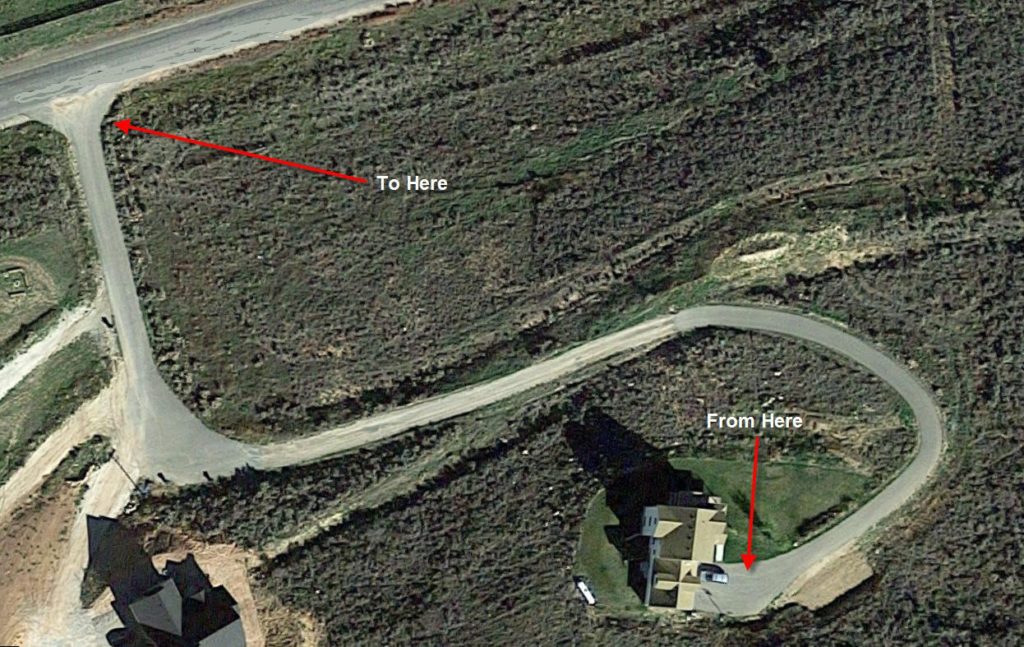
I think it’s safe to say that the Brown family clears more snow by hand than the average American family. We have a driveway and street that together are a little over a tenth of a mile long. Here’s a picture.
We clear that lovely stretch of road by hand with shovels. (Yes, we are crazy; more on that below.) Most of the time we have it cleared long before any city plow shows up. But we love our city plows because they can do the heavy work at the edges on the bottom two-thirds. And they do all the work on that bottom part when it gets really heavy and deep. We love our neighbors with tractors who’ve come to our rescue as well.
Still, we do most of the clearing.
We began our mad shoveling craze for one simple reason: we couldn’t get to our house when it snowed. And it was a pain in the neck to hike that tenth of a mile.
Part of the problem is that we live on a hill, and there are a couple of steep stretches. Another part of the problem was that we had not availed ourselves of this higher technology called snow tires. We thought all-weather tires would do just as fine.
Wrong. Big wrong. They don’t even come close.
With all-weathers, on a hill, you have to keep the road clear. As in to the blacktop. Because once you build up even a small layer of snow, you’ll get slick patches, and then the all-weathers do nothing but spin.
But we didn’t discover that until a few years into it. And by that time, we’d learned that shoveling such a long drive was not only good exercise, but it also was a great way to teach our four girls how to work hard and not fear projects that seemed daunting.
I know some of you are thinking, dude, why not purchase a snow blower, or a pickup or four-wheeler with a plow?
Because snow blowers at the time, much less four wheelers and pickups, were out of our budget. Because I’d much rather spend the money on a family trip somewhere fun. Because why spend the money when you can line up as a family and create your own Brown Family Snow Blade and give your kids stories to tell their kids about living in the Gulag?
Anyway, it’s what we do. Fast forward now to this year. Three of our daughters have grown up and gone off to college. Nellie, my youngest daughter, and I can usually still get it done. But this year’s record snows kicked our butts. Royally.
Now, we’ve tried all sorts of shovels. I can guarantee, if it was at a store for sale, we’ve tried it. We’ve used brooms. We’ve used all sorts of configurations of girl, woman, and dad power. After all that experimentation, we found a standard push shovel to be the best for general snow and a square garden shovel to be the ticket for ice. But this year our trusty tools weren’t cutting it.
So, after one long day on the driveway, I went on line looking for a better shovel. And after looking at quite several contraptions, I found The Snowcaster.
You can see it in action below. It’s basically a plow. One made for a human to push.
When I saw it, I thought this thing had to be better than pushing shovels. So I ordered it and assembled it. The curved blade of incredibly hard plastic rises 9 inches above the ground and is three feet long. Its nifty design allows you to simply flip it to change the direction of the blade.
After using it these last six weeks on multiple snows of everything from ten inches of powder to three inches of watery slush, I will simply say that it’s amazing. It’s so good, I ordered a second unit.
The Snowcaster does have a limit—you’re not going to plow three-feet of snow with it. You’re not going to plow a build-up of two feet. If you’ve got a lot of wet snow over a large area, you will break a sweat. And sometimes you’ll still need a shovel to toss snow at the edges. But for moving large quantities of snow out of the way on asphalt or concrete, it’s the best thing I’ve found to date.
If you are like me and don’t want to purchase a machine just yet, have snow to move, and want to dramatically reduce the time it takes to move it while providing some fun for the kids, I think you’ll love The Snowcaster. I ordered mine directly from the company here: https://thesnowcaster.com/. The model I chose was the 70SNC. I wouldn’t suggest the long model unless you rarely get snows above three inches. I say this because on some days with lots of snow the three-footer was about all I could push.
Okay, onto the movies. I have two excellent ones to recommend. Both of which are based on true-life events.
The first is Denial, a British-American historical drama, that tells the story of how Deborah Lipstadt, a holocaust scholar, was taken to court for libel in Britain by David Irving, a man who claims the Holocaust never happened. In America, you’re always innocent until proven guilty. However, in Britain, with libel, the burden of proof is upon the defendant. So how do you prove you weren’t slandering someone? The movie was thrilling and fascinating. And gave you something to think about afterwards. If you enjoyed Woman in Gold, you’ll enjoy this.
The next is Hidden Figures, an American biographical drama, that tells the story of female African-American mathematicians at NASA. These women were employed as computers—that was their official job title. Of course, this was before electrical computers and calculators, and what they did amazes me. The story is about the USA struggling to catch up to the Russians in the space race, and how four of these women helped while dealing with deep-seated prejudice against Blacks and females. It is full of humor, poignant moments, and surprises. It’s one of the best films I’ve seen these last few years. I don’t know what to compare it to. All I know is that you will laugh, be amazed, become outraged, and cheer.
Lt. General Michael T. Flynn. Flynn is a former director of the Defense Intelligence Agency and Assistant Director of National Intelligence and is now our National Security Advisor. If you want to understand how he is likely to advise the president about our war against radical Islam, let me recommend his book The Field of Fight. In the book, Flynn describes his background as an intelligence officer and how critical good intelligence is in this fight. He then describes his take on who the radical Islamist enemy is and how he thinks we can win the war against them. He shares several surprising insights that only someone with his experience can and reveals as well how good and smart leaders can disagree about strategy. One of his main points is that we will never win the war by killing bodies—this is an ideological war, much like the war we fought against communism. For those wanting to get past news blurbs and hear the man speak for himself at length, I think you’ll find this book interesting.
And because, Dear Reader, you read all the way to the end, I will give you two more movie recommendations. Moana is a great, fun, family film. La La Land is an enjoyable musical romance that will probably break your heart. It did mine.
And now the other side of Christmas. The real gift. I love this short clip. Of course, I’m a believer, but even if you’re not, I think we all can agree that it’s good to take time to contemplate this type of giving.
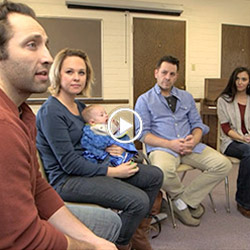
Part of my research for Bad Penny led me to the Utah state prison. I was able to attend a session with five of the convicts. Let me tell you: walking through those high fences and electric doors and hearing them close behind you was something.
The five men all had interesting and unfortunate tales to tell. But they were all hopeful. I was there with a couple of kids in a troubled youth program and their leader. And of course there were a couple of guards.
We got to ask questions and chat. It was an upbeat session despite the topic. One thing I asked about was the food, and one fellow said that the worst thing was this “crack wheat” they served for breakfast.
“Cracked wheat?” I asked with a smile. “That’s good old Mormon food.”
He said, “It’s awful.” We laughed. There were many times we laughed.
And there were a lot of things asked and shared. One of the key things that stood out to me was that all of them were there because of drug addictions. And as they shared their goals of staying clean, they revealed that this wasn’t their first time inside. For one it was his third, another his fifth, another his ninth.
And it was with those comments I realized just what a hold addiction had on these guys.
Fortunately, most folks with addictions don’t have to go to prison. But a lot fail to break out of them and miss many opportunities for joy, sometimes wrecking the ones they have. The 12-step program has one of the best success rates of any program.
My church has meetings and programs all over the country. They’re free and open to anyone. If you or someone you know is struggling with an addiction to alcohol, drugs, tobacco, porn, or eating disorders, you might want to go here to see what to expect from a 12-step meeting and how to participate.
Even with all the vicissitues, life is meant to be enjoyed.
Which animals do you think have a better life: family dogs or cattle on ranches?
Think about it. Cattle get branded and tagged and slaughtered. Some live only a year or two. Meanwhile, Fido gets the run of the house, a spot in front of the couch, and chew toys.
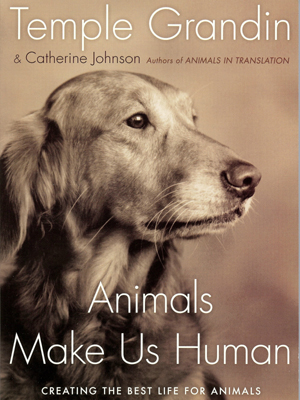
You might be surprised to know that many cattle have it better than pampered family pets. That’s the claim Temple Grandin makes in her fascinating and practical book Animals Make Us Human: Creating the Best Life for Animals.
Grandin is not a beef industry lobbyist working smoke and mirrors PR to make ranchers look good. She’s a practical, down-to-earth, get-your-hands-dirty animal scientist who has revolutionized the beef industry and had an impact on many others. She isn’t a vegetarian, and has no intention to become one. But she does love animals. And her insight and research has made the lives of millions of animals better.
When people ask her how she can work in the beef industry instead of being an activist against it, she says that all things die. It’s the cycle of life. She has no problem eating animals. In fact, she believes that our relationship with the animals we use for food is symbiotic–mutually beneficial. But she also believes that if we’re going to raise them, or keep them as pets, we need to give these animals a quality life.
So what do animals need for a quality life? Should we give our cattle rubdowns? Let our dogs roam through city streets? What do our cats and pigs and horses need? Is it freedom?
Her answer, surprisingly, is that focusing on freedom really isn’t a good guide for trying to give animals a good life. Not because freedom is a bad thing, but because it’s too confusing. Instead, she believes that we should be basing animal welfare on the core, or what she calls the “blue ribbon,” emotion systems in the brain. The key systems are SEEKING, RAGE, FEAR, PANIC, and PLAY.
The rule is simple: avoid stimulating the negative emotions; do stimulate the positive ones. In the book she shares what she knows about how to do that for dogs, cats, horses, cows, pigs, chickens and other poultry, wildlife, and animals in zoos.
Grandin is always fascinating, and with her trademark style of stories and practical insights, she shares what the research and her more than 30 years of practical hands-on experience working with animals has taught her. You’ll learn why your chickens need a place to hide, even if you’ve fenced out every fox and skunk with thirty feet of concrete; what makes pigs happy; why clicker training is so successful with horses; why you might want to consider the color of your cat’s fur; why leaving your dog locked in the house with food and plenty of toys may actually be very stressing. You’ll even learn to look at zoo habitats differently. Each chapter focuses on a different animal and how to avoid the negative and stimulate the positive blue ribbon emotions. This is not touchy-feely fluff. It’s not the ranting and raging of someone who thinks the planet would be better of without humans. It’s the insights of someone who is rigorously scientific, down-to-earth practical, and passionate about animals.
In her own words: “Everyone who is responsible for animals needs a set of simple, reliable guidelines for creating good mental welfare that can be applied to any animal in any situation.” Read her book to find out what she suggests these should be. If you own pets or raise animals, I think you’ll love this read. If you’d like to sample the first chapter, you can at Grandin’s website: http://www.grandin.com/
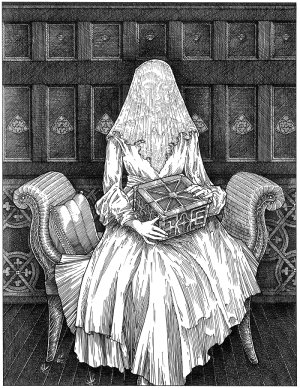 Take a runty warrior and a slow-witted wizard who have been contracted by a veiled bride willing to pay diamonds to anyone who would fetch an oh so precious box from the castle of a dead wizard. A castle from which no adventurers have returned. Well, except for Thogar the Mighty. Of course, he’s now Thogar the One-Armed Madman. But let’s not quibble.