Witchbreaker by Author James Maxey

I’m supposed to do this tag thing where one author tells about his or her latest project and then tags other authors to tell about theirs and so on and so on until we turn into some weird internet author borg and eat your brains out. 

Heck with that.

I want to simply share something cool with you instead. James Maxey (who tagged me in the borg fest) writes stories with lots of action, fun, and character that also make you think. They always start with a bang and never let up. For example, look at how GREATSHADOW, his last book, starts.

When Infidel grabbed me by the seat of my pants and charged toward the window, I didn’t protest. Partly this was due to the speed of her action, but mostly due to my inebriation from the sacramental wine we’d stolen.

If an opening like that isn’t going to make you want to read more, I don’t know what will. Especially when the wine was stolen from a lava-pygmy temple carved into the sheer cliff face of a volcano.  I’m not alone in my appreciation of Maxey’s writing. Orson Card wrote this glowing review of GREATSHADOW earlier this year.

Here is the opening to Maxey’s “To The East, A Bright Star” which was published in Asimov’s.  It has one of my favorite beginnings.

There was a shark in the kitchen. The shark wasn’t huge, maybe four feet long, gliding across the linoleum toward the refrigerator. Tony stood motionless in the knee-deep water of the dining room. The Wolfman said that the only sharks that came in this far were bull sharks, which were highly aggressive. Tony leaned forward cautiously and shut the door to the kitchen. He’d known the exact time and date of his death for most of his adult life. With only hours to go, he wasn’t about to let the shark do something ironic.  

Which brings us to the fact that Maxey has another book out called WITCHBREAKER. That’s such a cool title I wish I could off Maxey and steal it for myself. The book has, as you have seen to the right, a fabulous cover as well. About 5000% better than the horrid thing Solaris put on GREATSHADOW.

Maxey talks about what inspired WITCHBREAKER in this blog post, which I recommend you read in full. But just in case you’re a lazy son-of-a-gun like me, here’s the meat of the thing. WITCHBREAKER is about a woman named Sorrow. Says Maxey:

Her father was a judge who hung his own mother after she was accused of being a witch. Sorrow rebelled by becoming a witch herself, but her hatred isn’t directed directly at her father, it’s directed at the religious and political institutions that empowered him. So, Sorrow’s life mission is to overthrow that system. She’s one woman against the world, fighting to make it a better place even though everyone she meets keeps insisting that the world isn’t so bad. I’ve got a soft spot in my heart for characters locked into a lifelong battle against forces more powerful than they will ever be.

Blast that dang Maxey and his character genius. I’m not envious at all. No, sir. Which is why I suggest you give Maxey a go. Maybe you’ll appreciate him as much as thousands of other readers do. Read the first few pages of WITCHBREAKER here with Amazon’s look inside.

Share

Similar Posts

  • How to be a hero in your own house

    I have four daughters.

    My four daughters have long hair.

    That long hair finds its way into our drains. (Yes, despite our telling them to get it into that thing called a waste basket.)

    Said hair might flow down the pipes. But said hair does not. Life is not that easy. Instead, some evil house spirit catches the hair just as it begins its voyage and turns it from a luscious thing of beauty into a gunky demon of drain death.

    You would think that Drano could defeat this black magic. But Drano gets its butt kicked every time. Drano is in the pee-wee league against this thing. Drano is like a kitten. And gunk demons don’t listen to kittens.

    So for the last few years, we’d blast with Drano and then still have to stand up to our calves in water when we took a shower. Or wait as the sink decided it might finally slowly empty and leave soap scum, whiskers, and toothpaste on the sides for everyone’s viewing pleasure. And then we had to do the slow clean (I hate the slow clean).

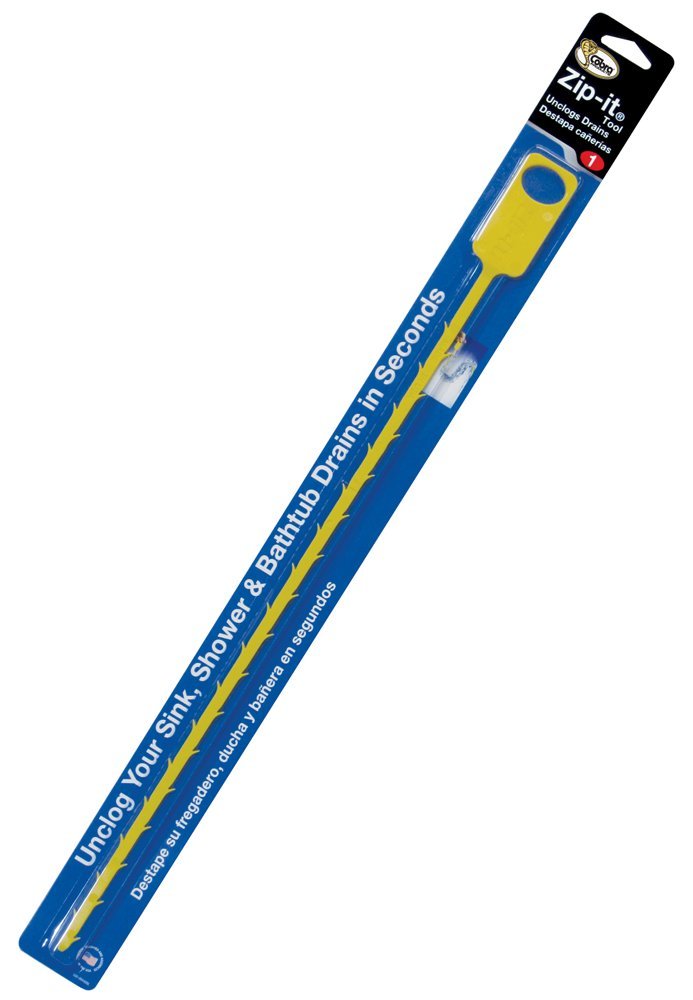
    Recently, I was strolling along in a hardware store and saw this.

    Zip-it drain cleaning tool

    Click on the picture. Get a good look. I bought ye handy yellow flex sword. And I did verily slay the monster lurking in every drain in our  house.

    I am the MAN!

    If you have drain issues, let me suggest you be the hero and buy your own sword. It’s called the Zip-It drain cleaning tool. If you’re a weird-o, in addition to being the hero, you can also use it to draw forth disgusting things to scare nieces and nephews with. Just saying.

    Share
  • Good Stuff! Woman in Gold

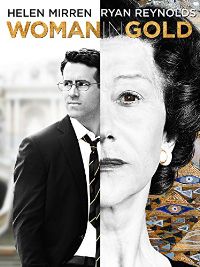
    Woman in GoldI recently watch Woman in Gold with my family, and we loved it. It has delightful characters, a suspenseful plot, and moments of both humor and deep poignancy.

    The movie is based on the true story of Maria Altmann, an elderly Jew living in Los Angeles. When she was a young woman, the Nazis took over Austria. She fled, narrowly escaping. In addition to all the horrors committed against her people and family that couldn’t get out, the Nazis stole artwork and other precious items. The problem is that after the war, many of these items were then appropriated by individuals or the countries of Europe and not returned to their original owners.

    The movie is about Maria and her young lawyer who fight the Austrian government to have a famous painting called Woman in Gold that was legally and rightfully hers returned. It’s a legal battle that went all the way to the Supreme Court of the United States in 2004. But this isn’t about someone wanting a painting. It’s about so much more.

    If you enjoyed Mr. Holmes, Saving Mr. Banks, or Bridge of Spies, I think you will love this movie. You will love the dynamic between the frank-speaking Maria and her lawyer. And you will be moved.

    Share
  • Interview with Author Leah Cypess

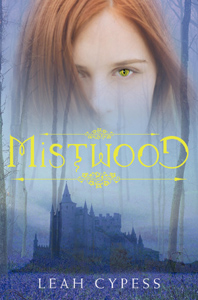
    Leah Cypess says, “After selling my first story (Temple of Stone) while in high school, I gave in to my mother’s importuning to be practical and majored in biology at Brooklyn College. I then went to Columbia Law School and practiced law for almost two years at Debevoise & Plimpton LLP, a large law firm in New York City. I kept writing and submitting in my spare time, and finally, a mere 15 years after my first short story acceptance, I sold my first novel, Mistwood, to Greenwillow Books (HarperCollins).”

    Leah lives in Brookline, Massachusetts (right outside of Boston) with her husband Aaron, a researcher and doctor at the Joslin Diabetes Center, and their two daughters. She majored in biology, minored in journalism, went to law school, worked as a lawyer, and has just started to learn about hawking and hunting. She’s published a number of short stories, which are all available for free on her website.

    I just had the opportunity to interview Leah about her writing process and books. Enjoy!

    *

    JB: MISTWOOD, published by HarperCollins in April, 2010, is your debut novel. But is it the first you’ve written?

    LC: Most definitely not. I wrote, revised, and submitted four manuscripts before Mistwood. (Technically, five; but I don’t count the first one, because it wasn’t very good, and I didn’t know what I was doing with the submissions process either. I was fifteen years old.)  In fact, after getting the offer from HarperCollins, I acquired an agent, who asked me to send him a list of my previous manuscripts and their submission histories.  The list was sixteen pages long.

    JB: Holy cow, five novels and 16 pages of submission history. That’s a lot of dedication. And faith in the face of rejection. I’m intrigued. How did the sale of this novel come about? Was it just another submission to yet another editor or did you have some connection? What was different with this book?

    LC: Both the faith and the sale were helped by the fact that I could see incremental improvements. My first novel received mostly form rejection letters, a couple of letters inviting me to submit further, and one revision request. My second received a lot of personal rejection letters, many more requests from various editors to submit future works, and one two-page revision request. The third made it to the acquisition committee at two houses. So I could tell I was getting closer, though it was still pretty dispiriting to think I might never make that final leap into publication. (After Novel #3 was turned down by both acquisition committees, even though it was being championed by senior editors in both cases, I had a couple of bad days.)

     In the end, I think what was different about Mistwood was mostly luck.

    It wasn’t my most perfect manuscript – there was a lot of revising to do after it was accepted! – but it was the one that resonated with the right editor at the right time. This was an editor who had asked me to submit future books after rejecting the query for Book #3, then requested Book #4 and written me a detailed and regretful email about why she didn’t feel it was right for her. By the time I sent her the query for Mistwood, she was obviously confident enough in my abilities to request that I email her the full manuscript, and to read it right away. After all those years, the acceptance for Mistwood came just a few months after I started submitting it.

    JB: I’m betting your persistence and work made some of that luck. Work seems to be a little bit of magic all by itself and has been used by a lot of other authors I know. Hum (grin). So let’s talk about the book. You should know you made The Top 200 YA Authors list I just published on my site. It ranks YA authors by average number of readers per book. And while the list can’t purport to be anything but a reflection of the tastes of the area’s library patrons, I think it’s probably representative of what’s going on in my region. So congrats! The book starts right off with a bang. It’s about a shape shifter. I know shape shifters have been around forever, but most fantasy these days seems to be about vampires and werewolves. Tell us a little bit about the core idea of the novel and its genesis.

    LC:  That’s awesome that I’m on the Top 200 YA Authors list – thanks for letting me know!

    I’ve been reading fantasy/science-fiction “forever” (I cut my teeth on the Edgar Rice Burroughs books my father had stored in our garage), so shapeshifters are just as familiar to me as vampires and werewolves.

    The core idea of the novel is that of an inhuman creature grappling with the fact that she seems to be turning human — while trying to figure out why, exactly, this has happened to her, and who and what she truly is. (And, of course, fending off assassins and dealing with palace intrigue.) That idea developed over the course of writing the novel – I started out with a scene of men riding into a misty forest in search of the magical creature who lived there, with no clear idea of what that creature was or why they wanted her. Then I kind of made the rest up as I went along. (This writing process is one of the reasons the novel was revised nine times before being published!)

    JB: I really liked the beginning. No wonder you felt compelled to follow the idea. And nine revisions! It sounds like you use drafts, as opposed to outlines or other tools, to help you discover your stories. Were these big revisions, almost complete rewrites?

    LC: Thanks! I’m glad you liked it

    I usually don’t rewrite scenes completely – most of my editing of already-written material consists more of snipping unnecessary parts and adding little bits and pieces. (Especially of description, which I tend to leave out entirely in the first draft.) But I do a lot of moving scenes around, deleting some scenes, and writing some new ones.

    Though I don’t use an outline when I first write, I usually create one during the revision process so I can keep track of the jigsaw-puzzle my manuscript has become.

    JB: That’s interesting. Well, I have just one more question for you. Tell us what’s coming next.

    LC: What’s next is NIGHTSPELL, a stand-alone companion novel to MISTWOOD, which will be published in May 2011. It’s about a country where an ancient spell allows murder victims to return as ghosts to seek vengeance on their killers… and if they don’t manage that, they remain ghosts forever. After a couple of hundreds of years of this, the kingdom – Ghostland – has evolved into a place where the living and the dead co-exist, albeit uneasily. My main character, Darri, is a foreigner to Ghostland; she is a barbarian princess who abhors the idea of ghosts and is only there to rescue her younger sister Callie, who was sent as a hostage four years ago. But Callie has changed in those four years, and now has secrets of her own.  In her quest to save her sister from herself, Darri will ultimately face a decision that will force her to reexamine beliefs she has never before questioned – and lead her into the heart of a conspiracy that threatens the balance of power between the living and the dead.

    JB: Oh my bleeping heck. That just gave me a case of massive author envy. I was thinking about writing a ghost story just yesterday and thought, “naw, ghosts are all played out.” Curse you, Cypess!

    Sheesh, talk about a parting shot. Well, I would ask about the next book, seeing NIGHTSPELL must be ready to go if it’s coming out in May, but I can only stand so much punishment. The good news, if I put my reader hat on, is that it looks like I get to put a tickler in my Outlook for this May. In the meantime, I going to suggest to my readers to give MISTWOOD a go. Thanks, Leah, for your time. I enjoyed the interview.

    LC: Thanks, John!

    *

    John sez: folks, I think I’m going to make interviews a regular feature. I just loved finding out more about Leah. It’s also interesting to see just how much work she’s put into this. I know that a good number of authors sell their first or second novel (see the Hines stats in the on writing section), but for a good number of others it’s later novels that sell. In either case, I think it’s clear that good old fashioned work makes up a big part of the secret sauce.

    Ah, that was fun. But, dang it, I should have asked her about her lawyer and biology background. Next time.

    LINKS

    Leah Cypess’s website

    The first three chapters of Mistwood

    Praise for Mistwood

    Codex Author Blog Tour 2011

    Share
  • |

    Diagnosing Quantum of Solace

    ***SPOILERS***

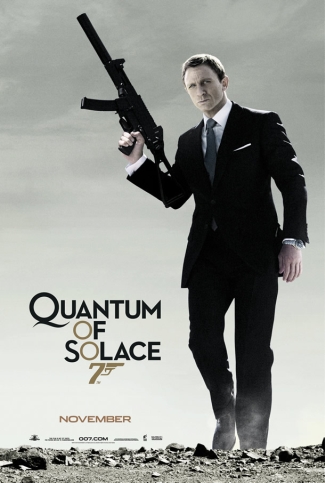
    Last night I went out with my wife and some friends to watch QUANTUM OF SOLACE. I was so excited. But when the movie ended, I was totally unsatisfied. There was no release. Nothing. It just ended.

    There was lots of great stuff in it. Love the character and style of this new bond. Loved CASINO ROYALE, but this just didn’t work for me. My diagnosis has two parts.

    MINOR ISSUE: clarity in story. The chase scenes were so choppy I couldn’t get a feel for what was going on so I could worry for Bond. All I did was get sick to my stomach. Part of the way through I told my wife I was going to write death threats to the freaking director. Who in the world thought that was a good idea? It doesn’t mimic battle etc. In battle you are HYPER alert and focused. Your world doesn’t turn into chaos.

    But it was more than the chase scenes. There were times when I did not know what was going on. Why was Bond going to his friend from movie 1, why was he watching that guy pick up a bag at the play, why was he going to the party, etc.?

    If he’d shared any of his plans, I could have gotten worried when antagonistic forces thwarted him. As it was, I was just watching him do stuff and only realizing at the end what the goal was.

    The basic principle of suspense is to let me know what they need to do and why they need to do it, then let me worry as I see the operation fall apart. Or let me know the danger and see them walking into it. But time and again they didn’t provider the viewer with the necessary information in this movie. 

    MAJOR ISSUE: ineffective story structure. I think for a film to build to a huge climax and release, the hero has to find himself in more and more desperate circumstances. His situation has to become darker and darker until we see no way out for him. By the end of act 2 his plans etc. should all be in shambles. He’s out of options.

    In this Bond I rarely felt he was in danger. Yes, there were some fight sequences which were tense, but he never ended up in worse shape afterwards. We got messages that he was being framed for murders, but I never really felt the screws tightening on him. So it never got darker and darker for him.

    His plans seemed to only be delayed, not destroyed. In Casino Royale, his car is wrecked and he’s taken captive and is going to die. He loses. In this one, nothing. Even when his plane is shot down going out to the desert, it’s just a delay. They walk to the bustop and are soon back on track.

    There might be another point about something being at stake. The water grab is a great idea, but we’re talking a 50 year plot. It’s not THAT urgent.

    A FIX?

    I think they could have done more by playing up the revenge/mystery of the last one. Yes, have the water grab, but make this personal to him. He’s searching for the answers to who was behind his lover’s death. Why not?

    Then get the villain, the US CIA, and the British hunting him down with real resources. He evaded everyone fairly easily in this one. He’s running FROM all these forces, barely one step ahead, until he gets caught by them. And it’s one of Green’s guys in the CIA or something like that who captures him. So he’s totally screwed. Then have the Black CIA officer do something to spring him. He’d probably have to die for it.

    I’m sure there are more and better options. But do something so that Bond is running for his life, FAILS, then pulls it out. Not chasing down the bad guys one by one with relative ease.

    Just one option. Thoughts?

    Share
  • The Harry Potter Book of Mormon Hello

    For those who haven’t been tracking the Broadway scene, South Park creators Trey Parker and Matt Stone launched the production of The Book of Mormon musical last year in New York. It won 9 Tony Awards, including best muscial, delighted many critics, and is something I will never see, alas. It’s simply too vulgar for this Mo. However, the show’s cast album did something that hasn’t happened in over 40 years: It hit the top ten on Billboard’s pop charts. While I couldn’t listen to all the songs (yeah, I tried but was almost struck by lightning), “Hello,” the first, is great. But it doesn’t stop there. Oh, no. Tessa Netting, a 20-year-old Broadway actress, recently had the brilliant idea to combine the characters of Harry Potter with the song. I think you’ll be delighted with both.

    “Hello” from the musical

    “Hello – Harry Potter Book of Mormon Parody” which you can get on iTunes.

    You might want to listen to an interesting All Things Considered NRP interview where Stone and Parker talk about the music.

    Share
  • Good Stuff! Wonder, Darkest Hour, Sea Wolves

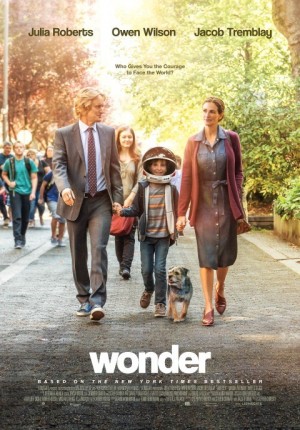
    I had seen a lot of good reviews of Wonder. My wife told me a lot of her students enjoyed the book. But I thought it was going to be a heavy topic, full of sadness and heart-wrenching drama. I’m happy to report that while Wonder does indeed have some difficult moments, it’s also full of humor. And triumph.

    It’s a story about Auggie, a boy with a rare medical deformity that has put him through multiple surgeries. His parents have homeschooled him, but now that he’s at the age where he could go to middle school, they feel it’s time for him to navigate the world. The perfect time, right?

    But it’s not just about Auggie. The film is also about Auggie’s sister, her former best friend, and Jack, Auggie’s classmate. We get to see their stories as well, and they are woven into a wonderful, poignant story.

    You’ll laugh and wince and cry and cheer. You’ll enjoy Julia Roberts and Owen Wilson, who do a wonderful job as Auggie’s parents. And you’ll enjoy the children and teens. Me, my wife, my married daughter, and my teen all loved this film. I will be watching it again. If you want a great movie to watch as a family, I think you’ll love this.

    *

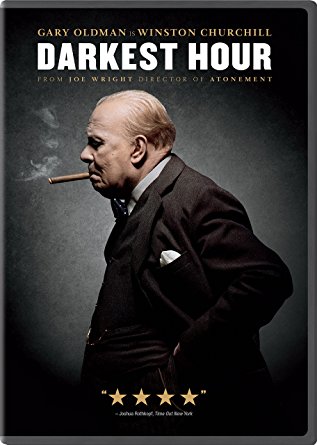
    As soon as I saw the preview for the Darkest Hour, I knew I had to see it. And, boy oh boy, this is yet another movie I can’t wait to watch again.

    The phrase “The Darkest Hour” is used in Britain to refer to the time when the United Kingdom appeared to be under direct threat of invasion from Germany at the beginning of World War 2. Germany had launched its attack on France, Belgium, and the Netherlands and had smashed their armies, sweeping all before them. The bulk of the British army was trapped at Dunkirk and looked like it would be annihilated.

    The British government was split between those who saw no path to victory and wanted to make a peace treaty with Hitler and those who wanted to resist him. The opposition party in parliament forced Neville Chamberlain to resign. And the only man they’d accept in his place is Winston Churchill. But Churchill was not the lion we think of him as today. He had a poor reputation among many of the leaders of his party and was not someone they wanted to elevate.

    So the film starts with the ouster of Chamberlain. We then get to watch how Churchill deals with the catastrophe of what’s happening just across the channel and all the voices pressuring him to make peace.

    There’s humor, suspense, and a number of one-liners that we all began repeating to each other immediately after the film ended. You get a feel for what it must have been like at the time and why so many wanted to sue for some peace treaty with the monster across the channel. You also get to see a slightly different picture of Churchill as a man. I particularly loved the exchanges between him and his wife.

    If you are interested in World War 2 or Britain in even the slightest degree, you simply must see this film.

    *

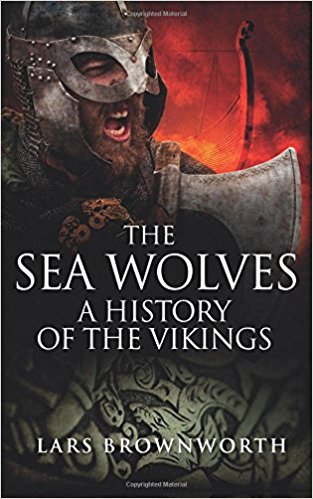
    I have now listed to the audio book of The Sea Wolves by Lars Brownworth twice.

    Yes, it’s that good.

    In this book, Brownworth tells the history of the Vikings. And he tells the history the way history should be told, bringing to life the old Norse world of epic poets, sea kings, and raiders, including Ivar the Boneless, Eric Bloodaxe, Harald Hardrada, Rollo the Walker—all the major figures.

    And Brownworth does it in a way that helps you understand how their dominance was possible and what their effect on the wider world was. Did you know, for example, that Russia comes from the word “Rus”, which was the name for the Swedish Vikings that started that nation?

    What? Russia was started by the Vikings?

    Yes.

    Read or listen to the book. You’ll learn that plus a whole bunch more that will make you look at that time in a different light.

    And if you want to get the other side of the tale, let me recommend reading Bernard Cornwell’s historical fiction series that starts with The Last Kingdom. The series tells the story of the invasion of the Danes during King Alfred’s rule from the point of view of Uhtred of Bebbanburg. It’s a terrific series.

    By the way, I do not recommend the TV series based on the books—too much sex for my tastes. But the books are fabulous. As are the audio versions. I’ve listened to six of them so far, and they have provided hours of enjoyment and interesting insights about the time and the events that took place.

    Share