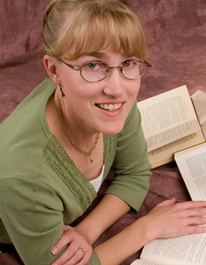
Interview with Author Leah Cypess
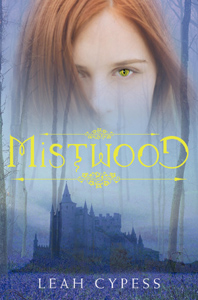
Leah Cypess says, “After selling my first story (Temple of Stone) while in high school, I gave in to my mother’s importuning to be practical and majored in biology at Brooklyn College. I then went to Columbia Law School and practiced law for almost two years at Debevoise & Plimpton LLP, a large law firm in New York City. I kept writing and submitting in my spare time, and finally, a mere 15 years after my first short story acceptance, I sold my first novel, Mistwood, to Greenwillow Books (HarperCollins).”

Leah lives in Brookline, Massachusetts (right outside of Boston) with her husband Aaron, a researcher and doctor at the Joslin Diabetes Center, and their two daughters. She majored in biology, minored in journalism, went to law school, worked as a lawyer, and has just started to learn about hawking and hunting. She’s published a number of short stories, which are all available for free on her website.

I just had the opportunity to interview Leah about her writing process and books. Enjoy!

*

JB: MISTWOOD, published by HarperCollins in April, 2010, is your debut novel. But is it the first you’ve written?

LC: Most definitely not. I wrote, revised, and submitted four manuscripts before Mistwood. (Technically, five; but I don’t count the first one, because it wasn’t very good, and I didn’t know what I was doing with the submissions process either. I was fifteen years old.)  In fact, after getting the offer from HarperCollins, I acquired an agent, who asked me to send him a list of my previous manuscripts and their submission histories.  The list was sixteen pages long.

JB: Holy cow, five novels and 16 pages of submission history. That’s a lot of dedication. And faith in the face of rejection. I’m intrigued. How did the sale of this novel come about? Was it just another submission to yet another editor or did you have some connection? What was different with this book?

LC: Both the faith and the sale were helped by the fact that I could see incremental improvements. My first novel received mostly form rejection letters, a couple of letters inviting me to submit further, and one revision request. My second received a lot of personal rejection letters, many more requests from various editors to submit future works, and one two-page revision request. The third made it to the acquisition committee at two houses. So I could tell I was getting closer, though it was still pretty dispiriting to think I might never make that final leap into publication. (After Novel #3 was turned down by both acquisition committees, even though it was being championed by senior editors in both cases, I had a couple of bad days.)

 In the end, I think what was different about Mistwood was mostly luck.

It wasn’t my most perfect manuscript – there was a lot of revising to do after it was accepted! – but it was the one that resonated with the right editor at the right time. This was an editor who had asked me to submit future books after rejecting the query for Book #3, then requested Book #4 and written me a detailed and regretful email about why she didn’t feel it was right for her. By the time I sent her the query for Mistwood, she was obviously confident enough in my abilities to request that I email her the full manuscript, and to read it right away. After all those years, the acceptance for Mistwood came just a few months after I started submitting it.

JB: I’m betting your persistence and work made some of that luck. Work seems to be a little bit of magic all by itself and has been used by a lot of other authors I know. Hum (grin). So let’s talk about the book. You should know you made The Top 200 YA Authors list I just published on my site. It ranks YA authors by average number of readers per book. And while the list can’t purport to be anything but a reflection of the tastes of the area’s library patrons, I think it’s probably representative of what’s going on in my region. So congrats! The book starts right off with a bang. It’s about a shape shifter. I know shape shifters have been around forever, but most fantasy these days seems to be about vampires and werewolves. Tell us a little bit about the core idea of the novel and its genesis.

LC:  That’s awesome that I’m on the Top 200 YA Authors list – thanks for letting me know!

I’ve been reading fantasy/science-fiction “forever” (I cut my teeth on the Edgar Rice Burroughs books my father had stored in our garage), so shapeshifters are just as familiar to me as vampires and werewolves.

The core idea of the novel is that of an inhuman creature grappling with the fact that she seems to be turning human — while trying to figure out why, exactly, this has happened to her, and who and what she truly is. (And, of course, fending off assassins and dealing with palace intrigue.) That idea developed over the course of writing the novel – I started out with a scene of men riding into a misty forest in search of the magical creature who lived there, with no clear idea of what that creature was or why they wanted her. Then I kind of made the rest up as I went along. (This writing process is one of the reasons the novel was revised nine times before being published!)

JB: I really liked the beginning. No wonder you felt compelled to follow the idea. And nine revisions! It sounds like you use drafts, as opposed to outlines or other tools, to help you discover your stories. Were these big revisions, almost complete rewrites?

LC: Thanks! I’m glad you liked it

I usually don’t rewrite scenes completely – most of my editing of already-written material consists more of snipping unnecessary parts and adding little bits and pieces. (Especially of description, which I tend to leave out entirely in the first draft.) But I do a lot of moving scenes around, deleting some scenes, and writing some new ones.

Though I don’t use an outline when I first write, I usually create one during the revision process so I can keep track of the jigsaw-puzzle my manuscript has become.

JB: That’s interesting. Well, I have just one more question for you. Tell us what’s coming next.

LC: What’s next is NIGHTSPELL, a stand-alone companion novel to MISTWOOD, which will be published in May 2011. It’s about a country where an ancient spell allows murder victims to return as ghosts to seek vengeance on their killers… and if they don’t manage that, they remain ghosts forever. After a couple of hundreds of years of this, the kingdom – Ghostland – has evolved into a place where the living and the dead co-exist, albeit uneasily. My main character, Darri, is a foreigner to Ghostland; she is a barbarian princess who abhors the idea of ghosts and is only there to rescue her younger sister Callie, who was sent as a hostage four years ago. But Callie has changed in those four years, and now has secrets of her own.  In her quest to save her sister from herself, Darri will ultimately face a decision that will force her to reexamine beliefs she has never before questioned – and lead her into the heart of a conspiracy that threatens the balance of power between the living and the dead.

JB: Oh my bleeping heck. That just gave me a case of massive author envy. I was thinking about writing a ghost story just yesterday and thought, “naw, ghosts are all played out.” Curse you, Cypess!

Sheesh, talk about a parting shot. Well, I would ask about the next book, seeing NIGHTSPELL must be ready to go if it’s coming out in May, but I can only stand so much punishment. The good news, if I put my reader hat on, is that it looks like I get to put a tickler in my Outlook for this May. In the meantime, I going to suggest to my readers to give MISTWOOD a go. Thanks, Leah, for your time. I enjoyed the interview.

LC: Thanks, John!

*

John sez: folks, I think I’m going to make interviews a regular feature. I just loved finding out more about Leah. It’s also interesting to see just how much work she’s put into this. I know that a good number of authors sell their first or second novel (see the Hines stats in the on writing section), but for a good number of others it’s later novels that sell. In either case, I think it’s clear that good old fashioned work makes up a big part of the secret sauce.

Ah, that was fun. But, dang it, I should have asked her about her lawyer and biology background. Next time.

LINKS

Leah Cypess’s website

The first three chapters of Mistwood

Praise for Mistwood

Codex Author Blog Tour 2011

Share

Similar Posts

  • Good Stuff! Simply Three

    The joy of music. Pure, unadulterated joy–this is what I recently stumbled across on YouTube.

    I was watching the The Piano Guys and thought I saw something new from them. I clicked, but it wasn’t The Piano Guys. It was Simply Three doing a cover version of the popular “Wake Me Up” by Avicii.

    For those unfamiliar with the term, a “cover” or “cover version” is a reworking, updating, or interpretation of an existing song. And this cover simply blew me away.

    SimplyThreeWakeMeUp

    Simply Three is an electrifying trio made up of cellist Zack Clark, bassist Nicholas Villalobos, and violinist Glen McDaniel, although they have switched in other violinists, including Alex Weill and Olivia Lemmelin. But don’t let the instruments fool you–this isn’t some stuffy classical music gig. And it’s not muzak in the elevator. Not even close.

    They are doing what Lindsey Stirling and The Piano Guys are doing: taking modern songs in wonderful new directions and, in the process, making these classical instruments cool again.

    I went on to watch a number of their other covers, and then I had to purchase the songs because I simply had to be able to listen to their great beats and interpretations on the road.

    Here’s their cover of “Wake Me Up.” The joy Zack Clark (the cellist) exhibits sells the whole thing for me.

    Here is their cover of “Demons” by Imagine Dragons.

    And finally their cover of “Counting Stars” by OneRepublic.

    If you like them, you can get each of these on Amazon for less than a buck with these links:

    Buying them not only supports the artists, but it lets them know there’s a demand for it and encourages them to make more. And I hope they make more.

    ***

    By the way, “Counting Stars” has some interesting lyrics. Ryan Tedder, the songwriter, is a professed Christian. He grew up in a Charismatic household and graduated from Oral Roberts University.

    However, you might look at some of the lyrics and think he’s given all that faith up.

    I feel something so right
    Doing the wrong thing
    I feel something so wrong
    Doing the right thing
    I could lie, could lie, could lie
    Everything that kills me makes me feel alive

    But you need to look at the lyrics in context of the rest of the song and the artist’s statements about the song to see he’s singing about something totally different.

    Some poets, and songwriters are poets (song is where poetry lives these days), think being obscure is cool. Tedder follows that more obscure approach in this song, which is unlike the immediate clarity he put into the lyrics of the fantastic “Halo,” performed by Beyonce, or his own OneRepublic’s “Apologize.”

    Sometimes the artist writing gnomic lyrics doesn’t want to pin down a message for the listener—they think it’s cool for each person to make up their own message (I prefer clarity). Other times they do have a message, but they want the listener to work for it, and so they try to be subtle. Or sometimes they simply goof and don’t realize their lyrics are being so vague.

    I have no idea which path Tedder was trying to take with these lyrics, but I do know that he’s made statements about the song. And these statements give us a guide.

    In an interview with 5280, the Denver magazine (Denver is where Tedder lives) we get the first glimpse.

    At 15, he began writing his own songs. “I obsessed over music and just loved it,” Tedder says. “But I never considered it as a career. Where I grew up you go to high school, you go to college, you find a wife in college, you get married, you have 2.3 kids, and if that hasn’t all happened by the time you’re 24, some people think there’s something wrong with you—or the assumption is that maybe you’re not into the opposite sex.”

    But he couldn’t keep away.

    Back in Oklahoma, at Oral Roberts University, the largest charismatic Christian university in the world, Tedder majored in public relations and advertising. At least that’s what his diploma says. Based on the time he put into sneaking into the Timko-Barton Performance Hall’s piano rooms, he probably could have been a double major. He spent hours on the piano and the guitar deconstructing his favorite albums—like Eric Clapton and B.B. King’s Riding with the King—figuring out the chords and then trying to write new songs using those same chords. He was skipping classes—even meals—to write songs.

    No one knew. Not friends. Not his roommate. He sang in secret. He was in the school choir, but his friends always thought it was odd that a person who didn’t seem overly musically inclined would be taking a singing class. When he was in one of the piano rooms he would tape a piece of notebook paper over the small window in the door so that no one could see him.

    Tedder says there were two reasons he hid his passion. The first was that he believed there were so many bad singers and bad songs in the world that he didn’t want to add to the noise. He wanted to be certain he would be successful before he revealed himself. The second reason was more deep-seated: Being raised in a religious home, Tedder had been taught that there was a purpose for his life, and that because God had ordained that purpose, he should live the life expected of him—one that was pious and humble. “Deciding you want to go into the music business is about the most narcissistic thing in the world,” Tedder says. “I had this constant battle—and to some degree I still do.”

    So Tedder felt “wrong” about songwriting. But he eventually began to see it as his gift to share.

    In an interview with Billboard magazine, we learn that he wants his OneRepublic to sing about different themes than the norm.

    Billboard: Given “Counting Stars”‘ uplifting, faith-based message, it must be gratifying to be connecting with such a meaningful song.

    Tedder: I think it’s our responsibility as a band, and what separates us from everyone else. I took that from being a fan of U2 for two decades now, since “Achtung Baby.” To this day, they might be the only band on that level who sings about things other than just boy-girl troubles or the kind of selfish, “I’m a badass” stuff. I’ve spoken with Bono about this when we toured with him, and he said the same thing. I felt a responsibility to actually write and sing about things that have a level of human gravity to them. If everybody else sings about sex and love and lust and money, then somebody’s gotta be singing about life and faith and hope and things of that nature.

    So if “Counting Stars” isn’t about sex, lust, and money, what’s it about?

    In another interview with Radio.com, he indicated that the whole counting stars bit was for anyone who loses sleep wondering how they’re going to be able to afford their rent or provide for their family. When he was first starting out, things were rough.

    “A lot of time I just lay in bed awake, stressing out,” Tedder said. “Everybody does it. And I just thought, I can’t wait until I’m counting stars and not counting dollars anymore. Things will be so much better.”

    To me, it’s clear that Tedder is singing about his story. And he’s singing for people like him who have a passion, but society says it’s not the practical thing to follow or dedicate your life to. Songwriting is what makes him feel alive. Furthermore, he had flashing signs indicating that if he sought, he would find—in other words, it was the thing God wanted him to do. And he just had to have hope, a four-letter word for those who are practical- and money-minded, and follow that passion.

    We can argue the merits of that follow-your-passion message, but I think we’re all happy Tedder followed his.

    ***

    And while we’re talking about the joy of music, how about this baritone saxophone and drum.

    Share
  • Dr. Horrible’s Sing-Along Blog

    I enjoyed Joss Whedon’s movie Serenity as well as many of the TV episodes of Firefly which featured the same characters and world. So when I saw Whedon had put up another movie called Dr. Horrible’s Sing-Along Blog and made it available over the internet, I had to watch it. And then watch it again, and again.

    I loved the characters. I couldn’t get some of the songs out of my mind. Some of the plot turns simply delighted. Here’s a preview.

    And here’s where you can watch it right now for free. It’s only 42 minutes long. Give it 4 minutes (literally). If you’re not hooked, let me know right here. I’d give it a PG-13 for some language and thematic stuff.

    Share
  • |

    Slush I Read by Jim C. Hines

    Laughs are lovely. I just came across this wonderful parody by novelist Jim C. Hines which will give you a few for free. Enjoy!

    Slush I Read
    by Jim C. Hines

    (Apologies to Seuss)

    I read slush.
    Slush I read.

    That slush I read.
    That slush I read!
    I do not like that slush I read.

    Do you like fanfic with vamps?

    I do not like them Mary Sue.
    Why do these vamps all worship you?

    Here’s a tale from D & D!

    I do not want your D & D.
    I do not like your elf PC.
    I can not stand your purple prose.
    I want to punch you in the nose!

    Would you like a hot sex scene?
    I wrote it for my online ‘zine!

    Go to Hines’ site and read the rest right now

    Share
  • Good Stuff! Saving Mr. Banks, Elementary, Captain Phillips, & Lone Survivor

    Saving Mr BanksOver the last two months I’ve been able to squeeze in a couple of hours to watch a few shows and some episodes of a TV series. I was plesantly surprised to have actually had a wonderfully good run. If you haven’t watched any of these, you’re in for some awesome entertainment.


    Saving Mr. Banks

    I didn’t think I’d like this movie. I enjoyed Mary Poppins as a child and enjoyed it again with my kids. But a movie on Disney getting the rights to make a movie? Boring. Except I was completely wrong. This is not a story about some woman selling the rights to her story. It’s about why she never wanted to sell the rights to Disney in the first place. It’s about her childhood and the real source of Mary Poppins. And to pull that off Saving Mr. Banks has to tell two stories: an often funny one about P.L. Travers who does not want to license her story and Disney’s final attempt to win her over, and a poignant one that reveals why Travers was so resistant. And it leaves the last twist, one that expands the meaning of the title in the viewer’s heart, to the very end. I loved this movie. I loved Hanks as the affable Disney and Thompson as the irascible Ms. Travers. Loved all of the other characters. If you enjoyed dramas like Miss Potter or The Blind Side, you’ll love this too.


    ElementaryElementary

    I thought: another Sherlock Holmes series? Puh-lease. Yes, the two films featuring Robert Downing Jr. and Jude Law and the BBC series with Benedict Cumberbatch and Martin Freeman were superb. I loved both. But another Sherlock? Surely this is going to be some cheap attempt to capitalize on the success of the other two, something that is direct-to-DVD quality. Who is going to do it as well as Downing and Cumberbatch?

    Boy, was I wrong (yet again!)

    Elementary is delightful. Sherlock, played by the talented Johnny Lee Miller who made Eli Stone such a joy, is a modern day Brit living in New York. He’s in the final stages of drug rehab, living with a “sober companion.” The companion is Joan Watson, played by Lucy Lui. The Captain of the NYPD is one of Sherlock’s old friends an appeciates his skills and so brings him in as a consultant on various cases.

    So how could they do anything different? Yes, you have the quick powers of observation and intellectual acrobatics the other Sherlocks have. But the female Watson and the whole recovering addict angle takes the stories in a new direction. This Sherlock has a past that haunts him. And this Watson is maybe a bit quicker than the other two, as wonderful as they are.

    I wouldn’t have believed it if I hadn’t seen it, but there is room for three Sherlocks and Watsons. I can’t tell you which of the three pairs I enjoy more.

    Captain_Phillips_PosterCaptain Phillips

    As soon as the news stories about Somali pirates started breaking back in 2008 I knew it would lead to some thrillers. Heck, Abdul Hassan, “The One Who Never Sleeps” was one of the first zings I posted on this site. What I didn’t know was that the big thriller would be based on an actual story: the 2009 hijacking of the US-flagged MV Maersk Alabama, the first American cargo ship to be hijacked in two hundred years. Phillips is played by Tom Hanks, who always gives a great performance. But I also found the portrayal of the pirates interesting as well. As I did the many unexpected details of how these pirates operate and how the incident was brought to a close. If you like realistic thrillers, you’ll enjoy Captain Phillips.

    Lone Survivor

    I reviewed the book Lone Survior back in 2011. You can read my full report there, but the bottom line is that it was an awesome read. However, as with all awesome reads, you become a bit wary of the films based on those books. I’m happy to say the filmmakers did a great job on this one. They paid huge attention to detail because they wanted to honor the fallen soldiers by getting it right.

    Lone_Survivor_posterIn order to get it right, they brought Marcus Luttrel, the author, and a number of other SEALs onto the project as consultants. The SEALs put the actors through some basic training before they even began shooting. This was to not only help the actors get to the point where they handle their weapons and gear as someone seasoned might, but also so they could feel what is was to work as a team, an important part of being a SEAL. The SEALs stayed on to provide input as well during the shooting.

    But the details went beyond that. I have never seen a military film that felt as real to me, especially when it came to the characters. SEALs are warriors. But that doesn’t capture the variety they come in. And in the opening 25% of the movie we see sides to these men that many movies do not portray. It was so refreshing! In fact, without the groundwork laid in the beginning, this film wouldn’t have had near the impact it did. Yeah, the action is ACTION! It’s thrilling. You have never seen some of the shots the film portrays. But the action means nothing without the men.

    And this story is about the men.

    It’s about what it means to be one of those guys and gals who put their lives on the line for the rest of us. And if you want a special treat, when the film is over, you’ll watch all the extras.

    The f-word is used about five million times in this movie. I usually don’t like a lot of vulgarity in my entertainment. But I cut the folks some slack in this case because I felt the story was worth it. Besides, I didn’t consider it entertainment anyway, more documentary.

    If you are interested in what it’s like for Special Operations forces, if you want a story to help you see what so many are doing for the rest of us, I don’t know that it gets any better than this.

    Share
  • Hey, I live in Washington and I’m an Idiot

    I’m sick of politicians who are more worried about votes, Republican or Democrat, than actually doing what needs to be done. Sick of these fools buying votes with Federal programs for everything from farm subsidies to gelatin wrestling.

    When someone runs for office, does an idiot switch get flipped? “Vote for me, I’ll spend like there’s no tomorrow. Cause look, honey, I got this magical piece of Uncle Sam plastic. It doesn’t cost anything. And when the bill comes, we’ll just tax all the rich folks to pay for it, and send government agents to put them in jail if they don’t. Or we’ll print money and make it all worth nothing. Or, better yet, we’ll just use the funds we set aside for social security.  It would be dumb to just save and invest that money we’re taking from people for their retirements. I mean, it’s just sitting there earning interest. Besides, we’ll set it all up like Amway with downlines and circles, and the rising generation will just be taxed out of their brains to pay for it.  And that will be someone else’s problem anyway. See the pretty money, honey. See it? Vote for me.”

    They’re like that candy man in Chitty Chitty Bang Bang with the nose that should have scared the soup out of those kids. Of course, American voters aren’t kids hiding in Benny Hill’s basement. Maybe the switch is getting flipped on some of us as well.

    Here’s what we need. It’s not rocket science.

    1. A balanced budget ammendment to prevent our super smart and caring representatives in Washington from continually spending what they don’t have.

    2. Real spending reductions. What does that mean? Dave Ramsey just shared some thoughts on what’s it’s going to take to get the nation out of debt. Go have a listen.

    Edit 6/7/11: Besides, Paul Ryan, here’s Tim Pawlenty with some ideas on how to accomplish it.  I’m looking forward to seeing the ideas Romney and the other presidential candidates put forth.

    Share
  • Bartimaeus & The Time Traveler’s Guide to Medieval England

    Pure Delight

    One of the most delightful literary characters to appear in the last decade is the cheeky Bartimaeus–a five-thousand-year-old djinni (“genie”) who plays the lead role in Jonathan Stroud’s trilogy The Amulet of Samarkand, The Golem’s Eye, and Ptolemy’s Gate.

    In Stroud’s world, magicians have no magic in themselves, but they do have the lore to summon and enslave demons, who can work magic. There are demons of various levels and powers. The lowest regularly summoned and enslaved are Imps, who can be crude and like to tell outright whoppers, but are good for standing watch and carrying messages. Next come Foliots, which Bartimaeus describes as “cut price djinn.” In the middle of the great chain of beings are the Djinn themselves, whose clever intelligence Bartimaeus extols, followed by Afrits, and finally Marids, who are rarely summoned because they are too strong for any but the most powerful magicians to control. Of Marids, Bartimaeus insightfully reveals that they are “dreadfully full of themselves.”

    In the trilogy, Bartimaeus is summoned and enslaved to do the bidding of a sometimes jerkish young magician who learns to be a better person, despite himself. Of course, along the way the magician sends Bartimaeus in great peril, which he eludes with cunning, sardonic wit, and many good one-liners. I read the first book, loved it, then listened to all three read by Simon Jones, who makes these stories even better. The sad news is that I finished them. I simply wasn’t ready to let Bartimaeus go.

    Which is why I was so happy to find that Stroud recently released a fourth book: The Ring of Solomon, which is a stand-alone prequel to the trilogy. The family and I just finished listening to it, and it is every bit as good, if not better, than the first three.

    This story is set in biblical times where King Solomon has risen to uncontested power because of his possession of an all-powerful ring which allows him to summon hordes of powerful demons in a blink. Bartimaeus is enslaved to one of Solomon’s magicians.  A mean man, who Bartimaeus catches in a mistake and escapes, principally by devouring him. But Solomon doesn’t take kindly to that, and orders Khaba, a sinister and cruel magician, to summon him back to make an example for the other demons.

    Meanwhile, the Queen of Sheba, having denied Solomon’s marriage proposal three times, is sent an extortion threat.  Angry and frightened, she sends Asmira, a young woman and loyal captain of the guard, to Jerusalem to assassinate Solomon.

    Bartimaeus and Asmira hook up and find themselves in quite a pickle as they attempt to solve their problems. The story provides lots of humor, adventure, peril for both Bartimaeus and Asmira, and a number of surprising turnarounds. It also, in its own way, makes a comment on leadership, loyalty, and zealotry.

    You’ll find it in the middle-grade section of your bookstore, but don’t let the placement fool you into thinking it’s not for adults. Like the best stories, it offers something for everyone. It’s a perfect blend of insight and entertainment and had my whole family, oldest to youngest, spellbound for the duration as we listened to it riding in the car. This is one of my favorite books this year. And if you want to really indulge yourself, listen to the audio book read by Simon Jones.

    Travel to Medieval England

    I love learning new things about places and peoples, even if it’s a place I’ve “been” to before, which is why Ian Mortimer’s The Time Traveler’s Guide to Medieval England intrigued me. The first page convinced me to buy to book. And I’m so happy I did.

    I’ve read my fair share of interesting and well-written texts on this subject, including, among others, Life in a Medieval City and Life in a Medieval Village by Frances and Joseph Gies, Standards of Living in the later Middle Ages by Christopher Dyer, The Medieval Castle by Philip Warner, Daily Life in the Middle Ages by Paul B. Newman, and Power and Profit: The Merchant In Medieval Europe by Peter Spufford. All engrossing reads. What sets Mortimer’s book apart is that he not only approaches the topic as a travel guide that leads to you interesting sights and shares fascinating tidbits about the place, but he also helps you imagine how it would be, as a 21st century person, to actually travel there.

    For example, where would you go if you got sick? What happens if you’re robbed, where do you report the crime, and should you? Where might you get food and would it be something you’d find palatable? How will you get from place to place? Why kind of entertainment can you expect? And what can you wear without offending your hosts?

    Mortimer focuses on the fourteenth century England, since this period comes closest to the popular idea of the medieval times. He tackles the topics of the landscape, people, the Medieval character, basic essentials, what to wear, traveling, where to stay, what to eat and drink, health and hygiene, the law, and what to do. And he does it all in a chatty, clear, and informative manner, with a bit of humor thrown in for spice.

    Each page was a delight, and I found myself feeling like I was there. Furthermore, I learned a number of things that I hadn’t picked up in my previous readings. I’m tempted to quote all sorts of interesting tidbits he shares about the age, but I’ll refrain. If you are at all interested in the Middle Ages, I think you’ll love this book.

    Share