I just finished the edit of CURSE. I now have 697 pages all marked in red. Most of the revisions are small things. But there are some larger scene level edits. I hope to finish these in the next few weeks. Then we do the copy edit, print the proof, do the proof edit, and then at long last this baby will be available for readers. We’re so very close.
In other news, Larry Correia did a book bomb for BAD PENNY yesterday. At 6:30 a.m. this morning it was ranked number 457 at Amazon. It was the #3 book in the Thriller>Military category and #50 in the Thriller>Suspense. Hundreds of folks purchased the book. A couple even finished and began posting glowing reviews on Amazon and Larry’s site. I can’t tell you how excited I am to get the story into the hands of new readers. Both series are now launched.
Both books are available at:
Amazon (trade paperback and ebook)
Barnes&Noble (ebook)
Kobo (ebook)
Diesel (ebook)
I’m still working with the blasted Smashwords to get it up at iTunes and the Sony eReader store. I’ve been working since the middle of December on that. I’m going to give them one more shot, and then we’ll have to figure something else out. Those of you wanting to get it on iTunes, I hope to have it resolved by this time next week. Thank you so much for your extreme patience.
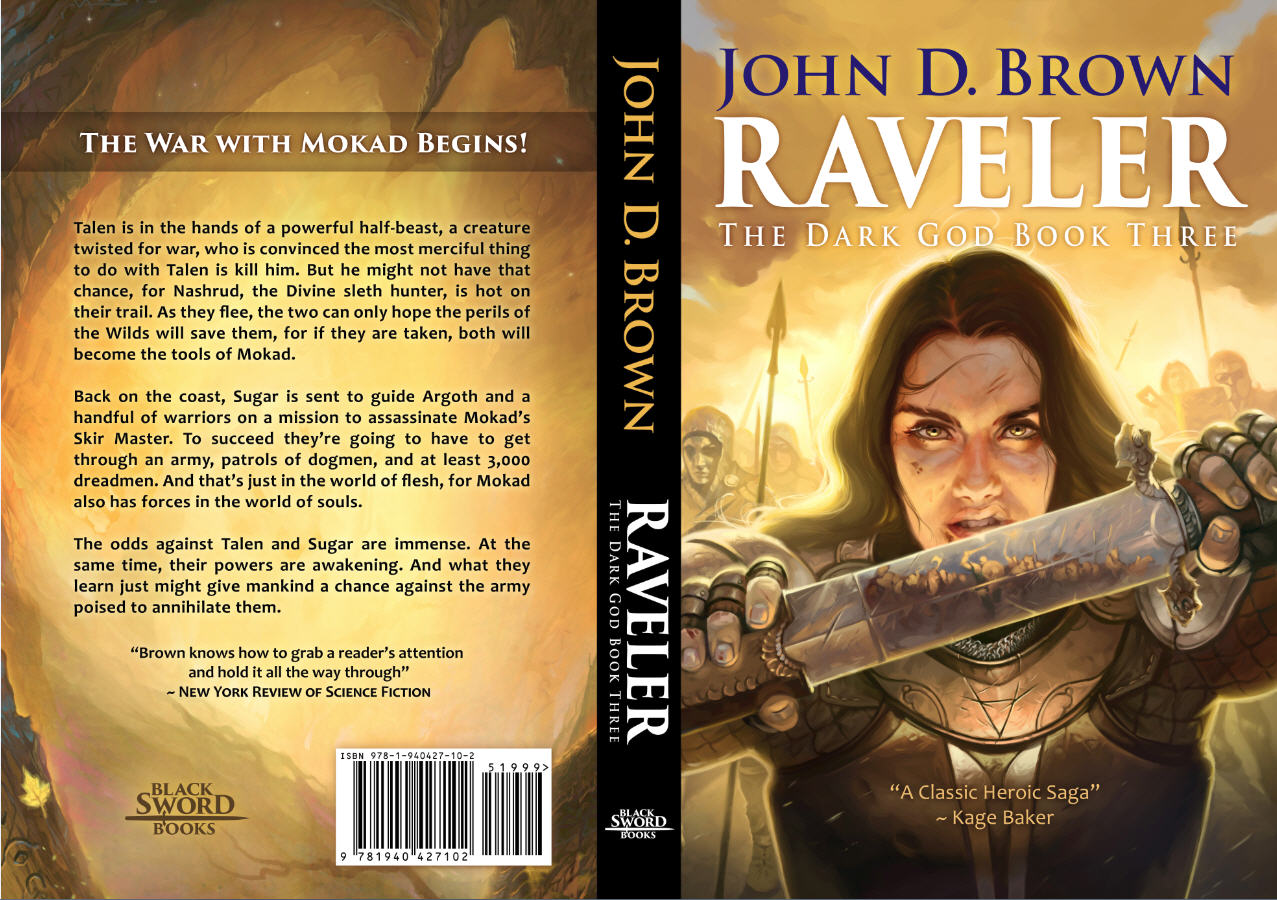
Back in July, I contacted the talented Victor Minguez again to do this cover. I sent him a creative brief with three scenes that I thought would work well. Victor read the passages, then came back with some sketches.
One of the scenes was of Sugar, battling howlers in the world of soul. Two parts of the reference I gave were the following. The first suggested an interesting lace pattern that fit my image of Sugar’s skenning. The second was a dead ringer for a howler. It’s actually “Lion,” made of used tires and steel by Yong Ho Ji. Okay I found it on Pinterest. But it’s absolutely gorgeous. I really thought this scene with Sugar would be the one.
Victor’s sketch is below. You can see the howlers in the foreground about to attack.
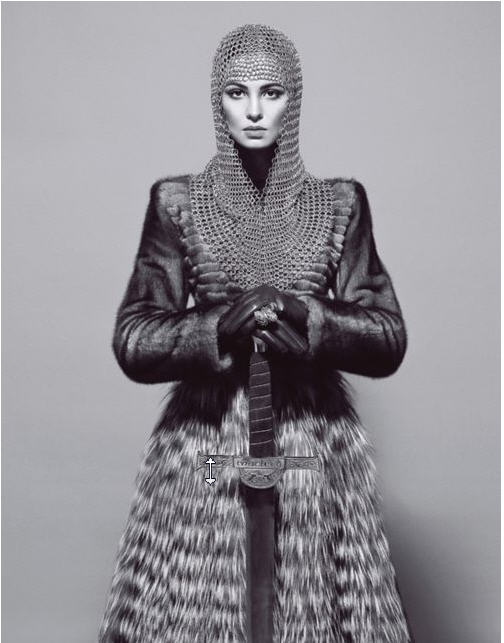
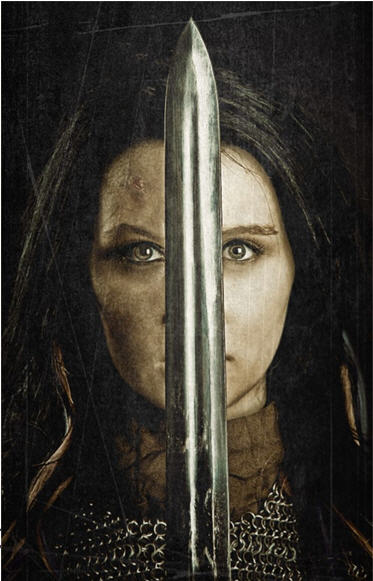
The second and third scenes were of Argoth facing down Mokad’s Guardian and Matiga and her fell-maidens in the final battle. The fell-maidens are women you don’t want to mess with. Some of the reference included these. BTW, if you’re interested in other images I’ve captured, feel free to browse my Pinterest collections.
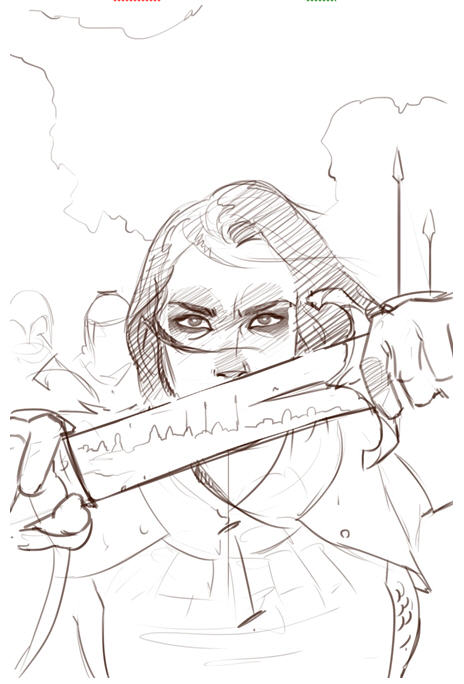
This is the sketch he came back with. His notes explained that the enemy line would be reflected in the sword.
I love the idea of Sugar and those howlers. I can see the image in my mind, and it’s awesome. But we felt this would make a more appealing cover. Maybe someday we’ll pay for someone to do that Sugar illustration just for the heck of it.
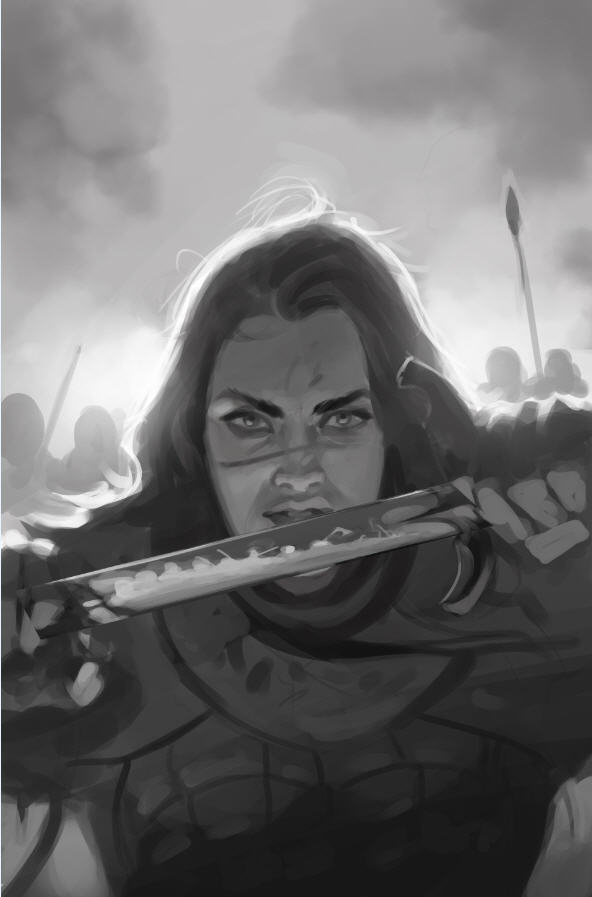
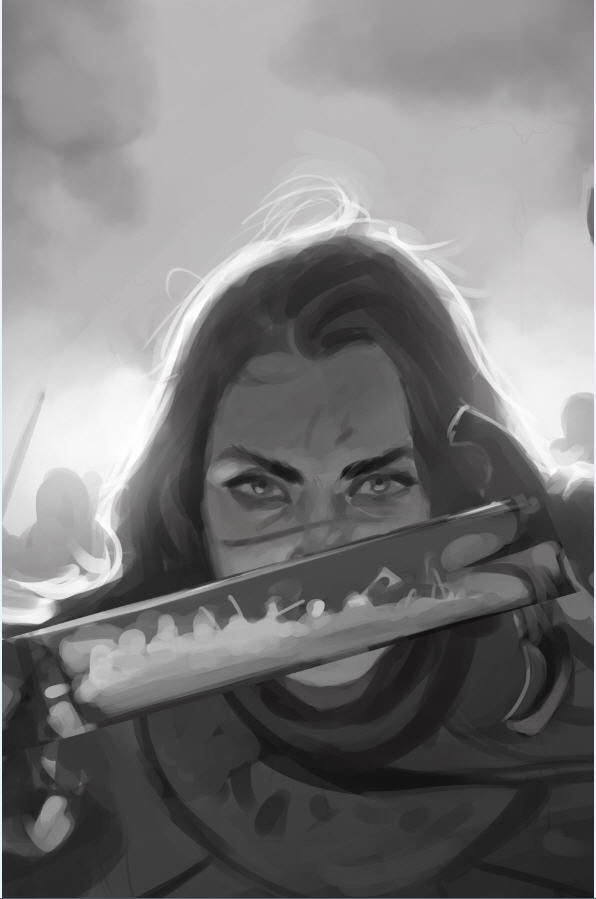
The next step was to do a value study. This was the first.
I wanted to see what a couple of variations might look like.
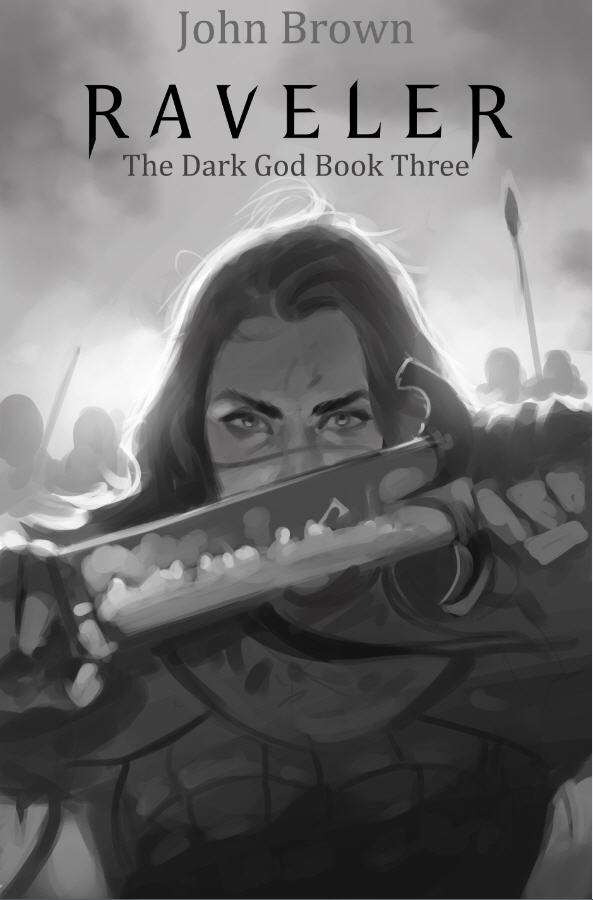
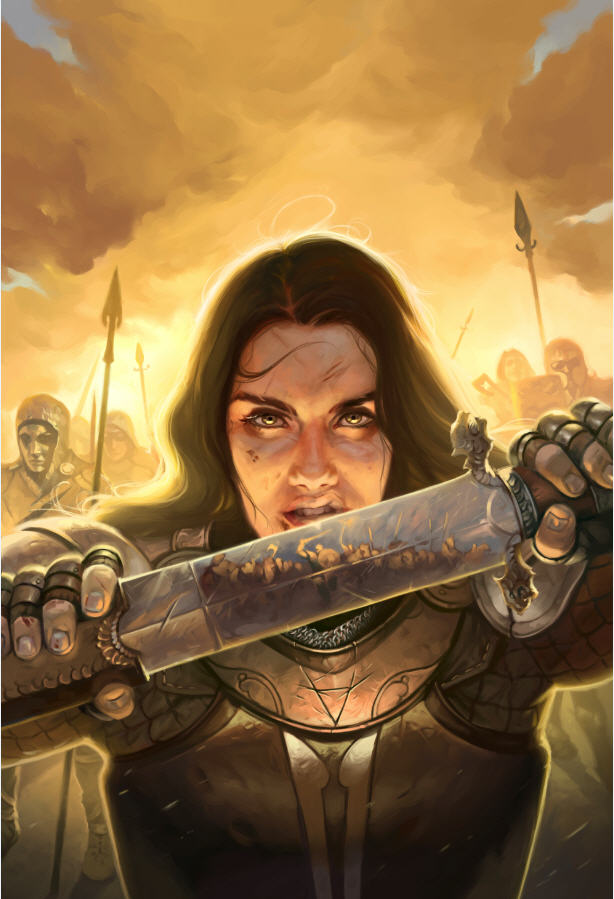
Ultimately, I thought all three of these were powerful. The first two really draw attention to her eyes and give a great focal point and hierarchy. In fact, I still go back and forth even now. But I did like seeing more of her face. I think anyone of them could have been great, but we ended up going with the third. A little magic from the artist, and Shazam!
There are a lot of things to love about this. Victor’s gorgeous backlighting and halo effects. The part of the story told in the reflection in the sword. And the fact that this woman is not some fluff bunny, running around in ridiculous bikini wear. She’s even got a bit of sneer or growl going on. My friends, this is a freaking fell-maiden. I also like that Victor etched an important symbol into the armor.
Mysteries, reversals, zing, stunts I’ve never seen in any thrillers, a bit of romance, and lots and lots of action. All set in the amazing landscape of Southern Utah’s Grand Staircase.
The backstory summary is 6 pages. The outline of events is 10, single spaced.
I’m feeling it, folks. This sketch of the story has got the goods.
One more pass to tighten up plants and make sure I’m hitting the progression points for the A and B stories, and it’s time to write. Just in time for the big Christmas break.
Speaking of that, merry Christmas to all my blog readers!
A cracking good story idea requires five critical elements.
Until you have all five, you’ll struggle to plot. You’ll write a few scenes and run out of gas. You’ll feel like the story just isn’t going anywhere.
And that’s because it isn’t. It can’t. A story isn’t a story without all five elements.
However, once you develop these five things, your story will suddenly roar to life. There are a few other elements that are important as well, but these five things form the core of the story setup.
In this course you’re not going to merely learn about all of those story elements. You’re going to go deep and learn what can only be learned by actually doing the work and developing story idea after story idea with personal one-on-one feedback from someone who knows what they’re doing.
When you finish, you won’t just know story theory. You will be a story idea machine. And you will be that because you have put in the work. The right work.
Again, this is not a course full of lectures and videos. This is a course where you’re going to work. And develop the insights and skills that only come from doing the work.
You’re actually going to:
Come up with story setup after story setup after story setup
And improve them with one-on-one feedback.
It’s going to:
Eliminate years of you wandering about in the story wilderness trying to figure things out on your own.
Put you miles ahead of other writers who have no idea what’s really at the core of story.
You are going to learn how to develop killer story ideas on purpose instead of on accident. Which means you’ll be able to do again and again. Reliably. Like clockwork.
Course details
The focus of the class is not on learning about story, although you will do that. The majority of your time will be spent on developing stories.
You can’t become a carpenter by watching videos and reading books about it.
You have to get out on the work site, cut wood, and pound nails. You have to make the mistakes all beginning carpenters make, get feedback, and improve.
The same goes for writing.
And you’re going to work in this class. You develop 21 story setups. In fact, you develop more because the 21 are just the ones you turn into me. And with each one your skills, insights, and abilities grow.
In the beginning, your setups will be bare bones. By the end, they’ll be fully developed setups that beg to be written. Setups you can use to immediately write the first draft of your novel, whether that’s in outline or chapter form.
Here’s what you do each week.
Week 1.
Uncover the secrets of what’s really at the heart of story and how to generate ideas.
Define your genre requirements
Create story setups 1-3
Week 2.
Uncover the secrets to compelling characters
Create character sketches
Create story setups 4-7
Week 3.
Uncover the secrets to formidable obstacles
Create story setups 8-11
Week 4.
Uncover the secrets to interesting casts
Create story setups 12-15
Week 5.
Uncover the secrets to managing multiple storylines and series
Create story setups 16-19
Week 6.
Create story setups 20-21. These are your capstone projects where you apply everything you’ve learned and take it to the next level
In this class you develop story idea after story idea after story idea. You are going to be marinated in the work of developing characters, THOMs, goals, obstacles, settings, casts, and more. And because of that, each week will not only bring an explosion of insights, but new skills and abilities.
Every week you get two private, one-on-one, live sessions with me where you get encouragement and feedback on what you’ve developed. And you’ll have access to a private Facebook group where you can apply the principles to brainstorm even MORE ideas for each other’s stories.
At first you might feel a bit shy and worried about your ideas and abilities. But you’ll soon get over that. By the end of the course you’ll be one of those people that can generate terrific ideas easily. And you’ll be able to do that because you will have put in the work to become a different writer.
What’s the price?
Hours of one-on-one instruction from a professional editor or author costs thousands of dollars. An MFA program can cost $25,000 to $30,000 or more!
But this course won’t cost anywhere close to that.
Plus you’re going to learn things here you’ll never get in an MFA program (I know. I was accepted into a top-ranked program).
The cost of this course is $799. And I personally guarantee your results. You’ll be totally oh-my-gosh-I’m-so-happy-I-took-that-class satisfied, or I’ll give you your money back. No questions asked.
Now’s your chance to stop spinning your wheels. I can’t tell you how much I wish I’d had something like this when I’d started:
The secrets about the true core of story.
The secrets about how to come up with ideas.
Actual work with personal one-on-one feedback.
Laser focused on what actually matters, not a bunch of ridiculous writing rules.
When you finish, you will be a story idea machine.
You won’t know plotting. That’s a different course and set of skills. You won’t know how to write chapters. But you’ll know how to create the engine that powers all the rest of that. You’ll know how to create the core that makes awesome plots and chapters possible.
If you want to take this course, click the button below and contact me. I will tell you exactly how to apply.
I’m not going to be able to accept everyone who wants to take the class. I have a very strict limit on the number of students I can work with. So you need to get your application in before the deadline of midnight, December 11th.
Folks, a huge thanks goes to Stephen Nelson for putting all this together. You may kiss his hand when you see him.
This is a recording of “How to Write a Story that Rocks,” a two-hour seminar Larry Correia and I just put on at the annual BYU’s Life, The Universe, & Everything symposium. I think we had 130-140 people attend. This symposium is focused on writing fiction. And while the panels and presentations do include things specific to the science fiction, horror, and fantasy genres (both adult and young adult), a lot of time is also spent on story writing fundamentals that apply to ALL genres. So when I developed this workshop, I made sure I took the fundamental approach.
The two-hour seminar has been broken down into 12 segments. To switch between the segments:
Hover your mouse pointer over the YouTube below
Click the forward and back arrows that appear on the right and left sides to move to the next or previous segment, OR
Scroll through all 12 segments and select the one you want using the playlist control at the bottom
I’ve found whenever I develop any presentation or training that it takes a few iterations and revisions before it’s the best it can be. This is the first iteration of this seminar. And so below this video I’ve provided additional comments on each segment explaining key concepts, principles, and techniques that we might have failed to discuss or convey as clearly as we’d hoped. Enjoy!
It’s documented–right-wing gun nut Larry Correia sang “Kumbaya.” What’s next? The hugging of small trees? Oh, Larry, the disilluion. The disillusion.
The reason why I had Larry sing was not for his mellifluous performance, but to demonstrate the difference in reactions between him and our happy volunteer (“Country Road” by John Denver–this really was a love fest). The volunteer balked because he hadn’t taken any thought to know what to sing before he was commanded to do so. On the other hand, Larry and I had spoken before the seminar. So Larry had something to sing BEFORE he sang it. It’s a simple demonstration, but it illustrates a principle a lot of new writers forget. Writing is a performance. It helps to know what it is you’re going to perform before you perform it.
It’s one thing for you to tell yourself to write. It’s much easier to tell yourself to write the scene where the rancher finds out one of his illegal ranch hands has been kidnapped.
Now this doesn’t mean that you have to know everything. Or that you can’t write exploratory drafts to figure out what it is you want to write. But it does illustrate that whatever techniques you use, you’ll be a lot more effective in your writing when you have something to say first.
But what do you develop? What are the things that bring the story to life? How do you go about getting those things to say? That’s precisely what I wanted to address in the seminar. In the segments that follow, I try to:
Explain what I’ve found are the most important things to develop, the things that define the essence of story, that make the story come alive in the writer’s mind–the things that really matter
Demonstrate techniques to develop those things so you have something to say
Segment 2
I think this segment went fairly well. What rocks will different from person to person, even though there will often be a huge overlap between people. So it’s important for authors to seek to develop the kinds of stories that rouse their passion. Watch this interview with best seller Debbie Macomber to see what I mean. So I can’t tell you what to write about. Or if whath you think rocks will resonate with a large number of people. However, what I can do is share the techniques I use that have been most productive in helping me develop initial ideas into something that has much more power.
You can use the techniques to juice up any of the four parts of story. However, I will say that I find that the most productive, the most important parts, are character and problem. Plot and setting are important. I love them and work to juice them up. But when I get a good character and problem, that’s when the writing seems to flow the easiest.
And no, I don’t list theme as a part of story. Everyone talks about theme, but when I read what they have to say or press them for examples, it seems that it always either boils down to (1) a story element or topic that’s repeated, (2) a story problem/issue stated in an abstract manner, or (3) some moral situation. Les Miserables is about the “theme” of mercy versus justice. But saying justice versus mercy is just an abstraction of the story problem and dilemmas the story deals with. So, no theme.
I’ll be adding my comments to the rest of these segments over the next few days.
Segment 5
Segment 6
Segment 7
Segment 8
Segment 9
Segment 10
Segment 11
Segment 12
Dan Wells on Story Structure
Check it out: Dan Wells on How to Build a Story (story structure). I find Dan’s “start with the ending” technique helpful as well as thinking about a worst fears realized moment. Watch the videos and see if there isn’t something there that can help you develop your story idea.
Folks, I love LTUE. Love it. Alas, I will only be able to attend Friday. But I can’t wait to listen, present, meet new folks, and catch up with old friends. If you’re a writer in the area–whatever genre it doesn’t matter–you’re going to want to come. Link out to the site to see all the authors that are going to be there. Here’s my schedule.
Date & Time
Event Type
Area
Notes
Thursday – Saturday, Februrary 17 – 19, 2011
Science Fiction & Fantasy & Writing convention
Provo, UT
Life the Universe & Everything held at BYU. It runs Thursday – Saturay, the 17th-19th. I’ll only be able to attend on Friday this year. This is where SF&F authors, scholars, and fans gather and discuss the genre, writing, and have a whole bunch of fun. Details on the LTUE site. I will be presenting. See the rows below for details.
Romance vs. Story with Romantic Elements: Injecting romance into saving the world
Panel
John Brown, Ami Chopine, Stacy Whitman, Lynn Kurland
FRIDAY: 12 pm – 1 pm
Plotstorming from Character: In some cases the plot of a book drives the characters. However, characters that instead drive the plot can make for a more compelling story. In this hour, we focus on how to grow your plot from your main characters.
Presentation
Paul Genesse (I want to hear what Paul has to say, I think this will be interesting)
FRIDAY: 3 PM – 4 PM
Lessons on Story from THE HUNGER GAMES (and let me tell you, there are a lot of good lessons)
Presentation
John Brown
FRIDAY: 6 PM – 7 PM
How to Get and Develop Killer Story Ideas
Workshop
John Brown & Larry Correia (oh, yeah–it’s the dynamic duo)
FRIDAY: 7 PM – 8 PM
EDIT 2/7/2011 9:45 PM: Scheduled has changed. The session on Hunger Games moved up an hour. And the story idea session moved back from 10 AM to 7 PM.
Read the story behind the story on Side-Show Freaks in the coming month.
Then read more about Scott Altmann, the marvelous illustrator.
Born on Long Island, New York, Scott was never far from a drawing tool and a surface to make a mark. The early years consisted of funny-looking beasts and asymmetrical faces. Years later Scott attended the School of Visual Arts in Manhattan and graduated from the Illustration Department with his BFA.
He enjoys sushi, cerebral spelunking, playing guitar and painting in oils. He draws to escape, and tries to escape to draw. All other times he can be found with his wife and son, in Long Island, New York — laughing uncontrollably and causing mischief.





Bad Penny will be the next book I read! Looking forward to Curse’s release!