Indie Thoughts: Tend Your Garden

From Joe Konrath.

Your ebooks function much like a garden.

One rare occassions, a plant will thrive with little help from you.

Others may whither and die no matter how much help you give them.

But the majority need to be constantly tended. Planted, watered, fertilized, weeded, pruned, mulched, replanted, harvested. In other words, lots of work.

Ebooks aren’t a Mr. Popeill invention where you can set it and forget it. Quite the opposite. You need to pay attention, and keep active, or your garden won’t thrive.

Everyone experiences slow downs in sales. It’s inevitable, and it seems to be cyclical, but not in any sort of way I’ve been able to prodect. Sales seem to rise and fall for reasons unknown.

But if you’re doing what you can to make your books discoverable, you have a better shot at sales than those authors who self-publish then self-ignore.

Here are some tricks to tend to your garden.

1. Change prices. As an indie, this is one of the biggest advantages you have over the legacy industry. You decide what the customer pays, and this is powerful. Don’t be afraid to weild that power by experimenting with prices, both lower and higher.

2. Newsletter. There is no excuse why you don’t have a newsletter. People who sign up are actively looking for your titles. Make them aware a new title exists.

3. Sales. Unlike a change in price, a sale only lasts for a short time. KDP Countdown is what I’m currently using, because it offers 70% royalties when I drop the price. I’ve been pleased with my results.

4. Advertising. Bookbub and Booksends are the ones I use regularly. If you’ve had success with another company, list it in the comments.

He names eleven tips. Link to the rest at JA Konrath’s blog.

This goes back to something Blake Russell said in the myth posts I pointed to a few posts ago. There are some folks who suggest that you can either write the next book or you can promote the current one.

Folks who suggest it’s either/or leave me scratching my head. Why not do both?

Applying to BargainBooksy or BookSends takes less than 30 minutes. Sending a review copy out to a decent review site takes about the same amount of time. If I spend just one hour a week on promotion, I can do all three of those things each month plus something else.

Some folks suggest that promotion doesn’t work when you only have a few books out. And forget about it if you only have one. Promo can’t do anything for you if you only have one book out. At least, not as much as completing the next book can.

Let me ask a question.

If I open a McDonalds down some back road where nobody sees it and nobody travels, do we think that releasing a second McDonalds down some other back road where nobody travels is going to increase sales?

Nobody is going to go down those roads except by accident.

Is that how McDonalds or Walmart or whatever company you want to name built their vast empire? They did it by accident? How about the diner everyone loves in your town? They hid it at the end of a dirt road, told nobody about it, definitely did not put up a sign (good grief, not a sign), and, shazam!–the customers started rolling in?

Mcdonalds11

Some folks say, no, you’re missing the point. The purpose of a promotion is to get people to buy other books in your list at higher prices, so if you don’t have a lot of other books, your promotion can’t do anything for you.

Using loss-leader or sampling strategies with one book to sell others is certainly a smart thing to do. Because it works. With cheeses at Sam’s Club, with books, with a lot of things. But is that really the only thing you’re trying to do?

How about building a base of readers who have some degree of loyalty to your brand? You don’t need ten books to start to do that. You don’t need two books. You can start with one.

I started two series last December—a thriller and an epic fantasy–and (writing gods willing) will be releasing book 2 in the fantasy series this month. Since December I’ve sold close to a thousand in each series. It was easy to see that at least half of my sales, maybe more, came because of some type of promo. I know this because I watched the numbers.

This means I now have hundreds more folks waiting for book two than I did for book one in both series. I’m going to be releasing book two in both series with a bigger customer base than I would have had without promo. Why would I not want to start at a higher level for each successive book?

More readers means more word of mouth. Why wouldn’t I want more word of mouth about my books?

More word of mouth means higher odds that an influencer will hear about, try, like, and then promote my books. In fact, I’m looking at at least double the odds. Somebody remind me: why wouldn’t I want those better odds?

One of the main keys to this business is to get a big enough customer base so that the word of mouth takes on a life of its own. I am building that base more quickly with promo than without. Why would I want to build that base more slowly?

Finally, I have twice the money I would have had otherwise to invest in promo and covers and editing etc. Or just go spend on my wonderful wife and girls. Why wouldn’t I want this revenue?

Traditional publishers have built reader bases for an author one book at a time, often spaced a year apart, for decades. They put money into the promo that works in in-store venues: covers, pre-release reviews and the necessary ARCs, catalogs, a sales team, and co-op visibility in the stores. And while that promo didn’t guarantee anything, it made the odds more likely the book would get readers to sample and build that reader base.

Why shouldn’t we put money into the promo that increases the odds for online stores?

What business out there can’t benefit from good promo?

Of course, the next question is what methods of promo work? There are a many methods that are a waste of money. But not all of them are. I think it’s our job as entrepreneurs to test and find ways that are effective a la The Lean Startup by Eric Ries.

Anyway, Konrath’s advice to not self-ignore, and Blake’s “do both” approach make a lot of sense to me.

Share

Similar Posts

  • Authors love women

    Two fascinating articles on who drives books sales. Would love to see original reports.

    September, 2010
    http://seattletimes.nwsource.com/html/books/2012801171_litlife06.html

    I arrived back at work, along with 2,000 e-mails and about that many incoming books, I got a report from Bowker, a global firm that tracks people’s book-buying habits. Here are some of the more interesting bits from 2009:More than 40 percent of Americans over the age of 13 purchased a book; the average age of the American book buyer is 42.

    Women make 64 percent of all book purchases, even among detective stories and thrillers, where they buy more than 60 percent of that genre. [see, they act all touchy feeling, but most women like to see someone kick hiney. Except I suspect a lot of that 60% is driven by mysteries; or are there a lot of women that like, say, Lee Child?]

    Thirty two percent of the books purchased in 2009 were from households earning less than $32,000 annually. A fifth of those sales were for children’s books.

    The biggest nonfiction genre is biography and autobiography.

    Whoa. Go gals.

    June, 2011
    http://tomorrowsbook.com/format-wars/features/who-is-buying-ebooks-women-reading-fiction.html

    Surprise, surprise: the hardcore power users in the eBook world are the same demographics as the hardcore power users in the physical-book word, as a report called Consumer Attitudes Toward E-Book Reading from the Book Industry Study Group (BISG) indicates both hardcore groups are dominated by women buying fiction.

    No surprise, really. The BISG says most eBook power buyers — that is, someone buying an eBook at least once a week — are by and large women (some 66 percent), who mostly buy fiction. Out of the entire eBook market, power buyers make just 18 percent of all buyers, but they buy 61 percent of the eBooks. [Holy crap! 18% are driving the sales–who are these people?! Of course, this is just the old 80/20 rule showing its face again.]

    In terms of exactly what is selling: literary fiction, science fiction and romance lead the way, each with over 20 percent of the market. [Go SFF!! and those are not the normal breakdowns, SFF is usually under 10%] Overall, eBooks comprise 11 percent of the total book market, with 13 percent of print book buyers also downloading eBooks.

    That evolution of the market isn’t surprising: early gadget adopters tend to be men, but as eReaders become more mainstreams, its userbase logically would look like the book market as a whole. And that’s exactly what happened: If women buy 64 percent of all books, it’s no surprise they’re buying 66 percent of all eBooks. [Except I think you got your math wrong; they’re 66% of power buyers. You didn’t say what report said of total sales]

    Whoa. GO LADIES!

    Seems women have been driving entertainment in a lot of ways for a long time. Watch a few minutes of this interview with Hitchcock back in 1964.

    Share
  • |

    Your local zombie author appears on Writing Excuses, Plus the Writing Debrief explained

    After a cancerous death, I appeared on Writing Excuses this week to groan and hold forth with the guys on writing second novels and second books in a series.

    During the podcast I talked about my practice of debriefing after every writing project. A reader just asked what that was, and so I thought I’d explain it here.

    The debrief is a simple thing. I learned it back when I worked as a business consultant. It always provides great insights. Sometimes  it provides massive insights. The principle is to pull back and look at the big picture every once in a while. So here’s what I do. When I finish a project, I sit down and simply list out what I struggled with, what went well, and anything I learned. I list out things I’d do again that worked particularly well and things I’d do differently. This might be about craft or process. Sometimes I might take some time to reflect on the nature of story and read a favorite book about the craft or perform a story analysis on another movie or book. Then I write up my insights in a form that I can read later and know what the heck I’m talking about. This can take a few hours or a few days. This last debrief after draft 3 of CURSE coincided with my preparation for a day-long workshop I had agreed to give on story, and so the insights came thick and fast. I recommend the practice highly.

    Share
  • Generating Story 14: Freewriting from Inquiry to Outline to Scene to Draft with Author Maya Lassiter

    Maya Lassiter is an unschooling mom, a yogini, a goat keeper, a yurt dweller, and a pantsy fantasy writer. Or should I say very likely soon to be less pantsy and more of a juggernaut? We shall see.  The initial results of her attempt to go from writing by the seat-of-your-pants to doing more pre-draft development seems to be paying off big time in less stress and higher word counts in each writing session.  I asked Maya to share her method with us. Here’s what she had to say.

    Maya

    At one hundred pages in on my eighth novel, I ran aground and could not seem to move forward an inch.  This was totally normal.  As a pantser, I pretty much always ran aground at some point, usually many times per novel, and then had to go back and rewrite, revise, redraft, finding the point I had gone off the rails and fixing things until finally I could get the train drafting moving once again.  Of course, even after all that, I would still go back to the beginning again, once I had hit then end, for revisions were where I found the book out of the mass of stuff I had gotten down by the seat of my writerly pants.  It was usually for four or five more drafts.  Grueling, exhausting work. 

    This time, however, staring at the choked up, broken manuscript before me, I had had enough.  I decided I wanted to be one of those people who planned their book: to heck with this pantsing crap. I wanted to write a draft that hung together the first time through.  I wanted this whole novel writing thing to be easier.

    In deciding this, however, I realized I had no idea how to proceed.  It’s one thing to say, “I want an entirely new way to do this,” and quite another to actually know what that new way is.  So, I did what any avid reader does when trying to figure anything out: I went to the library.  I checked out a giant stack of books–anything about writing fiction, or writers talking about their work, or editors talking about their writers.  I read it all. 

    In the process, I might have figured out how those outliners do it.

    Pantsing, for me anyway, involves figuring everything out in the draft.  Following your nose, your characters, your muse, your whim, and learning about your story as you go, often right along with your protagonist.  I had previously given up on outlining (multiple times) because, how can you outline what you don’t know, and how can you know if you haven’t written it yet?

    I found one solution to this in Alan Watts’s The 90 Day Novel.  In a word, free-writing.  In fact, 30 days of his 90 are spent just making stuff up, fooling around, free-writing without intending to keep a word of it, all using Watt’s copious question prompts about your story, your protagonist, or your antagonist, whenever you need to, to prime the pump.

    So I tried it.  And after 30 days, I knew a ton about my story I hadn’t already figured out—even though I had already written 100 pages of a draft.  (A draft that was riddled with problems, and now I could see what the pieces were.)  Basically, inquiring into the story and characters, and fooling around in longhand to find answers, brought many insights, including flashes of scenes, scraps of dialogue, the voices of the characters coming to life, new ideas….

    At some point I started listing these flashes out.  That is, any time I actually saw a scene-let from my novel spring to life in my head, I wrote it down.  I got an out-of-order laundry list this way of bits and pieces of the book-to-be, and I kept adding to it as the 30 days progressed.  Until one day I realized that two or three of those scene-lets could come together and become a true scene.  And that this bit ought to go in front of that bit–the beginnings of a plot!  Basically, the list started organizing itself as I figured out more about the story through those free-writes.  Magic.

    Watts also makes use of a three-act structure and slotting my proto-scenes and full scenes (as I found them) into his structure helped me see where there were holes…which brought more questions and more inquiry, which brought more free-writing, free-wheeling, answers.  I think any structure could work for this step: a romance structure, a puzzle structure, a plot-coupon epic, a coming of age story, whatever you know and love and want to use. 

    So, the laundry list, the scene list sequence, and then playing with that scene list within a structure template, these were the three steps that took me from a mass of free-written, stream of consciousness stuff, to a pretty clear idea of the arc of the story, beginning, middle, and end.  With lots of information along the way.

    At this point, I was at the end of Watts’s 30 days, the point at which he starts to draft in earnest….but I still wanted more than a laundry list of scenes, even an organized one.  I wanted a tighter sense of the thing.  I wanted less WORK and flailing about as I wrote.  So I took a page from Holly Lisle’s technique–a very similar one, I have learned, to a technique in Victoria Schmidt’s book, Book in a Month, that she supposedly got from Nora Roberts, and on it goes.  What you do is you take an index card for each scene and write a single sentence on it that sums up that scene.  The sentence includes five parts: [A protagonist with a need][in conflict with][an antagonist with a need][in an interesting setting][with a twist].  If you’ve got all five of those parts for each and every scene, you’re going to have tight scenes that move the story along, with no dangling bits or wandering (re: getting lost). 

    I took the “twist” part of that formula and read it to be similar to a central idea in Robert McKee’s book, Story, something he calls the Turn.  Basically, your character walks into a scene expecting X and the general energy charge of the scene is either postive + ish, or negative – ish.  Then something happens, or something is revealed, that changes all that, turns those expectations upside down.  That’s the Turn.  Whatever the charge was to begin with, it is now very different, either much further than it was (really + or really -) or the opposite charge altogether.  If a scene doesn’t have a Turn, it isn’t a scene.  If the charge doesn’t change, you get a monotony in your manuscript.

    All right.  I took my scene list and converted it into Sentence-per-Scenes on index cards, making sure each sentence had all 5 components, more or less, especially including the Turn.  Surprise, there were 28 scenes in this novel.  How about that?

    If I wrote 28 cards-worth of material, I’d have a complete novel draft.  It seems so doable, when it’s put like that.

    But I wasn’t done yet.  I remembered a blog post I had read a while back about increase productivity–and remember, this whole experiment was to see if I could make novel writing an easier, more streamlined process.  Maybe I would fail, maybe writing novels for me was always going to be guts and angst, but I wanted to see what was possible.  I mean, why not, right?  So I went and found that post, a post on Rachel Aaron’s blog, called How I Went from Writing 2000 Words a Day to 10000 Words a Day.  (http://thisblogisaploy.blogspot.ca/2011/06/how-i-went-from-writing-2000-words-day.html  )  One of her primary tricks was to figure out what you were going to write for five or ten minutes–just fool around long hand on a page or two, before you start drafting until the scene is clear in your mind before you start drafting.  It was sort of like Alan Watts’s 30 days of free-writing, in miniature. 

    I also remembered another writer, Laurel Amberdine, talking about her trick of priming the pump for a scene with a sort of cheat sheet she had invented, a list of things she wanted to be sure to hit in each scene–not as a checklist, but as more writing prompts to help her find the details of the scene before drafting.  I went looking for that in our writer’s group threads, merged it with John Brown’s take on that same list, and then added on some questions from McKee’s Story, and I came up with my own prompt-sheet, designed for 10-15 minutes of pre-writing before starting each of my 28 scene cards.  Here it is:

    One Sentence Description:

    Problem:  What does the main character want in this scene?

    What persons or forces stand in the way?  What do they want?

    Value:  What is the value at stake?

    Describe the charge, positive or negative, for the main character as the scene opens.
    Described the value charge as the scene closes.

    Turning Point:  When does a gap open between expectation and result?  Describe it.

    Beat Pattern:  Comment on any of the action/reaction exchanges that may occur.

    WHERE ARE WE?
    – Fun, cool, weird, odd, particular details, surprises for reader
    – Time, weather, etc.
    – Background or world building details?

    WHO IS HERE?
    – What’s the situation for each character?
    – Who is driving this scene?
    – What is his/her concrete objective?
    – What does each of the others want (motive)?
    – Fun & cool stuff?  Surprises for reader?

    WHAT STORY LINES WILL HAVE BEATS HERE?
    – Progress or trouble?
    – Points of conflict?
    – Obstacles?
    -TURN

    Opening/transition:
    Current Situation:
    Setting, and significant details:
    Next big crisis:
    Turn:
    Background/worldbuilding details:
    Desired effect in reader:
    Events:
    Emotions:
    Character’s unique reactions:
    Ending hook:

    Print one of these out, read my scene card, and start fooling around with the prompts.  By the time the page was filled up, the scene was clear in my mind, often with dialogue written, emotional beats I wanted to hit, and most importantly, the Point of it all, that Turn.  Not to mention foreshadowing, setting goodies, backstory bits I needed to get in, all of it on a single, handy page.

    Of course, at this point I had about a half-dozen different writer’s processes rolled together into a giant mash-up that was sure to do me in with sheer weight and complexity.  But so what–this was in the name of Science!  Throw everything against the wall and see what sticks!

    With card #1, built off the bones of my 30 days of free-writing, and my filled up, front and back, worksheet (took about fifteen minutes), I banged out the first scene chapter, 6000 words, in about 3 hours.  That’s double my usual top speed of 1000 words an hour, but who’s counting?  The main thing: it was perfectly painless.

    My scene card #2 was written similarly in record time, the words flowing easily, no staring into space or getting lost, just smooth, lovely writing.

    Plus, I wasn’t at all having the feared, “why write it if you know what’s going to happen?” thing that so many pantsers cite as their reason for not outlining.  On the contrary, I was very excited about each scene because I knew just what was so cool about it, where the juice was coming and why, and I was psyched to get in there and make it as awesome as I knew it could be. 

    In other words, I could focus on the HOW because the WHAT had already been determined.

    I won’t know, of course, until I finish card #28 whether the process will really work. And I REALLY won’t know until I do a revision pass on the complete draft to see if what I’ve got is any good.  So think of this post as a progress report from the trenches.  I’m up to scene card 6 so far, 16,000 words in, and its still going well, easy writing sessions at double my usual speed and no flailing. 

    Too soon to tell, but tentative conclusion…maybe a pantser really can become a plotter?

    John Sez

    Isn’t that absolutely fantastic?

    By simply taking some time to freewrite, which is just another term for sketching, she has been able (so far) to take out a ton of pain AND increase her word count. And increase it dramatically. So let’s see again how she does it.

    Step 1: Sketch the story using questions as prompts

    1. Sketched using inquiry and freewriting a la Alan Watt’s The 90-Day Novel. Among many other things, that pre-draft development generated a number of scenes and scene snippets. (Hum, “inquiry” and “freewriting”; why, they’re just another form of creative Q&A. That dang creative Q&A is popping up everywhere!)
    2. Kept a list of the scenes she saw.
    3. Sequenced the list in a this-before-that order.

    Step 2: Create a working outline

    1. Maya compared what she had to a structure pattern that and tried to fill in any gaps using more inquiry and freewrite.
    2. (I’m a big believer in patterns, not formulas.)

    Step 3: Sketch the scenes

    1. Next, she sketched out each scene on her list using her own version of the Holly Lisle/Victoria Schmidt/Nora Roberts technique. 
    2. Her sketches had 5 parts: [A protagonist with a need][in conflict with][an antagonist with a need][in an interesting setting][with a twist]

    Step 4: Draft

    1. She was now ready to begin drafting, but does one more sketch before she writes each scene.  She uses her own version of the Amberdine “Template,” which I call the “Scene Primer” and Maya calls a “prompt-sheet,” which helps her (a la Rachel Aaron) to envision the scene more clearly.  So does this for about 15 minutes at the beginning of her drafting session.  
    2. She starts to draft, full of excitement, and feeling free to focus on the how instead of so much on the what.

    Note all of the sketching. Note the creative Q&A. Note the developing in iterations. Did you also see her comments on the helpfulness of using a plot pattern?

    I remember when I first started doing this and feeling the same way–I can focus on the how! It’s so liberating! The writing became more of a pleasure. And I never stopped inventing. Because even though I’ve sketched a lot out, things change when you do the next take. It always does.

    I cannot wait to see how this experiment of hers turns out. I think she’ll run into a few snags but find it’s a much more productive method. We shall see.

    We shall also see if I can’t improve my productivity and pleasure because while this is generally how I work, I haven’t used the Lisle card prompts. Nor have I read Watt’s book. Which means it looks like I’m going to be performing an expirement of my own. And it couldn’t come at a better time. I’ll be done with BAD PENNY here in just a few weeks. And it will be time to start another novel. I can’t wait to try these new tools.

    For more in this series, see How to Get and Develop Story Ideas

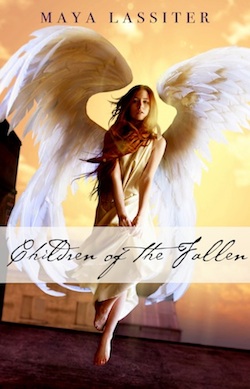
    P.S. Look at the cover of Maya’s latest novel. I think it’s gorgeous.
    Share
  • New presentation materials

    Super Author Kristan Higgins
    Super Author Kristan Higgins

    The RWA conference was a blast. It was a wonderful time to hook up with writing friends, to make new ones, and to listen to insights and advice from folks who are selling tons of books.

    Brenda Novak, whose latest book hit #48 on the USA Today list,  gave a great presentation on generating emotion in the reader.

    RaeAnne Thayne, whose book is currently the #5 best selling book in the USA this week, shared lots of helpful tips on ways to make this your most productive year ever.

    Kristan Higgins, whose latest book hit #20 on the USA Today list, gave a presentation on the role and delights of secondary characters and how to use them. She also gave a humorous and insightful keynote speech about one of the most satisfying reasons to tell stories–to help others.

    Lynn Kurland’s presentation on world building was short, but sometimes short is more powerful. I came away remembering that one key to great world building is remembering that nobody will care much about the world if they don’t care for the characters!

    There were others presenting, but I wasn’t able to attend. I’m sure they were equally good. I had a great time.

    I promised those that attended my presentations that I would post the PDFs here. Enjoy!

    Make Them Beg for More — Triggers and Delay

    The Story Setup

    Share
  • |

    Writing Update: 6/13/11 – reviewing the beginning

    I’ve finished chapter 17 of CURSE. I’m up to 50,000 words and have moved from the presentation phase into the struggle. And I’m stopping at this point to review the what I’ve got. I’ve learned that if the foundations of the story–the presentation phase–has fundamental flaws in it, you’re only going to create a HUGE rewrite mess if you push on.

    I know this from experience. When writing the first draft of CURSE back in 2009 (oh my heck, it feels like forever ago), I ignored my Spideysenses and told myself I could fix anything that was wrong in post production.  And it IS possible to fix many things afterwards–you can change scenes, improve clarity and transport, remove continuity errors, layer in character tags and things like that.

    And it IS true that sometimes you do just have to write to the end to figure out the story.  Sometimes you have to just write to the end, and do it in a substandard way, because if you don’t you’ll never finish anything. Sort of like sketching first and then painting. But if there’s something wrong with the basic premise of a story line, and you keep writing, then that story line affects everything it touches. The fractures ripple out all the way to the end of the book. And you might end up, like I did, having to toss a huge amount of what you’d written.

    Which is not all bad. I learned a lot and invented a lot of cool stuff while writing that. But when you’re on a deadline, it can be a killer.  And I’m not doing that this time. I worked out the big issues in my chapter outline.

    So I’m pulling back and reviewing. I’m delighted with everything but the villain. He’s still not right. I love his chapters, the scenes. I love the name I’ve given him–Endless. But the structure isn’t right. I’ve inadvertantly created two main villains. And that’s not useful. Having two “main” villains doesn’t double the power of the opposition. It splits it. The villain/henchman model works well. But I don’t have that either. Over the next few days I’ll be rectifying the setup. Then moving forward.

    For those of you who are writers, I thought you’d be interested to know that there were a few times these last two weeks when I dreaded the writing. I had a large problem before me or had to invent a new chapter (as opposed to using something from the previous draft), and a dread filled me. But I sketch/drafted my way to the end, and soon found the writing a joy again. 

    I can’t say enough about the sketch/draft method. I’ve found it works in creative activities OUTSIDE writing as well. When working up a lesson plan for my day job, designing landscaping for our house, developing a talking script for a sales call, writing a technical manual, or a hundred other things I’ve had to do–it’s always easier to work from something than create everything all from scratch.

    Sketching allows me to create that first draft. And it allows me to do this without having to worry about quality. Sketches can be silly. Weird. Full of crap. They can be all this because I can throw them away. They’re not meant to be permanent. And so there’s no pressure to perform. There’s no staring at a blank screen or page. Sketching is a free-wheeling joy. It fills me up with ideas. And then, when I’ve got the general idea of what I want to do, I can start in on the “real” draft knowing WHAT I want to accomplish which leaves me free to think about the HOW. And if I run into problems and realize the draft isn’t going to work, or I run into something better, I just call the current draft a sketch (or “take” as used in the movie business) and move on to the real one.

    Sometimes a chapter or section requires 1 sketch or take, sometimes I’ve run up into the 20’s. Sometimes I haven’t needed any at all. It’s not the number that’s important, it’s the process that has really freed me.

    Share