Indie Thoughts: Russell Blake’s Indie Author Myths

This is from Russell Blake, a pseudonym for Craig Osso, a 52-year-old retired home developer who has sold close to 450,000 copies of the 25 books he published in the last 30 months. The man has made over a million bucks at this.

1) Books Sell Themselves. No, sweetie, they don’t, at all, and never did. That’s why trad pubs spend massively on promotions. Because they know that visibility sells books, not invisible cosmic forces or author brilliance. It’s a highly competitive market with millions of choices, and it’s a retail market, and in retail, visibility is key. Which means constant promotion. Which most authors hate. But it’s reality, so get used to the idea. A companion to this aphorism is the next one…

2) Just write the next one. Sure, if you want to have two undiscovered gems instead of one. Look, writing the next one’s important, but not if it’s used to justify not promoting the last one, which is often the case. You have to both market the last one AND write the next one. Sorry. You do.

3) It’s all about luck. Well, perhaps some of it is. Maybe even much of it is. But so’s everything. You drive to the market, and 30 seconds after you pass the intersection some dumbass crashes into the car behind you. Luck. A hundred people start restaurants in town and two do well while the rest fail. Luck. A mugger attacks you after a movie. Luck. Sometimes good, sometimes bad. The book biz is no more or less random and chaotic than life, and yet some folks seem to consistently do better than others. I believe you need to work very hard, prepare, and be persistent, thereby creating some of your own luck. As an example, it’s possible you always wear your seat belt and the other driver didn’t today. In that case, bad luck becomes disastrous due to a simple lack of preparation. Or in the case of the restaurants, perhaps the ones that prospered had owners that worked 18 hour days and were talented chefs, and further, were savvy and inventive about getting people to try their cuisine. Preparation, persistence, hard work combine in that case to drag Lady Luck in their direction. With the mugger, maybe you have pepper spray or spent years on martial arts or have a concealed carry. Your preparation is the mugger’s bad luck.

Luck may be a factor, but in my experience it’s only one factor, and that perspective of it all being all about luck breeds apathy.

4) Do everything right and you’ll make it. Huh. If that were so, every book put out by big pubs would do well. The vast majority don’t. But that doesn’t mean you don’t have to do everything right, unless you want to worsen your already slim odds rather than improving them.

. . . .

10) Your muse cannot be forced to dance. Of course it can. If you were a writer on 24 or CSI or SNL you’d be expected to perform every week or you’d be out of a job. Most who work hard enough to get those gigs don’t want to lose ‘em, so they perform. Whether they feel like it or not. Whether they’re particularly inspired or not. The notion that you need to wait for your muse to decide to infuse you with story is fine if your books sell 10 million and you can afford to wait 4 or 5 years between each one. If that’s not you, you need to develop two things: a work ethic, and a system to inspire yourself.

One technique I use is to ask myself how I can make this book, or this chapter, the best I’ve ever written. You get completely different answers depending upon what questions you ask yourself. “How can I consistently write 5K a day and enjoy it?” will get you a different answer than “How am I ever going to do this?” If you’re stuck, ask better questions.

. . . .

12) I’m too busy to read. Who’s got the time? This one kills me. How in the hell do you expect to be a good writer if you don’t read a lot of good books? Intuition? Divine guidance? Magic?

. . . .

1[6]) Write a good book and you will make decent money. Or write a lot of good books and you will make decent money. Would that it were so. Reality is that the overwhelming majority of good books, which is to say competently written-and-edited tomes, fail to sell much.

. . . .

My message is simple: working very hard and very smart can improve your terrible odds, but that’s all it can do. It’s not a magic pill, nor a recipe for success.

. . . .

I can tell you how to operate your writing and publishing company intelligently, but you need to recognize that most well-run publishing companies fail. Just as most well-run any-kind-of-companies fail. Most start-ups don’t last. They go belly up. Even those with the smartest people and shiniest wow products. That’s just how it works. Don’t start a company if you’re uncomfortable with that idea.

. . . .

I’m a big proponent of choosing a genre that can support you, which means one that’s popular, and sticking to it (with the caveat that if it doesn’t meet your expectations after a massive, concentrated effort, pay attention to the result you’re getting, and switch to something with better odds). I’m also big on publishing regularly, meaning every three or four months (more often if possible) if you intend to make this your living. I’m huge on pro editing and covers and proofreading. I consider your cover and your blurb essential to success. But those are the basics. Important basics, but still, building blocks.

They will narrow your long odds because most authors simply don’t do what they should to make themselves successful. Understanding that is an advantage. It means you already know more than 90% of those who will publish on Amazon this year. If you do everything right, that will make you the 10% that has a chance.

But still, it’s not a lock. By any stretch of the imagination. Get clear on that. In all businesses, this included, you can do everything absolutely, spectacularly right, and go nowhere. Because God hates you. Or because the world’s unfair. Or because you’re not good enough. Or were born under a dark star. Or didn’t get breast fed enough as a child. Pick your reason. It doesn’t matter what it is, as long as you recognize that in ALL industries, most businesses do not succeed.

. . . .

I wish I could tell you how to avoid being that person. I wish there were a formula. What I’ve come up with I share openly: Pick a genre you love and that’s large enough to support you, stick to it, write a lot of seriously good books, focus on improving your grasp of craft each time you sit down to write, make each book your best ever (meaning respect your reader above all else), package and quality control your books like the pros do, market intelligently, and spend massive amounts of time and energy working smarter than everyone else. And above all, be extremely realistic about everything. Some might say, cynical. I’d say pragmatic.

. . . .

Can you do this part time and make it? Sure you can. So can someone who starts any business part time. Just recognize that your odds of making it are lower than if you did it full time. Duh. Put in 80 hours a week, you might get better results than 10. Big surprise. Can you put in 10 or 20 and still do well? Sure. Again, anything’s possible. But you have to be unable to grasp basic business concepts if you think your odds will be the same. If they were, nobody would put in the 80. They’d all put in the 10, because their odds are identical.

. . . .

What’s my point? That self-publishing is both exciting in its possibilities and daunting in its requirements. And that very few businesses succeed, whether it’s a new shoe shop, or a convenience store, or a restaurant, or a software start-up…or a publishing company. But it’s more possible now to succeed than at any point in the past. I’m living proof.


Link to the rest at Russell Blake’s Author Myths-1, Author Myths-2, and Author Myths -3.

Blake has some of the most sensible advice I’ve read. If you want more, search for him over on KindleBoards.

Share

Similar Posts

  • | |

    30 books you should read before you die

    An avid reader friend of mine began reading through the books in a list called “100 books you must read before you die.”

    She got to Jack Kerouac’s On The Road and went to Facebook and posted the following: “I don’t get the appeal. It’s about a group of boys/men who are irresponsible, drunks, whoring around taking advantage of others and being enabled by their women. Why is this a classic and why should I have wasted my time on it? Can some of my literary friends explain? I hated a brave new world and the handmaid’s tale too.”

    Is the book a classic?

    Should she read it before she dies?

    Is it really that important?

    Let me share an edited version of my response and then provide my list of 30 books you should read before you die.

    *

    Annette, the unfortunate truth is that these lists of “classics” are a sham because there is no objective criteria for determining literary excellence.

    Or maybe I should say that measuring quality in the arts isn’t like measuring the unambiguous, objective score of a baseball game. After books exhibit a certain level of proficiency, it becomes increasingly difficult to distinguish the quality of one book from another, especially because much of this depends on a reader’s interests and subjective experience of the story.

    When it becomes hard to rank performances, people rely on other measures. One of the most powerful is social networks.

    So if two readers find two different books that blow them away, one of the books might get all the attention because the one book gets picked up by a news service (The New York Times) or a platform (the Oprah Book Club effect) or some other social network of influence. A lot of the so-called literary classics only appear on various lists because they tapped into the academic network, which kept them alive far longer than they would have lasted otherwise.

    On The Road is simply a book that made a stir among some circles in the 1950s. That’s it.

    Was it more important or of higher quality than Exodus? The Chronicles of Narnia? Lord of the Rings? A Town Like Alice? All published in the 1950s as well.

    It depends.

    If you’re wanting to understand the 1950s beat culture, it would be an important book.

    But if you’re wanting to understand fantasy writing of the time, it wouldn’t.

    If you’re wanting to read a book that’s had a huge impact on popular culture, well, LOTR beats On The Road like a dog.

    Some people have the feeling that the so-called classics have some inherent medicinal value because someone put them on a list and called them classics.

    Nope. They’re just stories. Some of which can shed light on the issues and interests of a part of the culture in a given period. But if you’re not interested in that specific sub-culture, who cares?

    And if you’re reading to be entertained, moved, uplifted, or educated—which ones do that best for Annette is for you to decide.

    So all that to say I wouldn’t devalue your reaction to the book ?

    *

    I’m now going to give you my list.

    But it’s not going to be a list of titles. Nor will it focus on a book’s impact on some sub-culture of a given period.

    It’s going to be a real list. One that focuses on what so many of us go to stories for.

    1. The one that makes you weep.
    2. The one that makes you giggle and snort.
    3. The one that reminds you of what it’s like to fall in love.
    4. The one that gives you hope.
    5. The one that you begin to read more and more slowly because you don’t want it to end.
    6. The one that scares the soup out of you.
    7. The one that you can’t put down, even though you need to wake up early in the morning.
    8. The one that makes you wish you lived there.
    9. The one that’s so good that when you close it, you immediately start to read it a second time.
    10. The one that gives you and your child hours of pleasure together.
    11. The one that gives you a sacred, spiritual experience.
    12. The one that makes you reread some of the lines because the turns of phrase are just so delicious.
    13. The one that gives you courage.
    14. The one that takes you on an awesome adventure.
    15. The one that makes you want to be a better person.
    16. The one that bores you to tears (just so know you how good the others are).
    17. The one that introduces you to a different culture that delights you.
    18. The one that makes you think.
    19. The one that lingers with you for days.
    20. The one that gives you lovely insights.
    21. The one that inspires you to love your spouse more.
    22. The one that introduces you to the sorts of people you normally don’t like and makes you actually like them.
    23. The one that delights you with its characters.
    24. The one that whisks you away to a different historical period.
    25. The one that inspires you to give your children a hug.
    26. The one that gets your adrenaline pumping.
    27. The one that sparks all sorts of ideas in your head.
    28. The one that makes you wonder and start imagining what it would be like to be there.
    29. The one that blows your freaking mind.
    30. The one that makes you stand up in your living room and cheer.

    We could do more than 30, couldn’t we?

    Like the one that makes you think people from a different time period are just like us. And the one that makes you think people from that same period are completely alien.

    But I think we’ll stop. That there above is a list.

    Those are 30 books I think everyone will want to read before they die.

    Share
  • |

    JB Speculates: eBooks, Book Contracts, Agents, and Libraries

    I’ve looked in the crystal ball I hide under my desk and caught a glimpse of what ebooks will change in the next few years. Specifically I saw what will happen to:

    • Book Contracts
    • Literary Agents
    • eBook Aggregators and Libraries

    After showing me the vision, the ball thanked me for shopping at Walmart. Weird.

    PRINT ONLY CONTRACTS

    The only reason to have a print publisher is to get distribution you cannot obtain on your own, or to get it more cheaply than it would cost you if you tried to get it on your own. That’s it. Now, it’s true publishers have excellent art departments and story editors. But you can contract out cover art, copy editing, formatting, and even story editing yourself.

    Distribution is the main thing publishers offer that you can’t get anywhere else.

    BTW, when I’m talking about distribution, I’m talking mostly about getting the books out to places people can see and purchase them. For example, publishers can get your book into hundreds or thousands of books stores all at the same time–Barnes & Noble, Hastings, Walmart, Costco, indie book stores, airport book stores, grocery stores, drug stores, etc. Publishers can get you display in those stores so consumers see your book. One form of that are the racks and new book displays. Another is one that Scholastic does so well, i.e. displaying and selling titles in tens of thousands of classrooms with its book catalogs. A single author just can’t do that. 

    It’s also true publishers can convince some platform venues, that would never look at a self-pubbed author, to spotlight your book.  For example, it’s unlikely a self-published author will be able to convince Booklist, Publishers Weekly, and Library Journal, which have huge platform for library book purchasers, to review a book.  But publishers have no problem getting their stuff in there. Likewise, it’s often much easier for publishers to get endorsements from other authors or people with platform than it is for a single author.  Of course, there are so many places that have some kind of platform, that publishers don’t have a lock on them all, e.g. Goodreads and Amazon reader reviews.  But for the sake of simplicity, let’s just look at the distribution end.  

    Because 90% of book sales are still hardcopy, the only way to have HUGE sales numbers, right now, is through a print publisher. I’m talking about the numbers you see in the Publishers Weekly top selling books, where you have to sell at least 100k copies in hard back, 500k copies in mass market, to even make the list.

    Publisher’s lock on this ability will erode. We can see signs of this in the USA Today Top 150 already. I consider this to be the most accurate picture of what truly is selling the most. Here’s why. And ebooks are starting to be the best selling format for a number of books. On that list, they add up sales of a title in all formats and then list the best-selling format. So when you see an (E) at the end of the listing, you know it’s selling more ebooks than any other format. E’s are starting to pop up all over and we’re still in the early adopter stage for ebooks and ereaders.

    So what does this mean?

    If I put on my author business slacks (why does it always have to be hats we change?), I’d be crazy to turn down a publisher that wanted to offer me monster distribution. A bird in the hand is worth two in the bush. You offer me $500k now, I’m taking the money and running all the way to the bank and then the $6.99 Indian all-you-can-eat buffet.

    Of course, I’m not likely to get that kind of an offer. We new writers are more likely to get an offer for, what were Hines’ numbers? $6k – $12k? And for that the publisher will want all our ebook rights and will tie them up for years and years and years. And then they’ll try to give us a fraction of what we could get selling directly. Furthermore, they don’t provide such books the same push to garner platform spotlight. They don’t spend the money to give them the prime display in bookstores. This means the difference between what they bring to the table for us smaller authors and what we can do on our own is much less. And the ebook has narrowed that even further.

    How much further? Well, how many books would you have to sell to make that advance of $6k – $12k? If you’re selling your books for $2.99 for the Kindle, you get about $2.00 a book. That means you’d have to sell 3k-6k copies of an ebook to earn as much as that average advance. 

    Do you think you can sell 3k – 6k copies of an ebook at $2.99?

    Some authors will be able to do this. Some won’t. If you wanted to do that in three years, you’d have to sell about 150-350 books per month. For a more in depth comparison between traditional publishing and self-publshing ebooks, see Dean Smith’s blog on cash flow.  

    Maybe you don’t think you can make those numbers. But maybe you can. The point is that if you think you can, then you can make as much on your own as you can with a publisher. This means there is absolutely no financial reason on earth to take the publisher’s deal. None. Now, if you have non-financial reasons, that’s another thing, but when looking at dollars and cents, it’s fairly clear the publisher’s ability to put you into their distribution channels isn’t worth what it will cost you. Especially since the ebook is forever and may keep selling for years to come AND because the market for ebooks is still in the early adopter phase–it’s only going to grow massively over these next years.

    But this doesn’t mean paper publishing is dead. It’s not. Nor will it be for some time. Just because SOME authors can make as much in the ebook market on their own as they can with a publisher through their distribution channels doesn’t mean all of them can. Furthermore, publishers with distribution have something to offer even those who successfully publish ebooks themselves.

    Let’s say you have an ebook series that starts to sell well for you, 1,000 per month. That’s $2k per month, $24k per year. If a publisher wanted to buy the rights to that from me, they would have to pay me MORE than $70k as an advance. MORE. Because I can make that on my own in three years selling it myself. In fact, since ebooks are forever, I have to look at the present value of all of those years of sales. That income stream is going to be a LOT MORE than $70k, even if we think sales will taper off after five or six years.

    How many big publishers are going to want to pay that?

    Probably none. Or, at least, I suspect those deals will be few and far between. But there is money to be made in paper, even if that market is shrinking. There will be some smaller publishers who, for the right price, will offer paper distribution. And if they can get me distribution that I couldn’t get myself for paper, or do it at a lower cost, then I’d want to sell them paper rights. Why not?

    And so what I see in the crystal ball are some authors, the ones who do well selling ebooks, being able to sign contracts with publishers that sell paper rights only. I know the big publishers probably won’t go for that in the near term, but smaller publishers will see the value and step up to the plate.

    AGENTS

    What about agents? Are they going to die?

    I think if we remember that literary agents are SALES agents, then their future becomes clear. The only reason to get a sales agent is because doing so makes my property worth more (same reason for getting a publisher, btw). If, by letting them focus on sales and letting me focus on getting more product out the door, I make more money than I would if I tried to do BOTH the selling and the producing, then I want an agent.

    I want to sell as many rights as I can to as many people as possible–gaming, film, audio, foreign, merchandise, etc. I’d be a fool to say, well, no, I’ve got this little ebook gig going. I’m not going to sell any of these many other rights to anybody. No, I’m just going to let them sit in my basket and earn me nothing. Let them go to waste.

    !?

    A good agent should be able to sell more than I could on my own because they have a better ability to reach AND close editors AND other people that are in the market for purchasing rights to my property. They’ll also allow me to sell more because all the time I would have spent selling, I can now use to create more product. So not only do I have more books, and therefore rights, to sell, I can hopefully sell them for a better price and terms than I could on my own.

    I’d be a fool not to increase my revenue. I’d be a fool not to have a good agent.

    So as long as there are people who want to purchase these non-ebook rights, and an agent can make a sale I couldn’t or can make it for less than what it would cost me to do it on my own, then agents will be useful. Because of this, because we’ll always have more than ebook rights to sell, I don’t see a role for good agents ever going away.

    EBOOK AGGREGATORS & LIBRARIES

    When more and more people begin reading ebooks what happens to the libraries?

    Ebooks cost less. So a lower price per book would simply allow libraries to purchase more books and expand the collection. But wait, they don’t need rooms and rooms to hold all the paper. You can store the world’s library in one computer room. Shoot, this means that housing the collection on a server instead of on the shelves would cost less. This would allow for an even bigger collection. But why maintain a server and manage your own collection if you can network to the collection down the road?

    In fact, what if there were a mega service with millions of titles you could subscribe to? That would be even cheaper. Then you wouldn’t have to pay book purchasing agents or IT folks to keep your server running.

    Enter the ebook aggregators–the Netflixes of ebooks (I know somebody somewhere is working on this business plan; is it you?)

    I’m betting the whole library system goes national. I’m betting you’ll have some government aggregators, but they’ll probably be dwarfed by the private companies. You’d subscribe to the aggregator’s service just as you do Netflix today and many university libraries currently subscribe to electronic periodical collections.

    The aggregators will probably charge users as Netflix does for a certain number of books checked out at the same time. If a large entity like a library wanted to subscribe, I bet the aggregator would charge access to the collection based on number of users at the library. The library would pass some of that fee onto patrons. The rest of the fee would be paid by the community’s tax dollars, just as those tax dollars pay for the current collections. You might even have device manufacturers coupling subscriptions with purchase of the product as incentives to buy their devices.

    When the aggregators step in, we suddenly end up with a different mix of distribution channels that will coexist:

    1. Author –> ebook retailer (Amazon Kindle, B&N Nook, etc.) –> reader
    2. Author –> subscription aggregator –> reader
    3. Author –> subscription aggregator –> public and school libraries –> reader
    4. Author –> publisher –> subscription aggregator –> then option 2 or 3 above
    5. Author –> publisher –> current distribution channels

    Surprised by #5? Well, the current distribution channels are not going away until every book can be read on an ereader and everyone who reads has and wants to read on such a device. That’s going to take some time, if it happens at all.

    Why would readers buy individual titles ala distribution channel 1 above? Some people just want to own. Other readers will be happy to purchase the books because they don’t want to wait for a checkout slot to open up, e.g. I already have my allotted number of books checked out and I really want this one on hand all the time because it’s Suzie’s favorite. Other readers will want to customize a book with highlights, margin notes, links, etc. just as many of us like to mark up paper texts. We’ll need our own copy for that. Still, I think the bulk of reading will move to the subscriptions. For example, right now I purchase DVDs I love, even though I can get them from Netflix. But the number of DVD’s I own are a fraction of those I watch. Most TV and film I watch once and it goes back to Netflix until I want to see it again. And this checking out becomes even easier where there’s nothing physical to send through the mail.

    Please note: there will probably be some form of gatekeeping with the aggregators. I doubt they will carry every scrap of anything ever written. They’ll carry a lot of stuff, but not every written word. Furthermore, when you have hundreds of thousands of titles, you’ll need mechanisms for helping your subscribers find great content suited to their tastes. A lot of “people who read this read that,” review services, etc.–the next generation of Netflix recommendations, Goodreads reviews, and Pandora like tools. 

    Aggregators won’t be the only gatekeepers, however. The key is in getting notice. And there will be many places with platform that will be able to shine a spotlight on a book. Think about all the places you find out about movies today—radio movie programs, TV movie reviews, Rotten Tomatoes, Newspaper Reviews, Yahoo viewer and critic review summaries, Kids-in-mind, and on and on. Look at all the ways you find music. There will be just as many ways to find books.

    As far as paying authors, I suspect aggregators will pay authors each time a book is checked out, or, if it’s a must-have name author, they will pay to list the title plus a per use payment.

    So that’s the future I saw in my strange little ball. Feel free to comment or add your own thoughts.

    Share
  • What Makes a Great Villain?

    GENUS & SPECIES

    I think there are a few facets to the question posed in the title. But before we get to that, I think we need to define what a villain is.

    A villain is a type of antagonist. Every story has an antagonist, someone or something that opposes the hero or heroine, even if it’s the setting as in Jack London’s “To Build A Fire” or the hero himself as in Jim Carrey’s Liar Liar. But usually the antagonist is another character in the story.

    Antagonists vary in many ways. One way that’s important to the story is how sympathetic they are. The spectrum runs all the way from those who generate fear and loathing to those who generate just a little less sympathy than the hero. Note: we can never feel more sympathy for the antagonist; the moment we do, they become the hero in our eyes. The definition of the antagonist is the person we’re rooting against, the person who is working against the person we’re rooting for.

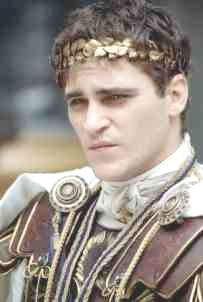
    So a villain is a species of antagonist that generates fear and loathing in the reader. It doesn’t matter if they think they have good reasons for their acts. We still feel they are evil and dangerous. Examples include: Darth Vader, Sauron, the kidnapper in Mel Gibson’s Ransom, Commodus in Gladiator, or the Joker in The Dark Knight.

    So here’s what I’ve noticed about effective villains.

    VILLAINS & STRUCTURE

    1) In a villain/hero story situation, the villain is key because the hero is reacting to the villain’s plan. It’s a total threat/danger plot.

    2) So the villain has to be active. He’s the one who WANTS something. He’s the one that starts the whole story. A weak villain isn’t going after this thing whole-hog or doesn’t have the power to do it or has no urgency and will.

    3) Strong villains are ruthless AND powerful. Villains also need to have some brains–we need to be worried for the hero, remember? We have to know that they’re they type of person  that will take you out if you get in their way. Even if they have a well-spun way of making themselves sound ethical. But villains go beyond other antagonists in that we fear and hate them. They are evil.

    4) The hero needs to be the underdog in the relationship, meaning less powerful, two steps behind, not as easily ruthless etc.  The bigger the plan the more high stakes and high concept the story becomes. But it’s the villain’s plan that drives it. And they will be taking steps to counter the hero, will probably be two steps ahead most of the story.

    5) As always, as with any character, the villain’s plan and motives have to be believable. Even if they are evil. The minute a villain becomes too far-fetched, they lose their power.

    CHARACTER INTEREST

    In addition to the role villains play in the story, there are a number of other things that make them interesting. However, these things are not anything new or different. They’re the same things that make any character (or person) interesting.

    – Larger-Than-Life Attributes (as in experience, power, skill, success, position, or behavior)
    – Eccentricities and Particularities
    – Outrageousness
    – Humor
    – Beauty
    – Surprise (as in against type details, reactions, motivations, or backstory)
    – Inner Conflicts (as in the “ethical” dilemmas they find themselves in)

    While danger and threat draws the attention, rouses interest, and can be sufficient to make a villain memorable, I think the factors mentioned above have a wonderful effect.

    THE CORE QUESTION

    The root question when considering villains is what pushes readers toward the fear and hate of others?

    Of course, it’s relative. But there are qualities that engender these feelings in us. Selfishness, brutality, sadism, madness, cruelty, a complete disregard for others AND the power to carry their wishes out. It’s someone who poses huge, immediate, specific threats to me or those I care about and does it without any concern or with relish. The more intense these factors, I think the more we move along the spectrum towards fear and hate.

    So people say the best villains are those who are the hero’s of their own story and with whom we can empathize. I don’t think this is accurate. The Joker in the Dark Knight was a great villain and may have been the hero of his own story, but never in a million years would I empathize with him. It’s true we can smpathize more with people who agonize and resist horrible acts. And some antagonists do show scruples. But not every story demands that type of antagonist. Sometimes what’s needed is someone who kills grandma horribly and says “so what” or “it was fun”–and engenders fear and hate.

    One last point. “Villain” is a reader attributed characteristic, i.e. the reader is the one who labels the character. This means the person has to be a villain in the READER’S eyes, not necessarily a villain in the eyes of the culture in the story. For example, In Not Without My Daughter the hero subverted and violated the dominant story culture, and I cheered for her. The guy who was sustaining the moral order of the story culture was the villain.

    ROOTING

    From what I can tell, all rooting response is based on some innate sense of justice, of what’s appropriate in a situation. For whatever reason, we feel discomfort when undesireable things happen to good or innocent people. We also feel discomfort when desireable things happen to bad people. The reason why we root for someone is because they have a lack of happiness or a threat to their happiness AND we belive they deserve better. I can’t see anything else we based that deservingness upon except some inner sense of justice.

    It doesn’t mean the deserving person is a goodie two-shoes. It just means that in the context of the story and what’s happening, we think the scales of justice tip, if only slightly, to the hero’s side.

    Some may argue this, but I don’t think it’s possible to root for someone or against someone without a moral judgment. It’s true that not every antagonist needs to or does act immorally. In fact, the antagonist might be doing the right thing, the moral thing, in his or her particular situation, and it just happens to oppose the hero’s desires. The key however, is that the story guides the reader to feel the hero should win at the antagonist’s expense. And that it’s right for the hero to do so. That “rightness” is based on a moral stance of what’s good and desireable in the given situation. The farther along the spectrum of antagonists we move towards villany, the more clear that moral stance becomes.

    Share
  • |

    New Workshop: How to Write a Story that Rocks

    Folks, the first tentative schedule for Life, The Universe, & Everything (LTUE) has been set. For the past few years I’ve been teaching a 2-3 hour workshop called “The 3 Things You Must Learn To Write Killer Stories.” I think I must have taught it over 15 times in different venues. Hundreds have attended and said they loved it.

    However, this year I’m going to be doing something different. I’m developing a new two-hour workshop called “How to Write a Story that Rocks.”

    I’ll be teaching it Thursday evening, February 11th from 5 PM – 7 PM at LTUE at BYU. It’s FREE and open to all.

    What I found was that a lot of new aspiring authors get lost in mountains of rules. But great storytelling isn’t about rules. They try to form stories with word counts, chapters, and weird plot diagrams. But stories aren’t about those things. They have a hard time knowing what to write next because they don’t understand how story works. In fact, some don’t know how to start at all. They just flounder in their piles of zing. Finally, even if they can get a bullet outline, they have a hard time turning that into a scene.

    So what we’re going to do in this workshop is this.

    1. I’m going to bring in some ideas for character, setting, and problem. We’re not going to generate from scratch as we’ve done in the past because I want to get to the next steps.
    2. Then I’m going to teach you how to go from idea to outline–we’re going to do it together, and you’re going to learn exactly how to know what comes next 
    3. Then we’ll go from outline step to scene sketch.
    4. Then from scene sketch to draft.
    5. At every step I’ll be pointing out key story development concepts and principles

    When we finish, you should be able to:

    1. Identify the essential story objectives and story development questions–get these right and the rest doesn’t really matter. This will include the HANDFUL of key things you need to worry about and develop with character and plot.
    2. Develop more likeable and interesting characters
    3. Develop more powerful story concepts (call it premise, problem, situation, whatever). Once you get this the story writes a lot of itself.
    4. Explain the real Story Cycle. Not Campbell’s mumbo-jumbo hero’s journey. Not the three, five, seven, nine acts. Not Freytag’s diagram. Story.
    5. Explain what it means to “move a story forward,” “increase the stakes and tension,” “complicate the plot,” “complicate the motive” and how that’s done using surprise, conflict, motive, and problem. Included in this are “turns,” “rugpulls,” and “reversals.”
    6. Use the Story Cycle concepts to generate a story bullet outline and take a bullet step idea and turn it into a scene.
    7. Explain the creative principles that help you generate stories more easily.

    Larry Correia will be there as well. So I’m expecting this to be a very helpful workshop. I’m going to do all I can to make it as good or better than the first.

    Share
  • |

    My First Year as an Indie Author

    On November 24th last year, a little over 13 months ago, I released my first indie title—Servant: The Dark God Book 1. That release was the official rise from the sideways swamp crash I had with Tor Books.

    BTW, sideways swamp crashes in publishing, which can be caused by all sorts of reasons, are not uncommon. Most writers will take a hit or three in their career. That’s just part of the writing business. The question is what happens after the swamp crash?

    In my case, I got to work. And, boy, was it a lot of work.

    The results have been positive. It was not a phoenixian rise from ashes to glory; it was more like a damp crew patching the ship in the jungle with whatever they had at hand and then launching with nothing but a few birds making any noise. We are by no means past the many perils and obstacles on the path–right now a solid hit from just about anything could knock us out of the sky.

    But we are airborne.

    We are flying.

    And by that I mean the business is delighting readers and generating income.

    I’ll probably hit close to 23,000 paid sales since that launch. The large majority of them were for Bad Penny. To give you some perspective, a single title will make the official Publishers Weekly bestsellers lists (of traditionally published authors) hardback and paperback categories when the title has sold around 100,000 copies in the year. The top dogs report sales of a few million.

    It’s clear the John D. Brown crew has got a ways to go.

    But we don’t have to reach that lofty level to be viable. It would be awesome. At the same time, it’s helpful to be realistic. There are somewhere between 300-400 titles on the adult hardback and paperback list combined. The same on the children’s lists. So I estimate there are around 700 traditionally published books, fiction and non-fiction, that sell at those bestseller levels. That’s out of the millions of trade titles available on Amazon.

    The good news is that the majority of writers making a living don’t appear there. The fact is that you don’t have to sell 100,000+ copies of a single title in a year to make a living. In the indie world, you can do just fine with what Russell Blake calls base hits and doubles.

    So are we making a living?

    Those sales have generated enough net profit to purchase us a nice used vehicle and a few other things. Better than a poke in the eye with a sharp stick (as my neighbor Mike Carr used to say), but making $10-20k can’t replace the day job. Not even close. Still, it’s a beginning.

    Will our crew make it?

    Can they survive the ferocious flying monkeys?

    Stay tuned.

    In the meantime, I want to summarize a few things I’ve learned about indie publishing and give a few shout-outs.

    First, I want to thank all the readers who decided to give one of my books a shot. From the reviews and sales, it appears the majority found just what they were looking for (and there was much rejoicing).

    Second, a big thanks goes to Larry Correia. Not only is he generous and enthusiastic, but his audience is as well. The Monster Hunter Nation made a definite difference for me this year.

    I want to thank LL Muir and Diane Darcy, two romance writers who have been incredibly generous in sharing their indie insights and support.

    Devon Dorrity and Dixon Leavitt spent hours, HOURS, of their time helping me with covers. I can’t thank them enough.

    I also need to thank the Codex Writers. There’s a small group of us indies there, and they’ve all be very helpful in sharing insights about what’s worked for them and what hasn’t.

    I’ve found other resources helpful as well. The Passive Voice kept me current on the industry. Russell Blake’s blogs gave me a clear-eyed opinion of what it takes to succeed. The Calibre ebook editor has saved me many times. And Anne-Marie Concepcion’s online course on using InDesign to publish ebooks was a very good introduction, as were Dean Wesley Smith’s online courses on interior and cover formatting.  I list other resources I found useful in my Resources for Indie Writers post.

    Okay, so what have I learned?

    1. Nothing happens without visibility

    This is retail. If your product is not somewhere that people can see it, they won’t buy it.

    I was in Wal-Mart the other day. My sister calls it the Evil Empire, but she’s a Tarzjay snob. I myself am a value shopper. I want what I want, and I want to pay as little for it as possible. At the same time, I’m not going to go out of my way to get it because searching around costs time and money. So if I’m looking for something in Wal-Mart and I don’t see it on the shelves, guess what? I buy something similar that will do the job.

    Wal-Mart used to stock Marzetti’s Ranch Dip. The best vegetable dip EVAR. But then sometime this year, they stopped stocking it.

    Why?! Why do they stop stocking stuff the moment I find it?!

    (Hey, maybe that’s why they’re the Evil Empire . . .)

    I mourned for a few seconds. And then I purchased the Lighthouse dip. It’s good. If they put Marzetti’s back on the shelves, I’ll switch back immediately. But the point is that if it’s not in front of my eyeballs when I go shopping, I ain’t gonna buy it.

    And I’m finding retail is the same with ebooks as it is with everything else. You can have the best product in the world, but you aren’t going anywhere with it until you are visible to your buyers.

    2. There are a couple of ways that I was able to make my stuff visible

    The way to make my stuff visible was not by publishing on Amazon, Nook, and the rest.

    Publishing means nothing.

    Think about it. There are, right now, 3,079,561 books in the Kindle bookstore.

    Yes, three million!

    If those were physical books, and we lined them up spine-out like we do on a bookshelf, and we assumed the spines average about an inch in width, they would make a line 48.6 miles long.

    For us Utahans, that’s a line of books that stretches from the Mormon temple in downtown Salt Lake City, past Provo, and ends in Springville! (Look up your own local distances to get an idea.)

    That’s the kind of visibility you get by publishing your book, which is nada.

    So if getting it in the store that’s 50 miles long didn’t help, what did?

    Getting on a bestseller list.

    I sold thousands of copies of Bad Penny on Nook when I was on the Nook’s top 100 list. I rose to #3, in the entire Nook store, then hung out around #50 for about a month. And when that burst of sales that made me #3 fell out of the algorithm (30 days later), I fell off the list. My sales dropped like a stone. Not to nothing. But they were a fraction of what they had been.

    How did I get that #3 slot to begin with? The same way I rose to #30 for a few hours in the Kindle store, then slowly dropped to the 1,200s for a few days. I got it by placing an ad with the king of book advertising services, aka BookBub.

    How did I get onto BookBub? Here’s their requirements and tips. Please note that the reviews of Bad Penny were part of what made the book appealing to BookBub.

    How did I get reviews? By using other ad services to make my book visible and getting mentions on blogs like Larry Correia’s and a few others. And by following recommendations in the book Let’s Get Visible and Your First 1,000 Copies and the suggestions of others who are selling well. And that’s a key thing too–looking to see what folks who are selling well are doing, not those who aren’t.

    Of course, readers also liked the books enough create word of mouth. And I can track some of my sales spikes to specific posts or people. The ultimate goal is to have so much word of mouth that everyone’s talking about you. But until that time, I ain’t going to rely on word of mouth alone.

    Why not?

    Because I’d like to increase my odds of success. I’d like to accelerate them. And thinking that word of mouth alone is going to do that flies in the face of everything I’ve learned about retail. Read what I had to say about books and lemonade and tending your garden for more. Consistent efforts with methods that actually have some track record of success seem to have helped a great deal.

    BTW, Bad Penny is currently in the top 10 of three of Amazon’s thriller lists. I guaran-dang-tee you that being on those lists is a big factor in me selling somewhere around 60 copies a day. I saw that with Nook. Being visible starts a virtuous cycle–more people give you a try; if they like the book, they spread the word, which leads to more sales, which keeps you visible, which prompts more new readers to give you a try. Yeah, you’ve got to be good. But you’ve got to be visible first.

    3. In most cases, books in a specific genre are substitutes

    When readers purchase a book, they are looking for a certain type of experience. And my book’s experience isn’t so singular that readers can’t get something roughly similar from another book.

    I love Lee Child. But Robert Crais provides an experience that’s basically inside the same ballpark. So does Nelson Demille and a whole host of others, including me.

    If Lee Child stops writing or slows down his production to one book every four years, I’m not going to stop reading thrillers. There are plenty of other authors that give me the general adrenaline, surprise, action experience I’m looking for. I’ll be sad, but there are a lot of good authors out there. And I’m sure a few will become my new Lee Child.

    Of course, we aren’t all exactly the same. I provide a noticeably different tale than Lee Child does even though we’re in the same Lone-Ranger-vigilante-justice action genre. And so, if I produce the best tale I can, I will find some readers will come to prefer me to Child because I line up more with their tastes than he does.

    In addition to continue to work on visibility and craft, this means I’ve got to up my production. I’m going to try for 2.5 brand new books in 2015. That’s nothing for some folks. But that’s a good stretch goal for me.

    4. There is no one sure-fire way to success

    Even though visibility and studying your craft helps, nobody I know who is doing well has a replicable step-by-step program that guarantees success. There are some activities that seem to make the odds better, but there is no guarantee.

    For example, from what I wrote above about BookBub, you’d think that’s the brass ring. Nope. I know other authors who have run promos with them and didn’t have near the success Bad Penny did.

    Russell Blake’s advice on this seems to square best with my experience. See the links to his blogs here to see what I’m talking about.

    5. Figuring out how to make a living with this has a lot in common with Lean Startup principles

    The basic concept behind lean startup is that when you’re in a market without a lot of info on what works, the company that wins is the one that learns what works the fastest. And you do that by conducting experiments.

    You experiment to see if you’re offering any value to the intended audience. You experiment to see if you’re promo methods are actually feeding your engine of growth. You experiment to see if your audience really is big enough.

    The experimental approach taught in the lean startup stuff has freed me from a lot of anxiety. Success or failure is not about me personally. It’s about my techniques. It’s about my craft and business skills. It’s about me learning how to learn quicker.

    I’m approaching my thriller and epic fantasy properties as experiments. I’m approaching various visibility methods as experiments. My current state of craft is an experiment. If what I’m doing with my current properties doesn’t work, I can pivot and experiment with something new.

    The question is whether I can learn what works–to find an opportunity to add value and provide that value–before I run out of runway.

    If you’re interested in these ideas, let me recommend The Lean Startup by Eric Ries, which explains the general principles, and Running Lean: Iterate From Plan A to a Plan That Works by Ash Mayura, which shows you how to start to implement them. These two books have changed how I approach the writing business.

    Bottom Line

    The bottom line is that I love developing stories and sharing them with readers.

    I knew this already, of course. But having the ship up and flying again made it hit home in a big way. I enjoy the process of developing a story. I love the research, the story generation, the surprises that come along the way. And I love the emails I get and the discussions I have with readers who have read my books and enjoyed the heck out of them.

    So that’s the big summary.

    Year two stands before us. Let’s hope John D. Brown and company can learn and produce at higher levels than we ever have before.

    Have a wonderful 2015!

    Edit 1/14/2015: Here’s John Ellsworth, another indie author, with a similar tale. Although I’m jealous of his seven books in a year. I need to get cracking!

    Share
  • |

    The 3 Things You Must Learn to Write Killer Stories: Feb 20 @ BYU

    Mark your calendars!!

    The free, 2009 Life, the Universe, and Everything symposium at BYU will run Thursday – Saturday, February 19 – 21.

    The speical guests are Tracy & Laura Hickman (Dragonlance authors) and James C. Christensen (yes, the amazing fantasy artist). But there will be more than a dozen other authors there, including: L.E. Modesitt, Brandon Mull, James Dashner, Brandon Sanderson, David Farland, Mette Ivie Harrison, Eric James Stone, Howard Tayler, and a number of others.
     
    Here’s what I’ll be doing:

    1. Panel: The Principles of Suspense. Fri, Feb 20, 1:00 PM – 2:00 PM
    2. Workshop: The 3 Things You Must Learn to Write Killer Stories. Fri, Feb 20, 6:00 PM – 8:00 PM
    3. Panel: Myth and Mythology in SF&F. Sat, Feb 21, 1:00 PM – 2:00 PM
    4. Reading: from the forthcoming novel and a few of my other published works, Sat, Feb 21, 3:00 PM – 4:00 PM

    If you want to write fiction, you’ll want to attend the workshop. And if you’ve attended the workshop before, know that I’ve made some significant updates to the workshop content for 2009. I’m always learning, and so each time I teach this I’m able to provide more insight.

    You’ll also want to carefully review the whole schedule. There are tons of panels with professional authors on them that are going to be both useful and interesting to writers.

    My workshop focuses on three incredibly important things.  In the beginning, I didn’t know these key things, and that ignorance stymied all my writing efforts for years. Once I learned them, the way was opened. There was still a lot of work involved. But these principles increased my output of quality material 1000% (literally). The principles allowed me to write the story that got me my current three-book contract from Tor.

    I’ve taught it now more than a dozen times to all sorts of fiction writers and they’re telling me they’re finding it very useful. You’re going to love this stuff, and I always enjoy sharing what I’ve learned with other writers. The three things are:

    1. What a story really is. We’re not talking narrative taxonomy, although that’s included. It’s focused on the story effect upon the reader. And why this is one of the most important things you need to understand when writing fiction.
    2. Parts & principles. Key principles of character, problem, plot, setting, and text as they relate to #1.
    3. The creative process. The simple but powerful principles of how to get ideas. How to develop them into story. Why writer’s block is a gift and how to use it to produce MORE. Plus a number of other creative principles I wished I’d known.

    It’s a highly interactive workshop. Again, the whole symposium, including the workshop, is free. I don’t know another place where you can learn from so many professionals for such a great price.

    Hope to see you there!!

    Share

2 Comments

  1. With number (10) it sounds like he has Patrick Rothfuss or George R. R. Martin in mind. 🙂

    Of course, those two are a bit old-fashioned. They seem to work and procrastinate until they have huge, “perfect” books to release.

    With ebooks, I still think it makes the most sense to release early and often. Once the whole story has been serialized in ebook form (even if the individual pieces are rough), then you can always go back and collect it into larger books or ebooks, possibly with major modifications that you may have thought of while working on the pieces.

Comments are closed.