New creatures & mystery in wonder fiction

I love listening to writing excuses because I get to hear three smart and funny authors discuss interesting topics that get me thinking. This week’s writing excuse was on building non-humans in SF&F.

Here’s my take.

An alien race, if done right, can be a huge draw to a story. For example, Brandon Sanderson’s Kandra point of view in HERO OF AGES is one of the most enjoyable parts of that book.

However, I want to suggest that aliens (in fantasy or sf) create that draw only IF they’re kept sufficiently strange or mysterious. The minute they become common or too human, they lose their power to enchant.

That’s one thing I like about how Tolkien did the elves and orcs–we never got the National Geographic on them. They never became common. And so I always wanted to know more. Easterlings, ents, balrogs, the orders of wizards, dragons, etc. were the same. There were tons of tales Tolkien hinted at, curioisties raised, but those desires were never sated. This is part of what drove me to other fantasy books.

It’s the same thing that made me love mammoths and dinosaurs, bats and giant squid, and far-off places. However, once these things became common and explained, their magic departed. The curiosity generated by the wonder of things new is one of the key things science fiction and fantasy offer its readers. But I think authors can only keep it alive if they approach it in the same way a fan dancer approaches her work.

This leads me to another point. It’s true that focusing our world building on the conflicts and story touch points can keep us on track. And we do need to produce. However, I think if we strictly limit our alien development to the central story conflicts, we might miss many opportunities for that wonder. Some of what we develop might end up complicating the plot while other parts might only enrich the experience. And I don’t think that’s bad.

For example, one of the most poignant parts of the LOTR, of which there were many, was the tale of the ents and the entwives and Treebeard’s poem. Tolkien could have eliminated that and the story never would have been affected. But, O, how much richer the story was for that little side trail that still beckons. Or you might think of the ring Bilbo found. When Tolkien first wrote THE HOBBIT, it wasn’t THE ring of power. It was merely a ring that Gollum used. Only later, when he began to work on LOTR and was trying to figure out the main problem of the story did he work that detail into it becoming THE ring of power.

Share

Similar Posts

  • Who Will Play in The eBook Supply Chain?

    I was reading this Konrath post by Barry Eisler on the “Attack of the self-publishing memes” in which he argues that there isn’t an inherent conflict of interest for agents to also help authors epub their books. This got me thinking about the steps (tasks) in the current supply chain, who was going to provide them, and where the biggest value lay.

    Here’s the process right now as I understand it from manuscript to reader. The numbers are only task identifiers and don’t represent sequential order in every case, although I did try to sort them that way.

    PAPER CHANNEL TASKS THROUGH BRICK & MORTAR OUTLETS

    SELL MANUSCRIPT TO PUBLISHER
    1. Promote manuscript to editor at publisher
    2. Negotiate contract with publisher

    EDIT MANUSCRIPT
    3. Story edit manuscript
    4. Revise for story edits
    5. Copy edit manuscript
    6. Revise for copy edits

    PREPARE BOOK
    7. Create cover design and art (a marketing/advertising function)
    8. Obtain ISBN
    9. Typeset book
    10. Print book

    MARKET BOOK TO WHOLESALERS, RETAILERS, AND LIBRARIES
    11. Establish book selling hierarchy (lead book, second lead, etc.)
    12. Obtain reviews from trade publications, newspapers, websites, authors, etc.
    13. Create sales catalog and other sales documents
    14. Contact book buyers and promote books (calls, visits, conferences, etc.)
    15. Take orders

    DISTRIBUTE BOOK
    16. Ship to retail outlets and wholesalers
    17. Warehouse book
    18. Process reader purchases & returns

    PROMOTE BOOK TO TARGET AUDIENCE
    19. Publicity, including free copies
    20. Advertising
    21. Co-op display purchases

    SELF-PUB EBOOK AND POD PAPER CHANNEL TASKS

    EDIT MANUSCRIPT
    1. Story edit manuscript
    2. Revise for story edits
    3. Copy edit manuscript
    4. Revise for copy edits

    PREPARE BOOK
    5. Create cover design and art (which you could lump under marketing)
    6. Obtain ISBN
    7. Format book for ereaders and POD services (CreateSpace etc.)

    DISTRIBUTE BOOK
    8. Upload book to retail and library outlets
    9. Warehouse the bytes
    10. Process reader purchases & returns

    MARKET BOOK TO LIBRARIES AND TARGET AUDIENCE
    11. Obtaining reviews from trade publications, newspapers, websites, authors, etc.
    12. Publicity, including free copies
    13. Advertising, including website display etc.

    AUDIO BOOK CHANNEL TASKS
    There are actually two channels here–physical audio books (CDs) and downloads (Audible, etc.).

    I would assume the physical audio would follow the marketing, distributing, and promoting aspects of the paper channel tasks and add in the audio production tasks. Downloadable audio would follow the marketing of the ebooks and add in the audio production tasks.

    THOUGHTS
    I’m sure I’m missing some key steps somewhere. Somebody please supply them if you see gaps.

    As for the future, here’s what I see. The paper channel tasks aren’t going to change much. Nor do I think the people performing the various tasks will either. For example, I just don’t think POD machines are going to catch on in stores and wipe out distributors. They may take out printers (#10) of trade and mass market paperbacks. But I haven’t seen a POD machine that can do hardbacks. Maybe the PODs will move to the retail outlets. But I don’t think so. Somebody disabuse me of the notion.

    However, I do think there will be some interesting developments in the ebook/POD channel.

    Right now a lot of authors are spending time performing tasks 6, 7, and 8. Some literary agencies are wanting to charge 15% forever for those steps with maybe a little cover design. But tasks 6-8 are the tasks that require the least amount of skill and will soon be automated.

    Formatting for ebooks now is like coding html was for webpages 10 years ago–people in the code spending hours tweaking crap. Right now it takes you about a day to learn how to format a novel for the various ebook readers. Once you know how to do it, you’ll spend a day, maybe two, formatting your novel and uploading it. Or you can pay someone else to do it–any responsible teenager will do.

    But within the next year I predict an application coming (if it’s not already here) that will hook into Word and other programs that will make the labor obsolete. Creating a Kindle document will be like creating a PDF document in Word today—you just click Save.

    Uploading could be automated as well across various sites with some application. But it’s fairly easy now.

    So for which tasks are these ebook distributors wanting to charge 15% forever? Obtaining an ISBN?

    I don’t even think they even do that.

    Amazon and the other ebook retailers have a lock on 9 & 10. It would be incredibly hard to dislodge those gorillas. So I think the place where literary agencies and others who want to play in the indie ebook/POD supply chain are going to flourish is in the other tasks that require the most skills–editing, cover art, and marketing, which I’ve marked in blue.

    Authors interested in the indie ebook/POD channel are going to want service providers who can deliver great editing, cover art, and marketing. They’re going to want folks who can help them sell into traditional domestic and foreign paper distribution channels. They’re going to want folks who can help them sell rights to other buyers–audio, film, etc.  And they’re going to want help with their contracts.

    If I were an agency, graphic artist, editor, intellectual rights lawyer, or some other entrepreneur trying to serve indie ebook/POD authors, that’s where I’d spend my time.

    Dystel & Goodrich literary agency recently announced they would do something like this . . . almost.

    Over the past months and years we’ve come to the realization that e-publishing is yet another area in which we can be of service to our clients as literary agents. From authors who want to have their work available once the physical edition has gone out of print and the rights have reverted, to those whose books we believe in and feel passionately about but couldn’t sell—oftentimes, after approaching 20 or more houses—we realized that part of our job as agents in this new publishing milieu is to facilitate these works being made available as e-books and through POD and other editions.

    Right now, you’re thinking, oh, DGLM is going to be another of those agencies that has decided to become an e-publisher and charge clients whose books they can’t sell 50% of their income for the privilege of uploading their work. Some of you may be mumbling, “Uh…that’s a conflict of interest.” We get it and we understand how that can be the perception. However, we have no intention of becoming e-publishers. As we said above, we have too much respect for the work that publishers do and too much respect for the work we ourselves do to muddy the waters in such a way.

    Again, what we are going to do is to facilitate e-publishing for those of our clients who decide that they want to go this route, after consultation and strategizing about whether they should try traditional publishing first or perhaps simply set aside the current book and move on to the next. We will charge a 15% commission for our services in helping them project manage everything from choosing a cover artist to working with a copyeditor to uploading their work. We will continue to negotiate all agreements that may ensue as a result of e-publishing, try to place subsidiary rights where applicable, collect monies and review statements to make sure the author is being paid. In short, we will continue to be agents and do the myriad things that agents do.

    Our intention is to keep on trying to find books we think we can sell to traditional publishing houses, to negotiate the best deal (always), and to give our authors as many options as we can. Because we will continue to be commission-based, we will not be automatically pushing authors into e-publishing. Again, we want to give our authors options and empower them to do what they set out to do all along: have their work read by the largest possible audience

    However, from what I understand they’re not offering to perform the necessary tasks for 15% forever, only the project management of the tasks. Which means the author will still be paying for the editing and cover art and marketing.

    15% forever for project management (a list of to-do’s in this case) and a service provider contact list? Where the author still pays for the editing, cover design and art, and marketing?

    Ummmmm, no.

    Others like D&G will pop up. But the ones that indie authors will eventually go to will be those that deliver on the high-skill tasks for reasonable rates.  Those will be the ones playing in the ebook supply chain of the future.

    Many authors will contract the tasks separately themselves.  But a lot of authors won’t want to do that. They’ll want a one-stop-shop. Or one that does most of it. Some of those one-stop-shops will charge an upfront fee and will probably accept anyone who can pay. Others will make most of their money on a % of the sales to readers and libraries, footing the initial costs of the tasks, and will only work with clients they think will pay out, which if you think about it isn’t really an idie (self-pub) model at all. That’s the space traditional publishers play in right now.

    But in the ebook/POD world distribution is no longer a key barrier to entry for new competitors. And so I expect to see a whole bunch of new publishers coming to play in that space. Those that select, edit, and market well will flourish.

    Meanwhile, I don’t think most of us authors care which road we take and who we play with. Well, as long as they play nice and don’t poop in the sandbox. We just want to get our stories in to the hands of massive numbers of delighted readers.

    Share
  • |

    Why you can’t popularize literary fiction, part 2

    I voiced my opinions on the TC Boyle message board. Needless to say, I’m probably too aggressive in my stance. But a guy over there said: “(easy,chewable,harmless pages) shouldn’t be the goal of any writer with even the tiniest self-respect.”

    Here’s my response.

    —-

    I don’t know any of these successful authors who don’t have self-respect because I don’t know any of them who try to write based on what they think will sell. Everyone of them that I know writes from passion. And I know some NY Times Bestsellers. They might look at 10 projects they have passion for and choose one that might be more marketable. But the passion comes first.

    I don’t know how anyone could spend the amazing number of hours it takes to finish a novel unless they have passion for the project. In fact, I wonder if it’s possible to create something that’s actually sellable without it. Everyone’s always talking about these hacks out there with metal brains writing for money. But after all the writers I’ve met, I’ve yet to find one. In my experience they’re as scarce as the yeti.

    So my intent wasn’t to say you can write for love or money, but not both. My intent was to say that I believe most MFA programs have made themselves irrelevant to the greater stream of literacy in the country. The teachers have passion for fringe genre and teach their students how to entertain that fringe reader. And if they DO have passion for the types of fiction most readers want, such enjoyment is always talked about as some form of slumming. There’s an apology or at least a statement making it clear they know such fiction is not something you bring to the table where serious writers work.

    But this isn’t true. Serious writers, passionate writers work in those genres. And they deliver excellent work. By that I do NOT mean they deliver the tropes of literary fiction in drag. What they deliver doesn’t appeal to the fringe markets. But it’s excellent, nevertheless, because it delivers exactly what the people go to those stories for.

    Share
  • Jennifer Nielsen and “The Rules of Personality”

    Jennifer Nielsen is the author of Elliot and the Goblin War, the forthcoming Elliot and the Pixie Plot (Sourcebooks, August 2011), and The False Prince (Scholastic, April 2012).  She’s also worked for many years with a troubled youth program. I recently sat in on one of her presentations on characters and personality at a writers conference and quickly found myself scribbling down insights. Later I convinced her to share some of that here. Enjoy. You can learn more about her at www.jennielsen.com.

    The Rules of Personality

    In the Mockingjay series by Suzanne Collins, 16-year-old Katniss Everdeen is selected as one of the contestants for the brutal Hunger Games held by the Capitol each year. Katniss is resourceful, fierce, intelligent, and compassionate. It is these traits she uses in her attempt to survive the Hunger Games. She is joined in the games arena by Peeta Mellark, who is clever, protective, and likable. Like Katniss, Peeta’s traits help him in his fight to survive.

    These characters are excellent illustrations of the importance of character in a story. What if Suzanne Collins had not given Katniss her compassion? For those who have read the story, they know changing that single trait would have dramatically changed the plot.

    It’s for this reason that character is so important in the creation of a story. If you change the plot, the character will remain the same. But if you change a character, the plot will inevitably change with it.

    In order to create a believable human sketch, a visual artist would have to understand the physical body, muscle structure, proportions, etc. In a similar way, for a writer to create a believable character, he must understand the basic rules of personality.

    But to create a believable characterization, there are some important things for the writer to understand about personality. Personality is the traits of a person’s core self. For example, there are many different types of people who value and practice honesty (the “trait”). But personality will determine how that trait is exhibited. An extrovert is far more likely to state the blunt truth while an introvert might create an opportunity for the people to discover the truth on their own. So although the trait is the same, there is no single way in which it might be expressed.

    In other words, while the presence of a trait is important in developing character, the way it is expressed is equally important. A person’s stubbornness might be demonstrated as passive-aggressiveness or outward defiance. A person’s jealousy might be expressed in withdrawal or by vicious repercussions. It’s personality that determines the way character traits are expressed.

    There are four important things to understand about personality. The better writers understand this, the better they can understand the characters they created.

    #1 Personality is Stable.  The core of who a person is remains about the same throughout a lifetime. The way a trait is expressed may evolve or adapt as the events of life unfold, but the core self doesn’t change much.

    For example, a shy child may hide behind her mother’s legs and refuse to talk. As she grows into adulthood, she will probably learn to manage her shyness and interact in the world. But she will likely never be the outspoken, bold, center stage person.

    #2 The Intensity of the Trait Matters.  When creating character, most writers stop at listing the presence of a trait. However, that is rarely good enough because it’s really the intensity that matters. Someone who has a hard time forgiving others and holds grudges is probably fairly normal. But increase the intensity of the trait and you may create a villain who’ll go to extreme lengths for revenge.

    #3 People Rarely Behave Out of Character.  Occasionally, writers finds themselves in a position where in order to make the plot unfold the way they want it to, they must force their character into behaviors outside of anything they’d normally do. This almost always fails the believability test because in real life, people rarely act out of character.

    Consider the example of the shy woman. Is it possible that she would willingly get up in front of a crowd and speak with boldness? Of course. But is it likely? No. It’s far more likely that she would find someone else to deliver the message for her, or find another way to communicate the message.

    When I’m speaking about this issue to groups, a common response from writers who are facing writer’s block is that this is the root of their problem. They are trying to force a character into a behavior not consistent with their personality. The entire scene becomes forced as the character literally balks at the writer’s attempts.

    #4 People Tend to Rework the Same Issues Throughout Life.  Everyone has “issues.” Some are more major than others, of course, but we all have them. And whatever it is that we battle, we likely battle it throughout life, even if the way we experience that issue evolves.

    For example, the teenager who becomes explosively angry is later the man who may take out his anger on his wife or children. In later life that trait may evolve so that he turns his anger inward and develops a drinking problem. Or perhaps the man matures and mellows. Perhaps he’s learned to manage it, or perhaps he’s too tired to create the same fuss as when he was younger.

    In April 2012, I’ll release a series with Scholastic that begins with Book 1: The False Prince. The protagonist in this story is a defiant boy named Sage who must use his own cleverness, determination, and strength to survive a contest that will name the winner as the false heir to the throne.

    As the writer of this series, it was important for me to understand Sage’s personality if I was going to create a believable character. One of his core traits is his instinct to rebel. It’s a more intense than would generally be found in his peers, so I needed to respect the fact that he would rarely back down from a fight, regardless of the consequences. There is one scene in the book where Sage steals an item from his master that Sage believes was stolen from him. He refuses to tell anyone where he hid it, even though he knows the consequences will be serious. I didn’t want those consequences to happen to Sage, but he would not have had things any other way. To attempt to create a story where he gave in to the master would have cheated the character, the story, and the reader.

    Likewise, writers must understand that creating great characters begins with understanding the rules of personality. And when it’s done right, whether it’s Katniss Everdeen, or any of your favorite characters, the reader will always remember them.

    *

    JOHN SEZ: I particularly like #2 because homo-ficti need to be a little bit larger than life.  A litter more courageous. A little more finicky. A little more skilled. A little more outrageous. Exaggeration is one of the key tools for developing characters.

    The statements about the core part of personality being stable and long-lasting, and folks dealing with issues for a long time, are interesting to me as well. It seems like this is where deep motives lie. 

    Of course, I know I don’t start with personality grids when developing characters. But I do eventually try to peg my characters.  I’ve found that having a dominant impression, a type, helps a great deal when working with them, even if my characters mix or bend the types.  If I know that this one is a wise-cracking farmer, that one a quick-tempered tailor, and that one a no-nonsense baker, it makes them easier to work with.  It makes it easier to envision how they might react in a given situation.

    In fact, I think I’ve created my most enjoyable characters when I didn’t try to make them super complex. They might have had things that occured in their past that affected them greatly. They might be dealing with terrible dilemmas now.  They might have a number of interesting details about them.  But if I can peg them in my mind as this or that type of person, it seems the scenes flow more easily.  I can improvise the dialogue and their reactions much better in my mind as I write.

    Sometimes I can capture that type with a description, e.g. “scary smart farmer.” Sometimes it’s enough to get a voice or a photograph or link them to someone I know.  Sometimes I’ve linked them to animals and that gave me the center.  Very often they form as I write them. They often have to come on stage first and have me start writing them for everything to coalesce.

    Check out Nielsen’s site. I love the first line of Goblin War. I mean not only does she get all these fab illustrations for her book, but then she opens it with this: “When he was 8 years old, Elliot Penster started an inter-species war.  Don’t blame him.  As anyone who has ever started an inter-species war will tell you, it’s not that difficult to do.” Elliot is trick-or-treating at the moment, everyone thinking he is dressed up as a hobo, when in reality he’s just wearning his normal day clothes. Hum. A little homo-fictus anyone?

    Share
  • |

    News

    Interview with The Man Monday night

    Dungeon Crawlers Radio interviews The Man Monday, March 8th at 10:30 PM MTN. You can listen live or to the archive they’ll post to their site. All brought to you by UtahFM. Malak and Revan are great guys. I had a blast with them.

    Cool facts on breaking in, advances, etc. for writers

    New page on writing facts & figures in the On Writing section.

    Novel update

    CURSE OF A DARK GOD is moving along. You should see the progress bar move along quite a bit this week.

    Initial Schedule for American Fork Arts Council Conference for Writers

    This is a cheap day-long writers conference and looks like it’s going to be another great one.  I’ve highlighted what I’ll be doing in red. I’ll be making adjustments to the HOW TO WRITE A STORY THAT ROCKS presentation for things learned at LTUE.

    Here’s their website. That night I’ll probably be attending the Whitney Awards Gala which is also being held down in Happy Valley, Utah.

    DATE: Saturday April 24 2010

    8-9 a.m. Registration
    9-9:10 Welcome (Plenary)

    KEYNOTES
    9:10-9:40 Keynote #1 Ginger Churchill, “What I Wish I had Known as a Beginning Writer”
    9:40-10:10 Keynote #2 Ally Condie, “My Journey to National Publication”
    10:10-10:40 John D. Brown, “Aiming for National Publication”

    INTRODUCTIONS of editors and authors
    10:40-11:05 EDITORS: Derk Koldewyn, Granite NAME
    AUTHORS: Caleb Warnock, Linda Jefferies, Shannon Guymon

    11:05-11:20 15-minute break

    11:20-noon BREAKOUT ONE
    Upstairs room “Crafting the Novel” with Shannon Guymon, John D. Brown
    Downstairs One “Finding and Working With an Agent” with Ginger Churchill, Ally Condie, Caleb Warnock
    Downstairs Two “Taking Your Questions about Publishing” with Deseret Book and Granite Publishing

    noon-1 LUNCH “Mix and Mingle with Authors and Editors”

    1-1:40 BREAKOUT TWO
    Conference One Derk Koldewyn of Deseret Book “What Deseret Book is looking for now”
    Conference Two Ginger Churchill “How to Write and Publish Picture Books”
    Upstairs room John Brown, “How to Write a Story That Rocks Part 1: First Principles & Story Concept”
    Office room Caleb Warnock “10 Things Every Writer Should Know about Copyright”
    Downstairs One Granite Publishing “What Granite is looking for now”
    Downstairs Two Ally Condie “Writing Young Adult Fiction”

    1:40-1:50 Ten-minute break

    1:50-2:30 BREAKOUT THREE
    Upstairs Room John Brown, “How to Write a Story That Rocks Part 2: Character”
    Conference Two Ginger Churchill “Genres of Children’s Books, from Board Books to YA Novels”
    Conference One Derk Koldewyn of Deseret Book “National Publication with Shadow Mountain”
    Office room Caleb Warnock “How to Write the Query Letter”
    Downstairs One Granite Publishing “Publishing Options with Granite”
    Downstairs Two Shannon Guymon “How to Write Romance”

    2:30-2:40 Ten-minute break

    2:40-3:20 BREAKOUT FOUR
    Upstairs Room John Brown, “How to Write a Story That Rocks Part 3: Plot”
    Conference Two Ginger Churchill “How to be a Writer and a Mother Too”
    Conference One Linda Jefferies “Writing Poetry”
    Office room Caleb Warnock “Write a Synopsis? I’d Rather Gouge My Eyes Out!”
    Downstairs One Ally Condie “Succeeding as an LDS author”
    Downstairs Two Shannon Guymon “Writing Nonfiction”

    3:20-3:30 Ten-minute break

    3:30-4:10 BREAKOUT FIVE
    Upstairs Room John Brown, “Writing Scenes: The Basic Units of a Novel”
    Conference Two Ginger Churchill “Querying Agents and Publishers”
    Conference One Linda Jefferies “Publishing Poetry”
    Office room Caleb Warnock “Okay, You Were Rejected – Why, and What to Do Now”
    Downstairs One “How to form a critique group that works”
    Downstairs Two Shannon Guymon “Succeeding as an LDS Author”

    4:10-4:20 PRIZE GIVEAWAYS, GOODBYE

    REVISED (MAY CHANGE)

    Share
  • Become A Story Idea Machine

    Now’s your chance

    It’s here. I finally figured out how to:

    • Hold the Novel Writers Academy courses
    • Give you one-on-one guidance (not canned videos)
    • And still accommodate my writing schedule and commitments

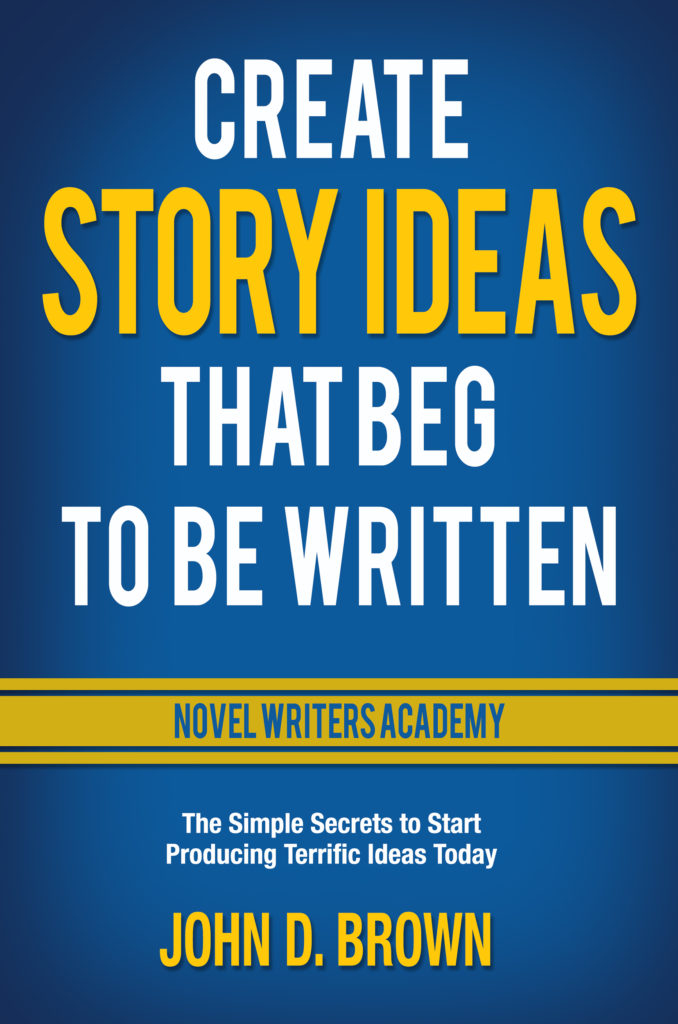
    The course that’s open for applications is called Create Story Ideas That Beg to Be Written. It’s purpose is to transform you into a story idea machine.

    And you can be there in six weeks. Before the end of the year.

    I will be working with only a small set of people. I can’t accommodate more and give you the one-on-one feedback you need. And so you need to apply to get in.

    The deadline for applications is midnight, October 27th. So contact me now to get the application instructions.


    A cracking good story idea requires five critical elements. Until you have all five, you’ll struggle to plot. You’ll write a few scenes and run out of gas. You’ll feel like the story just isn’t going anywhere. And that’s because it isn’t. It can’t. A story isn’t a story without all five elements.

    However, once you develop these five things, your story will suddenly roar to life. There are a few other elements that are important as well, but these five things form the core of the story setup. 

    In this course you’re not going to merely learn about all of those story elements. You’re going to go deep and learn what can only be learned by actually doing the work and developing story idea after story idea with personal one-on-one feedback from someone who knows what they’re doing.   

    When you finish, you won’t just know story theory. You will be a story idea machine. And you will be that because you have put in the work. The right work.  

    Again, this is not a course full of lectures and videos. This is a course where you’re going to work. And develop the insights and skills that only come from doing the work.

    You’re actually going to:

    • Come up with story setup after story setup after story setup
    • And improve them with one-on-one feedback. 

    It’s going to:

    • Eliminate years of you wandering about in the story wilderness trying to figure things out on your own. 
    • Put you miles ahead of other writers who have no idea what’s really at the core of story. 

    You are going to learn how to develop killer story ideas on purpose instead of on accident. Which means you’ll be able to do again and again. Reliably. Like clockwork. 

    Course details

    Here are the details. 

    • 6-week course 
    • Starts: November 2
    • Ends: December 19
    • One week off right in the middle for the US Thanksgiving holiday 

    The focus of the class is not on learning about story, although you will do that. The majority of your time will be spent on developing stories. 

    You can’t become a carpenter by watching videos and reading books about it. You have to get out on the work site, cut wood, and pound nails. You have to make the mistakes all beginning carpenters make, get feedback, and improve. The same goes for writing. And you’re going to work in this class. You develop 21 story setups. In fact, you develop more because the 21 are just the ones you turn into me. And with each one your skills, insights, and abilities grow.  

    In the beginning, your setups will be bare bones. By the end, they’ll be fully developed setups that beg to be written. Setups you can use to immediately write the first draft  of your novel, whether that’s in outline or chapter form. 

    Here’s what you do each week. 

    Week 1. November 2-7

    • Uncover the secrets of what’s really at the heart of story and how to generate ideas. 
    • Define your genre requirements
    • Create story setups 1-3

    Week 2. November 9-14

    • Uncover the secrets to compelling characters 
    • Create character sketches
    • Create story setups 4-7 

    Week 3. November 16-21

    • Uncover the secrets to formidable obstacles
    • Create story setups 8-11 

    Week 4. November 30-December 5

    • Uncover the secrets to interesting casts
    • Create story setups 12-15

    Week 5. December 7-12

    • Uncover the secrets to managing multiple storylines and series
    • Create story setups 16-19 

    Week 6. December 14-19

    • Create story setups 20-21. These are your capstone projects where you apply everything you’ve learned and take it to the next level

    As you can see, in this class you develop story idea after story idea after story idea. I didn’t detail it above, but each week you will also be lifting the hood on your favorite stories and actually seeing how they work. Story after story after story. In this class, you are marinated in the work of developing characters, THOMs, goals, obstacles, settings, casts, and more. And because of that, each week will not only bring an explosion of insights, but new skills and abilities.

    Every week you get two private, one-on-one, live sessions with me where you get encouragement and feedback on what you’ve developed. And then we’ll work as a group, applying the principles and brainstorming even MORE ideas for each other’s stories. 

    At first you might feel a bit shy and worried about your ideas and abilities. But you’ll soon get over that. By the end of the course you’ll be one of those people that can generate terrific ideas easily. And you’ll be able to do that because you will have put in the work to become a different writer.  

    Apply now!

    The normal cost of the course is $899. But because this is the first time I’ll be running through it, and we’re likely to run into a few kinks that need to be worked out, I’ve dropped the price to $599. I personally guarantee my course. You’ll be totally oh-my-gosh-I’m-so-happy-I-took-that-class satisfied, or I’ll give you your money back. No questions asked.

    Now’s your chance to stop spinning your wheels. I can’t tell you how much I wish I’d had something like this when I’d started:

    • The secrets about the true core of story.
    • The secrets about how to come up with ideas. 
    • Actual work with personal one-on-one feedback. 
    • Laser focused on what actually matters, not a bunch of ridiculous writing rules. 

    When you finish, you will be a story idea machine. 
     
    You won’t know plotting. That’s a different course and set of skills. You won’t know how to write chapters. But you’ll know how to create the engine that powers all the rest of that. You’ll know how to create the core that makes awesome plots and chapters possible. 

    If you want to take this course, click the button below and contact me. I will tell you exactly how to apply.

    I’m not going to be able to accept everyone who wants to take the class. I have a very strict limit on the number of students I can work with. So you need to get your application in before the deadline of midnight, October 27th.

    Don’t wait!

    Share

2 Comments

  1. You’re right on both counts!

    By the way you may want to read this article. It vividly illustrates your philosophy on how children learn best. http://www.deepastronomy.com/how-i-overcame-my-math-blocks.html
    Also, for kicks–or maybe to get more zings–you might as well watch this guy’s YouTube video he put together called, The Hubble Deep Field: The Most Important Image Ever Taken. It’s mind boggling.

  2. when I’m interested in something, I devour every piece of information I can find on the subject with a laser beam focus. Nothing else exists for me when I’m learning something I care about.

    Amen, to that.

Comments are closed.