New creatures & mystery in wonder fiction

I love listening to writing excuses because I get to hear three smart and funny authors discuss interesting topics that get me thinking. This week’s writing excuse was on building non-humans in SF&F.

Here’s my take.

An alien race, if done right, can be a huge draw to a story. For example, Brandon Sanderson’s Kandra point of view in HERO OF AGES is one of the most enjoyable parts of that book.

However, I want to suggest that aliens (in fantasy or sf) create that draw only IF they’re kept sufficiently strange or mysterious. The minute they become common or too human, they lose their power to enchant.

That’s one thing I like about how Tolkien did the elves and orcs–we never got the National Geographic on them. They never became common. And so I always wanted to know more. Easterlings, ents, balrogs, the orders of wizards, dragons, etc. were the same. There were tons of tales Tolkien hinted at, curioisties raised, but those desires were never sated. This is part of what drove me to other fantasy books.

It’s the same thing that made me love mammoths and dinosaurs, bats and giant squid, and far-off places. However, once these things became common and explained, their magic departed. The curiosity generated by the wonder of things new is one of the key things science fiction and fantasy offer its readers. But I think authors can only keep it alive if they approach it in the same way a fan dancer approaches her work.

This leads me to another point. It’s true that focusing our world building on the conflicts and story touch points can keep us on track. And we do need to produce. However, I think if we strictly limit our alien development to the central story conflicts, we might miss many opportunities for that wonder. Some of what we develop might end up complicating the plot while other parts might only enrich the experience. And I don’t think that’s bad.

For example, one of the most poignant parts of the LOTR, of which there were many, was the tale of the ents and the entwives and Treebeard’s poem. Tolkien could have eliminated that and the story never would have been affected. But, O, how much richer the story was for that little side trail that still beckons. Or you might think of the ring Bilbo found. When Tolkien first wrote THE HOBBIT, it wasn’t THE ring of power. It was merely a ring that Gollum used. Only later, when he began to work on LOTR and was trying to figure out the main problem of the story did he work that detail into it becoming THE ring of power.

Share

Similar Posts

  • Indie Thoughts: Resources for Indie Writers

    About this time last year I got the last of my rights back to the Dark God properties. I thought it would take twenty or thirty hours to figure out the whole indie publishing thing. And then the awesome John Brown story machine would kick in gear.

    Reality promptly woke me up and slapped me around a bit. This last year has been quite the learning curve. Here’s what I’ve had to pick up:

    • Designing book covers
    • Finding artists
    • Working with artists in a way that actually works
    • Copy editing
    • Formatting book interiors
    • Fonts, fonts, fonts
    • Using ISBNs
    • Using InDesign to create files for both POD books and epubs
    • eBook structure
    • Editing ebooks (okay, just get Calibre ebook editor right now. We luvs it, Precious)
    • Validating ebooks (http://validator.idpf.org/)
    • Converting epubs to Amazon’s mobi format
    • Uploading ebooks to the various ebook retailers: Amazon, NookPress, Kobo, iTunes (I upload via Draft2Digital), Smashwords
    • The pros and cons of CreateSpace vs Lightning Source
    • Using CreateSpace to publish POD books
    • Registering books with the US Copyright Office
    • Writing better book descriptions
    • Using keywords and categories on Amazon
    • Setting prices in the indie market
    • Creating an email list (I love MailChimp. They make me happy every time I go to their site)
    • Advertising and promoting as an indie

    One of the things I love about this business is that there is always more to learn. But I’m happy to be over that curve. For folks just starting out, let me share some of the resources I found super helpful with a number of the things listed above.

    Posts by a mega indie-seller Russell Blake to give you the right perspective about indie publishing. I’ve read a lot of posts the last few years about being an indie author. These are the best I’ve come across.

    Online courses to help you on the publishing side.

    • Designing Book Covers and Designing Book Interiors with Dean Wesley Smith (look for “Online Workshops”). I don’t agree with Dean on all his ideas about pricing and promotion, but these two courses helped a great deal.
    • InDesign CS6 to EPUB, Kindle, and iPad with Anne-Marie Concepción at Lynda.com. Awesome.

    The most practical and clear-headed books about indie promotion I’ve read. For other clear-headed advice, see the Russell Blake posts above.

    The most helpful book on copyright.

    The most helpful book on copy editing as well as info to put into front and back matter.

    Helpful threads on Kindle boards

    Other great resources

    Good luck!

    Share
  • |

    News

    Interview with The Man Monday night

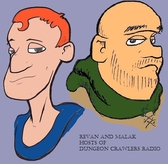
    Dungeon Crawlers Radio interviews The Man Monday, March 8th at 10:30 PM MTN. You can listen live or to the archive they’ll post to their site. All brought to you by UtahFM. Malak and Revan are great guys. I had a blast with them.

    Cool facts on breaking in, advances, etc. for writers

    New page on writing facts & figures in the On Writing section.

    Novel update

    CURSE OF A DARK GOD is moving along. You should see the progress bar move along quite a bit this week.

    Initial Schedule for American Fork Arts Council Conference for Writers

    This is a cheap day-long writers conference and looks like it’s going to be another great one.  I’ve highlighted what I’ll be doing in red. I’ll be making adjustments to the HOW TO WRITE A STORY THAT ROCKS presentation for things learned at LTUE.

    Here’s their website. That night I’ll probably be attending the Whitney Awards Gala which is also being held down in Happy Valley, Utah.

    DATE: Saturday April 24 2010

    8-9 a.m. Registration
    9-9:10 Welcome (Plenary)

    KEYNOTES
    9:10-9:40 Keynote #1 Ginger Churchill, “What I Wish I had Known as a Beginning Writer”
    9:40-10:10 Keynote #2 Ally Condie, “My Journey to National Publication”
    10:10-10:40 John D. Brown, “Aiming for National Publication”

    INTRODUCTIONS of editors and authors
    10:40-11:05 EDITORS: Derk Koldewyn, Granite NAME
    AUTHORS: Caleb Warnock, Linda Jefferies, Shannon Guymon

    11:05-11:20 15-minute break

    11:20-noon BREAKOUT ONE
    Upstairs room “Crafting the Novel” with Shannon Guymon, John D. Brown
    Downstairs One “Finding and Working With an Agent” with Ginger Churchill, Ally Condie, Caleb Warnock
    Downstairs Two “Taking Your Questions about Publishing” with Deseret Book and Granite Publishing

    noon-1 LUNCH “Mix and Mingle with Authors and Editors”

    1-1:40 BREAKOUT TWO
    Conference One Derk Koldewyn of Deseret Book “What Deseret Book is looking for now”
    Conference Two Ginger Churchill “How to Write and Publish Picture Books”
    Upstairs room John Brown, “How to Write a Story That Rocks Part 1: First Principles & Story Concept”
    Office room Caleb Warnock “10 Things Every Writer Should Know about Copyright”
    Downstairs One Granite Publishing “What Granite is looking for now”
    Downstairs Two Ally Condie “Writing Young Adult Fiction”

    1:40-1:50 Ten-minute break

    1:50-2:30 BREAKOUT THREE
    Upstairs Room John Brown, “How to Write a Story That Rocks Part 2: Character”
    Conference Two Ginger Churchill “Genres of Children’s Books, from Board Books to YA Novels”
    Conference One Derk Koldewyn of Deseret Book “National Publication with Shadow Mountain”
    Office room Caleb Warnock “How to Write the Query Letter”
    Downstairs One Granite Publishing “Publishing Options with Granite”
    Downstairs Two Shannon Guymon “How to Write Romance”

    2:30-2:40 Ten-minute break

    2:40-3:20 BREAKOUT FOUR
    Upstairs Room John Brown, “How to Write a Story That Rocks Part 3: Plot”
    Conference Two Ginger Churchill “How to be a Writer and a Mother Too”
    Conference One Linda Jefferies “Writing Poetry”
    Office room Caleb Warnock “Write a Synopsis? I’d Rather Gouge My Eyes Out!”
    Downstairs One Ally Condie “Succeeding as an LDS author”
    Downstairs Two Shannon Guymon “Writing Nonfiction”

    3:20-3:30 Ten-minute break

    3:30-4:10 BREAKOUT FIVE
    Upstairs Room John Brown, “Writing Scenes: The Basic Units of a Novel”
    Conference Two Ginger Churchill “Querying Agents and Publishers”
    Conference One Linda Jefferies “Publishing Poetry”
    Office room Caleb Warnock “Okay, You Were Rejected – Why, and What to Do Now”
    Downstairs One “How to form a critique group that works”
    Downstairs Two Shannon Guymon “Succeeding as an LDS Author”

    4:10-4:20 PRIZE GIVEAWAYS, GOODBYE

    REVISED (MAY CHANGE)

    Share
  • |

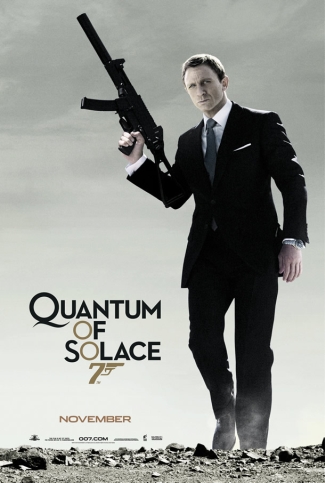
    Diagnosing Quantum of Solace

    ***SPOILERS***

    Last night I went out with my wife and some friends to watch QUANTUM OF SOLACE. I was so excited. But when the movie ended, I was totally unsatisfied. There was no release. Nothing. It just ended.

    There was lots of great stuff in it. Love the character and style of this new bond. Loved CASINO ROYALE, but this just didn’t work for me. My diagnosis has two parts.

    MINOR ISSUE: clarity in story. The chase scenes were so choppy I couldn’t get a feel for what was going on so I could worry for Bond. All I did was get sick to my stomach. Part of the way through I told my wife I was going to write death threats to the freaking director. Who in the world thought that was a good idea? It doesn’t mimic battle etc. In battle you are HYPER alert and focused. Your world doesn’t turn into chaos.

    But it was more than the chase scenes. There were times when I did not know what was going on. Why was Bond going to his friend from movie 1, why was he watching that guy pick up a bag at the play, why was he going to the party, etc.?

    If he’d shared any of his plans, I could have gotten worried when antagonistic forces thwarted him. As it was, I was just watching him do stuff and only realizing at the end what the goal was.

    The basic principle of suspense is to let me know what they need to do and why they need to do it, then let me worry as I see the operation fall apart. Or let me know the danger and see them walking into it. But time and again they didn’t provider the viewer with the necessary information in this movie. 

    MAJOR ISSUE: ineffective story structure. I think for a film to build to a huge climax and release, the hero has to find himself in more and more desperate circumstances. His situation has to become darker and darker until we see no way out for him. By the end of act 2 his plans etc. should all be in shambles. He’s out of options.

    In this Bond I rarely felt he was in danger. Yes, there were some fight sequences which were tense, but he never ended up in worse shape afterwards. We got messages that he was being framed for murders, but I never really felt the screws tightening on him. So it never got darker and darker for him.

    His plans seemed to only be delayed, not destroyed. In Casino Royale, his car is wrecked and he’s taken captive and is going to die. He loses. In this one, nothing. Even when his plane is shot down going out to the desert, it’s just a delay. They walk to the bustop and are soon back on track.

    There might be another point about something being at stake. The water grab is a great idea, but we’re talking a 50 year plot. It’s not THAT urgent.

    A FIX?

    I think they could have done more by playing up the revenge/mystery of the last one. Yes, have the water grab, but make this personal to him. He’s searching for the answers to who was behind his lover’s death. Why not?

    Then get the villain, the US CIA, and the British hunting him down with real resources. He evaded everyone fairly easily in this one. He’s running FROM all these forces, barely one step ahead, until he gets caught by them. And it’s one of Green’s guys in the CIA or something like that who captures him. So he’s totally screwed. Then have the Black CIA officer do something to spring him. He’d probably have to die for it.

    I’m sure there are more and better options. But do something so that Bond is running for his life, FAILS, then pulls it out. Not chasing down the bad guys one by one with relative ease.

    Just one option. Thoughts?

    Share
  • 2015 LTUE presentation materials

    I promised the audiences that I would post the PowerPoints and handouts to the website. Well, here they are. For those wondering, we do not have any recordings of the events.

    How to Build an Action Plot

    How to build an action plot

    How to Build an Action Plot Handout

    How to Build A Romance Subplot

    How to build a romance plot

    How to Build a Romance Plot Handout

    How to build a romance plot lecture notes

    The Power of the Story Setup

    Using Story Setup

    Share
  • Ebooks set to become largest trade category in 2012

    The folks at Mediabistro.com reported the American Association of Publishers sales for December 2011 and YTD: “The December report represents data provided by 77 publishers and only sales of the participants are reported. NOTE: All numbers have been rounded to one decimal point and may not add up to 100%”

    The key takeaway, I think, is that ebooks will become THE largest book trade category in 2012.

    Sales only need to grow 33% to surpass that of adult hardcovers.  See the chart below. They already dwarf adult mass market, which took a HUGE hit last year. Sales can’t keep growing at more than 100% year after year. They must eventually slow down.  But, given projections, it’s not going to be hard to make 33%. According to the estimates of a Barclays Bank analyst (link below), Amazon will sell an estimated 35 million Kindles and Kindlefires next year. Each owner would only have to purchase $10 worth of books in the year for the segment to grow 33%. And that doesn’t count the sales for the Nook, iphones, ipads, or any other ereaders out there.  

    This year ebooks become king of the heap.

    Media Bistro report of AAP numbers: http://www.mediabistro.com/galleycat/mass-market-paperback-sales-down-nearly-41-in-december_b47625   

    Barclays analyst project sales of 35 million Kindles and Kindlefires in 2012: http://blogs.barrons.com/techtraderdaily/2012/02/23/amazon-barclays-cuts-kindle-kindle-fire-estimates/ 


    Share
  • Is book marketing bad?

    At CONduit I spoke with an author friend who thought that marketing was indeed a bad thing, especially marketing for YA, because said author felt it didn’t build an audience based on the merits of the book. It built one based on hype and buzz.  Instead of buying a book because it delivered a wonderful experience, readers would be buying only because it was what everyone else was doing. Furthermore, publishers only have so much money, and by choosing to put the dollars behind some books, they choose to let other books, which might deliver a better experience, languish.

    I understand wanting to build a readership that’s based on love, not hype. But what I think my friend is overlooking is that you can’t love something if you don’t try it. And you won’t try it if you don’t know it’s there. Marketing and PR help make sure people know the book is there.

    Yes, some readers might try it the first time because it’s what everyone is doing. But if the book is really that good, i.e. it actually delivers a wonderful experience for the target audience, then those readers will come back for another serving. They might look initially because everyone else is, but they’ll stay for love.

    One of my editors just forwarded a link to “Not Quite a PR Campaign” by Sherry Thomas. Lots of interesting details there about what she does for PR, but probably one of the most important ideas she shares is the fact that marketing & PR don’t build an audience. A great story experience does that. However, marketing & PR can get the book in the audience’s hands.

    What we all want to happen is word-of-mouth. PR doesn’t really create word-of-mouth, love does. But readers won’t read a book until they know it exists. So then the point of a PR campaign, if a PR campaign has any point at all, is to create awareness and hope that awareness will translate into love, once a critical mass of readers have read and enjoyed your book.

    Readers may miss many high quality (i.e. they deliver a great experience to the intended audience) books because the lion’s share of the publisher’s marketing budget is being spent on a small group of books, and the author who gets the leftovers just doesn’t have the cash or know-how to do it themselves. But that doesn’t mean marketing is bad. It means that getting a big marketing push is like any other lucky break or opportunity.

    I just started reading Guide to Writing Fiction by Phillys A. Whitney (a huge seller in the 1970’s and 1980’s). It’s a wonderful, slim, down-to-earth volume. She opens the book with a chapter called “Opportunity is Like a Train.” She maintains that her success did not come from starting with loads of talent. In fact, she says her ability was “modest.” She certainly wasn’t as gifted as many other authors she’d worked with in the writing groups of her youth. Nor did it come from immediate initial success. It came from being ready when opportunity knocked. 

    Of course, I have been lucky. I’ve had extraordinary breaks come my way–along with some pretty bad blows and disappointments. There’s been bad luck too, but that doesn’t always show. Good fortune and unexpected opportunities are always coming along. Perhaps opportunity is like a train on an endless track. Now and then it makes a stop at your station, often without fanfare, and without warning.

    …What is important is not the lucky break, the stopping of the train–that’s only part of it. Life is full of trains that stop. What counts is what we are doing with our lives when there is no opportunity and not a train in sight.

    James Dashner is someone who is getting a big promo budget from Random House this year for Maze Runner. A very big one. But if you read his story about how he got published (links to all nine parts of the story are in his sidebar) and what got him to this point, you’ll see this promo train was a long time coming. 

    Meanwhile, if the big promo budget ever stops at my station, I’m going to hop on. Until then, I will keep writing the best stories I can and make my current marketing budget (part publisher, part mine) go as far as possible. I’ll do the one for the love, the other because I can’t share the love if nobody even knows it’s out there.

    Share

2 Comments

  1. You’re right on both counts!

    By the way you may want to read this article. It vividly illustrates your philosophy on how children learn best. http://www.deepastronomy.com/how-i-overcame-my-math-blocks.html
    Also, for kicks–or maybe to get more zings–you might as well watch this guy’s YouTube video he put together called, The Hubble Deep Field: The Most Important Image Ever Taken. It’s mind boggling.

  2. when I’m interested in something, I devour every piece of information I can find on the subject with a laser beam focus. Nothing else exists for me when I’m learning something I care about.

    Amen, to that.

Comments are closed.