LTUE 2016 presentation materials

I promised you I’d post my materials. Here they are.

Succeeding as a Storyteller 2016-02-13 HANDOUT

Vivid and Clear 2016-02-11

What Comes Next 2016-02-12 PRINT

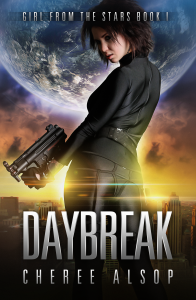
Also, at the end of my and LL Muir’s presentation of Succeeding as a Writer, I offered some of my books, the ones I authored, for free in the back. I would like to ask whoever accidentally got caught up in the mad rush (it was like Black Friday) and took my copy of Cheree Alsop’s Daybreak: Girl from the Stars Book 1 to please mail it to me. It looks like this:

Daybreak-Amazon-Kindle-196x300

It is dedicated to “Mrs. Brown’s Class” and was a present for her. You may mail it to John D. Brown, PO Box 157, Laketown, UT 84038.

Share

Similar Posts

  • Generating Story 2: No Clue, No Solution

    I want you to think about Ed Smylie, who helped save the Apollo 13 astronauts with his duct tape contraption. What if the authorities had come to Ed, but instead of saying, “Look, we need to fit the round CO2 scrubbers into the holes for the square ones,” they’d said, “We want you to do something; it involves thinking.”

    Ed would have blinked. Waited.  “Yeah?”

    “That’s it. Something. A lot is riding on this.” And then maybe they urged him on with a significant wave of their hands.

    Can you see Ed at this point?

    “Sure.” He’d say. “I’ll get right on that.” Then he’d wonder who put these guys up to this practical joke.

    Do you see how impossible it is when you frame things that way?

    To come up with solutions, you have to have a clue about what it is you’re trying to do. Even if it’s just a rough idea. It doesn’t matter if you’re trying to fix a space ship, roast hotdogs, or write a story.

    Once we have a rough idea of what we want to accomplish, the mind automatically kicks into gear to perform its wonders. Until we do that, we’re going to be like Ed in the example above—staring at a blank wall, wondering if our superiors aren’t a bit cuckoo.

    So what are we trying to do?

    Think about your reader. Is it a woman? A teen? A crazy dude? Do you remember my book tour with Larry Correia in 2009 and the guy who, during a booksigning / doughnut party at a Phoenix Barnes & Noble, proclaimed my book to be true?  Aliens really were eating our souls and enslaving humanity. They were lizards living in the hollow portion of the earth.

    The point is: what are your readers hoping your story provides them? In fact, since you’re the first audience, what do YOU want from your stories? Why do you read?

    I want you to write down five stories you really like. Movies, TV shows, novels, short stories, plays—I don’t care the genre or type. Just write down five. Do it now. Here are five random stories I like.

    • The Incredibles
    • The Good Guy by Dean Koontz
    • Hunger Games by Suzanne Collins
    • The Sound of Music
    • Runelords by David Farland

    This is going to be a powerful exercise for you. It was for me the first time I did it in a class on interior design.

    A few years ago, Lovely Wife and I were building a house. We wanted to make our living space sing. We wanted our surroundings to make us happy, but we didn’t quite know how to go about doing that. So we took a class on interior design, hoping to learn the principles involved.

    Except when we showed up in the first session and saw the many different design styles, it overwhelmed us. Some styles were ethnic (Southwestern, Asian, French, Gothic, Pygmy), some philosophical or religious (Zen, Feng Shui), many were artistic (Modern, Arts & Craft, Minimalist, Art Deco, College Room Mate ), a lot were mixtures. Some were about making statements and creating moods, some about practicality (here’s a taste of those styles).  How in the world were we going to learn this?

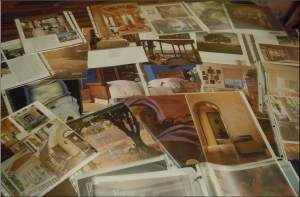
    Luckily, we had a very perceptive teacher. She knew that most of us were there, not to learn all the styles, but to decorate our own houses. So in our second session, she brought dozens of home magazines. She spread them out on the tables we were sitting at and told us we would go through the magazines. When we found a picture or image we liked, we were to rip that page out and put it in our personal stack. So for about 45 minutes we looked and ripped and looked and ripped. Lovely Wife and I each ended up with a pile of a few dozen pictures.

    Then the teacher told us to spread our pictures out in front of us and look for things that the images had in common. Colors, features, design elements.

    I spread my pictures out. Lovely Wife spread out hers. And it was like magic. Boom! Right there in front of us. I loved arches and eyebrow windows. Loved dark blues and purples mixed with creams and whites. Loved the color of blond wheat and a navy blue sky. I loved wood. Loved Arts & Craft with a few tweaks.
    Lovely Wife’s pile was equally revealing.

    The teacher then said, “This is your personal style. This is what’s going to make you happy.” She told us that when designing the rooms in our house, that we should think about their function and merge them with these elements. And if any of us were to work with clients, we’d do something similar with them and find out their wants and likes.

    With our styles now beginning to be fleshed out, Lovely Wife and I went to work. Some of her elements and colors overlapped mine. Some didn’t, like her idea of sleeping bliss: a bed with sheer red drapes hanging from some lamp shade contraption in the middle.

    I told her I didn’t know if I could keep my man card and sleep in that bed. She decided I should keep my man card, but said she couldn’t sleep in a plain-walled zen room. We compromised. She got textured red on the walls. I got a bed without too many frills. We came up with designs for our spaces that did what we wanted them to do.

    But we couldn’t have done this if we hadn’t identified what we were after.

    So I’ve adapted that visual art technique used in the design class for our purposes. It’s just as powerful with literary arts. Which is why I want you to write down five stories.

    I want you to take a moment and identify what you’re after, in a big picture general way.

    I can’t do this for you.

    You and I are different. Just like Lovely Wife and I are different. While our tastes may overlap in some places, they’re going to diverge. You don’t want to write my stories. You want to write YOURS.

    So write down five stories. Then write down what you really enjoyed, over all, about each of those five stories. You might do this on five pieces of paper. What did you enjoy with each of the main story elements—character, setting, problem, plot, and text? What kind of an experience did they give you? What drew you to them in the first place?

    You don’t need to go all crazy detailed on me with this and do a twenty page report. Just hit the highlights. The stuff that will fit on one page without writing in four point font.

    When you finish that, step back and look at all five pieces of paper side by side. What common elements do you see? Circle them.

    This is your style. This is what, in general, you’re going for.

    If you found the exercise insightful, do five more stories. Ten is such a nice number.

    I’m going to predict that 99% of the things you identify have to do with what the story did to you. The stories made you laugh, smile, scream, want to fall in love again. They made you curious or jealous or feel some type of desire (be a Ninja king, strong, beautiful). Maybe they gave you insight. Maybe they affected you so profoundly that it changed, if even in a small way, how you decided to live your life.

    Stories–the ones people pay money for; the ones people stay up until four a.m. reading with a flashlight; the ones people tell their friends about–make people feel things.

    A while back I wrote about this in three parts. I believe the things you’ll read in those short posts, if you don’t know them already, will change how you think about stories. They did for me. And it all begins with lipstick.

    1. Lipstick
    2. Getting specific
    3. My big draws

    Okay, I hope at this point you are getting a general idea of why readers pay money to read the stories we create. Why YOU pay money and spend countless hours reading what others write.

    This is the first step in being able to produce on purpose, not on accident. This is the first step to becoming the Ed Smylie of fiction—understanding what you, as a writer, are trying to do.

    This week, keep your eyes open. Notice what stories do to you. Notice how you feel about different characters and plots. If you feel like taking it farther, notice the effect of different beginnings and ends of novels, chapters, or scenes. Notice the effect of different ways authors describe characters, places, and actions.

    Of course, while knowing these general objectives is critical, it’s not enough. You need to know what you’re reaching for with the current story, the current characters, the current plot. How do you translate all this general stuff to the specifics of the story in front of you? Do you have to define everything up front? And what if you don’t know what you want in the current project anyway? What if you are clueless and have nothing but a handful of random ideas that for some reason are generating electrical sparks? What do you do then?

    In the next post, I’ll talk more about those questions and where the how-to’s fit into all of this, and then we’ll get into the principles of invention.

    For more in this series, see How to Get and Develop Story Ideas

    Share
  • Writing update: Envy

    Bible’s full of great stuff. Look at this.

    (Old Testament | Exodus 20:17 – 19)

    17 Thou shalt not covet thy neighbour’s house, thou shalt not covet thy neighbour’s wife, nor his manservant, nor his maidservant, nor his ox, nor his ass [we’re talking animals, folks], nor any thing that is thy neighbour’s.
    18 And all the people saw the thunderings, and the lightnings, and the noise of the trumpet, and the mountain smoking: and when the people saw it, they removed, and stood afar off.
    19 And they said unto Moses, Speak thou with us, and we will hear: but let not God aspeak with us, lest we die.
    20 And Moses said unto the people, Fear not: for God is come to prove you, and that his fear may be before your faces, that ye sin not.
    21 And the people stood afar off, and Moses drew near unto the thick darkness where God was.

    Dude, the “thick darkness where God was.” The thick darkness . . .

    I love the images in that passage. Moses going to talk to God face to face. Talk about spectacle. As for the commandment, well, let me just say that I might be smite-worthy.

    I do not covet many things. Certainly not any dude’s butt, but sometimes it’s so hard not to covet my neighbour’s writing success. And it’s not the big boys that kill me.

    I read a Lee Child or Orson Card or whoever, and I can legitimately say, “Hey, those guys have been writing for years and have produced a lot of novels; it’s unrealistic to compare my skills to their current masterly levels.” I can legitimately say, “Hey, best-sellerdom takes craft and luck, and I just need to be ready the next time the opportunity train stops at my station.” I can even say of those who start off as best-sellers, “Dude, maybe they DID start out with more skillz than me. Doesn’t mean I can’t learn. Give me some more books, you’ll see the Brown dog rise.”

    These are all true statements. I’ve got the big guys down. I can spot the Brain Nazi trying to hit me with them a mile away.

    It’s the other folks that get me. The guys at my level.

    I just had an email exchange with one of them. (No, I’m not going to tell you who it is. Author X might read this, get a fat head, and then be ridiculed and derided by small children. I’m not that heartless.) X comes up with great ideas. Has a ton of them. X is one of those other pro writers I meet who are always lamenting about how many ideas they have. Truckloads. Boatloads. They could employ all of  the peasants in a small country like Mozambique just writing the fab things that flow from their brains.

    I don’t have boatloads of ideas. I don’t have a truckful. I’ve got maybe two or three riding around on a Yike Bike.

    Covet, covet, covet.

    Author X is also funny. X can take a pedestrian idea, twist it, maybe with a great character or situation, and suddenly I’m dying to know more. X watches a TV show I’ve been watching for years. Bim! Bam! Comes up with another great idea I want to steal. (I think I average about two ideas a week I want to steal from other authors.)

    Covet, covet, covet.

    Author X has great sales. Better than mine, at least.

    Gol-leeeee, Mother of Hacks, please, put me out of my misery.

    Or not.

    I’ve got this freaking Brain Nazi’s number as well. The truth of the matter is that while Author X may have some minimal amount of writer-fu, X has also sold his/her soul to the lizard people of the hollow earth. I think they’re going to breed X. So I could have writer-fu too, but I don’t want to become anyone’s genetic experiment. I have standards.

    And with that, I’ll sign out. Happiness!

    Share
  • Revised version of “Key Conditions for Reader Suspense”

    Last year I published four very long essays on my site in a series called “The Key Conditions for Reader Suspense.”  The folks at SFWA (Science Fiction and Fantasy Writers of America) liked them and wanted to reprint them on their site. Of course, as I went through those essays I found things to revise and add. We published the revised essays in a twenty-seven part series. Read those more recent versions here.

    Share
  • |

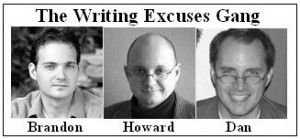
    John guests on Writing Excuses season 3 episode 18

    writing-excuses-the-guys2-300x139

    Here’s the second episode I recorded with the Writing Excuses guys.

    In the first podcast we talked about putting and not putting ourselves in our writing and making characters who don’t all sound like the author. In this one, we talked about how to not repeat ourselves in ways that make the reader feel like they’re getting the same old same old.

    As usual, the guys had some great insights. Check it out: How to Not Repeat Yourself.

    Share
  • |

    Writing update: brainstorming the ending of Curse

    I’ve had a number of people ask me where I am with the second book. I have the progress bars on the side, but they don’t give any details. So I thought I’d start up a semi-regular post that would be something like a writer’s journal. We’ll see how it goes.

    Right now I’m working on the climax of CURSE OF A DARK GOD. For the last two weeks I’ve been struggling trying to figure out the flow. I knew in general what I wanted to have happen. I had some images and the general feel–spectacle, revelation, battle at the fortress–knew I had to fulfill some expectations I’d raised with four characters. But I didn’t know the exact steps of the scene, the back and forth. I also hadn’t figured out the exact details of some of the magic that would be used.

    I outlined the objectives and plans of the two opposing warlords and then the steps of the scene. I listed my objectives for the scene. I do this sketching, sometimes exploratory drafts, to help bring the scene to life in my mind. I find that until a scene is alive in my mind, it’s impossible for me to write. Anyway, over the course of two weeks I went through six takes of the scene, and it still didn’t feel right. I won’t give the details and spoil the ending, but it just wasn’t there and I was getting frustrated. I’m behind on my deadlines and a book’s ending it critical. I talked a few things over with Nellie and made some headway, but it just wasn’t there.

    So I called a brainstorm meeting. I’ve never done this before for my writing work. I mean, I’ve bounced things off individuals (mostly Nellie) many times and found good resolutions, but I’ve never had a group. However, I felt I needed some extra input to get my mind going down new paths. Lenn Johnson, Amy and Alex Lamborn, and Miles and Becky Pinter came over. I borrowed a white board and easel from my church and made gingersnaps. When they arrived, I sat them around our kitchen table with Nellie and had them riff on one question while I captured their answers and ideas on the white board.

    It was incredibly productive. Partly because they came up with some great ideas I’m going to use. But also because it got me thinking in a new way which allowed me to come up with an idea that resolved the main issue I was dealing with. That was last Thursday. The next day I sat down and outlined a scene that did everything I wanted it to, including giving me the “oh, baby” feeling. It feels right. I have the spectacle, the revelation, the fulfillment to the expectations for the characters. I’m excited to write it. Which means I can now move forward. This week and next I hope to finish. After that there are a few small things I need to insert and clean up. Then it’s off to my editor.

    BTW, I did some calculations. For those interested, in this draft, the third, I ripped out 50% of the draft two and completely rewrote it. New problem and situation for two of my three points of view, major changes, etc. I heavily revised above 20% of the remaining 50%. I’ve put in a little over 500 hours working on this draft over the last six months.

    500 hours  (remember, I still have a day job).

    I am a slower writer than many. But it still would have been a huge task even if I could write twice as fast as I do. I think this is a perfect illustration of three things. First, if you don’t fix some things you feel are off when you find them, you might find you have a massive amount of rework later. Second, sometimes you don’t recognize you have those issues until you’re well into it. Third, writing requires the author to make time. I think this is the most important one. And the one that probably kills most aspiring writers. The fact is that if you can’t make time, you ain’t going to write 🙂

    Speaking of making time as a new artist, watch this interesting interview with author Scott Turow.

    Share

5 Comments

  1. Not sure who took daybreak, but there were a number that took multiple copies of the same book. It was sad.

  2. Hi, John Brown.

    Are you going to make a blog post or write an article about your and LL Muir’s presentation of “Succeeding as a Writer”?

  3. That would be a good one. I’m wanting to revamp the whole on-writing section. Get it streamlined and updated. But I don’t know when. Keep coming back. I think what’s on that handout is critical.

Comments are closed.