A Great Post on Writing by Mette Harrison

Author Mette Harrison writes a column on writing for Orson Card’s Intergalactic Medicine Show. I think you can read them without a subscription. This month’s column had some great insights. Here’s one fab example.

I also recommend that if you want to write a book that readers will not be able to put down, focus on one really good story (more on this next month). I am not saying that you can’t have sub plots or minor characters. You can. But I urge you to make sure that your page count does not obscure which characters are the main ones or what their main goal is. If you have lots of different characters who are in different parts of your world, that is fine. But make sure that they are all working at different ends of the same thread, that they all end up being part of the same story. If you cannot figure out which character is the one you want your readers to care the most about, to root for most desperately, you may have too many characters.

Good advice. There’s more.

Share

Similar Posts

  • Runts, widows, and orphans

    A typesetting mystery solved–Runts!

    OrphanRuntWindow

    And now for something for your typesetting hearts.

    You know what orphans are–A short line appearing at the bottom of a page. Sometimes the first line of paragraph appearing at the bottom of a page.

    You know what widows are–A short, paragraph-ending line appearing at the top of a page.

    But what’s the last word or part of a word of a paragraph stranded by itself on a line?

    I went to the store, looking for
    Paul.

    I could never find an answer. Some called it an orphan as well.

    But David Blatner revealed the name in the comments of his post What Are Your Favorite Word and Character Space Settings for H&Js?

    He actually coined the term years ago when he couldn’t find a name, and I love what he came up with and am going to use it forever.

    He calls them “runts.”

    Ha!

    Hyphen Control

    BTW, those settings he mentions in that article are awesome. Drastically reduced weird hyphens, which reduced time formatting.

    What do the big boys control for?

    Furthermore, I noticed something in the big time author Stuart Woods volume I happen to be reading. And then I checked it against a James Patterson and a Lee Child.

    1) They don’t care about most runts. As Blatner said, there’s a runt zone, but the zone where they control for runts appears to be less than 5 characters if that includes the end punctuation.

    For example, I just opened a random page of the Woods book and see the following runts:

    a) results.”

    b) entry.”

    I flipped to another page and saw:

    a) said.

    b) trunk.

    c) them.

    And the thing is that I DIDN’T notice them in the least while I was reading. Only when I started looking for them.

    Of course, there were no runts that were smaller than those. Nothing like “tie.” or “do.” or “for.”

    2) They don’t control for orphans either.

    3) They DO control for widows. However, when you’re not controlling for orphans and most runts, controlling for widows is easy. And sometimes the control is just to increase the tracking just a tiny bit to make it span the whole line.

    I spent a number of hours on Saturday formatting my book only to find when I finished that I had set the leading at 18pt instead of 16pt. That meant I had to reformat the whole bleeping thing.

    But I adopted the Big Boy rule, allowing all runts that end at or beyond the first line indent of the paragraph. I ignored orphans. And I controlled for widows. And it took me a fraction of the time and still looks great.

    Here’s to runts and orphans!

    Share
  • How do you know when to start drafting?

    This week’s Writing Excuses was an interesting topic. I’ve had similar questions from folks as I give my workshop on writing fiction. Here are some additions to the excellent comments made by our fearless Three.

    Can you plan for a single draft?

    In my experience and those of other published writers I know, wanting to start to draft only when you’re ready to begin writing THE draft that will take you clear to the end is only going to land you into a bog of dither.

    Here’s why. It’s almost impossible to know if this attempt at the hill is going to work until you make the attempt at the hill. Much of the story creation, even for those who do a lot of the creation in summary/outline form first, still takes place in the drafting. And you never know if something you create while drafting is going to throw a monkey wrench into the whole thing.

    Nobody I know who does a lot of development in the outline/summary form (and I’m one of those) has ever written a satisfactory novel without having to continually modify the original outline or abandon it altogether. David Farland tells a story of getting to the ending of one novel, the ENDING, and only then seeing a new ending that was going to be so much better than the one he planned. Which meant he needed a different beginning. Which meant a rewrite. And so he started the whole freaking story over.

    Writing is like blazing a trail

    Writing a novel is like seeing a far off destination that you’ve never been to before and to which there are no roads. You’ve got to make a trail to that destination. So when you set out you may be able to see a path for a mile or so, you may even have tried to get an overview of the terrain, but you must reconcile yourself to the fact that you are going to run into an impassable bog, or a cliff, or killer bees–you’re going to have dead-ends and backtracks.

    No matter what you do, it’s gonna happen. It’s just part of the nature of blazing trails. Even if you scout out possible routes, some of those routes are just not going to work when the wagon train finally gets there.

    This isn’t to say we must all become draft-only writers. There is HUGE value to some of us in having a starting line-up or knowing the ending or having the bare bones of the plot or having done a good deal of world building. For myself, I’ve learned I never get very far down any path if I don’t have a number of strong ideas for all the parts of story–character, setting, problem, and plot. But I only learned that by setting off time and time again and each time immediately having to stop. And new writers will never learn what they need, as was said, until they just start.

    So if the reality is that every author is going to have hiccups and course changes along the way, then it’s far more important and useful and efficient, not to wait for the perfect moment to draft, and draft the story only once, but to just start drafting.

    But how much pre-draft work is too much?

    Okay, for those of you who want a specific number, let me help you. A new writer recently posted a question wondering if she migh have world-builders disease. Here was my response.

    —

    Ms. X, one way to approach your diagnosis is to determine how many books per year you want to write. Because world-builders disease is only a malady in certain circumstances.

    If you don’t care about output and simply enjoy building worlds, then maybe you’re like Tolkien. He started The Book of Lost Tales in 1917 and didn’t finish THE HOBBIT until 1937 (20 years). He didn’t finish LOTR until 1949 (another 12 years). In this is your situation, then you are hale and hearty and have many years of enjoyment ahead of you.

    If you DO care about output and want to write one book per year, then I’d suggest you get some drafting treatment immediately. Here’s why: you now have only 26 weeks to finish.

    But wait: take out 4 weeks for vacation, sickness, relatives, and mosquito infestations. You now have 22 weeks.

    Assume you get 2 good hours of writing 6 days a week for 12 hours a week. Assume further that you can get a conservative 500 words of finished product per hour, or 1,000 words in 2 hours. (Sure you may be able to write faster than that in any given session, but when you go back and fiddle with it the next day and the next, you have to accout for that.)

    At this rate it will take you 17 weeks to finish a 100,000 word novel. And that’s only if you keep your story furnace hot with consistent hours each day.

    But wait: that’s only a FIRST draft. You now need to let it sit a bit. Reread it. Send it out to readers. Then REVISE. You only have 5 weeks to do that!

    Of course, your inputs to the equation might differ. But if your goal is a book a year, you need to get cracking. Most of your development will come as you write. It’s exciting and lovely. Don’t miss it. Get your starting line up written out in the next three days and then take the plunge.

    Share
  • 2015 LTUE presentation materials

    I promised the audiences that I would post the PowerPoints and handouts to the website. Well, here they are. For those wondering, we do not have any recordings of the events.

    How to Build an Action Plot

    How to build an action plot

    How to Build an Action Plot Handout

    How to Build A Romance Subplot

    How to build a romance plot

    How to Build a Romance Plot Handout

    How to build a romance plot lecture notes

    The Power of the Story Setup

    Using Story Setup

    Share
  • What does an author earn per book?

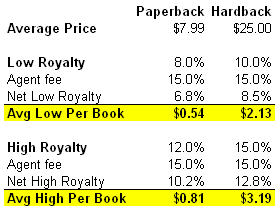
    People are always curious about this, so I thought I’d post it and refer to my previous post about what kind of sales numbers it takes to make a living as a fiction author in the US. Of course, the royalty rates depend on what’s in your contract. Many contracts have sales volume break points. For example, an 8% royalty on the first 50,000 paperbacks sold, 10% on anything above that. But this should give you a good feel.

    Earnings per book

    Share
  • |

    The book trade is a . . . trade

    James Dawson, YA author, feels it’s somehow wrong to hold back on cussing in his fiction. He wrote an article about this in the UK Guardian called “Why Teens in Books Can’t Swear.” He thinks it’s unrealistic. He thinks it’s about gate-keeper censorship. You know, parents wanting to steer their children towards certain experiences and away from others.  

    People.

    Dawson’s approach to the whole problem is wrong-headed. This isn’t about the virtues and vices of fiction. Or about gatekeepers, especially in today’s ebook world.  Or what experiences parents want to provide their children. And it’s not about art reflecting reality. Reality includes trips to the toilet, and yet we somehow fail to include realistic bum wiping in so many of our tales. Good heavens, have we betrayed our artistic integrity? No. We’ve just naturally chosen to include things that appeal to us and leave out others that don’t. Every book is an exercise in hundreds of such choices.

    The fact is that Dawson’s forgetting that a fundamental aspect of the book trade is the trade.  The buyer trades his or her money for a product (the book) that provides a service (the entertainment, thrills, chills, etc. of the reading experience) he or she values.  A customer preferring one kind of experience over another isn’t censorship (the horror, the horror).  It’s choice.  

    As an author, you make your offer. If folks like it, they buy it. If not, they don’t. Nobody owes you a purchase.

    This means that in any business, and selling fiction is a business, the most sensible way forward is to offer your intended buyers something they are likely to value.  Something they’re going to like.  Something they want.  If your buyer is thirsty and wants water, offer him a cold glass of water, not a waffle iron.  And if you can’t bear to develop anything but waffle irons, then, by all means, develop waffle irons.  Just make sure you offer them to the folks looking for . . . waffle irons. 

    This business of making offers also means that we package our products and services so that customers can easily tell what’s in the box. You don’t want someone to purchase your box thinking it contains breakfast cereal when in reality it’s a bunch of bolts.

    Yeah, writing is an art. But offering it in trade to others is also a basic economic act.

    Share
  • What Makes a Great Villain?

    GENUS & SPECIES

    I think there are a few facets to the question posed in the title. But before we get to that, I think we need to define what a villain is.

    A villain is a type of antagonist. Every story has an antagonist, someone or something that opposes the hero or heroine, even if it’s the setting as in Jack London’s “To Build A Fire” or the hero himself as in Jim Carrey’s Liar Liar. But usually the antagonist is another character in the story.

    Antagonists vary in many ways. One way that’s important to the story is how sympathetic they are. The spectrum runs all the way from those who generate fear and loathing to those who generate just a little less sympathy than the hero. Note: we can never feel more sympathy for the antagonist; the moment we do, they become the hero in our eyes. The definition of the antagonist is the person we’re rooting against, the person who is working against the person we’re rooting for.

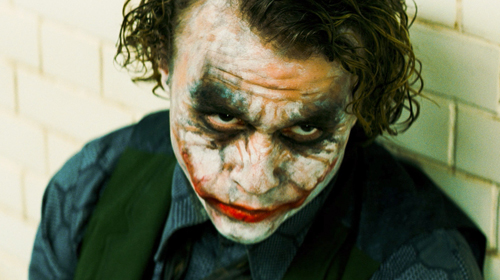
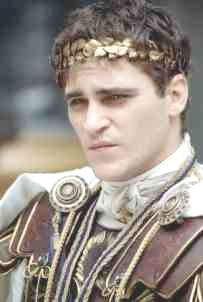
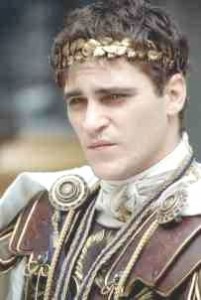
    So a villain is a species of antagonist that generates fear and loathing in the reader. It doesn’t matter if they think they have good reasons for their acts. We still feel they are evil and dangerous. Examples include: Darth Vader, Sauron, the kidnapper in Mel Gibson’s Ransom, Commodus in Gladiator, or the Joker in The Dark Knight.

    So here’s what I’ve noticed about effective villains.

    VILLAINS & STRUCTURE

    1) In a villain/hero story situation, the villain is key because the hero is reacting to the villain’s plan. It’s a total threat/danger plot.

    2) So the villain has to be active. He’s the one who WANTS something. He’s the one that starts the whole story. A weak villain isn’t going after this thing whole-hog or doesn’t have the power to do it or has no urgency and will.

    3) Strong villains are ruthless AND powerful. Villains also need to have some brains–we need to be worried for the hero, remember? We have to know that they’re they type of person  that will take you out if you get in their way. Even if they have a well-spun way of making themselves sound ethical. But villains go beyond other antagonists in that we fear and hate them. They are evil.

    4) The hero needs to be the underdog in the relationship, meaning less powerful, two steps behind, not as easily ruthless etc.  The bigger the plan the more high stakes and high concept the story becomes. But it’s the villain’s plan that drives it. And they will be taking steps to counter the hero, will probably be two steps ahead most of the story.

    5) As always, as with any character, the villain’s plan and motives have to be believable. Even if they are evil. The minute a villain becomes too far-fetched, they lose their power.

    CHARACTER INTEREST

    In addition to the role villains play in the story, there are a number of other things that make them interesting. However, these things are not anything new or different. They’re the same things that make any character (or person) interesting.

    – Larger-Than-Life Attributes (as in experience, power, skill, success, position, or behavior)
    – Eccentricities and Particularities
    – Outrageousness
    – Humor
    – Beauty
    – Surprise (as in against type details, reactions, motivations, or backstory)
    – Inner Conflicts (as in the “ethical” dilemmas they find themselves in)

    While danger and threat draws the attention, rouses interest, and can be sufficient to make a villain memorable, I think the factors mentioned above have a wonderful effect.
    THE CORE QUESTION

    The root question when considering villains is what pushes readers toward the fear and hate of others?

    Of course, it’s relative. But there are qualities that engender these feelings in us. Selfishness, brutality, sadism, madness, cruelty, a complete disregard for others AND the power to carry their wishes out. It’s someone who poses huge, immediate, specific threats to me or those I care about and does it without any concern or with relish. The more intense these factors, I think the more we move along the spectrum towards fear and hate.

    So people say the best villains are those who are the hero’s of their own story and with whom we can empathize. I don’t think this is accurate. The Joker in the Dark Knight was a great villain and may have been the hero of his own story, but never in a million years would I empathize with him. It’s true we can smpathize more with people who agonize and resist horrible acts. And some antagonists do show scruples. But not every story demands that type of antagonist. Sometimes what’s needed is someone who kills grandma horribly and says “so what” or “it was fun”–and engenders fear and hate.

    One last point. “Villain” is a reader attributed characteristic, i.e. the reader is the one who labels the character. This means the person has to be a villain in the READER’S eyes, not necessarily a villain in the eyes of the culture in the story. For example, In Not Without My Daughter the hero subverted and violated the dominant story culture, and I cheered for her. The guy who was sustaining the moral order of the story culture was the villain.

    ROOTING

    From what I can tell, all rooting response is based on some innate sense of justice, of what’s appropriate in a situation. For whatever reason, we feel discomfort when undesireable things happen to good or innocent people. We also feel discomfort when desireable things happen to bad people. The reason why we root for someone is because they have a lack of happiness or a threat to their happiness AND we belive they deserve better. I can’t see anything else we based that deservingness upon except some inner sense of justice.

    It doesn’t mean the deserving person is a goodie two-shoes. It just means that in the context of the story and what’s happening, we think the scales of justice tip, if only slightly, to the hero’s side.

    Some may argue this, but I don’t think it’s possible to root for someone or against someone without a moral judgment. It’s true that not every antagonist needs to or does act immorally. In fact, the antagonist might be doing the right thing, the moral thing, in his or her particular situation, and it just happens to oppose the hero’s desires. The key however, is that the story guides the reader to feel the hero should win at the antagonist’s expense. And that it’s right for the hero to do so. That “rightness” is based on a moral stance of what’s good and desireable in the given situation. The farther along the spectrum of antagonists we move towards villany, the more clear that moral stance becomes.

    Share

2 Comments

  1. Hello John, I really enjoyed the 12 of 12 series of writing tips you and Larry did on Youtube. I stayed awake until 1 am watching them all, they were great. Can you let me know if your doing any seminars in Ontario at any time? I would travel just to get advice from you. I am a fourty-five year old female paralegic. There are not many jobs out there for us, but I work at Home Depot as Greeter, but my passion is writing. I’m looking forward to a day I can publish a book. Congrats on work well done.

  2. Diane,

    So sorry to be tardy on approving your comment. And thank you for your kind words. I’m so happy you found the presentation useful. Alas, Ontario is not on the schedule in the foreseeable future. Of course, there are many resources in the On Writing section of this site. Hopefully, some of those will help you on your way. If you can travel, I highly recommend Orson Card’s Literary Bootcamp. If you can’t, you might want to check out some of the online workshops that Dean Wesley Smith and Kristine Rusch put on. What genres are you writing in at the moment?

Comments are closed.