News: LDStorymakers

You want to go to a writing conference dedicated to writing commercial (popular) fiction. Stuff people like to read. You want a conference that actually helps you on the business end, not just with craft. You live in Utah, Wyoming, Nevada, Idaho, Colorado, northern Arizona, or maybe a bit farther. What if you could go to one that featured the following:

  1. AUTHOR: Anne Perry. Yes, that Anne Perry, the mega mystery goddess.
  2. LITERARY AGENT: Michael Bourret (Dystel & Goderich Literary Management)
  3. LITERARY AGENT: Hannah Bowman (Liza Dawson Associates)
  4. LITERARY AGENT: Alyssa Henkin (Trident Media)
  5. LITERARY AGENT: Michelle Witte (Mansion Street Literary Management)
  6. EDITOR: Victoria Curan (Harlequin Heartwarming, which is a line that focuses on wholesome contemporary romances that celebrate traditional values, strong communities, family connections and true love)

Plus lots of other great folks. Including some who are making some nice numbers on Kindle selling independently.

Geez, John. Sounds fab!

Yeah. It’s happening May 10-11, 2013 in Provo, UT (a glorious time in Utah). It’s the LDStorymakers conference. There’s not a better conference in the Intermountain area. I presented last year. It was fun and insightful. I’ll be there this year. It’s great for meeting other authors (that includes lots of friendly folks trying to break in). And, obviously, meeting agents and editors.

The thing is the attendance is capped. Last year they turned folks away.

If you want in, I suggest you register now.

See you there! (Really, I hope you come up and say hello.)

Share

Similar Posts

  • The Cover Illustration for CURSE

    This is a story of how things went wrong and then went right. It’s also a cautionary tale for indie authors who want to direct their own art.

    Victor Minguez did the art for Servant, which I think is awesome, so I naturally wanted him to do the art for the second book as well. I started as I have before by working up a detailed creative brief which stated my goals, suggested color scheme, identified the scene I thought we should illustrate, and provided plently of reference images. The goals for this illustration were that it had to say epic fantasy, fit with Servant, have energy, and pop in thumbnail.

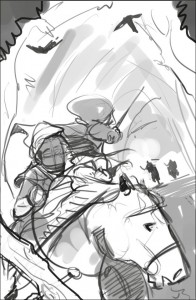
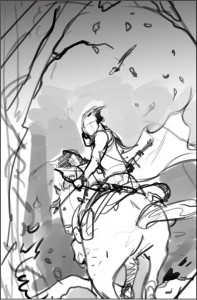
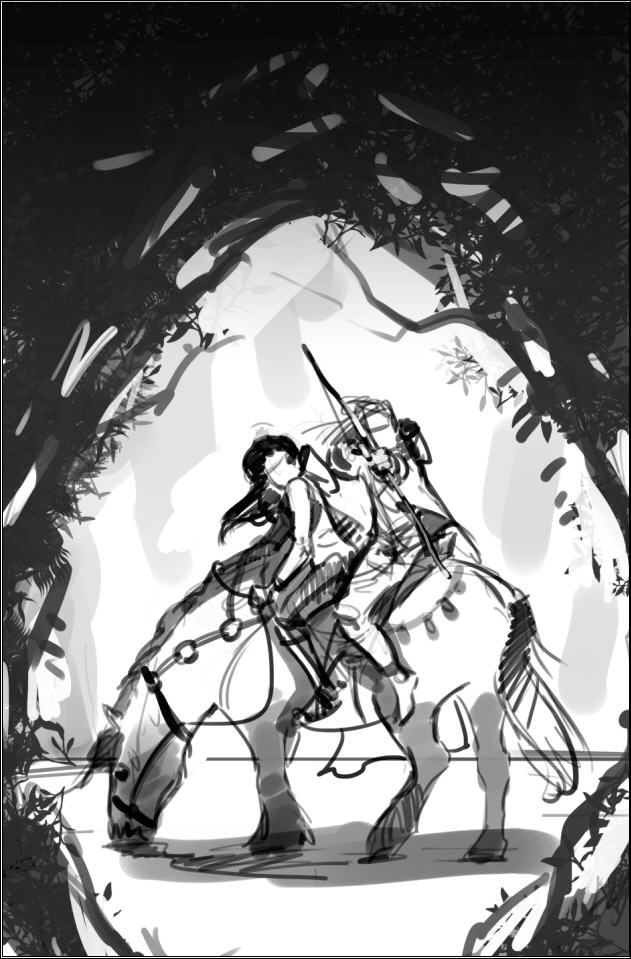
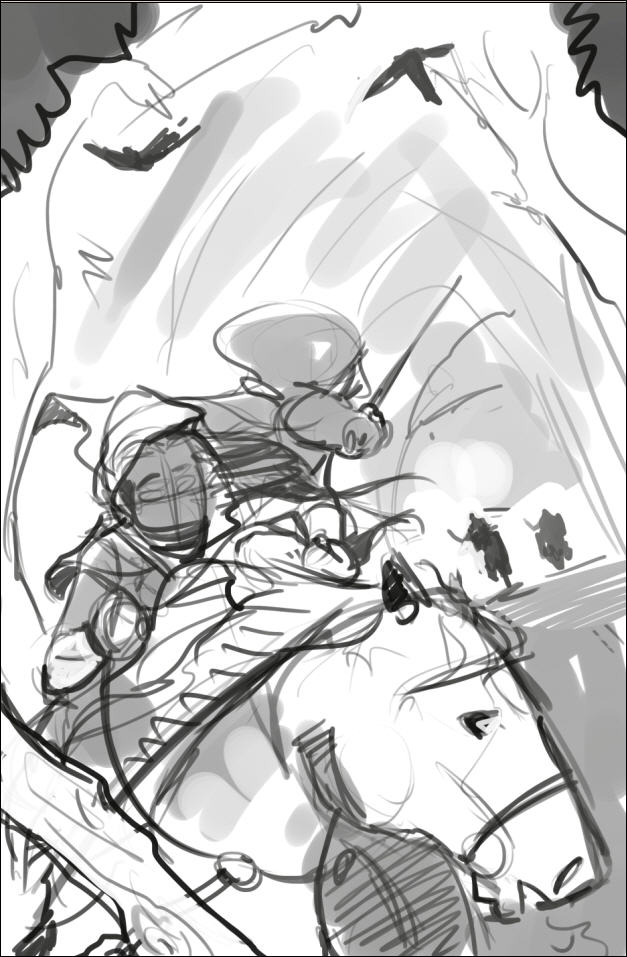
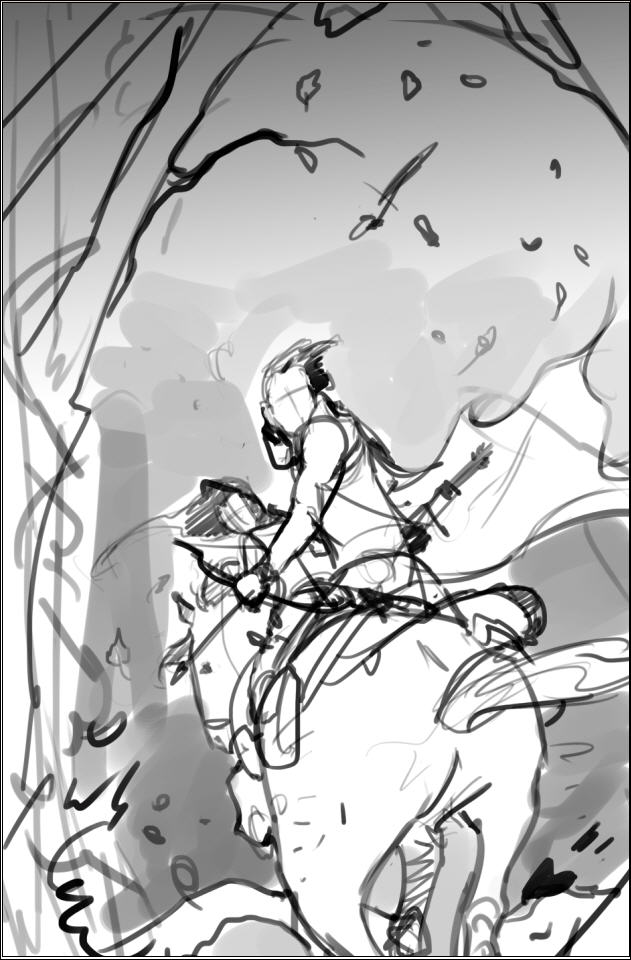
    Victor came back with these sketches. I thought all of them were great concepts. The framed and rear view depict the moment before something dramatic is about to occur, as if something dangerous is out in the woods. The front view was well into a dynamic scene. I loved the contrast of the framed sketch, but was drawn most to the dynamic rear view. (Click on any image to see it full size.)
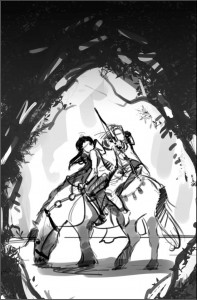
     CurseSketchFramed CurseSketchFront CurseSketchRear

    I knew from the last project that we needed to make sure that the illustration would integrate with the title and author’s name. And because we are going to brand the series, in part, by keeping the author name and title in the same position on all the books, I thought we needed to zoom in a bit. I tried various angles. Ultimately, we decided to flip it.

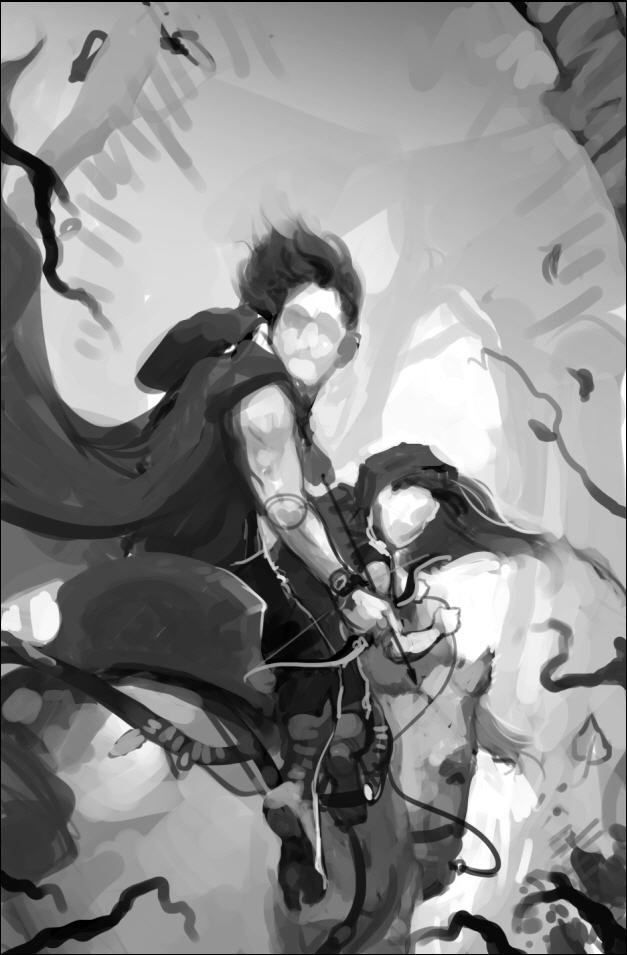
    Victor then did another sketch with values to nail it all down. I thought this sketch was awesome. There was energy. It said epic to me. I was drawn immediately to the characters. I thought we had great contrast.
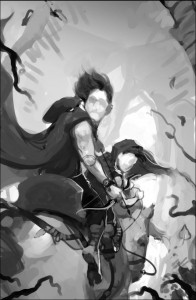
    CurseV1SketchValues

    So the next step was to start laying in some colors.
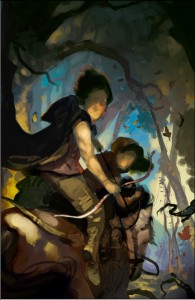
    CurseV1WIP1

    And here is where the cautionary tale begins. I think I have a good eye. I know when something is working. But I’m not a trained artist. And I’m not a trained art director. Which means that while I have a feeling of where in general I might want something to go, I don’t know exactly what will get us there. And that means that sometimes I’m going to do a lot of, let’s try this, nope that isn’t it, let’s try this instead. Naw. Maybe this. And as I begin to ask the artist to tinker, the risk of me directing us into something that doesn’t work, and forcing the artist to work way over his or her budgeted hours increases dramatically. It also sometimes increases the risk of me losing sight of the end goal.

    I keyed in on my desired color scheme. But a color scheme is a means to an end. I got trapped thinking about the means, not the end. So I asked Victor to get more gold and blue. Open it up.
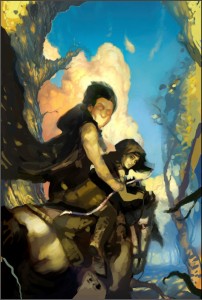
    CurseV1WIP2Brighter

    Can you see me taking us away from the original concept? Not necessarily a bad thing. Art is often iterative. But I wasn’t done. I wanted color. At least, I thought I did.

    CurseWIP3ColorBright

    Do you see where this is heading? But I had this idea and was determined to see it implemented . . .

    CurseV1WIP4

    Well, we got to this point. The artist was delivering what I’d asked. And it was shaping up to be a fine piece of art, but it was totally wrong for the book and genre. What’s more I was driving the artist nuts. For every change he’d make, I’d bring up two more. I was way too far into the details. I’d  taken us way off course. And burned up all his hours doing it.

    What do you do?

    Luckily, I know someone who IS an experienced illustrator, who has worked on many different projects, and who was willing to step in as art director. Most importantly, with me out of the picture, the artist was willing to give it one more go with this new guy at the helm.  I stepped completely away from the process. Here’s what happened in the words of the director (who wishes to remain anonymous).

    ART DIRECTOR TO THE RESCUE

    The goals for this image were to say fantasy and be eye grabbing at a very small size. I was brought on to accomplish those goals. I think we all felt that the image was too peaceful. It contradicted the feeling of danger we were going for.

    Take two: John gave me the old thumbnails that Victor had. At first I looked to see what could be salvaged from the old completed painting to use in the new, but ultimately Victor came up with a more dynamic sketch, and we decided to go for it.
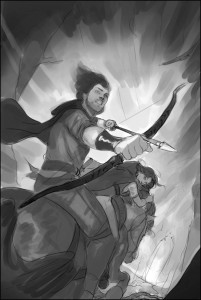
    CurseV2Sketch

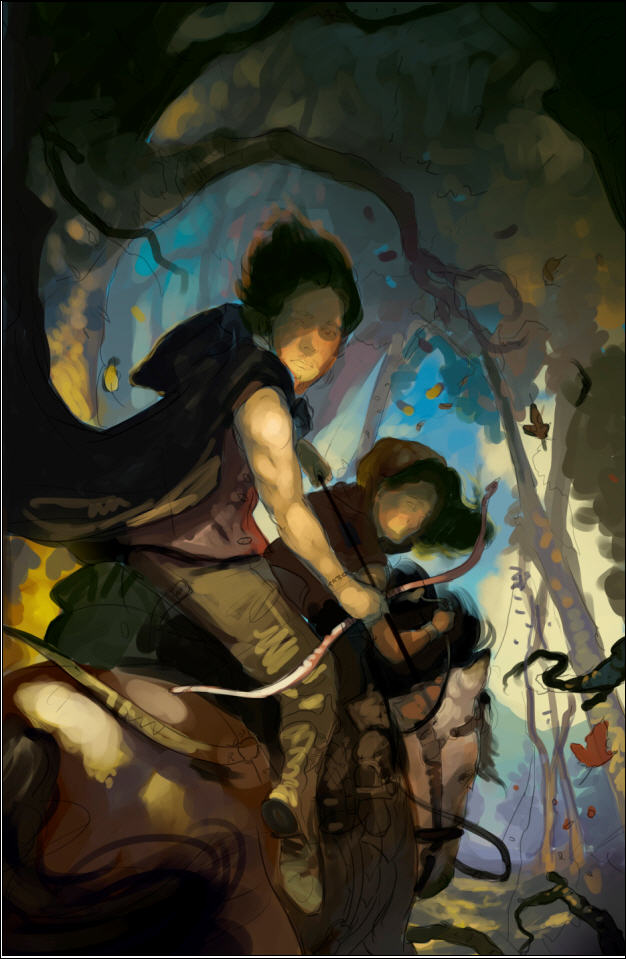
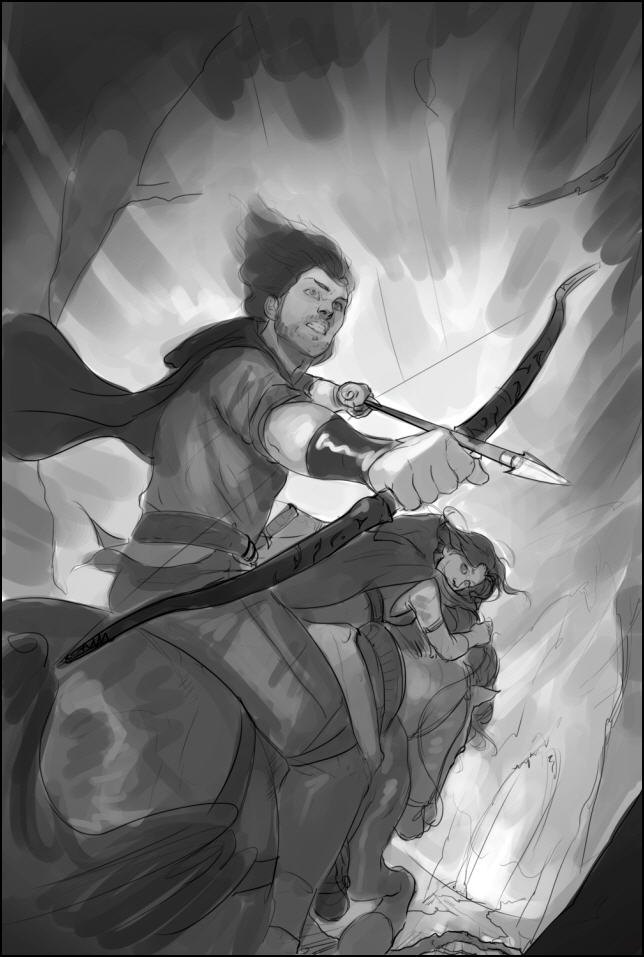
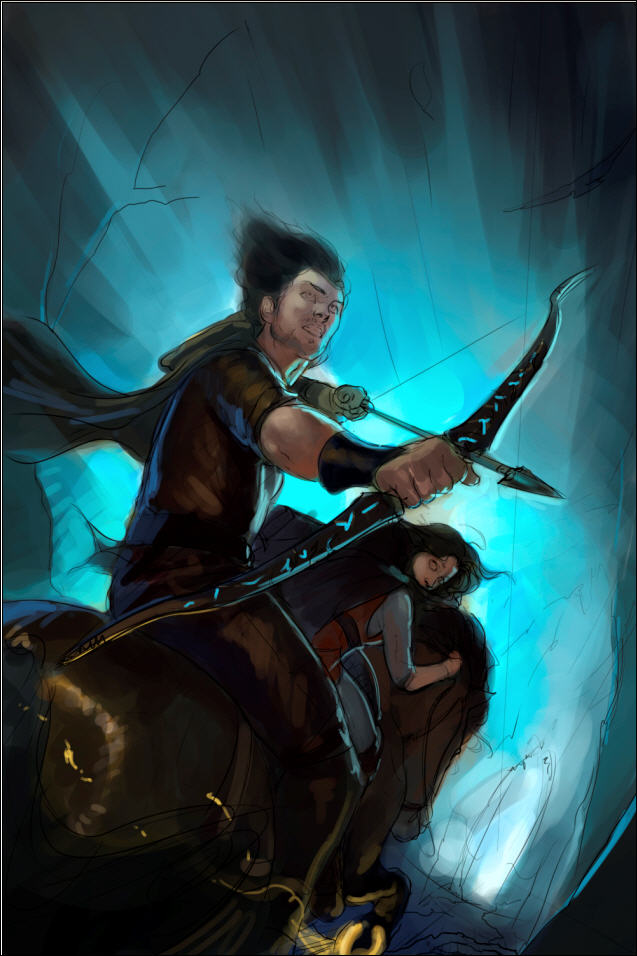
    So we started there. The processes was an iterative one. Victor blocked it in, and we nailed down the values/black and white image. Values are the underpinnings of a painting; you want that to work on an abstract level first. Meaning if you didn’t know that it was a painting of Talen and River riding away on a horse, would the value patterns still be both striking and pleasing? There is no point in proceeding with a painting if either the drawing or the values are failing. After that came the color study. 
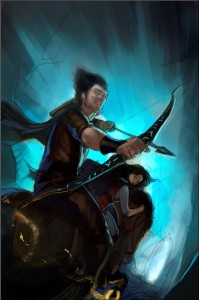
    CurseV2ColorStudy

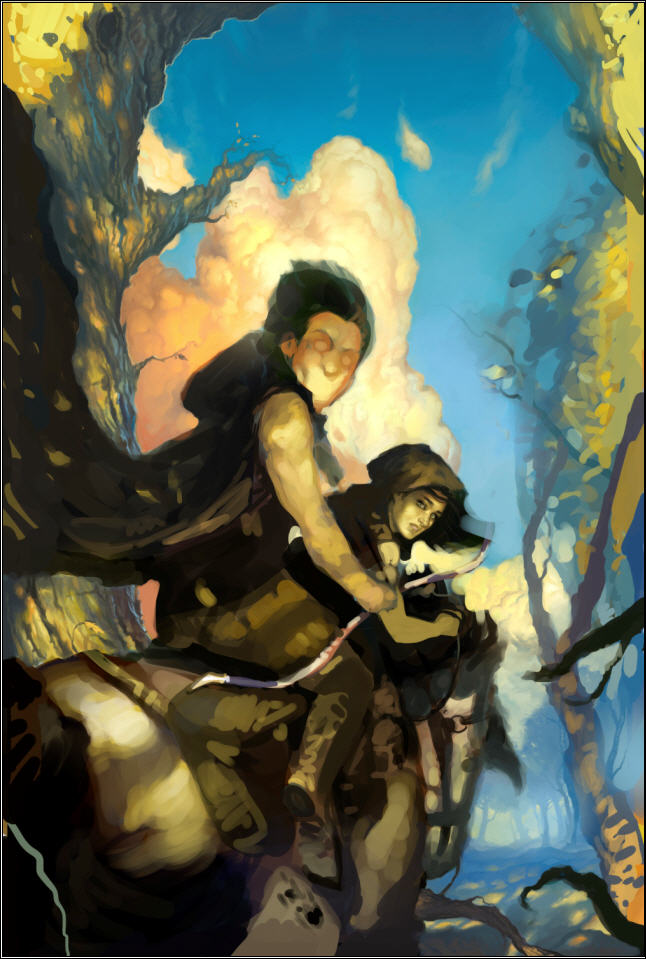
    Once nailed, we went to finish.  Victor really put his heart into this and it turned out awesome!  He’s got great talent, and is a pleasure to work with.
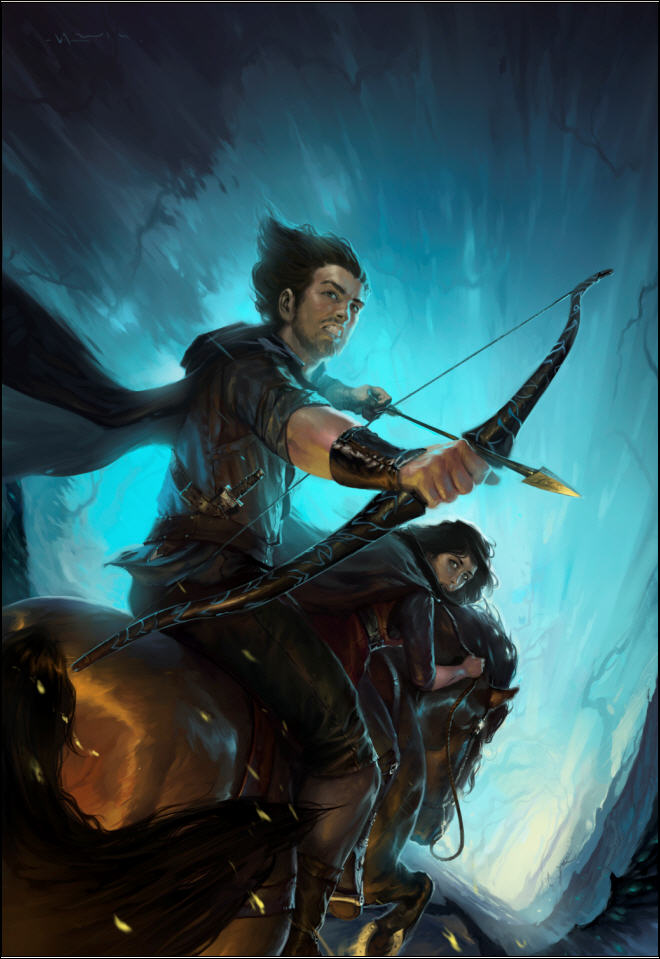
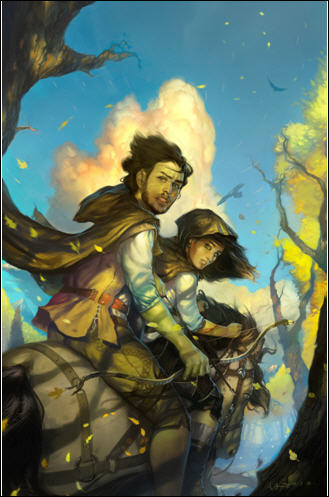
    CurseV2FinalV1 

    JOHN AGAIN

    Are Minguez and Un-named Director good or what! It says epic fantasy. It says action. It has the level of darkness and energy we need. And it looks like it belongs with the cover of Servant. It’s going to work great, and I think the cover will pop in thumbnail, especially when we add the title (white, like Servant) and author’s name (probably a bright color taken from arrow head or horse shoe).

    So lessons learned from this and the previous covers:

    1. Authors are not artists. Just because you know in general what you want doesn’t mean you have the ability to direct a project the way it should go. If you’re not careful, you will shipwreck the project.
    2. Having an experienced art director on board can do wonders.
    3. Keep the broad end in mind; try your best to let the artist focus on the means to that end. This doesn’t mean you don’t provide a lot of image reference up front, but you’re paying the artist for a reason.
    4. It’s helpful for the artist to estimate a total hours they’ll work for the project, even if you’re not paying them an hourly rate, and then keep you up-to-date on hours worked. This way you are forced to use their time wisely. You only have X hours to spend. Spend them on dumb changes, and you’re going to end up with something that’s half-baked.

    And now a mystery.

    I want you to look at the final image again. It’s not actually the final, final image. We had to ask the arist to make one more change because something was off. I will give you a hint. The change had to be made in the lower 1/4 of the image. Look at the image and see if you can find it. Do you see it?

    In the next post about this art I’ll both reveal what needed to be changed and tell you something about this artist that I think you’ll find both inspiring and amazing.

    Share
  • Idaho Librarians

    Just got back from the Idaho Librarian conference in Soda Springs.

    • Had a wonderful time. Got to meet a lot of great people. I just love librarians.
    • Organizer Cindy Erickson was so very gracious. She even promised to take my wife and girls huckleberry hunting. Not only does she reference books, she references the sweet harvest spots!!
    • Drank my first bottle of Hooper Springs sparkling water–naturally carbonated mineral water. It wasn’t too bad at first, but I can still taste the minerals seven hours later 🙂
    • Borders from Logan came up and sold a whole bunch of my books. The sales manager was very positive about the new corporate management. I hope things go well for the bookstore.
    • Locked myself out of my car. But I have a solution now, thanks to one of the librarians (how do they know so much?), that will never ever ever ever fail. I will never be in that situation again. No, I’m not talking about a magnet key box somewhere.
    • Told myself I am getting a camera to take to these things next week. That’s it. I want pictures of all these fine folks.
    Share
  • |

    Update and The Shape-Changer’s Wife

    Assassin is moving along. I’m heading into the last quarter of the book, which is where the fireworks start. I appreciate all of you who have been so patient. My goal is to end this arc of the series with a bang. 

    In the meantime, I’d like to recommend a fantasy novel. I enjoyed it many years ago and recently reread it, finding myself swept away with as much intrigue and delight as the first time. 

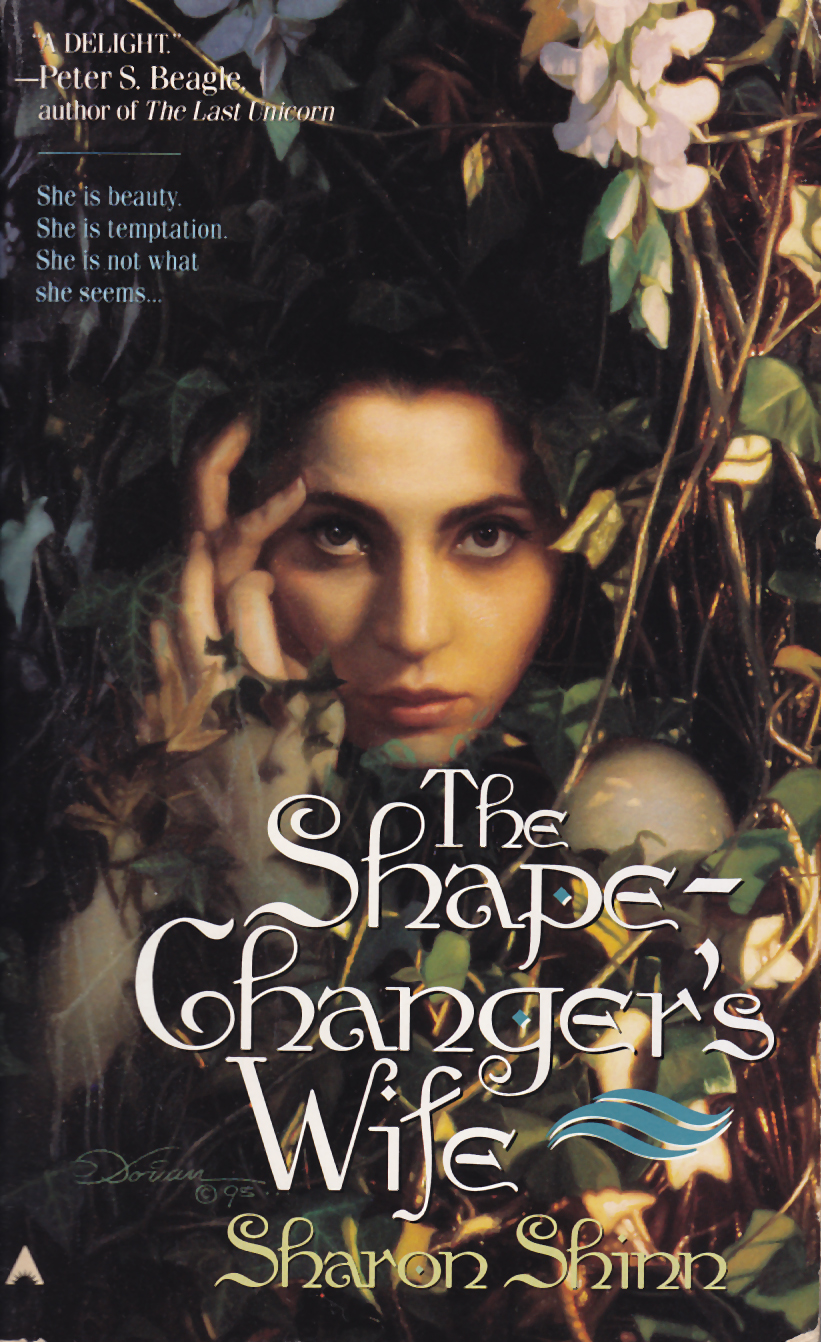
    It’s The Shape-Changer’s Wife by Sharon Shinn. 

    The story follows an aspiring wizard named Aubrey who is nearing the end of his training. He asks his mentor, the wizard Cyril, to teach him transmogrification—the art of changing form—but Cyril refuses. Aubrey protests. Cyril knows the spells. He has cast them himself. Still, he refuses. 

    Eventually, however, Cyril’s conscience gets the better of him. A well-rounded wizard should know every branch of magic, even the ones Cyril dislikes. So he writes to another wizard, a shape-changer named Glyrenden, and asks if he will take Aubrey as a student. Glyrenden agrees. 

    As Aubrey sets off, Cyril gives him a warning: “Learn everything he teaches you so well you can cast his own spells back at him. Glyrenden respects only those stronger than he is, and those he hates. If you cannot beat him, he will destroy you.” 

    And so begins the tale. 

    There’s mystery, wonder, betrayal, loss, battle, and even love. Best of all, it’s a complete stand-alone novel, a rarity these days. 

    If you’re hankering for a fantasy adventure that can be read in one volume, I think you’ll be very pleased with this one. 

    Happy reading,  

    John 

    Share
  • |

    How to Write a Story that Rocks

    Folks, a huge thanks goes to Stephen Nelson for putting all this together. You may kiss his hand when you see him.

    This is a recording of “How to Write a Story that Rocks,” a two-hour seminar Larry Correia and I just put on at the annual BYU’s Life, The Universe, & Everything symposium. I think we had 130-140 people attend. This symposium is focused on writing fiction. And while the panels and presentations do include things specific to the science fiction, horror, and fantasy genres (both adult and young adult), a lot of time is also spent on story writing fundamentals that apply to ALL genres. So when I developed this workshop, I made sure I took the fundamental approach.

    The two-hour seminar has been broken down into 12 segments. To switch between the segments:

    • Hover your mouse pointer over the YouTube below
    • Click the forward and back arrows that appear on the right and left sides to move to the next or previous segment, OR 
    • Scroll through all 12 segments and select the one you want using the playlist control at the bottom

    If you prefer, you can watch all 12 on the How to Write a Story that Rocks YouTube playlist page.

    I’ve found whenever I develop any presentation or training that it takes a few iterations and revisions before it’s the best it can be. This is the first iteration of this seminar. And so below this video I’ve provided additional comments on each segment explaining key concepts, principles, and techniques that we might have failed to discuss or convey as clearly as we’d hoped. Enjoy!

    Handout

    How to Write a Story That Rocks – Handout

    Segment 1

    It’s documented–right-wing gun nut Larry Correia sang “Kumbaya.” What’s next? The hugging of small trees? Oh, Larry, the disilluion. The disillusion.

    The reason why I had Larry sing was not for his mellifluous performance, but to demonstrate the difference in reactions between him and our happy volunteer (“Country Road” by John Denver–this really was a love fest). The volunteer balked because he hadn’t taken any thought to know what to sing before he was commanded to do so. On the other hand, Larry and I had spoken before the seminar. So Larry had something to sing BEFORE he sang it. It’s a simple demonstration, but it illustrates a principle a lot of new writers forget. Writing is a performance. It helps to know what it is you’re going to perform before you perform it.

    It’s one thing for you to tell yourself to write. It’s much easier to tell yourself to write the scene where the rancher finds out one of his illegal ranch hands has been kidnapped.

    Now this doesn’t mean that you have to know everything. Or that you can’t write exploratory drafts to figure out what it is you want to write. But it does illustrate that whatever techniques you use, you’ll be a lot more effective in your writing when you have something to say first.

    But what do you develop? What are the things that bring the story to life? How do you go about getting those things to say? That’s precisely what I wanted to address in the seminar. In the segments that follow, I try to:

    1. Explain what I’ve found are the most important things to develop, the things that define the essence of story, that make the story come alive in the writer’s mind–the things that really matter
    2. Demonstrate techniques to develop those things so you have something to say

    Segment 2

    I think this segment went fairly well. What rocks will different from person to person, even though there will often be a huge overlap between people. So it’s important for authors to seek to develop the kinds of stories that rouse their passion. Watch this interview with best seller Debbie Macomber to see what I mean. So I can’t tell you what to write about. Or if whath you think rocks will resonate with a large number of people. However, what I can do is share the techniques I use that have been most productive in helping me develop initial ideas into something that has much more power.

    You can use the techniques to juice up any of the four parts of story. However, I will say that I find that the most productive, the most important parts, are character and problem. Plot and setting are important. I love them and work to juice them up. But when I get a good character and problem, that’s when the writing seems to flow the easiest.

    And no, I don’t list theme as a part of story. Everyone talks about theme, but when I read what they have to say or press them for examples, it seems that it always either boils down to (1) a story element or topic that’s repeated, (2) a story problem/issue stated in an abstract manner, or (3) some moral situation. Les Miserables is about the “theme” of mercy versus justice. But saying justice versus mercy is just an abstraction of the story problem and dilemmas the story deals with. So, no theme. 

    Segment 3

    Loved this bit about scenes from David Mamet: http://www.slashfilm.com/2010/03/23/a-letter-from-david-mamet-to-the-writers-of-the-unit/ 

    Segment 4

    I’ll be adding my comments to the rest of these segments over the next few days.

    Segment 5

    Segment 6

    Segment 7

    Segment 8

    Segment 9

    Segment 10

    Segment 11

    Segment 12

    Dan Wells on Story Structure

    Check it out: Dan Wells on How to Build a Story (story structure). I find Dan’s “start with the ending” technique helpful as well as thinking about a worst fears realized moment. Watch the videos and see if there isn’t something there that can help you develop your story idea.

    You can get the PowerPoint of How to Build a Story on Dan’s site.

    If you find this approach useful, you might want to check out what novelist Larry Brooks has written about the same material on StoryFix.com.

    Share
  • Servant of a Dark God galley edit finished

    I just mailed my galley edits off to Stacy. My baby is now out on her own. And whether she sinks, swims, or squishes is largely out of my control. I’m excited and anxious. Here we come September 15th!!

    I’m wishing I could do one last story edit. But I suppose that’s just par for the course. I’d be doing story edits until the fulness of times. I’ll just have to take what I have and will learn from this one as it plays with audiences and roll it into the next. I’m going to be very interested to see how this plays.

    I also just saw the map. It’s very nice. Love the style. I’ll see if I can’t post it here.

    And I got an estimated publication date–September 15th. I found out there are two dates, actually. A shipping or release date when the books start leaving the warehouses. And then the date (publication date) when they estimate (a few weeks later) the book will be in stores. The book should be in stores on the 15th.

    I expect the cover to be out soon as well. I told my agent I’d try to work in a big-bosomed blond into the series just in case. Not because she’s particularly fond of well-endowed ladies, but because she told me about another author’s book about a Hispanic woman with an initial cover that depicted this Hispanic woman as a blond with mucho clevage, toting a big sword (just to be clear, it was the blond toting the sword, not the clevage). Hey, miscommunications happen. I don’t know which publisher it was with, and to the departement’s credit, they were able to revise. Still, I thought I’d be ready.

    And now back to book 2 in the series.

    Share
  • Another positive review for Servant of a Dark God: Don D’Ammassa

    Here’s Don D’Ammassa, yet another one of these reading forces of nature (about 1 book per day), on Servant of a Dark God.

    This first fantasy novel gets kudos from the outset because the setting was sufficiently different from the usual to make me perk up after only a couple of chapters…This series shows a good deal of promise mixing workmanlike writing with some genuinely interesting ideas.  More

    Share

7 Comments

  1. I find the LDStorymakers author’s guild rather offputting, considering their requirement for membership. It seems to me that anyone who is not LDS who pays to attend this conference is helping to fund a group who would never allow them to join.

  2. JohnW,

    Who said anything about membership? I’m not a member of the group.

    Folks don’t go to the conference to fund something or join the organization. Who cares about joining? They go because they feel two days of education are worth the dough. This is an educational and networking event. If the education and meeting opportunities are worth it, then it could be sponsored by the Ex-Clowns of Russia, and it wouldn’t matter (alas, such a highly-prestigious group I won’t be able to join).

    You know, it could have been a closed conference. But by opening it to the like-minded public, they are able to offer more to everyone. The key is whether there are going to be folks there in your genre and doing your thing. If not, don’t spend the money. If so, it’s an excellent opportunity.

    You don’t need to become a Shriner to like their hospitals 😉

  3. I said something about membership. I’m not sure why you reacted so defensively.

    As I said, I find the rules of membership of their author’s guild off-putting. If I went to a conference of theirs, every time I met or listened to someone in the guild I would be thinking that here was someone who would not let me into their guild, even if I became a published author.

    Clearly that does not bother some people. But it would bother me. If they were good teachers and mentors and earned my respect, it would be even worse, since I could not aspire to one day join their guild.

  4. JohnW,

    I guess you and I have different goals when it comes to these things. I suppose if my goal were to join a group then this would indeed be a waste of time. And off-putting.

    My goal is different at these things. Like I said: I wouldn’t go to a Shriner’s hospital because I wanted to join the Shriners. I have no intention of becoming a Mason. I’d go to get medical services. Which is why my original post was not intended to suggest people join LDStorymakers. It was intended to highlight great “services” for like-minded authors.

    None of the guests are members of the group. Neither are many of the presenters. Nor a huge number of the attendees. Contacts and aquaintances made have nothing to do with any group.

    But if that’s your goal, then you’re right, it’s going to be counterproductive. My job here is not to convince anyone they must go. I just want to make my post clear, and that is for folks looking for great education and contact opportunities, this is an excellent opportunity.

  5. Thanks for the shout-out John, though the email you got the dates off of was wrong. It’s actually May 9-11. (Thursday through Saturday, not over the weekend.) Thanks for being willing to present again this year. We’re really excited about the lineup of guests and fantastic classes.

Comments are closed.