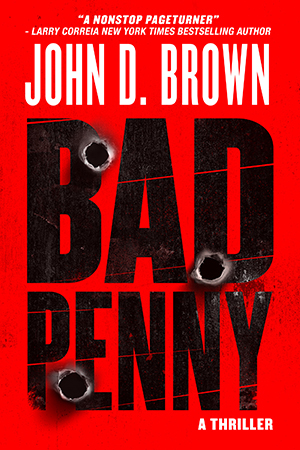
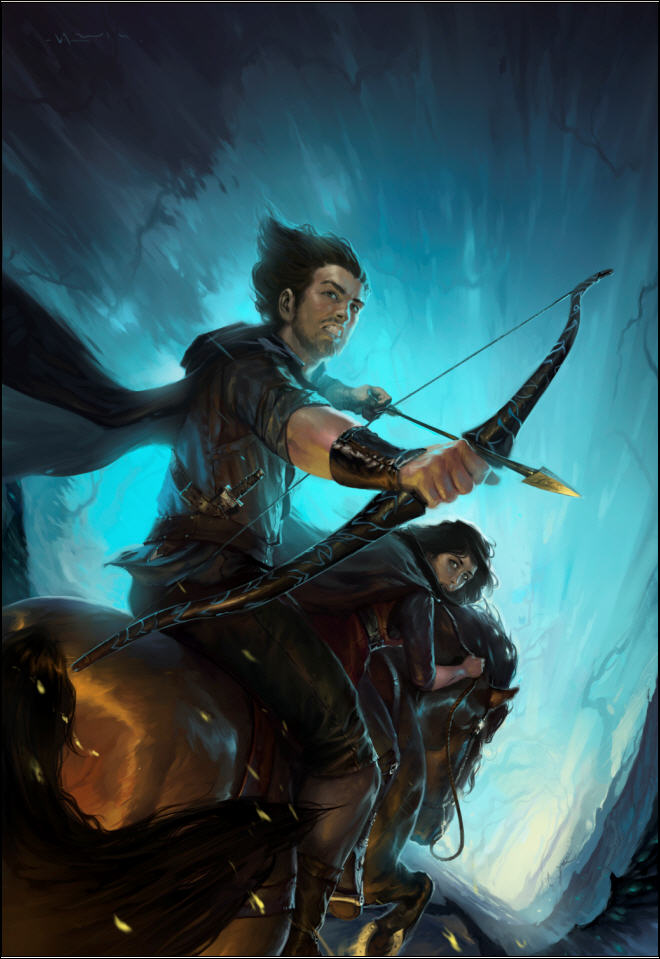
Mette Harrison is the author of Mira, Mirror, The Princess and the Hound and The Princess and the Bear (Orson Scott Card simply loves her work.) So she’s a great writer, but she is also someone who does not blurb books if she doesn’t like them. Heck, she has a hard time doing PR for her OWN work. So I was so very happy to see this review of Servant of a Dark God.
John Brown’s book has all the great things about epic fantasy that I love. Full Review.
Today is a fine US holiday. And so I took the day off to write. I just added over 6,000 words to the final big battle climax of my novel. And what a climax it is. It’s almost 50,000 words long. I still have another 5-10k to go.
Folks, this is longer than a lot of short novels.
I guess it would be more accurate to say I’m writing act 3. The book will probably exceed 200k words. So 60k isn’t too long for the final act.
I will now sigh in contentment.
*sighs*
I’m enjoying the heck out of writing this.
At the same time, I’m hoping to figure out how to make book three in this epic fantasy series shorter so I can get the story out to readers in a more timely manner. I might be able to write two normal sized novels instead of one monster. I will think hard about it.
In the meantime, I hope to wrap this rewrite of act 3 up over the next few days. And then it’s just line and copy edits.
I’ve had a number of people ask me where I am with the second book. I have the progress bars on the side, but they don’t give any details. So I thought I’d start up a semi-regular post that would be something like a writer’s journal. We’ll see how it goes.
Right now I’m working on the climax of CURSE OF A DARK GOD. For the last two weeks I’ve been struggling trying to figure out the flow. I knew in general what I wanted to have happen. I had some images and the general feel–spectacle, revelation, battle at the fortress–knew I had to fulfill some expectations I’d raised with four characters. But I didn’t know the exact steps of the scene, the back and forth. I also hadn’t figured out the exact details of some of the magic that would be used.
I outlined the objectives and plans of the two opposing warlords and then the steps of the scene. I listed my objectives for the scene. I do this sketching, sometimes exploratory drafts, to help bring the scene to life in my mind. I find that until a scene is alive in my mind, it’s impossible for me to write. Anyway, over the course of two weeks I went through six takes of the scene, and it still didn’t feel right. I won’t give the details and spoil the ending, but it just wasn’t there and I was getting frustrated. I’m behind on my deadlines and a book’s ending it critical. I talked a few things over with Nellie and made some headway, but it just wasn’t there.
So I called a brainstorm meeting. I’ve never done this before for my writing work. I mean, I’ve bounced things off individuals (mostly Nellie) many times and found good resolutions, but I’ve never had a group. However, I felt I needed some extra input to get my mind going down new paths. Lenn Johnson, Amy and Alex Lamborn, and Miles and Becky Pinter came over. I borrowed a white board and easel from my church and made gingersnaps. When they arrived, I sat them around our kitchen table with Nellie and had them riff on one question while I captured their answers and ideas on the white board.
It was incredibly productive. Partly because they came up with some great ideas I’m going to use. But also because it got me thinking in a new way which allowed me to come up with an idea that resolved the main issue I was dealing with. That was last Thursday. The next day I sat down and outlined a scene that did everything I wanted it to, including giving me the “oh, baby” feeling. It feels right. I have the spectacle, the revelation, the fulfillment to the expectations for the characters. I’m excited to write it. Which means I can now move forward. This week and next I hope to finish. After that there are a few small things I need to insert and clean up. Then it’s off to my editor.
BTW, I did some calculations. For those interested, in this draft, the third, I ripped out 50% of the draft two and completely rewrote it. New problem and situation for two of my three points of view, major changes, etc. I heavily revised above 20% of the remaining 50%. I’ve put in a little over 500 hours working on this draft over the last six months.
500 hours (remember, I still have a day job).
I am a slower writer than many. But it still would have been a huge task even if I could write twice as fast as I do. I think this is a perfect illustration of three things. First, if you don’t fix some things you feel are off when you find them, you might find you have a massive amount of rework later. Second, sometimes you don’t recognize you have those issues until you’re well into it. Third, writing requires the author to make time. I think this is the most important one. And the one that probably kills most aspiring writers. The fact is that if you can’t make time, you ain’t going to write 🙂
The city of American Fork is putting on what looks to be a great writer’s conference. I’m very pleased to announce that I’ve been asked to present the keynote speech.
Keynote: The 3 Things You Must Learn to Write Killer Stories When: Saturday, April 25, 2009, 9:00 AM Location:
American Fork City Arts Council
31 N. Church Street
American Fork, UT 84003
(801)763-3081
This looks like a great opportunity if you’re a writer. Here’s what the organizers envision.
We have editors from Desert Book, Covenant and Cedar Fort coming to speak as well as National Book Award finalist Sara Zarr, Kristen Langdon, Ginger Churchill, Linda Bethers, Anita Stansfield and others. The goal is to provide a space for local writers to interact with local editors and local authors for inspiration, motivation and guidance in the tricky world of writing and publishing. To that end, the editors will be holding a query letter clinic using query letters from participants, which I think will be super useful. The editors are also speaking on what they want and don’t want as far as submissions, and the state of regional publishing in 2009 given the world upheaval. The authors will all be speaking on how they got an agent, how they got a book deal, what they have learned about writing.
Folks, a huge thanks goes to Stephen Nelson for putting all this together. You may kiss his hand when you see him.
This is a recording of “How to Write a Story that Rocks,” a two-hour seminar Larry Correia and I just put on at the annual BYU’s Life, The Universe, & Everything symposium. I think we had 130-140 people attend. This symposium is focused on writing fiction. And while the panels and presentations do include things specific to the science fiction, horror, and fantasy genres (both adult and young adult), a lot of time is also spent on story writing fundamentals that apply to ALL genres. So when I developed this workshop, I made sure I took the fundamental approach.
The two-hour seminar has been broken down into 12 segments. To switch between the segments:
Hover your mouse pointer over the YouTube below
Click the forward and back arrows that appear on the right and left sides to move to the next or previous segment, OR
Scroll through all 12 segments and select the one you want using the playlist control at the bottom
I’ve found whenever I develop any presentation or training that it takes a few iterations and revisions before it’s the best it can be. This is the first iteration of this seminar. And so below this video I’ve provided additional comments on each segment explaining key concepts, principles, and techniques that we might have failed to discuss or convey as clearly as we’d hoped. Enjoy!
It’s documented–right-wing gun nut Larry Correia sang “Kumbaya.” What’s next? The hugging of small trees? Oh, Larry, the disilluion. The disillusion.
The reason why I had Larry sing was not for his mellifluous performance, but to demonstrate the difference in reactions between him and our happy volunteer (“Country Road” by John Denver–this really was a love fest). The volunteer balked because he hadn’t taken any thought to know what to sing before he was commanded to do so. On the other hand, Larry and I had spoken before the seminar. So Larry had something to sing BEFORE he sang it. It’s a simple demonstration, but it illustrates a principle a lot of new writers forget. Writing is a performance. It helps to know what it is you’re going to perform before you perform it.
It’s one thing for you to tell yourself to write. It’s much easier to tell yourself to write the scene where the rancher finds out one of his illegal ranch hands has been kidnapped.
Now this doesn’t mean that you have to know everything. Or that you can’t write exploratory drafts to figure out what it is you want to write. But it does illustrate that whatever techniques you use, you’ll be a lot more effective in your writing when you have something to say first.
But what do you develop? What are the things that bring the story to life? How do you go about getting those things to say? That’s precisely what I wanted to address in the seminar. In the segments that follow, I try to:
Explain what I’ve found are the most important things to develop, the things that define the essence of story, that make the story come alive in the writer’s mind–the things that really matter
Demonstrate techniques to develop those things so you have something to say
Segment 2
I think this segment went fairly well. What rocks will different from person to person, even though there will often be a huge overlap between people. So it’s important for authors to seek to develop the kinds of stories that rouse their passion. Watch this interview with best seller Debbie Macomber to see what I mean. So I can’t tell you what to write about. Or if whath you think rocks will resonate with a large number of people. However, what I can do is share the techniques I use that have been most productive in helping me develop initial ideas into something that has much more power.
You can use the techniques to juice up any of the four parts of story. However, I will say that I find that the most productive, the most important parts, are character and problem. Plot and setting are important. I love them and work to juice them up. But when I get a good character and problem, that’s when the writing seems to flow the easiest.
And no, I don’t list theme as a part of story. Everyone talks about theme, but when I read what they have to say or press them for examples, it seems that it always either boils down to (1) a story element or topic that’s repeated, (2) a story problem/issue stated in an abstract manner, or (3) some moral situation. Les Miserables is about the “theme” of mercy versus justice. But saying justice versus mercy is just an abstraction of the story problem and dilemmas the story deals with. So, no theme.
I’ll be adding my comments to the rest of these segments over the next few days.
Segment 5
Segment 6
Segment 7
Segment 8
Segment 9
Segment 10
Segment 11
Segment 12
Dan Wells on Story Structure
Check it out: Dan Wells on How to Build a Story (story structure). I find Dan’s “start with the ending” technique helpful as well as thinking about a worst fears realized moment. Watch the videos and see if there isn’t something there that can help you develop your story idea.
Mrs. Brown, my wife, teaches language arts for the 7th and 8th grades as well as reading comprehension. She’s big on reading. She wants to provide every opportunity for kids to not only get good at it, but also learn to love it.
And so her walls are lined with bookshelves full of awesome books teens love. She reads the first chapters of books to her classes to let them sample various stories. She features their book reports. She has them paste the covers of the books they’ve read on pages displayed around the classroom. And the school’s awesome librarian supports with her own programs.
The 7th and 8th grade students at Rich Middle School are marinated in a big celebration of reading.
In Mrs. Brown’s class, it’s fairly straight forward to get an A on reading, which is a huge part of your grade—all you’ve got to do is read.
But how much reading do they need to do? How do you track it? And what books should they read?
Check this out.
First, she tests each student to see what his or her reading speed is.
Next, she takes the number of hours they’re supposed to be reading each week for homework (I think it’s 2 or 2.5), then does the math to get a feasible reading word count for the trimester for each student. She may adjust it a bit, depending on the student’s ability.
Third, she presents that number to the student, and the two of them set a word count goal for the trimester. Talk about an individualized goal.
If you want to get an A in reading, all you have to do is reach that word count goal.
How do you know how many words a book has?
The Accelerated Reader program provides that information.
But how does she know that they’ve read the books?
She uses the Accelerated Reader tests. And if there isn’t one, the student can write a report.
And what books do the students read?
Any dang book they like.
I love this. The kids get to select their own books and just read, read, read.
Another part of this is that she pings each student once a week to ask them what book they’re reading, what page they’re on, and what they think of the book. This weekly check-in provides the more frequent accountability students of that age need.
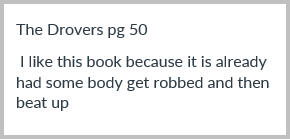
Yesterday, she received this report from one of her 8th grade boys who is reading Prey, the first book in The Drovers series.