The story behind “From the Clay of His Heart”
This story started in the Layton, UT Lowe’s on the trim isle. Read the story of how I wrote this story on Side-Show Freaks.
This story started in the Layton, UT Lowe’s on the trim isle. Read the story of how I wrote this story on Side-Show Freaks.
BSCreviews just published my guest blog “How to Get Ideas: Talk to Cows.” For those of you unfamiliar with the genesis of Servant of a Dark God, you’ll want to check it out.
Huzzah!
I just typed the final words of draft 2 of the first book of The Drovers. It now goes to my beta readers (I’m the alpha reader, the one who sees draft 1). And while they’re reading, I will begin draft 2 of the second book.
This is the shortest novel I’ve ever written, clocking in at 61,000 words. My target was 50,000 words, the average size of a Louis L’Amour western. But this will do. Depending on the beta reader feedback, I may add or cut a few thousand words. But not much.
I still don’t have a series name, dang it!
The Queen’s Drovers?
Folks, a huge thanks goes to Stephen Nelson for putting all this together. You may kiss his hand when you see him.
This is a recording of “How to Write a Story that Rocks,” a two-hour seminar Larry Correia and I just put on at the annual BYU’s Life, The Universe, & Everything symposium. I think we had 130-140 people attend. This symposium is focused on writing fiction. And while the panels and presentations do include things specific to the science fiction, horror, and fantasy genres (both adult and young adult), a lot of time is also spent on story writing fundamentals that apply to ALL genres. So when I developed this workshop, I made sure I took the fundamental approach.
The two-hour seminar has been broken down into 12 segments. To switch between the segments:
If you prefer, you can watch all 12 on the How to Write a Story that Rocks YouTube playlist page.
I’ve found whenever I develop any presentation or training that it takes a few iterations and revisions before it’s the best it can be. This is the first iteration of this seminar. And so below this video I’ve provided additional comments on each segment explaining key concepts, principles, and techniques that we might have failed to discuss or convey as clearly as we’d hoped. Enjoy!
How to Write a Story That Rocks – Handout
It’s documented–right-wing gun nut Larry Correia sang “Kumbaya.” What’s next? The hugging of small trees? Oh, Larry, the disilluion. The disillusion.
The reason why I had Larry sing was not for his mellifluous performance, but to demonstrate the difference in reactions between him and our happy volunteer (“Country Road” by John Denver–this really was a love fest). The volunteer balked because he hadn’t taken any thought to know what to sing before he was commanded to do so. On the other hand, Larry and I had spoken before the seminar. So Larry had something to sing BEFORE he sang it. It’s a simple demonstration, but it illustrates a principle a lot of new writers forget. Writing is a performance. It helps to know what it is you’re going to perform before you perform it.
It’s one thing for you to tell yourself to write. It’s much easier to tell yourself to write the scene where the rancher finds out one of his illegal ranch hands has been kidnapped.
Now this doesn’t mean that you have to know everything. Or that you can’t write exploratory drafts to figure out what it is you want to write. But it does illustrate that whatever techniques you use, you’ll be a lot more effective in your writing when you have something to say first.
But what do you develop? What are the things that bring the story to life? How do you go about getting those things to say? That’s precisely what I wanted to address in the seminar. In the segments that follow, I try to:
I think this segment went fairly well. What rocks will different from person to person, even though there will often be a huge overlap between people. So it’s important for authors to seek to develop the kinds of stories that rouse their passion. Watch this interview with best seller Debbie Macomber to see what I mean. So I can’t tell you what to write about. Or if whath you think rocks will resonate with a large number of people. However, what I can do is share the techniques I use that have been most productive in helping me develop initial ideas into something that has much more power.
You can use the techniques to juice up any of the four parts of story. However, I will say that I find that the most productive, the most important parts, are character and problem. Plot and setting are important. I love them and work to juice them up. But when I get a good character and problem, that’s when the writing seems to flow the easiest.
And no, I don’t list theme as a part of story. Everyone talks about theme, but when I read what they have to say or press them for examples, it seems that it always either boils down to (1) a story element or topic that’s repeated, (2) a story problem/issue stated in an abstract manner, or (3) some moral situation. Les Miserables is about the “theme” of mercy versus justice. But saying justice versus mercy is just an abstraction of the story problem and dilemmas the story deals with. So, no theme.
Loved this bit about scenes from David Mamet: http://www.slashfilm.com/2010/03/23/a-letter-from-david-mamet-to-the-writers-of-the-unit/
I’ll be adding my comments to the rest of these segments over the next few days.
Check it out: Dan Wells on How to Build a Story (story structure). I find Dan’s “start with the ending” technique helpful as well as thinking about a worst fears realized moment. Watch the videos and see if there isn’t something there that can help you develop your story idea.
You can get the PowerPoint of How to Build a Story on Dan’s site.
If you find this approach useful, you might want to check out what novelist Larry Brooks has written about the same material on StoryFix.com.

This Thursday, Friday, and Saturday, I will be at Comic Con at the Salt Palace Convention Center. I can’t wait. There’s going to be a huge crowd (100,000+) with lots of great panels, events, celebrities, and artists, including Bruce Campbell, Danny Glover, Cary Elwes (The Princess Bride), and Patrick Warburton (the guy who played Kronk!)
It’s going to be a blast.
Here’s my panel schedule.
| Time | Thursday, Sept 4 | Friday, Sept 5 | Saturday, Sept 6 |
| A.M. | 11:00 a.m. How to Write Great Science Fiction & Fantasy | ||
| P.M. | 3:00 p.m. Katniss Revealed: A Closer Look at The Hunger Games on Film and in Print | 1:00 p.m. Build a Story | 1:00 p.m. How to Win Writers and Illustrators of the Future Competition |
| Evening | 7:00 p.m. Writing Suspense |
The rest of the time I’ll probably be at my booth in the Artist’s Alley, chatting with folks and selling and signing books.
I’ve invited two other awesome authors to join me in the booth. Eric James Stone is a Nebula award-winning science fiction writer. Cheree Alsop is a paranormal and urban fantasy indie.

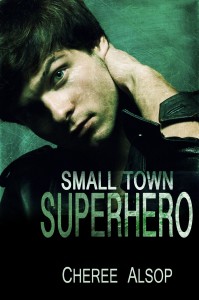
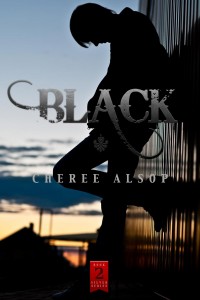
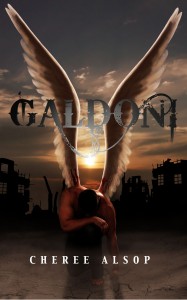
Please feel free to come by and say hello.
I believe that there are three things you need to know to write stories. The better you know them, the better and more stories you’ll be able to write. Those three things are:
1. What stories do, i.e. what you’re trying to do as an author.
2. The principles of how character, setting, problem, plot, and text work to do those things.
3. The principles of coming up with and developing stories.
About this time last year I wrote my series on the key conditions for creating reader suspense, which went into depth on things 1 and 2. And I’ve written a bunch of other blogs on those topics. This year I’m going to be doing one on the key principles of getting and developing killer story ideas. I’ll be presenting it in a shortened form at this year’s League of Utah Writer’s roundup on Saturday (see my calendar for more details). One neat thing about this series is that I will have a number of other authors illustrate the principles with their own work. When learning this type of stuff, I don’t think we can’t get enough concrete examples. Keep your eyes open. I think it’s going to be a good one.
