Author: John Brown

  • Hunger Games the Movie – Excellent, but marred . . .
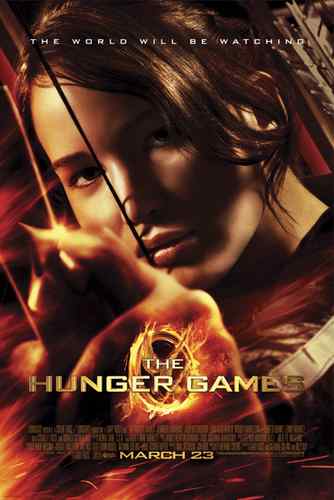
    So is the movie as good as so many are saying?

    I liked the book a lot. You can see my review here: http://johndbrown.com/2010/09/amano-jasons-deli-and-the-hunger-games/

    Yes, but is the movie as good as the book?

    Let’s start with the beginning of the movie. During the first 10 or 15 minutes I was so annoyed and angry that I almost rose up out of my seat to shout “Stop it! Stop it! Stop it!” at the screen.

    Was this because the movie wasn’t faithful to the book?

    Because the actors sucked?

    Because the popcorn triggered a terrible case of restless leg syndrome?

    No, no, and no. 

    Then, why, John? Why?

    Because the director, Gary Ross, who wrote the wonderful Seabiscuit and Big, just couldn’t trust the material, the story, to work its magic. No, he thought that it would be a really good idea to MAKE ME SICK by overexaggerating and overusing HANDHELD CAMERA MOVEMENT. You know, the idea that if you confuse the viewer and make them uncomfortable, that will help them FEEL the wrongness, the stress, and the fear of the situation.

    A common technique for doing this is the tilted shot. Tilt the shot just a little and viewers subconsciously get the idea that something is wrong. You don’t notice it. The movie plays on, but you do feel that something is wrong, that trouble is brewing somewhere or someone is lying. A similar technique is used in action scenes. To help the viewer feel the “speed” of the action, they give us quick cuts. But the traditional tilted shot and quick cuts preserve understanding. They’re more of an unconscious effect. You still see the movie unfold and understand it. 

    However, some directors in the last few years, maybe with Spielberg’s use of this in the beginning of Saving Private Ryan (is there a movie history buff out there who can confirm?), decided that if a little was good, good golly, ten times that would be a LOT better.  So instead of realizing that action sequences like the one in the beginning of Casino Royale or the fights in Inception, ones you can easily follow, are the kinds audiences want, they figure they need to push the shots and cuts until audiences can’t make heads or tails of what’s happening.

    Instead of giving the audience tremendous thrills and suspense, they give them confusion.

    Wow, that’s a good trade off.

    And now, Gary Ross, who seems to have inexplicably bought into this, decides that what he needs to do is not only deliver confusion but nausea and annoyance as well.

    Stop, people. Stop. PLEASE! A little spice enhances a dish and takes it to the next level. But when you dump a cupful of thyme on my plate, all you do is make me want to gag.

    I’m not the only one who noticed. My 14 year old and my 19 year old noticed it as well and were bugged by it. It got so bad I told myself if it didn’t stop, I was going to walk out and ask for my money back.  Luckily, Ross toned his nonsense down and finally let the actors and story take center stage. 

    Which is what he should have done from the beginning because the acting was great. I loved Jennifer Lawrence (Winter’s Bone) as Katniss. Loved Willow Shields as Primrose and Josh Hutcherson as Peeta. Stanley Tucci playing Ceasar Flickerman, the blue-haired talk show host, was perfect. And the story was indeed a faithful translation of the book. I’m sure a huge part of that is due to the fact that Suzanne Collins, the author of the novel, helped write the screen play.  The other writers were Gary Ross and Billy Ray. 

    They did change a few minor things like Buttercup the cat is now black and white (I’m so utterly devastated I won’t be right for years), and Primrose gives the mockingjay pin to Katniss instead of Madge. They added scenes with the President of Panem.  They cut some scenes with minor characters and some twists in the plot. For those who read the book, even though the lost and changed parts added texture to the story, I think you’ll still be very pleased. For those who haven’t read the book, I think you’ll be wowed and sobered by the end. You’ll think about the Romans and their gladiators. You’ll wonder how we can we humans can do things like this. And I think you’ll feel a great indignation take root in your breast against the villains who control the world of the story.

    So, the move is a great experience that would have been over-the-top excellent if the director hadn’t marred it with way too much of something that should be used as spice instead of the main course.  Nevertheless, I recommend it. If you like action and drama, I think you’ll love the movie and the book. And hopefully my comments above will innoculate you to the opening scenes because you know to expect them going in.

    EDIT: Matthais Stork writes about “Chaos Cinema: The Decline and Fall of Action Filmmaking“. And his response to his critics. Anne Billson of The Guardian agrees that “Action sequences should stir, not just shake“.  But here’s a fellow trying to defend chaos cinema in a way that reminds me way too much of those I met in my English degree who assumed that the highest reading was one that focused on meaning, one that assumed the story was really not a story about people to be experienced, but a clever puzzle that needed to be decoded.

    EDIT: The issue with chaos cinema is that it replaces showing with telling.

    It presents “big fight” and “exciting chase” instead of showing the big fight and exciting chase. It’s similar to voice over narration: using the soundtrack to tell us about what’s happening instead of showing it to us. But it goes beyond even that because at least the narration told us what was happening. Chaos cinema at its most extreme doesn’t do even that. It replaces clarity with confusion. And this is its biggest downfall.

    For someone to react with emotion to a situation, they must (1) understand what’s going on AND (2)believe that the situation is real. The moment you deliver confusion, you take away one of the two necessary antecedents, and prevent the audience from responding emotionally. They now can only respond intellectually, e.g. Ah, I congnitively see that we are having a fight; I have no idea what’s happening and how that affects the guy I’m rooting for, but I see we’ve inserted the “fight” concept. (For those interested in the excellent discussion of emotion and stories, you’ll want to read Jenefer Robinson’s DEEPER THAN REASON: Emotions and it’s role in literature, music, and art.)

    Take it too far and you remove the second antecedent as well because now, instead of reacting to the story, you’re thinking about the camera man. Which is what happened with me when I just about came out of my chair to shout at the screen at the beginning of HUNGER GAMES. And what happened to half a dozen others I know who couldn’t look up because it would make them dizzy, and another half dozen who did look up and got sick.

    Chaos cinema trades in the super powers of cinematic storytelling for a bunch of rocks.
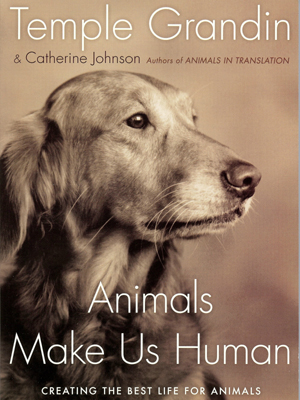
  • Animals Make Us Human by Temple Grandin

    Which animals do you think have a better life: family dogs or cattle on ranches?

    Think about it. Cattle get branded and tagged and slaughtered. Some live only a year or two. Meanwhile, Fido gets the run of the house, a spot in front of the couch, and chew toys.

    You might be surprised to know that many cattle have it better than pampered family pets. That’s the claim Temple Grandin makes in her fascinating and practical book Animals Make Us Human: Creating the Best Life for Animals.

    Grandin is not a beef industry lobbyist working smoke and mirrors PR to make ranchers look good. She’s a practical, down-to-earth, get-your-hands-dirty animal scientist who has revolutionized the beef industry and had an impact on many others. She isn’t a vegetarian, and has no intention to become one. But she does love animals. And her insight and research has made the lives of millions of animals better.

    When people ask her how she can work in the beef industry instead of being an activist against it, she says that all things die. It’s the cycle of life. She has no problem eating animals. In fact, she believes that our relationship with the animals we use for food is symbiotic–mutually beneficial. But she also believes that if we’re going to raise them, or keep them as pets, we need to give these animals a quality life.

    So what do animals need for a quality life? Should we give our cattle rubdowns? Let our dogs roam through city streets? What do our cats and pigs and horses need? Is it freedom?

    Her answer, surprisingly, is that focusing on freedom really isn’t a good guide for trying to give animals a good life. Not because freedom is a bad thing, but because it’s too confusing. Instead, she believes that we should be basing animal welfare on the core, or what she calls the “blue ribbon,” emotion systems in the brain. The key systems are SEEKING, RAGE, FEAR, PANIC, and PLAY.

    The rule is simple: avoid stimulating the negative emotions; do stimulate the positive ones. In the book she shares what she knows about how to do that for dogs, cats, horses, cows, pigs, chickens and other poultry, wildlife, and animals in zoos.

    Grandin is always fascinating, and with her trademark style of stories and practical insights, she shares what the research and her more than 30 years of practical hands-on experience working with animals has taught her. You’ll learn why your chickens need a place to hide, even if you’ve fenced out every fox and skunk with thirty feet of concrete; what makes pigs happy; why clicker training is so successful with horses; why you might want to consider the color of your cat’s fur; why leaving your dog locked in the house with food and plenty of toys may actually be very stressing. You’ll even learn to look at zoo habitats differently. Each chapter focuses on a different animal and how to avoid the negative and stimulate the positive blue ribbon emotions. This is not touchy-feely fluff. It’s not the ranting and raging of someone who thinks the planet would be better of without humans. It’s the insights of someone who is rigorously scientific, down-to-earth practical, and passionate about animals.  

    In her own words: “Everyone who is responsible for animals needs a set of simple, reliable guidelines for creating good mental welfare that can be applied to any animal in any situation.” Read her book to find out what she suggests these should be. If you own pets or raise animals, I think you’ll love this read. If you’d like to sample the first chapter, you can at Grandin’s website:  http://www.grandin.com/

  • The Story Behind “Amazing Grace”

    John Newton writes the following about himself.

    “My father was a very sensible, and a moral man, as the world rates morality; but neither he, nor my step-mother, was under the impressions of religion: I was, therefore, much left to myself, to mingle with idle and wicked boys; and soon learnt their ways.”

    And learn them he did, and not just from wicked boys.  This is the John Newton who worked aboard a “respectable” slave ship and then became the captain of his own.  But this is also the John Newton who later wrote “Amazing Grace,” probably the most famous of all folk hymns.

    That song has been sung in countless arrangements and to different tunes. I love the version by The Five Blind Boys of Alabama sung to the music of “The House of the Rising Sun”.  Soulful.  Incredible.

    And the fabulous mash up of those two same songs performed by Jerry Lawson And The Talk Of The Town on NBC’s The Sing-Off season 2.

    And the more traditional version featured on the movie Amazing Grace sung by Chris Tomlin and titled “Amazing Grace (my chains are gone)”.

    There are simply too many wonderful versions to list.

    But what makes this song so wonderful is not only the words, but also the story behind the song.  This song isn’t a song of theology—it’s John Newton’s own heartfelt expression of gratitude to God, who helped him turn from his profane and wicked life and eventually fight against the ills he practiced.  Later in life, Newton became a supporter and inspiration to William Wilberforce who lead the fight to pass the British Slave Trade Act in 1807, which abolished the slave trade in that empire.

    Although the experience of Newton’s turning point is dramatic, and referred to in the song, his change didn’t occur over night.  In fact, it took him a number of years to fully come to himself.   It was 34 years AFTER he retired from slavery, which was years AFTER he turned toward a new life, that he published his forceful pamphlet Thoughts Upon the Slave Trade, in which he describes the horrific conditions of the slave ships and apologizes for a confession that “comes too late” and “will always be a subject of humiliating reflection to me, that I was once an active instrument in a business at which my heart now shudders.”

    My heart soars when seeing someone turn a life around (maybe because I’m in need of a turnaround).  It’s such a wonderful and instructive tale of hope.

    Recently, Asbury University Media Com students and an Asbury Art Dept student under the direction of Professor Greg Bandy produced a short 14 minute documentary called Amazing Grace: The Story Behind the Song on the fascinating story of how John Newton wrote the most famous hymn in the world . . . and helped bring about one of the most powerful social justice movements in the history of Western Civilization.  It’s a great tale.  Watch it below.

    Amazing Grace: The Story Behind the Song from Gregory Bandy on Vimeo.

  • Ebooks set to become largest trade category in 2012

    The folks at Mediabistro.com reported the American Association of Publishers sales for December 2011 and YTD: “The December report represents data provided by 77 publishers and only sales of the participants are reported. NOTE: All numbers have been rounded to one decimal point and may not add up to 100%”

    The key takeaway, I think, is that ebooks will become THE largest book trade category in 2012.

    Sales only need to grow 33% to surpass that of adult hardcovers.  See the chart below. They already dwarf adult mass market, which took a HUGE hit last year. Sales can’t keep growing at more than 100% year after year. They must eventually slow down.  But, given projections, it’s not going to be hard to make 33%. According to the estimates of a Barclays Bank analyst (link below), Amazon will sell an estimated 35 million Kindles and Kindlefires next year. Each owner would only have to purchase $10 worth of books in the year for the segment to grow 33%. And that doesn’t count the sales for the Nook, iphones, ipads, or any other ereaders out there.  

    This year ebooks become king of the heap.

    Media Bistro report of AAP numbers: http://www.mediabistro.com/galleycat/mass-market-paperback-sales-down-nearly-41-in-december_b47625   

    Barclays analyst project sales of 35 million Kindles and Kindlefires in 2012: http://blogs.barrons.com/techtraderdaily/2012/02/23/amazon-barclays-cuts-kindle-kindle-fire-estimates/ 


  • Bad Penny – working title

    I’ve decided to tentatively call the first book in my Frank Shaw series “Bad Penny.”  This is the thriller I’ve been talking about. It’s a working title, so it may change.

    As for progress, I’m close to 14,000 words. Huzzah! And I’m having a blast writing it. Every day I look forward to my writing time.

    For those curious, the book takes place in Rock Springs, Wyoming. The plot will move it across eastern part of the state and then down into Colorado.

    Frank Moses Shaw, ex-con . . .

    Ah, folks. I’m just loving it.

    I’m also generating options for a pen name.  Althought I know there’s overlap between readers of epic fantasy and thrillers (hey, look at me!), I still think the genres are too different to try to spread a brand name across both.  I read about Tess Gerritsen, who started in romance, using the same name for her thrillers, which is all I think she writes now. She reports that she had a number of the thriller readers pick up her romances and vice versa, and then get frustrated because her brand meant one thing to them, but they got another.

    If I was writing thrillerish SF, like Card’s Ender’s Game, or thrillerish fantasy, like Correia’s Monster Hunter, then maybe the stretch wouldn’t be so far.  For those of you who are thriller readers, I’ll be posting some possible names in the near future. I’d like your reactions on the options, so keep a look out.

    As for CURSE OF A DARK GOD, no word yet from ye Editors. I’m expecting a reply March or April. Yeah, I turned it into my agent end of November. She submitted it to Tor in December. No, I don’t like these lead times any better than you do. But it is what it is. My job is to produce. My target this year is two novels–DARK GOD’S GLORY (book 3 in the series) and BAD PENNY. My stretch goal is to finish the working outline for the second Frank Shaw book (already have the premise) and actually start on it before the end of the year. We’ll see what happens.