Hunger Games the Movie – Excellent, but marred . . .
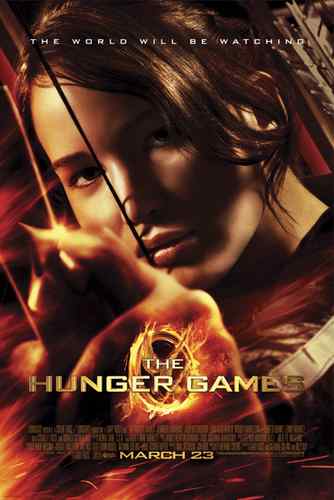
So is the movie as good as so many are saying?

I liked the book a lot. You can see my review here: http://johndbrown.com/2010/09/amano-jasons-deli-and-the-hunger-games/

Yes, but is the movie as good as the book?

Let’s start with the beginning of the movie. During the first 10 or 15 minutes I was so annoyed and angry that I almost rose up out of my seat to shout “Stop it! Stop it! Stop it!” at the screen.

Was this because the movie wasn’t faithful to the book?

Because the actors sucked?

Because the popcorn triggered a terrible case of restless leg syndrome?

No, no, and no. 

Then, why, John? Why?

Because the director, Gary Ross, who wrote the wonderful Seabiscuit and Big, just couldn’t trust the material, the story, to work its magic. No, he thought that it would be a really good idea to MAKE ME SICK by overexaggerating and overusing HANDHELD CAMERA MOVEMENT. You know, the idea that if you confuse the viewer and make them uncomfortable, that will help them FEEL the wrongness, the stress, and the fear of the situation.

A common technique for doing this is the tilted shot. Tilt the shot just a little and viewers subconsciously get the idea that something is wrong. You don’t notice it. The movie plays on, but you do feel that something is wrong, that trouble is brewing somewhere or someone is lying. A similar technique is used in action scenes. To help the viewer feel the “speed” of the action, they give us quick cuts. But the traditional tilted shot and quick cuts preserve understanding. They’re more of an unconscious effect. You still see the movie unfold and understand it. 

However, some directors in the last few years, maybe with Spielberg’s use of this in the beginning of Saving Private Ryan (is there a movie history buff out there who can confirm?), decided that if a little was good, good golly, ten times that would be a LOT better.  So instead of realizing that action sequences like the one in the beginning of Casino Royale or the fights in Inception, ones you can easily follow, are the kinds audiences want, they figure they need to push the shots and cuts until audiences can’t make heads or tails of what’s happening.

Instead of giving the audience tremendous thrills and suspense, they give them confusion.

Wow, that’s a good trade off.

And now, Gary Ross, who seems to have inexplicably bought into this, decides that what he needs to do is not only deliver confusion but nausea and annoyance as well.

Stop, people. Stop. PLEASE! A little spice enhances a dish and takes it to the next level. But when you dump a cupful of thyme on my plate, all you do is make me want to gag.

I’m not the only one who noticed. My 14 year old and my 19 year old noticed it as well and were bugged by it. It got so bad I told myself if it didn’t stop, I was going to walk out and ask for my money back.  Luckily, Ross toned his nonsense down and finally let the actors and story take center stage. 

Which is what he should have done from the beginning because the acting was great. I loved Jennifer Lawrence (Winter’s Bone) as Katniss. Loved Willow Shields as Primrose and Josh Hutcherson as Peeta. Stanley Tucci playing Ceasar Flickerman, the blue-haired talk show host, was perfect. And the story was indeed a faithful translation of the book. I’m sure a huge part of that is due to the fact that Suzanne Collins, the author of the novel, helped write the screen play.  The other writers were Gary Ross and Billy Ray. 

They did change a few minor things like Buttercup the cat is now black and white (I’m so utterly devastated I won’t be right for years), and Primrose gives the mockingjay pin to Katniss instead of Madge. They added scenes with the President of Panem.  They cut some scenes with minor characters and some twists in the plot. For those who read the book, even though the lost and changed parts added texture to the story, I think you’ll still be very pleased. For those who haven’t read the book, I think you’ll be wowed and sobered by the end. You’ll think about the Romans and their gladiators. You’ll wonder how we can we humans can do things like this. And I think you’ll feel a great indignation take root in your breast against the villains who control the world of the story.

So, the move is a great experience that would have been over-the-top excellent if the director hadn’t marred it with way too much of something that should be used as spice instead of the main course.  Nevertheless, I recommend it. If you like action and drama, I think you’ll love the movie and the book. And hopefully my comments above will innoculate you to the opening scenes because you know to expect them going in.

EDIT: Matthais Stork writes about “Chaos Cinema: The Decline and Fall of Action Filmmaking“. And his response to his critics. Anne Billson of The Guardian agrees that “Action sequences should stir, not just shake“.  But here’s a fellow trying to defend chaos cinema in a way that reminds me way too much of those I met in my English degree who assumed that the highest reading was one that focused on meaning, one that assumed the story was really not a story about people to be experienced, but a clever puzzle that needed to be decoded.

EDIT: The issue with chaos cinema is that it replaces showing with telling.

It presents “big fight” and “exciting chase” instead of showing the big fight and exciting chase. It’s similar to voice over narration: using the soundtrack to tell us about what’s happening instead of showing it to us. But it goes beyond even that because at least the narration told us what was happening. Chaos cinema at its most extreme doesn’t do even that. It replaces clarity with confusion. And this is its biggest downfall.

For someone to react with emotion to a situation, they must (1) understand what’s going on AND (2)believe that the situation is real. The moment you deliver confusion, you take away one of the two necessary antecedents, and prevent the audience from responding emotionally. They now can only respond intellectually, e.g. Ah, I congnitively see that we are having a fight; I have no idea what’s happening and how that affects the guy I’m rooting for, but I see we’ve inserted the “fight” concept. (For those interested in the excellent discussion of emotion and stories, you’ll want to read Jenefer Robinson’s DEEPER THAN REASON: Emotions and it’s role in literature, music, and art.)

Take it too far and you remove the second antecedent as well because now, instead of reacting to the story, you’re thinking about the camera man. Which is what happened with me when I just about came out of my chair to shout at the screen at the beginning of HUNGER GAMES. And what happened to half a dozen others I know who couldn’t look up because it would make them dizzy, and another half dozen who did look up and got sick.

Chaos cinema trades in the super powers of cinematic storytelling for a bunch of rocks.

Share

Similar Posts

  • |

    The average American reads 17 books per year

    Americans and Reading

    The Pew Research Center has just published their findings on reading in America. It’s called “The Rise of E-reading“. There’s a LOT of fascinating information in the report. Here’s a taste:

    1. Americans 18 and older read on average 17 books each year. 19% say they don’t read any books at all. Only 5% say they read more than 50.
    2. Fewer Americans are reading books now than in 1978.
    3. 64% of respondents said they find the books they read from recommendations from family members, friends, or co-workers.
    4. The average reader of e-books read 24 books (the mean number) in the past 12 months; the average non-e-book consumer read an average of 15.

    Building an Audience

    I also want to recommend this week’s post by Kris Rusch on Audience. She has a number of interesting things to say about the dream of being a best seller and building an audience. The money quote comes as she refers to a post by Tracy Hickman:

    “The point here is that you do not have to feel as though you are in competition with the entire world. You don’t NEED the entire world to be a successful writer. What you need is an audience—just enough of an audience, mind you—who reads your words, is changed by them and wants to come back for more.”

    An audience. More importantly, an audience that reads and “is changed by” your words. Not an audience who loves them, not even an audience who likes them. An audience who is changed by them, and because of that experience, “wants to come back for more.”

    Simple. Important. Usually forgotten.

    She talks about lots more. Read the whole thing.

    My thoughts?

    First, there’s no need for authors or readers to worry about wading through “crap.”

    According to Pew, readers only read 15 or 24 books a year on average.  That’s not a lot of books.

    More importantly, it takes about 3 seconds to get a lead for a good book.  You hear something from a friend or family member, you look at the USA Today best sellers list, you browse a few books at a store or online, you read a blog and suddenly you’ve found a book. 

    Readers fill up their book reading slots much more quickly than they can ever empty them.  That’s why we all have years of reading in our queues.

    It doesn’t matter that there are millions of other books out there, a good majority of which might have been written by monkeys. There’s no need for authors to worry that readers will have to wade through a mountain of crap to find a good book. They don’t need to because they have leads for good books coming out their ears.

    Second, people purchase books that friends, family, and co-workers love.

    Which means that when you deliver a great experience to one person, it’s going to ripple out. It’s probably not going to be linear. It’s probably going to ripple out like viruses do into different population pockets. Or seeds do into different environments. It will run through one pocket, make a jump to one or more others, or it may not jump at all. Some pockets are big, some are small.

    The way to keep a virus going is to release it in a lot of places where it’s likely to thrive or in places that a lot of people travel through. And as Kris points out, writing is all about repeat business–making sure you have a stream of good product (something I hope to rectify with my own writing this year).

    Bottom line: the best way to build your writing business is to simply write the best book you can, and keep them coming.

    Third, the market is BIG. 

    If you read Rusch’s and Hickman’s articles, you’ll see that even the mega sellers only reach a fraction of those who read. This is reinforced by the statement made by Thomas McCormack, former CEO of St. Martin’s that you can read here. So just because 100,000 people read one book doesn’t mean 100,000 others won’t read mine.  

    Moreover, e-books and online shopping are broadening distribution. Brick and mortar stores only have so many slots for books. Every 8-12 weeks they rotate the old books out (like 12 weeks is old) and replace them with the new ones, unless, of course, your book is selling very well and gets “modeled” at the store.  The point is: when you only display a few books at a time, those books will get bigger sales numbers. This happens because there isn’t anything else to purchase.

    But you don’t have that limitation with e-books and online shopping. Nothing rotates out of the store. Sure, things rotate on and off the best seller lists. But the books are always there. With an ever growing selection, there won’t be as many mega sellers.  Publishers Weekly discusses this trend in their 2011 Facts & Figures articles, which list best-seller numbers (make sure you click through to the Trade Paperback article as well). The same thing has happened with TV station viewership with the explosion of channels, DVDs, and online streaming. Same thing happened with music.

    What this means is each author has a better chance of getting his or her books to those who will love them. We’ll still have best-sellers. But we’ll also have a lot more medium sellers as well. And that’s great for authors everywhere.

    Share
  • The Power of Habit by Charles Duhigg

    Have you ever gotten into the car to go to destination A and a few turns later realized you’re going to destination B and have to turn around?

    If so, you’ve experienced the power of habit.

    Have you ever told yourself you will NOT eat the cookies sitting out on the counter and two minutes later pick one up and eat it?  Or perhaps it was the cigarette.  Or the drink.

    Habit.

    Did you know that the genius behind the methods of Tony Dungy–the only coach in the NFL history to reach the play-offs ten years in a row and the one who turned a troubled Colts team around and three years later took them to win the Super Bowl in 2007–was to teach his players to be faster than everyone else.  But they wouldn’t be faster because they would focus on increasing their physical speed. They would be faster because they would learn habits that would make their moves instinct.  When his strategy worked, Dungy’s players could move with a speed that was impossible to overcome.

    According to some research, more than 40% of the actions we perform each day are not actual decisions, but habits.  And habits that we didn’t always consciously choose to start.  We have sleeping habits, shopping habits, exercise habits, eating habits.  Habits at work, at home, at school.  Habits of the mind.

    Companies have a huge interest in changing our shopping habits.  Coaches have an interest in changing the habits we use when we play. Teachers have an interest in the habits of their classroom. Families and communities have habitual ways of interacting. We all have personal habits we’d like to adopt and others we’d like to give away.  But unless you know what you’re doing, habits can be extremely intransigent and slippery things.

    The good news is that a lot of research has been done in the last few decades, and we now know how habits work. When we arm ourselves with this knowledge, we’ll have a much better chance of changing. Luckily for us, we don’t have to track all that information down.  In The Power of Habit: Why We Do What We Do In Life and Business, Charles Duhigg draws on hundreds of academic studies, interviews with more than three hundred scientists and executives, and research conducted at dozens of companies in his book and distills all this knowledge to its essence.

    The title might sound boring, but Duhigg follows the style of Malcom Gladwell (Outliers, Blink, The Tipping Point), and the Heath brothers (Made to Stick), and has written a book that I couldn’t put down.  For example, I couldn’t stop reading about coach Tony Dungy, or Target as it predicts who is pregnant and how far along they are, or the scientists who couldn’t figure out why Alcoholics Anonymous works, or how bad organizational habits led to thirty-one people being burned alive in London’s King’s Cross subway stop.  I couldn’t stop reading about why Rosa Parks, not the first African American to refuse to give up her bus seat, could pivot the civil rights movement.  I couldn’t stop reading the stories of individuals losing bad habits, others picking up good ones, and others who lost their minds but not their habits. Duhigg uses these and many other examples and studies to illustrate the key principles underlying how habits work.  In the appendix, he gives us a guide for examining and forming our own habits.

    I personally know the power of changing habits of the mind (which I’ve already written about). And teeth. A few years ago, I flossed once a week. It was such a pain. Now it’s a habit that I almost crave each night. I look back at how I made those changes and see it all laid out in Duhigg’s book. Can I actually change my habit of going to bed late? Stay tuned.

    If you’re interested in forming the habits of a class, team, company, or family; if you want to change some of your own habits; if you’re interested in knowing why we do what we do and enjoy the style of Malcom Gladwell and Dan and Chip Heath, then I think you’ll love this book. Let me suggest you watch the video below.  Then go to http://charlesduhigg.com/the-power-of-habit/ and click on the “Additional Resources” to watch and read more. Then just get the dang book.

    Share
  • Check out Dave Farland’s new cover

    Isaac Stewart pointed this out to me. Wow. And what a change. Farland’s got a whole new look and feel. I don’t know much about cover art/marketing and how well various colors and styles do in the book store (will buyers gloss over this because of its dark color?–I hope not). But however this performs on the shelf, it’s a great illustration.

    See more images on Irene Gallo’s blog about it. Compare with the old style.

    david-farlands-sons-of-the-oak

    Share
  • How to be a hero in your own house

    I have four daughters.

    My four daughters have long hair.

    That long hair finds its way into our drains. (Yes, despite our telling them to get it into that thing called a waste basket.)

    Said hair might flow down the pipes. But said hair does not. Life is not that easy. Instead, some evil house spirit catches the hair just as it begins its voyage and turns it from a luscious thing of beauty into a gunky demon of drain death.

    You would think that Drano could defeat this black magic. But Drano gets its butt kicked every time. Drano is in the pee-wee league against this thing. Drano is like a kitten. And gunk demons don’t listen to kittens.

    So for the last few years, we’d blast with Drano and then still have to stand up to our calves in water when we took a shower. Or wait as the sink decided it might finally slowly empty and leave soap scum, whiskers, and toothpaste on the sides for everyone’s viewing pleasure. And then we had to do the slow clean (I hate the slow clean).

    Recently, I was strolling along in a hardware store and saw this.

    Zip-it drain cleaning tool

    Click on the picture. Get a good look. I bought ye handy yellow flex sword. And I did verily slay the monster lurking in every drain in our  house.

    I am the MAN!

    If you have drain issues, let me suggest you be the hero and buy your own sword. It’s called the Zip-It drain cleaning tool. If you’re a weird-o, in addition to being the hero, you can also use it to draw forth disgusting things to scare nieces and nephews with. Just saying.

    Share
  • The 2009 BBC version of Austen’s Emma

    Emma BBC Romola GaraiYou read some reviewers because they regularly set you back in your chair with keen insight. You read others because their phrasing and voice are so delightful that you find yourself unable not to read, even when they venture forth into exciting areas like soup cans and lug nuts. I, alas, fear I cannot occupy either role when I tell you about the BBC’s 2009 mini-series production of Jane Austen’s Emma.

    I cannot because have no keen insight into acting or film-making or film adaptations. I am not an expert on the late 18th and early 19th century England.  I am not an Austen junkie (although you can be sure I intend to become one shortly).

    Surely, as a writer, I could come up with some kind of amazing assessment. But I cannot because I am speechless. I am filled with a fine joy. I have spent nearly four hours with my wife and two of my lovely daughters watching a delightful tale unfold about the fates of a number of characters–some foolish, some arrogant, some quirky, but most of them splendidly human and noble.

    This. THIS is what I go to story for. To be transported. To laugh. To cry. To hope and fear and feel suspense for another.  To spend time with wonderful characters.  To have lived just a little more while under the story’s sway.

    Gush, gush, gush.

    Such an unmanly thing to do. But to hell with that. I am a man who loves Jane Austen and shoot ’em up thrillers both.

    And if you enjoy Cranford or Pride & Prejudice or Downton Abbey, then you will love this production of Emma too. You will want to own it.

    Romola Garai plays the star role of Emma. I enjoyed every minute she was on the screen. I didn’t know who she was, but it appears she was in the 2006 Amazing Grace with Ioan Gruffudd. I might have to watch that one again just to see more of her work. Mr. Knightly, Emma’s lifelong friend, is played by Jonny Lee Miller who starred in Eli Stone, one of my favorite TV series. I loved watching every minute with him equally as well. There were some other familiar British actors; and more I hadn’t seen before. I thought they all did an excellent job.

    As for the story, it’s about Emma, who believes she has an amazing ability at match making and prognosticating and very soon runs into to trouble because of it. It’s also about kindness, and generosity, and, most of all, love. Of so many varieties.

    If you’re wondering what to watch this next week, order this one now.

    Share
  • Good Stuff! Mr. Holmes and 13 Hours, the book

    Earlier this month I watched Mr. Holmes.

    Mr._Holmes_poster

    It left me with this fine peace. With this feeling of goodness and light, in spite of, or probably because of, a number of poignant moments. It also surprised me.

    To write a story like this, to give people this kind of gift…

    What a wonderful, powerful thing.

    Now, it was not a thriller. It’s not an episode of Sherlock or Elementary. It’s not a murder mystery. It reminds me of Saving Mr. Banks most, but also of Miss Potter, maybe even The King’s English. It has that kind of tempo.

    Basically, Sherlock Holmes is a much older man. He’s retired. And there’s a case he’s trying to solve. But, again, this isn’t a murder mystery. This story is about Sherlock himself and wisdom and the beauty of change whenever it occurs.

    The story lingered with me, and I avoided reading or watching anything else for a few days to savor it. Give yourselves a treat. Watch this wonderful story.

    *

    The book 13 Hours: The Inside Account of What Really Happened in Benghazi was the answer to so many questions.

    13_Hours_ZuckhoffWant really happened in Benghazi?

    What we’re we doing there?

    Who are the brave men who tried to save the ambassador?

    It was also a thrilling read in the tradition of Marcus Luttrell’s Lone Survivor. As such, it purposely avoids the political aspect of the incident. It’s not about what the officials of the United States government did, said, or knew, or the political firestorm that ensued.

    It’s not a hit piece on Clinton and Obama, nor is it any kind of defense. Instead it simply documents the events on the ground in those last 13 hours, relying most heavily on what the five American security contractors who rushed to give aid said happened. Those men–two former Marines, two former SEALs, and a former Army Ranger—teamed up with Mitchell Zuckoff, the writer, to simply set the record straight.

    I couldn’t put the book down. Not only because the book’s well-written and the characters and situation are compelling, but also because of the insight it shared into some key dynamics within Libya itself. For example, it helps you understand why the revolt against Muammar Gaddafi centered in Benghazi, not Tripoli. It also touches on some of the currents inside these Muslim-majority countries close to the epicenter of Sunni extremism—Egypt and Saudi Arabia–so volatile. And it shares details, large and small, as only those who experience such things first hand can.

    If you want a fascinating account of really happened on the ground in Benghazi, get this book.


    Share

11 Comments

  1. John,

    I agree with much of what you said about the film. Changing the cat’s color didn;t bother me much, and in fact they could have cut the cat out. I do wish they had spent less time on the shakey camera in the woods scenes and more fleshing out the relationship between Katniss and Rue. Still, my husband who had not read the books enjoyed it. After the film I encouraged him to read the books, and he seemed less resistant than before (It’s difficult to convince a 53 year old man that YA can be enjoyable.) And in my estimation, any time a movie can draw in readers, it’s successful indeed.

  2. I haven’t seen the movie (and don’t plan to). Haven’t read the books either (and don’t plan to.) I do try to avoid having an opinion about something without reading or seeing it first, but in this case I have a moral objection to the concept in general. I just don’t see children being forced to kill one another as entertainment. But I so agree with you about the overuse of “clever” camerawork in general, I just had to comment.

  3. Sherry,

    That is an interesting point. I will say none of it is “entertaining.” There is no glory in any of the killing. But I do see your concern. Now I never liked LORD OF THE FLIES, but did you have the same reaction to that or even war movies? Or is it just the whole set up that bugs you?

  4. In reply to Sherry. If you believe writing books, composing music, painting pictures and making movies is solely for entertainment then I feel bad for you because you’re completely missing so many other aspects of these arts. They tell stories, they communicate information, they share ideas, they do so many things and some of the best of them do a combination of these purposes. If movies were made of some of the atrocities that exist in our day would you still not see them just because you don’t agree with it? Or would you want to know what is really happening in our world, why is it happening, and who is out there fighting it? Our world has already seen events portrayed in the Hunger Games series. Perhaps you should know about it.

  5. No, I didn’t have the same reaction to LORD OF THE FLIES and I have no objection to war movies. In fact, I think I’m usually pretty open-minded about things so I really don’t find myself having objections to many concepts. But this one is just so wrong to me — adults setting children up to fight to the death for entertainment — I just don’t want anything to do with it. It gives me that “this is seriously wrong” feeling, and when I get that about someone or something, I’ve learned not to open the door.

  6. The camera work threw me right off the bat. The second thing that cheesed me off was that when Katniss retrieves her bow it is strung. I think that at that point we were between 3-5 minutes into the movie, and I was really worried that I was going to be continually pulled out of the story. Luckily it did get better and I was able to suspend reality to get through bad archery stuff and actually enjoy the movie. However, as a big fan of the books, I don’t think I’ll buy the movie.

  7. @Sherry_Lewis
    I think you are missing out, but I think it is more important to trust your gut. So stick to your guns.

    FYI: The way books play out is far less disturbing to me than the real life accounts of adult led child on child violence in the Lords Resistance Army, in Africa.

  8. I missed the strung bow. Probably BECAUSE OF THE CAMERA SHOTS!!! But I did wonder about her to the chin instead of the cheek pull.

  9. As a loyal supporter to the book, I agree with you on the camera angles, cuts, and etc. John. As opposed to its use in the Bourne movies, I would have liked more steady camera shots in the Hunger Games. There was enough tension in the movie itself to keep me going, not the cinematography.

  10. Exactly. I think the Bourne movies even pushed it in a few spots. Loved em. But those are tame compared to the crap going on at the beginning of this one.

  11. I agree completely about the shaking camera almost ruining the movie. Other than that, I thought it was pretty well done.

Comments are closed.