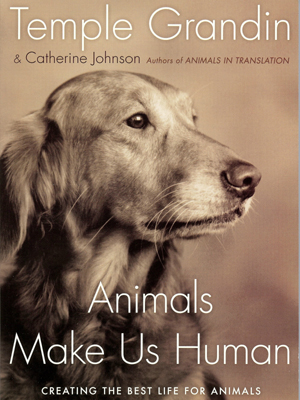
Animals Make Us Human by Temple Grandin

Which animals do you think have a better life: family dogs or cattle on ranches?

Think about it. Cattle get branded and tagged and slaughtered. Some live only a year or two. Meanwhile, Fido gets the run of the house, a spot in front of the couch, and chew toys.

You might be surprised to know that many cattle have it better than pampered family pets. That’s the claim Temple Grandin makes in her fascinating and practical book Animals Make Us Human: Creating the Best Life for Animals.

Grandin is not a beef industry lobbyist working smoke and mirrors PR to make ranchers look good. She’s a practical, down-to-earth, get-your-hands-dirty animal scientist who has revolutionized the beef industry and had an impact on many others. She isn’t a vegetarian, and has no intention to become one. But she does love animals. And her insight and research has made the lives of millions of animals better.

When people ask her how she can work in the beef industry instead of being an activist against it, she says that all things die. It’s the cycle of life. She has no problem eating animals. In fact, she believes that our relationship with the animals we use for food is symbiotic–mutually beneficial. But she also believes that if we’re going to raise them, or keep them as pets, we need to give these animals a quality life.

So what do animals need for a quality life? Should we give our cattle rubdowns? Let our dogs roam through city streets? What do our cats and pigs and horses need? Is it freedom?

Her answer, surprisingly, is that focusing on freedom really isn’t a good guide for trying to give animals a good life. Not because freedom is a bad thing, but because it’s too confusing. Instead, she believes that we should be basing animal welfare on the core, or what she calls the “blue ribbon,” emotion systems in the brain. The key systems are SEEKING, RAGE, FEAR, PANIC, and PLAY.

The rule is simple: avoid stimulating the negative emotions; do stimulate the positive ones. In the book she shares what she knows about how to do that for dogs, cats, horses, cows, pigs, chickens and other poultry, wildlife, and animals in zoos.

Grandin is always fascinating, and with her trademark style of stories and practical insights, she shares what the research and her more than 30 years of practical hands-on experience working with animals has taught her. You’ll learn why your chickens need a place to hide, even if you’ve fenced out every fox and skunk with thirty feet of concrete; what makes pigs happy; why clicker training is so successful with horses; why you might want to consider the color of your cat’s fur; why leaving your dog locked in the house with food and plenty of toys may actually be very stressing. You’ll even learn to look at zoo habitats differently. Each chapter focuses on a different animal and how to avoid the negative and stimulate the positive blue ribbon emotions. This is not touchy-feely fluff. It’s not the ranting and raging of someone who thinks the planet would be better of without humans. It’s the insights of someone who is rigorously scientific, down-to-earth practical, and passionate about animals.  

In her own words: “Everyone who is responsible for animals needs a set of simple, reliable guidelines for creating good mental welfare that can be applied to any animal in any situation.” Read her book to find out what she suggests these should be. If you own pets or raise animals, I think you’ll love this read. If you’d like to sample the first chapter, you can at Grandin’s website:  http://www.grandin.com/

Share

Similar Posts

  • You want your kids to succeed in school? There’s one thing you can do…

    Did you know that there is one thing that kids can do outside of school that’s been proven, over and over, to lead to them doing significantly better in all other subjects?

    And I mean all subjects. Math, history, science, criminology, psychology—you name it.

    There’s one thing, and numerous research studies have proven it, that kids do that leads to them getting better jobs later in life.

    This one thing, proven by research, leads them to grow up to make more money.

    And it doesn’t matter if they start in a rich or poor family. This one thing leads them to greater opportunity. Over and over again.

    It’s a thing that kids actually can learn to love. For some it becomes as delicious as eating ice cream.

    The kids are back in school. Parents want them to do well. They want them to succeed. How wonderful that there’s one thing that parents can focus on that will so dramatically change their child’s life.

    And it doesn’t take long. Even just twenty minutes per day of this activity can change everything.

    Twenty minutes.

    Is there a parent anywhere that can’t find twenty minutes?

    So what is this one thing?

    Reading for pleasure.

    Notice I didn’t say reading for academic purposes. I didn’t say reading to finish homework. I said reading for pleasure. For the enjoyment it brings.

    And it doesn’t matter what the subject matter is. It can be fiction—fantasy, love stories, horror, action. It can be non-fiction—like material on bugs, robots, horses, motocross. It can be fairy stories or funny anecdotes. It can be short or long. The key is that they’re reading for pleasure.

    I know some of you might be saying, “But John, my kid doesn’t like to read.”

    That’s okay. You can change that.

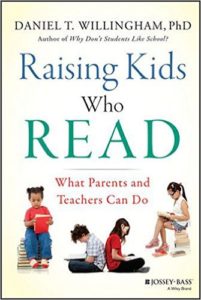
    If you want to find out how to help your child learn to enjoy reading, let me recommend Raising Kids Who Read: What Parents and Teachers Can Do by Daniel T. Willingham, a professor at the University of Virginia whose research has focused on the brain and learning. In the book, Willingham debunks the myths about literary instruction and provides practical, engaging, research-based tips for sharing the joy of reading with kids of all ages.

    You can get a used copy for $13 bucks on Amazon.

    RaisingKidsWhoReadByWillingham

    While you’re waiting for the book to come, here are some things you can do start doing right now to help your child read for pleasure.

    First, start reading something fun or interesting with or to them every day. For little kids, this can be picture books. For older kids, this can be anything–an article from a magazine, funny stories online, or books large and small. If you want to start with a joke book, that’s okay. If you want to start by listening to a book on tape, that’s great too.

    Wait a minute? A book on tape? Isn’t that cheating?

    No.

    There are four keys to helping your child read for pleasure. They need to learn to:

    1. Decode the sounds letters make.
    2. Comprehend what’s meant, which is driven by their general knowledge of the subject they’re reading about.
    3. Enjoy reading.
    4. Identify themselves as a person who likes to read books

    When you listen to a book on tape, you’re doing numbers 2-4.

    Remember: the goal is not to improve the child. It’s not to get them a better job ten years from now. It’s not to make them wealthy. It’s to simply help them enjoy reading. Because once they enjoy reading, once reading for pleasure is something they see as one of the things they do, they will begin to read more and more. And as they read, they become better at reading, which leads to more enjoyment, which leads to more reading. Which leads to all of those other awesome benefits. It’s a virtuous cycle.

    So the first thing you need to do is simply start having a good time reading with them. You can read to them at bedtime, after dinner, on weekends. You can have them read articles to you while you’re making dinner or washing the dishes. You can have them read to your or themselves while you’re on the road driving somewhere.

    You can make a rule that they have to read with you for twenty minutes before they go play with friends or watch TV or play video games.

    And above all, you need to let your child’s interests drive most of the topics you read about. If they want to read about spiders and dinosaurs, then read about spiders and dinosaurs. If they want to read horror stories, then read horror. If they’re into skiing or horses or guns, then help them find interesting stuff on the topics they’re already interested in. And if they don’t like a book, teach them they can abandon it and go find another.

    And if you yourself are not someone who reads for pleasure, well, now’s the time to start. You can make reading for pleasure something your family does, just like families make enjoying boating or hunting or riding horses or eating Mexican food part of what they do.

    It’s never too late to start.

    And seeing that this is the one thing that has such an impact on your child’s success, is there really anything else that would be a better use of those twenty minutes per day?

    Reading for pleasure—who knew that having a great time could have so many wonderful effects? Start today. Don’t wait.

    It might take a little work. You and your child might run into a few unpleasant spots. But that’s true of anything. How many times do kids fall when learning to water ski or snow ski? How many times do they experience something unpleasant when practicing football or basketball or volleyball?

    So start right now. Figure out a time with your child. And begin learning to read for pleasure.

    Share
  • Good Stuff! Woman in Gold

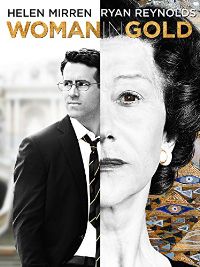
    Woman in GoldI recently watch Woman in Gold with my family, and we loved it. It has delightful characters, a suspenseful plot, and moments of both humor and deep poignancy.

    The movie is based on the true story of Maria Altmann, an elderly Jew living in Los Angeles. When she was a young woman, the Nazis took over Austria. She fled, narrowly escaping. In addition to all the horrors committed against her people and family that couldn’t get out, the Nazis stole artwork and other precious items. The problem is that after the war, many of these items were then appropriated by individuals or the countries of Europe and not returned to their original owners.

    The movie is about Maria and her young lawyer who fight the Austrian government to have a famous painting called Woman in Gold that was legally and rightfully hers returned. It’s a legal battle that went all the way to the Supreme Court of the United States in 2004. But this isn’t about someone wanting a painting. It’s about so much more.

    If you enjoyed Mr. Holmes, Saving Mr. Banks, or Bridge of Spies, I think you will love this movie. You will love the dynamic between the frank-speaking Maria and her lawyer. And you will be moved.

    Share
  • Miss Potter, Downton Abbey, Human Planet

    Miss Potter, a true romance

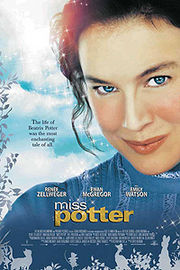
    How many shows are good enough that you can walk into them partway through and within a minute become completely engrossed? I found two this week. The first is the 2006 film Miss Potter, which tells the story of Beatrix Potter (1866-1943), who is the best selling children’s author of all time. You might know her by the most famous of her 23 illustrated children’s stories: The Tale of Peter Rabbit.

    As a side note, Potter spent a lot of time at her family’s country home in the Lake District. I was lucky enough to be able to vacation there once, but never knew until I saw this film that the gorgeous landscapes that had been preserved were partially due to her donation of 4,000 acres.  

    The movie opens with the fact that Potter, who is played so well by Renée Zellweger, has missed her early chances of marriage. She’s a young spinster, and, having a number of her illustrations purchased, is determined to make some money publishing her own illustrated stories. The movie follows her journey to publication, which met with opposition from both publishers and her family, but the real heart of the film is the story of her meeting and falling in love with Norman Warne, whom her parents, especially her mother, don’t approve of because he’s a tradesman. The film is full of wonderful drama, humor, tragedy, and solace. I can’t recommend it highly enough. In fact, I found myself watching it a second time two days later with my girls with just as much enjoyment.

    Downton Abbey, a period drama

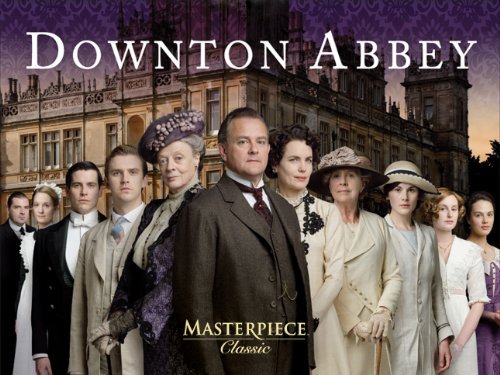
    The second show is the BBC miniseries Downton Abbey.  Its first season of seven episodes aired last year in the USA on PBS’s Masterpiece Theater.  The second season will air at the beginning of 2012.  

    The series is set in the fictional Downton Abbey and follows the lives of the aristocratic Crawley family and their servants. The stories take place over the time period that starts with the sinking of the Titanic in April 1912 to the outbreak of the First World War on 4 August 1914.

    The main story line running through the episodes is the fact that the Crawley family must give up the estate to a distant relation because they have no male heir. But what I find so refreshing is that the stories of various servants are included. Some are funny. Some pull at your heart strings.

    So far I’ve met and enjoyed some truly delightful characters as well as a couple of villains. If you enjoyed the BBC’s Pride & Prejudice or the Cranford series, I think you’ll enjoy this.

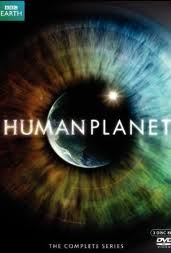
    Human Planet, an amazing documentary

    These last two weeks I’ve watched with fascination the eight episodes of the BBC and Discovery documentary series Human Planet. One species on our planet has adapted to every environment on earth—that’s us. The series looks at a number of remarkable ways humans have adapted to the various habitats.

    You’ll see people from all over the globe who do things you never would imagine. Here’s just a small sample:


    • -Folks in Churchill, Manitoba Canada who trick or treat on Halloween with hungry polar bears stalking the streets
    • -A man in Papua New Guinea practicing the ancient art of shark calling in a small canoe
    • -Dolphins that help humans fish in Brazil
    • -A wild honeyguide bird working with Maasai boys to steal honey from wild African bees
    • -Mongolians using tamed golden eagles to hunt fox
    • -People in the eastern Amazon who love their pet monkeys so much they breastfeed them
    • -Inuit Canadians who risk death going under the arctic ice during low tide to gather mussels
    • -Three Dorobo in Kenya stealing food from a lion pride of more than twenty lions


    Oh, and how could I not mention the three children who hunt tarantulas in Venezuela, roasting them up as tasty treats that taste a little like crab. I could go on and on. There are sixty-three of these stories in all, grouped into eight episodes that each focus on a certain habitat, including deserts, the Arctic, jungles, mountains, grasslands, rivers, and cities. Each episode also includes a behind-the-scenes story about the filming of one of the episodes. And some of these are as thrilling as the stories themselves.

    In fact, that’s one of the things I love about this series. In addition to showing me fascinating things I’ve never seen, a number of the stories also raise the adrenaline just a bit. And yet, that’s not all. Because while presenting “strange” cultures, the stories humanize these folks so that instead of presenting aliens, these people feel more like fascinating distant relations. This is storytelling at its finest. If you like nature shows at all, you’ll be totally delighted with Human Planet.

    Share
  • The Blind Side, Blink, Tandoori Oven, Bischoff Cookies

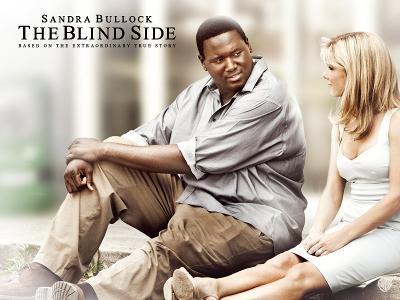
    The Blind Side

    Every time I see a sports movie advertised, I groan. Gee, what could this be–yet another story about an individual who, through pluck and determination, overcomes great odds to yadda, yadda, yadda win the game, yea, go team?

    Yawn.

    I enjoy sports, but only those where the outcome really is in question. Only those where I don’t already know the story. If I want a scripted win, I can watch some long-hairs and freaks on WWF.  

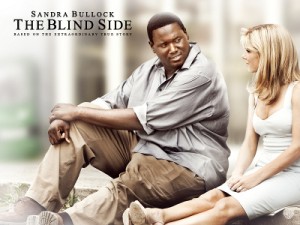
    So you’ll understand why I didn’t rush out last year to see The Blind Side. What? A monstrously huge kid plays high school football as a lineman? Wow, he must have really worked hard at that. Is the paint still drying at the Zeyer’s house? Maybe I’ll go watch that instead.

    And this was my response even though Sandra Bullock plays the leading role. I usually enjoy the movies Bullock stars in. Well, except for the last two–The Proposal and All About Steve–which I couldn’t bring myself to watch more than ten minutes of combined. But besides those, she’s probably been one of the most enjoyable actresses since Katherine Hepburn. This is because she actually plays real women, interesting characters, people with personality.

    This is opposed to some actresses who don’t really play people at all, but are put in movies by directors who must think that if they can make the eyes bong out of male heads, those very males won’t notice that the story is dumber than a bag of rocks. These gals have lips that are so puffed up they look painful (e.g. Angelina Jolie, ouch, ouch, OUCH, somebody help her) or have seemingly nothing else to bring to the table besides their looks (e.g. Megan Fox, oooh, look at her shirt ride up over her belly, oooh, another shot of her eyes, oooh, white teeth), and so all their roles end up including very little besides posing for the camera so that we can see that, yes, Timmy, these women really were born with some mathematics, i.e. symmetry and facial proportions conforming to the golden ratio. Are your eyes bonging out yet, Timmy? See, that’s why you should study algebra and geometry. Math lets you do things like that.   

    Anyway, so it was a Bullock film, yet I still didn’t want to see it. But my real-man brother-in-law suggested it for a date night, and so I reluctantly went to watch. (Date night as in double date with the wives, not him and me. Sheesh, you people.)

    I’m so glad I went. The movie was excellent. Probably because it was not about the plucky athlete winning the game, but about something far more important and enjoyable. It’s based on the true story of a rich southern white couple–Leigh Anne and Sean Tuohy–who try to take a homeless teenage African-American, Michael Oher (“Big Mike”), into their family. Michael’s mother is a crack head. His father is unknown. Michael himself is not doing very well. He’s failing school. He doesn’t even have a place to sleep sometimes. And he’s got the good old boys of his neighborhood wanting to hook him up with their gang and drug scene. But Leigh Anne soon takes charge.

    And, boy, does she take charge. She’s one of the most delightful characters I’ve seen in a long time. I laughed again and again at her lines and personality. She also made me think about what I’m doing with my life. This woman and her family did something significant. I won’t tell you what happened with Michael–blah, blah, blah, yea, go team. You can find out for yourself. That wasn’t the important story here. The important story, the one that touched my heart and funny bone, was the one about a delightful family who went way out of its way to try to give a complete stranger a chance at a happy life.

    Go see this show. No, it’s not in the theater, but you can buy or rent it. Me, I get all my films via Netflix. If you haven’t subscribed, consider it. Then you too can feel the excitement of seeing the happy little red Netflix envelopes waiting for you in your mailbox.

    By the way, I have enjoyed a number of other great sports films over the years. If you like The Blind Side, I think you’ll enjoy Coach Carter, Miracle, Invincible, and Cool Runnings (a Brown family favorite).
    Blink by Malcolm Gladwell

    We are told to make decisions based on logic, not emotion. Reason must prevail. The closer we are to Spock, the better. At least in our decision-making, right?

    Well, no. That’s actually wrong.

    Over the last two decades researchers have found that the vast majority of our decisions are made by our gut, in the blink of an eye. And even those we make consciously, we make with a large input from our emotions. In fact, people who have the emotion centers in their brains damaged seem almost unable to make good decisions. Give them seven types of apples to choose from, and they can’t seem to pick one. Ask them to schedule an appointment, and they’ll go round and round listing the pros and cons of different dates and times. Let them know one deck of cards is stacked against them, and they still choose to play with it. They have logic, but lack judgment.

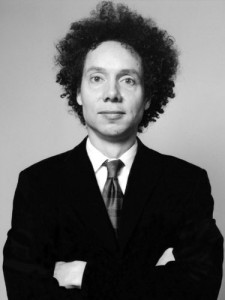
    The rapid, emotional part of our brain is critical for good decision making. Of course, out guts can often be spectacularly wrong. In Blink, Malcolm Gladwell explores both sides of the choices we make in the blink of an eye.

    But this is no tome of dry erudition. Gladwell writes with fantastic simplicity, clarity, and power. He explains what we now know about human decision-making by letting us meet the psychologist who has learned to predict whether a marriage will last, based on just a few minutes of observing the couple; the tennis coach who knows a player will double-fault before the racket even makes contact with the ball; and the art experts who can spot a fake at a glance. He helps us see why New Coke failed, how we pick presidents, and how it was possible that the police shot down Amadou Diallo, who was simply coming home one night. He shares the story of Paul Van Ripper who beat the Pentagon war-gamers in a massive defeat and why.

    Blink reveals that great decisions makers aren’t those who have the biggest brains and highest IQ, but those who have perfected the art of “thin-slicing”—focusing in on the factors that make the biggest difference.

    The book was fascinating. Read it. You’ll start seeing the world differently.

    The Tandoori Oven
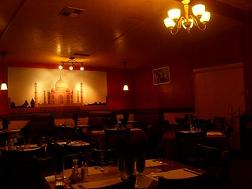
    While living in Orem, UT, Nellie and I got our first taste of Indian food. When we moved to the San Francisco area, we found a few Indian restaurants and really learned to love the cuisine. So you can imagine how excited we were when we moved up to boonieville Laketown and were told that just an hour away in Logan was a great Indian restaurant. So we followed the directions to the address we were given and ended up at the gas station just south of the USU football stadium on 720 East and 1000 North. And there above the gas station was the sign for the restaurant.

    We both looked at each other and rolled our eyes. Were the people who told us about this kidding?

    But I decided to just go look. Sometimes the little holes-in-the-walls can surprise you. Maybe in the back by the Hostess rack and chips we’d find some great food. I entered the gas station and found it run by a pleasant Indian fellow. I thought, dang, we’ve got our very own Apu’s Quiki-Mart (Apu being one of my favorite characters on the The Simpsons). However, there was no restaurant. I looked around and saw nothing but racks of normal gas station snacks. I was confused. “I was told there was an Indian restaurant here?” I said.

    “Right over here,” he said in his Indian accent and pointed me to an entryway in the far wall hung with strings of beads. “Through there.”

    Intrigued, I passed through the beads and did indeed find a small restaurant. They’d simply sectioned off a part of the original gas station. I also found that there was a separate door to the outside which I’d missed. I examined the buffet, which looked pretty good, went outside and waved Nellie in. We were going to give it a shot. We let them seat us, and proceeded to enjoy a fabulous meal.

    The restaurant is called The Tandoori Oven: http://TandooriOvenLogan.com. Nellie and I go there regularly. It’s been updated since the first time we went and dished up our soup into treacherous styrofoam bowls. Now they use real cutlery, but the good food and friendly service hasn’t changed.

    If you know Indian food, you can go in the evenings and order a number of dishes to share. But if you want the best deal, go for lunch. They put on an all-you-can-eat buffet which will let you sample a number of dishes. We love the kurmas, saags, vindaloos, curries, naans, and, dude, the spinach soup! Heck, it’s all good. Especially when we can sweeten it a bit with their tamarind or mango chutney. And make sure you leave room for their saffron helwa (spiced cubes of farina) smothered with cardamom rice pudding for dessert.

    Bischoff Lotus Cookies

    I recently performed a taste test. I got a package of Oreos and a package of Bischoff Lotus cookies, and I am here to state that the Bischoff Lotus cookies spanked the Oreos and sent them back to kindergarten for some schooling.

    After the taste test, I had to force myself not to eat the rest of the Bischoff Lotuses in one sitting. I succeeded in lasting for two sittings. Yes, they’re that good—crisp, caramelized, sweet. They have none of the bitterness of gingersnaps, yet have enough spice to delight the tongue.

    But these aren’t new cookies. The Dutch and Belgians have been enjoying them for years. Over there these types of cookies are called speculaas and are probably the most popular cookie around. I can testify they’re great with milk, hot chocolate, and Pero (hey, this is Mormon country). I understand they go great with coffee, even though I have not imbibed in that Aztec concoction and, therefore, cannot vouch for it personally. And for two years I enjoyed them, along with picturesque scenes of cobblestone streets, bicycles, and windmills.

    When I came home, alas, I couldn’t find these delights anywhere except at specialty Dutch stores. And when we moved away from Utah, I never found them again. Then Delta Airlines started serving them on their flights. Oh, joy. But I don’t fly that often. So I’m excited to report that recently I was walking in Macey’s grocery store just across from the Stadium 8 movie theaters in Logan, scanning the packages along the cookie aisle and finding nothing appetizing, when the heavens parted, and a beam of light illuminated a white package with red lettering. I believe I heard a choir.

    Bischoff Lotus cookies.

    Could it be?

    It was.

    I heard reports they were also in Wal-Mart, but I didn’t see them there. So for the sure bet, go to Macey’s, buy, enjoy. And consider yourself Dutchified.
    Share
  • Thai Crystal, Rothfuss, Daily Life in the Middle Ages, Perot Charts

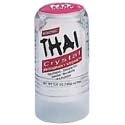
    Thai Crystal Stick - Large, 4.2 ozI don’t like anti-perspirants because they gob up in the underarms of my undershirts. Which means I eventually go walking about with pebbles in my pits. And, yes, we do have a washing machine and use it regularly. There’s something in there that defies anything less than hydro-chloric acid.

    I don’t like deodorants because they wimp out on me. I’ll put on my bracing Speedstick in the morning and be sniffing myself by lunch. And if I put some industrial perfume on it only leads to rashes.

    Someone might be saying that I should just be a real man and smell like a real man smells. But how about I be a real, smart man. See, if you’ve got dog poo in your carpet, you wouldn’t spray it with cologne, hoping to deal with the smell. No, you go to the source. Clean up the stuff and forego all the scents. In fact, if you keep the dog from pooping in the first place, you’re ahead of the game. So why not do the same with underarm odors? Just get rid of the stinkers.

    Well, that’s what I did. Many years ago I found out that natural mineral salts kill underarm bacteria. If the underarm bacteria can’t exist, let alone breed and excrete, then you don’t get underarm odor. What’s more, you can get those mineral salts in “rock” form. Just wet and wipe under your arms and you’re done. It works just like regular anti-perspirant and deodorant, it’s just that you’re delivery bacteria killers instead of perfumes.

    Another good thing about mineral salt deodrant rocks is that they last a LONG time. And I mean looooong. My last rock took about 4 years to use up (heads up all you one-year’s supply people). The problem with them is that you can’t find the rocks in the grocery store next to the big brands. But you CAN find them in health stories. I got my latest from Shangri-lah in Logan. The brand is Thai Crystal (named after the location where the US companies discovered this method of deodorizing).

    Folks, it’s 3:09 PM. I just did the sniff test–aah, the sweet smell of nothing!

    *

    The Name of the Wind (The Kingkiller Chronicle, Day 1)I heard all the hype about Rothfuss and picked up his The Name of the Wind  in a Hastings book shop. The first few pages didn’t grab me and so I put it back. But then I kept hearing the hype. I finally decided, okay, okay, I’ll give it a go.

    By “go” I mean something like five pages. See, I’m impatient with books. If you can’t grab me by the bottom of page one, I’m outta there. I read too many stories in my undergrad program that bored me to the very last page. Sometime after I graduated (why did I wait so long?) I realized that I could increase the odds of reading something interesting me if I only read things that interested me. (You only arrive at this level of brilliance after many years in college.)

    I’m not going to overview the plot here. Just know it’s a fabulous read. For you writers, note that what drives the reader’s suspense is not an overarching plot, but his situation of being alone and destitute. So while there are villains, that really isn’t what keeps the reader going. It’s the wonder of a new place and our hope for this kid.

    *

    Daily Life in the Middle AgesI read more non-fiction than I do fiction each year. I need to so that I have something to say in my writing. And I will tell you that I haven’t found a finer source of cool ideas to huck into stories than Paul Newman’s (no, not the actor cum cookie man) Daily Life in the Middle Ages.

    He breaks up medieval life into topics like Eating and Cooking, Building and Housing, Clothing and Dressing, etc. It’s full of wonderful stuff.

    Did you know that they played football back in old England? Not sissy European style, but hog style, like rugby or American football. Except it was often between two towns and the playing field was miles long.

    Did you know that respectable women wore hats? Those who let their hair go free were young girls and prostitutes. And that if a man knocked a woman’s headdress off it was tantamount to accusing her of prostitution and might result in the woman’s husband or family taking the man to court to exhonorate her. 

    Did you know that the word “curfew” came from the old French “covre feu,” meaning “cover the fire.” Since open flames were such a fire hazard in the old cities, many towns had regulations that required people to douse their lights and carefully bank their fires at a certain time in the evening which was often marked by the tolling of bells.

    I pulled these beauties out just randomly flipping through the pages. The book is full of such delights and you can be sure many of these will be finding their way into my stories.

    *

    I didn’t vote for Ross Perot the first time. I certainly wouldn’t vote for him now. But James Maxey just pointed me to an excellent on-line explanation of the current government budget. It’s worth your time to check this out to be able to understand what folks are talking about when it comes to our money and how Congress spends it. The charts are narrated, compelling, non-partisan, and incredibly easy to follow. Here are more Perot Chart presentations.  

    Share
  • Donald Rumsfeld, The King’s Speech, Aquatic Ancestor Apes & Talking Bacteria

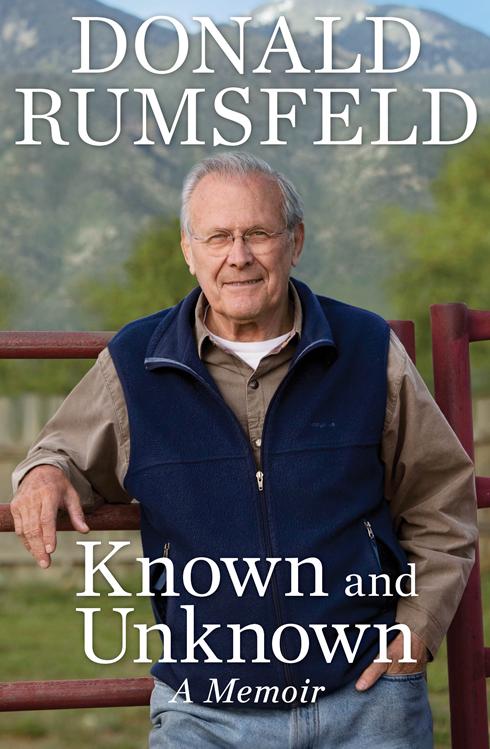
    Donald Rumsfeld

    I just finished Known and Unknown, a fat memoir by Donald Rumsfeld, and enjoyed every page.  Rumsfeld served as the Secretary of Defense under George W. Bush.  But Rumsfeld’s service didn’t start there. He was a Navy pilot, an assistant to a congressman during the Eisenhower days, and, in the early 60’s, a four-term congressman from Illinois.  He held various positions in the Nixon White House in the late 60’s and early 70’s, including ambassador to NATO.  He was Chief of Staff and Secretary of Defense when Ford took over from Nixon.  Reagan tapped him to be a special envoy to both the Middle East after the Beirut bombing and to the Law of the Sea treaty discussions.  He was the president of Searle, a pharmaceutical, as well as General Instrument, the company that pioneered HDTV.  Only after all that, did George W. Bush bring him on as Secretary of Defense.

    When writing novels, I try to create characters worth knowing, either because of their interesting personality or skills or because of the events they take part in. Donald Rumsfeld is just such a character, except he’s no fiction.

    In his memoir he shares insider information on everything from Watergate to 9/11 to the war in Iraq. What emerges is a fascinating look into many of the most important events in the last forty years.  You’ll get insight into some of the issues experienced in various White House administrations and see what really was going on with waterboarding, Guantanamo, Abu Ghraib, hurricane Katrina and many other of the hot button issues in the Bush years. There are some laugh out loud moments where his understated humor shines through. There are also parts where he reveals some of his differences with others that worked with him in the various administrations, including issues with Nelson Rockerfeller, Colin Powell and Andy Card. But in everything he writes he’s fair and restrained and attempts to present the facts accurately. This is no attempt to settle scores.  Just a wonderful read.

    If you are interested in politics at all, I think you’ll enjoy this book. Moreover, I think you’ll come out a little wiser, maybe a little better person, for having spent a few hours with Donald Rumsfeld.  

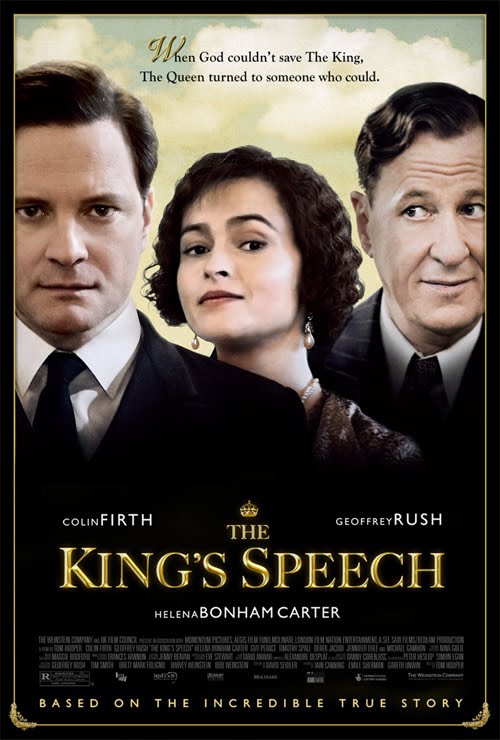
    The King’s Speech

    I do not watch many r-rated movies.  They are usually too vulgar or pornographic for my prissy tastes. However, I did my research on The King’s Speech, and having heard so many glowing reviews, Nellie and I rented it.

    It was wonderful.

    The movie tells the story of prince Albert Frederick Arthur George of Britain who did not ever expect to inherit the throne and did not want to, in part because of his stammer. Can you imagine having to be a public figure like a king and have to deal with something like that? Most of us dread the thought of public speaking. Can you imagine having to try with a stammer?

    But Albert’s lot was not to live the sheltered life. He became king when his brother abdicated the throne because of improprieties in his personal life. The day before the abdication, Albert went to London to see his mother, Queen Mary. He wrote in his diary, “When I told her what had happened, I broke down and sobbed like a child.” That is not the entry of a power-hungry man.

    He assumed the throne in 1936, when England ruled over almost a quarter of the world’s population. Three years later in 1939 WW2 broke out and Britain’s king needed to be able to address the people.

    In the movie, Colin Firth plays Price Albert. Geoffery Rush (Captain Barbossa in Pirates of the Caribbean) plays Lionel Logue, the unorthodox Australian speech therapist to whom Albert’s wife turns for help. The script is wonderful and the star-studded cast is spot on. There are moments of humor and poignancy and triumph. I was caught up in this movie as much as any I’ve seen.

    If you like English dramas, you’ll enjoy this one. And the profanity, the reason for the r-rating, is not there to depict casual vulgarity. It was part of a technique used by the therapist. In the end, you’ll overlook it and find yourself on pins and needles, rooting for this fine man.

    Aquatic Ancestor Apes & Talking Bacteria

    I’ve written about TED before. The annual TED (technology, entertainment, design) conferences, in Long Beach/Palm Springs and Edinburgh, bring together the world’s most fascinating thinkers and doers, who are challenged to give the talk of their lives (in 18 minutes or less). The folks at TED record these speeches and put them up for free on their site for the rest of us to watch. And I just watched two dandies.

    The first is by Elaine Morgan who says we evolved from aquatic apes (sigh, just when you think you’ve found grandpa Eddy hanging out in the trees, you learn he’s an imposter). Morgan is a Welsh writer for television and also the author of several books on evolutionary anthropology. In the speech she describes the reasons why it makes sense that humans had aquatic ancestors. Along the way, she illustrates key principles of science, including why science by consensus is no science at all. Her manner is so delightful and engaging I think I could listen to her for hours, preferably around the dinner table. Watch her right now. She just might convince you.

    The second speech was given by Bonnie Bassler, an American molecular biologist, who has been part of the team that discovered key insights into how bacteria talk. It appears that bacteria do not invade a host and start doing damage. No, they wait until their numbers are sufficient that they have a chance of surviving. They coordinate defense and mount attacks as a group. Who would have thought? Knowing how this works is not only interesting all by itself, but it has stunning implications for medicine and fighting infection. Bassler is a fascinating and enthusiastic presenter. Among other things, you’ll end up seeing that humans are more bacteria than you could imagine. Watch her.

    Share

2 Comments

  1. Thanks for highlighting this book. My family is planning to get a cat in the next week or two so I put it on hold at the library. Temple Grandin is an inspiration. I’ve seen the movie made about her and read some of her thoughts on anxiety. She is someone living with no excuses and I love that.

Comments are closed.