Bad Penny Update – 2 Chapters to Go

I just typed the last words of the climax!  The last 15,000 words have been a blast to write.  Heck, the whole thing has been fun. 

If you look at the progress meter, you’ll see I’m at 83,384 words.  It’s weird writing something this “short.” I figure I’ll end up around 90,000 words.  I did some analysis of the size of some other thrillers.  You can see it below. It’s not super rigorous, but BAD PENNY falls well within the range.

AUTHOR AVERAGE WORDS BOOKS
Dean Koontz 93,500 2
Harlen Coben 130,500 2
JA Konrath 77,667 3
James Lee Burke 153,000 1
John Grisham 148,000 1
Ken Follett 140,000 1
Lee Child 149,000 4
Michael Connelly 145,000 1
Ridley Pearson 114,000 1
Robert Crais 80,667 3

The average of all those books is 117,000.

So I have about two more chapters to go.  I’d finish them next week, but we’re taking some vacation for the 4th.  This means I expect to type “The End” in the second week of July. Then I’ll set it aside for a few weeks, revise it, and send it out to first readers, including my agent.  Here are the characters:

  • Frank Shaw – Ex-con trying to go straight
  • Sam Cartwright – Friendly neighborhood Mormon who’s trying to make Frank feel welcome
  • Dan Meese – A man with snakes in his soul, Frank’s former cellmate
  • Tony Shaw – Frank’s nephew and hacker
  • Carmen Escobar – The woman found tied up in the trunk of Dan’s car
  • Pinto Correia – Bearded gun nut and Sam’s go-to guy
  • Jesus Goroza – Zombie for a drug cartel & Dan’s employer

I really think folks are going to enjoy this one.

Share

Similar Posts

  • |

    The Pareto Principle, Form Follows Function, and Story

    There are a thousand things to “remember” when writing story. New writers who make lists of these things soon begin to drown in them. But I’ve come to realize that many of these “rules” don’t matter.

    They don’t matter because many ignore the function of story. And so you can’t know how and when to apply them, or if they’re even something you should apply in the first place. Furthermore, a good number that do tie back to function often have little impact.

    The more I develop and write, the more I begin to see that the key is to focus on a liminted number of fundamentals. To focus on the things that matter most.

    So what really matters when you’re writing a story?

    I’m going to be speaking for an hour at the Book Academy tomorrow. It’s at Utah Valley University. The week after I’ll be presenting all day at the American Fork Arts Council’s autumn writer’s conference. I will probably write up all my thoughts and post them to my site at some time.  But for right now this is where you can hear them.  

    I truly believe the Pareto Principle applies to writing. But you can’t go searching for those vital few factors until you know the effects they’re supposed to produce. Form follows function. And the function is something that happens in the reader.

    Here’s a nibble. This quote from David Howard is an example of what I’m talking about.

    “As we’ve seen, what the audience hopes for and what the characters hope for need not be the same thing. The same is true of our fears versus their fears. But how do hope and fear fit into the scheme of storytelling? Hope and fear are about the future. They derive from uncertaintly about future events in the story, future decisions the characters might make, future discoveries or revelations that might be unearthed, future outside forces and how they will influence the journey of the characters. When we discuss hope verusus fear in dramaturgical terms, this uncertainty is a function solely of the audience and its experience [my emphasis]. This is dramatic tension. We hope the man with the cobra in the shoe box won’t open the box; we fear he might and get himself or someone else bitten. We don’t know what will happen, but we know what might happen and therefore feel tension about those possibilities” (How to Build a Great Screenplay, 52).

    Readers buy novels because novels provide a service. They provide something to the reader. They DO something to the reader.  That’s why readers pay good money for them, and stay up late at night (well past smart bedtimes) with them, and spend hours of their lives reading them.  

    What do stories do? What are the key factors that have to be present in the stories for them to be able to do these things? How do you help readers hope and fear for what might happen?

    I’m no story guru, but I do hope to share some of the vital few factors I see in the presentations I’ll be giving this week and next.

    Share
  • Salt Lake City Comic Con!

    ComicCon2014

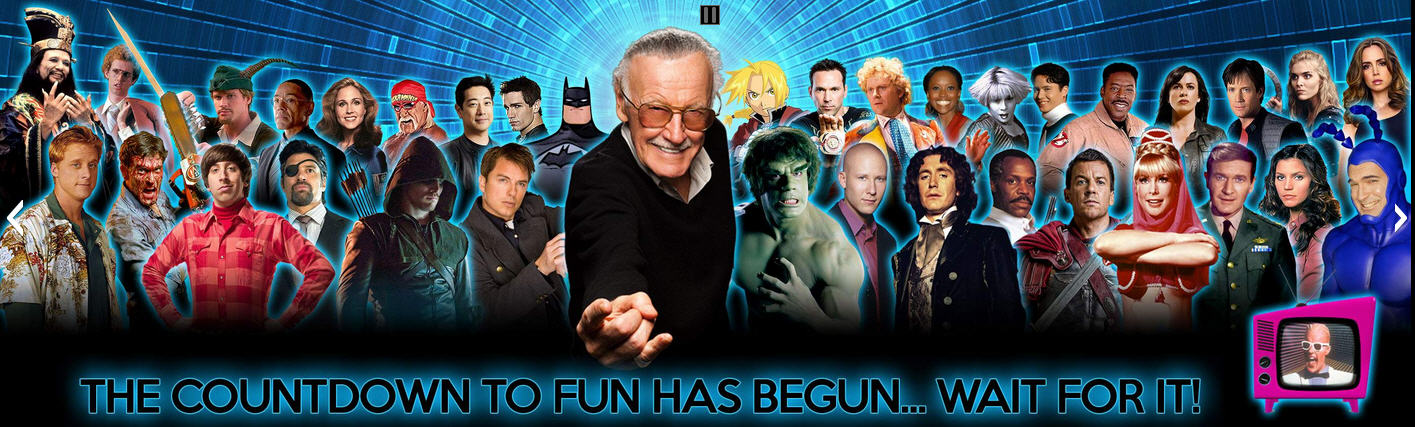
    This Thursday, Friday, and Saturday, I will be at Comic Con at the Salt Palace Convention Center. I can’t wait. There’s going to be a huge crowd (100,000+) with lots of great panels, events, celebrities, and artists, including Bruce Campbell, Danny Glover, Cary Elwes (The Princess Bride), and Patrick Warburton (the guy who played Kronk!)

    It’s going to be a blast.

    Here’s my panel schedule.

    Time Thursday, Sept 4 Friday, Sept 5 Saturday, Sept 6
    A.M. 11:00 a.m. How to Write Great Science Fiction & Fantasy
    P.M. 3:00 p.m. Katniss Revealed: A Closer Look at The Hunger Games on Film and in Print 1:00 p.m. Build a Story 1:00 p.m. How to Win Writers and Illustrators of the Future Competition
    Evening 7:00 p.m. Writing Suspense

    The rest of the time I’ll probably be at my booth in the Artist’s Alley, chatting with folks and selling and signing books.

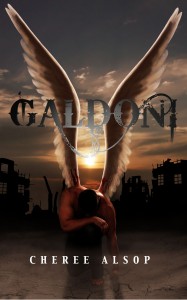
    I’ve invited two other awesome authors to join me in the booth. Eric James Stone is a Nebula award-winning science fiction writer. Cheree Alsop is a paranormal and urban fantasy indie.


    Please feel free to come by and say hello.

    Share
  • Curse Update

    CurseV2FinalV1A number of weeks ago life happened at my day job. I had just started a rewrite of the final battle of CURSE, but life put that on hold. Life got back to normal a few days ago. And a few days ago I began to work on that final battle sequence again. So you’ll notice that delivery targets have changed on the books page. I’m moving under a good head of steam now, and unless life happens again, we should meet those dates 🙂 More than anyone else, I want to get this book into your hands.

    Share
  • Need your Dark God T-shirt input

    I’ve got a deal to make t-shirts for my book available, and I have to make some decisions. The problem is that I am terrible at making these kinds of decisions. So I’m asking for your help. Any input would be appreciated.

    Mind-boggling question number 1

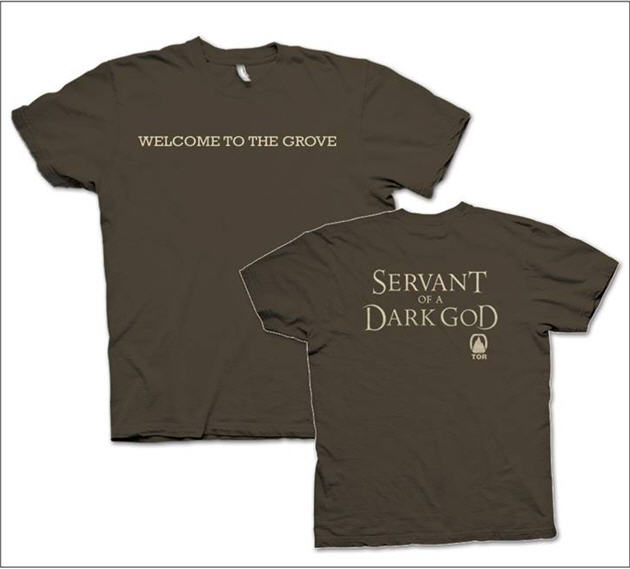
    So we’ve decided on the design. It will say “Servant of a Dark God” on the font as shown. We might put “Welcome to the Grove” or “Beware, the Mother is Watching” on the back. It will NOT have the Tor logo indicating it’s a book. Who knows what that is anyway? Instead, the question is whether to put my name on the shirt in some fashion.

    Option 1

    Some suggest that it’s better to just have a shirt that has the crazy label, suggesting the wearer is a servant of a dark god. It’s provocative, and if someone asks, the person wearing it can talk about the book. With this option we would NOT put my name on the t-shirt, just a small open book icon under the title. The idea behind this is that those who would buy the shirt would already be fans and the provocative statement will do more to spread the word than my name because going this route will make the shirt more fun to wear.

    Option 2

    Others think that you should have your name on the shirt to advertise. So we’d put “by John Brown” underneath the title. Or we’d put it on the back of the shirt. But some say it would make the shirt less fun.

    What would you prefer and why?

    Mind-boggling question number 2

    Because of the way we’re going about this, the color of the letters must be fixed. So the question is do we simply let people choose their own shirt colors that they thing will work with the color of the lettering or fix both the color of the lettering AND the shirt?

    Option 1

    Fix the shirt colors. Brown for guys and plum for women. Make the lettering a fantasy green or cream.

    Option 2

    Give people as much choice as possible and choose a font color that will work with the bulk of the shirt colors here: http://gildan.com/distributors/colorpalette/.

    But what would color would do that and still say fantasy, or would it matter?

    So which option to you think would work best? If you chose option 1, which colors?

    Mind-boggling question number 3

    Why is John worrying about this? Shouldn’t he be spending his time tracing his ancestry back to old grandpa lemur?

    The answer to that is that John’s mind works in mysterious ways, dear Reader. You must bear with him. And you must now face your greatest fashionista test ever: which colors would say fantasy and still be something people would want to wear? I will be making shirts up for the book store employees to wear before I come to signings.  So I have to decide. Someone suggested plum is all the rage this year for women. Make the letters a nice new willow green. We could have another color for men. Any ideas of what would appeal broadly?

    I await your ideas.

    (Ha, look at this. It appears one of my greats did indeed live his life out in the Prague menagerie. Hum.)

    Share
  • Gollum was in my garden

    Four days ago I was on my hands and knees in the garden, muttering, “My ring. Where is it? Where is it!” 

    I could have been Bilbo out there among the tomatoes. I could have been Gollum—though I’d have to endure a long, worm-filled diet to play that role convincingly. 

    I’ve been married thirty-six years to a good woman. You’d think a wedding ring is just a ring. 

    But it isn’t. 

    Someone memed me Boromir holding up the ring on a chain and saying, “It is a strange fate that we should suffer so much fear and doubt over so small a thing.” 

    And I thought, how true! It makes me wonder if Tolkien ever lost his wedding ring. 

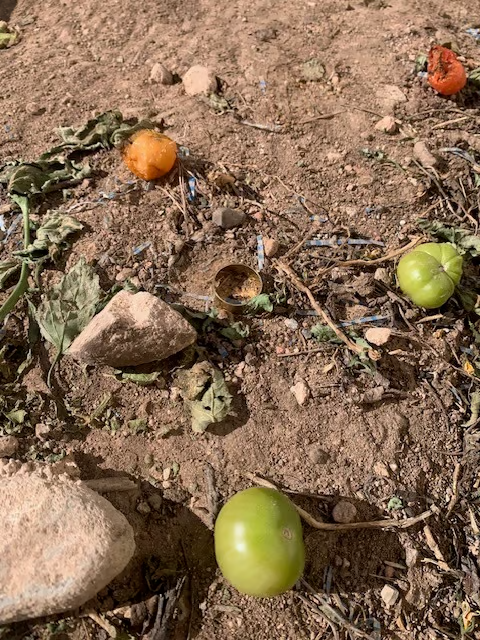
    For two days I searched the ground where I’d lost it—a long hedge of tomatoes and the sagebrush hill behind where I’d tossed split fruit. For two nights I went to bed feeling the absence on my hand, as if something vital had been taken from me. 

    Then, with the help of a Garrett ACE 250 metal detector I rented from a fine establishment in Logan, Utah, I found it. 

    It was just lying there in the open in a spot I’d checked half a dozen times. The detector beeped. And there it was. 

    My precious. My precious, precious reminder of thirty-six years with my admirable wife and our four wonderful daughters. It feels so good to have it back on my finger. 

    How strange that so many memories are wrapped up in so small a thing. It almost demands a new story about a magic ring. In fact, the experience might just influence the ending of ASSASSIN. That’s how writing works sometimes—life drops the ideas right in your tomato patch. 

    Speaking of ASSASSIN, it is coming along nicely. Ferran and company just turned a major corner with the help of a spunky kid in the city. And there’s an exciting scene coming up where all heck is about to break loose. 

    On another note, many of you have asked about GLORY, the fourth book in the Dark God series. It’s next in the queue. I’ll write that climax as soon as I finish ASSASSIN. I already have an opening, a rough outline, and plenty of notes—dogmen, dreadmen, Glories—the works. It’s coming, and I think the revelation of what’s really happening will surprise you. 

    Finally, I’m not dead yet, nor am I the fount of all wisdom, but I can say this: spend time with those you love, laugh with them, go on adventures. Because one day you’ll lose your ring—or some other small token bound up with all of it—and know exactly how precious those memories are. 

    Peace out, my fellow dreadmen and fell maidens. 

    Share
  • Press Release – SF/Fantasy Key to Teen Literacy

    FOR IMMEDIATE RELEASE

    IS SF/FANTASY KEY TO TEEN LITERACY?

    Findings presented at national American Library Association conference reveal science fiction & fantasy literal gateway drugs to youth literacy

    CHICAGO, ILLINOIS |  July 11, 2009 | Utah’s newest author, John Brown, summarized statistics and research at the 2009 national American Library Association (ALA) conference held in Chicago which suggest that science fiction and fantasy are two of the main gateway drugs to literacy for youth. Data provided by Nielsen BookScan, public libraries, and recent studies published by the National Endowment for the Arts (NEA), suggest that at least 1 in 3 youths read for the effect produced by Science Fiction and Fantasy. “However,” says Brown, “given library circulation statistics, that number may well be 2 out of 3. These are incredible numbers, and have important implications for youth reading programs.”

    According to Brown, “the latest research in emotion shows that reading fiction produces a physical response, as real and physical a response as when we take aspirin, alcohol, or crack. The good thing is that while stimulating pleasure centers, it doesn’t change the brain the way hard drugs do. Furthermore, it also carries the powerful and desirable side-effect of improving reading skills. The key is in finding the type of fiction which appeals to the given age group. And for youth it appears that drug of choice is science fiction and fantasy.”

    John Brown’s epic fantasy for teens and adults, Servant of a Dark God, will be released in October 2009 by Tor Books, the largest publisher of science fiction and fantasy in the world. For more information see the links below.

    Share

6 Comments

  1. As much as I enjoyed your book and look forward to your future books, I think what I like the most is following your journey as a writer. Writing fiction has always been my favorite hobby, and until recently I had many half finished novels and short stories, but never anything complete. When I started reading your blog and using the resources you posted, I learned all kinds of things that have made writing more fun and me more efficient. Your “On Writing” series, Rachel Aaron’s blog on being more productive, and the book “The Power of Habit: Why We Do What We Do in Life and Business”, have all been amazing tools for me. Thanks for sharing so much of the process with us!

  2. Good to hear that, Shane. I hope to have two authors on shortly that will provide some wonderful tools and insights!

  3. I almost laughed out loud when I saw “Pinto Correia – Bearded Gun Nut”. Larry Correia!

    It’s good to see you’re almost done with BAD PENNY. When it’s all done, will you be doing DARK GOD’S GLORY?

    -Matt

  4. Matt, if you can’t have fun with your friends, why write (grin)?

    I’ll most likely start on DGG. I’ve already outlined it. I’ll know better in a month.

Comments are closed.