Generating Story 13: The Scene Primer with Author Laurel Amberdine

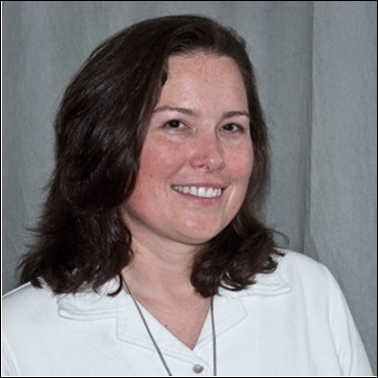
Laurel Amberdine was raised by cats in the suburbs of Chicago. She’s good at naps, begging for food, and turning ordinary objects into toys.  Having escaped the terrible weather of Chicago, she is now delighted to call San Francisco home. For many years she read a novel every day, until she got married and realized that her new husband didn’t enjoy being completely ignored in favor of fictional people. She’s working on writing science fiction and young adult novels herself now, and hopes you get to read them soon.

I hope you get to read them soon as well. Until that glorious moment, Laurel has a fabulous tool to share with you writers. And I know it’s fab because I use it.  If you look at the text tools section on the my Story Development Framework, you’ll see that The Scene Primer is one of the tools I’ve found useful in helping me bring enough of the scene to life in my mind that I can draft it. I’ve used various bare bones versions of this for a few years now, but then I was on a forum where Laurel explained her “Template.”  And I immediately knew it would be a useful tool for me. Here’s what she had to say.

Laurel
While working on a complicated science fiction novel a few years ago, I found myself stuck looking the blank page with each new scene. I had already outlined the story and knew generally what was supposed to happen, but the setting was alien and the characters were strange. There was so much specific detail to figure out simultaneously, I was paralyzed. I couldn’t start.

But I realized I did know some things, just not enough to write a new scene from the beginning. So I created a template, where I could fill in the bits I knew, and think about the bits I didn’t yet know in a simple, no-pressure way. After all, I wasn’t really writing yet, just making notes.

The template asks enough questions that if I fill it all in, I know exactly how to write the scene. But most of the time I don’t have to fill out the whole thing. I just work at it until I know what I want to write. It’s not a worksheet; it’s a tool to get started. Once I am ready to begin, I cut and paste the template and answers over to a notes section, and get writing. Most of the time I don’t even look back at it.

The template got me through that novel, and I continue to use it. I’ve refined the categories I use, and even discovered that I can improve my writing by adding template entries to cover aspects where I’d naturally slack off. Like, I often focus so tightly on plot that I skimp on showing a character’s emotions or unique behavors. Well, now I just put it in the template and make sure to figure that out too! Works great.

Here is the current version:

Summary:

Opening/transition:

Current Situation:

Theme song:

Setting, and significant details:

Time span/transitions:

Next big crisis or turning point:

Foreshadowing:

Background/worldbuilding details:

Desired effect in reader:

Events:

Sequence:

Emotions:

Character’s unique reactions:

Ending hook:

Other notes:

The colors encourage me to fill it out, because it’s pretty once it’s done. The “Summary” is what would go on a note card. In Scrivener, I just paste that onto the note card once I have it (or from the note card if it’s already filled out).

“Events” and “Sequence” almost always wind up being the same thing, but sometimes I don’t know what order things happen in, so I fill in “Events” first.

I listen to music while I write, and often a certain song seems to fit the scene. If I find one that does, I list it under “Theme Song.” This can be helpful when revising, because I can put the song on and get right back into the feel of the scene.

The hardest part for me is almost always the opening line.

John Sez

After reading Laurel’s post on that forum, I immediately tried applying the idea to the current novel I was drafting.  I’d done sketches of the scene in my own way, but never with a list of questions to prime my thinking. That day I started a new chapter, but before I began to do my initial sketching, I took Laurel’s idea and tweaked it to my taste, coming up with my own “Template” that I call a “Scene Primer” or “Sketch Primer,” then let it direct my sketching.  It worked like a charm.  After answering five or six of the questions, I could see enough of the scene detail to begin to write.  Here’s my current version.  I’ve used it a number of times since that first day, and it’s always proved helpful.

When starting to write a new sequence or scene, start filling these out UNTIL it comes alive and you can write. (That is my note to self.)

WHERE ARE WE?

  • Transport: general, dominant impression then specific
  • Setting tags
  • Sights, sounds, smells, textures, tastes? 3s2t
  • Fun, cool, weird, odd, particular details
  • Time, sun, weather, etc.
  • Background or world building details?
  • Fun & cool stuff?
  • Surprises, different, twists?

WHO IS HERE?

  • What’s the situation for each character?
  • Goals
  • Who is driving this scene?
  • What is the concrete objective for him/her?
  • What the concrete objective of other characters?
  • Motives?
  • Character transport: general, dominant impression then specific
  • Thoughts?
  • Tags?
  • Fun & cool stuff?
  • Surprises, different, twists?

WHAT STORY LINES WILL HAVE BEATS HERE?

  • Progress or trouble?
  • Points of conflict?
  • Obstacles?
  • Fun & cool stuff?
  • Surprises, different, twists?

OTHER OBJECTIVES AND THOUGHTS?

A few things to note. First, like Laurel, my goal isn’t to fill in all the blanks.  My goal is to bring the scene to life in my mind in enough detail that I can write.  So I don’t fill out every blank. I use the tool to stimulate my imagination. It’s like using a match to light a candle on a birthday cake–you only use it until the candles are all burning, then you wave it out and set it aside because it has done its job. The goal isn’t to burn a match, but to light the candles.

Second, there’s no one right version of this. My version is different from Laurel’s because she and I have different work habits and think about stories in slightly different ways. For example, sometimes I listen to music when writing, but most of the time I don’t. Maybe some day I’ll start using theme songs. But I know a lot of other authors who DO find music helpful.

So who’s right?

No, stop asking that question. That’s the wrong question. Music is a tool.  A tool can’t be write or wrong.  It can only be helpful or not helpful. If you find theme songs helpful, then use them. If you don’t, then don’t.

Third, this is yet another example of the general creative principle of developing in iterations. Think of painters.  They will usually start by sketching.  The sketches are, by nature, rough and incomplete.  They’ll sometimes create a number of sketches. Some of what they sketch might make it into the final painting. Some of it may not.  At some point in time, they feel they have enough of the image (feel, composition, subject, etc.) in their minds to start applying paint to canvas.  So they’ll rough in the subject on the canvas and then began to paint in the details.

It’s the same with writing. You start with a rough, incomplete idea. You sketch it out, inventing as you go.  Maybe you sketch the whole thing or just parts.  Then you go back and build up more detail, adding by degrees until you have enough character, setting, problem, and plot in your mind that you can form the story.

For example, I recently sat down to write chapter 22 of my current novel. Here’s what I had on the outline (which is simply one type of sketch) :

Recon

  1. Summarize wal-mart purchases etc.
  2. Recon their security, paint it all. It’s stiff security.
  3. Carmen or Pinto calls in—someone’s coming
  4. They’re dressed up as utility guys
  5. See her coming in the field. Not at the house. They wave her down or something

Can you see that scene well enough to write it?

No. Neither could I.  I knew roughly what would happen, but I couldn’t write anything because I couldn’t see anything.  Where was the house they were going to recon? What did it look like? What kind of security did they have?  Was it in a neighborhood or out in the country?  I only had the most general idea of character, setting, and plot. So I turned to my Scene Primer and started answering the questions.

800 words later, I’d sketched out the scene and had enough detail in my mind that it had come to life. I used a lot of what I developed in that sketch. But there was some, by the time I finished my draft, that I didn’t use.  Why? The draft was another iteration of the story. And in that take, things changed and I didn’t need it. But it wasn’t wasted effort because it helped me get to the point where I could draft.

The Scene Primer is an excellent tool to help you build up the detail when you’re starting to draft.  Give it a try to see if it’s useful to you.

BTW, Laurel and I aren’t the only ones using the primer. Author Maya  Lassiter is also using it to good effect in her new writing experiment.  See, Maya is a pantser who is “sick of the wretched groping around in the dark” that comes with a seat-of-the-pants writing method. She decided to try to see if she could learn to use some tools to help her invent some of her story before she begins to draft. You can read about her decision in “Can a Pantser Become a Plotter?” Then come back because Maya is going to share a post here in which she describes her new method and some very promising results.

For more in this series, see How to Get and Develop Story Ideas

Share

Similar Posts

  • |

    John guests on Writing Excuses season 3 episode 19

    writing-excuses-the-guys2-300x139

    Here’s the third episode I recorded with the Writing Excuses guys.

    In the first podcast we talked about putting and not putting ourselves in our writing and making characters who don’t all sound like the author. In the second, we talked about how to not repeat yourself as an author. In this one, I shared some basics about generating emotion in readers and dealing with negative emotions writers face when they encounter rejection, compare their career with others, hit writer’s block, or hear someone didn’t like their story.

    As usual, the guys had some great insights. Check it out: Emotion in Fiction.

    Share
  • |

    News

    Interview with The Man Monday night

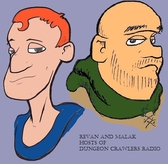
    Dungeon Crawlers Radio interviews The Man Monday, March 8th at 10:30 PM MTN. You can listen live or to the archive they’ll post to their site. All brought to you by UtahFM. Malak and Revan are great guys. I had a blast with them.

    Cool facts on breaking in, advances, etc. for writers

    New page on writing facts & figures in the On Writing section.

    Novel update

    CURSE OF A DARK GOD is moving along. You should see the progress bar move along quite a bit this week.

    Initial Schedule for American Fork Arts Council Conference for Writers

    This is a cheap day-long writers conference and looks like it’s going to be another great one.  I’ve highlighted what I’ll be doing in red. I’ll be making adjustments to the HOW TO WRITE A STORY THAT ROCKS presentation for things learned at LTUE.

    Here’s their website. That night I’ll probably be attending the Whitney Awards Gala which is also being held down in Happy Valley, Utah.

    DATE: Saturday April 24 2010

    8-9 a.m. Registration
    9-9:10 Welcome (Plenary)

    KEYNOTES
    9:10-9:40 Keynote #1 Ginger Churchill, “What I Wish I had Known as a Beginning Writer”
    9:40-10:10 Keynote #2 Ally Condie, “My Journey to National Publication”
    10:10-10:40 John D. Brown, “Aiming for National Publication”

    INTRODUCTIONS of editors and authors
    10:40-11:05 EDITORS: Derk Koldewyn, Granite NAME
    AUTHORS: Caleb Warnock, Linda Jefferies, Shannon Guymon

    11:05-11:20 15-minute break

    11:20-noon BREAKOUT ONE
    Upstairs room “Crafting the Novel” with Shannon Guymon, John D. Brown
    Downstairs One “Finding and Working With an Agent” with Ginger Churchill, Ally Condie, Caleb Warnock
    Downstairs Two “Taking Your Questions about Publishing” with Deseret Book and Granite Publishing

    noon-1 LUNCH “Mix and Mingle with Authors and Editors”

    1-1:40 BREAKOUT TWO
    Conference One Derk Koldewyn of Deseret Book “What Deseret Book is looking for now”
    Conference Two Ginger Churchill “How to Write and Publish Picture Books”
    Upstairs room John Brown, “How to Write a Story That Rocks Part 1: First Principles & Story Concept”
    Office room Caleb Warnock “10 Things Every Writer Should Know about Copyright”
    Downstairs One Granite Publishing “What Granite is looking for now”
    Downstairs Two Ally Condie “Writing Young Adult Fiction”

    1:40-1:50 Ten-minute break

    1:50-2:30 BREAKOUT THREE
    Upstairs Room John Brown, “How to Write a Story That Rocks Part 2: Character”
    Conference Two Ginger Churchill “Genres of Children’s Books, from Board Books to YA Novels”
    Conference One Derk Koldewyn of Deseret Book “National Publication with Shadow Mountain”
    Office room Caleb Warnock “How to Write the Query Letter”
    Downstairs One Granite Publishing “Publishing Options with Granite”
    Downstairs Two Shannon Guymon “How to Write Romance”

    2:30-2:40 Ten-minute break

    2:40-3:20 BREAKOUT FOUR
    Upstairs Room John Brown, “How to Write a Story That Rocks Part 3: Plot”
    Conference Two Ginger Churchill “How to be a Writer and a Mother Too”
    Conference One Linda Jefferies “Writing Poetry”
    Office room Caleb Warnock “Write a Synopsis? I’d Rather Gouge My Eyes Out!”
    Downstairs One Ally Condie “Succeeding as an LDS author”
    Downstairs Two Shannon Guymon “Writing Nonfiction”

    3:20-3:30 Ten-minute break

    3:30-4:10 BREAKOUT FIVE
    Upstairs Room John Brown, “Writing Scenes: The Basic Units of a Novel”
    Conference Two Ginger Churchill “Querying Agents and Publishers”
    Conference One Linda Jefferies “Publishing Poetry”
    Office room Caleb Warnock “Okay, You Were Rejected – Why, and What to Do Now”
    Downstairs One “How to form a critique group that works”
    Downstairs Two Shannon Guymon “Succeeding as an LDS Author”

    4:10-4:20 PRIZE GIVEAWAYS, GOODBYE

    REVISED (MAY CHANGE)

    Share
  • Inventing magic

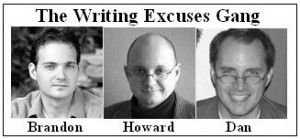
    Brandon Sanderson, Howard Tayler, and Dan Wells are doing a series of podcasts on writing called Writing Excuses.

    The have two podcasts on magic:

    http://www.writingexcuses.com/2008/05/12/writing-excuses-episode-14-magic-systems-and-their-rules/

    http://www.writingexcuses.com/2008/05/18/writing-excuses-episode-15-costs-and-ramifications-of-magic/

    I found these two interesting, and, as always, entertaining to listen to. However, while their focus on limitations and ramifications is excellent, I’ve found asking “what does the magic cost” to be counterproductive. Here’s why: “cost” leads people to think ONLY of magics where you trade x thing for y power. Blood, memories, vitality, years of life, your children, etc. The problem with this is that while magics that use fuel (cost something) can be great, it isn’t necessary to do it that way. There are many stories with wondrous magics that don’t cost a thing.

    For example, Heroes shows a lot of magic without cost. What does it cost Hiro to time travel? Nothing. It’s free. What about the painter? He can do it at will. Same with the guy who goes invisible, the cheerleader who regenerates–all the other characters there. What about the magic in Elantris? It costs nothing to draw the runes. What was consumed? Nothing. What about Orson Card’s Hatrack world? Alvin can doodlebug until doomsday. There’s no fuel required.

    Some may say it’s semantics, but it’s not. It affects the paths taken in the invention of the magic. I’ve seen it in my invention sessions and those of groups I’ve been in. Don’t trust me, do a group magic brainstorm session where you ask the cost of magic question and then another where you ask about limitations instead.

    I’ve found that it’s MUCH more helpful to ask these questions but NOT necessarily in the order below.

    • What is a cool power?
    • What are the limitations to it?
    • What are the ramifications and conflicts of using it?

    Costs are simply ONE type of limitation. In magic, limitation and ramification are the key things. By opening up the question, we can use costs or MANY other types of limitations like genetics/bloodlines, intelligence, scope of power, duration of effect, sources, scarcity of ability, morals, geography, times when it’s effective, mysteries, etc.

    Listen to the wonderful podcasts and then focus on powers, limitations, and ramifications, and use costs only if they are limitations that jazz you. 

    Share
  • Indie Thoughts: How much does it cost to publish a book independently?

    Is The Guardian right?

    Does it really cost $6,000 to publish a book independently?

    Is that the price to become Hemmingway these days?

    Lots of commenters at The Passive Voice said the numbers were rubbish. Far too high. They said this was yet another thinly-veiled bit of  flimflam The Guardian cooked up to depress indies and send aspiring authors into the arms of the zombie traditionalists.

    I actually thought the piece was good.

    Why?

    Because I like numbers. I did get a Master’s degree in accounting, after all.

    But is it just that numbers are sexy?

    It’s true the shape of the number 3 can be glorious. 9 is a stunner as well. But the slopes and curves of these digits is not why I like them. Numbers, even if they’re bad numbers, allow you to start thinking about costs. They allow you to question whether they could be reduced. Or whether you’re getting any bang for your buck in a certain category. Heck, numbers allow you to discover whether you’re allocating way too much in one area and far too little in another.

    I thought The Guardian did a great job breaking the costs out into categories and starting an examination. The question is: are the categories and amounts political fictions or real?

    Comparing My Numbers

    One way numbers do all the things I mentioned above is by letting you do comparisons. So I figured I’d compare The Guardian’s numbers with a set of my own. I’ve published four books independently. How do my costs stack up?

    Here are the costs for the latest.

    Cover: $500

    • $500 for illustration
    • $0 for cover design (I have a friend who is so incredibly generous with his time)
    • Cover for some genres can cost less. Some folks do it themselves. Most of those do-it-yourself covers look awful.
    • The zombie traditionalists can sometimes spend a few thousand. And when they do it right, they get some amazing, AMAZING, work.
    • Verdict: The Guardian’s number seems reasonable, but I’m thinking the range is a few hundred up to a few thousand for something that doesn’t give the average reader worms.

    Editing: $0

    • My wife, former technical writer, current language arts teacher, is my editor. There are some other folks I’ve tapped as well.
    • If I didn’t have her, I’d need someone. My experience is that if you yourself are not an editor, and you try to do this, you’re going to end up with a poorly edited book. Even with her experience, we’re still finding it hard, and are working to get the process down. We might outsource this in the future.
    • I’ve gotten reasonable quotes, and they’re all around $600-900. And that’s just for a copy edit. You want other kind of editing, you’re going to pay more.
    • Verdict: The Guardian’s number is high, but not if you tap into a bunch of pros for multiple edits.

    Formatting for POD and ebook: $120

    • I do the interiors myself, so the labor is free. If I had to pay, it could run anywhere from $100-$300 or more.
    • I pay a subscription fee for InDesign. If I release two books a year, it comes out to roughly $120/book.
    • I spent $300 taking a class on basic interior design principles. But that was just the beginning. I must have spent 50-70 hours, maybe more, last October and November, banging my head against the wall as I learned this. Luckily, all that thrashing about didn’t result in any medical bills. I’ve had to spend maybe 10-20 more since then learning advanced techniques and keeping the basics fresh.
    • Verdict: The Guardian didn’t even include this.

    ISBN: $0

    • I owe my friend; without him, this would definitely be a cost. I’m such a free loader.
    • Verdict: The Guardian’s number is good.

    Copyright Registration: $55

    • $20 bucks to mail 2 copies to the Copyright Registration Office
    • $35 processing fee
    • Yes, you do want to do this. For detail on why, see The Copyright Handbook by Stephen Fishman.
    • Verdict: Another miss

    Print-on-demand fees: $0

    • I go with CreateSpace instead of Lightning Source
    • Verdict: Another miss

    Notice what’s NOT up there that was in The Guardian article: reviews and review copies.

    Why don’t I include them?

    First, I would never pay for a Kirkus review. I wouldn’t because it appears such reviews mean little to readers. They don’t seem to generate much notice or desire to sample. Here’s what readers report matter to them. Such pre-publication reviews DO matter to store and library book buyers. But, as an indie, I’m not focusing on those channels.  Those channels are in the hands of the zombie traditionalists.

    What about review copies?

    You don’t need them to publish. All this review business is marketing. And you don’t need marketing to publish.

    So what are my totals? I’ve included The Guardian numbers so you can see the differences.

    Category My Costs Guardian Estimates
    Cover $500 $750
    Editing and proofing $0 $4,000
    Ebook and POD Formatting $100 ?
    ISBN $0 $125
    Copyright Registration $55 ?
    POD setup fees $0 ?
    Reviews – $825
    Review Copies – $300
    TOTAL $655 $6,000

    Whoa! The Guardian estimated a cost that’s ten times what it costs me. But I don’t think that’s a sign of some plot. If I’d paid an editor and cover designer and formatter and didn’t mooch my ISBNs, that could have added as much as $1,000-$2,000 to my total. I have friends who have paid more.

    Furthermore, that’s just for the ebook and hard copy. Depending on if you publish an audio edition and how you do it, you could spend another $2,000-$3,000.

    What does this tell you? It tells me that the reporter made a good start, but needed to do a bit more digging. It also tells me there’s a huge variability in the costs depending on the skills you and your friends possess. It also shows that this is a business. I doesn’t cost a gazillion dollars to publish. It’s not like the $200,000-500,000 you need to start some food franchises, but you’d better be prepared to fork over some cash and/or a lot of hard work.

    In fact, when you consider that last point of sweat equity, the $655 is completely misleading because it does not capture the hours I spent, at least 20-60, doing my part of the cover, editing, and formatting. Nor the time spent by my wife or friends. There’s a huge opportunity cost there.

    What’s the value of what I could have done with that time?

    It’s for dang sure not reflected in the $655.

    Marketing

    I didn’t include marketing in those costs above because marketing is its own beast. You can publish and do zero marketing. You can publish and do gobs. And just as with the publishing costs, marketing costs will vary based on what you can do in-house and what your situation is. It costs JK Rowling nothing to get covered in  every news outlet in the land. She sneezes, and we get a report about her. You and I are probably going to have to work harder to get noticed.

    There are all sorts of marketing costs. Whatever those costs, marketing has a job to do. It’s got to pay for itself. It’s got to help pay for the cost of publishing. And it’s got to help me meet my goal of winning new readers and compensating me for my time.

    There are lots of cost categories depending on what you decide to do:

    • Hard copies you sell at events
    • Travel and lodging required to attend events
    • Hard copies and postage for reviewers
    • Time writing blog posts
    • Promotions with folks like BookBub and BookSends
    • Giveaways
    • Etc.

    The bottom line is that I think it’s good to separate these costs from publishing so you can measure their effectiveness against sales. Marketing is about revenue generation. These costs really have nothing to do with producing a book.

    Books and Lemonade

    I’m going to go off an a tangent here for a second. Some folks suggest that indie authors shouldn’t do much marketing. Especially if they only have one or two books out.

    I find no evidence to support the idea that just writing the next book is all you need to do for readers to hear about you and beat a path to your door. It’s true you’ve got to write the next book. You must get new product out the door. Hey, I learned that when book 2 from the publisher fell into a black hole. But that doesn’t mean marketing and promotion are inappropriate,  wrong-headed, or a waste of time or money.

    Let me ask you a question.

    Let’s say Juanito is a no-name in the lemonade business. He’s just starting from scratch with dreams of becoming a big time lemonader. Who thinks it’s a good idea for him to open a lemonade stand in his back yard? Or better yet, in a closet in his basement? And when folks suggest that the stand might get more business if he lets the neighbors know about it or puts the stand in a place with a lot of foot traffic, who says, no, that’s a waste of time and money–the key to selling more lemonade is whipping more batches up in the kitchen?

    In retail, you must get folks to notice your product and then persuade them to try it. Now, maybe you’ve got something going that’s generating all the notice and sampling you can handle.  Maybe you lucked out.

    What percentage of indies are in that situation? Raise your hands, please.

    What? We’re not all inundated with hordes of readers? We’re not  all swimming in gold? Imagine that.

    The fact is that it’s tough to get notice. It’s tough to get people to try. But there are some things we can do to increase our odds. Selling books is a retail business. Retail lives and dies by visibility. Yeah, you need word of mouth. But you need to be noticed and sampled in large enough amounts to keep that word of mouth going.

    What would you rather have? 100,000 people all over the country in many social networks (I’m not talking about Facebook) noticing and sampling and talking about your product, or would you rather have five?

    In the brick and mortar world, there are lots of ways to get visibility without doing much TV or internet advertising. Ways to get notice include things as simple as signage and a store’s location. For example, you get a ton of eyeballs just situating your restaurant in the parking lot of a big destination shopping mall. You get eyeballs putting a sign on top of a 100 foot pole next to the freeway exit saying “Gas & Eats.” Online retailers get noticed in other ways.

    Without blathering on about that (this was a post on publishing costs), let me just say that until customers begin to line up and start throwing hundred dollar bills at me, it appears I’m going to have to do what every other retail business has done for hundreds of years–get my lemonade stand out of the basement and into the park with lots of thirsty kids and moms.

    EDIT 8/30/2014

    While a number of folks are assuming the article was written as part of some vast conspiracy to undermine indie authors, David Gaughran posted some criticism in the article’s comment section that actually make sense.

    DavidGaughran

    The reason I’m so annoyed by the inaccuracies in this article is that this kind of misinformation is creates an information gap which allows shady operators to flourish.

    Vanity press operators thrive because inexperienced authors think that self-publishing is either difficult or expensive. It’s neither of those things, and articles like this only serve to reinforce this false notion. That’s why I think this piece is irresponsible as well as inaccurate.

    Companies like Author Solutions specifically target the most inexperience authors, the ones who know least about self-publishing and the industry in general, the ones who have fallen under the spell of various myths (like that self-publishing costs $6,000).

    As a commenter said below, saying self-publishing costs $6,000 is like saying houses cost $10m. You can spend that much, but you don’t need to.

    It costs me less than a third of that to publish a book, and I use a Big 5 cover designer as well as an editor with over ten years experience working for traditional publishers. Anyone can look at my books and immediately see that they are produced to professional standards.

    You don’t even have to spend as much as I do to get a quality product. If authors are on a tighter budget, they can purchase a pre-made cover design. There are some wonderful pre-mades out there for as little as $40. You will have to invest a fair bit of time combing through the sites to find something suitable, but if you are on a shoestring budget it’s an option.

    Same goes for content editing/developmental editing. All manuscripts will need a thorough copy edit, but you can get by without a specific content edit with successive round of beta readers. Again, this will require a time investment – writers usually trade beta reads of each other’s work. But if you’re on a tighter budget, it’s another way you can save money.

    This is why this piece is so off. Even going the “deluxe” route shouldn’t cost more than $2,000. And if you don’t have $2,000, there are plenty of options where you can achieve a quality product, spending far less, if you are willing to put in a little time.

    There are ways you can save money in other areas too. It’s a waste of money for an author (especially a new author) to buy a NetGalley membership for themselves. Authors can (and do) form collectives to buy a membership between them – often spending just $20 per person. I got a NetGalley spot for a month, for free, by bartering with another author. (I didn’t think it was quite worth $20, by the way, let alone $400).

    If you need reviews, there are much better and cheaper ways. Submitting to book bloggers costs nothing (we usually send e-book copies or PDFs, rather than hard copies). Doing an e-book giveaway on LibraryThing costs nothing. Giving out electronic ARCs in advance of your release costs nothing. And all of these are much more effective than giving any kind of money to Kirkus, let alone $425.

    But I guess it doesn’t matter how many experienced self-publishers (and editors who work with same) tell you that your figures are off, or that you don’t need ISBNs to self-publish, you are going to stick to your guns.

    Share
  • |

    Slush I Read by Jim C. Hines

    Laughs are lovely. I just came across this wonderful parody by novelist Jim C. Hines which will give you a few for free. Enjoy!

    Slush I Read
    by Jim C. Hines

    (Apologies to Seuss)

    I read slush.
    Slush I read.

    That slush I read.
    That slush I read!
    I do not like that slush I read.

    Do you like fanfic with vamps?

    I do not like them Mary Sue.
    Why do these vamps all worship you?

    Here’s a tale from D & D!

    I do not want your D & D.
    I do not like your elf PC.
    I can not stand your purple prose.
    I want to punch you in the nose!

    Would you like a hot sex scene?
    I wrote it for my online ‘zine!

    Go to Hines’ site and read the rest right now

    Share
  • Become A Story Idea Machine

    Now’s your chance

    It’s here. I finally figured out how to:

    • Hold the Novel Writers Academy courses
    • Give you one-on-one guidance (not canned videos)
    • And still accommodate my writing schedule and commitments

    The course that’s open for applications is called Create Story Ideas That Beg to Be Written. It’s purpose is to transform you into a story idea machine.

    And you can be there in six weeks. Before the end of the year.

    I will be working with only a small set of people. I can’t accommodate more and give you the one-on-one feedback you need. And so you need to apply to get in.

    The deadline for applications is midnight, October 27th. So contact me now to get the application instructions.


    A cracking good story idea requires five critical elements. Until you have all five, you’ll struggle to plot. You’ll write a few scenes and run out of gas. You’ll feel like the story just isn’t going anywhere. And that’s because it isn’t. It can’t. A story isn’t a story without all five elements.

    However, once you develop these five things, your story will suddenly roar to life. There are a few other elements that are important as well, but these five things form the core of the story setup. 

    In this course you’re not going to merely learn about all of those story elements. You’re going to go deep and learn what can only be learned by actually doing the work and developing story idea after story idea with personal one-on-one feedback from someone who knows what they’re doing.   

    When you finish, you won’t just know story theory. You will be a story idea machine. And you will be that because you have put in the work. The right work.  

    Again, this is not a course full of lectures and videos. This is a course where you’re going to work. And develop the insights and skills that only come from doing the work.

    You’re actually going to:

    • Come up with story setup after story setup after story setup
    • And improve them with one-on-one feedback. 

    It’s going to:

    • Eliminate years of you wandering about in the story wilderness trying to figure things out on your own. 
    • Put you miles ahead of other writers who have no idea what’s really at the core of story. 

    You are going to learn how to develop killer story ideas on purpose instead of on accident. Which means you’ll be able to do again and again. Reliably. Like clockwork. 

    Course details

    Here are the details. 

    • 6-week course 
    • Starts: November 2
    • Ends: December 19
    • One week off right in the middle for the US Thanksgiving holiday 

    The focus of the class is not on learning about story, although you will do that. The majority of your time will be spent on developing stories. 

    You can’t become a carpenter by watching videos and reading books about it. You have to get out on the work site, cut wood, and pound nails. You have to make the mistakes all beginning carpenters make, get feedback, and improve. The same goes for writing. And you’re going to work in this class. You develop 21 story setups. In fact, you develop more because the 21 are just the ones you turn into me. And with each one your skills, insights, and abilities grow.  

    In the beginning, your setups will be bare bones. By the end, they’ll be fully developed setups that beg to be written. Setups you can use to immediately write the first draft  of your novel, whether that’s in outline or chapter form. 

    Here’s what you do each week. 

    Week 1. November 2-7

    • Uncover the secrets of what’s really at the heart of story and how to generate ideas. 
    • Define your genre requirements
    • Create story setups 1-3

    Week 2. November 9-14

    • Uncover the secrets to compelling characters 
    • Create character sketches
    • Create story setups 4-7 

    Week 3. November 16-21

    • Uncover the secrets to formidable obstacles
    • Create story setups 8-11 

    Week 4. November 30-December 5

    • Uncover the secrets to interesting casts
    • Create story setups 12-15

    Week 5. December 7-12

    • Uncover the secrets to managing multiple storylines and series
    • Create story setups 16-19 

    Week 6. December 14-19

    • Create story setups 20-21. These are your capstone projects where you apply everything you’ve learned and take it to the next level

    As you can see, in this class you develop story idea after story idea after story idea. I didn’t detail it above, but each week you will also be lifting the hood on your favorite stories and actually seeing how they work. Story after story after story. In this class, you are marinated in the work of developing characters, THOMs, goals, obstacles, settings, casts, and more. And because of that, each week will not only bring an explosion of insights, but new skills and abilities.

    Every week you get two private, one-on-one, live sessions with me where you get encouragement and feedback on what you’ve developed. And then we’ll work as a group, applying the principles and brainstorming even MORE ideas for each other’s stories. 

    At first you might feel a bit shy and worried about your ideas and abilities. But you’ll soon get over that. By the end of the course you’ll be one of those people that can generate terrific ideas easily. And you’ll be able to do that because you will have put in the work to become a different writer.  

    Apply now!

    The normal cost of the course is $899. But because this is the first time I’ll be running through it, and we’re likely to run into a few kinks that need to be worked out, I’ve dropped the price to $599. I personally guarantee my course. You’ll be totally oh-my-gosh-I’m-so-happy-I-took-that-class satisfied, or I’ll give you your money back. No questions asked.

    Now’s your chance to stop spinning your wheels. I can’t tell you how much I wish I’d had something like this when I’d started:

    • The secrets about the true core of story.
    • The secrets about how to come up with ideas. 
    • Actual work with personal one-on-one feedback. 
    • Laser focused on what actually matters, not a bunch of ridiculous writing rules. 

    When you finish, you will be a story idea machine. 
     
    You won’t know plotting. That’s a different course and set of skills. You won’t know how to write chapters. But you’ll know how to create the engine that powers all the rest of that. You’ll know how to create the core that makes awesome plots and chapters possible. 

    If you want to take this course, click the button below and contact me. I will tell you exactly how to apply.

    I’m not going to be able to accept everyone who wants to take the class. I have a very strict limit on the number of students I can work with. So you need to get your application in before the deadline of midnight, October 27th.

    Don’t wait!

    Share

2 Comments

  1. This is so freaking awesome. I was already planning on pre-sketching, but this takes it to the next level and will help make sure I don’t leave out critical components of each scene. Thanks so much!

  2. Ben, glad to hear it sounds useful to you. But be careful not to use it as a checklist. It’s there to stimulate your imagination.

Comments are closed.