Books for Breasts!

James Maxey loved met and loved a woman named Laura. She told him she had breast cancer. He didn’t care. Later when the disease advanced, he offered to marry her. She turned him down, but not because she didn’t love him back. The disease progressed.

His posts about this experience are tender and poignant. When you read them you will rejoice. You will sorrow. And you will think about life.

He begins like this:

She was dying when I met her. We met through online personal ads, and she wrote me saying that she liked the philosophy I had sprinkled through my post. I don’t even recall what it said, really–something about finding humor and hope even in down times, I think. And she told me she’d been through some down times. She’d fought breast cancer, her husband had left her when she was diagnosed with the disease. This might send other people into a spiral of despair and self-pity that they could never pull out of. But, she hadn’t surrendered to her worries and woes. She bested them, and went on to live a terrific life. She had gotten a butterfly tattoo–it was her symbol of transformation. The time of her cancer and her divorce were when she had been drawn into her cocoon. But she’d emerged with wings.

Here are the five I would read. They’re short. So take some time. Savor them.

  1. Laura Kathleen Herrmann
  2.  Laura and the Flowers
  3. Laura’s Snow
  4. Cancer on the Comics Page
  5. One Year

When you finish, you might then want receive a free book of his in exchange for a donation (of any size; yes, even for just one buck), to the Susan G. Komen Breast Cancer foundation. To make a donation vist his Books for Breast webpage.

Then live and love while the sun shines. And be glad.

Share

Similar Posts

  • Hooligan Hawks

    That guy just doesn't know when to quit...
    That guy just doesn't know when to quit...

    To allow my inner Swedish svelteness to manifest itself I’ve been doing some hiking and biking. I do my own Elmer Fudd biathalon in which I bike for a mighty 3 miles. Hike a hill interval style that I swear rises up at 90 degrees. Then go back to the bike and bike up another hill of the same size. And so I face the normal obstacles–inertia, rocks, mosquitoes, dump truck drivers who flirt with the idea of running me over. That sort of thing. But now I’ve got one more.

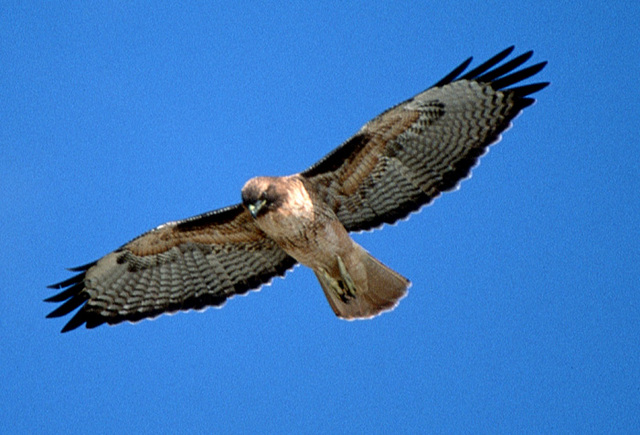
    You know I’ve been trying to attract some crows and ravens. No luck yet. I’ve gone to plan Q which is probably what most people would do for plan A–just put up a bird feeder with cat food in it. Except I haven’t gotten around to erecting the whole apparatus. So no crows or ravens yet. But I have been able to attract the attention of a pair of hawks.

    At first I thought they were protecting their nest. A pair of doughty parents. But I’ve looked about and can’t find any nest. Furthermore, they don’t always pull their stunt in the same area. And so I’m beginning to suspect they’re toying with me.

    Here’s what happens. I go on my hike and while I’m walking in place at the beginning of a new interval, looking out over the magnificent mountain vistas and contemplating important things like cheese, one of these hooligans will sneak dive bomb me from behind. At the last moment the bird will pull up making a huge WAAAHOOOF sound with its wings that sends my heart racing even faster than it already is. It’s like someone taking a huge broom and swinging it at speed three inches from the back of your head.

    Yesterday, I saw them off to the right at about 100 yards, calling out, making that piercing cry. I thought—ha! they’re over there. But THEY weren’t. It was only one of them. The other guy was between me and the sun. And so I’m hiking along minding my own business and WHAAAHOOOF!  I just about had a heart attack.

    I’ve caught one diving at me once. It’s an amazing thing to see a bird of that size hurtling from the sky straight at your head. And I would welcome such an experience again. But they just won’t perform. No, they’ve got to blindside me. 

    This week I’m going to get a picture of the low-budget criminals and post it here.

    Share
  • You’ve heard of the nocebo effect, right?

    We all know about the placebo effect. Well, here’s its ugly brother.

    nocebo (no-SEE-bo) noun: A substance producing harmful effects in someone because it is believed to be harmful, but which in reality is harmless. [From Latin nocebo (I will harm), from nocere (to harm). Modeled after placebo (I will please).]

    Both groups who received nocebos showed elevated levels of the stress hormone cortisol in their blood.” James Morgan; Is Your Pain a Trick of the Mind? The Herald (Glasgow, UK); Jan 12, 2007.

    An article with many interesting examples of nocebo effect.

    From words at wordsmith.org

    Emotion…

    Zing!

    P.S. This is one thing I love about English–it’s alive and growing, stealing from any language it can.

    Share
  • War Predictors

    What’s the best predictors of which nations are most likely to go to war or exhibit instability?

    Up until now these three factors were assumed to be the most predictive: poverty levels, lack of democracy, and the nation’s adherence to Islamic values. However, Valerie Hudson and the folks of WomanStats have found a fourth factor that is a better predictor:

    These results indicate that if a scholar or policymaker had to select one variable—level of democracy, level of wealth, prevalence of Islamic culture, or the physical security of women—to assist them in predicting which states would be the least peaceful or of the most concern to the international community or have the worst relations with their neighbors, they would do best by choosing the measure of the physical security of women.

    I found it interesting that their research indicates of all the predictors prevalance of Islamic culture is the weakest. So much for the idea that Islam is the bogey man.

    Before presenting their findings, they make a theoretical case by synthesizing insights from evolutionary biology and psychology, political sociology, and psychology. When summarizing the ideas from evolution, they state:

    Evolutionary theory suffers from two common misconceptions. The first is that evolutionary predispositions are intractable. No evolutionary theorist believes this. Richard Dawkins explains, “It is perfectly possible to hold that genes exert a statistical influence on human behavior while at the same time believing that this influence can be modified, overridden, or reversed by other influences.” The second misconception is that evolutionary theory posits static and essential characteristics for males and females. This has been debunked as well. In debunking this myth, Theodore Kemper notes, “Across the spectrum of the social sciences, the results show that females are not essentially pacific, retiring, unaggressive, lacking in motives and psychological need for power and dominance. While successful ideological socialization may persuade many women that this is true of themselves, it is not biologically true.”

    These misconceptions are very interesting indeed and should be remembered when examining genetic based arguments for all sorts of behavior. When they discuss social learning theory from psychology, they reiterate this point:

    First, social learning psychologists argue that biology does increase the likelihood that a child will engage in aggressive or violent behavior, but does not guarantee it. For example, twin and adoption studies find that genes make a small contribution to various forms of antisocial behavior compared to environmental factors. For example, while finding that having a biological parent who was antisocial increased the risk for antisocial behavior to be seen in an adopted child, these same studies also demonstrated that having a disrupted home environment contributed more significantly to the risk for a child to engage in antisocial behavior.

    They then discuss specific environmental factors that lead to violent behavior against women. It’s a fascinating article. I highly recommend it. You can find the original, “The Heart of the Matter: The Security of Women and the Security of States,” in Harvard university’s International Security, volume 33, issue 3.

    Okay, okay, so how do the countries rank? Here’s a summary from the Deseret News:

    A WomanStats map reveals highest levels of women’s physical insecurity in the Middle East, India, much of Africa, Brazil and Mexico. On a Violence Against Women scale, the United States sits smack dab in the middle, at a level 3 on a 5-point scale, with moderate levels of domestic violence and rape.

    Share
  • A bit of Yiddish to warm the soul

    schnook, schnorrer, megillah, meshuga, schlump…

    Who can resist such words? I plan on working at least one of these into my conversation today.

    I’ve copied from last week’s Wordsmith.org emails.

    A language is the soul of its people. This is nowhere illustrated more profoundly than in the Yiddish language, the language of Jews of eastern and central Europe and their descendants. A tongue full of wit and charm, Yiddish embodies deep appreciation of human behavior in all its colorful manifestations. The word Yiddish comes from German Judisch meaning Jewish. But it is not the same as Hebrew, even though it is written in Hebrew script…

    …Many of the everyday English language words such as bagel, klutz, and kibitz are terms from Yiddish. This week we’ll look at a few other Yiddishisms that have enriched the English language.

    schnook (shnook) noun

    A stupid, easily deceived person.

    [From Yiddish shnuk (snout) or from German schnucke (a small sheep).]

    -Anu Garg (words at wordsmith.org)

    “A gun-toting schnook became an embarrassing crook when he robbed
      a Spokane dollar store Sunday. Seriously, if you’re going to commit
      a Class A felony, you might as well rob a Class A joint.”
      Frank Sennett; Dollar-Store Thief Bucks Common Sense; Spokesman Review
      (Washington); Mar 9, 2007.

    schnorrer (SHNOR-uhr) noun

    One who habitually takes advantage of others’ generosity,
      often through an air of entitlement.

    [From Yiddish, from German schnurren (to purr, hum, or whir), from the sound of a beggar’s musical instrument.]

    megillah (meh-GIL-uh) noun

    A long, tedious account.

    [From Yiddish megile (scroll), from Hebrew megillah, from galal (to roll).
    The term alludes to the length of the text in the Book of Esther which is read in its entirety, twice, during Purim, a Jewish festival.]

    -Anu Garg (words at wordsmith.org)

    “But the obvious challenge was to go through the whole megillah — to
      begin with the Andante in C Major, which Mozart wrote when he was five,
      and proceed to the bitter end, the Requiem.”
      Alex Ross; The Storm of Style; The New Yorker; Jul 24, 2006

    meshuga or meshugga (muh-SHOOG-uh) adjective

    Crazy; stupid.

    [From Yiddish meshuge, from Hebrew meshugga.]

    Today’s word in Visual Thesaurus: http://visualthesaurus.com/?w1=meshuga

    -Anu Garg (words at wordsmith.org)

    “Plenty of hip-hoppers want to be considered insane, but only Paul Barman
      wants to be known as meshuga.”
      David Segal; The Weirder, the Better; The Washington Post; Jun 25, 2000.

    schlump (shlump) noun

    A dull or slovenly person.

    [From Yiddish shlumperdik (unkempt, sloppy).]

    -Anu Garg (words at wordsmith.org)

    “‘You don’t want to dress up too much, but you don’t want to be
      a schlump,’ says Michael Kors.”
      Hal Rubenstein; Terrific Style by Age, by Size, by Shape, by Color;
      In Style (New York); Aug 2006.

    Share