John’s Reviews – books, movies, whatever

  • The Profiler, Almond Milk, and Uncle Sam

    Real crime 

    It’s 1990. You’re a housewife, homeschooling your children, and renting a room upstairs to a young man to make ends meet. There are a few odd things about the young man, but you overlook them. Then one day a woman is strangled on a jogging path near your home, and your first thought is that the young man living in your house has something to do with it.

    What do you do?

    Pat Brown found herself in this exact situation. She voiced her suspicions to her husband, but it was all too farfetched. However, the nagging thought wouldn’t let her go, and she soon uncovered evidence that made the young man a strong suspect.

    She took the evidence to the police, but they dismissed her as a bored housewife with an overactive imagination. She evicted the young man, but it would be six years before the authorities would finally bring him in for questioning.

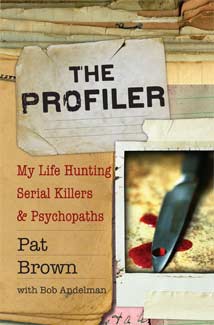
    Dismayed and frustrated, Brown started down a path that would lead to her become a professional criminal profiler, assisting police departments and victims’ families by analyzing both physical and behavioral evidence to make the most scientific determination possible about who committed a crime.

    In The Profiler: My Life Hunting Serial Killers and Psychopaths Brown tells about what happened with that young man and her journey to becoming a profiler, then she opens a number of other cases she’s worked on, giving the reader a behind-the-scenes look at how profilers work, and how their methods bring new investigative avenues to light. She also brings home very clearly just how many murders go unsolved. It’s an absolutely fascinating read.

    Milk that doesn’t moo

    I used to think soy milk was either for the lactose intolerant or hippies. And so I always avoided that milk section of the grocery store. But, having embarked on a new way of eating that I’ll explain in another column, I was induced to approach the alternative milk shelves. I purchased a carton of soy milk, but then I saw cartons of something even more strange: almond milk.
    Puzzling. I knew, of course, that almonds did not have udders. So nobody was out there hooking them up to tiny milking machines. And they were nuts, so it’s not like you can squeeze them to make them release their tasty juices. Instead, I learned that almond milk is made by finely grinding almonds together with water. I thought this was something new, invented perhaps by a Californian who’d had too much weed, but it appears many Medieval European recipes called for almond milk, and it has always been a popular beverage in the Middle East. So almond milk has been around for some time.

    But I didn’t know any of this. I just knew I loved almonds and that they provide all sorts of goodies for the human body. Besides, I have a hard time resisting adventures. So along with the soy, I picked up a carton of Silk’s PureAlmond regular, vanilla, and chocolate milk.

    The soy was okay, but it left a weird zingy taste in my mouth. Furthermore, soy contains estrogen. I’m sure it’s a fine product, but I live with four daughters and don’t need any more estrogen. And I certainly don’t need it mutating me in any, um, feminine ways. So I put the soy aside and gave the almond milk a go.

    It was delicious. I love the vanilla and regular flavors the best. In fact, I like it so much I only drink cow’s milk when the last drop of almond milk is gone, and I try to make sure that never happens. Some might worry that I’ll deplete my calcium stores, but not so. Almond milk actually has MORE calcium than cow’s milk along with vitamin D that allows the body to absorb the mineral. It also has 50% of the RDA of vitamin E, of which cow’s milk has none. But that’s all technical vitaminy stuff. It wouldn’t matter if the milk itself didn’t taste so dang good.

    The American breakfast

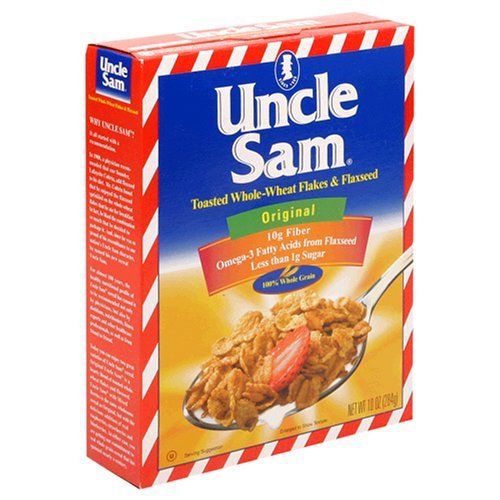
    I love cereal. We have our standard favorites as a family, but I also like to get a box of something new when we shop. I recently saw, perched up on the top shelf at Wal-Mart, boxes of  Uncle Sam.
    What the heck? Was this a Tea Party product? I know Utah is conservative, but come on. And what kind of nut sings “The Stars and Stripes” for breakfast?

    Well, I might.

    So I promptly snagged a box and read that it’s been around since 1908, thus making it politically neutral. Then I read the ingredients. It’s a simple cereal made of wheat berries that are steamed, rolled, and toasted to provide killer whole grain nutrition. Those wheat flakes are then mixed with flax seeds (omega 3’s anyone?). That’s it.

    I purchased a box, felt patriotic, and then gave it a try when we got home. I’ve been buying it regularly ever since. It’s slammed with 10 grams of fiber and 7 grams of protein, and goes great with Silk’s vanilla almond milk and a piece of fruit.

  • Which Way Home, Tangled, Cafe Zupas

    Child Migrants

    Each year, thousands of Latin Americans travel hundreds of miles, hoping to enter the United States illegally. About five percent of those attempting to make the journey are children traveling alone, often on the tops of freight trains. Some of these children are in their teens. Some are as young as eight or nine.

    Some of them have had relatives (in their home country or in the U.S.) pay smugglers to bring them in. Others try to make it on their own. Some do make it across. Others are caught and deported in the U.S. or by the Mexican authorities. Others simply vanish or perish along the way.

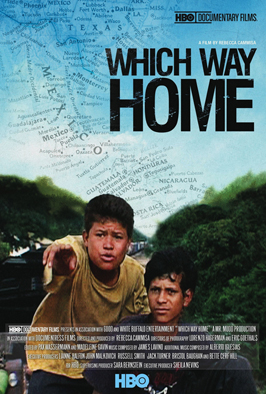
    The eye-opening documentary Which Way Home follows a number of these unaccompanied child migrants on their journey through Mexico as they try to reach the United States.

    There’s Olga and Freddy, nine-year old Hondurans. Olga is trying to reach her mother and sisters in Minnesota. Freddy wants to be reunited with his father.

    There’s fourteen-year old Jairo who was forced to live on the streets of Chiapas after his mother was killed. He wants an education but is too poor. So he thinks if he gets to Laredo, Texas, he can get a job, earn money, and come back to hire a tutor.

    There’s thirteen-year old Fito from Honduras whose mother abandoned him when he was very young. He lives with his impoverished grandmother, who has a job making cigars. He’s traveling to the U.S. to look for work and hopes to be adopted.

    Then there’s the thirteen-year old Eloy and his 16-year old cousin Rosario whose bodies were found in the desert.

    This film doesn’t propose any solutions or argue for or against immigration. It simply documents what’s happening. Anyone who has any interest at all in the issue will find this movie both fascinating and troubling. In fact, I think the whole family could watch this. For those who are concerned about language, there is one brief exchange where the one of the boys uses some high-grade curses. However, I wouldn’t let that hinder you. You can discuss it or easily fast forward those few seconds. These are just people. Don’t let a few foibles prevent you from learning about their plight.

    One of the best movies of 2010

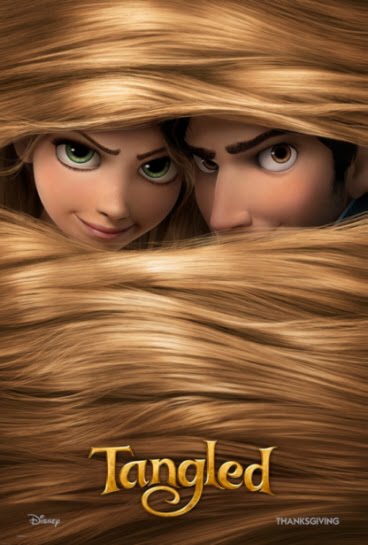
    Maybe you’re one of the few, like me, who didn’t see Tangled when it first came out. If so, you’re in for a treat. This is a great story about a girl whose mother, the queen, almost died giving birth to her. The magic used to save the mother and girl transferred into the child’s hair and gives her power to heal. Or to restore beauty and youth.

    And that’s too tempting for some. The princess is kidnapped by a woman who wants to maintain her youth. But this villainess doesn’t play the role of the bad guy. No, she plays the role of the loving mother, locking Rapunzel away in a tower to “protect her,” duping her into thinking she really is her mother and really cares. 

    It works for a number of years until Flynn Rider, a wanted thief running from the authorities, stumbles across Rapunzel’s tower. When he tries to take refuge, Rapunzel freaks, and then sees that Flynn just might be her ticket out. Of course, when the villainess returns and finds Rapunzel gone, she’s vows to lock Rapunzel up where nobody can find her. Unfortunately, poor Rapunzel has no clue what her “mother” really is—it’s hard to fight a villainess when you think she’s on your side.

    The animation is marvelous. The characters are fun. And the villainess is unlike any we’ve seen in a Disney film before. I recommend this film highly. I know I’ll be seeing it again. 

    Soup Heaven

    There’s nothing like an excellent soup and sandwich. And since my wife and a friend both raved about Cafe Zupas, I decided to give it a try.

    My first problem when I stood looking at the menu was that there were ten soups listed and they all sounded wonderful. There was Tomato Basil with Orzo Pasta, New England Clam Chowder, Thai Lobster Curry, Wild Mushroom Bisque, Yucatan Chicken Tortilla and five others. My second problem was that there were just as many delicious-sounding sandwiches to choose from, all grilled “panini style” on Italian Ciabatta bread. Should I get the Honey Bacon Club, Hawaiian Barbeque Chicken, Milano (ham, tomatoes, and pesto), or one of four others? And then there was a salad menu as well.

    Oye!

    I ended up ordering the turkey cranberry sandwich and a bowl of both the Thai Lobster Curry and the Tuscan White Bean and Vegetable. The staff was friendly. They served up my food quickly, and I sat down at a booth hoping I hadn’t just wasted my money.

    That fear was resolved with the first two sips. It was heaven. I oohed and aahed all the way through the meal until the last bite of the chocolate-dipped strawberry that comes with each sandwich. I cannot wait to go back and try another sandwich and bowl of soup. And the cool thing is that it appears even when I’ve tried all the menu items, I won’t run out of new options because Cafe Zupas rotates new soups into the menu. For example, right now they’re featuring a French Onion soup in addition to their normal menu items and have a Beef and Mushroom Goulash and Irish Stew “coming soon.”

    Cafe Zupas is a new chain that started in Utah. It currently has a total of nine locations from Layton to Provo. Next time you want to eat out, find the location nearest you at their website www.zupas.com and prepare yourself for a gustatory delight.

  • Basic Economics, Avatar: the Last Airbender

    How to not be duped by political blarney

    Karl Marx was not a scientist. Nor was Adam Smith before him. They were philosophers. Theorists. Idea men. That’s what all economists in those days were. They had little tested knowledge, and so which economic system was best was all a matter of opinion.

    But things are now much different. Nations and local governments tried the various theories. And we’ve seen the results. We now have a whole century of data. Furthermore, economists now are scientists. They use scientific methods and deal with tested knowledge. Sure, there are still controversies, just as there are in any science, but the basic principles of economics today are NOT matters of opinion.

    For example, we know what happens when governments impose price controls in all their many varieties—rent caps, minimum wages, laws against price gouging, and medical care cost limits. These last few years we’ve seen a dramatic demonstration of what happens when they meddle with the prices of home loans. We know what happens when they impose tariffs or give subsidies to special groups like farmers or steel producers. We know what happens when they create barriers to people entering a market to compete, like they’ve done with immigrants. We know what taxes do.

    The unfortunate thing is that many of these principles seem to be ignored by our politicians. And by those who vote them in. And so we can have a Congress pass massive health care legislation that will cause health care shortages just as similar laws caused shortages in other countries. This is how we have a president who in a recent speech to the U.S. Chamber of Commerce suggested, in good Marxist fashion, that it was business owners who kept the American workers down by hoarding all the profits. Has he not looked at the data which shows that huge profits invite more competition, which tries to get ahead of the leader by cutting prices, which allows the American workers to get more for less, thus raising their standard of living?

    In the 1980’s and 1990’s India and China began to make fundamental changes to their economic policies, doing the things that have been proven to work. Suddenly, the economies of those nations started to grow. It’s estimated that 20 million people in India rose out of poverty in a decade. In China, more than a million people rose out of poverty EACH MONTH.

    But this seems lost on a number of politicians. Don’t let it be lost on you. We have critical elections coming up. One of the best things we can do is educate ourselves about these basic economic principles so we can cut through all the political blarney. I haven’t found a better, more enjoyable book on the subject than Basic Economic Principles: A Common Sense Guide to the Economy by Thomas Sowell. Sowell is an economist and Senior Fellow on Public Policy at the Hoover Institution at Stanford University. His book is written for the general public and so foregoes dry charts and theoretical ho-hum for lots of real-life examples and straight-forward explanations. There are times when I wish he would have gone into more detail on a few subjects, but what he lacks in depth in a handful of areas, he makes up with breadth. Furthermore, the way he presents the topic was interesting enough to make me stay up late a number of nights well past my bedtime. 

    Great family entertainment

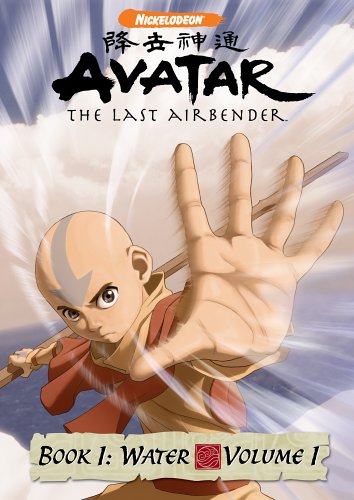
    Do you want some fun family entertainment that includes laughs, wonder, and moments of poignancy? Something you can watch and enjoy with the kids? Then let me recommend the animated TV series Avatar: The Last Airbender. This is NOT the movie Avatar by James Cameron with all the big blue people Nor is it the movie The Last Airbender, based on the TV series, which many fans disliked. This is the original. The one that millions love.

    Through the miracle of Netflix, I started watching it with my girls a few months ago. And we’ve all been sucked in. It’s unlike any “cartoon” I’ve seen. In fact, you can’t call it a cartoon just as you can’t call The Incredibles or Lion King cartoons. This is great story telling. Furthermore, instead of it being a bunch of unconnected episodes, this series is telling a long story. It ran for three years on Nickelodeon and includes more than sixty 22-minute episodes.

    The series follows the adventures of the main protagonist Aang and his friends, who must save the world by ending the destructive war with the Fire Nation. Aang’s world is divided up into four nations—Air, Earth, Water, and Fire. In each nation are “benders” who can powers with the element of that nation. So Air Benders can fly and create huge winds; Fire Benders can generate and throw fire; Water Benders can create ice and waves.

    So it’s fantasy, and all of that is cool, but it’s the characters that we enjoy the most. We quote and laugh at some of their lines. And then there are the episodes with true dramatic moments.

    Avatar has been nominated for and won many awards, including the Annual Annie Awards, the Genesis Awards, the primetime Emmy awards and a Peabody Award. It’s excellent entertainment.

  • |

    JB Speculates: eBooks, Book Contracts, Agents, and Libraries

    I’ve looked in the crystal ball I hide under my desk and caught a glimpse of what ebooks will change in the next few years. Specifically I saw what will happen to:

    • Book Contracts
    • Literary Agents
    • eBook Aggregators and Libraries

    After showing me the vision, the ball thanked me for shopping at Walmart. Weird.

    PRINT ONLY CONTRACTS

    The only reason to have a print publisher is to get distribution you cannot obtain on your own, or to get it more cheaply than it would cost you if you tried to get it on your own. That’s it. Now, it’s true publishers have excellent art departments and story editors. But you can contract out cover art, copy editing, formatting, and even story editing yourself.

    Distribution is the main thing publishers offer that you can’t get anywhere else.

    BTW, when I’m talking about distribution, I’m talking mostly about getting the books out to places people can see and purchase them. For example, publishers can get your book into hundreds or thousands of books stores all at the same time–Barnes & Noble, Hastings, Walmart, Costco, indie book stores, airport book stores, grocery stores, drug stores, etc. Publishers can get you display in those stores so consumers see your book. One form of that are the racks and new book displays. Another is one that Scholastic does so well, i.e. displaying and selling titles in tens of thousands of classrooms with its book catalogs. A single author just can’t do that. 

    It’s also true publishers can convince some platform venues, that would never look at a self-pubbed author, to spotlight your book.  For example, it’s unlikely a self-published author will be able to convince Booklist, Publishers Weekly, and Library Journal, which have huge platform for library book purchasers, to review a book.  But publishers have no problem getting their stuff in there. Likewise, it’s often much easier for publishers to get endorsements from other authors or people with platform than it is for a single author.  Of course, there are so many places that have some kind of platform, that publishers don’t have a lock on them all, e.g. Goodreads and Amazon reader reviews.  But for the sake of simplicity, let’s just look at the distribution end.  

    Because 90% of book sales are still hardcopy, the only way to have HUGE sales numbers, right now, is through a print publisher. I’m talking about the numbers you see in the Publishers Weekly top selling books, where you have to sell at least 100k copies in hard back, 500k copies in mass market, to even make the list.

    Publisher’s lock on this ability will erode. We can see signs of this in the USA Today Top 150 already. I consider this to be the most accurate picture of what truly is selling the most. Here’s why. And ebooks are starting to be the best selling format for a number of books. On that list, they add up sales of a title in all formats and then list the best-selling format. So when you see an (E) at the end of the listing, you know it’s selling more ebooks than any other format. E’s are starting to pop up all over and we’re still in the early adopter stage for ebooks and ereaders.

    So what does this mean?

    If I put on my author business slacks (why does it always have to be hats we change?), I’d be crazy to turn down a publisher that wanted to offer me monster distribution. A bird in the hand is worth two in the bush. You offer me $500k now, I’m taking the money and running all the way to the bank and then the $6.99 Indian all-you-can-eat buffet.

    Of course, I’m not likely to get that kind of an offer. We new writers are more likely to get an offer for, what were Hines’ numbers? $6k – $12k? And for that the publisher will want all our ebook rights and will tie them up for years and years and years. And then they’ll try to give us a fraction of what we could get selling directly. Furthermore, they don’t provide such books the same push to garner platform spotlight. They don’t spend the money to give them the prime display in bookstores. This means the difference between what they bring to the table for us smaller authors and what we can do on our own is much less. And the ebook has narrowed that even further.

    How much further? Well, how many books would you have to sell to make that advance of $6k – $12k? If you’re selling your books for $2.99 for the Kindle, you get about $2.00 a book. That means you’d have to sell 3k-6k copies of an ebook to earn as much as that average advance. 

    Do you think you can sell 3k – 6k copies of an ebook at $2.99?

    Some authors will be able to do this. Some won’t. If you wanted to do that in three years, you’d have to sell about 150-350 books per month. For a more in depth comparison between traditional publishing and self-publshing ebooks, see Dean Smith’s blog on cash flow.  

    Maybe you don’t think you can make those numbers. But maybe you can. The point is that if you think you can, then you can make as much on your own as you can with a publisher. This means there is absolutely no financial reason on earth to take the publisher’s deal. None. Now, if you have non-financial reasons, that’s another thing, but when looking at dollars and cents, it’s fairly clear the publisher’s ability to put you into their distribution channels isn’t worth what it will cost you. Especially since the ebook is forever and may keep selling for years to come AND because the market for ebooks is still in the early adopter phase–it’s only going to grow massively over these next years.

    But this doesn’t mean paper publishing is dead. It’s not. Nor will it be for some time. Just because SOME authors can make as much in the ebook market on their own as they can with a publisher through their distribution channels doesn’t mean all of them can. Furthermore, publishers with distribution have something to offer even those who successfully publish ebooks themselves.

    Let’s say you have an ebook series that starts to sell well for you, 1,000 per month. That’s $2k per month, $24k per year. If a publisher wanted to buy the rights to that from me, they would have to pay me MORE than $70k as an advance. MORE. Because I can make that on my own in three years selling it myself. In fact, since ebooks are forever, I have to look at the present value of all of those years of sales. That income stream is going to be a LOT MORE than $70k, even if we think sales will taper off after five or six years.

    How many big publishers are going to want to pay that?

    Probably none. Or, at least, I suspect those deals will be few and far between. But there is money to be made in paper, even if that market is shrinking. There will be some smaller publishers who, for the right price, will offer paper distribution. And if they can get me distribution that I couldn’t get myself for paper, or do it at a lower cost, then I’d want to sell them paper rights. Why not?

    And so what I see in the crystal ball are some authors, the ones who do well selling ebooks, being able to sign contracts with publishers that sell paper rights only. I know the big publishers probably won’t go for that in the near term, but smaller publishers will see the value and step up to the plate.

    AGENTS

    What about agents? Are they going to die?

    I think if we remember that literary agents are SALES agents, then their future becomes clear. The only reason to get a sales agent is because doing so makes my property worth more (same reason for getting a publisher, btw). If, by letting them focus on sales and letting me focus on getting more product out the door, I make more money than I would if I tried to do BOTH the selling and the producing, then I want an agent.

    I want to sell as many rights as I can to as many people as possible–gaming, film, audio, foreign, merchandise, etc. I’d be a fool to say, well, no, I’ve got this little ebook gig going. I’m not going to sell any of these many other rights to anybody. No, I’m just going to let them sit in my basket and earn me nothing. Let them go to waste.

    !?

    A good agent should be able to sell more than I could on my own because they have a better ability to reach AND close editors AND other people that are in the market for purchasing rights to my property. They’ll also allow me to sell more because all the time I would have spent selling, I can now use to create more product. So not only do I have more books, and therefore rights, to sell, I can hopefully sell them for a better price and terms than I could on my own.

    I’d be a fool not to increase my revenue. I’d be a fool not to have a good agent.

    So as long as there are people who want to purchase these non-ebook rights, and an agent can make a sale I couldn’t or can make it for less than what it would cost me to do it on my own, then agents will be useful. Because of this, because we’ll always have more than ebook rights to sell, I don’t see a role for good agents ever going away.

    EBOOK AGGREGATORS & LIBRARIES

    When more and more people begin reading ebooks what happens to the libraries?

    Ebooks cost less. So a lower price per book would simply allow libraries to purchase more books and expand the collection. But wait, they don’t need rooms and rooms to hold all the paper. You can store the world’s library in one computer room. Shoot, this means that housing the collection on a server instead of on the shelves would cost less. This would allow for an even bigger collection. But why maintain a server and manage your own collection if you can network to the collection down the road?

    In fact, what if there were a mega service with millions of titles you could subscribe to? That would be even cheaper. Then you wouldn’t have to pay book purchasing agents or IT folks to keep your server running.

    Enter the ebook aggregators–the Netflixes of ebooks (I know somebody somewhere is working on this business plan; is it you?)

    I’m betting the whole library system goes national. I’m betting you’ll have some government aggregators, but they’ll probably be dwarfed by the private companies. You’d subscribe to the aggregator’s service just as you do Netflix today and many university libraries currently subscribe to electronic periodical collections.

    The aggregators will probably charge users as Netflix does for a certain number of books checked out at the same time. If a large entity like a library wanted to subscribe, I bet the aggregator would charge access to the collection based on number of users at the library. The library would pass some of that fee onto patrons. The rest of the fee would be paid by the community’s tax dollars, just as those tax dollars pay for the current collections. You might even have device manufacturers coupling subscriptions with purchase of the product as incentives to buy their devices.

    When the aggregators step in, we suddenly end up with a different mix of distribution channels that will coexist:

    1. Author –> ebook retailer (Amazon Kindle, B&N Nook, etc.) –> reader
    2. Author –> subscription aggregator –> reader
    3. Author –> subscription aggregator –> public and school libraries –> reader
    4. Author –> publisher –> subscription aggregator –> then option 2 or 3 above
    5. Author –> publisher –> current distribution channels

    Surprised by #5? Well, the current distribution channels are not going away until every book can be read on an ereader and everyone who reads has and wants to read on such a device. That’s going to take some time, if it happens at all.

    Why would readers buy individual titles ala distribution channel 1 above? Some people just want to own. Other readers will be happy to purchase the books because they don’t want to wait for a checkout slot to open up, e.g. I already have my allotted number of books checked out and I really want this one on hand all the time because it’s Suzie’s favorite. Other readers will want to customize a book with highlights, margin notes, links, etc. just as many of us like to mark up paper texts. We’ll need our own copy for that. Still, I think the bulk of reading will move to the subscriptions. For example, right now I purchase DVDs I love, even though I can get them from Netflix. But the number of DVD’s I own are a fraction of those I watch. Most TV and film I watch once and it goes back to Netflix until I want to see it again. And this checking out becomes even easier where there’s nothing physical to send through the mail.

    Please note: there will probably be some form of gatekeeping with the aggregators. I doubt they will carry every scrap of anything ever written. They’ll carry a lot of stuff, but not every written word. Furthermore, when you have hundreds of thousands of titles, you’ll need mechanisms for helping your subscribers find great content suited to their tastes. A lot of “people who read this read that,” review services, etc.–the next generation of Netflix recommendations, Goodreads reviews, and Pandora like tools. 

    Aggregators won’t be the only gatekeepers, however. The key is in getting notice. And there will be many places with platform that will be able to shine a spotlight on a book. Think about all the places you find out about movies today—radio movie programs, TV movie reviews, Rotten Tomatoes, Newspaper Reviews, Yahoo viewer and critic review summaries, Kids-in-mind, and on and on. Look at all the ways you find music. There will be just as many ways to find books.

    As far as paying authors, I suspect aggregators will pay authors each time a book is checked out, or, if it’s a must-have name author, they will pay to list the title plus a per use payment.

    So that’s the future I saw in my strange little ball. Feel free to comment or add your own thoughts.

  • Interview with Author Kelly Barnhill

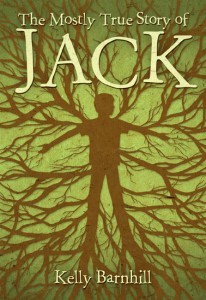
    Kelly Barnhill is a writer, teacher and Mom from Minneapolis. Her fiction has appeared in Postscripts, Weird Tales, Clarkesworld and other publications. She’s also published a number of high-interest science books for children. They have wonderful titles like Sewers and the Rats That Love Them, Blood-Sucking, Man-Eating Monsters, Sick, Nasty Medical Practices, and The Wee Book of Pee.  She states that “I’ve had like nine million jobs before this, including being a janitor, a park ranger, a wildland firefighter and a bartender (among others).” Kelly’s first novel, The Mostly True Story of Jack, will be published this year. I had the opportunity to interview her about the book and writing, and have to say I had a delightful time. Enjoy!

    * 

    JB: I have to start by saying I love the title of your book. It raises all sorts of questions in my mind. Was that part of the inspiration of the story or was it something you had to arrive at after a lot of hard work?

    KB: On the first question: Oh my. Titles. This title is the culmination of a whole lot of blood, sweat and tears. Okay, that’s not entirely true. Neither blood nor sweat, just tears – mine specifically. This book was originally called The Boy Without A Face, then Jack Be Quick, then The Curious Face in the Cornfield, then Uprooted, then the House at the Far Edge of Town, then the A Child of Earth and Magic, then…..oh lord, I can hardly remember. 

    The thing is, I typically don’t have a problem naming pieces. The title usually comes when I’ve untangled the first knot of text and the beating heart of the story is just starting to assert itself. This time, not so much. I was stymied from the beginning. I asked my kids their opinions, my agent, my agent’s assistant, every editor I’ve ever heard of. I asked my students, my Sunday School kids, kids on the block, kids at the park. 

    But that’s the thing when you have a title that doesn’t work – no amount of wanting it to be right will make it right. So I was bound to struggle and I was bound to hate – well, everything – because I just hadn’t hit on the right one yet. Until I did. And the fussing stopped (much to the great joy of everyone involved).

    JB: (laughing) That’s hilarious. I can see the desperate author hounding some kid on a swing. Of course, it shows persistence. And I’m betting it isn’t just a title that’s defied you. Have you run into plot or character snags that have been especially troublesome? If so, what do you do as a writer, how do you approach that?

    KB: Oh, clearly. I am one of those authors who does absolutely no planning before starting a project. Instead, I’ll get a little knot of text stuck in my head (usually when I’m out for a run) – something pleasing to the ear or gentle in the mind’s eye. And then I spend a whole lot of time figuring out the story behind it. What that means is that when I begin, I typically don’t know what exactly I’m writing. Is this a short story? A novel? A children’s book? A poem? It takes me a while to figure that out.

    Insane, you might say. Absolutely barking mad, you might mutter.

    Well, obviously, says I. But it’s fun.

    Anyway, I did a lot of select-all-deletes over the course of this novel (sometimes, deletes to the tune of 300 pages), retaining the characters, retaining the little bright spots that I managed to scrawl onto some note cards, but recomposing largely from memory, and re-engaging with the story in a fresh, new place.

    It’s a process I can’t really recommend. Except that I do. Whole-heartedly. There’s something thrilling about entering into a manuscript that doesn’t have any mistakes in it yet. Of course, it typically doesn’t have any words in it either at that point, but never mind.

    Along the way I’ve had to remove some fairly major characters, which forced me to completely re-imagine and recompose the book (again), but as I did so, the story was better, the writing was better, and I learned a lot doing it. So, I don’t like to call them “snags”. I like to call them “learning opportunities”. (Okay, fine, I also call them “throw-my-computer-in-the-creek-while-shouting-obscenities moments” but that’s not very nice to talk about.)

    JB: Kelly, I have to say, to find a simmering joy in the dreaded select-all-delete (folks, she’s wild, WILD!) Although I will say that starting a new project is always a thrill for me as well. So maybe we’re not too far apart, although I do enjoy my planning. So, what was the knot of text that started this story? Is it even there anymore? And how did it develop into the fantastic magic that’s at the heart of the tale? (Folks, as an aside, I have to tell you that the magic in this book is unlike anything I’ve read.)

    KB: Okay, you asked for it. Here is the original page. I’ll make the letters green, just because:

    Outside the house, a girl stood on the darkening street looking up. Her hands were shoved deep in the pockets of her ratty cut-offs, and her red-brown curls struggled out of the long braid that hung down the length of her back. Her bike lay on its side on the ground, the front wheel still slowly spinning around and around, until it finally stopped.

    Two boys walked slowly down the quiet street, their sneakered feet scarcely whispering against the pavement. One boy wore a bright orange seed cap over his even brighter blonde hair. He smiled at the girl as they approached. The other boy was very tall and he walked with a limp. Half of his face was obscured in a red knot of scars that bloomed over his skin like roses. He kept his eyes on the ground and did not speak. He never spoke. Both boys stood next to the girl. The boy with the cap tilted his chin towards the attic.

    “That kid get in today?” he asked, his eyes on the silhouette of the stranger in the window.

    “Yep,” the girl said.

    “Think he knows?” He turned to face the girl. His face, handsome and tan from so much time out of doors, shone in the last weak rays of the orange and pink sky.

    “How could he?” she asked. She reached over to the boy on her left, who was taller than her, though his pronounced slouch made it difficult to tell. She put her arm around his shoulder, and he, in turn, laid his face, bad side down, good side up, on hers. Only when they stood like this, could people see that they were brother and sister. “But he will,” she said.

    I wrote this while on a positively lovely run through Fort Snelling State Park in Minnesota. Well, that’s not exactly true. I thought it while I was running. I wrote it when I got home. But that’s how a lot of stories start for me – a bit of fluff twists into a thread and thickens to a cord and winds into a knot. And then I have a hell of a time figuring out where the thing leads.

    Now, that actually wasn’t everything that led me to JACK. There was another bit that I can’t find anywhere that was a conversation between a kid and his mom as they drove in a rental car towards a farm house in Iowa, where the kid would be staying while his parents worked through the details of their divorce. I didn’t realize that the kids on the street would occupy the same story as the kid in the car. Indeed, I had no idea that the kids on the street were talking about the kid in the car. I also had no idea that I was writing a book with magic in it either. That was a surprise.

    But to answer your earlier question, neither the conversation nor the bit about the kids looking at the house are in the book anymore, though little images and descriptions have drifted into the later drafts and taken root. That’s the magic of revisions – every cut is necessary, and every cut hurts, but something new always grows. And sometimes the bits of your novel that once were broken and wobbly and weak transform into some very pretty bits of fiction. It’s the transformation that gets us every time – or me, anyway. Honestly, it’s why I keep coming back to the page: I like change.

    And as far as the magic at the heart of the story – I can’t really say. I think that the magic was simply there, waiting for me to find it. Everything I know about the strange history of that town, the terrible events that happened in the past and the necessity for Jack and his friends to set things right – I only discovered those things by accident. I discovered them because I cared about Jack, and cared about his loneliness and his lack of place, and I wanted to understand him. (And yes, I totally get it that he’s not real, but in the end that doesn’t really matter, does it? I’m a mother, and a child in need is a child in need.)

    (Did I even answer your question? Why is it that every question sends me tumbling in all directions? I think I might be a dreadful interviewee. Maybe you should ask me easier questions. Like about darning socks.)

    JB: (laughing) You’re a wonderful interviewee. I love these answers. And I think my readers will appreciate very much what you’ve shared. In fact, I’m betting they’d want me to keep asking questions for quite some time, but I’ll limit myself to two more. First, the prose of your book has a flow to it. I haven’t pinpointed what it’s doing yet (I have noticed some parallelisms), but the prose is compelling. Just picks you up and carries you along. Is that flow important to you? Do you labor over it, or is it just something you enjoy, maybe seek out in other authors, and, therefore, seems to come naturally? Tell us your thoughts on this.

    KB: Oh, John, I am so glad you asked me this question! (Also, that you noticed, because I worked really hard on it!)

    Let me back up before answering that, though, because I think it’s really hard to separate how a writer builds text and uses words from how they think. There are people on earth – lots of them – who are visual thinkers. I am not one of them. In fact, I am not a visual thinker at all. Even now, when my house is quiet and my kids are at school, it is difficult for me to call up a mental image of their faces – but the texture and timbre of their voices is with me all the time. And it’s always been like that for me as a reader – I’m much more attracted to books with a strong aural sensibility. I like prose that is rhythmic and rich. I think language works best when it is a sensual experience – not just in what it evokes (though that’s clearly important) but how it feels in the mouth, how it feels in the ear.

    Now I think part of the reason for this is that, as a little girl, I was a delayed reader. And when I started reading, I was stuck in the bottom group (they never tell you you’re in the bottom group, but oh! As children we know. We know!). This is not to say I wasn’t experiencing and engaging with stories. Every night my dad read to us – first the Grimm stories, then Narnia, then Tolkein, then Dickens. I also had a little fisher-price record player (that I bought at a garage sale with my own money, so of course I thought it was awesome) and a bunch of dramatized books on records – Treasure Island, 20,000 Leagues Under the Sea, Watership Down, Call it Courage, Anne of Green Gables, and some others that I can’t remember.I would listen to those things so often that my siblings threatened to throw my record player out the window. So I’d lock myself in the closet and listen some more. And even now, I love stories out loud. My husband and I read to one another every night, I read to my kids, and I read my own work out loud as I revise, over and over and over again.

    My book sounds the way it does because I’ve read that thing out loud, cover to cover, approximately nine million times. Actually, that might be a conservative estimate. I want my stories to feel like a whisper on the skin, an insistent voice that you can’t shake. Now, mind you, I’ll probably never actually reach that goal, but it’s good having a target, anyway.

    JB: Wow. That’s lovely. You know, I’m not a style over substance guy, but I like sound. I’m attracted to prose that sings, even if it’s softly. This seems to be what you’re suggesting you look for. Not prose that necessarily stands up and shouts for people to look at it. But prose that, well, as you said, is a whisper on the skin. Oh, there’s a whole interview right there. In fact, I think, if you’ll agree, I’m going to have you back, maybe around the time Jack comes out to discuss that. In the meantime, I see you have a whole bunch of projects slated to come out. The Final Exile of the Insect King is another killer title. But Iron Hearted Violet is the one coming out next after Jack. Tells us about that one or anything else you think readers should know about. And since Jack is a ways off, tell us which of your published stories you’d suggest readers try while they’re waiting. I see a whole bunch you’ve linked to on your site.

    KB: Thanks John! This has been really fun, and I’d love to pop back over to your corner of the internets around launch-time (August 2! Mark your calendars!).

    Anyone who is interested in reading any of my fiction online can head over to my blog for a list of links (www.kellybarnhill.com). And any of you who are interested in buying some pretty cool collections could check out Sybil’s Garage #7, which has my story “The Dead Boy’s Last Poem” or Apex’s recent anthology Dark Faith, which has my story “Hush”. Another story that I feel pretty good about  is called “The Taxidermist’s Other Wife”, which appeared on Clarkesworld in December. That particular story came from an experience I had up in northern Minnesota (about ten miles south of the Canadian border), when I was teaching a fiction workshop to a bunch of hockey-playing high school seniors. One boy was telling me that it took him over an hour each way to get from home to school and back again. He said he’d been doing that for the last six years, ever since his town closed down the school. I asked him if all the kids in his town had to make the same kind of crazy commute, and he said, “Those of us who’re left, sure. There’s not many of us anymore. You kill the school, you kill the town. Everyone knows that.” The idea that the lifeblood of a town is bound up in its school  – and indeed, that a town can be killed, stuck with me, and transformed into an odd, mournful little piece. There is a deep love as well as a devastating sorrow that binds the people of my beautiful (and very cold) state to the land that surrounds them – and I feel that this story is the closest I’ve ever come to actually pinning those twin emotions down onto the page. 

    As for Iron-Hearted Violet  – that has been a devilishly tricky book to write, but I’m pretty happy with it. How to describe it? Hmmm. It’s the story of a girl who unwittingly releases an imprisoned, wicked god, and must sacrifice all that she knows and all that she loves in order to stop it from enslaving her – and every – world. There are banned stories and dragons with missing hearts and a grieving girl and  friendship and a magic book and sleeping gods and a multitude of universes gathering in great foamy waves and crashing against the shore. Mostly, getting the language and tone just right was incredibly tricky, and I went through something like a million drafts, so for me to say that I’m feeling happy with it is a pretty big deal.

    JB: Well, that gives us all some great things to try out. I’m personally looking forward to Jack.

    *

    John Sez: now there is someone who just loves to write. I love her sense of adventure in discovering the story and her willingness to generate a lot of stuff to get to the final story. And the sound of her prose. Not that all books have to have this, but it is nice. Furthermore, Kelly was just enjoyable to talk to. That fun voice comes out in her blog. She’s going to be someone to watch. In the meantime, for the rest of us, it’s back to work.  

    LINKS

    Kelly Barnhill’s website

    Codex Author Blog Tour 2011