John’s Reviews – books, movies, whatever

  • Ramsey’s Total Money Makeover & Brown Cow Yogurt

    Wear some financial underpants
    I graduated from BYU with a Master’s degree in accounting. BYU’s accounting program is regularly ranked as one of the top three schools in the nation.

    Whoa. Go, John. I ought to be some kind of financial superstar, right? You’d think I would have come out of that program with all my crap put together, living within my means, investing wisely, making a bundle of moo-lah. I’d have a tidy stash.

    Yeah, nope.

    That program taught me how to account for money, but not how to use it. Or maybe I was just too dumb to get it. We came rolling out of school with thousands of dollars of debt. So instead of graduating and building our wealth, we worked to pay off the man.

    Dumb, dumb, dumb.

    I can tell you right now my daughters aren’t going to do the same. They will pay as they go. I’m not co-signing any loans. They’re not going to use credit cards. If it takes them a few years longer to graduate, then it takes them a few years longer.

    But they’ll be free when they finish. No shackles for my girls.

    I always thought it was a good idea not to send them out into the world without underpants. Or knowing how to brush their teeth. It’s equally important I don’t send them out there not knowing how to build wealth and reap all the security and peace that comes with it.

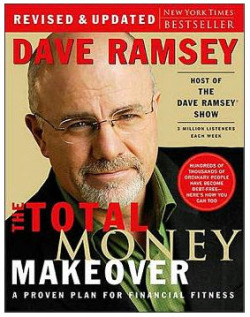
    This is why every child of mine is going to get a copy of Dave Ramsey’s The Total Money Makeover. It’s a goofy title, but the principles in it are sound. I can’t tell you how much I wished I’d known and followed the steps he outlines there on how to build wealth when I was just starting out.

    1. Save $1,000 in an emergency fund
    2. Pay off all your debt except the mortgage using the debt snowball (and don’t go into debt)
    3. Complete your emergency fund by saving three to six months’ expenses
    4. Maximize retirement investing
    5. Save for your kids’ college
    6. Pay off the home mortgage early
    7. Build wealth and give like crazy
    8. Live like no one else

    The book starts out by talking about the debt myth, i.e. debt is a great tool and should be used to create prosperity. Sometimes a little debt can be helpful. But in the vast majority of cases “debt adds considerable risk, most often doesn’t bring prosperity, and isn’t used by wealthy people nearly as much as we are led to believe.” Ramsey goes on to say, “Your largest wealth-building asset is your income. When you tie up your income, you lose. When you invest your income, you become wealthy and can do anything you want.  How much could you give every month, save every month, and spend every month if you had no payments? Your income is your greatest wealth-building tool, not debt. Your Total Money Makeover begins with a permanently changed view of the Debt Myths.”

    After tackling debt, Ramsey outlines other money myths and wealth-destroying attitudes and then explains each of the principles of the steps outlined above.

    I love this book so much it’s part of my gift package to every couple that invites me to their wedding reception. I hope those new couples follow his recommendations. It will bring them peace. If you want to give your children the gift of financial peace, if you want that peace yourself, I recommend you buy this book today and start following those baby steps. You can get the book for a mere $10 bucks at his website http://www.daveramsey.com.

    While you’re waiting for it to come, you might want to go over to Larry Correia’s site (another accountant and fiction author), and read his hilarious comments on some real folks who actually were sent out without any financial underwear: http://tinyurl.com/3zx9tbo.

    Thick and Creamy
    I love thick, creamy yogurt.

    Mix it with some raisins or fresh fruit, and I’m in heaven.

    The problem is that most of the yogurt on the shelves today is weird Splenda- or NutraSweet-filled crap. Or it’s full of sugar. And none of it has that thick mouth feel.

    I had some great yogurt up in Oregon a few years ago, but could never find anything like it here. Then a little while ago I hit the jackpot.

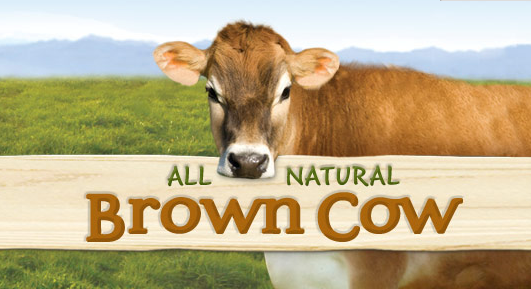
    Hello, Brown Cow Greek Yogurt.

    Thick. Oh, baby is it thick. Creamy. And full of goodness: 23 grams of protein, 9 grams of sugar, 0 grams of fat, and active cultures of more of our belly friends than any other yogurt I’ve found—give a big welcome to S. Thermophilus, L. Bulgaricus, L. Acidophilus, Bifidus, and L. Casei.

    I get the plain style. This allows me to mix it to my taste with fruit, granola, or a little bit of sugar or honey.

    If you’ve been looking for some good yogurt, let me recommend Brown Cow.
  • |

    Since when did young adult fiction become the cure for cancer?

    Meghan Cox Gurdon wrote an opinion piece for the Wall Stree Journal called “Darkness Too Visible” in which she complained that it was hard to find young adult fiction these days that isn’t filled with coarse, dark material–profanity, pederasty, mutilation, etc. She claims that “contemporary fiction for teens is rife with explicit abuse, violence and depravity” and wonders “why is this considered a good idea?” She concludes by saying:

    So it may be that the book industry’s ever-more-appalling offerings for adolescent readers spring from a desperate desire to keep books relevant for the young. Still, everyone does not share the same objectives. The book business exists to sell books; parents exist to rear children, and oughtn’t be daunted by cries of censorship. No family is obliged to acquiesce when publishers use the vehicle of fundamental free-expression principles to try to bulldoze coarseness or misery into their children’s lives.

    This, of course, sent hordes of folks into a frenzy of posts sneering at Gurdon’s so-called prissy sensibilities, decrying censorship, and extolling the virtues of young adult literature and dark material in particular. For example, Mary Elizabeth Williams in a Salon piece called “Has young adult fiction become too dark?” rolls her eyes, then deigns to wade into what’s she thinks is an obviously juvenile argument to apparently show Gourdon how “stupid” she really is. Williams concludes:

    One of the terrific side effects of an obviously click-baiting piece of editorial twaddle like Gurdon’s is that it reminds people how many fellow passionate readers there are in the world. That incendiary WSJ piece promptly sparked a tear-jerkingly beautiful twitter #YA saves trend full of heartfelt reactions and links to outstandingly reasoned, article responses from well-read adults and teens on the value within so much of YA literature and its downright lifesaving effects.

    Williams suggests fiction doesn’t have the power to lead people into bad behaviors. After all, she assures us, “an entire generation of women managed to devour the ‘Flowers in the Attic’ series without having sex with their brothers.” No, according to Williams (and all the #YAsaves folks), YA fiction only saves lives. And she provides a link to prove it.

    But Williams misses the mark. Completely. This isn’t about whether fiction has power to influence us in good and bad ways. There’s a huge body of research on media effects which clearly proves fiction’s power for both. Nor is it about the theraputic uses of dark material.

    The heart of the matter revolves around a rather mundane thing–customer service and marketing.

    Gurdon and those parents she describes in her article want a certain type of entertainment. For years, YA fiction has provided that type of entertainment. But things have changed, and the YA label isn’t reliable to them any more. It’s like someone who has purchased steel cut oatmeal for years is now suddenly bringing the bags home to find them filled with sardines or, horrors, Twinkies.

    We can argue the merits of sardines and Twinkies. And a hundred other foods. We can argue the merits of certain types of stories for certain types of readers. And my metaphor above–maybe you think using Twinkies is unfair; maybe you would have wanted me to use something like Triscuts or Wheat Thins. But that’s all beside the point.

    The real problem here is that the publishers have ignored a significant segment of the market who want to buy books but can’t find the types they’re interested in. Either the covers and blurb material don’t help them find what they’re looking for, sometimes misleading them, or the publishers have simply made the mistake of not thinking about this segment of the reading market.

    The fix is easy. (1) Produce more books for these folks. (2) Label your books in a way that makes it easy for the consumer to find what they want. They’re not asking for censorship. They’re asking for a nutrition label that lets them know what they’re getting. Publishers can do what the movie and gaming industries have done with rating systems that prominently display on the cover. Or use some other method. This isn’t a moral issue, it’s simply a matter of helping the right customers find your good or service. It’s a matter of good marketing and branding.

    And I would think, with the upheavals in the book industry today, that publishers and booksellers would want to do whatever they could to boost sales. Surely it doesn’t help to turn customers away because your package is confusing them.

    In the meantime, the battle will rage and this simple practical core of the issue will be lost in the fires and clouds of smoke produced by the arguments extolling and excoriating the virtues and vices of fiction.

  • Hey, I live in Washington and I’m an Idiot

    I’m sick of politicians who are more worried about votes, Republican or Democrat, than actually doing what needs to be done. Sick of these fools buying votes with Federal programs for everything from farm subsidies to gelatin wrestling.

    When someone runs for office, does an idiot switch get flipped? “Vote for me, I’ll spend like there’s no tomorrow. Cause look, honey, I got this magical piece of Uncle Sam plastic. It doesn’t cost anything. And when the bill comes, we’ll just tax all the rich folks to pay for it, and send government agents to put them in jail if they don’t. Or we’ll print money and make it all worth nothing. Or, better yet, we’ll just use the funds we set aside for social security.  It would be dumb to just save and invest that money we’re taking from people for their retirements. I mean, it’s just sitting there earning interest. Besides, we’ll set it all up like Amway with downlines and circles, and the rising generation will just be taxed out of their brains to pay for it.  And that will be someone else’s problem anyway. See the pretty money, honey. See it? Vote for me.”

    They’re like that candy man in Chitty Chitty Bang Bang with the nose that should have scared the soup out of those kids. Of course, American voters aren’t kids hiding in Benny Hill’s basement. Maybe the switch is getting flipped on some of us as well.

    Here’s what we need. It’s not rocket science.

    1. A balanced budget ammendment to prevent our super smart and caring representatives in Washington from continually spending what they don’t have.

    2. Real spending reductions. What does that mean? Dave Ramsey just shared some thoughts on what’s it’s going to take to get the nation out of debt. Go have a listen.

    Edit 6/7/11: Besides, Paul Ryan, here’s Tim Pawlenty with some ideas on how to accomplish it.  I’m looking forward to seeing the ideas Romney and the other presidential candidates put forth.

  • The Meth Epidemic, The Marines

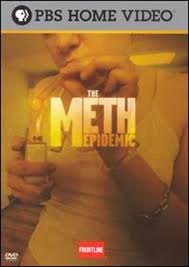
    The Meth Epidemic

    Mamphetamine is the most addictive illegal drug in America. Unlike marijuana, cocaine, or heroin, all of which are synthesized from easy-to-obtain plant material (cannabis, cocoa leaf, opium poppy), meth requires ephedrine or pseudoephedrine, which are very complex to make and require a lot of know-how and high-tech processing. The only folks who have that ability are legitimate chemical factories. In fact, there are less than a dozen such factories around the world that produce these chemicals. Which means it should be easy to stop illegal use at the source.

    “Should” is the key word there.

    When you’re trying to halt drug trafficking, you can work two sides. There’s the demand side and the supply side.

    When you work on the demand side, you try to affect people’s desire and use.  For example, in the 1960’s the Federal Trade Commission, along with other government agencies and private groups, began a campaign against tobacco. Using government policy, public awareness, and education over the last forty years, these groups have significantly altered demand for tobacco in the United States. In 1963 more than half the nation smoked. 4,345 cigarettes were consumed per capita. But as these groups worked to affect demand, those numbers dropped steadily until by 2006 only 1,619 cigarettes were consumed per capita.

    That’s astounding, folks. A whole culture was changed.

    When you work on the supply side, you try to reduce the production and distribution of drugs. This can sometimes be almost impossible to do. For example, almost anyone can grow marijuana. And it takes very little knowledge to harvest and package the parts that are used.  Same with alcohol–home brewing has been practiced for ages. In both examples, the ingredients are easy to obtain and the processing is relatively simple and easy to hide.

    But there are some drugs that are very difficult to produce. The key ingredient for barbiturates is one. In the 1950’s and 1960’s barbiturate abuse was increasing. But the government instituted some regulations on the legitimate businesses that produced these ingredients, and it reduced the amount available on the streets until we very seldom hear of barbiturates being used these days.

    So where does meth fit in? Well, as I stated above, there are less than a dozen factories that create the key ingredients. Meth is a perfect candidate for supply side intervention. Unfortunately, regulation isn’t as easy as it may seem.

    PBS’s Frontline recently aired “The Meth Epidemic” which explains the history of meth in the United States and the battle raging over its cure. If you’ve ever wondered about what meth is and how it affects our nation, you’ll want to watch this. I think you’ll find it eye-opening and well worth your time. Watch it for free here: http://video.pbs.org/video/1933783731.  

    The Marines

    The US Marine Corps is a fascinating organization with special capabilities. With the exception of the Coast Guard, they are the smallest of the United States’ armed forces, although they’re still bigger than the entire British army. Part of what makes the Marines unique is that they have the ability to rapidly deploy an independent task force (infantry, air support, ships) to almost anywhere in the world within days. Because of this, they are usually the first boots on the ground in any engagement. They pave the way and the Army and other branches follow to provide overwhelming and continuous force.

    But the differences include more than their mission. The Marine Corps emphasizes authority and responsibility downward to a greater degree than the other military services. It members are, on average, younger. And its creed “Every Marine’s a Rifleman” has special implications for its commanders and troops.

    In order to do some research for a novel I’m writing, I’ve been watching a lot of documentaries about special operations forces and the Marines. One of the best introductions to the Marines I’ve come across is the 2007 PBS documentary called The Marines. It examines what it takes to become a Marine and what it truly means to be one, outlining the rigorous training process that each recruit must endure to become a commissioned officer. I found it fascinating.

    If you have ever been curious what makes the Marines different from the other branches of the military and what it takes to become one, you’ll want to watch this film. I couldn’t find it on the PBS site, but you can find it split into 10 parts at YouTube.com. Just go to site and search for “pbs the marines”.

  • La Brea Bakery Breads Cookbook, Very Young Girls

    Divine Nature

    I became a fan of bread when I lived in Europe. But not just any bread. I’m talking about the kind of bread with a crust that crackles and is chewy. With an inside that’s soft. Bread that doesn’t need anything on it, but makes you sing when you eat it with soup or a thin smear of butter. Alas, I came home and could not find such bread. It was all Wonder Bread nonsense and its many sandwich bread relatives.

    Luckily, I married a gal who had lived in Europe as well. And who, for a few years, actually had some time to bake. It took some time to find a cookbook with recipes that worked. It took some practice. But she was finally able to recreate that crackle, chewy, soft (not the shattering, roof-of-mouth cutting stuff either). And we enjoyed great bread for a few years. Then she took a job outside the home and we’ve been relegated to American sandwich bread again.

    Enter four daughters. Three of whom are working through a church program like the Boy Scouts that’s meant to help them develop key virtues. Each of the virtues requires they complete a number of tasks to educate them about that virtue. When they’ve completed the tasks for a virtue, they are to devise and undertake a ten hour project to help them practice what they’ve learned.

    Recently, I sat down with my oldest to see where she was and found to my surprise that she still had a number of things to complete. As I reviewed the requirements with her, I pointed out that she’d fulfilled the requirements for all of these virtues many times over. But she refused to count her activities that might apply because she didn’t perform them at the time with the intent to fulfill the requirements. She wanted her accomplishment to be purposeful. She’s focused on the intent of the program, not the award for the award’s sake. (Where do such children come from?) I saw her point, applauded it, and went back to work trying to help her brainstorm what she could do.

    We came to the virtue called Divine Nature, which states: “Be partakers of the divine nature. Giving all diligence, add to your faith virtue; and to virtue knowledge; and to knowledge temperance; and to temperance patience; and to patience godliness; and to godliness brotherly kindness; and to brotherly kindness charity.” Many of the activities revolve around womanhood and family. But it was the big project she needed to complete, one that “will help you practice what you have learned. This should be a significant effort that will take at least ten hours to complete.”

    Some of the suggested projects had to do with service in the community, others with talents. Then I read: “Develop a skill you could use in your future home, such as cooking, sewing, making repairs, organizing, or designing.”

    Cooking?

    My bread soul stirred.

    Cooking?! Baking is cooking.

    Memories of crackling crust and soft centers filled the mind of my bread beast. “Bread!” I declared.

    Luckily, Daughter Number 1 had also eaten her mother’s bread and missed it. “Bread,” she agreed. And we pulled the book out that my wife had found so useful, and began.

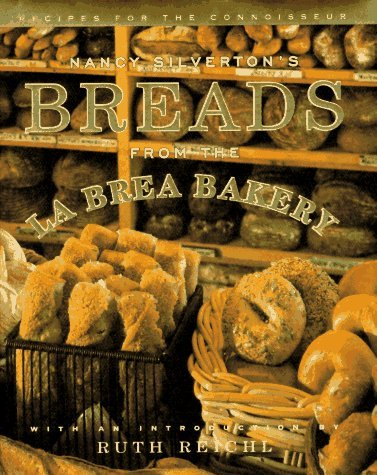
    The book is Nancy Silverton’s Breads From The La Brea Bakery. Silverton is a master chef.  She owns and operates the Campanile restaurant and the La Brea Bakery in Los Angeles. Her bread is sought for all over the nation. Her breads and the breads she shares in this book are all made with a sourdough starter that she teaches you to make from scratch with grapes. Actually, you don’t make it, but feed it. Because it’s a living thing. And after a while it becomes almost like a strange family pet growing on the counter and in the fridge.

    Some might hear “sour” and turn away, but Silverton explains how to keep the starter from becoming too sour. The result is a crackling, chewy, soft bread with a light tang that’s delicious. In fact, Daughter Number 1 just made bagels from the recipe in the book. There’s no tang at all. They’re the best bagels I’ve had. She’s also made the regular loaf, pancakes, and waffles from this same starter. They’re all delicious.

    The book starts off with a lesson in bread making then shares about 60 recipes, everything from baguettes to whole-wheat sandwich bread to sourdough onion rings. The only downside to the book is that I wish it had more pictures. An illustration, for example, in the section on rolling bagels would have been helpful. But we found one on youtube, and it sufficed. And I will confess that I didn’t think once about pictures when eating the bread.

    BTW, we’ve stopped calling this bread. Now, when it’s time, one of us will say, “I think it’s time to make some divine nature.”

    Our Young Girls

    I was recently reading about organized crime and their main activities.  In the section about what ties such groups have to prostitution, the authors reported that it’s estimated that 20% of all prostitutes are street walkers. Another 15% are call girls or escort service workers, and the remaining number, 65%, work in an establishment of some kind—massage parlors, brothers, bars, and hotels.  

    The authors reported that most street walkers have a lover or companion relationship with their pimp. This didn’t make sense to me at the time. But after watching Showtime’s Very Young Girls, I now understand what they’re talking about.

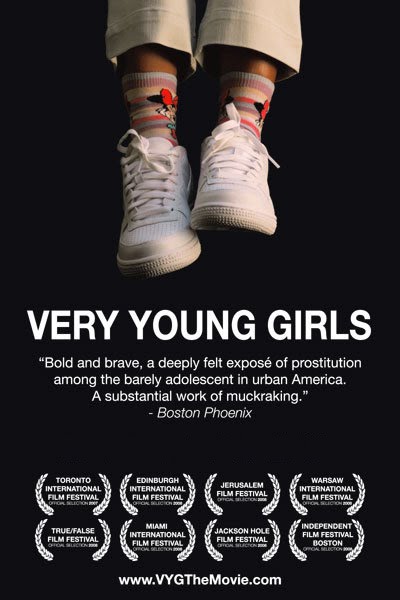
    This film is a documentary about teenage girl prostitutes in New York City and the GEMS (Girls Education and Mentoring Services) that helps them to find a new direction, which is not always easy.

    One of the awful statistics the film reveals is that the average age of entry into street walker prostitution in the United States is just thirteen.

    No, that’s not a typo. It’s thirteen. THIR-TEEN.

    The film introduces us to Rachel Lloyd who dropped out of school and became a teenage stripper and hooker. But she got out. She changed her life and then started the GEMS program to help young girls who found themselves in situations like the one from which she escaped. Lloyd began the program in her apartment and eventually got funding to open a recovery center where girls can seek shelter while they’re trying to redirect their lives.

    The film profiles a number of the girls working through the program. Some of these kids are kidnapped off the street and forced into the “life” as they call it. Some are lured away by pimps who initially act as if they want them to be their girlfriends, flattering them and showing them a good time, and only after they’ve been sleeping together for a while do the pimps then explain that they need to make some money.

    Many of these girls come from broken homes. Many have grown up believing the sexual messages portrayed by the media. The girls are beaten and given drugs.

    Some have been so psychologically manipulated by their pimps that they feel compelled to return. Others have successfully broken with their pasts.

    And all of them are just kids. KIDS!

    This is a movie that’s hard to watch. It’s not graphic in any way. It’s simply the subject matter. It’s also eye-opening and, while the problem is huge, does provide some hope. Thank the Lord for people like Rachel Lloyd. And for people everywhere who live upstanding lives and by kindness and good teaching save their children and others in their communities from this terrible waste. Rent this movie on Netflix. I think you’ll find it’s well worth the time.