The Profiler, Almond Milk, and Uncle Sam

Real crime 
It’s 1990. You’re a housewife, homeschooling your children, and renting a room upstairs to a young man to make ends meet. There are a few odd things about the young man, but you overlook them. Then one day a woman is strangled on a jogging path near your home, and your first thought is that the young man living in your house has something to do with it.

What do you do?

Pat Brown found herself in this exact situation. She voiced her suspicions to her husband, but it was all too farfetched. However, the nagging thought wouldn’t let her go, and she soon uncovered evidence that made the young man a strong suspect.

She took the evidence to the police, but they dismissed her as a bored housewife with an overactive imagination. She evicted the young man, but it would be six years before the authorities would finally bring him in for questioning.

Dismayed and frustrated, Brown started down a path that would lead to her become a professional criminal profiler, assisting police departments and victims’ families by analyzing both physical and behavioral evidence to make the most scientific determination possible about who committed a crime.

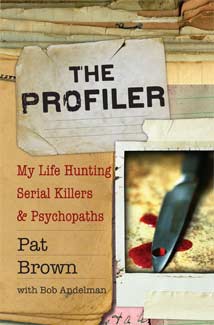
In The Profiler: My Life Hunting Serial Killers and Psychopaths Brown tells about what happened with that young man and her journey to becoming a profiler, then she opens a number of other cases she’s worked on, giving the reader a behind-the-scenes look at how profilers work, and how their methods bring new investigative avenues to light. She also brings home very clearly just how many murders go unsolved. It’s an absolutely fascinating read.

Milk that doesn’t moo

I used to think soy milk was either for the lactose intolerant or hippies. And so I always avoided that milk section of the grocery store. But, having embarked on a new way of eating that I’ll explain in another column, I was induced to approach the alternative milk shelves. I purchased a carton of soy milk, but then I saw cartons of something even more strange: almond milk.

Puzzling. I knew, of course, that almonds did not have udders. So nobody was out there hooking them up to tiny milking machines. And they were nuts, so it’s not like you can squeeze them to make them release their tasty juices. Instead, I learned that almond milk is made by finely grinding almonds together with water. I thought this was something new, invented perhaps by a Californian who’d had too much weed, but it appears many Medieval European recipes called for almond milk, and it has always been a popular beverage in the Middle East. So almond milk has been around for some time.

But I didn’t know any of this. I just knew I loved almonds and that they provide all sorts of goodies for the human body. Besides, I have a hard time resisting adventures. So along with the soy, I picked up a carton of Silk’s PureAlmond regular, vanilla, and chocolate milk.

The soy was okay, but it left a weird zingy taste in my mouth. Furthermore, soy contains estrogen. I’m sure it’s a fine product, but I live with four daughters and don’t need any more estrogen. And I certainly don’t need it mutating me in any, um, feminine ways. So I put the soy aside and gave the almond milk a go.

It was delicious. I love the vanilla and regular flavors the best. In fact, I like it so much I only drink cow’s milk when the last drop of almond milk is gone, and I try to make sure that never happens. Some might worry that I’ll deplete my calcium stores, but not so. Almond milk actually has MORE calcium than cow’s milk along with vitamin D that allows the body to absorb the mineral. It also has 50% of the RDA of vitamin E, of which cow’s milk has none. But that’s all technical vitaminy stuff. It wouldn’t matter if the milk itself didn’t taste so dang good.

The American breakfast
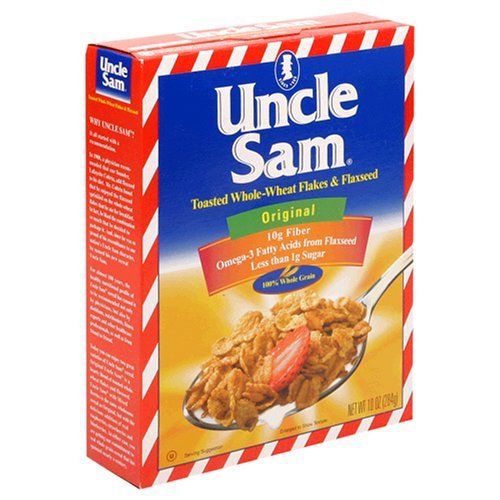
I love cereal. We have our standard favorites as a family, but I also like to get a box of something new when we shop. I recently saw, perched up on the top shelf at Wal-Mart, boxes of  Uncle Sam.

What the heck? Was this a Tea Party product? I know Utah is conservative, but come on. And what kind of nut sings “The Stars and Stripes” for breakfast?

Well, I might.

So I promptly snagged a box and read that it’s been around since 1908, thus making it politically neutral. Then I read the ingredients. It’s a simple cereal made of wheat berries that are steamed, rolled, and toasted to provide killer whole grain nutrition. Those wheat flakes are then mixed with flax seeds (omega 3’s anyone?). That’s it.

I purchased a box, felt patriotic, and then gave it a try when we got home. I’ve been buying it regularly ever since. It’s slammed with 10 grams of fiber and 7 grams of protein, and goes great with Silk’s vanilla almond milk and a piece of fruit.

Share

Similar Posts

  • Good Stuff! Woman in Gold

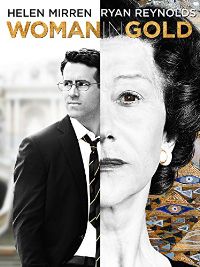
    Woman in GoldI recently watch Woman in Gold with my family, and we loved it. It has delightful characters, a suspenseful plot, and moments of both humor and deep poignancy.

    The movie is based on the true story of Maria Altmann, an elderly Jew living in Los Angeles. When she was a young woman, the Nazis took over Austria. She fled, narrowly escaping. In addition to all the horrors committed against her people and family that couldn’t get out, the Nazis stole artwork and other precious items. The problem is that after the war, many of these items were then appropriated by individuals or the countries of Europe and not returned to their original owners.

    The movie is about Maria and her young lawyer who fight the Austrian government to have a famous painting called Woman in Gold that was legally and rightfully hers returned. It’s a legal battle that went all the way to the Supreme Court of the United States in 2004. But this isn’t about someone wanting a painting. It’s about so much more.

    If you enjoyed Mr. Holmes, Saving Mr. Banks, or Bridge of Spies, I think you will love this movie. You will love the dynamic between the frank-speaking Maria and her lawyer. And you will be moved.

    Share
  • |

    Good Stuff! The actual Christmas story

    It’s interesting how many things we’ve added to the accounts we have in the Bible.

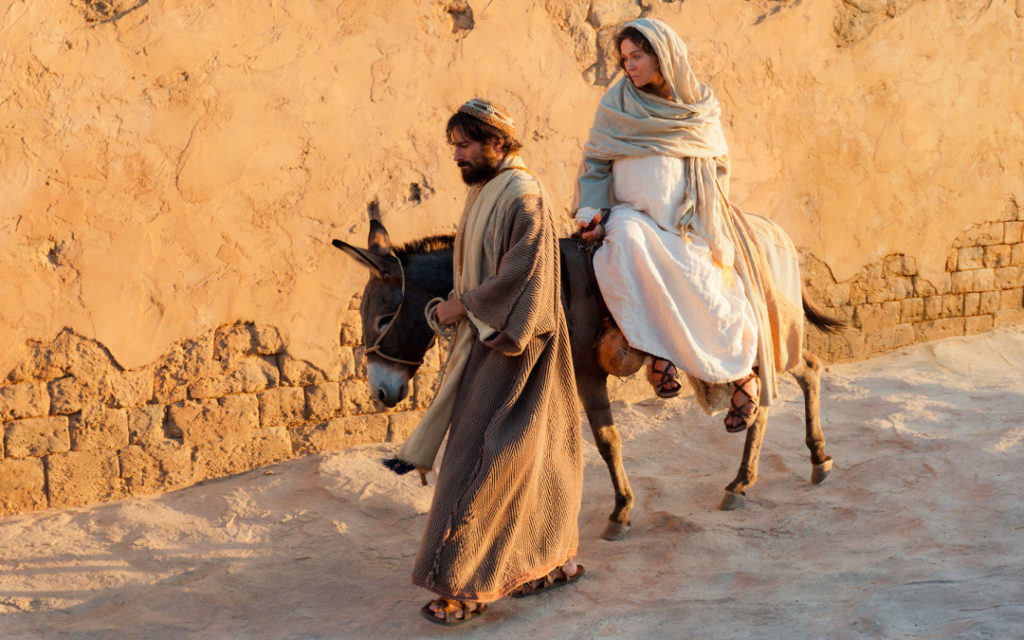
    For example, nowhere does the Bible say that Mary rode a donkey. Mary might have walked. Or rode in a cart. Or gotten piggy back rides. We don’t know. We do know that there is no donkey mentioned in the record.

    It also doesn’t say she had the child the night they arrived.

    It only says she was “great with child” when they made the roughly 80-mile journey from Nazareth to Bethlehem. And that “while they were there” in Bethlehem “the days were accomplished that she should be delivered.”

    So she had the baby sometime while they were there. That could have been during the first hour. But it could have also been a week or month later. We just don’t know.

    It doesn’t mention anywhere the word stable.

    Christ might have been born in a stable, or he might have been born in a cave, or inside the house, or out on the porch, or on the roof (lots of those places had flat roofs where they hung out). We just don’t know. What we do know is that he wasn’t born in a palace. And that they laid him in a manger because there wasn’t any room in the inn. An odd circumstance for a king.  

    Notice as well that there weren’t multiple inns.

    It just says “the inn.” And if you look up that word in the Greek, it’s translated as “guest chamber” in the other spots where it’s used in Luke. So they could have been talking about the one guest room in the house where they were staying. Either way, we don’t have anything that says there was a mean innkeeper who later regretted turning the couple away or that Joseph went door-to-door looking for a place.

    We have no record in the account of three wisemen.

    It just says “wisemen.” So there might have been two of them. Or twelve. We don’t know. And it appears they came sometime after Jesus had been born because they first saw the star of his birth in the east and only then set out to find him. They might have been coming from Persia, hundreds of miles away. Or they could have been living in Bethphage, a mile to the east of Jerusalem. Either way, they didn’t know they should travel to Bethlehem because it says they went and talked to Herod first, in Jerusalem, and asked “where is he that is born King of the Jews?”

    The question freaked Herod out (if you’re the current king, you kind of want to know who else is claiming your throne), and so he gathered all the chief priests and scribes to discuss it, and those guys said the prophecies said it would be Bethlehem. And so Herod met with the wisemen again and told them to go there. And only then did they go down to Bethlehem. So it doesn’t appear the wisemen were there the night of the birth.  

    There’s no record of camels hanging out with the baby either. Or sheep. Or goats. There’s not a lot there. But what is there is interesting.

    Now, I want to go on record stating I have no problem speculating about the event and imagining what it might have been like. I love to do it. Good grief, I write fiction.

    In fact, for many years I figured I needed to get in on the Christmas noun gig. You know what I mean. Every year we get heart-warming books about new Christmas nouns. We’ve had Christmas sweaters, Christmas jars, Christmas boxes, Christmas candles, Christmas carols. This year I see there’s one about Christmas fudge and other about a Christmas train. So I figured I’d do one. Mine would be about the Christmas rat. A little fellow who decided to snuggle up with the babe instead of giving him a nibble. One of these days I will get that hungry rat story written.  

    In the meantime, while there’s a lot of good stuff we’ve added to make the event special, it’s also nice to know what the record actually does say. Whether you’re Christian or not, it’s helpful when dealing with others to know what was recorded about this event that is so significant to the largest religion in the world.

    And so the last bit of good stuff I recommend this month are the two brief accounts we have. The first one is in Matthew 2:1-16 and tells the story of the wisemen. The other is in Luke 2:1-20 and features some shepherds.

    Merry Christmas!

    Share
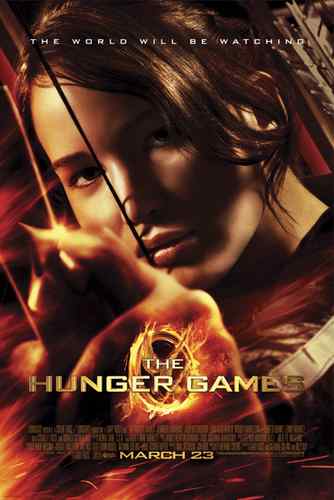
  • Hunger Games the Movie – Excellent, but marred . . .

    So is the movie as good as so many are saying?

    I liked the book a lot. You can see my review here: http://johndbrown.com/2010/09/amano-jasons-deli-and-the-hunger-games/

    Yes, but is the movie as good as the book?

    Let’s start with the beginning of the movie. During the first 10 or 15 minutes I was so annoyed and angry that I almost rose up out of my seat to shout “Stop it! Stop it! Stop it!” at the screen.

    Was this because the movie wasn’t faithful to the book?

    Because the actors sucked?

    Because the popcorn triggered a terrible case of restless leg syndrome?

    No, no, and no. 

    Then, why, John? Why?

    Because the director, Gary Ross, who wrote the wonderful Seabiscuit and Big, just couldn’t trust the material, the story, to work its magic. No, he thought that it would be a really good idea to MAKE ME SICK by overexaggerating and overusing HANDHELD CAMERA MOVEMENT. You know, the idea that if you confuse the viewer and make them uncomfortable, that will help them FEEL the wrongness, the stress, and the fear of the situation.

    A common technique for doing this is the tilted shot. Tilt the shot just a little and viewers subconsciously get the idea that something is wrong. You don’t notice it. The movie plays on, but you do feel that something is wrong, that trouble is brewing somewhere or someone is lying. A similar technique is used in action scenes. To help the viewer feel the “speed” of the action, they give us quick cuts. But the traditional tilted shot and quick cuts preserve understanding. They’re more of an unconscious effect. You still see the movie unfold and understand it. 

    However, some directors in the last few years, maybe with Spielberg’s use of this in the beginning of Saving Private Ryan (is there a movie history buff out there who can confirm?), decided that if a little was good, good golly, ten times that would be a LOT better.  So instead of realizing that action sequences like the one in the beginning of Casino Royale or the fights in Inception, ones you can easily follow, are the kinds audiences want, they figure they need to push the shots and cuts until audiences can’t make heads or tails of what’s happening.

    Instead of giving the audience tremendous thrills and suspense, they give them confusion.

    Wow, that’s a good trade off.

    And now, Gary Ross, who seems to have inexplicably bought into this, decides that what he needs to do is not only deliver confusion but nausea and annoyance as well.

    Stop, people. Stop. PLEASE! A little spice enhances a dish and takes it to the next level. But when you dump a cupful of thyme on my plate, all you do is make me want to gag.

    I’m not the only one who noticed. My 14 year old and my 19 year old noticed it as well and were bugged by it. It got so bad I told myself if it didn’t stop, I was going to walk out and ask for my money back.  Luckily, Ross toned his nonsense down and finally let the actors and story take center stage. 

    Which is what he should have done from the beginning because the acting was great. I loved Jennifer Lawrence (Winter’s Bone) as Katniss. Loved Willow Shields as Primrose and Josh Hutcherson as Peeta. Stanley Tucci playing Ceasar Flickerman, the blue-haired talk show host, was perfect. And the story was indeed a faithful translation of the book. I’m sure a huge part of that is due to the fact that Suzanne Collins, the author of the novel, helped write the screen play.  The other writers were Gary Ross and Billy Ray. 

    They did change a few minor things like Buttercup the cat is now black and white (I’m so utterly devastated I won’t be right for years), and Primrose gives the mockingjay pin to Katniss instead of Madge. They added scenes with the President of Panem.  They cut some scenes with minor characters and some twists in the plot. For those who read the book, even though the lost and changed parts added texture to the story, I think you’ll still be very pleased. For those who haven’t read the book, I think you’ll be wowed and sobered by the end. You’ll think about the Romans and their gladiators. You’ll wonder how we can we humans can do things like this. And I think you’ll feel a great indignation take root in your breast against the villains who control the world of the story.

    So, the move is a great experience that would have been over-the-top excellent if the director hadn’t marred it with way too much of something that should be used as spice instead of the main course.  Nevertheless, I recommend it. If you like action and drama, I think you’ll love the movie and the book. And hopefully my comments above will innoculate you to the opening scenes because you know to expect them going in.

    EDIT: Matthais Stork writes about “Chaos Cinema: The Decline and Fall of Action Filmmaking“. And his response to his critics. Anne Billson of The Guardian agrees that “Action sequences should stir, not just shake“.  But here’s a fellow trying to defend chaos cinema in a way that reminds me way too much of those I met in my English degree who assumed that the highest reading was one that focused on meaning, one that assumed the story was really not a story about people to be experienced, but a clever puzzle that needed to be decoded.

    EDIT: The issue with chaos cinema is that it replaces showing with telling.

    It presents “big fight” and “exciting chase” instead of showing the big fight and exciting chase. It’s similar to voice over narration: using the soundtrack to tell us about what’s happening instead of showing it to us. But it goes beyond even that because at least the narration told us what was happening. Chaos cinema at its most extreme doesn’t do even that. It replaces clarity with confusion. And this is its biggest downfall.

    For someone to react with emotion to a situation, they must (1) understand what’s going on AND (2)believe that the situation is real. The moment you deliver confusion, you take away one of the two necessary antecedents, and prevent the audience from responding emotionally. They now can only respond intellectually, e.g. Ah, I congnitively see that we are having a fight; I have no idea what’s happening and how that affects the guy I’m rooting for, but I see we’ve inserted the “fight” concept. (For those interested in the excellent discussion of emotion and stories, you’ll want to read Jenefer Robinson’s DEEPER THAN REASON: Emotions and it’s role in literature, music, and art.)

    Take it too far and you remove the second antecedent as well because now, instead of reacting to the story, you’re thinking about the camera man. Which is what happened with me when I just about came out of my chair to shout at the screen at the beginning of HUNGER GAMES. And what happened to half a dozen others I know who couldn’t look up because it would make them dizzy, and another half dozen who did look up and got sick.

    Chaos cinema trades in the super powers of cinematic storytelling for a bunch of rocks.

    Share
  • |

    I need your insight!

    R-moviesLast year I posted about a service I’m working on to get ratings on books for sex, violence, and language. I posted similar thought about YA books in “Since When Did Young Adult Become The Cure For Cancer?“.

    I’m back.

    I did lots of customer discovery last August in an effort to see if book ratings is a problem worth solving, i.e., are there lots of avid readers who would love content ratings and sign up? All my interviews were very positive, but I didn’t finish validating our ideas because I had to stop to get books out and because we discovered some things that made us change some of our assumptions. I started up again a few weeks ago, this time with a team.

    To continue the project, we need to interview 20-40 avid cleaner romance readers. Folks who probably read just such a book last month.

    Why?

    The biggest problem startups like this have is assuming they know what the customer values, being wrong, and building something nobody wants. So before we build anything, we need to first understand exactly what readers are doing today to solve this problem and where (and if) they are struggling. If we can validate the need, I think a lot of folks will be very happy having popular clean reads delivered to their email every week.

    If you know someone who fits the bill, please send this post to them. They can shoot me an email by clicking the contact link in the menu bar.

    If you fit the bill, please contact me.

    It would be incredibly helpful to me to hear about how you approach this and ask you a few questions. It won’t take more than 20 minutes, and there’s no need to prepare in advance.

    Hope you had a great 4th!


    Share
  • I Am Not A Serial Killer by Dan Wells

    IAmNotASerialKillerYou can scare the crap out of me (Aracnaphobia), and I will love you forever. You can make me bite my nails in terrible suspense (Wait Until Dark, The Village) or throw supernatural at me (Poltergeist) and I will sing with praise. But the moment you do gruesome, the moment you start showing me entrails and organs, my discomfort level shoots through the roof.

    And this is why I would not have finished  I Am Not A Serial Killer by Dan Well’s if I had just picked it up off a shelf–because the main character is the son of a woman who owns a mortuary. We get to see him help process a mutilated body very early in the book, pumping fluids in etc., and Wells knows his craft so I was THERE. I’m sure it’s not too gruesome for some, but I just have issues with organs. I don’t know why. I also have an issue with clowns.

    Clowns are, by far, the scariest things around. And this is not because I read the book IT by Stephen King as a wee lad because I didn’t. It’s because they’re painted vessels of evil. End of story. They’re perfect examples of the freakazoids that lurk in the uncanny valley.

    Anyway, I’d heard Wells read a portion of this book that had all of us in the room crying because we were laughing so hard. So I read on, telling myself I had to at least get to that part. And I am so very happy I did. 

    I Am Not A Serial Killer is young adult story about a good-hearted teen named John Cleaver who is a sociopath with all the traits shared by serial killers. John’s in counseling, but more importantly, he is convinced he can prevent himself from becoming a serial killer by keeping rules he’s made for himself like not watching people for too long and complimenting someone when they make him angry. Such rules, he hopes, will keep him from feeding compulsions he won’t be able to resist.  The problem is a real serial killer has come to town (but unlike any you’ve seen before). And John may be the only one who can stop him. Will he let go of his rules to save the town? Or will he keep his monster asleep while others die around him?

    It’s a fascinating situation (without a clown in sight, may the writing gods be praised). And Wells takes the reader on a journey through it that includes mystery, dread, and humor. In the hands of some other author, that would be enough. But Wells does more than entertain us. He gives us things to think about. He gives us great characters to boot–come on, when was the last time you read a book where the hero was a likeable sociopath? And most of the gruesome is up front anyway.

    Read this book. Skim the body processing if you must. But you simply don’t want to miss the rest. It was a fabulous read and I recommend it highly.

    The US version comes out in March of 2010. But you can get the UK version now on Amazon UK, Borders UK, etc. The links are all here on Well’s site.

    Share

2 Comments

  1. I love your food posts! I’m a huge cereal lover myself. Sometimes I eat it for dinner. And lunch. Yeah, I’m that crazy. My favorite source of fiber these days is Bran Buds. 13 grams of fiber in 1/3 of a cup! I’ll have to give Uncle Sam a try. I’m also a huge milk fan. I used to drink it like water until I realied I was dehydrated. Not sure if I can go for the almond milk. I’ve never really liked nuts. But maybe I’ll give it a shot.

Comments are closed.