Curse Update: Copy Edits, 2 Books
CurseV2FinalV1My copy editor just delivered the marked up manuscript. I will be making the edits over the next few days. Once those are made, it’s time to publish.

Ah, but publish just one book?

Nope. It looks like this is going to be two:

  • CURSE: The Dark God Book 2
  • RAVELER: The Dark God Book 3

Each book would be about 120k words. Novels can range from around 30-50k words like many middle grade novels (or most of the books written by Louis L’Amour) to the 50-70k length of a lot of romance novels to the 70-100k words of many thrillers to the 300-400k epic behemoths that George R.R. Martin and Sanderson have recently written.  I think most adult novels are around 100k.  I think most fantasies are in the 80-130k area, although many epics can be in the 200’s.  The bottom line is that both volumes will be chock full of story.

This is all part of a strategy to tell the same long, big story as originally planned, but do it in quicker chunks so that the series can become viable financially more quickly, but also so readers aren’t waiting so long between books.  I have tormented those who enjoyed book 1 and wanted more far too long. I want to remedy that in the future, and more frequent installments will allow me to do this. Getting these two volumes out will help set the expectation, I think.

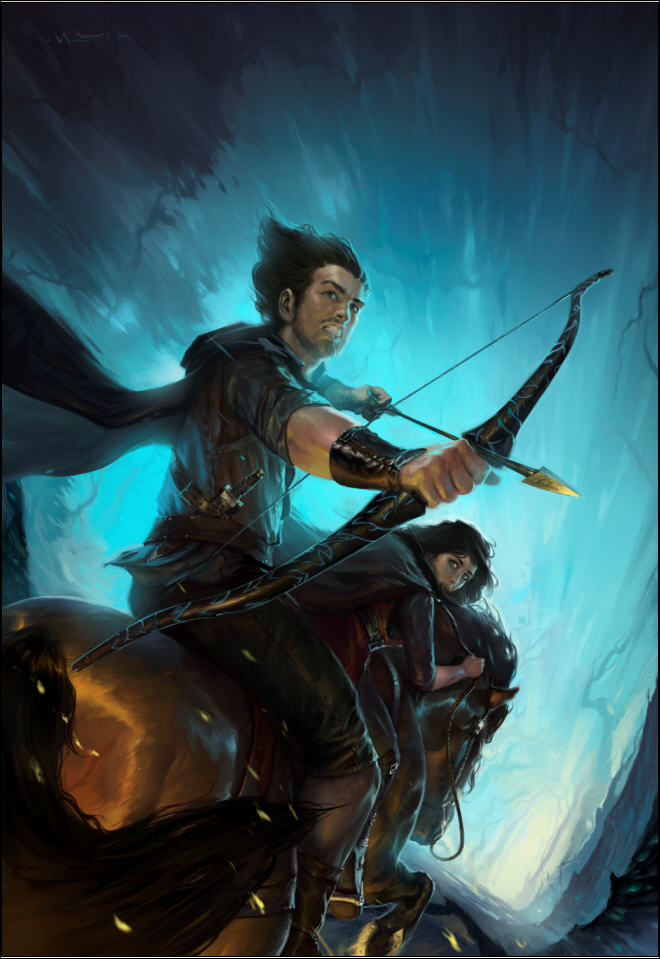
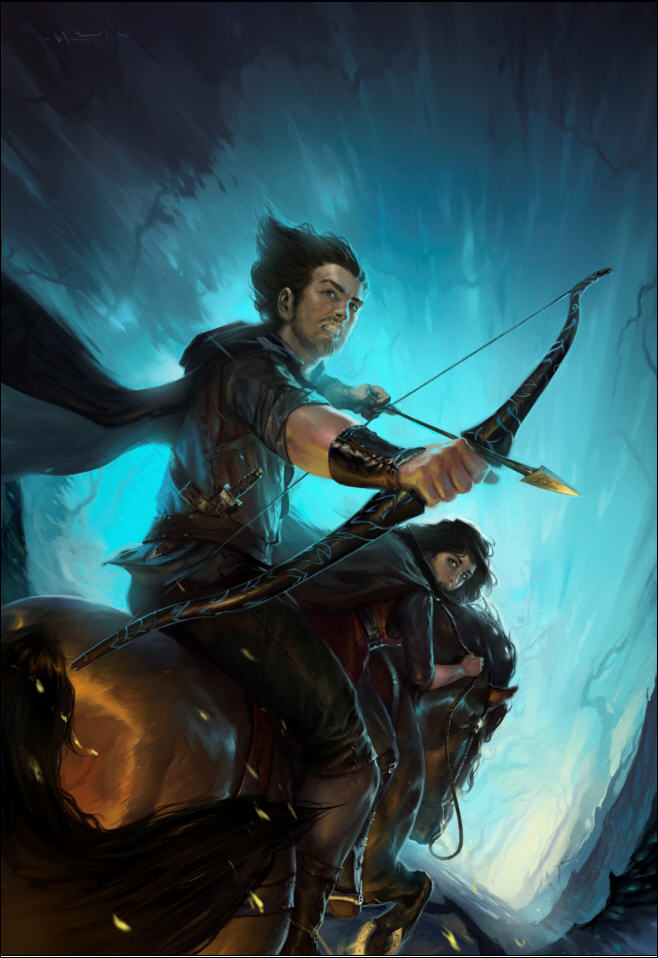
So a release of CURSE in July seems more than feasible. Then we’ll release RAVELER early August. Why August? Because we need to commission a new cover illustration. The soonest the artist can have it done would be August. Stay tuned. I can’t wait to see what art Victor comes up with next.

And if you want to get in on the new release sale for both, please sign up for the notification in the left sidebar.

Happiness.

Share

Similar Posts

  • Bad Penny – working title

    I’ve decided to tentatively call the first book in my Frank Shaw series “Bad Penny.”  This is the thriller I’ve been talking about. It’s a working title, so it may change.

    As for progress, I’m close to 14,000 words. Huzzah! And I’m having a blast writing it. Every day I look forward to my writing time.

    For those curious, the book takes place in Rock Springs, Wyoming. The plot will move it across eastern part of the state and then down into Colorado.

    Frank Moses Shaw, ex-con . . .

    Ah, folks. I’m just loving it.

    I’m also generating options for a pen name.  Althought I know there’s overlap between readers of epic fantasy and thrillers (hey, look at me!), I still think the genres are too different to try to spread a brand name across both.  I read about Tess Gerritsen, who started in romance, using the same name for her thrillers, which is all I think she writes now. She reports that she had a number of the thriller readers pick up her romances and vice versa, and then get frustrated because her brand meant one thing to them, but they got another.

    If I was writing thrillerish SF, like Card’s Ender’s Game, or thrillerish fantasy, like Correia’s Monster Hunter, then maybe the stretch wouldn’t be so far.  For those of you who are thriller readers, I’ll be posting some possible names in the near future. I’d like your reactions on the options, so keep a look out.

    As for CURSE OF A DARK GOD, no word yet from ye Editors. I’m expecting a reply March or April. Yeah, I turned it into my agent end of November. She submitted it to Tor in December. No, I don’t like these lead times any better than you do. But it is what it is. My job is to produce. My target this year is two novels–DARK GOD’S GLORY (book 3 in the series) and BAD PENNY. My stretch goal is to finish the working outline for the second Frank Shaw book (already have the premise) and actually start on it before the end of the year. We’ll see what happens.

    Share
  • Curse Update: April 29, 2014

    CurseV2FinalV1Folks, I have moved into making the line edits, which means we are on the home stretch. The manuscript is 888 pages long. I expect it to take 40-50 hours to make all the edits I marked. However, you have to remember that has to be worked in around my day job. Then we do the copy edit. I expect my portion of that will take another 40 hours. And then I take a day off work to create the book in the POD and ebook formats and publish.  We are oh so close!

    Share
  • |

    The Pareto Principle, Form Follows Function, and Story

    There are a thousand things to “remember” when writing story. New writers who make lists of these things soon begin to drown in them. But I’ve come to realize that many of these “rules” don’t matter.

    They don’t matter because many ignore the function of story. And so you can’t know how and when to apply them, or if they’re even something you should apply in the first place. Furthermore, a good number that do tie back to function often have little impact.

    The more I develop and write, the more I begin to see that the key is to focus on a liminted number of fundamentals. To focus on the things that matter most.

    So what really matters when you’re writing a story?

    I’m going to be speaking for an hour at the Book Academy tomorrow. It’s at Utah Valley University. The week after I’ll be presenting all day at the American Fork Arts Council’s autumn writer’s conference. I will probably write up all my thoughts and post them to my site at some time.  But for right now this is where you can hear them.  

    I truly believe the Pareto Principle applies to writing. But you can’t go searching for those vital few factors until you know the effects they’re supposed to produce. Form follows function. And the function is something that happens in the reader.

    Here’s a nibble. This quote from David Howard is an example of what I’m talking about.

    “As we’ve seen, what the audience hopes for and what the characters hope for need not be the same thing. The same is true of our fears versus their fears. But how do hope and fear fit into the scheme of storytelling? Hope and fear are about the future. They derive from uncertaintly about future events in the story, future decisions the characters might make, future discoveries or revelations that might be unearthed, future outside forces and how they will influence the journey of the characters. When we discuss hope verusus fear in dramaturgical terms, this uncertainty is a function solely of the audience and its experience [my emphasis]. This is dramatic tension. We hope the man with the cobra in the shoe box won’t open the box; we fear he might and get himself or someone else bitten. We don’t know what will happen, but we know what might happen and therefore feel tension about those possibilities” (How to Build a Great Screenplay, 52).

    Readers buy novels because novels provide a service. They provide something to the reader. They DO something to the reader.  That’s why readers pay good money for them, and stay up late at night (well past smart bedtimes) with them, and spend hours of their lives reading them.  

    What do stories do? What are the key factors that have to be present in the stories for them to be able to do these things? How do you help readers hope and fear for what might happen?

    I’m no story guru, but I do hope to share some of the vital few factors I see in the presentations I’ll be giving this week and next.

    Share
  • Warwick Castle

    This last June, I stood outside Warwick Castle next to a longbowman and stared up at the massive structure. The curtain walls rose forty to fifty feet high. The great tower soared even higher—one hundred and twenty feet. But it wasn’t just the walls. 

    The moat. Holy schnitzel, folks, the MOAT. 

    On one side of the castle, the River Avon provided a barrier. On the other, a dry moat stretched forty to sixty feet wide and twenty to thirty feet deep. Standing at the bottom, you’d be staring up at seventy feet of turf and stone. That’s like staring up at a six-story building—with armed soldiers waiting at the top. 

    My only thought was: good night, what kind of madman would assault these defenses? 

    The answer, of course, is almost no one. Medieval sieges were usually about starving the defenders out, not storming the gates in a blaze of glory. Unless you had a trebuchet—which I also saw demonstrated that day. 

    It was the kind of moment that makes a writer’s brain spark. Assassin, the fourth book in my Drovers series, is set in the capital city of Broniss, which bristles with towers and walls of its own. Standing there at Warwick, I realized: no sane army would attack such walls directly. Which is why the High King of Osson has other dark plans. 

    Of course, Warwick had more than just military lessons. There was a falconry show where hawks, vultures, eagles, and even a condor soared just above our heads. Here’s a tip. If you go, sit on the benches, not under the tree. The benches are where you get the most flyovers.  

    There was a dungeon tour that turned into a hilarious series of skits, complete with a plague doctor and a judge who convicted one of us.  

    And afterward, we went into the city to a Thai place called The Giggling Squid (yes, that’s really its name). The food was amazing. 

    It was a glorious day, and it reminded me that some of the best research often comes from first-hand experience. Although some things—like being pierced through with a sword—I’m happy to leave to my imagination. 

    I’m back at the desk now, hard at work on Assassin. It’s turning into a terrific ride, and I can’t wait to share more soon. 

    Here’s to Ferran, Sura, and Lagash—will they foil the traitor’s plot and stop the hashida’s creature, or will Ferran and the others fail and find all their dreams dashed to pieces?  

    You’ll soon be able to find out.  

    Sincerely, 

    John 

    Share
  • Bad Penny: two big sequences left plus list of pen names

    For those of you watching, I’m past the 65% point on Bad Penny. I’ve set the target at 90,000 words, but, of course, I don’t know if that’s exactly how long it will be. I have two big sequences left, one of which is the climax. My stats so far:

    • Pre-draft development hours: about 50
    • Draft 1 hours: about 90
    • Total hours: 140
    • Words (draft 1): 59,009 
    • Words per draft hour: about 650

    I’ve spent time thinking that I haven’t recorded–time on walks or driving. And time doing research. So this is understated, but it’s probably accurate enough. The good news is that I’m writing this draft slightly faster than I did the first draft of my last novel.

    Now look at those numbers again. If I was doing this full time, it would have taken a week, maybe two do finish the pre-draft development.  Then another two or three weeks to get to this point.  Dang, how nice would that be! Once I finish, I’ll let it sit for a month. Then I’ll revise.  Then I’ll give it to my expert beta readers. Then I’ll revise again and send it out for sale.

    As for pen names, here’s what I selected out of a finalist list of about 200 names:

    1. John Blackburn
    2. John Crawford
    3. John Clawson
    4. John Holland
    5. John Holloway
    6. John Lee
    7. John Nash
    8. John Walker

    Which will it be?

    Share
  • Update on CURSE OF A DARK GOD – just finished numba 40

    For those who haven’t noticed, I just finished chapter 40 of 60 on this draft of Curse of a Dark God. My original target was September 5th to finish the draft. I’m closer in my projections than I have been in the past, but I’m clearly not going to make that date. However, I’m going to see what I can do these next three weeks and hopefully pull it off by the end of September. 

    This is possible.  Author James Maxey just finished a novel of almost 60,000 words in one week. Yes, you heard that right. ONE WEEK! Here are his tips for doing this and here was his master plan when he started. I got to read his updates a few times each day. It was simply amazing.

    Of course, there’s no way I can write 60,000 words in one week. Not because I think it’s impossible. But because it takes time. James had a week off and spent like 10 hours a day at it.  I can’t take a week off.  But even if I could, I don’t write as fast as James. But hopefully I can structure things to get more time and finish it in three weeks. We’ll see. I’ve been working on this draft for the last four months and have put in about 240 hours on it, roughly 12.5 per week.  My slow 500 words per hour that I can’t seem to budge (yes, some is writing and some is revising as I go along).  I wanted to get a solid 20 hours in each week–that’s really the key–and am disappointed I haven’t managed to do this.  Of course, it’s hard with a full-time job and family and a daughter going off to college and life.  Waa, waa, waa. But I’m going to see what I can do to boost that to 25 hours per week for the next few weeks.  The good thing is that I’m really enjoying the story on the page.

    As for manuscript size, the issue with the last draft, right now the manuscript is 123,000 words. The target is around 170,000. I’m roughly on track to hit that. I’m trying to keep my chapters around 2,500 words.  We’ll see how close I get.

    Share

5 Comments

  1. I think 120 words is the perfect length for a fantasy novel. I like Martin’s books (and Steven Erikson’s too for that matter, which must be in the 300k-400k range), but they become feats of endurance (for me) at times.

    I like the title “RAVELER”, very intriguing!

  2. “I have tormented those who enjoyed book 1 and wanted more far too long.”

    You can say that again! I think you are only a few months from the 5 year anniversary of the date Servant was published.

    As I have said before, I think releasing shorter books more frequently is the way to go in this era of ebooks.

    Probably the optimal formula is to release a book every 3 months and charge $2.99 for each book. It would be interesting to release a chapter or two every month and charge $0.99, but amazon’s ebook royalties penalize books less than $2.99, so I think the 3 months formula may be better. 3 months is short enough that fans get a new book frequently, but allows enough writing time to create a book long enough to justify paying $2.99 (at least 50K words). I think most fans are willing to pay around $12 per year for an ebook series, whether that is a 200K word ebook a year at $12, or a 50K word ebook every three months at $3/ea. But any more than that and I think most fans may balk. Actually, some fans balk at an ebook more than $10, but give them 200K words per year, divided into two or more installments, with each installment priced below $10, and many will not have a problem.

    If you have 2 or 3 series going at once, you could spend 3 months on each book in each series and alternate so that fans still have less than a year to wait for the next book, even if they only read one of your series. But I doubt it is optimal to have more than 2 series going at once.

  3. It’s good to hear you both have no issues with shorter books!

    John,

    3 months would be great. If I were full time, I don’t think that would be an issue. My goal now is to get two books out a year, hopefully, three. We’ll see how it goes. I did write 50k words for the ending in two months earlier this year, but I wonder if 50k is just too small to fit the complexity of story I want to tell. I’m currently trying to come up with a structure that will allow shorter installments yet still retain the big feel. Things may speed up now that I’ve gotten over the big hump of the indie learning curve. It will be exciting to test and see.

  4. If you are releasing part of a story every 3 months (or more frequently), then I do not think it is necessary to have everything, or even anything, wrapped up nicely every 3 months. So I do not think a complex story precludes releasing every 3 months. As long as customers know not to expect closure until the story is complete (you could manage expectations by titling each ebook part something like “Dark God, Part 2”).

    Unless you meant that you doubt your ability to outline the story ahead of time. If you cannot do that, then I can certainly see the problem with releasing the story in 3-month-parts, since you could write yourself into a hole in the first 3-month-part that cannot be satisfactorily resolved 6 or 9 months later.

Comments are closed.