Good Stuff! Saving Mr. Banks, Elementary, Captain Phillips, & Lone Survivor

Saving Mr BanksOver the last two months I’ve been able to squeeze in a couple of hours to watch a few shows and some episodes of a TV series. I was plesantly surprised to have actually had a wonderfully good run. If you haven’t watched any of these, you’re in for some awesome entertainment.


Saving Mr. Banks

I didn’t think I’d like this movie. I enjoyed Mary Poppins as a child and enjoyed it again with my kids. But a movie on Disney getting the rights to make a movie? Boring. Except I was completely wrong. This is not a story about some woman selling the rights to her story. It’s about why she never wanted to sell the rights to Disney in the first place. It’s about her childhood and the real source of Mary Poppins. And to pull that off Saving Mr. Banks has to tell two stories: an often funny one about P.L. Travers who does not want to license her story and Disney’s final attempt to win her over, and a poignant one that reveals why Travers was so resistant. And it leaves the last twist, one that expands the meaning of the title in the viewer’s heart, to the very end. I loved this movie. I loved Hanks as the affable Disney and Thompson as the irascible Ms. Travers. Loved all of the other characters. If you enjoyed dramas like Miss Potter or The Blind Side, you’ll love this too.

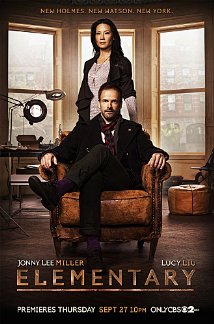
ElementaryElementary

I thought: another Sherlock Holmes series? Puh-lease. Yes, the two films featuring Robert Downing Jr. and Jude Law and the BBC series with Benedict Cumberbatch and Martin Freeman were superb. I loved both. But another Sherlock? Surely this is going to be some cheap attempt to capitalize on the success of the other two, something that is direct-to-DVD quality. Who is going to do it as well as Downing and Cumberbatch?

Boy, was I wrong (yet again!)

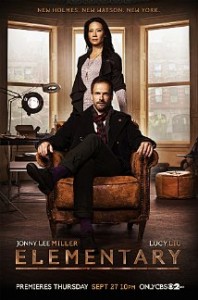
Elementary is delightful. Sherlock, played by the talented Johnny Lee Miller who made Eli Stone such a joy, is a modern day Brit living in New York. He’s in the final stages of drug rehab, living with a “sober companion.” The companion is Joan Watson, played by Lucy Lui. The Captain of the NYPD is one of Sherlock’s old friends an appeciates his skills and so brings him in as a consultant on various cases.

So how could they do anything different? Yes, you have the quick powers of observation and intellectual acrobatics the other Sherlocks have. But the female Watson and the whole recovering addict angle takes the stories in a new direction. This Sherlock has a past that haunts him. And this Watson is maybe a bit quicker than the other two, as wonderful as they are.

I wouldn’t have believed it if I hadn’t seen it, but there is room for three Sherlocks and Watsons. I can’t tell you which of the three pairs I enjoy more.
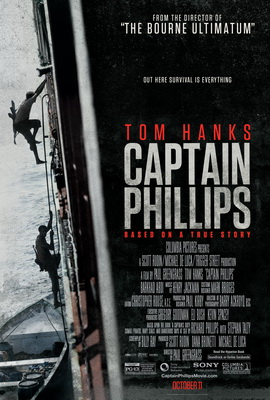
Captain_Phillips_PosterCaptain Phillips

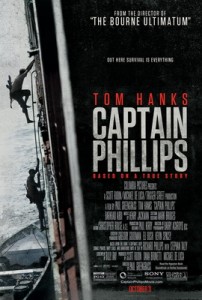
As soon as the news stories about Somali pirates started breaking back in 2008 I knew it would lead to some thrillers. Heck, Abdul Hassan, “The One Who Never Sleeps” was one of the first zings I posted on this site. What I didn’t know was that the big thriller would be based on an actual story: the 2009 hijacking of the US-flagged MV Maersk Alabama, the first American cargo ship to be hijacked in two hundred years. Phillips is played by Tom Hanks, who always gives a great performance. But I also found the portrayal of the pirates interesting as well. As I did the many unexpected details of how these pirates operate and how the incident was brought to a close. If you like realistic thrillers, you’ll enjoy Captain Phillips.

Lone Survivor

I reviewed the book Lone Survior back in 2011. You can read my full report there, but the bottom line is that it was an awesome read. However, as with all awesome reads, you become a bit wary of the films based on those books. I’m happy to say the filmmakers did a great job on this one. They paid huge attention to detail because they wanted to honor the fallen soldiers by getting it right.
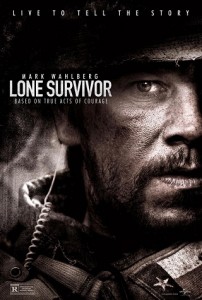
Lone_Survivor_posterIn order to get it right, they brought Marcus Luttrel, the author, and a number of other SEALs onto the project as consultants. The SEALs put the actors through some basic training before they even began shooting. This was to not only help the actors get to the point where they handle their weapons and gear as someone seasoned might, but also so they could feel what is was to work as a team, an important part of being a SEAL. The SEALs stayed on to provide input as well during the shooting.

But the details went beyond that. I have never seen a military film that felt as real to me, especially when it came to the characters. SEALs are warriors. But that doesn’t capture the variety they come in. And in the opening 25% of the movie we see sides to these men that many movies do not portray. It was so refreshing! In fact, without the groundwork laid in the beginning, this film wouldn’t have had near the impact it did. Yeah, the action is ACTION! It’s thrilling. You have never seen some of the shots the film portrays. But the action means nothing without the men.

And this story is about the men.

It’s about what it means to be one of those guys and gals who put their lives on the line for the rest of us. And if you want a special treat, when the film is over, you’ll watch all the extras.

The f-word is used about five million times in this movie. I usually don’t like a lot of vulgarity in my entertainment. But I cut the folks some slack in this case because I felt the story was worth it. Besides, I didn’t consider it entertainment anyway, more documentary.

If you are interested in what it’s like for Special Operations forces, if you want a story to help you see what so many are doing for the rest of us, I don’t know that it gets any better than this.

Share

Similar Posts

  • Good Stuff! Three Days in Moscow

    Book cover, Three Days in Moscow

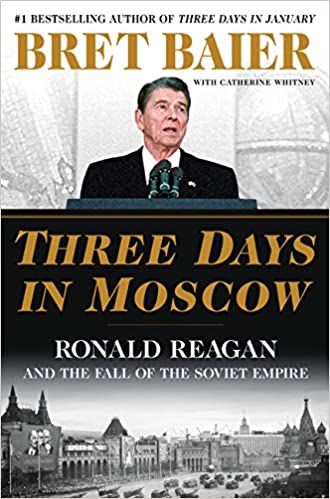
    I just finished Three Days in Moscow: Ronald Reagan and the Fall of the Soviet Empire by Bret Baier. It’s a New York Times bestseller that takes you into the world of Ronald Reagan, his rise to power in politics, and his role in ending the Cold War. And it does in a personable way with gentle humor throughout.

    I enjoyed the fascinating behind-the-scene insights about the personalities involved and the clarity about what really happened. And how the book brings Reagan to life, as if he’s almost there. Along the way you’ll also get insight into Mikhail Gorbachev, the assassination attempt on Reagan, and more.

    Baier is the chief political anchor for Fox News. In 2001, he became the station’s chief Pentagon correspondent and ended up traveling to Afghanistan 11 times and Iraq 13 times. In 2007, he became the station’s chief correspondent to the White House. More importantly, Baier seems to be one of the few journalists these days who is simply trying to get and report facts instead of spin. And that’s exactly what he’s done here.

    If you like biographies or history, if you want to know how the U.S.A. and the U.S.S.R. stepped back from decades of mutually assured destruction, if you want to get a view into how diplomacy is done, then I think you’ll love this book. And you’ll probably love it even more if you can listen to the audio book version, read by Baier himself, which also includes a recording of Reagan’s speech to the students at Moscow State University. I listened to it via the Overdrive account my public library provides. Baier’s reading was terrific.  

    Share
  • Good Stuff! The Greatest Showman

    I saw the previews of The Greatest Showman, the movie about the circus guy. I rolled my eyes. The circus? Come on.

    But my daughters, one by one, went to see it and came home raving.

    And then my wife went to see it and came home raving.

    And then my youngest was playing some music the other night, and I said, “Ooh, that’s nice. Good beat. Wow. What is that?”

    She said with much affection, “The Greatest Showman, loser.”

    I said to myself, maybe the previews simply stank. I said, I’ve seen movies where the previews were better than the full-length film. Maybe this was the reverse.

    I said, to my fine daughter and wife, “How about a movie night?”

    They were more than game to see it a second time. So we went and saw The Greatest Showman this week.

    Here’s the report.

    Oh. My. Holy. Freaking. Heck!

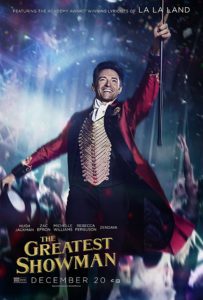
    This movie is one of the best movies I’ve seen in the last few years. And get this: it was released more than eleven weeks ago, back in December of last year. How many movies do you know that stay in the theaters for eleven weeks straight? When a movie keeps attracting crowds week after week, long after the release night hype has faded, they say it “has legs.”

    Let me tell you, this one has some legs. The music is awesome. The visuals are wonderful. And the story—the story is everything a story should be. I came out of the theater having wept and cheered and bitten my nails and been thrilled with a number of the scenes. I came out of the theater happy, positive, thinking about life, thinking about what really matters.

    Look, if you enjoy musicals, if you enjoy dramas, if you enjoy Hugh Jackman of Wolverine fame, you must drop everything you’re doing right now and run to see this before it leaves the theaters. You’ll be so happy you did.

    And now, I’m going to figure out how I can go see it again.

    Share
  • Good Stuff! Lindybeige Rocks!

    I’ve been watching Lindybeige videos for a few years now. Lindybeige is the online name for Nikolas Lloyd, a smart, funny geek of the re-enactement, fencing, and RPG line. He’s got a youtube channel that is chock full of videos in which he makes witty and insightful points about ancient and medieval warfare, archaeology, dance, and anything else that takes his fancy.

    For example, have you ever seen folks pushing each other about with swords? Is that realistic?

    Interesting, what about pushing in a shieldwall?

    Food for thought, isn’t it? It makes me want to go read up on shieldwalls. Were they really as he concludes they were? But enough about history and conjecture. What about the truth? What about science? For example, if you believe in science, must you also believe in a certain approved list of theories?

    But surely that doesn’t apply to Global Warming Theory, which is now called Man-made Climate Change because the warming bit never panned out. No?

    Wow, and he even accepts the data on the warming. Okay, enough about the truth. Back to fantasy geekiness and weapons in fantasy worlds that make sense.

    I love this guy. If you’re a fantasy geek and haven’t yet begun to watch Lindybeige, you’ve got a lot of enjoyment ahead of you.

    Share
  • Good Stuff! Two fun family and party games

    There’s nothing quite like the laughter and fun a good family or party game creates. And we discovered two games this summer that have brought hours of pleasure.

    The first is Just One. It’s for 3 to 7 players and takes about 20 minutes to finish.

    Now, I was skeptical of this game at first because it’s a cooperative party game.

    I mean, come on. Cooperation?

    No teams?

    No competition?

    What were we going to do—hold hands and sing Kumbaya?

    I was fully expecting to be bored out of my mind. Boy, was I wrong. There was suspense, laughter, and loads of fun.

    There are 13 rounds in each game. In each round, one player blindly selects the number of a word on one of the game cards. The other players each write a one word clue to help that player guess the word. However, if two or more players write down the same word, they have to remove that clue.

    So you’re trying to come up with one-word clues the others won’t that still help the guessing player. Some clues lead the guessing player off onto funny tangents. Others are just funny. And then there’s the suspense of whether someone else wrote your word and whether the player will be able to guess it from the clues that are left.

    Your goal is to guess all 13 words selected. And there’s a little score card that ranks what it means if you get 13, 12, 11, etc.

    As an aside, it’s crazy to me that the score card provided motivation. But it did. It was a delightful little brain hack.

    One Word is a quick, fun game. We’ve played it with a few as 3 and as many 8 players and had a ball each time. We are so happy to have it in the family game closet.

    The next is Fish Bowl. It’s for 4+ players. What this game does is take favorites like Taboo, One Word, and charades and mixes them together in a competitive game between two teams.

    Here’s how you play it. Each person writes up 5 to 7 different words or phrases on separate slips of paper, folds the papers, and puts them in a bowl. Then you do 3 rounds.

    Round 1 is like Taboo, where you can describe, but can’t say or act out the word or phrase on the paper. You select a team to go first. One person on the team selects the papers from the bowl and then tries to describe the word or phrase. The team has 30-45 seconds (you decide) to guess as many of the words as possible. When the time is up, it’s the other team’s turn. Back and forth you go, selecting a new team member each turn to give the clues, until there are no more slips of paper in the bowl. Then you count the number of slips each team got and move to round 2.

    In round two, you put all of the slips of paper back into the bowl. The team that went second in the first round starts this one. This time the person giving clues gets to share one word. That’s it. And the team has to guess it. Again, the team has 30-45 seconds to guess as many as they can.  Then it goes to the next team. And you switch back and forth just like you did in round 1, and when the slips of paper are gone, each team counts up their score.

    In round 3, you put all of the slips of paper back into the bowl. The time the person giving the clues has to act them out. No words allowed. You run this round just like you did the first two with  30-45  second turns, switching back and forth between the teams until all the papers are gone. At that point, the teams  total their scores for this round and then for all 3 rounds together to see which team won.

    If you don’t want to use paper, you can play a version online.

    Either way, it’s another fast, fun game. In fact, we played it last night. And laughed and laughed when one daughter was trying to get the other to guess “sling” and nailed her teammate in the head trying to act out a rock hitting Goliath.   Movies are great. But sometimes what you need is some delightful game fun. And I’m betting you’ll love these.

    Share
  • Good Stuff! The China Study

    T. Colin Campbell grew up on a dairy farm, loved milk, loved meat, and started his career as a nutrition scientist thinking the cornerstone of good nutrition was high-quality animal protein—meat, milk, and eggs.

    One of his first projects was for MIT, trying to help the chicken industry. Millions of chickens were dying each year from something toxic in their feed. What was the mystery killer? Campbell was responsible for isolating and determining the structure of the chemical. Through his work, he helped discover dioxin, one of the most toxic chemicals ever found.

    After helping with that, he began work helping malnourished children in the Philippines. He wanted to find ways to help them get more protein in their diets, because, again, protein was supposed to be the cornerstone of health. Part of the project was remedying an unusually high incidence of liver cancer in children, which is normally an adult disease. At the time, they thought a lack of protein was leaving the children vulnerable to aflatoxin in their diet.

    But as they began their scientific investigation, Campbell discovered the kids who ate the most protein had the highest rates of liver cancer.

    But that just couldn’t be right.

    And then he came across a study of rats and aflatoxin. The scientists in the study administered the cancer-causing aflatoxin to all of the animals. Half of the animals were then fed a diet with 5% protein. The other half were fed a diet with 20% protein. All of the animals fed a diet with 20% protein developed liver cancer. None of the animals fed a diet with 5% protein developed the cancer.

    Again, that couldn’t be right. Protein was good for you. A respected colleague suggested surely the researchers must have mislabeled the animal cages. Campbell decided to run his own studies and find out. Back at Cornell, he and his research assistants ran the experiment multiple times and in various ways. And all of the experiments confirmed that protein promoted cancer growth. In fact, they could turn cancer growth on and off by the amount of protein they fed the animals.

    But it wasn’t all protein. It was animal-based protein. The plant-based protein didn’t promote cancer growth.

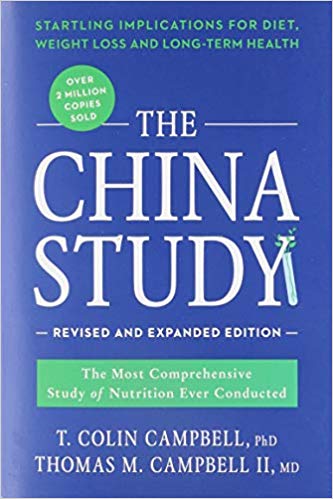
    Campbell was astounded. The findings rocked his world, but he was determined to follow the facts wherever they led. This began decades of research into diet and nutrition. The culmination was what’s called The China Study. It is the most comprehensive study of nutrition ever conducted. And what all of his decades of research demonstrated was that “People who ate the most animal-based foods got the most chronic disease. Even relatively small intakes of animal-based food were associated with adverse effects. People who ate the most plant-based foods were the healthiest and tended to avoid chronic disease.”

    Campbell didn’t rest there. He sought out the findings of other researchers and clinicians. And what he found all demonstrates that “The same diet that is good for the prevention of cancer is also good for the prevention of heart disease, as well as obesity, diabetes, cataracts, macular degeneration, Alzheimer’s, cognitive dysfunction, multiple sclerosis, osteoporosis and other diseases.”

    What was the diet that showed such important results? A whole food plant-based diet. It’s a diet rich in legumes, whole grains, vegetables, and fruits with little or no meat, milk, and eggs.

    Campbell has written a book for lay people like you and me that explains the science and findings called The China Study: Revised and Expanded Edition.

    The book is a fascinating masterwork of clarity. In it, he not only explains the research but also how and why various groups have tried to suppress and discredit the information.

    Campbell is not some crazy quack. He isn’t someone selling pills and supplement drinks on the internet. He has no financial interest in you believing him. He is one of the foremost researchers on nutrition, a renowned scientist at Cornell University, who has worked as a senior science adviser to the American Institute for Cancer Research, sat on government nutrition panels, and is on the advisory board of the Physicians Committee for Responsible Medicine.  

    If you or someone you love are worried about any of the following:

    • Heart disease
    • Cancer (breast, prostate, colon, liver, and others)
    • Type 1 Diabetes
    • Type 2 Diabetes
    • Erectile dysfunction
    • Multiple sclerosis
    • Cataracts
    • Macular degeneration
    • Osteoporosis
    • Alzheimer’s

    I think you will be interested in hearing what he has to report. Of course, you’ll have to make up your own mind about the evidence he provides. But I think you owe it to yourself to hear what he has to say.

    Share
  • Donald Rumsfeld, The King’s Speech, Aquatic Ancestor Apes & Talking Bacteria

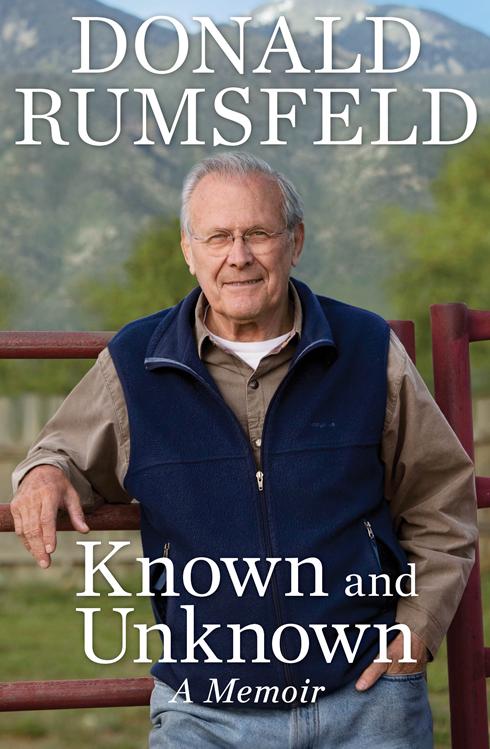
    Donald Rumsfeld

    I just finished Known and Unknown, a fat memoir by Donald Rumsfeld, and enjoyed every page.  Rumsfeld served as the Secretary of Defense under George W. Bush.  But Rumsfeld’s service didn’t start there. He was a Navy pilot, an assistant to a congressman during the Eisenhower days, and, in the early 60’s, a four-term congressman from Illinois.  He held various positions in the Nixon White House in the late 60’s and early 70’s, including ambassador to NATO.  He was Chief of Staff and Secretary of Defense when Ford took over from Nixon.  Reagan tapped him to be a special envoy to both the Middle East after the Beirut bombing and to the Law of the Sea treaty discussions.  He was the president of Searle, a pharmaceutical, as well as General Instrument, the company that pioneered HDTV.  Only after all that, did George W. Bush bring him on as Secretary of Defense.

    When writing novels, I try to create characters worth knowing, either because of their interesting personality or skills or because of the events they take part in. Donald Rumsfeld is just such a character, except he’s no fiction.

    In his memoir he shares insider information on everything from Watergate to 9/11 to the war in Iraq. What emerges is a fascinating look into many of the most important events in the last forty years.  You’ll get insight into some of the issues experienced in various White House administrations and see what really was going on with waterboarding, Guantanamo, Abu Ghraib, hurricane Katrina and many other of the hot button issues in the Bush years. There are some laugh out loud moments where his understated humor shines through. There are also parts where he reveals some of his differences with others that worked with him in the various administrations, including issues with Nelson Rockerfeller, Colin Powell and Andy Card. But in everything he writes he’s fair and restrained and attempts to present the facts accurately. This is no attempt to settle scores.  Just a wonderful read.

    If you are interested in politics at all, I think you’ll enjoy this book. Moreover, I think you’ll come out a little wiser, maybe a little better person, for having spent a few hours with Donald Rumsfeld.  

    The King’s Speech

    I do not watch many r-rated movies.  They are usually too vulgar or pornographic for my prissy tastes. However, I did my research on The King’s Speech, and having heard so many glowing reviews, Nellie and I rented it.

    It was wonderful.

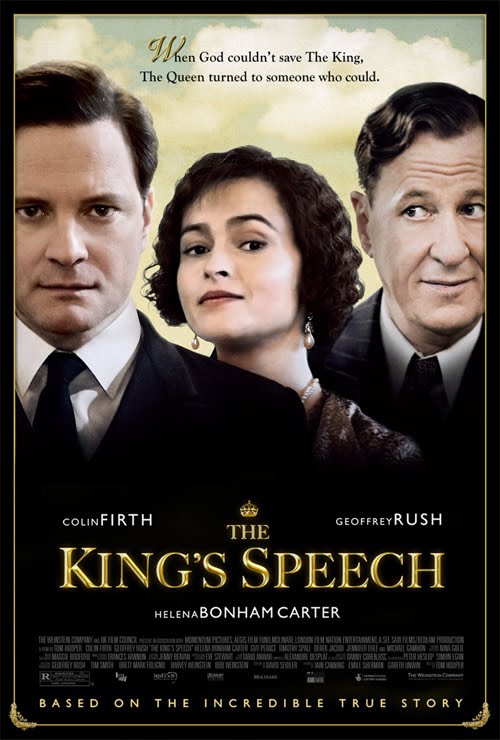
    The movie tells the story of prince Albert Frederick Arthur George of Britain who did not ever expect to inherit the throne and did not want to, in part because of his stammer. Can you imagine having to be a public figure like a king and have to deal with something like that? Most of us dread the thought of public speaking. Can you imagine having to try with a stammer?

    But Albert’s lot was not to live the sheltered life. He became king when his brother abdicated the throne because of improprieties in his personal life. The day before the abdication, Albert went to London to see his mother, Queen Mary. He wrote in his diary, “When I told her what had happened, I broke down and sobbed like a child.” That is not the entry of a power-hungry man.

    He assumed the throne in 1936, when England ruled over almost a quarter of the world’s population. Three years later in 1939 WW2 broke out and Britain’s king needed to be able to address the people.

    In the movie, Colin Firth plays Price Albert. Geoffery Rush (Captain Barbossa in Pirates of the Caribbean) plays Lionel Logue, the unorthodox Australian speech therapist to whom Albert’s wife turns for help. The script is wonderful and the star-studded cast is spot on. There are moments of humor and poignancy and triumph. I was caught up in this movie as much as any I’ve seen.

    If you like English dramas, you’ll enjoy this one. And the profanity, the reason for the r-rating, is not there to depict casual vulgarity. It was part of a technique used by the therapist. In the end, you’ll overlook it and find yourself on pins and needles, rooting for this fine man.

    Aquatic Ancestor Apes & Talking Bacteria

    I’ve written about TED before. The annual TED (technology, entertainment, design) conferences, in Long Beach/Palm Springs and Edinburgh, bring together the world’s most fascinating thinkers and doers, who are challenged to give the talk of their lives (in 18 minutes or less). The folks at TED record these speeches and put them up for free on their site for the rest of us to watch. And I just watched two dandies.

    The first is by Elaine Morgan who says we evolved from aquatic apes (sigh, just when you think you’ve found grandpa Eddy hanging out in the trees, you learn he’s an imposter). Morgan is a Welsh writer for television and also the author of several books on evolutionary anthropology. In the speech she describes the reasons why it makes sense that humans had aquatic ancestors. Along the way, she illustrates key principles of science, including why science by consensus is no science at all. Her manner is so delightful and engaging I think I could listen to her for hours, preferably around the dinner table. Watch her right now. She just might convince you.

    The second speech was given by Bonnie Bassler, an American molecular biologist, who has been part of the team that discovered key insights into how bacteria talk. It appears that bacteria do not invade a host and start doing damage. No, they wait until their numbers are sufficient that they have a chance of surviving. They coordinate defense and mount attacks as a group. Who would have thought? Knowing how this works is not only interesting all by itself, but it has stunning implications for medicine and fighting infection. Bassler is a fascinating and enthusiastic presenter. Among other things, you’ll end up seeing that humans are more bacteria than you could imagine. Watch her.

    Share