Good Stuff! Just Mercy

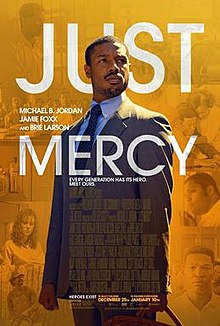
Just Mercy movie poster

In other countries, the government can throw you in jail for no cause. It can keep you there indefinitely awaiting trial. And it can manipulate the trial to prevent you from mounting a defense.

In other countries, there is no trial by your peers. Instead the government is prosecutor, judge, and jury. 

Our criminal legal system has so many wonderful protections in it. But there are times, as good as it is, when it convicts people of wrongs they didn’t do. Including murders they did not commit.

I can’t imagine being in that position. One day I’m pursing my dreams, enjoying my family, going to the movies, walking my dog, hiking. The next I’m hauled off to jail, convicted, and put on death row.  And nobody will listen to me.

Luckily this doesn’t happen in the vast majority of cases. But it does happen. And if it happens to you, wouldn’t it be nice to have someone show up one day and say, “I’m going to work like a dog to reveal the truth and get you out of here.”

The movie Just Mercy tells the true story of just such a case. Walter McMillian is on death row for a murder he did not commit. And then one day a young defense attorney shows up and says he’s come to help.

This movie will have you on the edge of your seat and make you think. There are two or three moments where some crass language is used. So check it to make sure it meets your requirements. If you end up watching, I think you’ll really enjoy this tale. We did.

Share

Similar Posts

  • Good Stuff! Unbroken by Laura Hillenbrand

    hillenbrand-unbroken-4

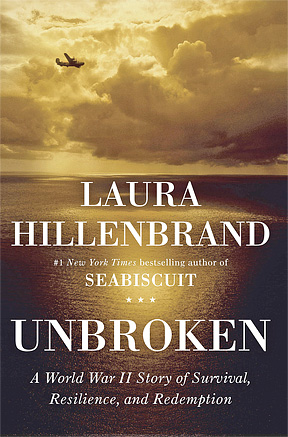
    Unbroken by Laura Hillenbrand is the finest book I’ve read in some time.

    It’s tells an engrossing and true World War 2 story about Louis Zamperini, who started out in life as a steal-and-run trouble-maker. He was a kid who’d try the patience of Job. His mother tried to reform him to no avail. His father administered spankings, but physical punishment seemed to have no effect. Louis was constantly in trouble with neighbors, school mates, cops, teachers, store owners.

    Louis’s older brother thought Louis would succeed if he were to just receive some positive attention. He thought track, a very popular sport at the time, was just the ticket. Louis loved his brother. In 9th grade he tried running, but the workouts chafed, and then one day he had an altercation with his parents. Louis figured the train would take him away from all his problems. So he ran away, hopped a boxcar, and very quickly learned the freedom of the rails wasn’t freedom at all. It sucked.

    When he returned home, defeated, he decided to submit to his brother’s plan. This time it was just what the doctor ordered. Louis ran like mad. He broke records. He got a scholarship to USC and broke more. Louis ran in the 1936 Olympic Games. He didn’t win, but he would the next time they came around. However, the world was in turmoil back then, and Germany and Japan had their own plans which changed Louis’s life forever. He became a bombardier in the Pacific theater.

    And that’s where I’m going to stop. The story that awaits you is truly amazing. And Hillenbrand brings it to life with surprising and powerful details. From start to last, I was enthralled. And towards the end, just when I thought the story was over, it took a turn that lifted it from being just another WW2 story with plenty of action to a tale that goes right to the heart of what it means to live. I wept, not for Louis’s pain, as awful as that was, but for something far more vital.

    When I first saw the book, its sepia-washed cover turned me away from the tale. But with so many folks talking about it, I thought I’d give the first pages a go. I was delighted, but didn’t make it a priority. Not long after that, my 10th grade nephew told me how much he enjoyed it, and that prompted me to go back (and I’m so glad I did). It’s not that this is a kid’s book or that my nephew has the maturity of an older man. He’s definitely got some reading chops, but it’s not about an advanced writing style either. What is enthralling old and young alike is Zamperini’s story and Hillebrand’s skills in telling it.

    How much do I like this book? I’m reading it again, slowly this time, so I can savor every word. Let me recommend you do yourself a favor. If you read one book this year, make it Unbroken.

    Share
  • Good Stuff! Wonder, Darkest Hour, Sea Wolves

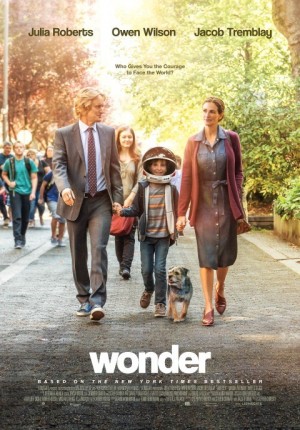
    I had seen a lot of good reviews of Wonder. My wife told me a lot of her students enjoyed the book. But I thought it was going to be a heavy topic, full of sadness and heart-wrenching drama. I’m happy to report that while Wonder does indeed have some difficult moments, it’s also full of humor. And triumph.

    It’s a story about Auggie, a boy with a rare medical deformity that has put him through multiple surgeries. His parents have homeschooled him, but now that he’s at the age where he could go to middle school, they feel it’s time for him to navigate the world. The perfect time, right?

    But it’s not just about Auggie. The film is also about Auggie’s sister, her former best friend, and Jack, Auggie’s classmate. We get to see their stories as well, and they are woven into a wonderful, poignant story.

    You’ll laugh and wince and cry and cheer. You’ll enjoy Julia Roberts and Owen Wilson, who do a wonderful job as Auggie’s parents. And you’ll enjoy the children and teens. Me, my wife, my married daughter, and my teen all loved this film. I will be watching it again. If you want a great movie to watch as a family, I think you’ll love this.

    *

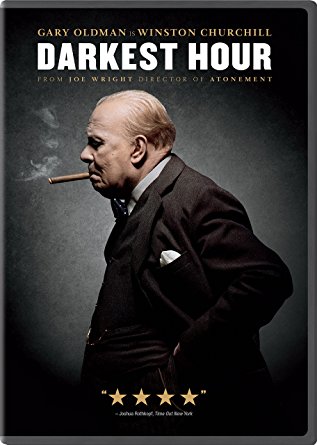
    As soon as I saw the preview for the Darkest Hour, I knew I had to see it. And, boy oh boy, this is yet another movie I can’t wait to watch again.
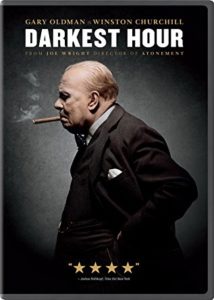
    The phrase “The Darkest Hour” is used in Britain to refer to the time when the United Kingdom appeared to be under direct threat of invasion from Germany at the beginning of World War 2. Germany had launched its attack on France, Belgium, and the Netherlands and had smashed their armies, sweeping all before them. The bulk of the British army was trapped at Dunkirk and looked like it would be annihilated.

    The British government was split between those who saw no path to victory and wanted to make a peace treaty with Hitler and those who wanted to resist him. The opposition party in parliament forced Neville Chamberlain to resign. And the only man they’d accept in his place is Winston Churchill. But Churchill was not the lion we think of him as today. He had a poor reputation among many of the leaders of his party and was not someone they wanted to elevate.

    So the film starts with the ouster of Chamberlain. We then get to watch how Churchill deals with the catastrophe of what’s happening just across the channel and all the voices pressuring him to make peace.

    There’s humor, suspense, and a number of one-liners that we all began repeating to each other immediately after the film ended. You get a feel for what it must have been like at the time and why so many wanted to sue for some peace treaty with the monster across the channel. You also get to see a slightly different picture of Churchill as a man. I particularly loved the exchanges between him and his wife.

    If you are interested in World War 2 or Britain in even the slightest degree, you simply must see this film.

    *

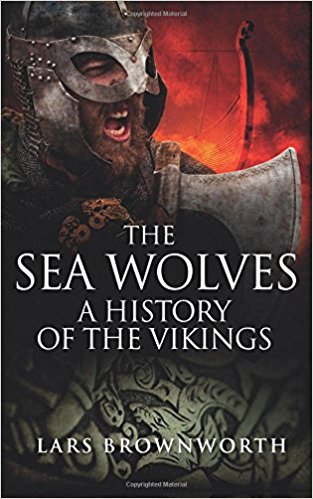
    I have now listed to the audio book of The Sea Wolves by Lars Brownworth twice.

    Yes, it’s that good.
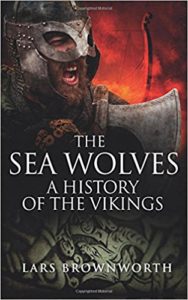
    In this book, Brownworth tells the history of the Vikings. And he tells the history the way history should be told, bringing to life the old Norse world of epic poets, sea kings, and raiders, including Ivar the Boneless, Eric Bloodaxe, Harald Hardrada, Rollo the Walker—all the major figures.

    And Brownworth does it in a way that helps you understand how their dominance was possible and what their effect on the wider world was. Did you know, for example, that Russia comes from the word “Rus”, which was the name for the Swedish Vikings that started that nation?

    What? Russia was started by the Vikings?

    Yes.

    Read or listen to the book. You’ll learn that plus a whole bunch more that will make you look at that time in a different light.

    And if you want to get the other side of the tale, let me recommend reading Bernard Cornwell’s historical fiction series that starts with The Last Kingdom. The series tells the story of the invasion of the Danes during King Alfred’s rule from the point of view of Uhtred of Bebbanburg. It’s a terrific series.

    By the way, I do not recommend the TV series based on the books—too much sex for my tastes. But the books are fabulous. As are the audio versions. I’ve listened to six of them so far, and they have provided hours of enjoyment and interesting insights about the time and the events that took place.
    Share
  • Good Stuff! A clear-eyed view of the Founders

    When it comes to politics, we frequently talk twice as much as we should and listen half as much as is deserved. With our mouths open so much of the time, we fail to get the facts. And this often leads us to paint things in hyperbolic black or white.

    One area where we seem to do this regularly is with the Founding Fathers. Depending on our side, we label the Founders as devils or demigods and the constitution as a wicked document or holy writ.

    Is it possible both sides are distorting the truth?

    Joseph Ellis, one of the nation’s foremost scholars of American history, suggests that we are. He has written an excellent article for the online Encyclopedia Britannica called “Founding Fathers” that points out both the amazing things the Founders achieved with the birth of this nation and some of their most egregious failures.

    I don’t know about you, but I find clarity a good thing. I think it helps us have more productive conversations. If you agree with me, I think you’ll enjoy the clarity Ellis brings to the Founders and the nation they set up. Read his article here.

    For my part, I think the Founders set up an awesome system. Not because it was perfect at birth, but because it was a system that got enough right to allow us to get where we are today. Look at how far we’ve come on so many fronts! And it got enough right to allow us as a nation to get even better in the future.

    Just consider what the Founders implemented that was in no government at that time. The ideals of individual liberty, the separation of powers, the ability for a huge swath of citizens to elect their leaders, the ability to change the constitution itself, the separation of church and state, and the engine of democratic capitalism that has lifted more people out of poverty than anything else the world has seen.

    The Framers didn’t create the Constitution in a vacuum, but nowhere in the world had anyone set anything up that went so far. There was nothing like it, no real examples to follow. And many thought it would fail, just as France’s attempt in their revolution failed just a few years later.

    As for things they got wrong. Well, they themselves soon recognized the way we elect the president and vice president didn’t work and adjusted it. Their idea that political parties wouldn’t form was wrong. Their idea of a militia for common defense didn’t work (see my writeup here). Their compromise on slavery was a festering sore that came to a head before the Union was 100 years old. Their treatment of the Indians was awful. Their reasons for excluding women and those not owning land was bone-headed.

    So, yes, they got some things wrong. Some of them held some beliefs that we find appalling today. And the nation has not implemented their stated ideals as well as we might have hoped. However, the Founders got so many things right. And what’s more, they did it as men living in the times they lived, having grown up with the beliefs and values of that time, not those of 2019!

    While we as a nation have progressed from some of their failures (thank heavens), in other ways the Founders may be are our betters. There are a great many lessons to learn from them, both from their successes and failures. One is their humility—they knew what they’d created wasn’t perfect. Let’s not imagine that we or our ideas are perfect either.

    If you’re at all interested in politics, I recommend Ellis’s article and its view of the Founders. Read it article here.

    Share
  • Good Stuff! Saving Mr. Banks, Elementary, Captain Phillips, & Lone Survivor

    Saving Mr BanksOver the last two months I’ve been able to squeeze in a couple of hours to watch a few shows and some episodes of a TV series. I was plesantly surprised to have actually had a wonderfully good run. If you haven’t watched any of these, you’re in for some awesome entertainment.


    Saving Mr. Banks

    I didn’t think I’d like this movie. I enjoyed Mary Poppins as a child and enjoyed it again with my kids. But a movie on Disney getting the rights to make a movie? Boring. Except I was completely wrong. This is not a story about some woman selling the rights to her story. It’s about why she never wanted to sell the rights to Disney in the first place. It’s about her childhood and the real source of Mary Poppins. And to pull that off Saving Mr. Banks has to tell two stories: an often funny one about P.L. Travers who does not want to license her story and Disney’s final attempt to win her over, and a poignant one that reveals why Travers was so resistant. And it leaves the last twist, one that expands the meaning of the title in the viewer’s heart, to the very end. I loved this movie. I loved Hanks as the affable Disney and Thompson as the irascible Ms. Travers. Loved all of the other characters. If you enjoyed dramas like Miss Potter or The Blind Side, you’ll love this too.


    ElementaryElementary

    I thought: another Sherlock Holmes series? Puh-lease. Yes, the two films featuring Robert Downing Jr. and Jude Law and the BBC series with Benedict Cumberbatch and Martin Freeman were superb. I loved both. But another Sherlock? Surely this is going to be some cheap attempt to capitalize on the success of the other two, something that is direct-to-DVD quality. Who is going to do it as well as Downing and Cumberbatch?

    Boy, was I wrong (yet again!)

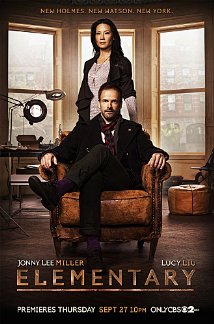
    Elementary is delightful. Sherlock, played by the talented Johnny Lee Miller who made Eli Stone such a joy, is a modern day Brit living in New York. He’s in the final stages of drug rehab, living with a “sober companion.” The companion is Joan Watson, played by Lucy Lui. The Captain of the NYPD is one of Sherlock’s old friends an appeciates his skills and so brings him in as a consultant on various cases.

    So how could they do anything different? Yes, you have the quick powers of observation and intellectual acrobatics the other Sherlocks have. But the female Watson and the whole recovering addict angle takes the stories in a new direction. This Sherlock has a past that haunts him. And this Watson is maybe a bit quicker than the other two, as wonderful as they are.

    I wouldn’t have believed it if I hadn’t seen it, but there is room for three Sherlocks and Watsons. I can’t tell you which of the three pairs I enjoy more.

    Captain_Phillips_PosterCaptain Phillips

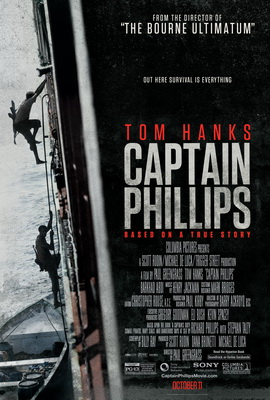
    As soon as the news stories about Somali pirates started breaking back in 2008 I knew it would lead to some thrillers. Heck, Abdul Hassan, “The One Who Never Sleeps” was one of the first zings I posted on this site. What I didn’t know was that the big thriller would be based on an actual story: the 2009 hijacking of the US-flagged MV Maersk Alabama, the first American cargo ship to be hijacked in two hundred years. Phillips is played by Tom Hanks, who always gives a great performance. But I also found the portrayal of the pirates interesting as well. As I did the many unexpected details of how these pirates operate and how the incident was brought to a close. If you like realistic thrillers, you’ll enjoy Captain Phillips.

    Lone Survivor

    I reviewed the book Lone Survior back in 2011. You can read my full report there, but the bottom line is that it was an awesome read. However, as with all awesome reads, you become a bit wary of the films based on those books. I’m happy to say the filmmakers did a great job on this one. They paid huge attention to detail because they wanted to honor the fallen soldiers by getting it right.

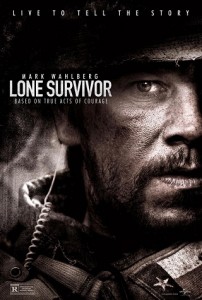
    Lone_Survivor_posterIn order to get it right, they brought Marcus Luttrel, the author, and a number of other SEALs onto the project as consultants. The SEALs put the actors through some basic training before they even began shooting. This was to not only help the actors get to the point where they handle their weapons and gear as someone seasoned might, but also so they could feel what is was to work as a team, an important part of being a SEAL. The SEALs stayed on to provide input as well during the shooting.
    But the details went beyond that. I have never seen a military film that felt as real to me, especially when it came to the characters. SEALs are warriors. But that doesn’t capture the variety they come in. And in the opening 25% of the movie we see sides to these men that many movies do not portray. It was so refreshing! In fact, without the groundwork laid in the beginning, this film wouldn’t have had near the impact it did. Yeah, the action is ACTION! It’s thrilling. You have never seen some of the shots the film portrays. But the action means nothing without the men.

    And this story is about the men.

    It’s about what it means to be one of those guys and gals who put their lives on the line for the rest of us. And if you want a special treat, when the film is over, you’ll watch all the extras.

    The f-word is used about five million times in this movie. I usually don’t like a lot of vulgarity in my entertainment. But I cut the folks some slack in this case because I felt the story was worth it. Besides, I didn’t consider it entertainment anyway, more documentary.

    If you are interested in what it’s like for Special Operations forces, if you want a story to help you see what so many are doing for the rest of us, I don’t know that it gets any better than this.

    Share
  • 24 Hours in Ancient Rome

    One of the best tricks for building fantasy worlds is to start with real history. Tolkien did it. George R.R. Martin did it. I do it too. In The Drovers, I draw, in part, on the cultures around the Black Sea. 

    This is why I read a lot of “daily life” books. And I found one that is unlike anything else I’ve read. 

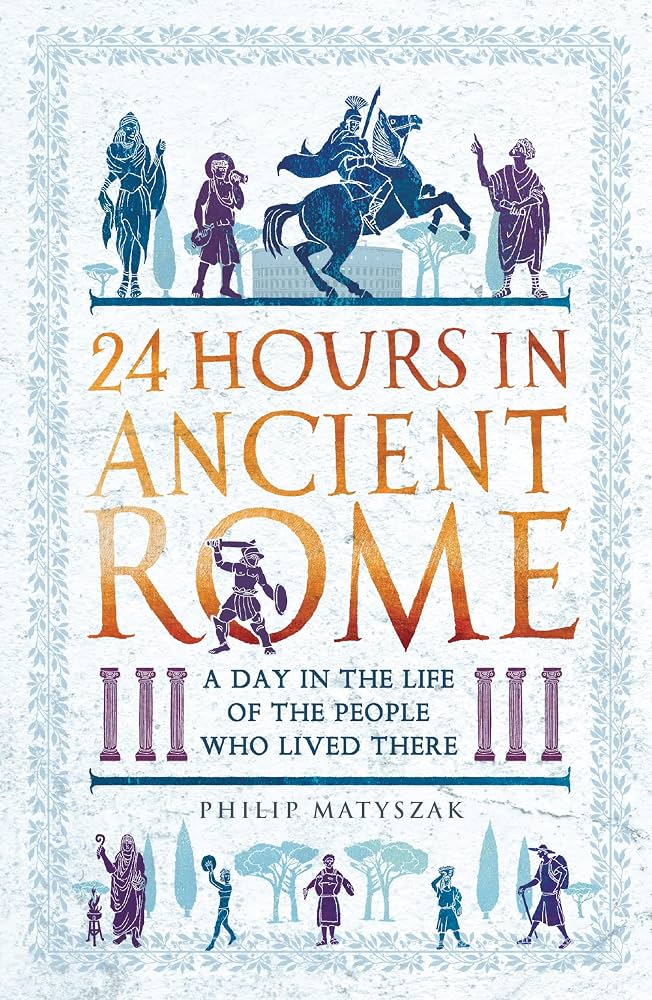
    It’s called 24 Hours in Ancient Rome by Philip Matyszak. 

    Instead of dry lists of facts, it gives you twenty-four stories — one for each hour of the day — told through the eyes of Romans: a watchman, a baker, a carter, a senator, a slave girl, a mother with a sick child, and plenty more. 

    Each short chapter drops you right into their lives. I couldn’t put it down. By the end, I felt like I’d actually walked the streets of Rome. And I kept telling my family, “Did you know this? Did you know that?” 

    If you love history, or if you’ve ever wondered what daily life in Rome really felt like, I think you’ll enjoy this one. 

    A big thanks to those who responded to the last email with castle recommendations: John E, John D, Nikki, Tom, and Robert. Skipton, Bamburgh, Mad King Ludwig’s places, Carnarvon, Carcassonne, and many more, including some in Japan if I ever get over there. I now have a terrific list, and want to visit as many of these as I can. 

    And thanks to those who sent me their first names and told me how much they enjoy the books. (We luvs to hear that, Precious.) 

    I will also say this: there are some fascinating people on this newsletter list. Of course, when I sit down with anyone, I find they’re fascinating in their own way. I’m honored to have you here. 

    Here’s to books that make the past feel like an adventure—and the present feel richer for it. 

    Sincerely, 

    —John 

    Share