Good Stuff! The Chosen

Nellie and I stumbled onto a new TV series that we are really enjoying. It’s made us laugh, think, and feel. It’s called The Chosen and is based on the life of Jesus Christ, but it’s not like any Jesus series I’ve seen before.

Now I have to admit that when I first saw ads for this, I wasn’t interested. It’s not that I don’t like videos about scriptures. There are some I love. It’s just that the purpose of so many of them is to illustrate a scripture instead of tell a story. And there’s nothing wrong with that. It’s just that when I’m looking for a drama, I want to watch a drama.

But this series is different. They have taken a historical fiction approach, which means that while they adhere as closely to the facts as we know them, they don’t limit the story to those facts. And so they imagine people, events, and motives that are plausible, and then tell a story. A great example of this type of storytelling is Gerald N. Lund’s bestselling The Work and The Glory series about a family in the early 1800s who join The Church of Jesus Christ of Latter-day Saints. Or Michael Shaara’s bestselling The Killer Angels about the battle of Gettysburg in the United States Civil War.

The Chosen focuses on stories about characters surrounding Jesus and those who plausibly could have met him. It also imagines Jesus as more than a sober Lord. He laughs, jokes, engages with children. It is a reimagining of the familiar that makes the story fresh again and leaves you wondering and pondering.

It’s created by Dallas Jenkins, an evangelical Christian, and produced and distributed by VidAngel Studios, run by Latter-day Saints. And their love of and delight in the subject show. I can’t wait to see the next episode. You can watch it right now for free. Go to the VidAngel site or to https://studios.vidangel.com/the-chosen/. Or you can watch it on YouTube with ads.

If you like religious fiction, if you like a good drama, if you’re interested in knowing more about the life and times of Jesus Christ, then I think you’ll love this.

Share

Similar Posts

  • Good Stuff! Three Days in Moscow

    Book cover, Three Days in Moscow

    I just finished Three Days in Moscow: Ronald Reagan and the Fall of the Soviet Empire by Bret Baier. It’s a New York Times bestseller that takes you into the world of Ronald Reagan, his rise to power in politics, and his role in ending the Cold War. And it does in a personable way with gentle humor throughout.

    I enjoyed the fascinating behind-the-scene insights about the personalities involved and the clarity about what really happened. And how the book brings Reagan to life, as if he’s almost there. Along the way you’ll also get insight into Mikhail Gorbachev, the assassination attempt on Reagan, and more.

    Baier is the chief political anchor for Fox News. In 2001, he became the station’s chief Pentagon correspondent and ended up traveling to Afghanistan 11 times and Iraq 13 times. In 2007, he became the station’s chief correspondent to the White House. More importantly, Baier seems to be one of the few journalists these days who is simply trying to get and report facts instead of spin. And that’s exactly what he’s done here.

    If you like biographies or history, if you want to know how the U.S.A. and the U.S.S.R. stepped back from decades of mutually assured destruction, if you want to get a view into how diplomacy is done, then I think you’ll love this book. And you’ll probably love it even more if you can listen to the audio book version, read by Baier himself, which also includes a recording of Reagan’s speech to the students at Moscow State University. I listened to it via the Overdrive account my public library provides. Baier’s reading was terrific.  

    Share
  • No Apology: The Structure

    I posted my review of No Apology on a few sites the other day. I can understand how some folks might be skeptical that the book is nothing more than a PR puff job. But I’m surprised at how many refuse to even test their assumptions with ten or fifteen minutes of reading (or listening to a few minutes of the book on audio).

    Too bad for them. They’re missing out.

    For those who think they know Romney from what’s being reported in the press, I want to suggest you listen to or read Pat Caddell’s recent comments on 9/21/12 at the Accuracy in Media conference. Caddell is a Democrat, BTW. He is the founder of Cambridge Survey Research, a public opinion pollster, and an expert in analyzing public opinion.  He’s been working for democratic campaigns for a long, long time. He started with the McGovern campaign.  Then worked for the Jimmy Carter campaign, for Gary Hart, for Joe Biden, and Jerry Brown. His speech is titled “The Audacity of Corruption”.  Find it here: http://www.aim.org/video/pat-caddell-the-audacity-of-corruption/

    Back in college I took this class on epistemology (how we know what we know). It was fascinating. One of the best classes I took. One of the things the professor taught us was that the first step in examining someone’s ideas was to capture them. So he’d have us research all sorts of stuff and then write a short paper in which we restated the ideas in summary form.

    A few years later I read Steven Covey’s 7 Habits of Highly Successful people. An amazing book. One of the habits was to seek first to understand, then to be understood. He pointed out that probably the best measure of whether you have actually understood someone is that you can restate their point in your own words to their satisfaction.

    First seek to understand, then to be understood. Capture.

    I’m going to try to do that here.

    I’ll start by outlining the structure of the book.

    CHAPTERS 1-3
    Romney shares some interesting insights about the four main current geopolitical strategies being employed by major players around the world and the threats they pose to us. He also considers lessons from great nations in the past that have fallen—what were their mistakes and how can we avoid them.

    CHAPTER 4
    Romney discusses key ways we can grow American “soft power” and maintain our “hard power” abroad.

    CHAPTERS 5-9
    Romney discusses domestically what we need to do to remain internally powerful, and, therefore, prosperous and free. Topics include the economy and jobs (chapter 5), the entitlement programs social security, medicare, and medicaid (chapter 6), health care (chapter 7), education (chapter 8), and energy (chapter 9).

    CHAPTER 10
    Romney suggests that culture is a huge factor in the success of nations. He summarizes key values and practices he feels will promote a strong culture.

    CHAPTER 11 – EPILOGUE
    Romney provides a method for gauging how we’ll we’re doing—a set of national indicators—as well as a summary of all the things he discussed in the preceding chapters that he believes will make and keep America strong.

    The central overarching theme of the book is that America will only remain strong if we follow certain principles. We’re at a point where many feel America is starting its demise. Romney rejects that must be the case.

    In the next post, I’ll capture chapter 1 and make my few comments. I hope you join me 🙂

    Share
  • Good Stuff! Easy WFPB

    If you’ve decided to try the whole-food, plant-based lifestyle (WFPB) to lose weight or lower your risk of certain diseases, you will immediately find there’s a bit of a learning curve.

    That’s because the food culture in the United States is geared towards foods that are animal-based and processed—cheese, meats, sugar, flour-based products, chips, candy, etc. In fact, WFPB is such a large change, you might wonder if you’ll be eating anything other than cardboard.

    I can happily report that WFPB eating is satisfying and delicious.

    Let’s review the general guidelines. With WFPB there are three things to avoid or minimize.

    • Added sugar (and artificial sweeteners)
    • Flour-based products
    • Animal-based products (meat, dairy, eggs)

    And there are five things you eat. The main four include:

    • Legumes
    • Grains (as close to whole kernel as you can get it)
    • Vegetables
    • Fruits (natural form, not canned)

    The fifth category is some added fat on the side. That includes things like a tablespoon of mayo, peanut butter, oil, avocado, etc. Or it could be an ounce of nuts or seeds.

    We’ve found it easiest to compose a meal by simply thinking about the five categories and filling in the blanks. If you don’t include one of the main four groups in a meal, that’s fine. Just be sure you’re not excluding it all the time.

    There are dozens and dozens of delicious meals. Over the next months I’ll be sharing some of those we love. Let’s start with the base.

    The base

    Grains

    Our InstaPot has been a huge help with grains. It makes them so easy to cook. You can make them in a batch and enjoy them over the course of a few days.

    Wheat

    • 2 cups food storage wheat berries (Yes! Finally a use for all those bags of food storage wheat in the basement!)
    • 5.5 cups water (or use vegetable stock if you want it savory)
    • ½ tsp salt
    • Cook for 35 minutes on high pressure followed by immediate pressure release. Drain if necessary.

    Rye berries, oat groats, pearled barley, brown rice

    • 2 cups grain
    • 2.5 cups water (or vegetable stock if you want it savory)
    • ½ tsp salt
    • Cook for 22 minutes on high pressure followed by 10 minutes of natural pressure release. Drain if necessary.

    When you want the grain as a savory dish, use vegetable broth or stock. It gives the grain a wonderful flavor. It’s total magic. You can get cartons at the grocery store for under two bucks. 

    For rice, we love the Lundberg wild rice mix. Lundberg also happens to be California rice which doesn’t have the high levels of arsenic that rice from the Southern United States has.

    Legumes

    Lentils

    • 1 cup brown or green lentils (do not use red for this)
    • 2 cups vegetable broth (the broth is the magical ingredient)
    • ½ tsp salt
    • Cook for 15 minutes on high with 10 minutes of natural pressure release. Drain if necessary.

    For other beans, we just purchased them in the can. They’re cheap and easy. Pinto, black, white, black-eyed peas, etc. You might find it easiest to start with pinto and garbanzo beans.

    Fruits

    Easy. Just get whole fruits. You can also get the frozen berries and cherries.

    Vegetables

    Easy. Just get a variety of veggies and salad.

    Nuts and seeds

    Easy. Get whole almonds, pecans, walnuts, etc. Whatever you like. Try to get them raw. You can heat them up in a pan on the over before you eat. Stove-roasted pecans are tasty.  

    Added oils

    Olive oil, avocado oil, coconut oil. You’re not going to be using a ton. If you want to use mayo and salad dressing, do it. Again, you’re not going to be using much.

    Spices

    Use all you want—cinnamon, ginger, basil, etc. Also use mustard, soy sauce, hot sauce. Balsamic vinegar is great on many things.

    Recipes

    With meal recipes we mix and match. Here are some meals we like.

    Grain Bowl

    For 1 person.

    • 4-6 oz of grain
    • 6 oz of berries, cherries, or 1 whole fruit
    • Some almond milk
    • Some spices like cinnamon or pumpkin pie spice or ginger (could do fresh ginger if you like it), or cocoa.
    • 1 oz of nuts, 1 tablespoon of peanut butter, or 1 tablespoon of coconut cream
    • Heat in microwave if desired

    Great for breakfast. Using different fruits and spices gives it lots of variety from day to day.

    Homemade Costa Vida Salad

    For 1 person.

    • 4-6 oz beans
    • 3-4 oz salad greens (you will need a big bowl)
    • Some mango salsa
    • 1 tablespoon Ranch dressing or may
    • 2 or 3 tablespoons of balsamic vinegar
    • Salt and pepper to taste

    Just mix it all up and enjoy. You can add cooked rice if you want and other sautéed veggies. You can also add rosemary leaves and turmeric for the health benefits.

    Other tips

    Here are some other things we’ve found.

    • Broccoli tastes the best, hands down, when cooked in a steamer.
    • Cabbage is great when steamed and stir fried with soy sauce, ginger, garlic powder, and onion powder
    • Succotash is tasty, especially if you make it with some small cubes of potato.
    • You can substitute lentils for ground beef in many meals. We’ve done it with stuff green peppers, shepherd’s pie, and many others, and our picky, teenage daughter actually likes it.
    • Some corn added to beans for a burrito or chili gives it a nice sweet flavor.
    • Sautéed mushrooms are great with onion powder, garlic powder, and thyme.
    • Garbanzos go really well with peanuts.

    We’re not fanatics about this. But I’d say we’ve been able to get 90% of the way to a WFPB lifestyle. And we’re enjoying the food. In fact, the longer we eat this way, the tastier it becomes.

    For about two years, we ate a diet high in vegetables and animal-based foods (meat, dairy, and eggs). We were diligent, but didn’t see the results we hoped for. Four months ago, we switched over to WFPB. I recently had some blood work done. After four months of eating this new way, I’ve dropped about fifteen pounds. My total cholesterol is down from 214 to 188. My blood sugar levels went from 107 to 83. And my blood pressure has improved. And that’s after just four months with some days of holiday eating mixed in. I can’t wait to see what happens after eating this way for a year.

    If you want to hear the research behind this to consider the evidence yourself, I recommend the following:

    • The China Study: The Most Comprehensive Study of Nutrition Ever Conducted (Revised and Expanded) by Colin T. Campbell, PhD
    • Whole: Rethinking the Science of Nutrition by Colin T. Campbell, PhD
    • How Not to Die: Discover the Foods Scientifically Proven to Prevent and Reverse Disease by Michael Greger, M.D.
    • How Not to Diet: The Groundbreaking Science of Healthy, Permanent Weight Loss by Michael Greger, M.D.

    You can get all of them from your local library. If they don’t have the books there physically, ask the librarian how to use their Overdrive account to check out an ebook or audio book version online.

    Share
  • Good Stuff! Two fun family and party games

    There’s nothing quite like the laughter and fun a good family or party game creates. And we discovered two games this summer that have brought hours of pleasure.

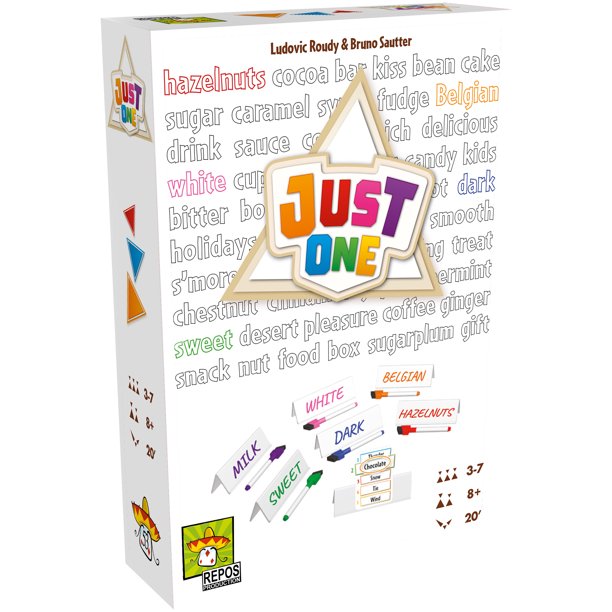
    The first is Just One. It’s for 3 to 7 players and takes about 20 minutes to finish.

    Now, I was skeptical of this game at first because it’s a cooperative party game.

    I mean, come on. Cooperation?

    No teams?

    No competition?

    What were we going to do—hold hands and sing Kumbaya?

    I was fully expecting to be bored out of my mind. Boy, was I wrong. There was suspense, laughter, and loads of fun.

    There are 13 rounds in each game. In each round, one player blindly selects the number of a word on one of the game cards. The other players each write a one word clue to help that player guess the word. However, if two or more players write down the same word, they have to remove that clue.

    So you’re trying to come up with one-word clues the others won’t that still help the guessing player. Some clues lead the guessing player off onto funny tangents. Others are just funny. And then there’s the suspense of whether someone else wrote your word and whether the player will be able to guess it from the clues that are left.

    Your goal is to guess all 13 words selected. And there’s a little score card that ranks what it means if you get 13, 12, 11, etc.

    As an aside, it’s crazy to me that the score card provided motivation. But it did. It was a delightful little brain hack.

    One Word is a quick, fun game. We’ve played it with a few as 3 and as many 8 players and had a ball each time. We are so happy to have it in the family game closet.

    The next is Fish Bowl. It’s for 4+ players. What this game does is take favorites like Taboo, One Word, and charades and mixes them together in a competitive game between two teams.

    Here’s how you play it. Each person writes up 5 to 7 different words or phrases on separate slips of paper, folds the papers, and puts them in a bowl. Then you do 3 rounds.

    Round 1 is like Taboo, where you can describe, but can’t say or act out the word or phrase on the paper. You select a team to go first. One person on the team selects the papers from the bowl and then tries to describe the word or phrase. The team has 30-45 seconds (you decide) to guess as many of the words as possible. When the time is up, it’s the other team’s turn. Back and forth you go, selecting a new team member each turn to give the clues, until there are no more slips of paper in the bowl. Then you count the number of slips each team got and move to round 2.

    In round two, you put all of the slips of paper back into the bowl. The team that went second in the first round starts this one. This time the person giving clues gets to share one word. That’s it. And the team has to guess it. Again, the team has 30-45 seconds to guess as many as they can.  Then it goes to the next team. And you switch back and forth just like you did in round 1, and when the slips of paper are gone, each team counts up their score.

    In round 3, you put all of the slips of paper back into the bowl. The time the person giving the clues has to act them out. No words allowed. You run this round just like you did the first two with  30-45  second turns, switching back and forth between the teams until all the papers are gone. At that point, the teams  total their scores for this round and then for all 3 rounds together to see which team won.

    If you don’t want to use paper, you can play a version online.

    Either way, it’s another fast, fun game. In fact, we played it last night. And laughed and laughed when one daughter was trying to get the other to guess “sling” and nailed her teammate in the head trying to act out a rock hitting Goliath.   Movies are great. But sometimes what you need is some delightful game fun. And I’m betting you’ll love these.

    Share
  • No, You Did Not Get a Mandate

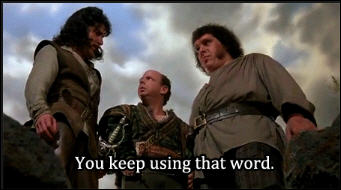
    “Mandate” is one of the stupidest words used in politics today.
    You keep using that word

    A mandate is an order, a command from the boss. A requirement.

    Some restaurant owners mandate their employees wash their hands after using the bathroom. I personally like restaurant owners who mandate that.

    States mandate that people who drive cars have car insurance. I like that mandate as well.

    But do political representatives receive mandates?

    When a politician wins an election, does he or she receive a mandate from the people?

    For example, when Obama spanked John McCain in 2008, and the Democrats swept into power, did they have a mandate from the American people to enact certain legislation?

    Obama had 52.9% of the voters behind him. McCain had 45.7% of them.

    Many Democrats at the time claimed a mandate from “the American people.” But if you know some elementary school maths, you’ll quickly recognize that 52.9% is nowhere close to 100%. Or 90%. Or even 70%.

    52.9% is close to, well, 50%. That’s half. As in half a pizza. Here’s a visual for the maths-impaired.

    Half a pizza

    Clearly, 52.9% is nowhere close to “the American people” or “voters.”

    But this was lost on politicians who had the brain capacities of gerbils. They thought the elections magically evaporated the will of 45.7% of the people. They though the other half had suddenly disappeared. They thought government by and for the people meant government by and for half the people.

    Hold on, John. In the Senate, Democrats won 57 seats, Republicans 41. In the House it was 257 to 178, or 59% to 41%.

    Yeah, like I said. About half.

    But such maths were beyond them. And so they began to push through legislation that only half the country wanted. Sometimes much less than half, as in the case of Obamacare.

    They weren’t governing America. They weren’t leading America. They were leading half and oppressing the other half because they had “won the election.”

    So, my fellow Americans, should winning an election give you the right to force something onto the other half of the populace they don’t want?

    Is this what America is all about? Is that the freedom from tyranny we celebrate every fourth of July?

    The Republicans won a great victory in this year’s election, taking back the Senate and expanding their seats in the House. In the Senate, it will probably be 53 to 45. In the House, 244 to 184.

    But does this mean the American people have clearly given them a mandate to enact certain legislation? Does it mean they’re supposed to ignore the other half of the country and ram legislation down their throats they don’t agree with?

    I’m a true blue conservative. Or true red, or whatever the color is. After the last six years, I never want to have legislation rammed down my throat again. And I’ve also come to the realization that I never want to do that to the other guy.

    America hasn’t given the Republicans a mandate. Nor, as President Obama recently claimed, have they given Washington a mandate to “get stuff done.”

    Getting stuff done is exactly the problem.

    We don’t want you to get stuff done.

    We want you to get stuff done that the vast majority of us agree on!

    But, John, does that mean you want us to compromise on our principles?

    No. I don’t want to compromise. I’m not interested in going along to get along. But I’m also not interested in a representative government that fails to represent HALF of us.

    Here’s my proposal. Let’s go back and start over.

    Let’s get rid of Obamacare and put something in its place that at least 60-65% of us can agree on. Maybe 70% of us. It won’t be a liberal weed dream. It won’t be a right wing vision of glory. But whatever gets enacted will be something all of us agree are good things.

    And it will force us to win others to our way of thinking if we want to get the rest of the stuff we think is so splendid.

    But, John, what if folks can’t agree?

    Then we don’t enact. This forces us to use persuasion. It forces is to think win-win. It forces us to behave like a nation that loves freedom.

    Immigration. Do we want an American where the president acts like a tyrant and forces something down half of our throats? Or do we want to enact something 65-70% of us can agree on?

    The budget. Let’s roll back all the nonsense and get a spending plan that 65-70% of us can agree on.

    What about the 30%? I don’t want to oppress them, but 100% ain’t never gonna happen. Let’s be practical. Besides, requiring a large majority means Washington will be at least by and for most of the people. And that’s better than what we have today.

    So, do we have a mandate? If anything, I would hope the mandate would be to do stuff that represents America, not one party.

    Edit 11/10/2014

    And today I find this–an explicit example of the gerbil-brain thinking I reference above. This fine fellow is one of the architects of Obamacare, explaining that the law was written in a way to bamboozle the American voter. What we need in Washington is honest debate and persuasion. Not duplicity and lies. I’m appalled. This is the get-stuff-done-I-have-a-mandate mentality. Not the get stuff done that most of us agree on approach. These folks have completely misunderstood the purpose of government.

    Share
  • Impeachment might not be what you think it is

    I’ve come to realize I didn’t understand the process of impeachment and the standards by which it is conducted. Here are a few key things I’m betting most of us didn’t know. Some of them will surprise you.  

    First, the process has three steps:

    1. The Congress starts an investigation, which can be conducted by any part of that body—the House, Senate, a special counsel, etc.
    2. The House leadership decides on whether to vote on “articles of impeachment.” The articles need only a simple majority to pass. If they do pass, the person is impeached. However, the articles of impeachment are not a conviction; they are a formal allegation of wrongdoing. The analog to this in the criminal justice system is an indictment.
    3. The Senate then holds a trial to decide if the allegations are true with both sides bringing witnesses, evidence, cross-examination, etc. The chief justice presides when the president is impeached. If two-thirds of the senators deem the allegations true, then the person is convicted and removed from office and may be barred from holding future positions. If the super majority isn’t reached, the person is acquitted of the charges.

    There are two big questions in all of this. First, what standard of proof is used for passing the articles and then convicting the person of the allegations?

    It appears that the standard of proof required for impeachment and conviction is left to the discretion of each individual representative and senator. There is no standard defined. So while some may use the standard of beyond a reasonable doubt, others may not.

    Second, what can someone be impeached for?

    According to the constitution they can be impeached for “Treason, Bribery, or other high Crimes and Misdemeanors.” However, the phrase “high Crimes and Misdemeanors” is not defined in the Constitution itself. 

    The most authoritative explanation of what “high crimes and misdemeanors” are appears to be a document written by the staff of the House Judiciary Committee. The latest version of this was written in 2015 and is called “Impeachment and Removal.”

    According to the Wikipedia article on impeachment, “While this document is only staff recommendation, as a practical matter, today it is probably the single most influential definition of “high Crimes and Misdemeanors.””

    A key take away from that house committee report is that not all crimes are impeachable offenses and not all impeachable offenses are crimes. So what are grounds for impeachment? Well, it’s a bit vague.

    In 1788, Alexander Hamilton argued in the Federalist Paper 65 that impeachment was for “the misconduct of public men, or in other words from the abuse or violation of some public trust.” The House Committee report expounds on that, including the following general grounds:

    • “Constitutional wrongs that subvert the structure of government, or undermine the integrity of office and even the Constitution itself”
    • “Abuse of the particular powers of government office or a violation of the “public trust””

    The report goes on to say the following.

    “Congressional materials have cautioned that the grounds for impeachment “do not all fit neatly and logically into categories” because the remedy of impeachment is intended to “reach a broad variety of conduct by officers that is both serious and incompatible with the duties of the office.” Nonetheless, congressional precedents reflect three broad types of conduct thought to constitute grounds for impeachment, although they should not be understood as exhaustive or binding: (1) improperly exceeding or abusing the powers of the office; (2) behavior incompatible with the function and purpose of the office; and (3) misusing the office for an improper purpose or for personal gain.”

    But the report doesn’t give much definition beyond this, just a few examples of what individuals have been impeached for since the founding of the country. What does all of this mean?

    I think the Wikipedia article sums it up well.

    “Several commentators have suggested that Congress alone may decide for itself what constitutes a “high Crime or Misdemeanor”, especially since the Supreme Court decided in Nixon v. United States that it did not have the authority to determine whether the Senate properly “tried” a defendant. In 1970, then-House Minority Leader Gerald R. Ford defined the criterion as he saw it: “An impeachable offense is whatever a majority of the House of Representatives considers it to be at a given moment in history.””

    Impeachment is a political remedy, not a criminal justice or civil justice one. And given the vague definition of grounds for impeachment and the lack of any required standard of proof, what this all means, unfortunately, is that the process, especially in our current climate, is going to be rife, not with objectivity, but partisan politics. On both sides. 

    Here’s more for the curious.

    Share