Indie Thoughts: How much does it cost to publish a book independently?

Is The Guardian right?

Does it really cost $6,000 to publish a book independently?

Is that the price to become Hemmingway these days?

Lots of commenters at The Passive Voice said the numbers were rubbish. Far too high. They said this was yet another thinly-veiled bit of  flimflam The Guardian cooked up to depress indies and send aspiring authors into the arms of the zombie traditionalists.

I actually thought the piece was good.

Why?

Because I like numbers. I did get a Master’s degree in accounting, after all.

But is it just that numbers are sexy?

It’s true the shape of the number 3 can be glorious. 9 is a stunner as well. But the slopes and curves of these digits is not why I like them. Numbers, even if they’re bad numbers, allow you to start thinking about costs. They allow you to question whether they could be reduced. Or whether you’re getting any bang for your buck in a certain category. Heck, numbers allow you to discover whether you’re allocating way too much in one area and far too little in another.

I thought The Guardian did a great job breaking the costs out into categories and starting an examination. The question is: are the categories and amounts political fictions or real?

Comparing My Numbers

One way numbers do all the things I mentioned above is by letting you do comparisons. So I figured I’d compare The Guardian’s numbers with a set of my own. I’ve published four books independently. How do my costs stack up?

Here are the costs for the latest.

Cover: $500

  • $500 for illustration
  • $0 for cover design (I have a friend who is so incredibly generous with his time)
  • Cover for some genres can cost less. Some folks do it themselves. Most of those do-it-yourself covers look awful.
  • The zombie traditionalists can sometimes spend a few thousand. And when they do it right, they get some amazing, AMAZING, work.
  • Verdict: The Guardian’s number seems reasonable, but I’m thinking the range is a few hundred up to a few thousand for something that doesn’t give the average reader worms.

Editing: $0

  • My wife, former technical writer, current language arts teacher, is my editor. There are some other folks I’ve tapped as well.
  • If I didn’t have her, I’d need someone. My experience is that if you yourself are not an editor, and you try to do this, you’re going to end up with a poorly edited book. Even with her experience, we’re still finding it hard, and are working to get the process down. We might outsource this in the future.
  • I’ve gotten reasonable quotes, and they’re all around $600-900. And that’s just for a copy edit. You want other kind of editing, you’re going to pay more.
  • Verdict: The Guardian’s number is high, but not if you tap into a bunch of pros for multiple edits.

Formatting for POD and ebook: $120

  • I do the interiors myself, so the labor is free. If I had to pay, it could run anywhere from $100-$300 or more.
  • I pay a subscription fee for InDesign. If I release two books a year, it comes out to roughly $120/book.
  • I spent $300 taking a class on basic interior design principles. But that was just the beginning. I must have spent 50-70 hours, maybe more, last October and November, banging my head against the wall as I learned this. Luckily, all that thrashing about didn’t result in any medical bills. I’ve had to spend maybe 10-20 more since then learning advanced techniques and keeping the basics fresh.
  • Verdict: The Guardian didn’t even include this.

ISBN: $0

  • I owe my friend; without him, this would definitely be a cost. I’m such a free loader.
  • Verdict: The Guardian’s number is good.

Copyright Registration: $55

  • $20 bucks to mail 2 copies to the Copyright Registration Office
  • $35 processing fee
  • Yes, you do want to do this. For detail on why, see The Copyright Handbook by Stephen Fishman.
  • Verdict: Another miss

Print-on-demand fees: $0

  • I go with CreateSpace instead of Lightning Source
  • Verdict: Another miss

Notice what’s NOT up there that was in The Guardian article: reviews and review copies.

Why don’t I include them?

First, I would never pay for a Kirkus review. I wouldn’t because it appears such reviews mean little to readers. They don’t seem to generate much notice or desire to sample. Here’s what readers report matter to them. Such pre-publication reviews DO matter to store and library book buyers. But, as an indie, I’m not focusing on those channels.  Those channels are in the hands of the zombie traditionalists.

What about review copies?

You don’t need them to publish. All this review business is marketing. And you don’t need marketing to publish.

So what are my totals? I’ve included The Guardian numbers so you can see the differences.

Category My Costs Guardian Estimates
Cover $500 $750
Editing and proofing $0 $4,000
Ebook and POD Formatting $100 ?
ISBN $0 $125
Copyright Registration $55 ?
POD setup fees $0 ?
Reviews – $825
Review Copies – $300
TOTAL $655 $6,000

Whoa! The Guardian estimated a cost that’s ten times what it costs me. But I don’t think that’s a sign of some plot. If I’d paid an editor and cover designer and formatter and didn’t mooch my ISBNs, that could have added as much as $1,000-$2,000 to my total. I have friends who have paid more.

Furthermore, that’s just for the ebook and hard copy. Depending on if you publish an audio edition and how you do it, you could spend another $2,000-$3,000.

What does this tell you? It tells me that the reporter made a good start, but needed to do a bit more digging. It also tells me there’s a huge variability in the costs depending on the skills you and your friends possess. It also shows that this is a business. I doesn’t cost a gazillion dollars to publish. It’s not like the $200,000-500,000 you need to start some food franchises, but you’d better be prepared to fork over some cash and/or a lot of hard work.

In fact, when you consider that last point of sweat equity, the $655 is completely misleading because it does not capture the hours I spent, at least 20-60, doing my part of the cover, editing, and formatting. Nor the time spent by my wife or friends. There’s a huge opportunity cost there.

What’s the value of what I could have done with that time?

It’s for dang sure not reflected in the $655.

Marketing

I didn’t include marketing in those costs above because marketing is its own beast. You can publish and do zero marketing. You can publish and do gobs. And just as with the publishing costs, marketing costs will vary based on what you can do in-house and what your situation is. It costs JK Rowling nothing to get covered in  every news outlet in the land. She sneezes, and we get a report about her. You and I are probably going to have to work harder to get noticed.

There are all sorts of marketing costs. Whatever those costs, marketing has a job to do. It’s got to pay for itself. It’s got to help pay for the cost of publishing. And it’s got to help me meet my goal of winning new readers and compensating me for my time.

There are lots of cost categories depending on what you decide to do:

  • Hard copies you sell at events
  • Travel and lodging required to attend events
  • Hard copies and postage for reviewers
  • Time writing blog posts
  • Promotions with folks like BookBub and BookSends
  • Giveaways
  • Etc.

The bottom line is that I think it’s good to separate these costs from publishing so you can measure their effectiveness against sales. Marketing is about revenue generation. These costs really have nothing to do with producing a book.

Books and Lemonade

I’m going to go off an a tangent here for a second. Some folks suggest that indie authors shouldn’t do much marketing. Especially if they only have one or two books out.

I find no evidence to support the idea that just writing the next book is all you need to do for readers to hear about you and beat a path to your door. It’s true you’ve got to write the next book. You must get new product out the door. Hey, I learned that when book 2 from the publisher fell into a black hole. But that doesn’t mean marketing and promotion are inappropriate,  wrong-headed, or a waste of time or money.

Let me ask you a question.

Let’s say Juanito is a no-name in the lemonade business. He’s just starting from scratch with dreams of becoming a big time lemonader. Who thinks it’s a good idea for him to open a lemonade stand in his back yard? Or better yet, in a closet in his basement? And when folks suggest that the stand might get more business if he lets the neighbors know about it or puts the stand in a place with a lot of foot traffic, who says, no, that’s a waste of time and money–the key to selling more lemonade is whipping more batches up in the kitchen?

In retail, you must get folks to notice your product and then persuade them to try it. Now, maybe you’ve got something going that’s generating all the notice and sampling you can handle.  Maybe you lucked out.

What percentage of indies are in that situation? Raise your hands, please.

What? We’re not all inundated with hordes of readers? We’re not  all swimming in gold? Imagine that.

The fact is that it’s tough to get notice. It’s tough to get people to try. But there are some things we can do to increase our odds. Selling books is a retail business. Retail lives and dies by visibility. Yeah, you need word of mouth. But you need to be noticed and sampled in large enough amounts to keep that word of mouth going.

What would you rather have? 100,000 people all over the country in many social networks (I’m not talking about Facebook) noticing and sampling and talking about your product, or would you rather have five?

In the brick and mortar world, there are lots of ways to get visibility without doing much TV or internet advertising. Ways to get notice include things as simple as signage and a store’s location. For example, you get a ton of eyeballs just situating your restaurant in the parking lot of a big destination shopping mall. You get eyeballs putting a sign on top of a 100 foot pole next to the freeway exit saying “Gas & Eats.” Online retailers get noticed in other ways.

Without blathering on about that (this was a post on publishing costs), let me just say that until customers begin to line up and start throwing hundred dollar bills at me, it appears I’m going to have to do what every other retail business has done for hundreds of years–get my lemonade stand out of the basement and into the park with lots of thirsty kids and moms.

EDIT 8/30/2014

While a number of folks are assuming the article was written as part of some vast conspiracy to undermine indie authors, David Gaughran posted some criticism in the article’s comment section that actually make sense.

DavidGaughran

The reason I’m so annoyed by the inaccuracies in this article is that this kind of misinformation is creates an information gap which allows shady operators to flourish.

Vanity press operators thrive because inexperienced authors think that self-publishing is either difficult or expensive. It’s neither of those things, and articles like this only serve to reinforce this false notion. That’s why I think this piece is irresponsible as well as inaccurate.

Companies like Author Solutions specifically target the most inexperience authors, the ones who know least about self-publishing and the industry in general, the ones who have fallen under the spell of various myths (like that self-publishing costs $6,000).

As a commenter said below, saying self-publishing costs $6,000 is like saying houses cost $10m. You can spend that much, but you don’t need to.

It costs me less than a third of that to publish a book, and I use a Big 5 cover designer as well as an editor with over ten years experience working for traditional publishers. Anyone can look at my books and immediately see that they are produced to professional standards.

You don’t even have to spend as much as I do to get a quality product. If authors are on a tighter budget, they can purchase a pre-made cover design. There are some wonderful pre-mades out there for as little as $40. You will have to invest a fair bit of time combing through the sites to find something suitable, but if you are on a shoestring budget it’s an option.

Same goes for content editing/developmental editing. All manuscripts will need a thorough copy edit, but you can get by without a specific content edit with successive round of beta readers. Again, this will require a time investment – writers usually trade beta reads of each other’s work. But if you’re on a tighter budget, it’s another way you can save money.

This is why this piece is so off. Even going the “deluxe” route shouldn’t cost more than $2,000. And if you don’t have $2,000, there are plenty of options where you can achieve a quality product, spending far less, if you are willing to put in a little time.

There are ways you can save money in other areas too. It’s a waste of money for an author (especially a new author) to buy a NetGalley membership for themselves. Authors can (and do) form collectives to buy a membership between them – often spending just $20 per person. I got a NetGalley spot for a month, for free, by bartering with another author. (I didn’t think it was quite worth $20, by the way, let alone $400).

If you need reviews, there are much better and cheaper ways. Submitting to book bloggers costs nothing (we usually send e-book copies or PDFs, rather than hard copies). Doing an e-book giveaway on LibraryThing costs nothing. Giving out electronic ARCs in advance of your release costs nothing. And all of these are much more effective than giving any kind of money to Kirkus, let alone $425.

But I guess it doesn’t matter how many experienced self-publishers (and editors who work with same) tell you that your figures are off, or that you don’t need ISBNs to self-publish, you are going to stick to your guns.

Share

Similar Posts

  • The Key Conditions for Reader Suspense Part 2: Character

    In the last part in this series we discussed the idea that readers don’t want your characters to be happy. They want them to hunted, stressed, threatened, freaked, and nigh unto some horrible fate for 90% of the novel. At that point, after all that trouble, readers want the characters to pull victory out of the jaws of defeat, exhale a big sigh of relief, and enjoy a Slurpee . . . until the next book in the series.

    All through the big worry, readers don’t want to know what WILL happen. They want to know or suspect what MIGHT happen and HOPE and FEAR about those possibilities. And then they want a cathartic resolution of all that hope and fear, all that dramatic tension they have felt.

    But our readers won’t hope and fear for just anyone. They will only hope and fear for those characters who evoke sympathy and interest. And so the second set of Pareto factors focus on the things, the conditions, that do this. 

    Pareto Factor 1: Troubles

    Sympathy starts when we see someone in trouble. That’s not the only thing that’s required. Some people who are in terrible trouble only evoke pity or even antipathy. So there’s more to this than trouble, but trouble is where sympathy starts. So what kind of trouble are we talking about? I like the categories James Scott Bell uses. We feel sympathy for people who are:

    • In jeopardy or experiencing hardship
    • Are underdogs
    • Are vulnerable

    When someone is in jeopardy, it means some significant aspect of their happiness is being threatened. Hum, sounds suspiciously like the first type of story problem I discussed in the last post, doesn’t it? That’s because it is. We have sympathy for people who are being threatened with death, slavery, drudgery, etc. We’re just wired for it. Likewise, we feel for someone experiencing a hardship. And a “hardship” is simply someone having to deal with a lack, the second type of problem we discussed. So we begin to evoke reader sympathy by just giving our characters significant problems to deal with.

    And you can pile the problems on so that not only does our hero have to deal with the central problem of the story, but maybe he’s also broke and has nothing but one box of macaroni and cheese in the cupboard, or his car just got repossessed, or he’s just been dumped by his girlfriend, or he and his daughter are estranged because his ex-wife is pouring poison in her ear, or he breaks his arm, or he works in an awful job.

    Do you remember Peter Parker in Spiderman 2? He gets fired from his pizza job, has no money, is losing his girl. Lots of hardship. And lots of reader sympathy.

    But giving characters problems is not quite enough. Because if you recall, the readers want to fear for our characters. Nobody fears too much for someone else if we know that they can easily resolve any threat or hardship that comes their way. And so we need to stack the odds against the character. They need to be underdogs.

    This means that the opposition starts off two steps ahead. It means they have more power, more resources, or more information. This is why strong antagonists make strong stories—they help the reader to fear for our protagonists.

    Who worries about a Superman who is a hunk of burning love? Nobody. Unless he’s actually Clark Kent in other matters and stands to lose something like Lois. Or, when he is Superman, someone hangs kryptonite around his neck and turns him into a dweeb.

    In this same vein, our characters need to be vulnerable. This means they can be squashed at any time. They can be shot, killed, ruined. Until the very end, the reader must know the characters can lose big. In the previous post, I said that problems have to be hard to solve, otherwise readers don’t worry. The things that make problems hard to solve are character limitations, ongoing and increasing troubles, conflicts, and surprises. All of those factors make characters vulnerable as well.

    So, threaten your characters will all sorts of things, give them hardships, make them vulnerable underdogs, and we’ll feel sympathy for them.

    Or will we?

    There are some characters with problems who we don’t want to root for. Instead, we hope they fail. Villains, for example, have problems, but we root against them with vigor. In our minds, these folks deserve to fail. So you can’t rely on problem alone. There’s another quality that your characters must evoke if we’re going to hope and fear for them.

    That other quality is deservingness.

    Pareto Factor 2: Deservingness (likeability)

    All of us have an automatic scale of justice inside of us. We can’t turn it off. Nor can we ignore it. It’s very simple. If someone’s bad outweighs their good, then we think they don’t deserve good things. Conversely, if someone’s good outweighs their bad, we think they should be happy.

    Don’t believe me? Fine, let’s test it.

    A boy breaks his arm and he whines, whines, whines about it all day long. Tells his teachers he can’t do his school work because of it. Mopes at home in front of the TV. Steals his sister’s money to buy candy because he has this awful injury and he deserves it. Maybe he makes all his friends listen to him talk about how hard it is, and he just goes on and on and on.

    You know exactly what you’re thinking. You know exactly how much sympathy you have for him, which is none.

    Another boy has a broken arm. But this one doesn’t whine. In fact, when his dad falls ill, he goes out and with the one good arm, and in pain, mucks out the horse stalls. He does this because his dad was going to lose his job if he didn’t. Then the boy comes back in and cleans himself up and doesn’t say a thing.

    You like that second boy? You want good things for him?

    Of course, you do.

    Problems aren’t enough. They’re only half the equation. For us to root for someone, we have to feel they’re deserving. Or if you like the term better, you can say they need to be “likeable.”

    So what makes someone deserving or likeable?

    That’s going to be slightly different for each person because our moral codes are all slightly different. If you feel it’s a sin to kill animals, you might feel conflicted reading a story about a rancher who needs to get his cattle to slaughter. If you feel unions do nothing but harm, you might throw down a book that’s about a union boss trying to force a corporation into compliance. Nevertheless, there are many virtues and vices that people hold in common. Usually, we feel people are deserving if they weigh more on the one side of the table below than they do the other. 

    Deserving / Likeable Not Deserving / Unlikeable
    • Unselfish, do nice things for others
    • Stand up for little guy
    • Funny
    • Sacrifice for someone else
    • Good-humored, don’t take themselves too seriously
    • Courageous
    • Hard-working
    • Actively trying to fix their own problems
    • Hopeful
    • Etc.
    • Selfish
    • Bully others
    • Dull
    • Whining
    • Cowardly
    • Take themselves too seriously
    • Sanctimonious and self-righteous
    • Lazy, only want to snivel or groan about their problems
    • Sad sacks
    • Etc.

    We tend to like people more who show the characteristics on the left side. We tend to dislike people who show the characteristics on the right side.

    Notice, a lot of this has to do with motive. In many instances it isn’t just the act that decides us for or against someone. It’s the act + the reason why they did it. Let’s go back to that example of the kid with the broken arm that mucked out the horse stall. We’ll love him if he made that sacrifice out of selflessness. We’ll feel something different if he does it only because it allows him to hide his and his father’s crime (maybe they killed someone and have temporarily stashed the body in the barn under the muck in a stall).

    Furthermore, while we need to make the characters we want our readers to root for deserving, this doesn’t mean they have to be paragons of virtue. Remember that deservingness is weighed on a scale. Just as long as the characters tip the scales one way, we will feel they’re deserving. On the other hand, if they cross the line the other way, we’ll turn against them.

    For example, let’s say your lead character is a thief who steals money from retired folks. But in your story she’s trying to save a kid from being kidnapped and sold into the sex slave trade. Yeah, our character may be a thief, but what she’s doing outweighs the bad, and we’re going to root for her.

    Now let’s make our lead a child molester. He’s trying to capture a brutal drug cartel murderer who has just escaped prison. Along the way he has his way with a few children.

    Who are you rooting for this time?

    Yeah, me too. I hope the murderer finds the child molester and offs him. Or at least alerts the authorities to his crime and ties him up in a neat package for them to pick up.

    So you don’t have to have perfect people as your leads. In fact, it’s sometimes more interesting to have someone with foibles just like the rest of us. But when those foibles turn into things we find despicable, we’ll turn against those characters.

    And vice versa. For those of you who have read or watched Pride & Prejudice, did you notice how you rooted against Mr. Darcy when we interpreted his actions as smug condescension? The moment he changed, and we learned of it, we cheered for him. It was all a matter of deservingness.  

    If we want to hope and fear for our characters, they need troubles. But they also need to weigh in on the deserving side of our scale of justice. When they do, they become admirable, likeable, heroic.

    In fact, heroes, the ones that make us stand up and cheer, are those people that put their own happiness at risk to do the “right” thing. They’re the very embodiment of deservingness.

    So make your characters admirable in some way, if only just a little bit.

    For more on the topic of deservingness, read How Inequity and Deservingness Propel Readers Through Story.

    Still, we’re not done yet. We might have characters who are completely deserving, but they are so boring we can’t muster any interest in them. And that brings us to the third Pareto factor.

    Pareto Factor 3: Interest

    We want to hope and fear for a character for 90% of the novel. But will you stick around if the characters are utterly boring? Probably not. So you want to make your characters interesting. Heck, sometimes we don’t need much of a problem, but will read about someone just because they’re so dang interesting. Character interest is a key factor in a reader’s enjoyment of your story. It one of the things that produces the biggest bang for the buck.

    The question is: what makes a character interesting? The answer: the same things that make real people interesting.

    You’ll want to make your own list of things that make people interestings because what rocks you might not rock me, but I’ll share the types of things that spark my interest in other people below.

    Your characters don’t have to exhibit all of the traits listed, but you might want to think of giving them at least one or three of them.

    Power

    People who have power draw our interest. That power may be one of many varieties:

    • Wealth. They might be super rich like Bill Gates or Warren Buffett or the Queen. They may drive the coolest cars and have the most luxurious houses or clothing.
    • Position. Someone in a powerful position like the CEO of a big company, the general of an army, or the leader of some gang. But it doesn’t have to be huge. A single cop draws attention. As does an IRS agent on your doorstep. The foreman of a crew has some power. The character might not even be the one to hold the reins of power but be a spouse or counselor of someone else who does.
    • Physical strength. They may be fast or strong or just huge individuals. Maybe they have been trained to be deadly weapons or at least use them.

    Ability

    People with extraordinary skills or talents draw our interest. It’s why, in fantasies, we’re so interested in those that can actually practice magic. In fact, ability is a type of power. And just like those with the other types of power, these folks evoke wonder, respect, and sometimes awe.

    The skills and abilities you’re interested in may differ from mine, but we are fascinated by those who can do things well or have some gift. Maybe they are expert at selling, or making money, or framing a house, or painting, or doing gymnastics, or reading, or hacking into computers, or skydiving, or firing weapons, or riding horses, or hunting, or getting people to like them, or making pancakes, or a thousand other things. Maybe, like Edna Mode in The Incredibles, they have the ability to design amazing super-hero outfits.

    Even though your characters have limitations that prevent them from immediately solving the problem they face, you can still give them some kind of an ability that makes them admirable to us. Some gift or talent. And maybe it helps them solve the problem in the end.

    Extraordinariness

    People who are uncommon in some way draw our interest. In fact, if you think about those with power and ability, you see that they possess this quality as well. However, you don’t always need power and ability to be extraordinary.

    Maybe you’re a normal guy in an extraordinary job. You’re a CIA officer, a smuggler, or a spy. Maybe you raise wolves or are a bounty hunter. Or you hunt bears with a pack of dogs and a horse. Or maybe you have some other uncommon hobby.

    You might argue that these are special skills. They are. But who says my categories can’t overlap? Still they don’t have to be extraordinary in that way. Maybe you simply have extraordinary experience. You fought in a war, escaped prison, were a bank robber at one time. Or maybe you’re just outrageous, bizarre, eccentric, odd, or have some exaggerated quirk.

    Maybe you’re a loud-talker, a mumbler, a guy who takes his three parrots with him where ever he goes, a farmer who loves pies. Maybe you’re super thin. Or a cab driver with glasses so thick his passengers immediately wonder if they’ll arrive alive. Maybe you have squeaky shoes. Or are always dressed to the nines and smell of lemons. Maybe you’re one of these people that walk around in their sleep or hold loud conversations with ghosts. Or you’re a coffee freak and drink a pint of black mud each day. Maybe you just have an uncommon name like the folks in the Netherlands who surname is, no lie, Born Naked.

    Sometimes these extraordinary things affect the plot. Sometimes they don’t. The point is that the extraordinary captures our attention. When you’re inventing your characters, add something extraordinary. You’ll be surprised at how much more interesting they are to you.  

    Beauty

    People who are beautiful capture our attention. In movies we see a million bits of information at once. We can see the beauty and respond. But we can’t do that in text. And so we have to evoke the image of beauty in the reader’s mind. A few key details and the way others react to them should be enough.

    Now you might think beauty is a superficial method for generating interest, but I think it’s a manifestation of something else more fundamental. If you think about a lot of the interest factors we’ve discussed so far–having special power, wealth, ability, or beauty–they all have a common element running through them. That element is wish-fulfillment.

    Wish-fulfillment

    We cannot help but be interested in characters who are, do, or have things we want. In fact, this is one of the main draws of fiction–experiencing something wonderful or cool, even if it’s vicariously. Phyllis Pianka states this so well in How to Write Romances: 

    “You cannot write an engrossing romance novel until you create a heroine the reader wants to identify with and a hero the reader can fall in love with . . . they are idealized; the heroine is someone women would like to emulate: nicer, prettier, thinner, more intelligent, though not necessarily all of those things. She will have a flaw but it will be a minor one . . . the hero is the ideal lover and husband and father . . . Above all, he must be the man with whom every woman would like to fall in love [bold font added for emphasis]” (30).

    A lead you’d like to be like in some way. A hero you could fall in love with. Or at least feel attracted to. Remember, readers are hoping and fearing for the characters. How can readers hope for a woman to enter a committed relationship if the readers feel the man is completely unattractive, physically or emotionally? How can we males root for the man if we feel the same about the female character? It doesn’t mean they have to be perfect. Wish-fulfillment, like many things in writing, slides along a scale. But we’ll be more interested as readers the more we can participate in the same attraction and desire.

    Someone might be thinking this is just for love stories, but that couldn’t be farther from the truth. What’s one of the reasons why James Bond and all the other action heroes are so popular? Among other things, it’s because so many of us would love to live the adventures those heroes do. We would love to be the types of guys who know how to fight like Jack Reacher and get to use all the high-tech the gizmos and drive the deluxe cars. How many YA stories are about characters finding fairies or dragons or aliens? How much of fantasy is about having the powers magic grants? Wouldn’t it be cool! Of course. That’s wish-fulfillment.

    So when developing a character, we can think of things we’d like to be, do, or have and give those things, or the opportunity for them, to our characters. Make them admirable or desireable in some way. Of course, this doesn’t mean you can’t give your characters flaws, or that you can’t write about someone we wouldn’t want to be like. Our readers don’t have to want to be like our characters in every way, but a little bit of wish-fulfillment helps. It’s something to consider.

    Also, as with anything, what’s desireable to you might not be what’s desireable to me. Maybe I’m interested in anyone who has served in the armed forces or lives with some kind of risk and adventure. Maybe you can’t stand that and are enthralled instead with horses. Maybe you’d like to fly airplanes, but I’d love to fly dragons. One guy is drawn to those with happy marriages full of laughter. Another is drawn to the freedom of single life. You write your stories, and I’ll write mine. But we can both make our characters more interesting by adding, when it fits, some element of wish-fulfillment.

    Humor

    We love humor. Love to laugh. And so anytime you can create a character that does this to the audience, they will be interested in them. It might be our characters have witty lines or comments. Maybe they’re humorous types or find themselves in humorous situations. 

    One note. Don’t make the mistake of thinking that making a character interesting will make them deserving or admirable. Humor, just like beauty, can be given to characters we root against. Maybe the character is funny, but it’s a cruel funny. Maybe the character is mind-stealing beautiful, but they use their beauty for terrible purposes. Sympathy and interest are different things.

    Danger

    Anyone who poses a threat demands our interest. This is one of the reasons why Darth Vader is so interesting. Criminals present threats of all sorts, which is why we’re always interested in them. Recall, however, that many aspects of happiness can be threatened. It doesn’t have to be a threat to life, limb, or property. For example, someone may threaten my relationship to my wife or my belonging to a group or community.

    We’re also interested in those who are in danger. This ties back to the first story element of problem. In fact, the problem might be so interesting and threatening that we could cast anyone in the role and readers would go along with them. Do you really remember the leads in Jurassic Park, for instance? There’s nothing fundamentally wrong with a plain vanilla character. In fact, that might be exactly what your story needs. However, I would still see if it doesn’t improve things to make your character interesting outside the context of the story problem. If you do, you just might end up with an Indiana Jones.

    Secrets

    We love mysteries. And so sometimes it’s wonderful to give characters secrets. It might be they present a bit of danger or have something to hide as Aragorn does when we first meet him in The Lord of the Rings. Or maybe they have a past they don’t like to talk about. Either way, we love to wonder about them and then have our questions answered in surprising ways. We like it even better when these secrets affect the deservingness of the character or our understanding of the situation the character faces.

    Surprise

    We are intrigued by characters who play against type, if only a little. So maybe you have a plumber who quotes Shakespeare or William Blake to his customers. Maybe you have a mixed martial arts fighter who is a woman with three kids. Maybe the hero has a fear of spiders. Or the villain is a magnificent artist or tends lovingly to his bees or his daughter. Maybe the super rich businessman secretly goes to poor neighborhoods to find folks to help. Maybe the bearded and tattooed biker carries around a Book of Mormon and reads it during quiet moments. Maybe, like Michael in the series Burn Notice, the super spy loves yogurt. Anything that runs against, or just doesn’t fit, our expectations of the type. This includes motives  as well as external character tags.

    Cast Variety

    Finally, because we almost always deal with a cast of people in our stories, we need to make sure they’re interesting as a group. You will increase reader interest if you give each character some memorable and interesting trait, but you’ll get the most bang for the buck if you make those traits different.

    For example, let’s say you have a team of characters who need to go behind enemy lines to find and dismantle a radar station. If every one of those team members is exactly the same–all wise-cracking blond farm boys from Oklahoma–we might find it funny and odd at first, but it will soon lose its appeal as they all say and do the same things. Compare this to a group where one is a silent-but-deadly farmer, another is a metaphysical mechanic, a third is a short woman’s man, the fourth is a wise-cracking American Indian. Maybe one joined the ARMY because he’s got first person shooter games dancing in his eyes, another because his father was a military man, another is there to conduct some kind of criminal heist, the fourth because he’s poor and needed help getting through college and supporting his wife and kid.

    I know, I know, you women are probably saying the tall blond farm boys might not be all that bad. But after you finish oogling them, think of this: your readers might not all be into farm boys. Did you ever wonder why boy bands have a variety of types–the serious one, the good one, the bad one, the cutie? It’s because it broadens the appeal to a wider audience.

    But it goes beyond that. Variety also avoids the problem of diminishing marginal utility. This is simply the idea that the more you experience something, the less power each experience provides. For example, the first time you hear a great joke it may be gut-busting funny. By the time you’ve heard it ten times the joke has probably lost its appeal. Imagine eating a meal that’s nothing but salmon or broccoli or fried okra or ice cream. Eventually, after twenty dishes of cheese, you will go blind. The same thing occurs with characters. This is why it’s always more powerful to have one villain instead of a hundred of them. One wise-cracking American Indian is awesome. Fifteen of them only water down the effect so that none of them are as powerful as the one could be all by herself.

    And it doesn’t end there. There’s an even more important reason for giving your cast variety: it opens up possiblity for more conflict, surprise, and story. Maybe one of the lead’s team members turns traitor. Maybe one of the bad guys is thinking about doing his boss in. With some variety, you can not only write about the main problem, but you also add in subplots–a love story or a redemption plot. And both can complicate the central problem.

    Vareity adds interest. Develop your characters–the major, minor, and bit roles, folks that help our lead and others who hinder or oppose them–but also develop them with an eye towards the effect of the cast as a whole.

    Characters you want to hope and fear for

    Our readers want to hope and fear for our characters. They want to feel sympathy. But they also want to be delighted and awed by them. They want to feel admiration for them. They want to laugh at and with them. These are some of the key joys of the experience they come to us for.

    The way we deliver this is by giving our characters troubles, letting them demonstrate they deserve to be rooted for, and making them interesting.

    But we’re not done yet. Right now we’ve only talked about the problem and the character. That’s just the beginning. Remember, readers want to hope and fear and then feel a cathartic release. But you can’t feel catharsis if your worries don’t build up to a certain point, if they aren’t extended.

    Form follows function.

    Think about the itch deep down in your cast that builds and builds and builds over days. It’s amazing when you finally scratch it. Think about the time you couldn’t drink or eat for a day or two and how hungry or thirsty you were. Think about how good it felt to finally satisfy that tension. The experience of eating after a fast is so different from the one when you eat when you’re still mostly full.

    You need to make your readers hungry for a release. They want to be hungry. And that takes time. So while a six-hundred word piece of flash fiction can evoke some emotion, it’s nothing compared to the emotion and experience a 100,000 word novel can deliver. Because 100,000 word novels allow you to build the reader’s hunger, their tension, their hope and fear, to a sharp point.

    You build this tension with plot. And that will be the next post in the series.

    In the meantime, if you think of other things that make characters interesting or sympathetic, specific examples of the factors I’ve talked about, or have questions, please post them in the comments.

    More great reading

    A lot of the factors listed above that make characters interesting have to do with them being larger than life. If you want to read more on this, Orson Scott Card devotes a whole chapter to it in his wonderful book Characters & Viewpoint.

    For those interested in exploring the factors that lead to sympathy, let me recommend Adam Smith’s The Theory of Moral Sentiments. That link will take you the wiki about the book. At the bottom of that wiki are links to the actual text.

    Parts in the The Key Conditions for Reader Suspense Series

    1. Scene  (coming soon)
    2. Development Tips
    Share
  • |

    Generating Story 1: Can You Create a Redneck Crapper?

    Bugatti Veyron Super Sports $2,400,000

    Almost everyone reading this knows what they like in a car. We know what we want a car to do. We can talk about acceleration, voom-voom styling, and handling. Some of us could talk about how engines and transmissions and tires all work together to create those things. We could get really technical.

    But how many of us could then go manufacture a tire? Or the paint we’re going to put on the car? How about a windshield?

    No?

    Well, what about one little bolt? Just a little bolt. Can you do it?

    There’s a difference between knowing what a thing is supposed to do, how it works, and actually building it. A lot of people can talk about the first two topics and have no idea at all about the third.

    It’s the same with stories.

    There are three things we have to learn to write killer stories.

    1. What a story is supposed to do.
    2. How the 5 parts of story—character, setting, problem, plot, and text–do that
    3. How to come up with and develop a story idea in the first place

    We authors talk a lot about the second thing. You have books and blogs galore on dialogue, plot, characters, structure, grammar, world-building, setting—you name it. Heck, the big series I wrote last year about the key conditions for reader suspense was all about how story works.

    Some of us talk about the first thing. And really there’s no point in blathering on about the how-to’s if we don’t know the what-for’s, which is why I tried to highlight one of the core what-for’s in my series on suspense.

    But as important as those two things are, none of it matters if we don’t know how to put it to use. We’re not reviewers or editors. We’re creators. We’re writers—the ones that invent the story in the first place. And let me tell you, knowing how a story works and how to invent one are two very different things.  

    I didn’t know the principles of invention when I was first starting out. And that gap in my knowledge was one of the things that held me back for years. In fact, I almost gave up my dream of writing stories because of it.

    Very early in my attempts to start a career I wrote a story that won an award and $2,000. I was flown out to Cocoa Beach, Florida for a week-long workshop with amazing pros. Was published. And then I went home, finished another story (yea!), and proceeded not be able to finish another thing for five years.

    Five years.

    FIVE. YEARS!

    And I tried.

    After five years of failure you begin to wonder if maybe you didn’t get the wrong memo (what am I doing at this empty warehouse?). Your family begins to wonder that as well. You realize life is short and there are a lot of other things you could be spending your time on. You begin to think that only an idiot would spend more time on this. And you’d probably be right.

    Unless, of course, you realize that what’s keeping you back isn’t a manifestation of cosmic will. Rather, it’s just a lack of understanding.

    That’s what happened in my case. Just a few days before I gave up on all my dreams, the light was turned on for me. I learned some key, but simple, principles of invention that I hadn’t known. You can read the whole story here. After I learned these principles, my production took off like a rocket.

    And so what I want to do in this series is share those principles with you. Hopefully, this will unleash your abilities. You might find a huge audience for your stories. You might find only the family dog will stick around to listen to them. The popularity of your stories is a separate matter. But you can’t even find out how big your audience will be if you don’t know how to finish.

    So let’s start. A lot of people think that creativity is about passion. When they think of creativity, they think of someone like this.

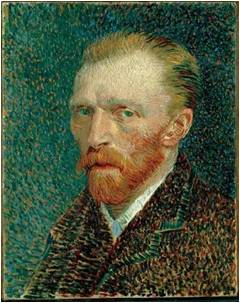
    Look at him. Brushed velvet jacket. Beard. Rakish devil-may-care hair. And that gaze. Look at that gaze! It’s full of passion. It’s coming off him in waves. In fact, we all know his inner world is a vast tempestuous sea of passion that sends ideas crashing in great surges onto the rocky beaches of his soul. And those earthly forces cannot be contained. No, he must write them, write them, write them. That’s the face of a man who will channel fire onto the written page because if he didn’t, he would surely burn.

    Or maybe not.

    Maybe creativity is about being like this guy.


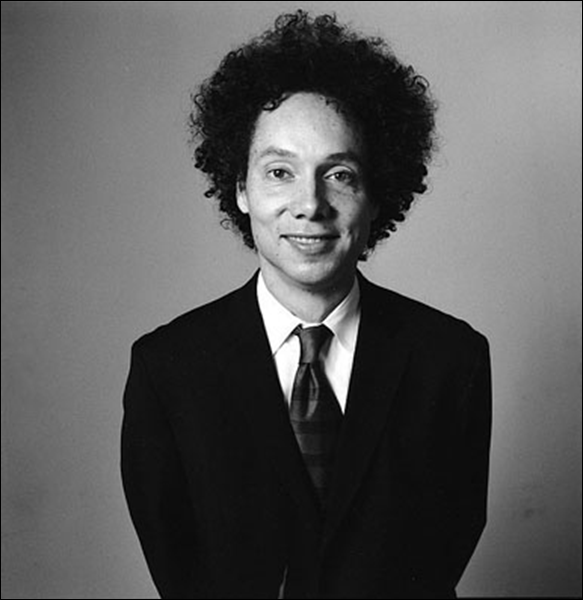
    Hello, Malcolm Gladwell. Look at him. There are so many ideas in that great blaze of brains they trip over themselves trying to get out. There are so many they kinked his hair with their electric heat. Oh, fecund mind!

    Or maybe not.

    Maybe creativity is all a function of being blessed.


    Or maybe it’s about alcohol (or some other chemical). After all, isn’t that how Ernest Hemmingway did it?

    Booze Makes Ernie Reel Smart

    Or it’s about being mentally unstable.

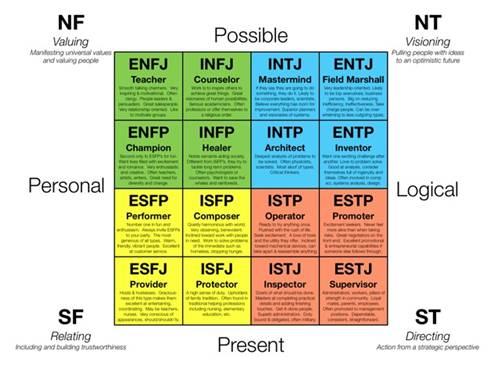
    Or it’s about having the right personality type. I remember the day of woe when I learned that I was an ENFJ but that the “natural” writers were all ISFPs!

    Alas, me being a blockhead was all scientific

    Or it’s about being eccentric.

    Patrick Rothfuss shows us the key is crazy beardage and an Alice in Wonderland chair

    Or it’s none of that. It’s about being born to it.

    I wrote my first novel when I was six

    Right? All of those things are what creativity is about. And if, as so clearly demonstrated by those pictures, you don’t have passionate hair, well then, forget about it. Except here’s Larry Correia, a New York Times bestseller, who has no passionate hair whatsoever.

    I keep guns in my basement

    Huh?!

    How could that be?

    Here’s how. All those ideas above about creativity–they’re rubbish. Creativity has nothing to do with passion or hair or whether you wear Argyle socks.

    Nothing.

    Let me show you the face of creativity.

    That is Warren Ellis. Warren is my brother-in-law, except when he’s not (do not ask me to explain this). One day our fridge started to drip. The freezer would cycle through its normal thawing, and all the water would drip down into the fridge and soak up our egg cartons and pool in the vegetable crispers. It was a mess.

    We defrosted the freezer we weren’t supposed to ever have to defrost, but the problem persisted. So we called Warren because he fixes things.

    Warren came to our house, looked the fridge over. He declared that the freezer’s drain tube was plugged. We thought up a few ideas for cleaning it out, none of which were any good, then Warren asked if we had an air compressor. We did and hauled it in.

    Warren plugged it in, let it build up the pressure, and then held the compressor nozzle to the bottom end of the tube. The compressed air went in. The obstruction flew up and out and landed on the counter. The obstruction was a fat fly that had crawled in there, gotten stuck, and died.

    We poured a quart of water into that freezer, and it all flowed down into the catch pan at the bottom. Warren fixed our freezer with an air compressor.

    Folks, that is creativity.

    What did Warren have? He didn’t have passionate hair; I can tell you that. No. He had an objective. He knew basically how fridges worked. And he came up with a couple of options to fix the issue.

    Let’s look at another example. Here’s Ed Smylie.

    Ed was like Warren. He ran into some problems. Actually, the astronauts in Apollo 13 ran into some problems. Ed was tasked to help solve them.  One of those problems was the fact that the astronauts were running out of air.

    Ed and the others designed the solution in two days. The ground crew relayed the instructions to the flight crew. The lunar module’s CO2 scrubbers started working again, saving the lives of the three astronauts on board.  Of the experience, Ed said that he knew the problem was solvable when it was confirmed that duct tape was on the spacecraft. “I felt like we were home free”, he said. “One thing a Southern boy will never say is: I don’t think duct tape will fix it.”

    Ed and his crew saved the day. The made a round peg fit into a square hole. How did he come up with such a creative solution?  

    Ed had an objective. He knew how the CO2 scrubbers and the shuttle worked. He knew about duct tape. He came up with options.

    Let’s look at a few more examples of this. I know you’ve seen some of these.


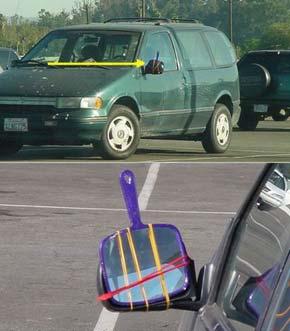
    That is creativity. So is this.


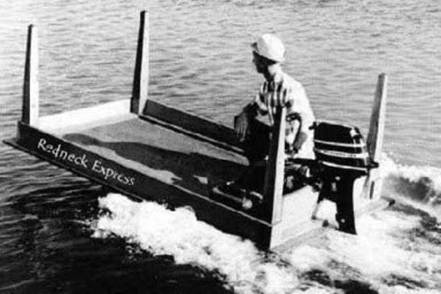
    And this . . .


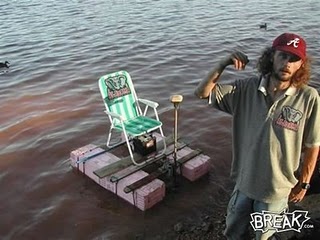
    And this . . .

    Or this, if you don’t need to go so fast . . .

    Smaller size, for trolling

    And this . . .

    And this, which is officially called a Bumper Dumper . . .

    Do you really want to dig?

     These fine folks had a goal. They knew the basics of how things worked. They came up with some solutions.

    That’s all there is to creativity. Three things. You need to have an idea of what you’re trying to do. You need to have a basic knowledge of how things work. And you have to know how to come up with some solutions to meet your objective. 

    Not so mystical, is it?

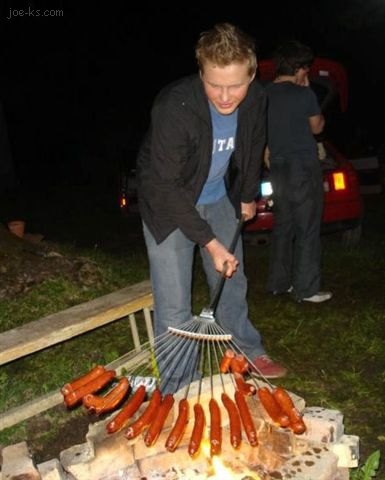
    But I can hear some of you complaining. Writing is different. It’s a whole other world. It’s Fiction, which is so significant we must capitalize it. It’s passion. It IS mystical. This is a matter of the heart. It’s not a fridge or space ship or some dumb hotdog roast. You cannot compare these things.

    Except I can because they’re the same. It doesn’t matter if you’re trying to invent a different recipe like the folks at Cook’s Illustrated, or decorate your house, or come up with a way to keep the squirrels out of your bird feeders, or make people weep in a movie theater.

    What I’ve found is that when we have troubles coming up with ideas, we probably don’t know what our objectives are. Or we probably lack some understanding of how fiction works. Or we don’t know the principles of generating options.

    And so we conclude it’s a mystery. It’s arcane lore.

    But it just ain’t so. Can you create a redneck toilet? Then you can write a story.

    Now, it’s true that a lot of people feel their way through this. They don’t know what they’re doing, but they do it. I did that. Remember: I won an award. But then I couldn’t repeat it. Couldn’t find that groove I’d stumbled into.

    I don’t want to stumble around hoping to get lucky. I want to make a living at this. And if I’m going to make a living, I need to produce. Regularly. I can’t be bumbling around, hoping to create something by accident.

    The good news is that we don’t have to create by accident.  We can create on purpose. There are principles to invention. When we learn them, our productivity will shoot through the roof.

    Finding a solution to Apollo 13’s issues might seem impossible to us. But they weren’t impossible to Ed Smylie because Ed had an objective; he knew how things worked up there; and knew how to come up with options.

    My intent is that when you finish this series, you’ll know what Ed Smylie knew, except for stories.

    For more in this series, see How to Get and Develop Story Ideas

    Share
  • Villainous Heroes

    If we root against villains based on moral judgments, then how is it possible to root for heroes who are not just bad boys but down right criminal, e.g. hitmen, mobsters, thieves?

    It’s a wonderful question that has a simple and revealing explanation.  We root for these bad guys because they’re really good.

    What?!

    When talking about bad heroes, what we often do is:

    1. Take them out of their context.
    2. Focus on one or two negative traits, not the person as a whole.
    3. Abstract them and miss what’s happening in real time as we process the story. We only have so much working memory and usually can only think about what’s being presented versus what we think about when we’re out of the story. What’s being presented in the story is mostly the threats to these heroes, not the consequences of their evil deeds. And if the consequences are show, it’s always modified by context (#1 and #2 above).
    4. Confuse fascination with rooting.

    When we actually look at what’s happening with the hero in the context of the story, what we find is that rooting is still based on moral judgments of who is good/right and who is not. We root for people we think are in the right (given their context) or are getting, undeservedly, the short end of the stick; we root against people who we think are in the wrong.

    Here are some examples.

    DISNEY’S ALADDIN

    Thief. This one’s easy, I grant it. But it’s illustrative. I never once didn’t root for the boy. But I also never saw him as a true bad boy. He was nice. He shared the bread he stole with kids less fortunate. The guards were mean brutes. Jaffar was wicked and threatened the sultan and Jasmine who were good and innocent. was in a situation that provided some leeway for his behavior (alone, penniless).

    1. Context. He’s fighting a much greater evil, someone we are rooting against.
    2. Whole Person. He is a thief, but he’s also kind. Given his whole person, he falls on the side of good.
    3. Processing. As we process the story we’re never shown awful consequnces of his theiving. Mostly just the good and courageous things he does. And the threats to his welfare.

    THE ITALIAN JOB

    Thieves.

    1. Context. The movie starts with a heist and then a betrayal and murders by a traitor. Yes they’re theives, but we wittness a greater evil. The people they fight against are worse than they are.
    2. Whole person. Except for the thieving, he’s a likeable guy.
    3. Processing. We see few negative consequences of their actions to others, but we are constantly being presented with threats to them by guys who are committing greater crimes.
    4. Fascination. I was incredibly interested in the scam–the plans, tech, everything.

    THE PROFESSIONAL

    Mob Hit Man

    1. Context. He’s protecting a girl from other hit men. He’s fighting a bigger evil. He’s also taken advantage of by his boss.
    2. Whole Person. He’s a hitman, but more time is spent on his kindness.
    3. Processing. We see very little of the effect his hits have on others. Instead we are presented with threats to the girl and him.

    DIRTY HARRY

    Murdering vigilante

    1. Context. He’s stopping guys who are doing terrible things.
    3. Processing. We don’t focus on negative consequences of his vigilantism, but the threats from these really bad guys.

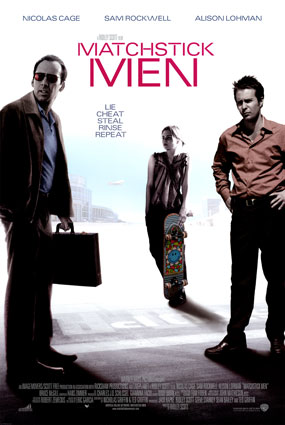
    MATCHSTICK MEN

    Scammers of the elderly

    From IMDB “Roy’s private life, however, is not so successful. An obsessive-compulsive agoraphobe with no personal relationships to call his own, Roy is barely hanging on to his wits, and when his idiosyncrasies begin to threaten his criminal productivity he’s forced to seek the help of a psychoanalyst just to keep him in working order. While Roy is looking for a quick fix, his therapy begets more than he bargained for: the revelation that he has a teenage daughter–a child whose existence he suspected but never dared confirm. What’s more troubling, 14-year-old Angela wants to meet the father she never knew. At first, Angela’s appearance disrupts her neurotic father’s carefully ordered routine. Soon, however, with his own unique spin on parenthood, Roy begins to enjoy a relationship he never dreamed of having with his daughter.”

    1. Context. Much of the time is spent his on his loneliness and issues with his estranged daughter.
    2. Whole person. He steals, but we never see huge suffering from it. We see all the other issues he deals and have sympathy for him.
    3. Processing. We’re focused on the threats to him, not the consequences of his one negative trait.
    4. Fascination. I was fascinated by the scam and this pulled me along through the first.

    CONCLUSION

    What happened in all these stories as I experienced them was that the story carefully managed my view of the hero. He was always on the better side of the antagonists. He was always more good than bad, even if only by a little. And the story focused my attention most of the time on the bad/threats/consequences flowing from the antagonists, not the bad from the hero’s deeds.

    What this shows is that you could write a story about a villain and make him the hero. In some instances it might be exceedingly difficult. For example, I think Hitler would be a hard sell as a hero, someone we’d root for. But the Neo-Nazis prove it’s not too hard a sell for some people. 

    I don’t think recognizing the fact that we can make “bad” people sympathetic means authors are “simply being clever” or “pushing buttons.” After all, to write well you must believe and care about what you’re writing about. YOU have to believe it. Nor do I think it undercuts the notion that we root for people based on a moral stance. It just recognizes the fact that moral judgments, in fact, the vast majority of appraisals of situations, happen quickly with the facts at hand, which are the ones in our working memories. The ones the authors are controlling.

    Share
  • |

    Get great writing tips, for cheap!

    The annual Life, The Universe, and Everything writer’s conference is being held this year February 11-13. It’s chock full of panels and presentations from working authors. And this year you don’t have to live within driving distance of Provo, Utah to go because they’re doing it all online (thank you, Covid).

    I will be delivering two hour-long presentations. The first is about plot, where you learn the John Brown Story Framework that makes plotting so much easier. Heck, it makes story much easier. The second is for folks new to self-publishing and is called Indie Publishing 101.

    If you’re a new writer or looking to hone your craft, you will want to check it out.

    Share
  • |

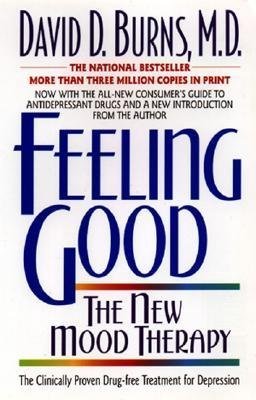
    Brain Nazis and Feeling Good by David D. Burns, M.D.

    Have You Got a Brain Nazi?

    If you’re conscious, you’re monitoring your environment. You have to. It’s how you survive. This is not something you can turn off. It’s just one of those systems that runs automatically, like your liver. You’re always appraising the situation.

    And as soon as you encounter something that’s likely to be of importance to you or yours, your monitor kicks off a physical response to prepare you to deal with or take advantage of it.

    The problem is that sometimes a Nazi propagandist worms his way into the monitoring station. And like any good Nazi, he distorts reality.

    Sometimes those distortions lead to burning resentment, sometimes to unwarranted shame or anxiety, sometimes to eating disorders, sometimes to grave depression. When I heard of the tragic suicide that occurred in our community a few months ago, my heart went out in sympathy to the girl, her family, and friends.  I’m not a doctor. I don’t know the situation. But I’m positive she was dealing with one of these villains.

    I wished I’d been able to share something that’s been a literal life saver to me. Now, it might not have changed anything. But hopefully it can change things in the future for you and others you know who may have to deal with a Nazi in the brain.

    And you will have to deal with a brain Nazi at some time.

    This is not something that affects a miniscule portion of the population. In any given year you can expect more than 15% of a population to experience some form of this [1]. That’s roughly 238 of the estimated 1,592 people 18 years and older in the little county where I live [2]. Rates for teens are similar [3]. Besides, you don’t have to have a full-blown case of a depression for distortions to affect you. How many of us haven’t made faulty comparisons with others? “Oh, she’s so thin and has such great hair; I’m so dumpy.” “Oh, he’s doing so well, and I’m not. I’ll never be a success.”

    The question is not whether you or someone important to you will have to deal with it. The question is how prepared you’ll be when you do. Everyone deals with distortions now and again.  Which means everyone can find a little more enjoyment in life by showing their brain Nazis the door.

    So how does it all work? How do you show the villain out?

    I’m going to summarize it below, but I’ll tell you right now that the book that saved my life was Feeling Good by David D. Burns, MD. This isn’t positive mental attitude. It’s not neuro-linguistic programming. It’s not the mumbo jumbo of Freud and Jung. This is practical and proven. It is the most prescribed intervention for dealing with these issues in the current medical community. It’s prescribed because it works.

    Your Brilliant Appraisal-Emotion System

    To understand this, you have to understand how emotions work. As I said before, you’re always monitoring your situation. You hear a buzz and see a rattlesnake on the path two feet away. Your monitor immediately responds. Alarm, adrenaline, increased blood flow–all of that to get you ready to deal with the situation. Your monitor writes “alarm” on your face to communicate it to those around you–to warn and ask for help. This happens in less than a blink of an eye.

    But this doesn’t just happen with danger. It happens when we encounter unfamiliar things. When we encounter positive things. You see a great friend who makes you laugh all the time. Boom, your monitor responds. You smile. Feel. Focus. You do so because you not only want to avoid dangers, you also want to seek out the things that make you happy.

    Our emotions prepare us to fight, flee, seek, and pitch woo. Our little monitoring and physical response system is brilliant.

    But there’s more. We don’t rely on just the automatic subconscious monitoring. We also have a cognitive (conscious thinking) part. Let’s go back to the rattlesnake. You walk out into the garden, step on a slither, and immediately go into alarm mode. Then you look, consciously see the slithery thing is not a snake, but the garden hose. You relax. Laugh.

    The quick subconscious appraisals keep us alive, because with snakes and other things, if you’re slow, you’re dead. We don’t have time for thought. If you touch a hot stove, you want an immediate reflex. You don’t want to ponder it for a second or two. On the other hand, the cognitive appraisals help us further appraise a situation. They bring more of our resources to bear on the situation.

    How Does the Nazi Get In?

    So there are three parts of the appraisal-emotion system: the subconscious appraisal of the situation, the physical response, and the cognitive appraisal. Each of the three parts affects the other two. And when things are running smoothly, we don’t have problems. But sometimes we get a distortion mucking up the works. We make a faulty appraisal of the situation. And therefore have a faulty physical response.

    For example, you’re a mother. You’ve had a hard day. The kids make a huge mess with flour in the kitchen. You yell, freak out. When they’re cowering in their rooms and you’re cleaning up the flour, you think, “There I go again. I’m a total failure. I can’t stand it! I never do anything right! I’m a terrible mother.” These thoughts make you even sadder.

    And that’s the propaganda. That’s your brain Nazi with his all-or-nothing thinking, telling you that you either perform perfectly or you’re a failure.

    But is that true? No, it’s not. You might be a B+ mother, filling the lives of your kids with all sorts of goodness. You might have just had a great time reading with the kids not thirty minutes before. But the brain Nazi tells you to forget that. “Vatch dis film,” he says, “und see de horrors of vut you are!”    

    And the all-or-nothing thinking gambit is just one of ten common weapons he uses. Furthermore, this happens so quick that we often don’t notice it. In fact, we’ve often repeated some of these distortions so often than they’ve become almost automatic.

    Mr. Nazi, Meet Mr. Bazooka

    The good news is that you can pull the lid off the lies. You can open the door, spot the brain Nazi that slipped in, and take him out. You can do this because one of the three parts of the system is our cognitive appraisal. This means you can consciously stop the movie, pin the distortion on the wall, and uncover the truth. Once you do that, it’s like the rattlesnake scenario above—oh, it’s a hose, we realize, not a snake, and the appropriate emotions immediately follow.

    But you need to know how to stop the movie. You need to know how to spot the lies. David D. Burns, MD tells you exactly how to do this in his book Feeling Good. (By the way, DON’T get this book confused with his Feeling Good Handbook–you DON’T want the handbook; you want Feeling Good, the book.)  In the book, Burns talks about the theory, the results, and then gets right down to the practical techniques used to blow the brain Nazi to kingdom come.

    A few years ago I hit a bad patch with a brain Nazi that had taken up residence. A very bad patch. He’d been there for quite some time. This book and a good counselor saved me. I thank the Lord for that. By the time I went to see a medical doctor to assess whether chemical issues might be playing a role, I was stable. I wasn’t out of the woods yet, but I had opened the lid and found the villain at the controls. I used the techniques Burns gave me, and I’m happy to say that while the brain Nazi still comes round every once in a while, I can spot him. And I can take that sucker out.

    Go to the library and check out the book and take the assessment test. If you, or someone you know, scores in the mild range, maybe you’ve just experienced a very sad event. But maybe you’ve also got a villain in residence. Get the book. Read it. Be happy. Nobody needs to live with a Nazi at the controls.

    For Authors

    By the way, fiction authors should pay special attention to this stuff. Not because we’re more susceptible to brain Nazis than others, although we do have to deal with our fair share as we develop and share our stories. No, we should because the emotion process is exactly what we’re trying to tap into. Knowing the principles can be very useful indeed. Let me recommend you read the books on emotion listed on the Learning With Pros page.

    Sources

    1. 1. http://www.nimh.nih.gov/health/publications/the-numbers-count-mental-disorders-in-america/index.shtml
    2. 2. http://quickfacts.census.gov/qfd/states/49/49033.html (find your state and county and see how many folks are likely dealing with a brain Nazi in your area)
    3. 3. http://www.oas.samhsa.gov/2k5/youthDepression/youthDepression.htm
    Share