Indie Thoughts: Resources for Indie Writers

About this time last year I got the last of my rights back to the Dark God properties. I thought it would take twenty or thirty hours to figure out the whole indie publishing thing. And then the awesome John Brown story machine would kick in gear.

Reality promptly woke me up and slapped me around a bit. This last year has been quite the learning curve. Here’s what I’ve had to pick up:

  • Designing book covers
  • Finding artists
  • Working with artists in a way that actually works
  • Copy editing
  • Formatting book interiors
  • Fonts, fonts, fonts
  • Using ISBNs
  • Using InDesign to create files for both POD books and epubs
  • eBook structure
  • Editing ebooks (okay, just get Calibre ebook editor right now. We luvs it, Precious)
  • Validating ebooks (http://validator.idpf.org/)
  • Converting epubs to Amazon’s mobi format
  • Uploading ebooks to the various ebook retailers: Amazon, NookPress, Kobo, iTunes (I upload via Draft2Digital), Smashwords
  • The pros and cons of CreateSpace vs Lightning Source
  • Using CreateSpace to publish POD books
  • Registering books with the US Copyright Office
  • Writing better book descriptions
  • Using keywords and categories on Amazon
  • Setting prices in the indie market
  • Creating an email list (I love MailChimp. They make me happy every time I go to their site)
  • Advertising and promoting as an indie

One of the things I love about this business is that there is always more to learn. But I’m happy to be over that curve. For folks just starting out, let me share some of the resources I found super helpful with a number of the things listed above.

Posts by a mega indie-seller Russell Blake to give you the right perspective about indie publishing. I’ve read a lot of posts the last few years about being an indie author. These are the best I’ve come across.

Online courses to help you on the publishing side.

  • Designing Book Covers and Designing Book Interiors with Dean Wesley Smith (look for “Online Workshops”). I don’t agree with Dean on all his ideas about pricing and promotion, but these two courses helped a great deal.
  • InDesign CS6 to EPUB, Kindle, and iPad with Anne-Marie Concepción at Lynda.com. Awesome.

The most practical and clear-headed books about indie promotion I’ve read. For other clear-headed advice, see the Russell Blake posts above.

The most helpful book on copyright.

The most helpful book on copy editing as well as info to put into front and back matter.

Helpful threads on Kindle boards

Other great resources

Good luck!

Share

Similar Posts

  • |

    The book trade is a . . . trade

    James Dawson, YA author, feels it’s somehow wrong to hold back on cussing in his fiction. He wrote an article about this in the UK Guardian called “Why Teens in Books Can’t Swear.” He thinks it’s unrealistic. He thinks it’s about gate-keeper censorship. You know, parents wanting to steer their children towards certain experiences and away from others.  

    People.

    Dawson’s approach to the whole problem is wrong-headed. This isn’t about the virtues and vices of fiction. Or about gatekeepers, especially in today’s ebook world.  Or what experiences parents want to provide their children. And it’s not about art reflecting reality. Reality includes trips to the toilet, and yet we somehow fail to include realistic bum wiping in so many of our tales. Good heavens, have we betrayed our artistic integrity? No. We’ve just naturally chosen to include things that appeal to us and leave out others that don’t. Every book is an exercise in hundreds of such choices.

    The fact is that Dawson’s forgetting that a fundamental aspect of the book trade is the trade.  The buyer trades his or her money for a product (the book) that provides a service (the entertainment, thrills, chills, etc. of the reading experience) he or she values.  A customer preferring one kind of experience over another isn’t censorship (the horror, the horror).  It’s choice.  

    As an author, you make your offer. If folks like it, they buy it. If not, they don’t. Nobody owes you a purchase.

    This means that in any business, and selling fiction is a business, the most sensible way forward is to offer your intended buyers something they are likely to value.  Something they’re going to like.  Something they want.  If your buyer is thirsty and wants water, offer him a cold glass of water, not a waffle iron.  And if you can’t bear to develop anything but waffle irons, then, by all means, develop waffle irons.  Just make sure you offer them to the folks looking for . . . waffle irons. 

    This business of making offers also means that we package our products and services so that customers can easily tell what’s in the box. You don’t want someone to purchase your box thinking it contains breakfast cereal when in reality it’s a bunch of bolts.

    Yeah, writing is an art. But offering it in trade to others is also a basic economic act.

    Share
  • The Key Conditions for Reader Suspense Part 1: Problem

    Sometimes it feels like there are a thousand things to remember when writing a story. New writers who make lists of these things soon begin to drown in them. But I’ve come to realize that many of these “rules” don’t matter.

    They don’t matter because many ignore the function of story. This makes it impossible to know how and when to apply them, or if they’re even something you should apply in the first place. Furthermore, a good number that do tie back to function often have little impact.

    In fact, the more I write, the more I believe the Pareto Principle applies to writing–a few vital factors make up most of the effect. The key is to focus on a limited number of fundamentals. To focus on these things that matter most. The things that produce the biggest bang for the buck.

    So what really matters when you’re writing a story?

    That all depends on what you’re trying to do. Form follows function.

    So what is the function, the objective?

    First of all, it’s something that happens in the reader. Readers buy stories because they provide a service, they do something to the reader, guide them into an experience. In this series, I take a look at what I think is one of the core elements of the story experience and identify the Pareto factors for delivering it to the reader.

    That story core, or at least a huge part of it, is suspense.

    Man goes out and turns on his sprinklers. They hiss to life. He scratches his bum, looks at the rising sun, goes back inside, and nothing more happens.

    You want to pay me money for that one? Want to make it into a movie? It’s a story.

    Yeah, it’s a story alright, you may say, but who cares?

    Okay, so maybe while he’s scratching his bum, a guy with a gun slips in the back. The intruder points the gun at the man’s daughter who is standing by the toaster buttering her bread. She’s a teenager, dressed in cutoffs and hiking boots. The intruder says, “Your father is going to be coming back through that door any time now. You’re going to call him into the kitchen. We’re going to have a chat. You two didn’t finish the business we talked about.”

    The girl only has a butter knife, but she grips it tighter, considers that only 13% of shots fired by cops in gunfights hit home. This was drilled into her by her firearms instructor. The guys who are trained only hit 13% of the time. It’s that low even though most gunfights start with the opponents standing only six feet away from each other–the distance between her and Gideon with his gun. That’s what happens when the adrenaline takes over. But Gideon doesn’t look like he’s full of adrenaline. He looks like a man going to a BBQ. So maybe he has a 40% chance with each bullet. That still gives her 60. 

    The front door opens. It distracts Gideon for just a moment. The barrel of his gun moves slightly to the left.

    It’s not a story yet, but it’s more interesting. And it’s more interesting because that second version generated something the first one never could. What it generated, dear Reader, was a little rise of hope, fear, and curiosity–a little suspense.

    After finishing draft 3 of CURSE OF A DARK GOD, I needed a break. So I reviewed my notes of DARK GOD’S GLORY, debriefed the many things I learned this last year about novels and story (and, oh boy, was it a year for learning), wrote up my “Ideal Novel” document, and then began to study structure and suspense. It’s been a wonderful and fruitful month.

    I think I’ve found some clarity and solidified a number of Pareto factors for suspense. Let me share my current thoughts on the subject. (Interestingly enough, the Writing Excuses guys just did a podcast on this subject: 5.4: Creating Suspense. You might want to check it out.)

    Because form follows function, let’s start with the end in mind.

    In the stories we love, the stories we stay up late at night for, the ones for which we pay $25.99 in hardback, the ones we willingly spend hours of our life on, those stories very frequently put the reader into a state of hoping and fearing for a character. This starts as curiosity and quickly moves to sympathy. Very often it builds to an edge-of-your-seat worry that continues up to the end of the novel. At that point the reader experiences a cathartic release.

    When we talk about suspense, this is what I believe we’re talking about. And a key thing to remember is that the tension we’re after is not something that’s in the text. It’s something the text builds IN the reader. So you may have massive explosions, deaths, chases, escapes, villains, and all the hordes of hell combine in your story, in the text, but that does not mean the story has dramatic tension. Because dramatic tension is a READER concept. You may have a relatively quite scene where a child is doing nothing more than swinging at a park, but because the reader knows the child molester has just arrived and the park is empty, the scene creates dramatic tension. The girl feels no tension. She’s just swinging away. But the reader’s tension goes through the roof. It’s all about what happens in the READER.

    So the question is what key factors of a story guide the reader into this dramatic tension?

    Well, we first need to understand what’s involved with this tension. What’s it made of? I came across a lovely *discussion of this last month in David Howard’s How to Build a Great Screenplay and have adapted it to my use. In emotional terms, we HOPE and FEAR for a character. “We don’t know what WILL happen, but we know [or suspect] what MIGHT happen, and therefore feel tension about those possibilities” (p52).

    Notice the key ideas:

    • Hope
    • Fear
    • Character
    • Uncertainty

    So what makes us hope or fear for someone? What makes us uncertain of an outcome?

    I see vital ingredients, key conditions in three of the four parts of story—problem, character, and plot. In this blog I’ll discuss the Pareto factors for suspense I see working in problem. In following posts, I’ll identify those I see in character and plot.

    The Nature of the Problem

    Form follows function, so what types of problems lead to us hoping and fearing for a character?

    When I look back at the stories I love that produce this effect in me, I see three main types of problems. I’ve talked about these before.

    Problem Type 1: Danger/Threat

    In this type of problem, there’s a danger or threat to some aspect of the character’s happiness that is significant enough that the READER can sympathize.

    With these problems we HOPE the character avoids or eliminates the danger, but we FEAR they may not. There are many aspects of happiness that might be threatened or in danger. I’ve listed below those that raise my FEAR and would raise my fear for someone else. I’ve stated them in first person, but you can think about them in third.

    1. Life

    In these situations my life is in danger or threatened.  People are out to kill me (HUNGER GAMES); I’m going to starve or freeze to death (“TO BUILD A FIRE”); there’s a shark in the water who would like a taste (JAWS).

    2. Security & well-being

    My security and physical well-being is in danger or threatened. These include all sorts of situations where bullies threaten me with violence or where I might be maimed in some way. Or I begin to lose some vital function—sight, hearing, speech, my ability to think, etc.

    3. Relationships

    In these situations my inclusion in a group is threatened. My love, friendship, relationship, feeling of belonging or of being valued are endangered. For example, I’m ostracized by a group, shunned, discriminated against. Or maybe my girlfriend begins to look at other men and I fear losing her, or my son and I become estranged and I fear losing him. This can even be a physical separation like in TAKEN (daughter kidnapped for the slave trade) or NOT WITHOUT MY DAUGHTER (daughter kidnapped by husband).

    4. Meaningfulness

    In these situations my sense of fulfillment of doing something worthwhile is in danger. I’m threatened with a life of drudgery. You can see this at work in the beginning of THE INCREDIBLES where Bob, Mr. Incredible, has to work in a deadening insurance office. But it might be someone whose future or ability to do things that are meaningful to them is being threatened. For example, a boy who desperately wants to play the piano has his piano and is forced to do something else.

    5. Freedom

    Anything threatening our freedom. It might be slavery or blackmail or government control or a number of other things.

    6. Ownership

    In these situations my ability to retain and use my possessions is threatened. Any time something precious is stolen from me, my happiness is affected.

    7. Other aspects?

    These are the main aspects of happiness I’ve identified that seem significant enough to raise fears. If you think you know another, please post a comment.

    Problem Type 2: Lack/Opportunity

    In this type of problem, a character has a lack of and opportunity for some aspect of happiness that is significant enough that the READER can sympathize. These are often about characters in some kind of hardship. The lacks, hardships, and opportunities all have to do with the same aspects of happiness as listed above. In these situations we HOPE the character is able to fill the lack; we HOPE they will be able to grasp this opportunity for happiness. But we also FEAR they will fail.

    If you think about love stories, these are all stories of lack/opportunity. She’s alone, without a lover, or a satisfying and loving relationship, and she meets someone. Suddenly, she has an opportunity for happiness. As readers we immediately began to hope she will find that relationship wonderfulness and fear she might not.

    In the movie OCTOBER SKY a young boy lives in a coal mining community. But it’s not his thing. He suddenly gets an opportunity at school to do something with science. This is his ticket to doing something meaningful. We HOPE he doesn’t miss it, but we FEAR he might.

    Problem Type 3: Mystery

    A character encounters a mystery that is significant enough that the READER can sympathize or feel curiosity about it.

    The first two types of problems center on happiness. They raise suspense and sympathy and worry in the reader. This last type of problem centers more on raising curiosity in the reader. We HOPE the character solves the mystery because we want to know the answer as well, but we FEAR they might not.

    Very often these types of problem are paired with some aspect of happiness. The vast majority of murder mysteries, cop stories, and courtroom dramas do this. In fact, many happiness problems are paired with mysteries and puzzles.

    Problems that are HARD to Solve

    Let’s go back up to the objective. We want to HOPE and FEAR for the character. We don’t know what WILL happen but suspect or know what MIGHT and we worry and feel tension about the possibilities. We want to worry, and we want that worry to build to a pitch. We then want to experience a cathartic release.

    How will we FEAR if the problem is so easy anybody could fix it? How will we WORRY if the lead has all the odds stacked in his or her favor?  How will we feel UNCERTAIN if we know exactly what’s going to occur?

    I can’t worry for Frodo, for example, if all he has to do is cast the naughty ring into the pit of doom that lies on the other side of his street. I can’t worry about a guy finding a girl to love and who will love him, and have that worry build to a sharp edge-of-your-seat point, if all he has to do is proclaim his feelings and the girl immediately rushes to him forever.

    The facts are that we won’t feel fear, worry, or uncertainty unless the problem is HARD to solve. I’ll discuss the Pareto factors for making problems hard when I talk about plot.

    Problem Intensifiers

    Besides being hard, problems need to be urgent. I’ve identified four factors that seem to intensify the nature of the problem: probability, immediacy, significance, and specificity.

    1. Probable

    It’s one thing to face the one-in-a-gazillion chance that I might be trampled by a herd of elephants when I walk out of the door. It’s quite another to know that the last seven people who walked out of the door were killed by the madman with the AK-47 sitting at the end of the hall.

    The higher the probability of the threat or loss of opportunity, the more intense the problem becomes because it’s more likely I’ll lose. No probability and I have nothing to FEAR.

    2. Immediate

    It’s one thing to know an asteroid will hit the earth and kill us all in 7,000 years. It’s quite another to know it will hit in three days.

    The more immediate the problem, the less likely I’ll be able to solve it. The less likely my chances are, the more I’ll WORRY. Give us 2,000 years, and I’m sure we’ll figure out the asteroid thing. Give us three days, and that’s probably cutting it too close. This is why setting up a time limit, a ticking clock or ticking time-bomb, can ratchet up the audience’s tension.  Of course, it has to be a short time limit. You can’t start the bomb ticking, and give the lead 45 years to disarm it.

    3. Significant

    We talked about this before. It’s one thing to face the kidnapping of my pet spider. It’s quite another to face the kidnapping of my child. Significance increases when more is put at risk.

    The more significant the threat or opportunity, the more invested I become. The more I FEAR to lose.

    4. Specific

    It’s one thing to say that something bad is going to happen. It’s quite another to know that kidnappers are going to cut your finger off with a pair of wire dikes. It’s one thing to have someone say something good will happen (Chinese fortune cookie) and quite another to say your uncle just died and left you a million dollars, but you have to fight your three cousins for it.

    The more specific the problem, the easier it is for us to see the specific possibilities and react to them with HOPE and FEAR. Generalities don’t trigger emotions.  Striking snakes do, though. As do garbage disposals that are turned on just when you reach in to get the baby’s pacifier.

    Another part of this is to make the threat specific to the hero. It’s one thing to say a lot of people in the United States or Russia or India are going to die. It’s another to say the hero will lose his own child or wife in the event. In fact, the loss of one child can make the problem more intense that the loss of thousands.

    This is not to say you can’t write about threats to large groups of people. That’s one of the ways to broaden the scope of the problem and make it more significant. It’s just that problems become more intense the closer they comes to home. Things that threaten us personally, or those we love, raise more fears than those that threaten people we don’t know. A flood raging in the next county is different than the one coming down our street. So in story, the more personal you make the threat to the person we’ve invested in, the more intense the threat will be.

    Uncertainty

    Supporting all of this hope, fear, and worry is the fact that the reader is uncertain of the outcome. The character must have a chance to solve the problem up until the end, but for no extended period of time can it look like winning or losing is assured, because the moment the reader can predict the ending and the major turns along the way, that’s the moment they will lose interest.

    Think about this. It’s the first quarter of a football game, and the score is 64 to 0. Anybody sticking around for that one to play out?

    No, you can predict the ending. Why watch? Predictability kills hope, fear, and worry. It kills interest.

    So how do we make sure the reader is uncertain of the outcome?

    First, as stated before, we make the problem hard to solve. We’ll get into more specifics during the post on plot, but we make the problem harder to solve by giving our characters limitations, putting them into ongoing and continuing troubles, and making them face conflict with their own competing desires, other people in the story, and the setting.

    But there’s another ingredient. The second thing we do is introduce surprise. Surprise is one of the vital elements in story making precisely because it makes things unpredictable. It makes hope, fear, worry, and curiosity possible.

    There are two forms the surprise takes. The first is surprising or new limitations, troubles, and conflicts. New twists to the problem.

    Maybe we’ve seen lots of stories about assassins who need to go behind enemy lines. But what if we add a surprising conflict. What if our character is asked to sneak in and kill his sister? Or his mother? Or his best friend? Or the teacher he loves?

    What if our lead is not a highly-skilled CIA operative, but a child who has been trained for this, and not as a suicide bomber? Or a grandmother with no training at all who is forced into the situation?  What if the person she is supposed to kill isn’t in enemy territory but a religious leader or someone in our own government?

    Do you see? You simply twist the elements of the problem in new ways. While the situation may be similar, it’s not the exact same thing they’ve seen before, and so it prevents them from predicting how things will unfold. While they suspect what MIGHT happen, then don’t know what WILL happen.

    The next type of surprise is to simply introduce a turn into the story the reader cannot foresee. Again, this relies on reader expectation. So the sidekick we’ve lead the reader to trust turns out to be a traitor. The tactic that the reader has seen work so many times in other stories fails right off the bat in your book. In fact, maybe the whole plan fails. The villain finds out about the child assassin in the beginning and when he shows up, they’re waiting.

    Surprises give the story vital jolts of life. Set up a problem that has a new twist to it and give us some unexpected twists along the way during the plot.

    Developing a Story Problem

    Story problems are the engines that make stories go. They define where a story starts and when it ends. They do so because they generate hope, fear, worry, and curiosity. You might have great characters and a fabulous setting, but if your characters don’t face gnarly problems, readers will be unable to hope and fear for them. They will not worry. And they’ll soon tire of waiting for something to happen.

    When I’m developing the central problem of my stories, I find the most exciting possibilities when I think of possible threats/dangers, lacks/opportunities, and mysteries. My ideas start to really crackle when I think of ways to make those problems harder, more urgent, and the outcome more uncertain. When I do this, I find I never have to worry about knowing what to write next. The problems beg for scenes.

    It’s true that some delightful stories do not promise or deliver suspense and curiosity as their major delights. For example, in many mysteries, readers are not hoping and fearing as much as they are enjoying the character interactions or the humor. But even in those stories, hope, fear, and curiosity play a significant role. They often structure the novel.

    The bottom line is that suspense over a character’s fate (hope, fear, and worry) or the answer to an involving question (curiosity) is one of the key things readers come to our stories for. And all that suspense starts with problem. However, it can’t end there because readers won’t worry for just anybody. You have to have characters they can get behind. In the next post in the series, I’ll write about a number of Pareto factors that naturally invest a reader in a character’s fate.

    Notes

    *These notes might expand. For right now I just want to share the full Howard quote.

    “As we’ve seen, what the audience hopes for and what the characters hope for need not be the same thing. The same is true of our fears versus their fears. But how do hope and fear fit into the scheme of storytelling? Hope and fear are about the future. They derive from uncertaintly about future events in the story, future decisions the characters might make, future discoveries or revelations that might be unearthed, future outside forces and how they will influence the journey of the characters. When we discuss hope verusus fear in dramaturgical terms, this uncertainty is a function solely of the audience and its experience [my emphasis]. This is dramatic tension. We hope the man with the cobra in the shoe box won’t open the box; we fear he might and get himself or someone else bitten. We don’t know what will happen, but we know what might happen and therefore feel tension about those possibilities” (How to Build a Great Screenplay, 52).

    Parts in the The Key Conditions for Reader Suspense Series

    1. Scene  (coming soon)
    2. Development Tips
    Share
  • |

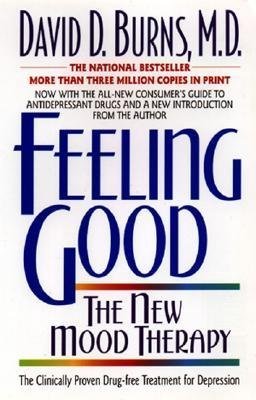
    Brain Nazis and Feeling Good by David D. Burns, M.D.

    Have You Got a Brain Nazi?

    If you’re conscious, you’re monitoring your environment. You have to. It’s how you survive. This is not something you can turn off. It’s just one of those systems that runs automatically, like your liver. You’re always appraising the situation.

    And as soon as you encounter something that’s likely to be of importance to you or yours, your monitor kicks off a physical response to prepare you to deal with or take advantage of it.

    The problem is that sometimes a Nazi propagandist worms his way into the monitoring station. And like any good Nazi, he distorts reality.

    Sometimes those distortions lead to burning resentment, sometimes to unwarranted shame or anxiety, sometimes to eating disorders, sometimes to grave depression. When I heard of the tragic suicide that occurred in our community a few months ago, my heart went out in sympathy to the girl, her family, and friends.  I’m not a doctor. I don’t know the situation. But I’m positive she was dealing with one of these villains.

    I wished I’d been able to share something that’s been a literal life saver to me. Now, it might not have changed anything. But hopefully it can change things in the future for you and others you know who may have to deal with a Nazi in the brain.

    And you will have to deal with a brain Nazi at some time.

    This is not something that affects a miniscule portion of the population. In any given year you can expect more than 15% of a population to experience some form of this [1]. That’s roughly 238 of the estimated 1,592 people 18 years and older in the little county where I live [2]. Rates for teens are similar [3]. Besides, you don’t have to have a full-blown case of a depression for distortions to affect you. How many of us haven’t made faulty comparisons with others? “Oh, she’s so thin and has such great hair; I’m so dumpy.” “Oh, he’s doing so well, and I’m not. I’ll never be a success.”

    The question is not whether you or someone important to you will have to deal with it. The question is how prepared you’ll be when you do. Everyone deals with distortions now and again.  Which means everyone can find a little more enjoyment in life by showing their brain Nazis the door.

    So how does it all work? How do you show the villain out?

    I’m going to summarize it below, but I’ll tell you right now that the book that saved my life was Feeling Good by David D. Burns, MD. This isn’t positive mental attitude. It’s not neuro-linguistic programming. It’s not the mumbo jumbo of Freud and Jung. This is practical and proven. It is the most prescribed intervention for dealing with these issues in the current medical community. It’s prescribed because it works.

    Your Brilliant Appraisal-Emotion System

    To understand this, you have to understand how emotions work. As I said before, you’re always monitoring your situation. You hear a buzz and see a rattlesnake on the path two feet away. Your monitor immediately responds. Alarm, adrenaline, increased blood flow–all of that to get you ready to deal with the situation. Your monitor writes “alarm” on your face to communicate it to those around you–to warn and ask for help. This happens in less than a blink of an eye.

    But this doesn’t just happen with danger. It happens when we encounter unfamiliar things. When we encounter positive things. You see a great friend who makes you laugh all the time. Boom, your monitor responds. You smile. Feel. Focus. You do so because you not only want to avoid dangers, you also want to seek out the things that make you happy.

    Our emotions prepare us to fight, flee, seek, and pitch woo. Our little monitoring and physical response system is brilliant.

    But there’s more. We don’t rely on just the automatic subconscious monitoring. We also have a cognitive (conscious thinking) part. Let’s go back to the rattlesnake. You walk out into the garden, step on a slither, and immediately go into alarm mode. Then you look, consciously see the slithery thing is not a snake, but the garden hose. You relax. Laugh.

    The quick subconscious appraisals keep us alive, because with snakes and other things, if you’re slow, you’re dead. We don’t have time for thought. If you touch a hot stove, you want an immediate reflex. You don’t want to ponder it for a second or two. On the other hand, the cognitive appraisals help us further appraise a situation. They bring more of our resources to bear on the situation.

    How Does the Nazi Get In?

    So there are three parts of the appraisal-emotion system: the subconscious appraisal of the situation, the physical response, and the cognitive appraisal. Each of the three parts affects the other two. And when things are running smoothly, we don’t have problems. But sometimes we get a distortion mucking up the works. We make a faulty appraisal of the situation. And therefore have a faulty physical response.

    For example, you’re a mother. You’ve had a hard day. The kids make a huge mess with flour in the kitchen. You yell, freak out. When they’re cowering in their rooms and you’re cleaning up the flour, you think, “There I go again. I’m a total failure. I can’t stand it! I never do anything right! I’m a terrible mother.” These thoughts make you even sadder.

    And that’s the propaganda. That’s your brain Nazi with his all-or-nothing thinking, telling you that you either perform perfectly or you’re a failure.

    But is that true? No, it’s not. You might be a B+ mother, filling the lives of your kids with all sorts of goodness. You might have just had a great time reading with the kids not thirty minutes before. But the brain Nazi tells you to forget that. “Vatch dis film,” he says, “und see de horrors of vut you are!”    

    And the all-or-nothing thinking gambit is just one of ten common weapons he uses. Furthermore, this happens so quick that we often don’t notice it. In fact, we’ve often repeated some of these distortions so often than they’ve become almost automatic.

    Mr. Nazi, Meet Mr. Bazooka

    The good news is that you can pull the lid off the lies. You can open the door, spot the brain Nazi that slipped in, and take him out. You can do this because one of the three parts of the system is our cognitive appraisal. This means you can consciously stop the movie, pin the distortion on the wall, and uncover the truth. Once you do that, it’s like the rattlesnake scenario above—oh, it’s a hose, we realize, not a snake, and the appropriate emotions immediately follow.

    But you need to know how to stop the movie. You need to know how to spot the lies. David D. Burns, MD tells you exactly how to do this in his book Feeling Good. (By the way, DON’T get this book confused with his Feeling Good Handbook–you DON’T want the handbook; you want Feeling Good, the book.)  In the book, Burns talks about the theory, the results, and then gets right down to the practical techniques used to blow the brain Nazi to kingdom come.

    A few years ago I hit a bad patch with a brain Nazi that had taken up residence. A very bad patch. He’d been there for quite some time. This book and a good counselor saved me. I thank the Lord for that. By the time I went to see a medical doctor to assess whether chemical issues might be playing a role, I was stable. I wasn’t out of the woods yet, but I had opened the lid and found the villain at the controls. I used the techniques Burns gave me, and I’m happy to say that while the brain Nazi still comes round every once in a while, I can spot him. And I can take that sucker out.

    Go to the library and check out the book and take the assessment test. If you, or someone you know, scores in the mild range, maybe you’ve just experienced a very sad event. But maybe you’ve also got a villain in residence. Get the book. Read it. Be happy. Nobody needs to live with a Nazi at the controls.

    For Authors

    By the way, fiction authors should pay special attention to this stuff. Not because we’re more susceptible to brain Nazis than others, although we do have to deal with our fair share as we develop and share our stories. No, we should because the emotion process is exactly what we’re trying to tap into. Knowing the principles can be very useful indeed. Let me recommend you read the books on emotion listed on the Learning With Pros page.

    Sources

    1. 1. http://www.nimh.nih.gov/health/publications/the-numbers-count-mental-disorders-in-america/index.shtml
    2. 2. http://quickfacts.census.gov/qfd/states/49/49033.html (find your state and county and see how many folks are likely dealing with a brain Nazi in your area)
    3. 3. http://www.oas.samhsa.gov/2k5/youthDepression/youthDepression.htm
    Share
  • |

    Presentation for Brandon Sanderson’s writing course

    PDF of the slides

    Brandon asked me to substitute for him on March 1st and teach the students about indie publishing. For those of you who were there, here are the slides.

    2018 Sanderson Class – Indie Publishing Final PDF

    “If I Were Published”

    To start the presentation, I regaled the students with a surprise: my epic-fantasy-BYU-newbie-author version of the classic Fiddler on the Roof song which I called “If I Were Published.” Dylan Rowe, a student in the class with some serious violin chops, practiced with me in secret, then accompanied me during the performance. He was great. And the performance went well. We all had a great time. There’s a recording. Once I get it, I’ll post it here.

    Here’s how it went.

    Isaac introduced me. I said how happy I was to be there. I then asked for a show of hands: who was hoping to be published. Not all did, BTW. Some were taking the course for other reasons. I then said that the sight of such a vast assemblage of unpublished writers made me think of someone else. I displayed the slide of Tevye dancing. They all laughed, and I knew this was going to be a good crowd.

    And then Dylan, who was hiding off to the side, played the phrase for “If I were a rich man” and I put on my own black Tevye hat. There was more laughter and surprise, and I began.

    Dear Lord, you made many, many unpublished writers.
    I realize, of course, that it’s no shame to be unpublished
    But it’s no great honor, either.
    So what would have been so terrible if I had one small best-selling series?

    [Dylan began to play and I began to sing]

    If I were published,
    Yaba dibba dibba dibba digguh deedle daidle dum.
    All day long I’d biddy-biddy-bum
    If I were a published man

    Wouldn’t have to work hard,
    Yaba dibba dibba dibba digguh deedle daidle dum.
    If I were a biddy biddy pub
    digguh deedle daidle published man

    I’d write a big long epic–hundreds of characters!
    Swords and dragons and a lot of gore
    A snot-nosed lad who was prophesied for the fight

    There’d be a quest to one far side of the map
    And one to find a lovely ancient lore
    And one more leading out into the blight

    [I paused here, to think, then sang the tune to the last line again with the first four of these]

    To meet a sprite,
    and a dark knight,
    with an old birth right,
    read by moon light,
    that … cures snake bite.

    [Dylan produced a big scratch. I covered my eyes in shame.]

    Oy! Bad story development.

    I’d see my wife, my Nellie,
    Looking like a rich man’s wife,
    with a proper golden skin,
    rolling out the yoga mats to her heart’s delight.

    I’d see her driving the kids
    in something other than a minivan
    Oy! What a happy mood she’s in!
    Posting perfect selfies to day and night.

    Hordes of bright-eyed zoobie writers will come to fawn on me.
    They will ask me to advise them,
    like Sanderson the Wise.
    “If you please, Mister Brown?”
    “Pardon me, Mister Brown?”
    Posing problems that would cross a Shakespeare’s eyes
    Ya da dee da dum, ya dah da dum

    And it won’t make one bit of difference
    if I answer right or wrong.
    When you’re published they think you really know.

    If I were published, I’d have the time that I lack
    to go to the temple and to pray,
    seated in a corner of the celestial room.
    And I would serve on projects building Enoch’s Zion
    from here to Africa and beyond.
    And that would be the sweetest thing of all

    Oy!

    If I were pub-lished.
    Yaba dibba dibba dibba digguh deedle daidle dum.
    All day long I’d biddy-biddy-bum
    if I were a published man.

    Wouldn’t have to work hard.
    Yaba dibba dibba dibba digguh deedle daidle dum.
    Lord who made the lion and the lamb,
    You decreed I should be what I am.
    Would it spoil some vast, eternal plan,
    if I were a pub-lished man?

    Limericks

    I took a bunch of copies as my books as gifts to support the good cause of entertaining hard-working students. But there was a twist. To get a book, they had to pay me one limerick. It could be about anything and of any quality. But it needed to be a limerick. They had, like, 5 minutes to write one at the end. Thirty-three souls came up with the payment. Here they are for your enjoyment.

    1.
    A writer, a publisher, and a poet,
    And now, wouldn’t you know it,
    They’re debating a comma,
    and imagine the drama,
    When they’re divided on just how to cull it

    2.
    There once was a class of fiction
    Which had a stranger take up his position
    He was quite amusing
    He kept them from snoozing
    For he had quite a talent for diction.

    3.
    John Brown’s book could be greatness
    I hope it’ll be a hit, not a miss
    Your lecture was great,
    It did not stagnate
    I hope you will great me my wish! (to get your book)

    4.
    I want to write a book that is fun
    where an evil something kills someone
    And the people will fail
    ‘Til the heroes prevail
    But I fear I will never be done.

    5.
    I’m trying to write my own book.
    But, if you now went to look
    I fear you will find
    It’s all in my mind
    But, oh – all the effort it took!

    6.
    There once was a poodle named Paddle
    whose fur was cut into a saddle
    until in the park
    he ate too much bark
    And now his tight fur is a battle.

    7.
    There was a young woman whose head
    Had eyes that looked dead
    As boys approached her,
    Her sharp tongue they started to stir
    Filling others with dread

    8.
    A poet sat twiddling his thumbs
    He felt his ideas were dumb.
    He was lacking in time
    But just couldn’t rhyme
    So he loosened his thoughts with some rum.

    9.
    “In honor of your song”
    “You know I’d really love to be published
    Oh, the glam and the glory I would relish
    The hordes of fans my mind’s eye can see-
    Sanderson with John Brown bowing to me –
    And don’t (?) tell me my dreams are embellished”

    10.
    Homework I do not much like, you see
    But for your book a lim’rick it be
    and so i must do,
    with great thanks to you,
    this my small bit of lame poetry

    11.
    There once was a boy named John
    Who needed to mow the lawn.
    He pulled on the rope
    But oh, what a dope!
    Alas, the gas was all gone!

    12.
    Guardian Angel Limerick
    I’ve struggled to write since the phone call,
    when the maybe’s, the what-if’s turned actual
    and the grieving stretched on
    till the morn she was gone
    and the world lost, but I gained, an angel.

    The note with that one: “I was the girl who asked if the limericks had to be funny. Thank you for coming to class and giving us the books. I’ve included my limerick below. My mother passed away a couple weeks ago. This is my tribute to my loudest cheerleader and my harshest critic.” Boy, I’m definitely honored to have this one.

    13.
    There was a young man from Pocatello
    Who thought that he was a brave fellow
    But one dark, dark night
    He took quite a fright,
    And found that he was quite, quite yellow.

    14.
    There once was a sorcerer bloke
    Who traveled outside for a smoke
    He yawned, “curse this day”
    And that is to say
    The incantation now was spoke

    15.
    There once was a ship fresh-moored
    With my favorite couple on board
    But despite the large fanon
    It was destroyed by the canon
    And my ship, sunk quick, sailed no more

    16.
    There once was a sad unicorn
    Who had tragically lost his gold horn
    And thus ran away
    and still to this day,
    He stands but a horse all forlorn

    17.
    There once was a grandma so old
    on her birthday she had a bad cold
    as she blew out her candles
    her kids yelled, “Mad scandal!”
    as her dentures flew into the mould

    18.
    There once was a cat named caterer
    who keeps running into the mirror
    we got her some glasses
    form the shopping masses
    and now she sees everything clearer

    19.
    There once was a dust speck named Mike
    Who lived on the edge of a spike.
    He was bumped off that edge,
    then snagged on some sedge,
    ending up on the wheel of a bike

    20.
    I am a cat who is hip.
    Who likes to shoot from the lip.
    My songs are all crude.
    My stories are lewd.
    I like to make reality flip.

    21.
    There once was a bunny named Mopey
    Who had friends that were silly and dopey.
    They hopped on a train
    That took them to Maine
    Where someone threw them in a bath that was soapy

    22.
    I want something to teach me to cook
    but this sure and that kind of a book
    but bore shadiz tes (yeah, couldn’t read it, dang it)
    and this sure seems fair
    So now I guess I should take a look

    23.
    There once was a man named John
    Who put his books out to pawn
    Some students one day,
    Wrote limericks to say,
    “We love your free books–give us one.”

    24.
    My mother wanted to get a book,
    And she gave me that terrible look.
    A limerick the price,
    I wrote one down twice,
    So please give me that sought after book.

    25.
    There once was a man named Lam
    Who like to eat lots of Spam.
    When the aliens came
    He cooked them a meal
    And so his soul they did not steal

    26.
    There once was a tiger named Ted
    He went to town in a bed.
    Jeep in the rustle
    He spotted a tussle
    And now he has bumps on his head.

    27.
    Once I tried writing haiku;
    it seemed like a fun thing to do.
    But I fumbled the timing,
    and couldn’t stop rhyming,
    and now this haiku is just poo.

    28.
    Once I was writing a sonnet
    But my paper hand not a word on it.
    I sat there confused,
    My talents unused,
    Because nothing else rhymes except “bonnet”.

    29.
    I love me a good paper book
    But the digital have a nice look
    Shopped for a kindle all day,
    Tried to buy on eBay,
    But, somehow I just have a Nook.

    30.
    There once was a man with pink hair
    And all he ever got were rude stares.
    He said, “I know that I’m hot.
    There’s no need to gawk.
    Goodbye.” And left with great flair.

    31.
    There once was a lobster named Clyde
    Who was inexplicably snide.
    But he had some bad luck,
    from the sea he was plucked
    and now he’s been battered and fried.

    32.
    I was once walking home on the street
    When a woman, I happened to meet
    I said to her, “Hey.”
    She said to me, “Nay.”
    So I went out and bought me a treat.

    33.
    Tetris is the very best game
    My playing will put you to shame
    See… I am the best
    Put it to the test
    One day it may lead me to fame.

    Share
  • Washington Irving, Family, & Writing

    How do writers juggle writing and family?

    One of my heroes is Mary Higgins Clark who, as a single mom, started a career. She got up very early, wrote for 1-2 hours in the morning, and became a mega-seller.

    I have four girls. And a full-time job. When the first two were little my wife was working and I was Mr. Mom going to school. Then we switched.

    Here’s my experience. While I love writing, my stories do not run to me and give me wonderful strangling hugs after school like my youngest. While I laugh at the humor I come up with in my stories and enjoy it, it cannot replace the uncontrollable giggling I experience when I go on dates with my second. While writing lifts me, it does not fill my office with notes and wallpapers of love like my oldest. And writing never drags me out to play ghosts in the graveyard or hide and seek–daughter #3. Nor will my stories and novels be there for me when I’m old.

    While writing is incredibly fulfilling, my wife, kids, and other relationships are a joy it cannot replace.

    What all this means is that I try to recognize that I can’t let family and writing compete. They can’t be equal priorities. Family comes first. But this doesn’t mean I don’t write. I block out times to write. These are my writing times. I get up early to make time for this. I don’t watch a lot of TV. I don’t read a million blogs, nor, alas, can I read fiction at the level I used to. I make time. But I also make blocks when I just forget writing (even though it can be hard).

    Specifically, here’s my average work week.

    5:00 AM rise, wake and get centered for the day
    6:00 AM work (“work” is my day job and writing)
    6:30 AM family and breakfast
    7:30 AM go to work (at home). Try to get in 7-8 hours at day job and 2 hours writing. When I did commute I wrote for 1 hour during lunch and 1 hour in the morning before I went to work. Then I’d take a 2 hour block on Thursdays.
    5:30 PM family etc.
    9:30 PM bed

    On Saturdays I get a few more hours writing. Sunday I forget everything but family.

    With the new book contract I have to become a bit more creative. But if it ever comes down to sacrifice the last 2 years of my oldest being at home and writing, well, the books will go.

    When my writing plans meet reality, I try to adjust and find other slots for writing. It wasn’t easy in the beginning, but it’s become much easier. And I don’t worry about what I might have accomplished in writing if I’d just had the extra time. Such what-if’s, I’ve found, are almost always poisonous. And who the heck cares? Because while I want to write wonderful stories, I think the greatest loss I think I might experience at the end of my life (believing in an after life or not) is looking back and seeing that I traded the opportunity for wonderful relationships for a rapidly mouldering spot on the shelves.

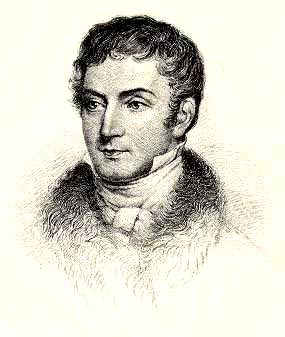
    Washington Irving wrote a funny and wonderful piece on this mouldering in his “The Mutability of Literature” in THE SKETCHBOOK OF GEOFFERY CRAYON. I recommend every writer read this to put life and writing into perspective.

    Share
  • Is book marketing bad?

    At CONduit I spoke with an author friend who thought that marketing was indeed a bad thing, especially marketing for YA, because said author felt it didn’t build an audience based on the merits of the book. It built one based on hype and buzz.  Instead of buying a book because it delivered a wonderful experience, readers would be buying only because it was what everyone else was doing. Furthermore, publishers only have so much money, and by choosing to put the dollars behind some books, they choose to let other books, which might deliver a better experience, languish.

    I understand wanting to build a readership that’s based on love, not hype. But what I think my friend is overlooking is that you can’t love something if you don’t try it. And you won’t try it if you don’t know it’s there. Marketing and PR help make sure people know the book is there.

    Yes, some readers might try it the first time because it’s what everyone is doing. But if the book is really that good, i.e. it actually delivers a wonderful experience for the target audience, then those readers will come back for another serving. They might look initially because everyone else is, but they’ll stay for love.

    One of my editors just forwarded a link to “Not Quite a PR Campaign” by Sherry Thomas. Lots of interesting details there about what she does for PR, but probably one of the most important ideas she shares is the fact that marketing & PR don’t build an audience. A great story experience does that. However, marketing & PR can get the book in the audience’s hands.

    What we all want to happen is word-of-mouth. PR doesn’t really create word-of-mouth, love does. But readers won’t read a book until they know it exists. So then the point of a PR campaign, if a PR campaign has any point at all, is to create awareness and hope that awareness will translate into love, once a critical mass of readers have read and enjoyed your book.

    Readers may miss many high quality (i.e. they deliver a great experience to the intended audience) books because the lion’s share of the publisher’s marketing budget is being spent on a small group of books, and the author who gets the leftovers just doesn’t have the cash or know-how to do it themselves. But that doesn’t mean marketing is bad. It means that getting a big marketing push is like any other lucky break or opportunity.

    I just started reading Guide to Writing Fiction by Phillys A. Whitney (a huge seller in the 1970’s and 1980’s). It’s a wonderful, slim, down-to-earth volume. She opens the book with a chapter called “Opportunity is Like a Train.” She maintains that her success did not come from starting with loads of talent. In fact, she says her ability was “modest.” She certainly wasn’t as gifted as many other authors she’d worked with in the writing groups of her youth. Nor did it come from immediate initial success. It came from being ready when opportunity knocked. 

    Of course, I have been lucky. I’ve had extraordinary breaks come my way–along with some pretty bad blows and disappointments. There’s been bad luck too, but that doesn’t always show. Good fortune and unexpected opportunities are always coming along. Perhaps opportunity is like a train on an endless track. Now and then it makes a stop at your station, often without fanfare, and without warning.

    …What is important is not the lucky break, the stopping of the train–that’s only part of it. Life is full of trains that stop. What counts is what we are doing with our lives when there is no opportunity and not a train in sight.

    James Dashner is someone who is getting a big promo budget from Random House this year for Maze Runner. A very big one. But if you read his story about how he got published (links to all nine parts of the story are in his sidebar) and what got him to this point, you’ll see this promo train was a long time coming. 

    Meanwhile, if the big promo budget ever stops at my station, I’m going to hop on. Until then, I will keep writing the best stories I can and make my current marketing budget (part publisher, part mine) go as far as possible. I’ll do the one for the love, the other because I can’t share the love if nobody even knows it’s out there.

    Share

2 Comments

  1. John,

    Thanks for sharing this. I went through a very mini-version of your learning curve two years ago this month, when I published a couple of short stories on Amazon, and had a crash course in cover design, and formatting. There is so much more to indie publishing than that, and these resources will be a huge help to all of us taking the self-publishing path.

    I also spent more time writing short fiction and developing a serial, which I recently realized really needs to be a novel series, but that’s a subject for a different post. Suffice to say that I am now squarely focused on becoming a better novelist, and that these resources will be a huge help when my next novel is ready for prime time. Thanks again!

  2. Dale,

    Glad you found them useful. There is sooooo much more to this that I expected.

Comments are closed.