|

Superstars Writing Seminar DVDs

Aspiring authors, I wasn’t able to attend, but heard from a few who were that the Superstars Writing Seminar in Pasadena with Eric Flint, Brandon Sanderson, Dave Wolverton, Rebecca Moesta, and Kevin J. Andersen was EXCELLENT. 

See clips of parts of the videos here (still a lot of good info): http://www.youtube.com/view_play_list?p=2F211054CBD822A8

Purchase the full recordings on DVD or MP3 here: www.writerscanon.com

Topics include:

  • Econ 201 for Writers: Economics of Commercial Publishing
  • Inside Editors: How editors look at manuscripts, novels & short fiction
  • Dirty Secrets: What you need to know about being a Professional Author
  • From Slushpile to #1 New York Times Bestseller in 4 Years
  • Intellectual Property: How to Exploit Yours
  • Balancing Acts: Writing World & Real World
  • Agents: the A Word
  • Networking for Writers
  • Self-Promotion for Authors
  • Novel Contracts
  • Self-Publishing: Realities & Pitfalls
  • Pitching the Big Proposal
  • Two Heads Are Better than One: Collaborative Writing
  • New Media: Using It to Get an Edge
  • E-Publishing
  • Movies, TV and Authors
  • Anatomy of a Major Book Release
  • Myths of Publishing
  • Eleven Tips to Increase Your Writing Productivity
Share

Similar Posts

  • Blindingly white and female!

    MaryLeonhardt_KeepingKidsReadingThe Guardian just published a report of a survey taken of 34 American book publishers and found that 79% of staff are white and 78% female. Or as The Guardian put it “blindingly white and female” as if it’s some kind of horror show.  The rest of the article bemoans the lack of diversity in publishing and our society in general and quotes the author of the study suggesting that these percentages should be monitored.

    Is anyone up in arms about appropriate diversity percentages in the NBA or NFL?

    Some might roll their eyes and ask me not to trot out that old chestnut. But it’s not a chestnut. It’s a point–nobody cares, me included. So why care about this? Many industries will be skewed toward one gender or race than another. As long as everyone has free opportunity to compete, who gives a flip?

    Maybe that still doesn’t satisfy. Okay, how about this. According to Humanites Indicators, approximately 70% of degrees in English language and literature in America are awarded to…women. And about 82% are awarded to Whites. I’m assuming these percentages are probably pretty good indicators for the gender and race of folks interested in working at publishing companies.

    If so, the survey results don’t reflect some white woman conspiracy at these publishing houses. They simply reflect the choices people make in college.

    By the way, did you know the United States is still 72% White and European. So it’s not surprising to see roughly that many Whites in these jobs. The numbers might be a little high, but minorities seem to be pursuing other degrees in greater numbers (compare the overall percentages here versus those with ELL degrees).

    This is not to say that we don’t want to welcome authors from all different background. We do. But if you want more men and more minorities, then maybe instead of monitoring publishers, you ought to start by seeing if you can attract more men and minorities to ELL degrees.

    Or even better yet, how about reaching out to more boys and minorities at an earlier age and helping them learn the delights of reading and writing? Maybe if they like it, more of them will go into it as a career.

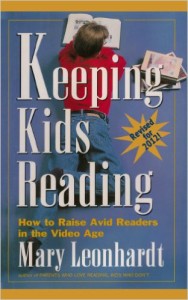
    The best program I’ve seen for helping kids learn to love reading is the one Mary Leonhardt outlines in Keeping Kids Reading: How to Raise Avid Readers in the Video Age. It’s the culmination of the insights she gained over her thirty-five years teaching high school English and focusing on helping kids learn to LOVE reading. What an excellent book!

    Oh, and one other idea. It might be effective to maybe just skip publishers altogether and help folks go directly to readers as indie writers. Amazon’s algorithms are pretty much race- and gender-blind.

    Share
  • |

    Writing update: brainstorming the ending of Curse

    I’ve had a number of people ask me where I am with the second book. I have the progress bars on the side, but they don’t give any details. So I thought I’d start up a semi-regular post that would be something like a writer’s journal. We’ll see how it goes.

    Right now I’m working on the climax of CURSE OF A DARK GOD. For the last two weeks I’ve been struggling trying to figure out the flow. I knew in general what I wanted to have happen. I had some images and the general feel–spectacle, revelation, battle at the fortress–knew I had to fulfill some expectations I’d raised with four characters. But I didn’t know the exact steps of the scene, the back and forth. I also hadn’t figured out the exact details of some of the magic that would be used.

    I outlined the objectives and plans of the two opposing warlords and then the steps of the scene. I listed my objectives for the scene. I do this sketching, sometimes exploratory drafts, to help bring the scene to life in my mind. I find that until a scene is alive in my mind, it’s impossible for me to write. Anyway, over the course of two weeks I went through six takes of the scene, and it still didn’t feel right. I won’t give the details and spoil the ending, but it just wasn’t there and I was getting frustrated. I’m behind on my deadlines and a book’s ending it critical. I talked a few things over with Nellie and made some headway, but it just wasn’t there.

    So I called a brainstorm meeting. I’ve never done this before for my writing work. I mean, I’ve bounced things off individuals (mostly Nellie) many times and found good resolutions, but I’ve never had a group. However, I felt I needed some extra input to get my mind going down new paths. Lenn Johnson, Amy and Alex Lamborn, and Miles and Becky Pinter came over. I borrowed a white board and easel from my church and made gingersnaps. When they arrived, I sat them around our kitchen table with Nellie and had them riff on one question while I captured their answers and ideas on the white board.

    It was incredibly productive. Partly because they came up with some great ideas I’m going to use. But also because it got me thinking in a new way which allowed me to come up with an idea that resolved the main issue I was dealing with. That was last Thursday. The next day I sat down and outlined a scene that did everything I wanted it to, including giving me the “oh, baby” feeling. It feels right. I have the spectacle, the revelation, the fulfillment to the expectations for the characters. I’m excited to write it. Which means I can now move forward. This week and next I hope to finish. After that there are a few small things I need to insert and clean up. Then it’s off to my editor.

    BTW, I did some calculations. For those interested, in this draft, the third, I ripped out 50% of the draft two and completely rewrote it. New problem and situation for two of my three points of view, major changes, etc. I heavily revised above 20% of the remaining 50%. I’ve put in a little over 500 hours working on this draft over the last six months.

    500 hours  (remember, I still have a day job).

    I am a slower writer than many. But it still would have been a huge task even if I could write twice as fast as I do. I think this is a perfect illustration of three things. First, if you don’t fix some things you feel are off when you find them, you might find you have a massive amount of rework later. Second, sometimes you don’t recognize you have those issues until you’re well into it. Third, writing requires the author to make time. I think this is the most important one. And the one that probably kills most aspiring writers. The fact is that if you can’t make time, you ain’t going to write 🙂

    Speaking of making time as a new artist, watch this interesting interview with author Scott Turow.

    Share
  • Murder, Courts, and Bart D. Ehrman

    I’m going to talk a bit about some murderers in Detroit, Jesus, and a couple of books I recently read that I think are just awesome.

    MURDER
    Highers BrothersSo, the murderers.

    Let me start by asking this question: can you establish the truth in a court of law?

    Is that what the judge and jury are deciding? The Truth, with a capital T?

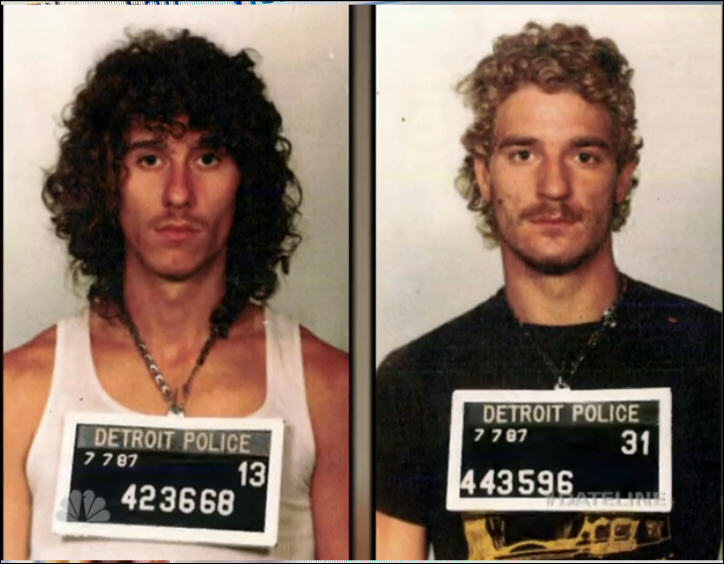
    Think about Tommy and Ray Highers, brothers from Detroit. They were convicted of murder. Open and shut case. No parole. They were two nasty buggers who shot a man down over some dope.

    But then twenty-five years later (last year, in fact) they were back in court because new evidence had come to light that undermined the original conviction. For the curious, this fascinating Dateline episode reveals the amazing way the evidence came to light and what happened because of it: http://www.nbcnews.com/dateline/full-episode-graduation-night-n72666. Watch it. You’ll be happy you did.

    So the Truth. Capital T. Can you establish that in a court of law?

    No.

    What the justice system does is try to determine which story about the evidence available is the most convincing.

    It’s about telling and judging stories.

    There are many types of evidence folks use when telling their stories. Some of it is very strong. Some is so unreliable, like hunches and hearsay, that the court won’t even allow it to be presented.

    Whatever the evidence, the fundamental nature of this is that you can often tell a number of different stories using the same set of data, the same evidence. Sometimes the stories are variations with minor differences. Sometimes the stories are radically different.

    It’s like having only some of the pieces of a 100 piece puzzle. You look at the four, twenty, or thirty pieces you have and imagine what the rest of the puzzle looks like. And then you invent something that seems reasonable.

    You invent it.

    And if that story meets certain standards of proof, then our system allows the authorities to take certain actions. If the standard of a “reasonable suspicion” is met, it allows a police officer to stop someone. If the standard of “probable cause” is met, a higher standard than reasonable suspicion, an officer can arrest you. If a jury in a criminal case decides the defendant is guilty “beyond a reasonable doubt,” an even higher standard of proof, then the justice system authorizes the authorities to sentence the defendant.

    But at no time does the system seek to establish the absolute truth, the truth with a capital T. It only seeks to establish some level of probability that the story being told about the evidence is true.

    All of this is made more complex because what’s “reasonable” is based on other people’s opinion. We have guidelines and rules to help folks be “reasonable.” But reasonableness is still affected by culture, background, history, etc.

    It’s still opinion.

    OTHER PUZZLES

    What other realm of knowledge works like the justice system and consists of inventing stories about missing parts of the puzzle?

    Well, history does.

    In fact, if you think about it, history is what courts do. The processes and principles of our justice system guide everyone involved in how they go about telling the stories that make up that specific type of history.

    And all historians (lawyers, judges, and juries included) have no means of establishing the absolute truth.

    They can’t use science. Science requires you conduct experiments and reproduce results. But how is a historian going to reproduce the same events? What, they’re going to get Lincoln shot all over again and let the rest of us watch it? Dang, John Wilkes Booth did shoot the man. We all saw it happen down in the lab.

    Sure, they can use science to date a manuscript, or determine what something is made of, or establish some other fact. But all science is doing is providing facts about the pieces of the puzzle you have. About the claims the evidence makes.

    But science can’t fill in the missing pieces of the puzzle. It can’t tell the story. The historian has to invent the story that makes the pieces all make sense.

    And then the rest of us determine if that story, that sketch of the full puzzle, is reasonable.

    But that isn’t all there is to it.

    STANDARDS OF PROOF

    Think about conspiracy theories like the ones that claim that the US government perpetrated the 9/11 bombings. Conspiracy theorists are practicing history. They are inventing a story that seems to fit the evidence available to them.

    But what happens when you have only five or ten pieces of a 1,000 piece puzzle? What happens when you don’t thoroughly vet the evidence? What happens when someone screws around with the evidence? And I’m not just talking about tampering or invalidating it by thoughtless handling (contaminating DNA, for example). Folks with the best intentions have biases. In fact, we all have biases that lead us to include and exclude various pieces of evidence based on whether they support or oppose the ideas we want to believe.

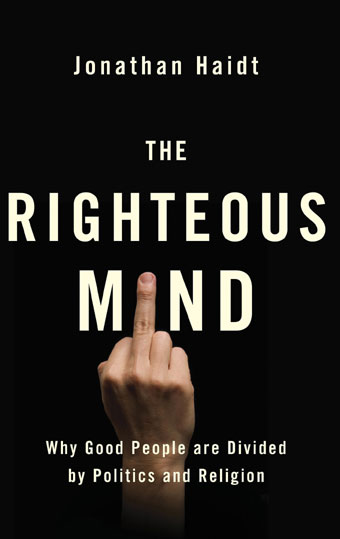
    Jonathan Haidt explains these biases in his excellent book The Righteous Mind. He explains that with things we want to believe, we often use the standard of “Can I Believe It”?  We look for anything at all that would allow us to believe our position. If we find it, even if it’s flimsy, we discount all the other evidence that may point another way and conclude we have met the burden of proof for our view.

    For things that we don’t want to believe, we often use the standard of “Must I Believe It”? When falling prey to this bias, we look for anything at all that would undermine the thing we don’t want to believe, even if that evidence is flimsy. If we find it, we ignore all the other evidence, even if there’s a mountain of it pointing another way, and claim we have met the necessary burden of proof.

    In court there are all sorts of procedures and standards that need to be followed to help us avoid invalidating evidence or falling prey to our biases. Those procedures and standards don’t remove all risk. But they do remove a lot.

    Which court system would you want to be processed through? The current American justice system or the medieval witch trials?

    Oh, for sure I’d want to be someone accused of witchcraft back when a claim of “I saw her as a witch in my dream” was admissible, as was the test of poking a mole on the accused’s body with a needle to see if said witch flinched enough. I’d be so happy to go back to the days when a confession obtained by torture was incontrovertible evidence.

    So when practicing history, it’s important to have some guidelines, some rules to establish which bits of evidence are more likely (not guaranteed, but more likely) to be reliable. And it’s important that when folks tell their story, they not only share the evidence, but also all the assumptions they’re making.

    JESUS

    Where does Jesus of Nazareth come into all of this?
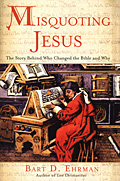
    Misquoting Jesus by Bart D Ehrman

    Well, Jesus has affected the world more than any other person who has lived on it. The stories we tell about him (the history we have practiced about him for the last 2,000+ years) have changed the world. And those stories will continue to affect us, especially folks in Western cultures, on everything from foreign policy to which clothes think are fit to be worn in public.

    Who was Jesus? Did he really exist? Was he a god? What did he really teach? Have his teachings been changed?

    These are all fundamental questions. And for the last two-hundred years historians have been re-examining the pieces of the puzzle, finding new pieces, and telling new stories to explain it all.

    Some of these historians believe in Jesus as a god. Some don’t. Either way, the conversation is fascinating.
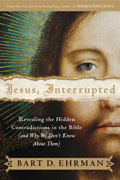
    Jesus Interrupted  Bart D Ehrman

    I just read three historical books about Jesus that were awesome. AWESOME. Not because I agreed with all of the author’s conclusions, i.e. his stories. I don’t. But because of the way he practiced his history. The way he told his stories. And because what he shared gave me new insights to my stories about Jesus.

    The three books, all by Bart D. Ehrman, a professor of religious studies at the University of North Carolina, Chapel Hill, are:

    1. Misquoting Jesus: The Story Behind Who Changed the Bible and Why
    2. Jesus Interrupted: Revealing the Hidden Contradictions in the Bible (And Why We Don’t Know About Them)
    3. Did Jesus Exist? The Historical Argument for Jesus of Nazareth

    I’ve read the Bible many times, and I’m a believer. Of course, the question is a believer in which story?

    Did Jesus Exist Bart D Ehrman

    What Ehrman so engagingly makes clear is that there have indeed been many stories about Jesus. In fact, the gospels (Matthew, Mark, Luke, and John) and the writings of Paul (most of the rest of the New Testament) seem to all portray a different man and message. Not only do they say things that flat out contradict each other on some details, but if you look at each book separately, each author seems to have a slightly different take on Jesus.

    Furthermore, it appears that what we now have has changed over time. For example, it seems the last twelve verses of Mark were not in the oldest manuscripts. There have been other changes. One of the more notable ones occurs in John 5:7-8.

    Our earliest texts say:

    “For there are three that bear record, the spirit, and the water, and the blood: and these three agree in one.”

    But later texts say:

    “For there are three that bear record in heaven, the Father, the Word, and the Holy Ghost: and these three are one. And there are three that bear witness in earth, the spirit, and the water, and the blood: and these three agree in one.”

    Nowhere else in the New Testament do we have anything that states that creedal doctrine so explicitly. Did John write that? Or was the extra material added to make the idea of the trinity scriptural?

    And what do we make of the fact that we have no manuscript that dates to anywhere close to when Jesus lived? We have some small fragments of manuscripts with a few verses of John, Revelation, and Matthew dated around 150 AD. But the oldest manuscripts we have that contain the majority of any of the gospels are for the gospels of Luke and John, and these are dated around 200 AD. The oldest manuscripts with the full New Testament are dated around 350 AD.

    That’s more than 300 years after Jesus died!

    Have you played the game of telephone? Are we sure that the oral traditions that were written down weren’t changed? What happened to the books mentioned in the Bible that we don’t have now? For example, Jude mentions a prophecy of Enoch that we don’t have in our current Bible. Are we sure that the copyists didn’t add to the text like it seems some did to John?

    And what about the term “Christ”? It’s actually the Greek word for “messiah” which just means one anointed with oil to perform a special service for god. Christ wasn’t Jesus’s last name. It was a title: Jesus the anointed one.

    The anointed ones in those days were kings and prophets and priests. It appears most of the historical sources suggest that a “messiah” to the Jews of that time was someone who would throw off foreign rule and establish the kingdom of Israel as David had. In fact, there were a whole bunch of people who claimed to be messiahs. Here’s a nice list: http://en.wikipedia.org/wiki/Jewish_Messiah_claimants.

    Judas Maccabeus was considered a messiah because he threw off Greek rule in 164 BC. But then around 63 BC Israel was taken over by Rome. And Rome wasn’t too keen on revolts, so around 4 BC they crucified Judas the Galilean for claiming to be the messiah, the king of the Jews. Crucifixion, it seems, was the punishment reserved for seditionists. They crucified Jesus and a whole bunch of other guys claiming to be the king of the Jews. And their crimes were written on a board above them, which is why they hung the words “King of the Jews” over Jesus’s head on the cross. Here’s the criminal, and here’s his crime. These other messiahs were not claiming to be a god that came to earth to atone for sins, but anointed by God to throw off foreign rule and establish his earthly kingdom again.

    Jesus talks a lot about the kingdom of God. Was Jesus just another one of the seditionists?

    Ehrman examines these and many other questions as a historian, providing all sorts of insights.

    But the fabulous thing is that he doesn’t just tell his story. He gives his evidence. Exposes his assumptions. And in all three books he explains the guidelines or “rules” historians use to when trying to determine which stories are more likely and which evidence is more reliable.

    I was enlightened, challenged, and delighted. I learned things about Jesus’s life and times that have helped me understand what I read in the Bible better.

    LIMITS

    Of course, the historical method has its limits.

    Historians, because they are looking for explanations (stories) that are more probable, automatically select against things that are improbable. They exclude miracles. They exclude any story that says Christ was actually resurrected.  They may establish that a lot of folks thought he was resurrected, but they don’t have any methods to establish something like a resurrection actually occurred. And so they ignore it. Historians exclude modern revelation. If someone today were to have a visitation from Jesus as Paul did, the historians would exclude that.

    But we all know that truth is sometimes stranger than fiction. We all know that sometimes the less likely thing is exactly what occurred.

    Historians are looking for what is most probable. Not what actually happened. Because they can’t go back and time and verify their story.

    Excluding “improbable” things changes the types of stories the pieces of the puzzle support. For many of us, me included, we do accept evidences many historians don’t as pieces of the puzzle. And because we have these pieces, we’re able to tell different types of stories.

    The cool thing about Ehrman is that he explains this. He’s not trying to hide anything. Instead, he’s explaining how to approach the Bible from a historical point of view, and where the principles of the historical method lead him.

    And I have found that those methods in his hands have a lot to offer.

    If you’re someone who is interested in religion–as a believer, agonistic, or atheist–you will love these books. Ehrman himself was once an ardent believer, but is now agnostic. However, his respect for believers, including other scholars in his field who believe in the divine Jesus, comes through loud and clear. Ehrman has no axe to grind. He is simply sharing the stories of Jesus that make sense to him and many other historians. And he does it in a very interesting and easy-to-read style.

    If these books sound like something you want to try, I’d start with Misquoting Jesus, move to Jesus Interrupted, and then finish with Did Jesus Exist? And if you enjoy those, let me recommend two more of Ehrman’s books. The first is The Lost Gospel of Judas Iscariot: A New Look at Betrayer and Betrayed, which looks at the discovery and content of a very ancient manuscript that calls itself The Gospel of Judas. The second is Lost Christianities: The Battles for Scripture and the Faiths We Never Knew, which explores the variety of Christian faiths that existed in the few hundred years after Jesus’s death.

    Happy reading!

    Share
  • Authors love women

    Two fascinating articles on who drives books sales. Would love to see original reports.

    September, 2010
    http://seattletimes.nwsource.com/html/books/2012801171_litlife06.html

    I arrived back at work, along with 2,000 e-mails and about that many incoming books, I got a report from Bowker, a global firm that tracks people’s book-buying habits. Here are some of the more interesting bits from 2009:More than 40 percent of Americans over the age of 13 purchased a book; the average age of the American book buyer is 42.

    Women make 64 percent of all book purchases, even among detective stories and thrillers, where they buy more than 60 percent of that genre. [see, they act all touchy feeling, but most women like to see someone kick hiney. Except I suspect a lot of that 60% is driven by mysteries; or are there a lot of women that like, say, Lee Child?]

    Thirty two percent of the books purchased in 2009 were from households earning less than $32,000 annually. A fifth of those sales were for children’s books.

    The biggest nonfiction genre is biography and autobiography.

    Whoa. Go gals.

    June, 2011
    http://tomorrowsbook.com/format-wars/features/who-is-buying-ebooks-women-reading-fiction.html

    Surprise, surprise: the hardcore power users in the eBook world are the same demographics as the hardcore power users in the physical-book word, as a report called Consumer Attitudes Toward E-Book Reading from the Book Industry Study Group (BISG) indicates both hardcore groups are dominated by women buying fiction.

    No surprise, really. The BISG says most eBook power buyers — that is, someone buying an eBook at least once a week — are by and large women (some 66 percent), who mostly buy fiction. Out of the entire eBook market, power buyers make just 18 percent of all buyers, but they buy 61 percent of the eBooks. [Holy crap! 18% are driving the sales–who are these people?! Of course, this is just the old 80/20 rule showing its face again.]

    In terms of exactly what is selling: literary fiction, science fiction and romance lead the way, each with over 20 percent of the market. [Go SFF!! and those are not the normal breakdowns, SFF is usually under 10%] Overall, eBooks comprise 11 percent of the total book market, with 13 percent of print book buyers also downloading eBooks.

    That evolution of the market isn’t surprising: early gadget adopters tend to be men, but as eReaders become more mainstreams, its userbase logically would look like the book market as a whole. And that’s exactly what happened: If women buy 64 percent of all books, it’s no surprise they’re buying 66 percent of all eBooks. [Except I think you got your math wrong; they’re 66% of power buyers. You didn’t say what report said of total sales]

    Whoa. GO LADIES!

    Seems women have been driving entertainment in a lot of ways for a long time. Watch a few minutes of this interview with Hitchcock back in 1964.

    Share
  • Good Stuff! Tiny Habits

    We’re told we can change.

    We’re told that a key is to write “SMART” goals. Make them specific, measurable, realistic, and focused on results. Give them a deadline. And, for heaven’s sake, put them to paper because “a goal that is not written down is just a wish.”

    We’re told a key is to dream, that “whatever the mind can believe, it can achieve.”

    We’re told that the key to changing our life is changing our habits, and that they way to change our habits is to stick with something for twenty-one days.

    Except, well, how many habits have you been successful in establishing?

    How many of those lofty goals have you achieved?

    How many New Year’s resolutions have you really followed through with?

    The problem is that all of the good advice on goals and habits seems to only work for other people. And I grant that there might be some AAA+++ personalities out there with megawatts of motivation who seem to be able to do whatever they set their mind to.

    But that triple A plus personality passed me by. It passed a lot of us by.

    So are we doomed?

    B.J. Fogg, a Stanford researcher, says no. There’s hope for all of us. Because the key is not in having megawatts of motivation.

    It’s not that we disregard the power of motivation. It’s just that motivation, Fogg has found, is never constant. It comes in waves. And while we certainly want to take advantage of it when it comes and do things that increase it, a much more effective way to grow habits and meet goals and change our lives is to focus on the other things that drive behavior.

    Fogg has spent his career studying persuasion and habit. He works with companies to help them create products that are habit-forming. Think about Facebook, Twitter, or Candy Crush, and the habits those products form. These and similar companies have implemented the principles of habit so well that their products have become, for some, something of an addiction.

    So what’s the secret?

    Fogg has identified three things that must be present if we’re going to do something:

    1. The motivation to do it
    2. The ability to do it
    3. A trigger to remind us to do it

    When those three things are present, we act. And we often do so without thinking. If one of those three elements is missing, we don’t act. So if we want to start a new habit, we need to focus on these three things.

    But if motivation goes up and down, then we don’t want to rely on that part of the equation. Fogg’s insight is that it’s much easier and more effective to focus on the ability and the trigger parts.

    When we focus on the ability, we make the habit we want to form so tiny and small that it’s super easy to do. Such tiny behaviors require only the smallest levels of motivation. And if we’ve planted them in good ground (at a time of day where they can expand and linked to a good trigger), those tiny habits eventually grow into the full blown big habit we wanted all along.

    Does this work?

    Well, I started Fogg’s Tiny Habits back at the beginning of December. And I’m happy to report that starting new habits using this approach has been easy.

    Like falling off a log easy.

    For example, because I work on the computer, I know that to increase my health, I need to get at least forty minutes of good, heart-pumping activity each day. But did I start there? No.

    Did I start at twenty minutes?

    No.

    Ten minutes?

    No.

    Five? Surely, I started at five minutes.

    No.

    The Tiny Habits approach suggests starting much smaller. I started with doing one push up after I used the restroom. And it was an incline pushup on the stairs, which my daughter found hilarious.

    Yes, that’s how tiny you start them. Something that takes less than 30 seconds.

    That tiny habit grew. And I am now doing 60 regular floor pushups each day, plus 75 curls, 75 flies, 75 squats, and 75 bicycle crunches. It’s about 25 minutes of good activity. And it’s only going to grow. Come April, I’m pretty sure I’ll be around 100 pushups every day.

    And there was no twenty-one day business. Fogg has found that’s not the secret. Habits can form in just a few days.

    I started the delicious habit of kissing my wife for at least five seconds each day. Along with a five-second hug. And then a little more kissing, and little more hugging, and a little more kissing (when I can steal it). Did I mention it was delicious? This is a highly-recommend habit.

    I started the habit of daily morning scripture reading. I have tried to be consistent for years and couldn’t do it. But with this new approach, I think I’ve missed three times in the last two months.

    I started the habit of beginning the day with a positive thought, the habit of turning off my wireless mouse when I’m done at my desk, and I’ve also made great headway against the mother of all habits for me—going to bed by 10 PM.

    I can easily stay up until one a.m. reading, “researching” on the internet, wasting time watching political videos, or Facebooking. Or a million other things. This bad habit is so ingrained it is almost like someone else is controlling me. All day long I say I’ll go to bed only to find myself, yet again well past dark, screwing up my life plans. It’s like some evil villain has me on remote. I can’t tell you how many times I’ve tried to “motivate” myself to change this. All to no avail.

    But with the tiny habits approach, I finally figured out the triggers that were driving it. Then I engineered other triggers and tiny habits to replace them. And now my computer is off and behind a closed door most of the time in the evenings. I’m actually getting to bed. It’s huge progress. There are still some kinks to work out, but it’s only going to grow.

    I found the Tiny Habits program through my insurance provider. They had an annual wellness check in November, and on their website they had a link to Tiny Habits. I clicked, signed up for their tiny program, and I’m so happy I did.

    I’m hooked on tiny habits.

    And the cool thing is that you can begin learning and developing your ability to plant and grow tiny habits too. For free.

    If you want to change your life, I think you will love their free five-day, three-habit program. It’s there to teach you how to create tiny habits, triggers, and celebrate.

    Let me also recommend a few videos. Here’s the best video I’ve found that explains Fogg’s model of behavior and why tiny habits work.

    And here’s the best video that explains the pitfalls of relying mostly on motivation instead of bringing in the other two Musketeers.

    Researchers say that between 40-70% of all we do each day is driven by habit and external triggers. We think we’re exercising our agency all day long, but it’s an illusion. We’re not. Most of the day we’re running on auto pilot and responding to triggers. But we can change those routines. That’s the promise of tiny habits. And so far, the results for me have been promising. Give it a try. I think you’ll be happy you did.

    Notes

    SMART stands for specific, measurable, achievable, results-focused, and time-bound. SMART goals are helpful. But the key, Fogg has found, is in not trying to eat the whole SMART whale in one bite. Instead, you start with the tiniest part of the very first step. And then watch as the habit grows.

    I reviewed The Power of Habit by Charles Duhigg back in 2012. It provided great insight about habits, but not a tested program to actually change them. In fact, the author states himself that his book doesn’t provide a program, just a way of thinking about habits. Duhigg isn’t a behavioral scientist; he’s a reporter, trying to share what he’s found. The book was great. However, I tried to apply his insights, and, as expected, wasn’t very successful in changing things. But Fogg and his Tiny Habits fills that gap in a spectacular way. Fogg is a behavioral scientist and has taught thousands how to form habits. So read Duhigg for great stories and insights about habits in general. But go to Fogg for a tested program that will guide you step by step.

    Share
  • The Righteous Mind by Jonathan Haidt

    After this year’s presidential election I emailed my sister, a smart, super-competent, true-blue, bleeding-heart, save the weeds and snails liberal, who volunteered to do campaign work for Hilary Clinton in Colorado during the 2008 Democratic primaries and, of course, voted loudly for Obama in this last election.

    “Are you kidding me?” I asked. “How can anyone who doesn’t have a carrot for a brain want more of the same? I don’t get it. Obama? How can so many Americans be that gullible? I’m totally baffled.”  And that puzzlement wasn’t rhetorical. I was seriously baffled.

    “Are you kidding me?” she replied. “Mitt Romney? How could anyone vote for Mitt Romney?  Talk about baffled.”  She went on a rant listing all of Romney’s supposed deeds and positions of sooper evil and stupidity. Then she questioned how anyone could support that Hitler in his Mormon clothes.

    Okay, she didn’t say “Hitler,” but she did claim he was “evil” and “despicable.” And when I think of evil, my first thought is always of folks like Mitt Romney.

    Vicente Carrillo Fuentes, leader of the Juarez drug cartel, which is responsible for hundreds of gruesome murders each year and . . . Mitt Romney. Oh, yeah. They’re like brothers. In fact, wasn’t Romney’s dad born in Mexico? And, hey, one of Romney’s sons even knows Spanish. That boy wasn’t on a church mission there. No, he was making connections with the jefe!

    Sonia Montoya-Cadena, the one who ran a human trafficking ring in Denver exploiting young girls for sex and . . . Mitt Romney. Yeah, Romney’s just like that. If he could run slave brothels, he’d do it in a minute to make a buck. In fact, doesn’t Bain Capital own a couple of slave brothels in Greenland?

    I wanted to unload. I was prepared to destroy her with fiery analysis of the first order.

    Thundering analysis.

    Mountain crushing logic.

    She was so freaking blind.

    Except,

    She had never actually considered what I had to say in any of my previous emails. It never mattered how powerfully vast my brilliant logic was. She’d demonstrated wax ear time and again. All of my intellectual might never made a dent in her liberal force field. I brought blood and thunder, and it always seemed to bounce off her like bullets made of styrofoam.

    Nevertheless! Clinton? Obama? Save the gerbils?

    I made a comment that sent Smart Sister into DEFCON 5. Foolish me. Eventually, her liberal ire cooled and she decided to order comrade Putin to stand down and not push the big red button.

    Meanwhile, I started to think.

    I noted that if things didn’t change, the Republicans wouldn’t be winning the presidency any time soon. If they couldn’t beat Obama when the economy was in the tank, then there really was no hope. Which meant we are going to end up like Greece, with continuing inflation (which is not only an intentional, government-led annual pay cut on the disgustingly rich, filthy rich, and annoyingly rich, but also on the middle class, poor, destitute, and various and sundry hoboes everywhere), huge debt, stupid taxes, ridiculous health care, Soviet-style redistribution, blah, blah, blah.

    I asked myself, like all Republicans did, what could we conservatives do differently? Follow Obama’s example and improve our operations to get the vote out? Build up a conservative La Raza? Do the right thing with the children of illegals? Get someone willing to land more blows on the opposition (Romney could have decimated Obama in debates two and three, but he didn’t; he totally failed to define his opponent).

    Maybe it was in the messaging. Maybe what we needed to do was develop something that actually changed minds.

    At this point a faint ding sounded in the distance in my mind. A small light bulb suddenly flipped on and illuminated a dark cubby of my mind.

    Hadn’t I just read about studies showing how a soap opera in Mexico, a radio play in Tanzania, and sitcoms in America actually changed viewer attitudes and behaviors about literacy, HIV, and abortion? Didn’t I already know about the power of concrete and vivid storytelling? Not sermon-telling, but storytelling.

    Why, yes. Yes, I did.

    Had I not witnessed the use of storytelling on U.S. television for, what, fifteen years by those wanting to build sympathy for homosexuals? (A good thing, even if I disagree with some of the gay agenda.) And the cheapening of sex by others? (A bad thing.) And the clearly conscious promotion of many other attitudes and beliefs via various media programs?

    I determined there was something to this.

    If people were going to vote for fiscal responsibility in Washington, something like this was going to have to be done. It wasn’t going to happen in flame wars.

    About this same time I was browsing through the recent Radio West programs. I saw one called “The Righteous Mind.”  It was an interview of Jonathon Haidt about his new book The Righteous Mind: Why Good People Are Divided by Politics and Religion.

    Hey, wasn’t that addressing my question?

    The program blurb states: “Monday, our guest is the social psychologist Jonathan Haidt, whose latest book sets out to explain the root causes of the divisions in our society. At the heart of his argument is the idea that the human mind is designed to “do” morality. But when we separate into tribes – say political affiliations or religious denominations – we focus on different moral foundations. Haidt joins us to explain why he says we need the insights of liberals and conservatives to flourish as a nation.”

    I listened. And loved the program.

    Haidt shared a number of deliciously insightful things about how our mind works and how we choose our affiliations. He shared so many insights that I immediately requested his book at my library. The library ordered a copy for their collection. I, of course, was first in line to read it. I just finished the book.

    It’s one of the best books I’ve read all year.

    Haidt explains why my sister and I were both baffled by people who voted for the opposition candidate. He explains how human morality works. How our reason does not lead us to make the judgments we do, but instead more often acts like a lawyer to justify our positions to others.

    As soon as he explained that I saw how I had done that time and time again. For example, in this election cycle I blamed Obama for the economy. In the Bill Clinton re-election I vigorously argued that the President doesn’t have any effect on the economy and is lying if he takes credit for it. I’m not saying that Obama didn’t do things that might have hampered the recovery, but how did I know his actions exacerbated our problems? What evidence did I really have?

    Haidt explains that there are six basic moral bases then points out which ones drive liberals, conservatives, and libertarians, and how we can use that knowledge to disagree more constructively. He provides strong insights into how our reason and intuitions and judgments work, the evolutionary function of our morality, and how our wiring for group affiliation affects it.

    I didn’t agree with some of his conclusions. He sometimes takes his points too far. For example, he seems to suggest that people in cities are pre-disposed to be liberal. And that’s why they live there. Um, no. That’s not why they live there. They live in cities because that’s where the jobs are. The agricultural revolution made sure of that, remember? In his effort to explain the smaller biological basis of our beliefs, he also downplays the larger effect our families and groups have. But despite these excesses, he shares so many fresh and exciting ideas that they don’t matter. And he shares them all in such a fun and clear way that I couldn’t help but stay up late a number of nights reading this book.

    Do you know how much I wanted to trash Obama to my sister?  That Soviet-style central planner.  That drunken sailor spender.  That choom wagon pot head.

    And yet, you and I also know that will never work. I now know better why. Because of Haidt, I think I see a better way. I certainly see how I have done exactly what drives me mad about those who have drunk the opposition candidate’s Kool-aide. I see that I have my own conservative force field that deflects liberal bullets (and perhaps even blinds me to the truth sometimes). And why I need to watch my reason, that cunning lawyer part of my brain, as well as my intuition.

    Haidt, a liberal, has given me, a conservative, a great gift. I intend to use it. If you are interested in the two taboo topics of politics or religion, if you enjoyed Malcolm Gladwell’s book Blink or the Heath brother’s Made to Stick, if you want to find a better way to influence than flame wars (as fun as they can sometimes be), then I think you will enjoy the wonders Haidt shares in his fine book.

    Don’t just take my word for it. Listen to the Radio West program http://radiowest.kuer.org/post/righteous-mind for a taste of what awaits you.

    Share

One Comment

Comments are closed.