Good Stuff! Operation Underground Railroad

WeSaveChildrenFromSlavery

I blogged about this before.

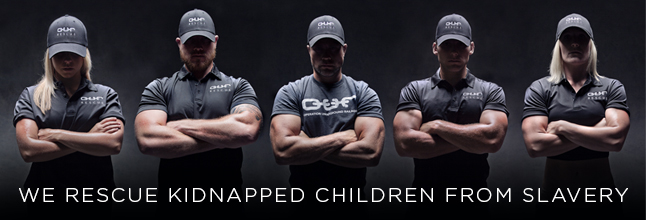
On February 28th, Operation Underground Railroad freed 20 kids from slavery and brought 5 slavers to justice. They are continually running operations.

Oskar Schindler didn’t stop the killing of all Jews. But he did what he could. One of the most poignant moments of Schindler’s List was when he pulled out his pen and realized he could have saved someone with his pen. We all have a pen opportunity in front of us. Join me and my family. Become an abolitionist.

We’ve set up a monthly amount, but even a one-time donation puts you on the team.

I know you want more information. Here’s an awesome video where the founder explains what’s happening and what they’re doing.

In this one, Glenn Beck interviews Cliff Graham about the organization. It’s a must-see interview.

See how you can help.

JumpTeamImage1-350x175

Share

Similar Posts

  • Good Stuff: Why We Get Fat

    What if everything you know about fat, cholesterol, and diet is pretty much wrong?

    What if you found out that the science behind the good old food pyramid is, well, not really there?

    We’ve been told that a healthy diet consists of lots of grains, bagels, bread, pasta, cereals, rice, etc. and very little fat. What if it’s actually the reverse?

    If it is, then it might explain why the rates of diabetes and obesity began to skyrocket as the nation started to implement a low fat high carb diet.

    I remember having gained about fifteen pounds when I was first married. I decided I would go on a diet. I read up on the low fat high carb diet and followed it strictly. Two weeks later, I had gained ten more pounds. Did I, at the time, look at the diet and think that maybe there was something wrong with it?

    No. That would have been too intelligent.

    Instead, I figured something must be wrong with me and continued to try to “eat healthy.” What’s that definition of insanity—doing the same thing over and over again and expecting different results? Call me insane. Or slow. Or too trusting of authority.

    It appears that the science of nutrition got hijacked. Government policy then ran away with it. It’s a fascinating and cautionary tale. Let me recommend three books that explain what really causes us to deposit fat and how we got off track.

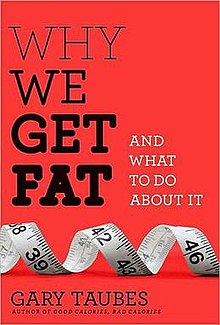
    The first is Why We Get Fat by science writer Gary Taubes. In it he reveals the bad nutritional science of the last century, why the good science was ignored, what really causes us to store fat, and what to do about it.

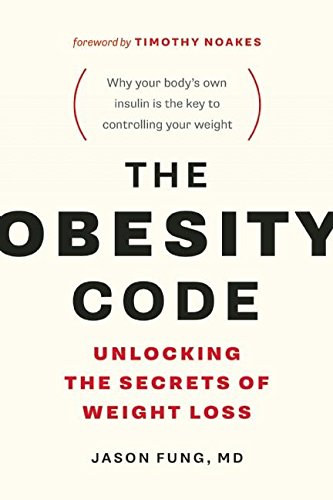
    The next is The Obesity Code by Dr. Jason Fung. Fung is a kidney specialist. Obesity and diabetes are the root of many kidney problems. And so he decided to help his patients by strop treating symptoms and get at the root cause. Fung’s gift is clarity. He explains how obesity and diabetes became an epidemic, the errors in how we think about calories and diet, and then he explains in great clarity the new model of what really causes obesity and how to reverse it.

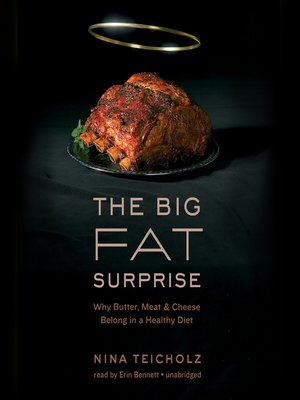
    The last is The Big Fat Surprise: Why Butter, Meat & Cheese Belong in a Healthy Diet by investigative journalist Nina Teicholz. She spent nine years investigating this, and the book reveals how the misinformation about saturated fats took hold in the scientific community, government, and the public and how recent findings overturn these beliefs. It’s a startling history, a cautionary tale showing how ego, bias, and premature institutional consensus allowed dangerous misrepresentations to become dietary dogma.

    If you’re dealing with obesity, heart disease, or diabetes, I think you’ll find these books very interesting.

    Share
  • |

    Jon Ronson, mild-mannered pal of extremists

    Take a guy who does humorous journalism, but not in the sneering sort of way, and send him out to find out more about extremists (KKK, Islamicists, etc.) and conspiracy theories (he didn’t really believe in the Bildeburgers…until he was followed), and what do you get?

    Well, you get British journalist Jon Ronson.

    I just listened to a wonderful interview with him on Radio West.

    Don’t miss it.

    Share
  • Good Stuff! Some Calm on the Climate

    Is the sky falling?

    When we politicize science it sure seems that way.

    For example, a while back I reviewed The Big Fat Surprise by Nina Teicholz. What she found in her research about fat and sugar was that we followed the exact wrong diet path over the last 40 years by (1) rushing to judgment on the science in a field that was tricky and (2) politicizing it. This, in turn, affected the science. And not in a good way. Here’s a quote from the book.

    “Once ideas about fat and cholesterol became adopted by official institutions, even prominent experts in the field found it nearly impossible to challenge them. One of the twentieth century’s most revered nutrition scientists, the organic chemist David Krivtchesky, discovered this thirty years ago when on a panel of the National Academy of Sciences, he suggested loosening the restriction on dietary fat. “We were jumped on!” he told me. “People would spit on us!…they were so angry that we were going against the suggestions of the American Heart Association and the National Institutes of Health”

    “This kind of reaction met all experts who criticized the prevailing view on dietary fat, effectively silencing any opposition. Researchers who persisted in their challenges found themselves cut off from grants, unable to rise in their professional societies, without invitations to serve on expert panels, and at a loss to find scientific journals that would publish their papers. As a result, for many years the public has been presented with the appearance of a uniform scientific consensus on the subject of fat, especially saturated fat, but this outward unanimity was only made possible because opposing views were pushed aside.”

    For the rest of us, the result has been the highest obesity and diabetes rates we’ve ever seen. And it seems to me that we’ve been doing this same thing with climate science.

    Instead of vigorous and spirited debate and research, we’re rushing to judgment and politicizing it. The media, non-climate scientists, activists, politicians, and others have turned it into a religious eco frenzy. And so we end up with people like Bill Nye the science guy (who was a mechanical engineer and then TV host for a children’s science program, not a climate scientist) suggesting that “climate deniers” go to prison.

    Prison?

    I think Bill had a bad dream about Nazi Germany, socialist Russia, or ISIS.

    We all want clean air and water. We all want awesome rivers and lakes. We all want good science. Is it possible to remove the politics and frenzy so we don’t go off into the weeds again? I don’t know. But I did find these short videos helpful. If you’re interested in the climate, I think you’ll enjoy them.

    In the first one, Richard Lindzen, an MIT atmospheric physicist, addresses the politicization.

    In the one, Will Happer, emeritus professor of physics at Princeton University,  addresses whether we can actually accurately predict the climate.

    This one by Patrick Moore, an ecologist and one of the founders of Greenpeace who subsequently left the organization because of its anti-science activism, explains why CO2 is actually awesome.

    In this one Moore gives more details and argues that maybe we need more CO2.

    In this one, Bjorn Lomborg argues against climate alarmism. Of course, Lomborg isn’t a climate scientist. However, if his facts are correct, then he asks an important question.

    The other thing to ask is so what? So let’s say the seas rise a bit and it gets a bit warmer. We might lose some beach front properties over a number of years. That’s not new. It might accelerate and reach farther inland. Okay. But nobody is going to die. They’ll just rebuilt somewhere else.

    So let’s avoid prison and climate pogroms and disastrous dashes off into public policy like we did with fat and sugar. Let’s simply support our scientists in doing what they do best. Let’s promote a vigorous search for more insight.

    Notes

    Share
  • Teacher power, crawdad fun, and lemon bars

    Teacher Power

    When we find great teachers, we prize them not only because what we learn improves our lives but also because good learning can be one of the most exhilarating things we experience. Unfortunately, a lot of teaching stinks. It’s boring, misguided, useless.

    I’ve made a study of teaching. I’ve had to. For almost 20 years I’ve taught and designed courses in the private sector. And for many of those years, my work has been in a revenue-generating department. That means that my classes had better be effective and interesting, otherwise nobody signs up, revenue falls, and a lot of folks will stand around and wonder if it might not be better to just replace me with a potted plant.

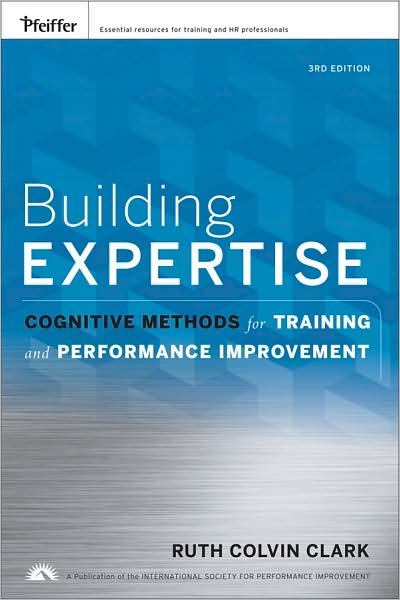
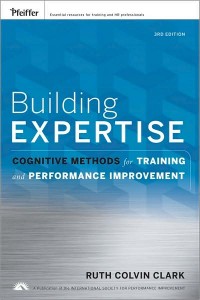
    I kind of like having a job. And so I’ve tried my best to find the most effective methods for instruction. In the last few decades, education researchers have put many teaching techniques and principles to the test. We know better now than ever before how to structure learning that is effective and interesting. And I have yet to find a better explanation of the proven techniques and principles than Ruth Colvin Clark’s Building Expertise: Cognitive Methods for Training and Performance Improvement, 3rd Edition. 

    Don’t let the “training” part fool you. We often associate “training” with learning procedures and simple tasks, e.g. the State pays for “sex education” in our schools, not “sex training.” But Clark isn’t using the term that way. Clark’s “training” includes all types of learning.

    Two things separate Clark from so many others who would offer advice on teaching. First, she bases everything on tested principles and techniques. I’m not talking about tested as in some teacher somewhere tried it and was impressed. I’m talking about scientifically valid testing that controls for variables and shows causation. The methods she describes are practical and proven. Second, she writes clearly enough and uses enough examples so that I can read about the principle and immediately see how I can apply it in my own class.

    Among other things, you’ll learn:

    • Why working memory is key to instruction and how to overcome its limits
    • How to motivate learners
    • How to structure learning
    • When to use lecture and when to put learners into action
    • When taking notes can actually be counterproductive

    You’ll even learn why assigning lots of practice is NOT always the best way to learn. In fact, sometimes your child will learn more if you do half of their homework questions for them. Sound ridiculous? It’s not. It’s science.

    You’ll find that there is no yellow brick road in teaching. Instead, you’ll see that the effectiveness of any method depends on whether it’s suited to the specific situation. And Clark will explain what the key factors in any situation are so you know which methods to apply and the trade-offs you’ll make when you do.

    If you’re a teacher in any setting–family, job, church, school, or recreation–or if you’re trying to teach yourself, this book (specifically the 3rd edition) will be a goldmine. I can’t recommend it highly enough.

    Crawdads & the Bear River Greenway in Evanston
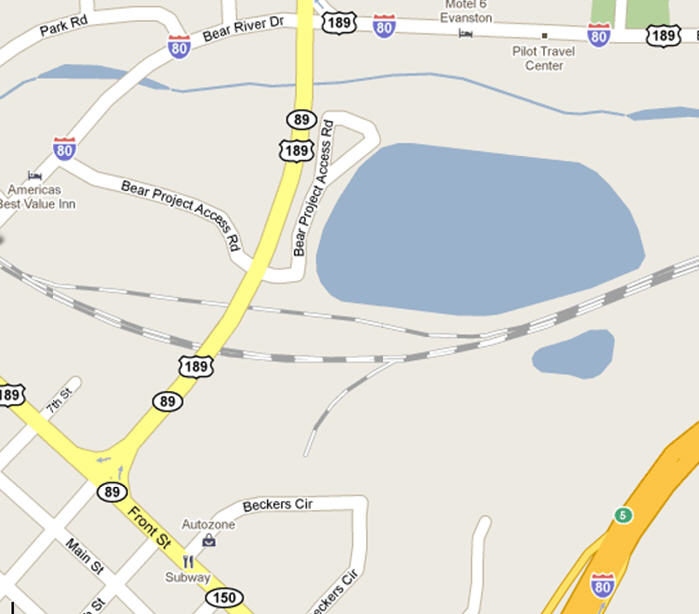
    Here’s a recipe for a whole lot of family or date fun. And it costs almost nothing. Drive to Evanston, Wyoming. Make sure you bring a bucket. Pick up a few pieces of fried chicken at Wal-Mart then picnic at the Bear River Pavilion park. It’s the one with the small lake west of Wal-Mart and east of the overpass on 89. Keep your chicken bones.

    When you finish eating, attach a length of about four feet of string or yarn to each chicken bone. Weight the bone down with some rocks or washers. You want it to sink deep. Tie a loop for your finger in the end of the string. Then go out to the pier or the cement box on the northwest side of the small lake and drop your bone in.

    Wait.

    Slowing bring your chicken bone up. You’ll find a crawdad clinging to it, thinking he’s gone to free lunch heaven. Use a net to snag the crawdad. A simple fish aquarium net will do. You can get them at Wal-Mart for a few bucks. Plop crawdad into the bucket. Ooh and aah appropriately. Make sure he’s got some water to swim around in.

    Drop your line in again and repeat until you and the kids or dates are bored. We had a bucketful in about twenty minutes. You might want to pick a few of the crustaceans up. Just grab them on the sides just behind the spot where the arms of their big pincers join the body. Wave the crawdad at a selected victim—wife, daughter, girlfriend–for special effects.

    When you’re done, dump the critters back into the water. But don’t go home yet. Take a stroll along the greenway that follows the river and enjoy the beautiful sights. If you walk east from the park, you might be able to be at the right spot at the right time to see a train up close as it thunders by.

    We just did this with family from Colorado and California and had a great time. Who would have thought Evanston had this gem?

    Crocker’s Luscious Lemon Bars

    I luv lemon in desserts. I especially love lemon pies, but they take too long to make. Plus you’ve got the meringue to whip up, and half the people hate that stuff anyway. I’ve found lemon bars taste just as good, probably better, and are far easier. Here’s a recipe I just tried and loved. It’s from our Betty Crocker cookbook. Please remember to include the sugar. My sister, bless her heart, attempted it without, and she can verify that, surprise surprise, it just doesn’t taste quite as good.

    STEP 1: Preheat oven to 350 degrees.

    STEP 2: Make pastry crust.

    1.   Combine: 2 C flour, ½ C powdered sugar, 2 T cornstarch, and ¼ t salt

    2.   Use pastry blender and cut in ¾ C butter until it mixture resembles coarse crumbs

    3.   Press mixture into bottom of greased 13x9x2 inch pan

    4.   Bake for 18-20 minutes or until edges are golden

    STEP 3: While crust is cooking, make filling by stirring together: 4 slightly beaten eggs, 1.5 C granulated sugar, 3 T flour, 1 t lemon peel (optional),  ¾ C lemon juice, ¼ C half-and-half (you can substitute with light cream or milk if needed)

    STEP 4: When crust finishes, pour filling over hot crust.

    STEP 5: Put it all back into oven and bake for 15-20 minutes or until center is set, i.e. it doesn’t jiggle and slosh.

    STEP 6: Cool on a wire rack for 20 minutes.

    STEP 7: Cut into bars, but DO NOT EAT IT YET! The lemon bars will taste 500% better if you totally chill them in fridge (the chill is the secret, folks). So put that pan in the fridge and wait! It will take a few hours.

    STEP 8: When TOTALLY chilled, take out of fridge, sift some powdered sugar over the top, and serve.

    Try to refrain from eating half of the pan.

    Share
  • Blindingly white and female!

    MaryLeonhardt_KeepingKidsReadingThe Guardian just published a report of a survey taken of 34 American book publishers and found that 79% of staff are white and 78% female. Or as The Guardian put it “blindingly white and female” as if it’s some kind of horror show.  The rest of the article bemoans the lack of diversity in publishing and our society in general and quotes the author of the study suggesting that these percentages should be monitored.

    Is anyone up in arms about appropriate diversity percentages in the NBA or NFL?

    Some might roll their eyes and ask me not to trot out that old chestnut. But it’s not a chestnut. It’s a point–nobody cares, me included. So why care about this? Many industries will be skewed toward one gender or race than another. As long as everyone has free opportunity to compete, who gives a flip?

    Maybe that still doesn’t satisfy. Okay, how about this. According to Humanites Indicators, approximately 70% of degrees in English language and literature in America are awarded to…women. And about 82% are awarded to Whites. I’m assuming these percentages are probably pretty good indicators for the gender and race of folks interested in working at publishing companies.

    If so, the survey results don’t reflect some white woman conspiracy at these publishing houses. They simply reflect the choices people make in college.

    By the way, did you know the United States is still 72% White and European. So it’s not surprising to see roughly that many Whites in these jobs. The numbers might be a little high, but minorities seem to be pursuing other degrees in greater numbers (compare the overall percentages here versus those with ELL degrees).

    This is not to say that we don’t want to welcome authors from all different background. We do. But if you want more men and more minorities, then maybe instead of monitoring publishers, you ought to start by seeing if you can attract more men and minorities to ELL degrees.

    Or even better yet, how about reaching out to more boys and minorities at an earlier age and helping them learn the delights of reading and writing? Maybe if they like it, more of them will go into it as a career.

    The best program I’ve seen for helping kids learn to love reading is the one Mary Leonhardt outlines in Keeping Kids Reading: How to Raise Avid Readers in the Video Age. It’s the culmination of the insights she gained over her thirty-five years teaching high school English and focusing on helping kids learn to LOVE reading. What an excellent book!

    Oh, and one other idea. It might be effective to maybe just skip publishers altogether and help folks go directly to readers as indie writers. Amazon’s algorithms are pretty much race- and gender-blind.

    Share
  • A Wowser Mouse & Financial Peace

    Dis Eez A Mouse

    I’m a Luddite, which means that even though I work in the software industry, I do not rush out to purchase the latest and greatest gadget.  Our family computer, for example, is running Windows 98, primarily because we purchased the computer itself in 1999.  In human years that computer is like 432 years old.  Maybe we’ll retire the old boy this year.  The point is that I don’t like to churn through tons of gadgets.  I want something to work.  I want it to work well.  And then I want to use it for a long time. 

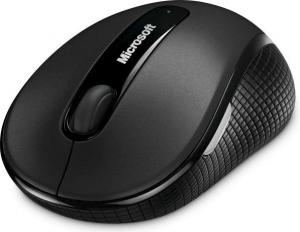
    Recently, my mouse started acting up.  So I went out and found a new one.  I settled on a Microsoft Wireless Mobile Mouse 4000.  It comes with three parts: the mouse, an AA battery, which is supposed to last for up to ten months, and a tiny transceiver you insert into one of your computer’s USB ports.  The mouse has a great hand-feel.  The clicks are smooth.  If you want to take your mouse with you somewhere, there’s an easy storage slot inside the mouse for the transceiver.

    But the best thing of all is its BlueTrack technology.  This is not an ancient mouse with a track ball that you have to clean every so often.  It’s an optical mouse.  But unlike earlier versions of optical mice (why do I have a terrible urge to use “mouses” or “meece”?) that didn’t work very well on a number of surfaces, this BlueTrack technology works like a charm on everything I’ve tried it on, including glass. 

    You need a new mouse?  This is a good one.

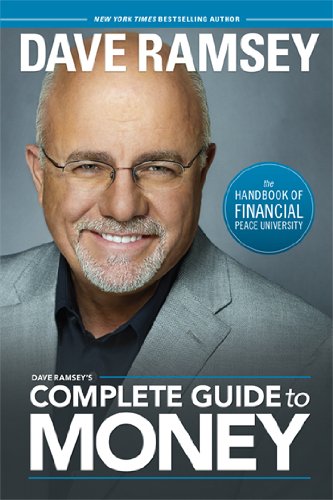
    Dave Ramsey’s Complete Guide to Money

    If you’re like 70% of America, you are living paycheck to paycheck, which means that if you or your spouse (assuming you have one) were laid off, you would probably have difficulties meeting your mortgage the next month.  If you didn’t go into default on the house, you certainly would on other payments and bills. 

    You also have very little retirement. 

    You probably have around $7,000 in credit card debt.  Maybe a lot more.

    You also have a car payment or two.  Or, heaven forbid, a lease. 

    You might be house poor—the house payment is so large you can’t seem to do anything else. 

    You might have creditors hounding you. 

    You might be one of those folks throwing their money away on the lotto instead of investing it. 

    Did you know that if you invested $50 a month, an average of what many lotto players spend, in the stock market for 40 years, you’d very likely end up with $316,000 in the bank  (over the last 40 years of ups and downs, the annualized return of the market was almost 10%). You would have put in only $24,000 over that time period, which means you would have made $292,203!  But instead, if you’re a lotto player, you just throw all that out the window.  (No, you’re not going to win; not even maybe in your dreams.)

    You probably think your kids will have to take out loans to go to college. And you think that’s a good idea.  In fact, you probably think it’s a good idea to have a credit card just in case there’s an emergency because you don’t have any savings to cover any emergencies.

    The list goes on.  The sad part of this is that our finances cause us average Americans a lot of stress in our lives and marriages and families (even if we’re in denial) and very often heartbreak. 

    I know that a lot of us look at our financial chains and throw our hands up in despair—what can I do?  The mountain of debt and bills are just too high.  Besides, this is how everybody lives.

    But it’s not.

    There is a way out.  And it doesn’t matter how old you are, it’s not too late.

    Dave Ramsey has written his hands-down best book ever, which will take you step-by-step through the process of turning a financial mess into financial peace.  He’ll do it in a down-to-earth easy-to-read style. No confusing ten dollar words that make your head spin.

    Ramsey himself went through financial hell.  He was the guy that made all the mistakes with his money.  Lost everything.  Had collection agencies coming after him.  Didn’t know how he was going to feed the family.  He turned that all around.  Yes, he’s a millionaire, but more importantly, he has been working for the last twenty years to teach regular people with regular jobs the simple principles that lead to financial peace.  They’re becoming debt free and working their way towards huge net-worth.  

    You want a step-by-step plan?  You want to educate yourself about money and family finances from one of the nation’s leading experts?  Then go and purchase Dave Ramsey’s Complete Guide to Money today and start reading it.  You will not regret it.  If you already have his Total Money Makeover and don’t think this will be worth it, think again.  This goes into all sorts of things the Total Money Makeover doesn’t.

    Be free, people.  Be free.


    Related Stuff

    Look at the links and the video.

    Share

One Comment

Comments are closed.