Generating Story 14: Freewriting from Inquiry to Outline to Scene to Draft with Author Maya Lassiter

Maya Lassiter is an unschooling mom, a yogini, a goat keeper, a yurt dweller, and a pantsy fantasy writer. Or should I say very likely soon to be less pantsy and more of a juggernaut? We shall see.  The initial results of her attempt to go from writing by the seat-of-your-pants to doing more pre-draft development seems to be paying off big time in less stress and higher word counts in each writing session.  I asked Maya to share her method with us. Here’s what she had to say.

Maya

At one hundred pages in on my eighth novel, I ran aground and could not seem to move forward an inch.  This was totally normal.  As a pantser, I pretty much always ran aground at some point, usually many times per novel, and then had to go back and rewrite, revise, redraft, finding the point I had gone off the rails and fixing things until finally I could get the train drafting moving once again.  Of course, even after all that, I would still go back to the beginning again, once I had hit then end, for revisions were where I found the book out of the mass of stuff I had gotten down by the seat of my writerly pants.  It was usually for four or five more drafts.  Grueling, exhausting work. 

This time, however, staring at the choked up, broken manuscript before me, I had had enough.  I decided I wanted to be one of those people who planned their book: to heck with this pantsing crap. I wanted to write a draft that hung together the first time through.  I wanted this whole novel writing thing to be easier.

In deciding this, however, I realized I had no idea how to proceed.  It’s one thing to say, “I want an entirely new way to do this,” and quite another to actually know what that new way is.  So, I did what any avid reader does when trying to figure anything out: I went to the library.  I checked out a giant stack of books–anything about writing fiction, or writers talking about their work, or editors talking about their writers.  I read it all. 

In the process, I might have figured out how those outliners do it.

Pantsing, for me anyway, involves figuring everything out in the draft.  Following your nose, your characters, your muse, your whim, and learning about your story as you go, often right along with your protagonist.  I had previously given up on outlining (multiple times) because, how can you outline what you don’t know, and how can you know if you haven’t written it yet?

I found one solution to this in Alan Watts’s The 90 Day Novel.  In a word, free-writing.  In fact, 30 days of his 90 are spent just making stuff up, fooling around, free-writing without intending to keep a word of it, all using Watt’s copious question prompts about your story, your protagonist, or your antagonist, whenever you need to, to prime the pump.

So I tried it.  And after 30 days, I knew a ton about my story I hadn’t already figured out—even though I had already written 100 pages of a draft.  (A draft that was riddled with problems, and now I could see what the pieces were.)  Basically, inquiring into the story and characters, and fooling around in longhand to find answers, brought many insights, including flashes of scenes, scraps of dialogue, the voices of the characters coming to life, new ideas….

At some point I started listing these flashes out.  That is, any time I actually saw a scene-let from my novel spring to life in my head, I wrote it down.  I got an out-of-order laundry list this way of bits and pieces of the book-to-be, and I kept adding to it as the 30 days progressed.  Until one day I realized that two or three of those scene-lets could come together and become a true scene.  And that this bit ought to go in front of that bit–the beginnings of a plot!  Basically, the list started organizing itself as I figured out more about the story through those free-writes.  Magic.

Watts also makes use of a three-act structure and slotting my proto-scenes and full scenes (as I found them) into his structure helped me see where there were holes…which brought more questions and more inquiry, which brought more free-writing, free-wheeling, answers.  I think any structure could work for this step: a romance structure, a puzzle structure, a plot-coupon epic, a coming of age story, whatever you know and love and want to use. 

So, the laundry list, the scene list sequence, and then playing with that scene list within a structure template, these were the three steps that took me from a mass of free-written, stream of consciousness stuff, to a pretty clear idea of the arc of the story, beginning, middle, and end.  With lots of information along the way.

At this point, I was at the end of Watts’s 30 days, the point at which he starts to draft in earnest….but I still wanted more than a laundry list of scenes, even an organized one.  I wanted a tighter sense of the thing.  I wanted less WORK and flailing about as I wrote.  So I took a page from Holly Lisle’s technique–a very similar one, I have learned, to a technique in Victoria Schmidt’s book, Book in a Month, that she supposedly got from Nora Roberts, and on it goes.  What you do is you take an index card for each scene and write a single sentence on it that sums up that scene.  The sentence includes five parts: [A protagonist with a need][in conflict with][an antagonist with a need][in an interesting setting][with a twist].  If you’ve got all five of those parts for each and every scene, you’re going to have tight scenes that move the story along, with no dangling bits or wandering (re: getting lost). 

I took the “twist” part of that formula and read it to be similar to a central idea in Robert McKee’s book, Story, something he calls the Turn.  Basically, your character walks into a scene expecting X and the general energy charge of the scene is either postive + ish, or negative – ish.  Then something happens, or something is revealed, that changes all that, turns those expectations upside down.  That’s the Turn.  Whatever the charge was to begin with, it is now very different, either much further than it was (really + or really -) or the opposite charge altogether.  If a scene doesn’t have a Turn, it isn’t a scene.  If the charge doesn’t change, you get a monotony in your manuscript.

All right.  I took my scene list and converted it into Sentence-per-Scenes on index cards, making sure each sentence had all 5 components, more or less, especially including the Turn.  Surprise, there were 28 scenes in this novel.  How about that?

If I wrote 28 cards-worth of material, I’d have a complete novel draft.  It seems so doable, when it’s put like that.

But I wasn’t done yet.  I remembered a blog post I had read a while back about increase productivity–and remember, this whole experiment was to see if I could make novel writing an easier, more streamlined process.  Maybe I would fail, maybe writing novels for me was always going to be guts and angst, but I wanted to see what was possible.  I mean, why not, right?  So I went and found that post, a post on Rachel Aaron’s blog, called How I Went from Writing 2000 Words a Day to 10000 Words a Day.  (http://thisblogisaploy.blogspot.ca/2011/06/how-i-went-from-writing-2000-words-day.html  )  One of her primary tricks was to figure out what you were going to write for five or ten minutes–just fool around long hand on a page or two, before you start drafting until the scene is clear in your mind before you start drafting.  It was sort of like Alan Watts’s 30 days of free-writing, in miniature. 

I also remembered another writer, Laurel Amberdine, talking about her trick of priming the pump for a scene with a sort of cheat sheet she had invented, a list of things she wanted to be sure to hit in each scene–not as a checklist, but as more writing prompts to help her find the details of the scene before drafting.  I went looking for that in our writer’s group threads, merged it with John Brown’s take on that same list, and then added on some questions from McKee’s Story, and I came up with my own prompt-sheet, designed for 10-15 minutes of pre-writing before starting each of my 28 scene cards.  Here it is:

One Sentence Description:

Problem:  What does the main character want in this scene?

What persons or forces stand in the way?  What do they want?

Value:  What is the value at stake?

Describe the charge, positive or negative, for the main character as the scene opens.
Described the value charge as the scene closes.

Turning Point:  When does a gap open between expectation and result?  Describe it.

Beat Pattern:  Comment on any of the action/reaction exchanges that may occur.

WHERE ARE WE?
– Fun, cool, weird, odd, particular details, surprises for reader
– Time, weather, etc.
– Background or world building details?

WHO IS HERE?
– What’s the situation for each character?
– Who is driving this scene?
– What is his/her concrete objective?
– What does each of the others want (motive)?
– Fun & cool stuff?  Surprises for reader?

WHAT STORY LINES WILL HAVE BEATS HERE?
– Progress or trouble?
– Points of conflict?
– Obstacles?
-TURN

Opening/transition:
Current Situation:
Setting, and significant details:
Next big crisis:
Turn:
Background/worldbuilding details:
Desired effect in reader:
Events:
Emotions:
Character’s unique reactions:
Ending hook:

Print one of these out, read my scene card, and start fooling around with the prompts.  By the time the page was filled up, the scene was clear in my mind, often with dialogue written, emotional beats I wanted to hit, and most importantly, the Point of it all, that Turn.  Not to mention foreshadowing, setting goodies, backstory bits I needed to get in, all of it on a single, handy page.

Of course, at this point I had about a half-dozen different writer’s processes rolled together into a giant mash-up that was sure to do me in with sheer weight and complexity.  But so what–this was in the name of Science!  Throw everything against the wall and see what sticks!

With card #1, built off the bones of my 30 days of free-writing, and my filled up, front and back, worksheet (took about fifteen minutes), I banged out the first scene chapter, 6000 words, in about 3 hours.  That’s double my usual top speed of 1000 words an hour, but who’s counting?  The main thing: it was perfectly painless.

My scene card #2 was written similarly in record time, the words flowing easily, no staring into space or getting lost, just smooth, lovely writing.

Plus, I wasn’t at all having the feared, “why write it if you know what’s going to happen?” thing that so many pantsers cite as their reason for not outlining.  On the contrary, I was very excited about each scene because I knew just what was so cool about it, where the juice was coming and why, and I was psyched to get in there and make it as awesome as I knew it could be. 

In other words, I could focus on the HOW because the WHAT had already been determined.

I won’t know, of course, until I finish card #28 whether the process will really work. And I REALLY won’t know until I do a revision pass on the complete draft to see if what I’ve got is any good.  So think of this post as a progress report from the trenches.  I’m up to scene card 6 so far, 16,000 words in, and its still going well, easy writing sessions at double my usual speed and no flailing. 

Too soon to tell, but tentative conclusion…maybe a pantser really can become a plotter?

John Sez

Isn’t that absolutely fantastic?

By simply taking some time to freewrite, which is just another term for sketching, she has been able (so far) to take out a ton of pain AND increase her word count. And increase it dramatically. So let’s see again how she does it.

Step 1: Sketch the story using questions as prompts

  1. Sketched using inquiry and freewriting a la Alan Watt’s The 90-Day Novel. Among many other things, that pre-draft development generated a number of scenes and scene snippets. (Hum, “inquiry” and “freewriting”; why, they’re just another form of creative Q&A. That dang creative Q&A is popping up everywhere!)
  2. Kept a list of the scenes she saw.
  3. Sequenced the list in a this-before-that order.

Step 2: Create a working outline

  1. Maya compared what she had to a structure pattern that and tried to fill in any gaps using more inquiry and freewrite.
  2. (I’m a big believer in patterns, not formulas.)

Step 3: Sketch the scenes

  1. Next, she sketched out each scene on her list using her own version of the Holly Lisle/Victoria Schmidt/Nora Roberts technique. 
  2. Her sketches had 5 parts: [A protagonist with a need][in conflict with][an antagonist with a need][in an interesting setting][with a twist]

Step 4: Draft

  1. She was now ready to begin drafting, but does one more sketch before she writes each scene.  She uses her own version of the Amberdine “Template,” which I call the “Scene Primer” and Maya calls a “prompt-sheet,” which helps her (a la Rachel Aaron) to envision the scene more clearly.  So does this for about 15 minutes at the beginning of her drafting session.  
  2. She starts to draft, full of excitement, and feeling free to focus on the how instead of so much on the what.

Note all of the sketching. Note the creative Q&A. Note the developing in iterations. Did you also see her comments on the helpfulness of using a plot pattern?

I remember when I first started doing this and feeling the same way–I can focus on the how! It’s so liberating! The writing became more of a pleasure. And I never stopped inventing. Because even though I’ve sketched a lot out, things change when you do the next take. It always does.

I cannot wait to see how this experiment of hers turns out. I think she’ll run into a few snags but find it’s a much more productive method. We shall see.

We shall also see if I can’t improve my productivity and pleasure because while this is generally how I work, I haven’t used the Lisle card prompts. Nor have I read Watt’s book. Which means it looks like I’m going to be performing an expirement of my own. And it couldn’t come at a better time. I’ll be done with BAD PENNY here in just a few weeks. And it will be time to start another novel. I can’t wait to try these new tools.

For more in this series, see How to Get and Develop Story Ideas

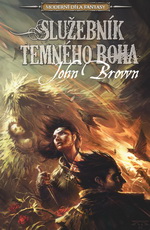
P.S. Look at the cover of Maya’s latest novel. I think it’s gorgeous.

Generating Story 13: The Scene Primer with Author Laurel Amberdine

Laurel Amberdine was raised by cats in the suburbs of Chicago. She’s good at naps, begging for food, and turning ordinary objects into toys.  Having escaped the terrible weather of Chicago, she is now delighted to call San Francisco home. For many years she read a novel every day, until she got married and realized that her new husband didn’t enjoy being completely ignored in favor of fictional people. She’s working on writing science fiction and young adult novels herself now, and hopes you get to read them soon.

I hope you get to read them soon as well. Until that glorious moment, Laurel has a fabulous tool to share with you writers. And I know it’s fab because I use it.  If you look at the text tools section on the my Story Development Framework, you’ll see that The Scene Primer is one of the tools I’ve found useful in helping me bring enough of the scene to life in my mind that I can draft it. I’ve used various bare bones versions of this for a few years now, but then I was on a forum where Laurel explained her “Template.”  And I immediately knew it would be a useful tool for me. Here’s what she had to say.

Laurel

While working on a complicated science fiction novel a few years ago, I found myself stuck looking the blank page with each new scene. I had already outlined the story and knew generally what was supposed to happen, but the setting was alien and the characters were strange. There was so much specific detail to figure out simultaneously, I was paralyzed. I couldn’t start.

But I realized I did know some things, just not enough to write a new scene from the beginning. So I created a template, where I could fill in the bits I knew, and think about the bits I didn’t yet know in a simple, no-pressure way. After all, I wasn’t really writing yet, just making notes.

The template asks enough questions that if I fill it all in, I know exactly how to write the scene. But most of the time I don’t have to fill out the whole thing. I just work at it until I know what I want to write. It’s not a worksheet; it’s a tool to get started. Once I am ready to begin, I cut and paste the template and answers over to a notes section, and get writing. Most of the time I don’t even look back at it.

The template got me through that novel, and I continue to use it. I’ve refined the categories I use, and even discovered that I can improve my writing by adding template entries to cover aspects where I’d naturally slack off. Like, I often focus so tightly on plot that I skimp on showing a character’s emotions or unique behavors. Well, now I just put it in the template and make sure to figure that out too! Works great.

Here is the current version:

Summary:

Opening/transition:

Current Situation:

Theme song:

Setting, and significant details:

Time span/transitions:

Next big crisis or turning point:

Foreshadowing:

Background/worldbuilding details:

Desired effect in reader:

Events:

Sequence:

Emotions:

Character’s unique reactions:

Ending hook:

Other notes:

The colors encourage me to fill it out, because it’s pretty once it’s done. The “Summary” is what would go on a note card. In Scrivener, I just paste that onto the note card once I have it (or from the note card if it’s already filled out).

“Events” and “Sequence” almost always wind up being the same thing, but sometimes I don’t know what order things happen in, so I fill in “Events” first.

I listen to music while I write, and often a certain song seems to fit the scene. If I find one that does, I list it under “Theme Song.” This can be helpful when revising, because I can put the song on and get right back into the feel of the scene.

The hardest part for me is almost always the opening line.

John Sez

After reading Laurel’s post on that forum, I immediately tried applying the idea to the current novel I was drafting.  I’d done sketches of the scene in my own way, but never with a list of questions to prime my thinking. That day I started a new chapter, but before I began to do my initial sketching, I took Laurel’s idea and tweaked it to my taste, coming up with my own “Template” that I call a “Scene Primer” or “Sketch Primer,” then let it direct my sketching.  It worked like a charm.  After answering five or six of the questions, I could see enough of the scene detail to begin to write.  Here’s my current version.  I’ve used it a number of times since that first day, and it’s always proved helpful.

When starting to write a new sequence or scene, start filling these out UNTIL it comes alive and you can write. (That is my note to self.)

WHERE ARE WE?

  • Transport: general, dominant impression then specific
  • Setting tags
  • Sights, sounds, smells, textures, tastes? 3s2t
  • Fun, cool, weird, odd, particular details
  • Time, sun, weather, etc.
  • Background or world building details?
  • Fun & cool stuff?
  • Surprises, different, twists?

WHO IS HERE?

  • What’s the situation for each character?
  • Goals
  • Who is driving this scene?
  • What is the concrete objective for him/her?
  • What the concrete objective of other characters?
  • Motives?
  • Character transport: general, dominant impression then specific
  • Thoughts?
  • Tags?
  • Fun & cool stuff?
  • Surprises, different, twists?

WHAT STORY LINES WILL HAVE BEATS HERE?

  • Progress or trouble?
  • Points of conflict?
  • Obstacles?
  • Fun & cool stuff?
  • Surprises, different, twists?

OTHER OBJECTIVES AND THOUGHTS?

A few things to note. First, like Laurel, my goal isn’t to fill in all the blanks.  My goal is to bring the scene to life in my mind in enough detail that I can write.  So I don’t fill out every blank. I use the tool to stimulate my imagination. It’s like using a match to light a candle on a birthday cake–you only use it until the candles are all burning, then you wave it out and set it aside because it has done its job. The goal isn’t to burn a match, but to light the candles.

Second, there’s no one right version of this. My version is different from Laurel’s because she and I have different work habits and think about stories in slightly different ways. For example, sometimes I listen to music when writing, but most of the time I don’t. Maybe some day I’ll start using theme songs. But I know a lot of other authors who DO find music helpful.

So who’s right?

No, stop asking that question. That’s the wrong question. Music is a tool.  A tool can’t be write or wrong.  It can only be helpful or not helpful. If you find theme songs helpful, then use them. If you don’t, then don’t.

Third, this is yet another example of the general creative principle of developing in iterations. Think of painters.  They will usually start by sketching.  The sketches are, by nature, rough and incomplete.  They’ll sometimes create a number of sketches. Some of what they sketch might make it into the final painting. Some of it may not.  At some point in time, they feel they have enough of the image (feel, composition, subject, etc.) in their minds to start applying paint to canvas.  So they’ll rough in the subject on the canvas and then began to paint in the details.

It’s the same with writing. You start with a rough, incomplete idea. You sketch it out, inventing as you go.  Maybe you sketch the whole thing or just parts.  Then you go back and build up more detail, adding by degrees until you have enough character, setting, problem, and plot in your mind that you can form the story.

For example, I recently sat down to write chapter 22 of my current novel. Here’s what I had on the outline (which is simply one type of sketch) :

Recon

  1. Summarize wal-mart purchases etc.
  2. Recon their security, paint it all. It’s stiff security.
  3. Carmen or Pinto calls in—someone’s coming
  4. They’re dressed up as utility guys
  5. See her coming in the field. Not at the house. They wave her down or something

Can you see that scene well enough to write it?

No. Neither could I.  I knew roughly what would happen, but I couldn’t write anything because I couldn’t see anything.  Where was the house they were going to recon? What did it look like? What kind of security did they have?  Was it in a neighborhood or out in the country?  I only had the most general idea of character, setting, and plot. So I turned to my Scene Primer and started answering the questions.

800 words later, I’d sketched out the scene and had enough detail in my mind that it had come to life. I used a lot of what I developed in that sketch. But there was some, by the time I finished my draft, that I didn’t use.  Why? The draft was another iteration of the story. And in that take, things changed and I didn’t need it. But it wasn’t wasted effort because it helped me get to the point where I could draft.

The Scene Primer is an excellent tool to help you build up the detail when you’re starting to draft.  Give it a try to see if it’s useful to you.

BTW, Laurel and I aren’t the only ones using the primer. Author Maya  Lassiter is also using it to good effect in her new writing experiment.  See, Maya is a pantser who is “sick of the wretched groping around in the dark” that comes with a seat-of-the-pants writing method. She decided to try to see if she could learn to use some tools to help her invent some of her story before she begins to draft. You can read about her decision in “Can a Pantser Become a Plotter?” Then come back because Maya is going to share a post here in which she describes her new method and some very promising results.

For more in this series, see How to Get and Develop Story Ideas

Bad Penny Update – 2 Chapters to Go

I just typed the last words of the climax!  The last 15,000 words have been a blast to write.  Heck, the whole thing has been fun. 

If you look at the progress meter, you’ll see I’m at 83,384 words.  It’s weird writing something this “short.” I figure I’ll end up around 90,000 words.  I did some analysis of the size of some other thrillers.  You can see it below. It’s not super rigorous, but BAD PENNY falls well within the range.

AUTHOR AVERAGE WORDS BOOKS
Dean Koontz 93,500 2
Harlen Coben 130,500 2
JA Konrath 77,667 3
James Lee Burke 153,000 1
John Grisham 148,000 1
Ken Follett 140,000 1
Lee Child 149,000 4
Michael Connelly 145,000 1
Ridley Pearson 114,000 1
Robert Crais 80,667 3

The average of all those books is 117,000.

So I have about two more chapters to go.  I’d finish them next week, but we’re taking some vacation for the 4th.  This means I expect to type “The End” in the second week of July. Then I’ll set it aside for a few weeks, revise it, and send it out to first readers, including my agent.  Here are the characters:

  • Frank Shaw – Ex-con trying to go straight
  • Sam Cartwright – Friendly neighborhood Mormon who’s trying to make Frank feel welcome
  • Dan Meese – A man with snakes in his soul, Frank’s former cellmate
  • Tony Shaw – Frank’s nephew and hacker
  • Carmen Escobar – The woman found tied up in the trunk of Dan’s car
  • Pinto Correia – Bearded gun nut and Sam’s go-to guy
  • Jesus Goroza – Zombie for a drug cartel & Dan’s employer

I really think folks are going to enjoy this one.

The Avengers & The Paris Grill

Edit: I wrote this like a month ago and thought I posted it. But there is was in my drafts. Somebody give me some Ginko extract.

The Avengers

The Avengers is Marvel’s latest installment of the films in the Avenger world—Iron Man (2008), The Incredible Hulk (2008), Iron Man 2 (2010), Thor (2011), and Captain America: The First Avenger (2011). 

Iron Man is, by far, the BEST of all of them.  I thought Captain America might be just as good, but the movie lost its way about half way through.  The others are okay, not anything to jump up and down on the couch about. So while I was looking forward to seeing The Avengers, I wasn’t expecting anything special. I’m happy to tell you that The Avengers is good. Not as good as Iron Man, but much better than all the others.  And certainly well-worth the price of admission.

The earth is in possession of an artifact of immense power called the Tesseract, which isn’t a made-up name. In geometry a tesseract is a cubic prism—some four-dimensional thing which boggles the mind. But in this movie and Captain America, the tesseract is a blue cube that can open portals to different parts of the universe or run Nazi war machines.  The problem is that there are other beings in the universe.  Some of these would like to be able to run their own Nazi machines and subjugate all species on every planet.  So they get Loki, Thor’s adopted brother, to lead an army to raze the earth and retrieve the artifact.   

Of course, earth’s forces aren’t strong enough to repel this alien force. That is, unless you call upon the Avengers—Iron Man, Thor, Hulk, and Captain America. As well as Avengers who haven’t had their own movies yet like Black Widow, Hawk, and Nick Fury.

It all sounds a bit much, and in the hands of a lesser writer it might have been. But Joss Whedon (Serenity, Firefly, Buffy the Vampire Slayer) wrote the script and directed the movie. And he did a fantastic job. Instead of thinking we came for a barrage of special effects, he takes time to build the characters and relationships so we care about the action when it arrives. He does use the idiot chaos cinema technique for some of the action, but not nearly as much as was in Hunger Games. More importantly, he makes up for the error of his ways with a number of laugh-out-loud moments. Hilarious moments.  In fact, the humor is one of the main reasons why this movie was so good.

If you like super hero movies, you’ll love The Avengers. Maybe not as much as you like Iron Man or Spider Man 2 or the Nolan Batman series. But close enough to have a great night out.

The Paris Grill

The Paris (Idaho) Grill has opened another restaurant in what used to be the Bear Lake Motor Lodge Cafe.  The cafe was okay. Nothing to write home about.  So I didn’t know what to expect with the new grill.  However, I took two of my daughters out last night for dinner.

The Paris Grill has four menus. I don’t know why they keep them separate, but they do. One for breakfast, lunch, dinner, and another for their pizzas.  We opted for the “Burgers n Pastas n Salads” menu which I guess is the lunch menu, but was what we ordered our dinner off of.

Confused yet?

Luckily, the food’s good enough that the menu business doesn’t matter. The lunch menu features a number of regular sandwiches—BLT, chicken cordon bleu, French dip.  But it also offers some signature sandwiches like a kielbasa and pepper sandwich, something called the Hobo Deli (which is tasty sounding combo of sour dough bread with pepper cheese, roasted turkey, bacon, grilled tomatoes, and cilantro dressing), as well as the Monster Grill—roast beef topped with caramelized onions and peppers, mushrooms, and provolone cheese.  I opted for the Monster Grill. My girls skipped the salads and ordered a hamburger and the chicken cordon bleu with mashed potatoes.

The first words out of my daughters’ mouth when eating the mashed potatoes were “ooh” and “yum.”  That was followed by another “ooh” and “yum.”  The potatoes were good.  And they were made from scratch.  The sandwiches were tasty as well.  Good enough that I’m going to go back to the grill to try their dinner menu with my wife.  

We topped the dinner off by splitting one of the grill’s big, hot cinnamon rolls.  The prices for the lunch items were reasonable—around seven or eight bucks—and they were big enough that the girls took half their meal home.  

If you’re in Garden City, Utah and looking for something besides burgers and shakes, try the grill.  I think you’ll be quite satisfied when you walk out the door.