Spider-man, Dark Knight, Downton, and Brave

The Amazing Spider-man
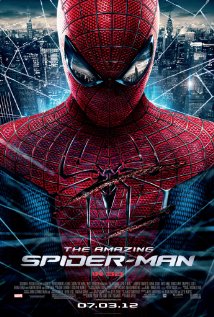
The Amazing Spider-man is one of the most enjoyable superhero movies I’ve seen in the last ten, heck, fifteen years.  It rocks.

Is it as good as any in Christopher Nolan’s Batman series? Yes, but it never becomes dark.  And in many ways I think it might be better.

How about Iron Man? Oh, yeah.  Not as witty, but just as funny.

Sherlock Holmes?  Spiderman 2?  Yes and yes. And I don’t care what you say, Sherlock Holmes is a superhero.  He can’t bend metal with his mind, but almost. He’s certainly as much a superhero as, say, Black Widow.

What made this Spider-man so good?

The story tells the story of how Peter Parker becomes Spider-man.  I know, we’ve seen it before, but unlike other superhero movies, this one, like Iron Man and Sherlock Holmes, actually chooses more realism and less cartoon.  There were so many unexpected real moments and details that I couldn’t help but believe.  There were Parker’s boxers hanging out when he gets beat up, his reactions when he’s trying to find his hero outfit, and the fact that he performs his derring-do while toting about a teen’s most trusted gear–a backpack and cell phone!  He fails at many things, just like a teen would in this situation, which is so refreshing–this is not yet another all-powerful superhero!  

Like so many superhero movies, this one features another mad scientist with mad science.  It’s still the stuff of comic books after all. But what I really enjoyed were the moments of comedy, the delightful romance, and the fact that Spider-man is way more vulnerable than I’ve ever seen him portrayed.  The movie kept delivering pleasant surprise after pleasant surprise.  Towards the end, it all works together to honestly earn a swell of emotion in a scene which I won’t reveal here and spoil for you.  

Just know that if you want to see a movie full of action, drama, and fun, you’ll want to watch this one.

The Dark Knight Rises
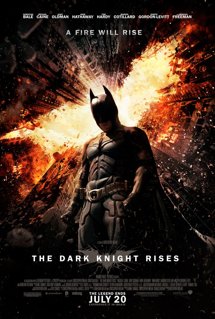
I have been looking forward to the last Christopher Nolan Batman for quite some time, and The Dark Knight Rises delivers. 

After taking the fall in the last movie for Harvey Dent, Batman/Bruce Wayne goes into reclusive retirement.  But we all know what happens when you stop minding the wheel.  A new villain shows up named Bane, and very soon Gotham is reeling.  Which means Batman needs to come back.  But Batman ain’t the Batman he used to be.

This Batman and the recent Spider-man have taught me that I enjoy heroes that can be beaten soundly.  I like heroes that can and do lose.  They are so much more interesting than those who always seem to pull it out. 

There’s a lot of cool action in this movie.  Batman has a cool new toy.  There are a number of well-executed plot twists.  And I think I enjoyed the slow reveal of Bane’s back story about as much or more than I have for any villain.  But I think my favorite part is at the end when Batman makes his sacrifice.  I know the movie had to end as it does, but I almost wish we didn’t have the last five minutes because it undermined that incredibly powerful note for me.  Yes, I’m being intentionally obscure to avoid spoilers.  Whether you agree with me or like the movie with the last five minutes added on (as my wife did), if you like big action flicks, you don’t want to miss this one.

Downton Abbey season 2
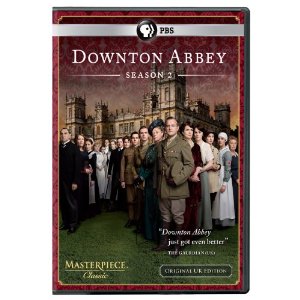
About nine months ago I reviewed Downton Abbey, a BBC miniseries that aired on PBS. The first season is set in the fictional Downton Abbey and follows the lives of the aristocratic Crawley family and their servants. The stories take place over the time period that starts with the sinking of the Titanic in April 1912 to the outbreak of the First World War on 4 August 1914.

The main story line running through those episodes is the fact that the Crawley family must give up the estate to a distant relation because they have no male heir.  But it wasn’t just about the aristocrats.  One of the most delightful aspects of the series is that it also featured the refreshing stories of various servants. Some were funny. Some pulled at your heart strings. Some were tragic.

Well, Downton is back with a second season that you can get on Netflix if you missed it on PBS. The events span the first world war. Some of those we met in season one go to war; some stay at the estate.  Other new folks mix in.  What’s constant is that the wonderful storytelling continues.  As a family, we enjoyed all of the characters, but I must say that Maggie Smith (who played Professor McGonagall in the Harry Potter series) seems to get a majority of the best lines as the Dowager Countess.  We looked forward to every minute she was on the screen. 

This is a fabulous series.  If you like Pride & Prejudice or Cranford, you will love watching the stories of Downton Abbey.

Brave
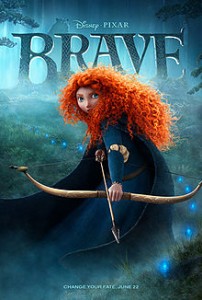
I’m just about out of time, but let me just say that if you’re looking for an enjoyable family movie, you need to watch Brave.  It’s set in the highlands of Scotland in the 10th century and tells the story of Princess Merida who doesn’t want to marry, even if it means war with the other clans.  To change her mother’s mind, Merida turns to a witch for a potion.  Of course, potions never go well, do they, and the kingdom and lives of those Merida loves are soon put at stake.  The movie focuses on the mother and daughter, with the father providing comic relief.  There are plenty of laffs, some parts that will put younger viewers on the edge of their seats, and a wise message for parents and children alike.

Share

Similar Posts

  • I Am Not A Serial Killer by Dan Wells

    IAmNotASerialKillerYou can scare the crap out of me (Aracnaphobia), and I will love you forever. You can make me bite my nails in terrible suspense (Wait Until Dark, The Village) or throw supernatural at me (Poltergeist) and I will sing with praise. But the moment you do gruesome, the moment you start showing me entrails and organs, my discomfort level shoots through the roof.

    And this is why I would not have finished  I Am Not A Serial Killer by Dan Well’s if I had just picked it up off a shelf–because the main character is the son of a woman who owns a mortuary. We get to see him help process a mutilated body very early in the book, pumping fluids in etc., and Wells knows his craft so I was THERE. I’m sure it’s not too gruesome for some, but I just have issues with organs. I don’t know why. I also have an issue with clowns.

    Clowns are, by far, the scariest things around. And this is not because I read the book IT by Stephen King as a wee lad because I didn’t. It’s because they’re painted vessels of evil. End of story. They’re perfect examples of the freakazoids that lurk in the uncanny valley.

    Anyway, I’d heard Wells read a portion of this book that had all of us in the room crying because we were laughing so hard. So I read on, telling myself I had to at least get to that part. And I am so very happy I did. 

    I Am Not A Serial Killer is young adult story about a good-hearted teen named John Cleaver who is a sociopath with all the traits shared by serial killers. John’s in counseling, but more importantly, he is convinced he can prevent himself from becoming a serial killer by keeping rules he’s made for himself like not watching people for too long and complimenting someone when they make him angry. Such rules, he hopes, will keep him from feeding compulsions he won’t be able to resist.  The problem is a real serial killer has come to town (but unlike any you’ve seen before). And John may be the only one who can stop him. Will he let go of his rules to save the town? Or will he keep his monster asleep while others die around him?

    It’s a fascinating situation (without a clown in sight, may the writing gods be praised). And Wells takes the reader on a journey through it that includes mystery, dread, and humor. In the hands of some other author, that would be enough. But Wells does more than entertain us. He gives us things to think about. He gives us great characters to boot–come on, when was the last time you read a book where the hero was a likeable sociopath? And most of the gruesome is up front anyway.

    Read this book. Skim the body processing if you must. But you simply don’t want to miss the rest. It was a fabulous read and I recommend it highly.

    The US version comes out in March of 2010. But you can get the UK version now on Amazon UK, Borders UK, etc. The links are all here on Well’s site.

    Share
  • How to Get Rich: Spend

    No, really. It’s true. You just have to spend smartly. And in a special way.

    Over the course of your life, if you make what the average American does, more than a million dollars will flow through your hands.  And yet so many of us don’t feel rich.  That’s because money is like the Gingerbread Man.  Turn your back on it, and it’s out the door, rudely taunting everyone as it flies by.  And then it gets eaten by a fox. Such a waste.

    But it doesn’t have to be.

    Let me share with you THE best method I’ve found for managing my money.  It takes tons of anxiety out of spending and saving.  And, if you’re a Dave Ramsey fan, it is the one thing upon which everything else he teaches depends.  If you’re not a Ramsey fan, it doesn’t matter. After getting a job, this is the first thing you must do to get rich.

    Here’s the big secret. It has three parts:

    1)     Decide how much you’re going to spend on various things BEFORE you spend it

    2)     Make what you have left in each spending category EASY to track

    3)     Manage the things you can’t foresee

    To do the first two parts, you’re going to create a special kind of spending plan. We won’t use the term “budgeting” because “spending” is so much more fun, and because that’s what we’re going to do anyway. To understand how to do this, you need to watch three videos.

    Before you do, please know I earned a Masters degree in accounting.  I’ve used Quicken for more than twenty years.  Neither of those things has helped me manage my money like this simple method.  If you’re looking for a better way to manage your money, this is it.

    First, watch this video to get an overall idea of how this method works.

    Note: you can use actual envelopes and cash for everything if that makes you happy, but you really don’t need to.  The idea is to think of pre-allocating your monthly income to categories of expenses AND then having an easy way to track what’s left.

    Now, watch this bubba explain how he does it.

    But John, didn’t he say the same thing?

    Basically, but he has a fun accent. Besides, it’s good to see another example. And please note again: you don’t have to use actual envelopes and cash, although many swear by them.

    Finally, watch this one. No, it’s not just another repeat. There are some additional important ideas illustrated here.

    This video brings up the idea of why simply tracking an overall account balance isn’t very helpful. It also shows you WHY envelope categories are–they make it immediately apparent how much money you have to spend for a thing.  If you just use Quicken to track what you spent (looking in the past), you’ll run into troubles.  Let me tell you, I know this from experience. We use Quicken, and have for years, and plan use it for some time to come because it makes taxes and bank reconciliation a snap.  But Quicken only tracks what you spent.  Tracking, as important as it is, is not the key to success.  The key is pre-allocating BEFORE you spend.  And then tracking so you know what you have left in that category.  And making that tracking EASY.

    The final thing you have to do is manage the things you can’t foresee because things rarely go exactly to plan. Unexpected things ALWAYS come up. Your daughter will crash the car. Your husband will get appendicitis. You will forget that you had a $200 school sports expense.

    Okay, fine. Things happen. But how do you manage them if you can’t foresee them?

    If it’s really small, you simply adjust your plan. For example, if you need $30 more in food, you can transfer it from fuel if you have some extra there.

    You manage larger things by building up an emergency fund. Ramsey suggests starting with a $1,000 emergency fund and then trying to get two to three months of living expenses—about $10,000 to $15,000 for most people. Unexpected things WILL happen and cost your money. So build up some cushion to take care of them.

    Finally, you manage the really large things by getting proper insurance. This is what insurance is for. The types of insurance you need include (1) homeowner’s or renter’s, (2) auto, (3) medical, (4) long-term disability, (5) long-term care (for those 60 and older), and (6) life insurance. You may add true identity theft insurance as well.

    Okay, so that’s the overview.  If you want to try this, here’s how you do it.  It’s fairly easy. 

    STEP 1: get your head straight

    Resolve that you will NOT use credit for anything. You will not spend any money you don’t have.  You will not put another dime on a credit card, and this despite the fact that the plastic devil companies are begging you with offers almost every day to sign up for their cards. (Hum, I wonder how they afford all that junk mail.) If your monthly bills are greater than your income, then we have to fix that first.  But the new law of the land is zero new debt.

    Next, always remember to allocate your money to these categories first—shelter, food, adequate clothing, and adequate transportation.  This means if you have a crunch month, you would NOT pay credit card bills before food, even if you work for Visa.

    STEP 2: get your blank sheet & pencil

    Get out a piece of paper and pencil (not a pen) or open an Excel spreadsheet.  Whoa, that was an easy step.

    STEP 3: list your monthly income

    List your expected monthly income at the top from all sources.

    STEP 4: list your spending categories

    List your spending categories. You’re going to split them into two groups.

    The first group goes right below your income and includes all of your recurring monthly expense/spending categories. Not the amounts you spend. Just the categories. Things like mortgage, electricity, phone, groceries, dining, etc. Make sure you include some entertainment/fun money.

    The second group goes below your recurring monthly expenses and includes all of your major annual periodic expense/spending categories. Things like Christmas, vacation, clothing, kids back to school stuff, etc. And things you want to save for—a couch, iPhone, car, etc. Your emergency fund goes here as well.

    If you need help thinking up categories, use these Ramsey resources: Monthly cash flow plan forms and Monthly allocated spending plan form.

    STEP 5: Fund your categories

    Decide how much you will spend in each category this month.  You should have 0 dollars when you get to the bottom of the sheet.  Spend (allocate) every dime BEFORE you start the month.  You’re going to do this at the beginning of each month.  And you will probably have to adjust it a couple of times during the month.

    You will probably have categories that don’t get any money this month.

    You will also have categories that get money, but you won’t spend any of it this month.  These are your periodic expenses.  Your goal is to have the cash up front to pay for them, so you have to save for them.  Remember, you are NOT going to take on any new debt. 

    For example, if you’re saving up for Christmas, you allocate some money for that out of this month’s funds and TRANSFER it to savings.  Then it will be there when you need it.  You could draw the cash out and put it in an actual envelope, but you don’t have to.  Just as long as you keep a record of the total amount in savings and what it’s all supposed to be for, i.e. total savings in July = $1,000: $500 for back to school, $200 for Christmas, and $300 for my trip with kids to Six Flags in 2013.

    STEP 6: mark the “watch” categories

    Some of the categories you need to watch closely, and some you don’t. The ones you need to watch closely will be your “envelope watch” categories. 

    The categories you don’t need to watch as closely are those that are automatically taken out of your account each month.  And those you will write a check once a month for.  These things include mortgage, car payment, electricity, etc.  These are NOT categories you need to use actual envelopes for.  You can track it on paper or in the spreadsheet. Not much happens with these categories. 

    But there are other categories that you’re going to be spending throughout the month, and it’s easy to over spend if you don’t track them.  Groceries, dining, entertainment, gasoline, a specific vacation, etc. are all categories that you make multiple purchases with each month and are flexible/discretionary and need to be watched closely.  So while everything is tracked in a category/envelope on paper or on the computer, you’ll track these with either a real envelope and cash or a virtual one using that free software you saw in the third video or a piece of paper with a running category balance in your wallet.

    STEP 7: have fun and spend!

    Now go out and spend!

    Before spending, check your envelope.  Do you have enough money?  If you do, spend and be happy.  If not, save up for it or find a way to save money in another category and adjust so that you’re still spending the same total amount.  Never spend what you don’t have.

    If you feel you need something not planned for, well, you have to get it later OR transfer something out of another envelope.  I just make myself wait a day or three, and usually the urge to buy, Buy, BUY! goes away, and I see I don’t “need” it right now.  Or maybe a more affordable option presents itself.

    If the kids want something, and you feel guilty you can’t give it to them, just tell them what’s in the envelope/category, and tell them they can save for it or choose something else in that category that will fit with what you have left.

    If you’re tracking envelopes virtually or using the paper balance in your wallet, you MUST update your envelope AFTER every purchase so you don’t spend more than you have. If you find you just can’t seem to remember to do this, go to the cash method.

    That’s it! 

    Of course, that’s not quite it because even though it’s easy, if you haven’t done this before, it might take some adjustment.  Give yourself a month or three to get it down.  Because when you do, it WILL produce great results and peace. It’s doing that for us. 

    If you feel you need more info, I suggest you read Dave Ramsey’s Complete Guide to Money.  Here’s the first chapter to sample: Complete Guide To Money sample chapter.

    Happy spending.

    EDIT: here’s another video to watch: http://www.youneedabudget.com/.  Then read about the method: http://www.youneedabudget.com/method. This one highlights the idea that you need to make sure you realize that things will happen that you cannot foresee. No plan survives contact with the enemy.

    Share
  • Animals Make Us Human by Temple Grandin

    Which animals do you think have a better life: family dogs or cattle on ranches?

    Think about it. Cattle get branded and tagged and slaughtered. Some live only a year or two. Meanwhile, Fido gets the run of the house, a spot in front of the couch, and chew toys.

    You might be surprised to know that many cattle have it better than pampered family pets. That’s the claim Temple Grandin makes in her fascinating and practical book Animals Make Us Human: Creating the Best Life for Animals.

    Grandin is not a beef industry lobbyist working smoke and mirrors PR to make ranchers look good. She’s a practical, down-to-earth, get-your-hands-dirty animal scientist who has revolutionized the beef industry and had an impact on many others. She isn’t a vegetarian, and has no intention to become one. But she does love animals. And her insight and research has made the lives of millions of animals better.

    When people ask her how she can work in the beef industry instead of being an activist against it, she says that all things die. It’s the cycle of life. She has no problem eating animals. In fact, she believes that our relationship with the animals we use for food is symbiotic–mutually beneficial. But she also believes that if we’re going to raise them, or keep them as pets, we need to give these animals a quality life.

    So what do animals need for a quality life? Should we give our cattle rubdowns? Let our dogs roam through city streets? What do our cats and pigs and horses need? Is it freedom?

    Her answer, surprisingly, is that focusing on freedom really isn’t a good guide for trying to give animals a good life. Not because freedom is a bad thing, but because it’s too confusing. Instead, she believes that we should be basing animal welfare on the core, or what she calls the “blue ribbon,” emotion systems in the brain. The key systems are SEEKING, RAGE, FEAR, PANIC, and PLAY.

    The rule is simple: avoid stimulating the negative emotions; do stimulate the positive ones. In the book she shares what she knows about how to do that for dogs, cats, horses, cows, pigs, chickens and other poultry, wildlife, and animals in zoos.

    Grandin is always fascinating, and with her trademark style of stories and practical insights, she shares what the research and her more than 30 years of practical hands-on experience working with animals has taught her. You’ll learn why your chickens need a place to hide, even if you’ve fenced out every fox and skunk with thirty feet of concrete; what makes pigs happy; why clicker training is so successful with horses; why you might want to consider the color of your cat’s fur; why leaving your dog locked in the house with food and plenty of toys may actually be very stressing. You’ll even learn to look at zoo habitats differently. Each chapter focuses on a different animal and how to avoid the negative and stimulate the positive blue ribbon emotions. This is not touchy-feely fluff. It’s not the ranting and raging of someone who thinks the planet would be better of without humans. It’s the insights of someone who is rigorously scientific, down-to-earth practical, and passionate about animals.  

    In her own words: “Everyone who is responsible for animals needs a set of simple, reliable guidelines for creating good mental welfare that can be applied to any animal in any situation.” Read her book to find out what she suggests these should be. If you own pets or raise animals, I think you’ll love this read. If you’d like to sample the first chapter, you can at Grandin’s website:  http://www.grandin.com/

    Share
  • Top 200 Juvenile Novels of 2010

    Two weeks ago I published the top 200 novels and authors of YA fiction. As I stated then, looking at bestselling novels only gives one view into what readers are enjoying. Looking at library circulation gives another view that complements sales. These rankings are based on the circulation (number of times the book was checked out) at the Logan Utah Libarary which serves a community of over 100,000 residents. 

    This week I present to you the top 200 Juvenile (these are mostly middle grade) novels of 2010. These are from the 5,377 different titles that were checked out. I can’t claim these lists show what’s most popular nationally. I’m confident the libraries in each region of the nation will have lists that vary a little or a lot from these. However, this does show what’s being read in this neck of the woods. Furthermore, all of these should be great reads for middle graders, teens, and adults.  

    As before, the list features a lot of authors who live in Utah or have ties to Utah. The number of titles are in ( ).

    • Obert Skye (8)
    • Brandon Mull (6)
    • James Dashner (3)
    • J. Scott Savage (2)
    • Matthew Buckley (1)

    I’m surprise at just how much these folks dominate this list. They’re rock stars! If I’ve missed anyone, let me know. For the previous lists, see these links:

    And now, the top 200 Juvenile Novels of 2010.

    The List

    Title Total % Rank
    Fablehaven book 5 : Keys to the Demon Prison / Brandon Mull* 319 0.98% 1
    Diary of a wimpy kid : dog days/  Jeff Kinney 261 0.80% 2
    Diary of a wimpy kid : Greg Heffley’s journal /  Jeff Kinney 239 0.74% 3
    Fablehaven / Brandon Mull* 236 0.73% 4
    Diary of a wimpy kid : Rodrick rules /  Jeff Kinney 235 0.72% 5
    Fablehaven Book 4 : Secrets of the Dragon Sanctuary / Brandon Mull* 226 0.70% 6
    Diary of a wimpy kid : the last straw /  Jeff Kinney 217 0.67% 7
    Fablehaven Book 3 : Grip of the Shadow Plague / Brandon Mull* 215 0.66% 8
    Fablehaven Book 2 : Rise of the Evening Star / Brandon Mull*  152 0.47% 9
    The candy shop war / Brandon Mull* 139 0.43% 10
    Leven Thumps and the ruins of Alder / Obert Skye* 110 0.34% 11
    Leven Thumps and the gateway to Foo / Obert Skye* 110 0.34% 12
    Harry Potter and the sorcerer’s stone /  J.K. Rowling  90 0.28% 13
    Harry Potter and the Chamber of Secrets /  J.K. Rowling  86 0.26% 14
    Harry Potter and the prisoner of Azkaban /  J.K. Rowling 85 0.26% 15
    Fairest / Gail Carson Levine 78 0.24% 16
    Charlie Bone and the Red Knight / Jenny Nimmo 78 0.24% 17
    The journal of curious letters / James Dashner*  76 0.23% 18
    Pillage / Obert Skye* 74 0.23% 19
    Leven Thumps and the whispered secret / Obert Skye*  74 0.23% 20
    The hunt for dark infinity / James Dashner* 69 0.21% 21
    The Blade of Shattered Hope / James Dashner* 69 0.21% 22
    The 39 clues. Viper’s nest /  Peter Lerangis 68 0.21% 23
    The lion, the witch, and the wardrobe / C.S. Lewis  67 0.21% 24
    Diary of a wimpy kid : the ugly truth /  Jeff Kinney 67 0.21% 25
    The 39 clues. The maze of bones /  Rick Riordan 67 0.21% 26
    The bad beginning /  Lemony Snicket  66 0.20% 27
    The field guide / Tony DiTerlizzi and Holly Black 64 0.20% 28
    How to train your dragon by Hiccup Horrendous Haddock III / Cressida Cowell 62 0.19% 29
    The Society of Unrelenting Vigilance / Glenn Dakin  62 0.19% 30
    The tales of Beedle the Bard / J.K. Rowling 61 0.19% 31
    Dragon rider / Cornelia Funke 59 0.18% 32
    Midnight for Charlie Bone / Jenny Nimmo 59 0.18% 33
    Leven Thumps and the eyes of the Want / Obert Skye*  59 0.18% 34
    The 39 clues. One false note / Gordon Korman 58 0.18% 35
    The 39 clues. In too deep /  Jude Watson 58 0.18% 36
    Peter and the Sword of Mercy /  Dave Barry and Ridley Pearson  57 0.18% 37
    The 39 clues. The emperor’s code / Gordon Korman 56 0.17% 38
    The reptile room /  Lemony Snicket  55 0.17% 39
    The 39 clues. Storm warning / Linda Sue Park 55 0.17% 40
    Choke / Obert Skye* 55 0.17% 41
    Leven Thumps and the wrath of Ezra / Obert Skye* 54 0.17% 42
    The wide window /  Lemony Snicket  53 0.16% 43
    Gregor the Overlander / Suzanne Collins 53 0.16% 44
    The miserable mill /  Lemony Snicket  52 0.16% 45
    The 39 clues. The sword thief / Peter Lerangis 52 0.16% 46
    Peter & the Starcatchers /  Dave Barry and Ridley Pearson 51 0.16% 47
    The 39 clues. Beyond the grave / Jude Watson 51 0.16% 48
    The 39 clues. The black circle / Patrick Carman 51 0.16% 49
    Fantastic Mr. Fox / Roald Dahl  50 0.15% 50
    Into the wild / Erin Hunter 49 0.15% 51
    The city of Ember / Jeanne DuPrau 49 0.15% 52
    The seeing stone / Tony DiTerlizzi and Holly Black 49 0.15% 53
    The witches / Roald Dahl  48 0.15% 54
    The end /  Lemony Snicket  47 0.14% 55
    Charlie and the chocolate factory / Roald Dahl  46 0.14% 56
    Gregor and the prophecy of Bane / Suzanne Collins 46 0.14% 57
    Redwall / Brian Jacques  45 0.14% 58
    Land keep / J. Scott Savage* 45 0.14% 59
    Charlie Bone and the time twister / Jenny Nimmo 45 0.14% 60
    Professor Winsnicker’s book of proper etiquette for well-mannered sycophants / Obert Skye* 45 0.14% 61
    Found /  Sarah Prineas  45 0.14% 62
    The people of Sparks / Jeanne DuPrau 43 0.13% 63
    Beezus and Ramona / Beverly Cleary 42 0.13% 64
    The austere academy /  Lemony Snicket  42 0.13% 65
    39 clues. Into the gauntlet/  Margaret Peterson Haddix 42 0.13% 66
    Lucinda’s secret /  Tony DiTerlizzi and Holly Black 42 0.13% 67
    Ramona’s world / Beverly Cleary  41 0.13% 68
    Midnight / Erin Hunter 41 0.13% 69
    Captain Underpants and the attack of the talking toilets / Dave Pilky 40 0.12% 70
    The penultimate peril /  Lemony Snicket  40 0.12% 71
    The nixie’s song / Tony DiTerlizzi and Holly Black 40 0.12% 72
    The magician’s nephew / C.S. Lewis  39 0.12% 73
    Fading echoes / Erin Hunter 39 0.12% 74
    Charlie Bone and the shadow / Jenny Nimmo 39 0.12% 75
    The capture /  Kathryn Lasky 39 0.12% 76
    The fairy-tale detectives / Michael Buckley 39 0.12% 77
    The inside story / Michael Buckley  39 0.12% 78
    Gregor and the curse of the warmbloods /  Suzanne Collins 39 0.12% 79
    The mouse and the motorcycle / Beverly Cleary 38 0.12% 80
    The wide-awake princess / E.D. Baker 38 0.12% 81
    Ella enchanted / Gail Carson Levine 38 0.12% 82
    Water keep / J. Scott Savage* 38 0.12% 83
    Little house in the big woods / Laura Ingalls Wilder 38 0.12% 84
    The vile village /  Lemony Snicket  38 0.12% 85
    Prince Caspian : the return to Narnia / C.S. Lewis  37 0.11% 86
    The fourth apprentice / Erin Hunter 37 0.11% 87
    The prophet of Yonwood /  Jeanne DuPrau 37 0.11% 88
    Among the hidden / Margaret Peterson Haddix 37 0.11% 89
    The Wrath of Mulgarath / Tony DiTerlizzi and Holly Black 37 0.11% 90
    The diamond of Darkhold / Jeanne DuPrau 36 0.11% 91
    The ersatz elevator /  Lemony Snicket  36 0.11% 92
    Rani in the Mermaid Lagoon /  36 0.11% 93
    Gregor and the Code of Claw / Suzanne Collins 36 0.11% 94
    The Ironwood tree / Tony DiTerlizzi and Holly Black 36 0.11% 95
    The Sable Quean / Brian Jacques  35 0.11% 96
    Fire star / Chris d’Lacey 35 0.11% 97
    Bluestar’s prophecy / Erin Hunter 35 0.11% 98
    Gregor and the marks of secret /  Suzanne Collins 35 0.11% 99
    How to speak dragonese by Hiccup Horrendous Haddock III / Cressida Cowell 34 0.10% 100
    Charlotte’s web /  E. B. White. Pictures by Garth Williams 34 0.10% 101
    The grim grotto /  Lemony Snicket  34 0.10% 102
    The Everafter War / Michael Buckley  34 0.10% 103
    The Dark Hills divide / Patrick Carman 34 0.10% 104
    Magic thief /  Sarah Prineas  34 0.10% 105
    Forest of secrets / Erin Hunter 33 0.10% 106
    Found / Margaret Peterson Haddix 33 0.10% 107
    Chickens in the headlights ; a novel / Matthew Buckley* 33 0.10% 108
    In the realm of the Never Fairies / Monique Peterson 33 0.10% 109
    The Thief Lord / Cornelia Funke  32 0.10% 110
    The last wilderness / Erin Hunter 32 0.10% 111
    Charlie Bone and the invisible boy / Jenny Nimmo 32 0.10% 112
    Tunnels / Roderick Gordon, Brian Williams 32 0.10% 113
    Ramona the brave / Beverly Cleary 32 0.10% 114
    How to be a pirate by Hiccup Horrendous Haddock III / Cressida Cowell 31 0.10% 115
    Captain Underpants and the wrath of the wicked Wedgie Woman / Dave Pilky 31 0.10% 116
    Fire in the sky /  Erin Hunter 31 0.10% 117
    Charlie Bone and the castle of mirrors / Jenny Nimmo 31 0.10% 118
    Little house on the prairie /  Laura Ingalls Wilder  31 0.10% 119
    The slippery slope /  Lemony Snicket  31 0.10% 120
    The wyrm king / Tony DiTerlizzi and Holly Black 31 0.10% 121
    The fire within / Chris D’Lacey 30 0.09% 122
    Captain Underpants and the perilous plot of Professor Poopypants / Dave Pilky 30 0.09% 123
    Fire and ice / Erin Hunter 30 0.09% 124
    The princess test / Gail Carson Levine  30 0.09% 125
    A Giant Problem / Holly Black 30 0.09% 126
    Charlie Bone and the beast / Jenny Nimmo 30 0.09% 127
    Dealing with dragons /  Patricia C. Wrede 30 0.09% 128
    Over sea, under stone / Susan Cooper 30 0.09% 129
    How to twist a dragon’s tale / Cressida Cowell 29 0.09% 130
    The adventures of Captain Underpants : an epic novel /  Dav Pilky 29 0.09% 131
    Once upon a curse / E.D. Baker 29 0.09% 132
    Cats of the Clans /  Erin Hunter  29 0.09% 133
    The sight / Erin Hunter 29 0.09% 134
    Moonrise / Erin Hunter 29 0.09% 135
    Charlie Bone and the hidden king / Jenny Nimmo 29 0.09% 136
    The carnivorous carnival /  Lemony Snicket  29 0.09% 137
    The hostile hospital /  Lemony Snicket  29 0.09% 138
    Matilda / Roald Dahl  29 0.09% 139
    The frog princess / E.D. Baker 28 0.09% 140
    Long shadows / Erin Hunter 28 0.09% 141
    The darkest hour / Erin Hunter 28 0.09% 142
    Lanie /  Jane Kurtz  28 0.09% 143
    Wayside School gets a little stranger / Louis Sachar  28 0.09% 144
    Atherton : the house of power /  Patrick Carman 28 0.09% 145
    The dark is rising / Susan Cooper  28 0.09% 146
    Icefire / Chris D’Lacey 27 0.08% 147
    Sunset / Erin Hunter 27 0.08% 148
    Sunrise / Erin Hunter 27 0.08% 149
    Fawn and the mysterious trickster / Laura Driscoll 27 0.08% 150
    The unusual suspects / Michael Buckley  27 0.08% 151
    Charlie and the great glass elevator / Roald Dahl 27 0.08% 152
    The Twits / Roald Dahl  27 0.08% 153
    Ramona Quimby, age 8 / Beverly Cleary  26 0.08% 154
    Peter & the shadow thieves /  Dave Barry and Ridley Pearson 26 0.08% 155
    Peter & the secret of Rundoon /  Dave Barry and Ridley Pearson 26 0.08% 156
    Twilight / Erin Hunter 26 0.08% 157
    The quest begins / Erin Hunter 26 0.08% 158
    Dawn / Erin Hunter 26 0.08% 159
    Fairy Haven and the quest for the wand / Gail Carson Levine  26 0.08% 160
    For Biddle’s sake / Gail Carson Levine  26 0.08% 161
    Myka finds her way / Gail Herman 26 0.08% 162
    The Boxcar children / Gertrude Chandler Warner  26 0.08% 163
    Dear Dumb Diary #1: Let’s pretend this never happened / Jim Benton 26 0.08% 164
    Tales of a fourth grade nothing / Judy Blume 26 0.08% 165
    Rosetta’s daring day / Lisa Papademetriou 26 0.08% 166
    Among the enemy / Margaret Peterson Haddix 26 0.08% 167
    Beyond the Valley of Thorns / Patrick Carman 26 0.08% 168
    Dork diaries : tales from a not-so-fabulous life / Rachel Renee  26 0.08% 169
    Where the red fern grows / Wilson Rawls 26 0.08% 170
    Ramona and her father / Beverly Cleary  25 0.08% 171
    Captain Underpants and the big, bad battle of the Bionic Booger / Dave Pilky 25 0.08% 172
    Dragon kiss /  E.D. Baker 25 0.08% 173
    Code of the clans / Erin Hunter  25 0.08% 174
    The two princesses of Bamarre /  Gail Carson Levine 25 0.08% 175
    Silvermist and the ladybug curse / Gail Herman 25 0.08% 176
    Iridessa, lost at sea / Lisa Papademetriou 25 0.08% 177
    Sideways stories from Wayside School /  Louis Sachar  25 0.08% 178
    A long way from Chicago : a novel in stories / Richard Peck 25 0.08% 179
    Island of the giant Pokâemon / adapted by Tracey West 24 0.07% 180
    How to cheat a dragon’s curse / Cressida Cowell 24 0.07% 181
    Firestar’s quest / Erin Hunter 24 0.07% 182
    Fira and the full moon / Gail Herman 24 0.07% 183
    Savvy /  Ingrid Law 24 0.07% 184
    Vidia and the fairy crown / Laura Driscoll 24 0.07% 185
    Sent / Margaret Peterson Haddix 24 0.07% 186
    NERDS : National Espionage, Rescue, and Defense Society /  Michael Buckley 24 0.07% 187
    Beauty : a retelling of the story of Beauty & the beast /  Robin Mckinley 24 0.07% 188
    The popularity papers / Amy Ignatow 23 0.07% 189
    Ramona forever / Beverly Cleary  23 0.07% 190
    Dark fire / Chris d’Lacey 23 0.07% 191
    The salamander spell /  E.D. Baker 23 0.07% 192
    Outcast / Erin Hunter 23 0.07% 193
    Eclipse / Erin Hunter 23 0.07% 194
    The hound of Rowan / Henry H. Neff 23 0.07% 195
    Erec Rex : the dragon’s eye /  Kaza Kingsley  23 0.07% 196
    Beck beyond the sea / Kimberly Morris 23 0.07% 197
    Prilla and the butterfly lie / Kitty Richards 23 0.07% 198
    Utterly me, Clarice Bean / Lauren Child 23 0.07% 199
    Among the Barons / Margaret Peterson Haddix 23 0.07% 200
    Into the mist / Patrick Carman 23 0.07% 201
    This book is not good for you / Pseudonymous Bosch  23 0.07% 202
    George’s marvelous medicine / Roald Dahl  23 0.07% 203
    A hero’s guide to deadly dragons : the heroic misadventures of Hiccup Horrendous Haddock III / Cressida Cowell 23 0.07% 204
    Share
  • Good Stuff! Those looking to seal their asphalt in Ogden, Logan, and Bear Lake areas

    AndersenAsphaltFolks with asphalt driveways and parking areas, I have something you’ll be interested in.
    I have a nice long driveway, about 5,500 square feet of asphalt. We hadn’t touched it since 2005 when it was installed. But asphalt doesn’t last forever. If it’s not periodically sealed, it weathers and cracks, and then the water gets in and undermines the whole structure, and soon you get pot holes and alligator cracks and the thing becomes a mess. Last year some small cracks began to show, and we knew we couldn’t put it off any longer.

    I called a number of places for quotes and availability. And the person who gave me the best quote and quickest turnaround was Caden Andersen of Andersen Asphalt. The name will sound familiar because that’s the Caden that grew up in Rich County. He and his brother took over his grandfather’s long-standing business.

    And I am happy to report that they did an excellent job at an excellent price. They came and cleaned the whole thing with wire brooms (although I power washed it before they came), filled the cracks with hot tar, then sealed everything with two coats. Their service was friendly and prompt. And they went the extra mile. There were some large cracks in the city’s road right before you turn off into our driveway. They filled those cracks with tar as well for no extra charge. The result is a beautiful driveway that’s going to last for quite some time.

    They have two locations right now, one in Cokeville, Wyoming and the second in South Ogden, Utah. If you live within an hour or two of either of those places and need to seal some asphalt, I highly recommend you give Andersen Asphalt a call.

    Share
  • Black Hawk Down, Pete Blaber, Not Waving But Drowning

    A Ferocious Battle

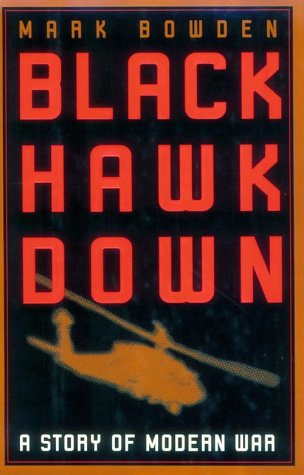
     I just finished reading Black Hawk Down by Mark Bowden. It is the most gripping account of any battle I have ever read.

    In 1992 a Somali warlord attacked and killed U.N. peacekeeping forces. As a result, the US put a $25,000 bounty on his head and attempted to arrest and try him for war crimes. On October 3, 1993, by the order of President Bill Clinton, a force of United States Army Rangers and Delta Force operators, the Army’s most elite warriors, set out to capture several lieutenants of the warlord’s militia in an area of the Somali capital city of Mogadishu that was controlled by the warlord.

    The force of about a hundred U.S. soldiers helicoptered in during broad daylight. They roped down to the streets surrounding the target building. It was supposed to take them no more than an hour. They would bag the warlord’s lieutenants, put them on a convoy of Army trucks that had barreled into the city and were waiting right around the corner, and get out.

    But the citizenry, loyal to the warlord, weren’t going to take it lying down. They began to swarm with guns and rocket propelled grenades. They attacked, almost heedless of the danger. One Somali with an AK-47 rode a cow out in a strange charge, a number of other Somali’s taking cover behind (yeah, he and the cow died). But the Americans were overconfident of their Black Hawk helicopters. They didn’t think the types of weapons the Somalis had could bring them down.

    One chopper was hit and crashed. Then another. A third and then a fourth were damaged and barely made it back to safety before they crash landed. As for the Rangers and D-boys, they were in for the fight of their life.

    The book tells the story of their courage, but it also brings in the point of view of a number of actual Somalis who fought and were injured. In the process, we get a view of the battle that is both thrilling and poignant.

    Bowden did an excellent job researching and writing this. I could not put it down. It does include some military grade profanity, but it wasn’t there to titillate or shock. I’ve talked to those who saw the movie based on this book, and I could tell the book is, per usual, better than the movie. If you’re at all interested in the military and the military operations we conduct overseas, let me recommend that you read this book. 

    Delta Force Commander Shares Insights

    Delta Force is the world’s most elite counterterrorist fighting force. Pete Blaber was a Delta Force operator that worked his way up to become a Delta Force commander and took part in some of the most dangerous, controversial, and significant military and political events of our time.

    During his time in uniform, he learned a number of lessons about life, about how we make decisions and act on them. In The Mission, The Men, and Me, Blaber writes about a number of the missions he conducted and the lessons he learned from them.

    The missions were conducted in Montana, Iraq, Bosnia, and Afghanistan. One featured a commander stupidly ordering Blaber to take his men into sure destruction. Another featured some of the first plans to capture Osama Bin Laden, before 9/11. Another included a man in a gorilla suit.

    The lessons Blaber draws from these experiences are fascinating and apply to more than military operations. For example, the lesson he drew from the operation featuring the gorilla suit is something I use every day with my writing. Anyone who leads or manages or works in groups will find other critical lessons. This was another book I couldn’t put down. Anyone interested in special forces will love this book.

    Not Waving But Drowning

    “Not Waving but Drowning” is a poem by female British poet Stevie Smith. It was published in 1957 as part of a collection with the same title. The work is her most famous poem and describes a man whose distressed thrashing in the sea causes onlookers to believe that he is waving to them, not drowning

    I hadn’t thought about this poem since I was a student at BYU. Then a local poet read it as part of his remarks at a conference I recently attended. The image and message lingered with me for hours. I thought about it off and on over the following weeks. This is, for me, an incredibly powerful poem. It needs to be read aloud, I think, to be appreciated. Not in some silly way, but with the appropriate feeling. I’m going to record a reading for my website, but you can read it aloud for yourself. Or have someone else do it for you. Then read it again.

    Nobody heard him, the dead man,
    But still he lay moaning:
    I was much further out than you thought
    And not waving but drowning.

    Poor chap, he always loved larking
    And now he’s dead
    It must have been too cold for him his heart gave way,
    They said.

    Oh, no no no, it was too cold always
    (Still the dead one lay moaning)
    I was much too far out all my life
    And not waving but drowning.

    How often does this happen? Those onlookers, caring only superficially, thinking it was too cold, thinking he was funning. But it wasn’t too cold. And his heart didn’t give out. He was struggling for his life, and they were too preoccupied to see it.

    Too preoccupied to really see. 

    I wonder. Is there someone around me, that if I just looked, just paused from my rush, I’d see they were much too far out, and not waving, but drowning.

    Share

2 Comments

  1. The Amazing Spider-Man was, as the title suggests, amazing. I like who they chose to play the new Spider-Man, and I liked that they started his love life off with Gwen Stacy. They could have done better with the Lizard, but the story was really, really great.

    The Dark Knight Rises was simply fantastic. I agree, they should have taken out the last two minutes or so, and ended with the *ahem – Spoiler – ahem* “Robin” part. That would have been awesome.

    Downton Abbey is my dad’s favorite show. He’s trying to get me to watch it, but I’m more concerned with Doctor Who at the moment.

    Brave is one of my sister’s favorite movies.

    -Matt

  2. Matt,

    I just saw Bourne Legacy. Another great thriller. Although the ending was a bit off for me. Don’t want to spoil it, but I thought it was excellent. And I’ll say it again–I do NOT like tons of the chaos cinema technique. There was far too much for my taste in the final motorcycle chase scene.

Comments are closed.