I’ve looked in the crystal ball I hide under my desk and caught a glimpse of what ebooks will change in the next few years. Specifically I saw what will happen to:
- Book Contracts
- Literary Agents
- eBook Aggregators and Libraries
After showing me the vision, the ball thanked me for shopping at Walmart. Weird.
PRINT ONLY CONTRACTS
The only reason to have a print publisher is to get distribution you cannot obtain on your own, or to get it more cheaply than it would cost you if you tried to get it on your own. That’s it. Now, it’s true publishers have excellent art departments and story editors. But you can contract out cover art, copy editing, formatting, and even story editing yourself.
Distribution is the main thing publishers offer that you can’t get anywhere else.
BTW, when I’m talking about distribution, I’m talking mostly about getting the books out to places people can see and purchase them. For example, publishers can get your book into hundreds or thousands of books stores all at the same time–Barnes & Noble, Hastings, Walmart, Costco, indie book stores, airport book stores, grocery stores, drug stores, etc. Publishers can get you display in those stores so consumers see your book. One form of that are the racks and new book displays. Another is one that Scholastic does so well, i.e. displaying and selling titles in tens of thousands of classrooms with its book catalogs. A single author just can’t do that.
It’s also true publishers can convince some platform venues, that would never look at a self-pubbed author, to spotlight your book. For example, it’s unlikely a self-published author will be able to convince Booklist, Publishers Weekly, and Library Journal, which have huge platform for library book purchasers, to review a book. But publishers have no problem getting their stuff in there. Likewise, it’s often much easier for publishers to get endorsements from other authors or people with platform than it is for a single author. Of course, there are so many places that have some kind of platform, that publishers don’t have a lock on them all, e.g. Goodreads and Amazon reader reviews. But for the sake of simplicity, let’s just look at the distribution end.
Because 90% of book sales are still hardcopy, the only way to have HUGE sales numbers, right now, is through a print publisher. I’m talking about the numbers you see in the Publishers Weekly top selling books, where you have to sell at least 100k copies in hard back, 500k copies in mass market, to even make the list.
Publisher’s lock on this ability will erode. We can see signs of this in the USA Today Top 150 already. I consider this to be the most accurate picture of what truly is selling the most. Here’s why. And ebooks are starting to be the best selling format for a number of books. On that list, they add up sales of a title in all formats and then list the best-selling format. So when you see an (E) at the end of the listing, you know it’s selling more ebooks than any other format. E’s are starting to pop up all over and we’re still in the early adopter stage for ebooks and ereaders.
So what does this mean?
If I put on my author business slacks (why does it always have to be hats we change?), I’d be crazy to turn down a publisher that wanted to offer me monster distribution. A bird in the hand is worth two in the bush. You offer me $500k now, I’m taking the money and running all the way to the bank and then the $6.99 Indian all-you-can-eat buffet.
Of course, I’m not likely to get that kind of an offer. We new writers are more likely to get an offer for, what were Hines’ numbers? $6k – $12k? And for that the publisher will want all our ebook rights and will tie them up for years and years and years. And then they’ll try to give us a fraction of what we could get selling directly. Furthermore, they don’t provide such books the same push to garner platform spotlight. They don’t spend the money to give them the prime display in bookstores. This means the difference between what they bring to the table for us smaller authors and what we can do on our own is much less. And the ebook has narrowed that even further.
How much further? Well, how many books would you have to sell to make that advance of $6k – $12k? If you’re selling your books for $2.99 for the Kindle, you get about $2.00 a book. That means you’d have to sell 3k-6k copies of an ebook to earn as much as that average advance.
Do you think you can sell 3k – 6k copies of an ebook at $2.99?
Some authors will be able to do this. Some won’t. If you wanted to do that in three years, you’d have to sell about 150-350 books per month. For a more in depth comparison between traditional publishing and self-publshing ebooks, see Dean Smith’s blog on cash flow.
Maybe you don’t think you can make those numbers. But maybe you can. The point is that if you think you can, then you can make as much on your own as you can with a publisher. This means there is absolutely no financial reason on earth to take the publisher’s deal. None. Now, if you have non-financial reasons, that’s another thing, but when looking at dollars and cents, it’s fairly clear the publisher’s ability to put you into their distribution channels isn’t worth what it will cost you. Especially since the ebook is forever and may keep selling for years to come AND because the market for ebooks is still in the early adopter phase–it’s only going to grow massively over these next years.
But this doesn’t mean paper publishing is dead. It’s not. Nor will it be for some time. Just because SOME authors can make as much in the ebook market on their own as they can with a publisher through their distribution channels doesn’t mean all of them can. Furthermore, publishers with distribution have something to offer even those who successfully publish ebooks themselves.
Let’s say you have an ebook series that starts to sell well for you, 1,000 per month. That’s $2k per month, $24k per year. If a publisher wanted to buy the rights to that from me, they would have to pay me MORE than $70k as an advance. MORE. Because I can make that on my own in three years selling it myself. In fact, since ebooks are forever, I have to look at the present value of all of those years of sales. That income stream is going to be a LOT MORE than $70k, even if we think sales will taper off after five or six years.
How many big publishers are going to want to pay that?
Probably none. Or, at least, I suspect those deals will be few and far between. But there is money to be made in paper, even if that market is shrinking. There will be some smaller publishers who, for the right price, will offer paper distribution. And if they can get me distribution that I couldn’t get myself for paper, or do it at a lower cost, then I’d want to sell them paper rights. Why not?
And so what I see in the crystal ball are some authors, the ones who do well selling ebooks, being able to sign contracts with publishers that sell paper rights only. I know the big publishers probably won’t go for that in the near term, but smaller publishers will see the value and step up to the plate.
AGENTS
What about agents? Are they going to die?
I think if we remember that literary agents are SALES agents, then their future becomes clear. The only reason to get a sales agent is because doing so makes my property worth more (same reason for getting a publisher, btw). If, by letting them focus on sales and letting me focus on getting more product out the door, I make more money than I would if I tried to do BOTH the selling and the producing, then I want an agent.
I want to sell as many rights as I can to as many people as possible–gaming, film, audio, foreign, merchandise, etc. I’d be a fool to say, well, no, I’ve got this little ebook gig going. I’m not going to sell any of these many other rights to anybody. No, I’m just going to let them sit in my basket and earn me nothing. Let them go to waste.
!?
A good agent should be able to sell more than I could on my own because they have a better ability to reach AND close editors AND other people that are in the market for purchasing rights to my property. They’ll also allow me to sell more because all the time I would have spent selling, I can now use to create more product. So not only do I have more books, and therefore rights, to sell, I can hopefully sell them for a better price and terms than I could on my own.
I’d be a fool not to increase my revenue. I’d be a fool not to have a good agent.
So as long as there are people who want to purchase these non-ebook rights, and an agent can make a sale I couldn’t or can make it for less than what it would cost me to do it on my own, then agents will be useful. Because of this, because we’ll always have more than ebook rights to sell, I don’t see a role for good agents ever going away.
EBOOK AGGREGATORS & LIBRARIES
When more and more people begin reading ebooks what happens to the libraries?
Ebooks cost less. So a lower price per book would simply allow libraries to purchase more books and expand the collection. But wait, they don’t need rooms and rooms to hold all the paper. You can store the world’s library in one computer room. Shoot, this means that housing the collection on a server instead of on the shelves would cost less. This would allow for an even bigger collection. But why maintain a server and manage your own collection if you can network to the collection down the road?
In fact, what if there were a mega service with millions of titles you could subscribe to? That would be even cheaper. Then you wouldn’t have to pay book purchasing agents or IT folks to keep your server running.
Enter the ebook aggregators–the Netflixes of ebooks (I know somebody somewhere is working on this business plan; is it you?)
I’m betting the whole library system goes national. I’m betting you’ll have some government aggregators, but they’ll probably be dwarfed by the private companies. You’d subscribe to the aggregator’s service just as you do Netflix today and many university libraries currently subscribe to electronic periodical collections.
The aggregators will probably charge users as Netflix does for a certain number of books checked out at the same time. If a large entity like a library wanted to subscribe, I bet the aggregator would charge access to the collection based on number of users at the library. The library would pass some of that fee onto patrons. The rest of the fee would be paid by the community’s tax dollars, just as those tax dollars pay for the current collections. You might even have device manufacturers coupling subscriptions with purchase of the product as incentives to buy their devices.
When the aggregators step in, we suddenly end up with a different mix of distribution channels that will coexist:
- Author –> ebook retailer (Amazon Kindle, B&N Nook, etc.) –> reader
- Author –> subscription aggregator –> reader
- Author –> subscription aggregator –> public and school libraries –> reader
- Author –> publisher –> subscription aggregator –> then option 2 or 3 above
- Author –> publisher –> current distribution channels
Surprised by #5? Well, the current distribution channels are not going away until every book can be read on an ereader and everyone who reads has and wants to read on such a device. That’s going to take some time, if it happens at all.
Why would readers buy individual titles ala distribution channel 1 above? Some people just want to own. Other readers will be happy to purchase the books because they don’t want to wait for a checkout slot to open up, e.g. I already have my allotted number of books checked out and I really want this one on hand all the time because it’s Suzie’s favorite. Other readers will want to customize a book with highlights, margin notes, links, etc. just as many of us like to mark up paper texts. We’ll need our own copy for that. Still, I think the bulk of reading will move to the subscriptions. For example, right now I purchase DVDs I love, even though I can get them from Netflix. But the number of DVD’s I own are a fraction of those I watch. Most TV and film I watch once and it goes back to Netflix until I want to see it again. And this checking out becomes even easier where there’s nothing physical to send through the mail.
Please note: there will probably be some form of gatekeeping with the aggregators. I doubt they will carry every scrap of anything ever written. They’ll carry a lot of stuff, but not every written word. Furthermore, when you have hundreds of thousands of titles, you’ll need mechanisms for helping your subscribers find great content suited to their tastes. A lot of “people who read this read that,” review services, etc.–the next generation of Netflix recommendations, Goodreads reviews, and Pandora like tools.
Aggregators won’t be the only gatekeepers, however. The key is in getting notice. And there will be many places with platform that will be able to shine a spotlight on a book. Think about all the places you find out about movies today—radio movie programs, TV movie reviews, Rotten Tomatoes, Newspaper Reviews, Yahoo viewer and critic review summaries, Kids-in-mind, and on and on. Look at all the ways you find music. There will be just as many ways to find books.
As far as paying authors, I suspect aggregators will pay authors each time a book is checked out, or, if it’s a must-have name author, they will pay to list the title plus a per use payment.
So that’s the future I saw in my strange little ball. Feel free to comment or add your own thoughts.
 How many pushups can you do in a row?

 The Guardian just published
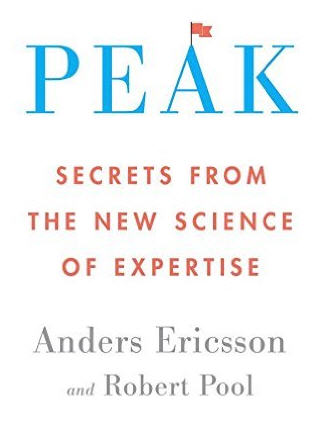
This book has been a great listen. Thanks for the recommendation. Have you found ways ta writer can incorporate deliberate practice. I could see using this to learn to type faster. (I am a painfully slow typist)
I don’t know that you can do deliberate practice as he describes it for writing. But even that’s not accurate because I don’t think what you want to focus on is writing.
I mean, if you want to type faster, there are all sorts of programs that have been proven to work. And lots of people have learned to type fast, but that doesn’t mean they can develop and tell stories.
What we want are great stories. What you’re trying to learn is how to develop and tell stories that entertain, provoke, and move.
But what would prevent us from doing deliberate practice of story development and telling?
Ericsson divides practice up into three types:
1. Naive practice
2. Purposeful practice
3. Deliberate practice
He says that “Deliberate practice develops skills that other people have already figured out how to do and for which effective training techniques have been established. The practice regimen should be designed and overseen by a teacher or coach who is familiar with the abilities of expert performers and with how those abilities can best be developed” (p99).
He states further that “You need a teacher or coach who assigns practice techniques designed to help you improve on very specific skills. That teacher or coach must draw from a highly developed body of knowledge about the best way to teach these skills. And the field itself must have a highly developed set of skills that are available to be taught” (p100).
It’s not that there are no teachers and coaches. It’s that I don’t think there’s a highly developed body of knowledge about the best way, or even more effective ways, to teach story development and telling.
If you think about how pianists and Olympians train, they are put through programs that measure progress. They know that this type of practice leads to these gains.
When you look at storytelling, I don’t see any of that. I don’t see anyone measuring methods of training against performance goals.
Furthermore, a lot of the training that takes place isn’t about what top performers DO. It’s about concepts–what is plot, what makes characters interesting, what is the three act structure, etc.
Those concepts are all important. But deliberate practice is about DOING something.
And that doing isn’t really typing. Yes, you’ve got to type. But its the development of the story that matters. That’s the goal. And the way the story is told so that it’s clear, believable, and interesting, triggering the emotional reactions that we love.
The only person I’ve taken a class from that really did this to any noticeable degree was Orson Card in his boot camp. There may be other programs, but I haven’t seen them personally.
So I don’t know that we have a lot of deliberate practice options in the strict sense of the term.
However, we do have lots of purposeful practice opportunities. And the key, Ericsson says, is to try to get it as close to deliberate practice as possible.
And to do that you would:
1. Identify the expert performers.
2. Figure out what they DO that makes them so good. And remember that we’re talking about being good at DEVELOPING stories (identifying and developing ideas) and TELLING stories.
3. Come up with training techniques that allow you to do it too.
Yes, you’ll need to learn concepts and principles along the way, but we want to focus on what these folks DO.
I have some ideas on that, but no time right now to make suggestions other than:
1. Identify 1-3 books you just love. That give you a great experience.
2. Identify what in those books triggers your interest and pleasure, whatever that is. What parts do you savor and anticipate? What was it that you think triggered that response in you? What about the experience as a whole–what do you think made it so satisfying?
3. What did they do in the telling that made it clear?
4. What did they do in the telling that made it believable?
5. What did they do that transported you to the scenes? And that transported you into the character’s head?
6. Break the books down. Analyze them. The sequence of things told to the reader and the effect. The content included.
7. Identify how they generate the ideas. This is mental work. How do they do it? What are ways that will work to help you generate the ideas and develop them into a story?