Good Stuff! Those looking to seal their asphalt in Ogden, Logan, and Bear Lake areas

AndersenAsphaltFolks with asphalt driveways and parking areas, I have something you’ll be interested in.

I have a nice long driveway, about 5,500 square feet of asphalt. We hadn’t touched it since 2005 when it was installed. But asphalt doesn’t last forever. If it’s not periodically sealed, it weathers and cracks, and then the water gets in and undermines the whole structure, and soon you get pot holes and alligator cracks and the thing becomes a mess. Last year some small cracks began to show, and we knew we couldn’t put it off any longer.

I called a number of places for quotes and availability. And the person who gave me the best quote and quickest turnaround was Caden Andersen of Andersen Asphalt. The name will sound familiar because that’s the Caden that grew up in Rich County. He and his brother took over his grandfather’s long-standing business.

And I am happy to report that they did an excellent job at an excellent price. They came and cleaned the whole thing with wire brooms (although I power washed it before they came), filled the cracks with hot tar, then sealed everything with two coats. Their service was friendly and prompt. And they went the extra mile. There were some large cracks in the city’s road right before you turn off into our driveway. They filled those cracks with tar as well for no extra charge. The result is a beautiful driveway that’s going to last for quite some time.

They have two locations right now, one in Cokeville, Wyoming and the second in South Ogden, Utah. If you live within an hour or two of either of those places and need to seal some asphalt, I highly recommend you give Andersen Asphalt a call.

Share

Similar Posts

  • Murder, Courts, and Bart D. Ehrman

    I’m going to talk a bit about some murderers in Detroit, Jesus, and a couple of books I recently read that I think are just awesome.

    MURDER
    Highers BrothersSo, the murderers.

    Let me start by asking this question: can you establish the truth in a court of law?

    Is that what the judge and jury are deciding? The Truth, with a capital T?

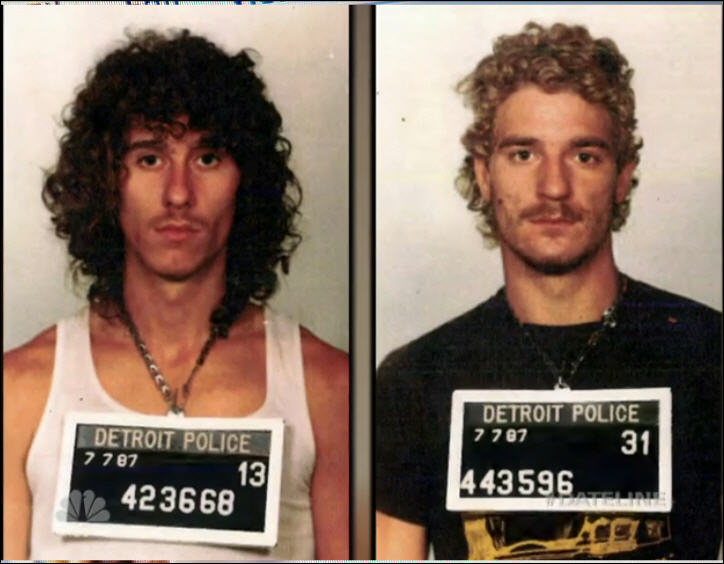
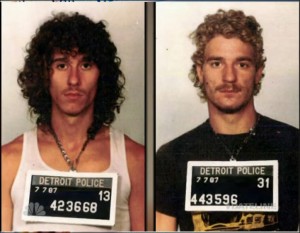
    Think about Tommy and Ray Highers, brothers from Detroit. They were convicted of murder. Open and shut case. No parole. They were two nasty buggers who shot a man down over some dope.

    But then twenty-five years later (last year, in fact) they were back in court because new evidence had come to light that undermined the original conviction. For the curious, this fascinating Dateline episode reveals the amazing way the evidence came to light and what happened because of it: http://www.nbcnews.com/dateline/full-episode-graduation-night-n72666. Watch it. You’ll be happy you did.

    So the Truth. Capital T. Can you establish that in a court of law?

    No.

    What the justice system does is try to determine which story about the evidence available is the most convincing.

    It’s about telling and judging stories.

    There are many types of evidence folks use when telling their stories. Some of it is very strong. Some is so unreliable, like hunches and hearsay, that the court won’t even allow it to be presented.

    Whatever the evidence, the fundamental nature of this is that you can often tell a number of different stories using the same set of data, the same evidence. Sometimes the stories are variations with minor differences. Sometimes the stories are radically different.

    It’s like having only some of the pieces of a 100 piece puzzle. You look at the four, twenty, or thirty pieces you have and imagine what the rest of the puzzle looks like. And then you invent something that seems reasonable.

    You invent it.

    And if that story meets certain standards of proof, then our system allows the authorities to take certain actions. If the standard of a “reasonable suspicion” is met, it allows a police officer to stop someone. If the standard of “probable cause” is met, a higher standard than reasonable suspicion, an officer can arrest you. If a jury in a criminal case decides the defendant is guilty “beyond a reasonable doubt,” an even higher standard of proof, then the justice system authorizes the authorities to sentence the defendant.

    But at no time does the system seek to establish the absolute truth, the truth with a capital T. It only seeks to establish some level of probability that the story being told about the evidence is true.

    All of this is made more complex because what’s “reasonable” is based on other people’s opinion. We have guidelines and rules to help folks be “reasonable.” But reasonableness is still affected by culture, background, history, etc.

    It’s still opinion.

    OTHER PUZZLES

    What other realm of knowledge works like the justice system and consists of inventing stories about missing parts of the puzzle?

    Well, history does.

    In fact, if you think about it, history is what courts do. The processes and principles of our justice system guide everyone involved in how they go about telling the stories that make up that specific type of history.

    And all historians (lawyers, judges, and juries included) have no means of establishing the absolute truth.

    They can’t use science. Science requires you conduct experiments and reproduce results. But how is a historian going to reproduce the same events? What, they’re going to get Lincoln shot all over again and let the rest of us watch it? Dang, John Wilkes Booth did shoot the man. We all saw it happen down in the lab.

    Sure, they can use science to date a manuscript, or determine what something is made of, or establish some other fact. But all science is doing is providing facts about the pieces of the puzzle you have. About the claims the evidence makes.

    But science can’t fill in the missing pieces of the puzzle. It can’t tell the story. The historian has to invent the story that makes the pieces all make sense.

    And then the rest of us determine if that story, that sketch of the full puzzle, is reasonable.

    But that isn’t all there is to it.

    STANDARDS OF PROOF

    Think about conspiracy theories like the ones that claim that the US government perpetrated the 9/11 bombings. Conspiracy theorists are practicing history. They are inventing a story that seems to fit the evidence available to them.

    But what happens when you have only five or ten pieces of a 1,000 piece puzzle? What happens when you don’t thoroughly vet the evidence? What happens when someone screws around with the evidence? And I’m not just talking about tampering or invalidating it by thoughtless handling (contaminating DNA, for example). Folks with the best intentions have biases. In fact, we all have biases that lead us to include and exclude various pieces of evidence based on whether they support or oppose the ideas we want to believe.

    Jonathan Haidt explains these biases in his excellent book The Righteous Mind. He explains that with things we want to believe, we often use the standard of “Can I Believe It”?  We look for anything at all that would allow us to believe our position. If we find it, even if it’s flimsy, we discount all the other evidence that may point another way and conclude we have met the burden of proof for our view.

    For things that we don’t want to believe, we often use the standard of “Must I Believe It”? When falling prey to this bias, we look for anything at all that would undermine the thing we don’t want to believe, even if that evidence is flimsy. If we find it, we ignore all the other evidence, even if there’s a mountain of it pointing another way, and claim we have met the necessary burden of proof.

    In court there are all sorts of procedures and standards that need to be followed to help us avoid invalidating evidence or falling prey to our biases. Those procedures and standards don’t remove all risk. But they do remove a lot.

    Which court system would you want to be processed through? The current American justice system or the medieval witch trials?

    Oh, for sure I’d want to be someone accused of witchcraft back when a claim of “I saw her as a witch in my dream” was admissible, as was the test of poking a mole on the accused’s body with a needle to see if said witch flinched enough. I’d be so happy to go back to the days when a confession obtained by torture was incontrovertible evidence.

    So when practicing history, it’s important to have some guidelines, some rules to establish which bits of evidence are more likely (not guaranteed, but more likely) to be reliable. And it’s important that when folks tell their story, they not only share the evidence, but also all the assumptions they’re making.

    JESUS

    Where does Jesus of Nazareth come into all of this?
    Misquoting Jesus by Bart D Ehrman

    Well, Jesus has affected the world more than any other person who has lived on it. The stories we tell about him (the history we have practiced about him for the last 2,000+ years) have changed the world. And those stories will continue to affect us, especially folks in Western cultures, on everything from foreign policy to which clothes think are fit to be worn in public.

    Who was Jesus? Did he really exist? Was he a god? What did he really teach? Have his teachings been changed?

    These are all fundamental questions. And for the last two-hundred years historians have been re-examining the pieces of the puzzle, finding new pieces, and telling new stories to explain it all.

    Some of these historians believe in Jesus as a god. Some don’t. Either way, the conversation is fascinating.
    Jesus Interrupted  Bart D Ehrman

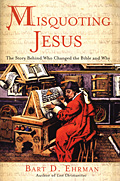
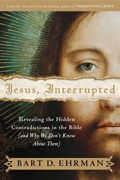
    I just read three historical books about Jesus that were awesome. AWESOME. Not because I agreed with all of the author’s conclusions, i.e. his stories. I don’t. But because of the way he practiced his history. The way he told his stories. And because what he shared gave me new insights to my stories about Jesus.

    The three books, all by Bart D. Ehrman, a professor of religious studies at the University of North Carolina, Chapel Hill, are:

    1. Misquoting Jesus: The Story Behind Who Changed the Bible and Why
    2. Jesus Interrupted: Revealing the Hidden Contradictions in the Bible (And Why We Don’t Know About Them)
    3. Did Jesus Exist? The Historical Argument for Jesus of Nazareth

    I’ve read the Bible many times, and I’m a believer. Of course, the question is a believer in which story?

    Did Jesus Exist Bart D Ehrman

    What Ehrman so engagingly makes clear is that there have indeed been many stories about Jesus. In fact, the gospels (Matthew, Mark, Luke, and John) and the writings of Paul (most of the rest of the New Testament) seem to all portray a different man and message. Not only do they say things that flat out contradict each other on some details, but if you look at each book separately, each author seems to have a slightly different take on Jesus.

    Furthermore, it appears that what we now have has changed over time. For example, it seems the last twelve verses of Mark were not in the oldest manuscripts. There have been other changes. One of the more notable ones occurs in John 5:7-8.

    Our earliest texts say:

    “For there are three that bear record, the spirit, and the water, and the blood: and these three agree in one.”

    But later texts say:

    “For there are three that bear record in heaven, the Father, the Word, and the Holy Ghost: and these three are one. And there are three that bear witness in earth, the spirit, and the water, and the blood: and these three agree in one.”

    Nowhere else in the New Testament do we have anything that states that creedal doctrine so explicitly. Did John write that? Or was the extra material added to make the idea of the trinity scriptural?

    And what do we make of the fact that we have no manuscript that dates to anywhere close to when Jesus lived? We have some small fragments of manuscripts with a few verses of John, Revelation, and Matthew dated around 150 AD. But the oldest manuscripts we have that contain the majority of any of the gospels are for the gospels of Luke and John, and these are dated around 200 AD. The oldest manuscripts with the full New Testament are dated around 350 AD.

    That’s more than 300 years after Jesus died!

    Have you played the game of telephone? Are we sure that the oral traditions that were written down weren’t changed? What happened to the books mentioned in the Bible that we don’t have now? For example, Jude mentions a prophecy of Enoch that we don’t have in our current Bible. Are we sure that the copyists didn’t add to the text like it seems some did to John?

    And what about the term “Christ”? It’s actually the Greek word for “messiah” which just means one anointed with oil to perform a special service for god. Christ wasn’t Jesus’s last name. It was a title: Jesus the anointed one.

    The anointed ones in those days were kings and prophets and priests. It appears most of the historical sources suggest that a “messiah” to the Jews of that time was someone who would throw off foreign rule and establish the kingdom of Israel as David had. In fact, there were a whole bunch of people who claimed to be messiahs. Here’s a nice list: http://en.wikipedia.org/wiki/Jewish_Messiah_claimants.

    Judas Maccabeus was considered a messiah because he threw off Greek rule in 164 BC. But then around 63 BC Israel was taken over by Rome. And Rome wasn’t too keen on revolts, so around 4 BC they crucified Judas the Galilean for claiming to be the messiah, the king of the Jews. Crucifixion, it seems, was the punishment reserved for seditionists. They crucified Jesus and a whole bunch of other guys claiming to be the king of the Jews. And their crimes were written on a board above them, which is why they hung the words “King of the Jews” over Jesus’s head on the cross. Here’s the criminal, and here’s his crime. These other messiahs were not claiming to be a god that came to earth to atone for sins, but anointed by God to throw off foreign rule and establish his earthly kingdom again.

    Jesus talks a lot about the kingdom of God. Was Jesus just another one of the seditionists?

    Ehrman examines these and many other questions as a historian, providing all sorts of insights.

    But the fabulous thing is that he doesn’t just tell his story. He gives his evidence. Exposes his assumptions. And in all three books he explains the guidelines or “rules” historians use to when trying to determine which stories are more likely and which evidence is more reliable.

    I was enlightened, challenged, and delighted. I learned things about Jesus’s life and times that have helped me understand what I read in the Bible better.

    LIMITS

    Of course, the historical method has its limits.

    Historians, because they are looking for explanations (stories) that are more probable, automatically select against things that are improbable. They exclude miracles. They exclude any story that says Christ was actually resurrected.  They may establish that a lot of folks thought he was resurrected, but they don’t have any methods to establish something like a resurrection actually occurred. And so they ignore it. Historians exclude modern revelation. If someone today were to have a visitation from Jesus as Paul did, the historians would exclude that.

    But we all know that truth is sometimes stranger than fiction. We all know that sometimes the less likely thing is exactly what occurred.

    Historians are looking for what is most probable. Not what actually happened. Because they can’t go back and time and verify their story.

    Excluding “improbable” things changes the types of stories the pieces of the puzzle support. For many of us, me included, we do accept evidences many historians don’t as pieces of the puzzle. And because we have these pieces, we’re able to tell different types of stories.

    The cool thing about Ehrman is that he explains this. He’s not trying to hide anything. Instead, he’s explaining how to approach the Bible from a historical point of view, and where the principles of the historical method lead him.

    And I have found that those methods in his hands have a lot to offer.

    If you’re someone who is interested in religion–as a believer, agonistic, or atheist–you will love these books. Ehrman himself was once an ardent believer, but is now agnostic. However, his respect for believers, including other scholars in his field who believe in the divine Jesus, comes through loud and clear. Ehrman has no axe to grind. He is simply sharing the stories of Jesus that make sense to him and many other historians. And he does it in a very interesting and easy-to-read style.

    If these books sound like something you want to try, I’d start with Misquoting Jesus, move to Jesus Interrupted, and then finish with Did Jesus Exist? And if you enjoy those, let me recommend two more of Ehrman’s books. The first is The Lost Gospel of Judas Iscariot: A New Look at Betrayer and Betrayed, which looks at the discovery and content of a very ancient manuscript that calls itself The Gospel of Judas. The second is Lost Christianities: The Battles for Scripture and the Faiths We Never Knew, which explores the variety of Christian faiths that existed in the few hundred years after Jesus’s death.

    Happy reading!

    Share
  • How to be a hero in your own house

    I have four daughters.

    My four daughters have long hair.

    That long hair finds its way into our drains. (Yes, despite our telling them to get it into that thing called a waste basket.)

    Said hair might flow down the pipes. But said hair does not. Life is not that easy. Instead, some evil house spirit catches the hair just as it begins its voyage and turns it from a luscious thing of beauty into a gunky demon of drain death.

    You would think that Drano could defeat this black magic. But Drano gets its butt kicked every time. Drano is in the pee-wee league against this thing. Drano is like a kitten. And gunk demons don’t listen to kittens.

    So for the last few years, we’d blast with Drano and then still have to stand up to our calves in water when we took a shower. Or wait as the sink decided it might finally slowly empty and leave soap scum, whiskers, and toothpaste on the sides for everyone’s viewing pleasure. And then we had to do the slow clean (I hate the slow clean).

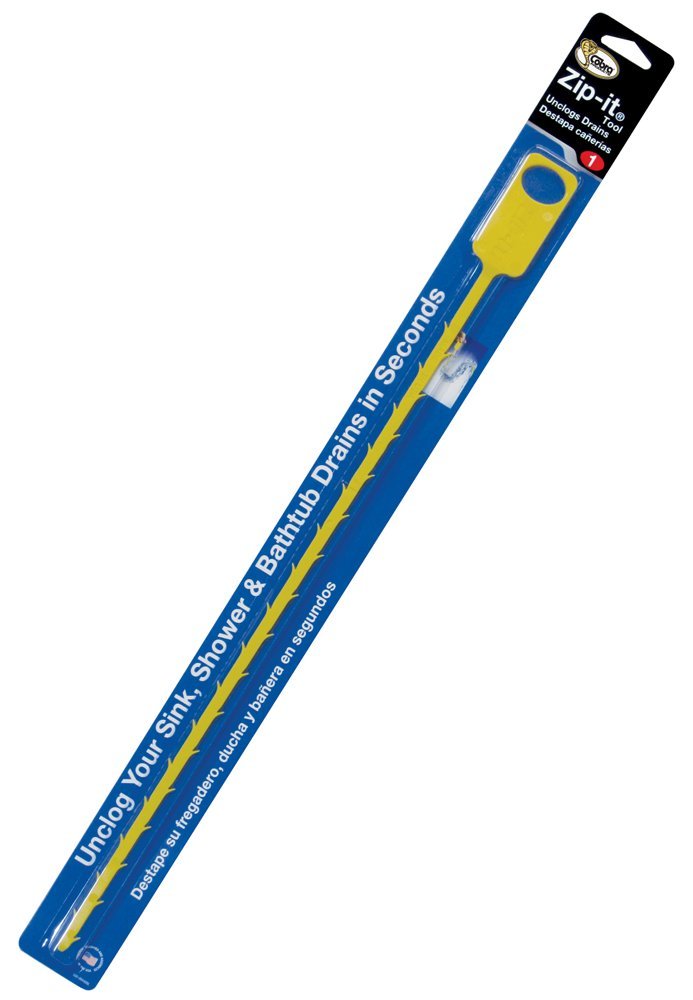
    Recently, I was strolling along in a hardware store and saw this.

    Zip-it drain cleaning tool

    Click on the picture. Get a good look. I bought ye handy yellow flex sword. And I did verily slay the monster lurking in every drain in our  house.

    I am the MAN!

    If you have drain issues, let me suggest you be the hero and buy your own sword. It’s called the Zip-It drain cleaning tool. If you’re a weird-o, in addition to being the hero, you can also use it to draw forth disgusting things to scare nieces and nephews with. Just saying.

    Share
  • Good Stuff! The future, Service Depot, Bear Lake ice cream shops

    Huge changes are coming to our world soon.

    They’re going to affect your health, wealth, and job. They’re going to take us back into space and make us live longer. They are changes that almost blow the mind. And they’ve already begun.

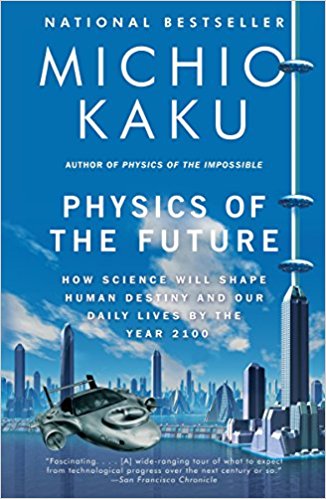
    Michio Kaku is a world-renowned physicist that has always been fascinated with all sorts of science. And in Physics of the Future, he looks at what’s currently happening in computing, robotics, biotechnology, medicine, energy, and engineering, and explains how it’s going to affect our daily life between now and 2030, 2030 to 2070, and 2070 to 2100.

    The insights are awesome. The book’s a feast. Page after page.

    Did you know, for example, that there are parts of our DNA that have genes for certain traits, but those genes are turned off? For example, humans have genes for growing fur all over our bodies, but they’re turned off. Snakes have genes for legs that have been turned off. Chickens, one of the distant progeny of the dinosaurs, have genes for growing tooth buds in their beaks (imagine the grandchildren being chased by one of those bad boys). There are many more such dormant genes, and in the not too distant future, we’ll be able to turn them on.

    Did you know that today we can regrow organs? So far scientists can grow skin, blood, blood vessels, heart valves, cartilage, bone, noses, and ears from your own cells. They’ve be able to grow windpipes and bladders. Imagine damaging your eye and being able to grow a new one that your body won’t reject.

    Did you know that we’ve already been able to hook people up so they can move objects with their minds?

    And what about computers and robots? Many futurists fear the robots will become smarter than us and take over the world. Will they? Kaku explains why this isn’t likely with the technology we currently have and what really makes up intelligence.

    These are just a couple of the dozens of thrilling topics Kaku explores. And he makes it all so easy to understand and entertaining.

    A new world is coming, full of perils and exciting opportunities. An Kaku gives us an intelligent sneak peek.

    If you wonder what our world will be like in the near future, if you enjoy science and technology, if you want to be informed, then you will love this book. When you finish it, you can then move onto his book The Future of Humanity, which delves deeper into what we can expect in the near future in space. You can then move to The Future of the Mind, in which he explores in more detail what we can expect in understanding, enhancing, and empowering our minds.

    *

    I’m not a handy man. I’d like to be one. I respect folks who know how to fix things immensely. But I have a million other things on my plate and don’t have the time to learn how to be one. And so when our oven and gas range started having problems, I was staring at spending around $2,000 to replace it.

    But then I found Service Depot in Logan, Utah. They do handyman, appliance, HVAC, and plumbing repairs. I called them. They send out someone all the way to Bear Lake to look at the issue and give me a bid. He was clean-cut and smiling. When I invited him in, he stopped to put booties on to make sure he didn’t track dirt into my house. We arranged an appointment, and a few days later another fellow who was equally clean-cut and pleasant to deal with showed up and fixed the range for about one-fourth of what it would have cost to replace it.

    These folks were prompt to respond, friendly, and bootied. If you need repairs done around your house, my experience with them was great.

    *

    If you enjoy ice cream and are in the Utah Bear Lake area, I have two recommendations. For soft-serve shakes and cones, you can’t do better than Zipz in Garden City. Some soft-serve is icy and thin. Not enjoyable at all. But Zips uses a soft-serve ice cream with a higher fat content, which makes it deliciously smooth and creamy. And when you add flavors—oh baby! We recently went there as a family and got shakes. They have a lot of different flavors, but I got the Nutella and pretzel mix and floated up a bit toward heaven. If you like chocolate at all, you have to try that shake.

    The other place is in Laketown. The Sinclair gas station turned their old car wash into a hard ice cream shop called, ta-dum, The Car Wash Ice Cream Shop. It’s bright and clean. The youth scooping the ice cream there are smiling and friendly. And they have a flavor called Coconut Castaway that’s scrumptious. Think of a Mounds chocolate bar, but in ice cream. More heavenly floating. What makes it even better are the reasonable prices.

    If you’re in the mood for ice cream, if you want to get a bit closer to heaven, then do yourself a favor and get yourself to one of these shops.

    Share
  • Gandhi & Waiting for Superman

    Enthralling History

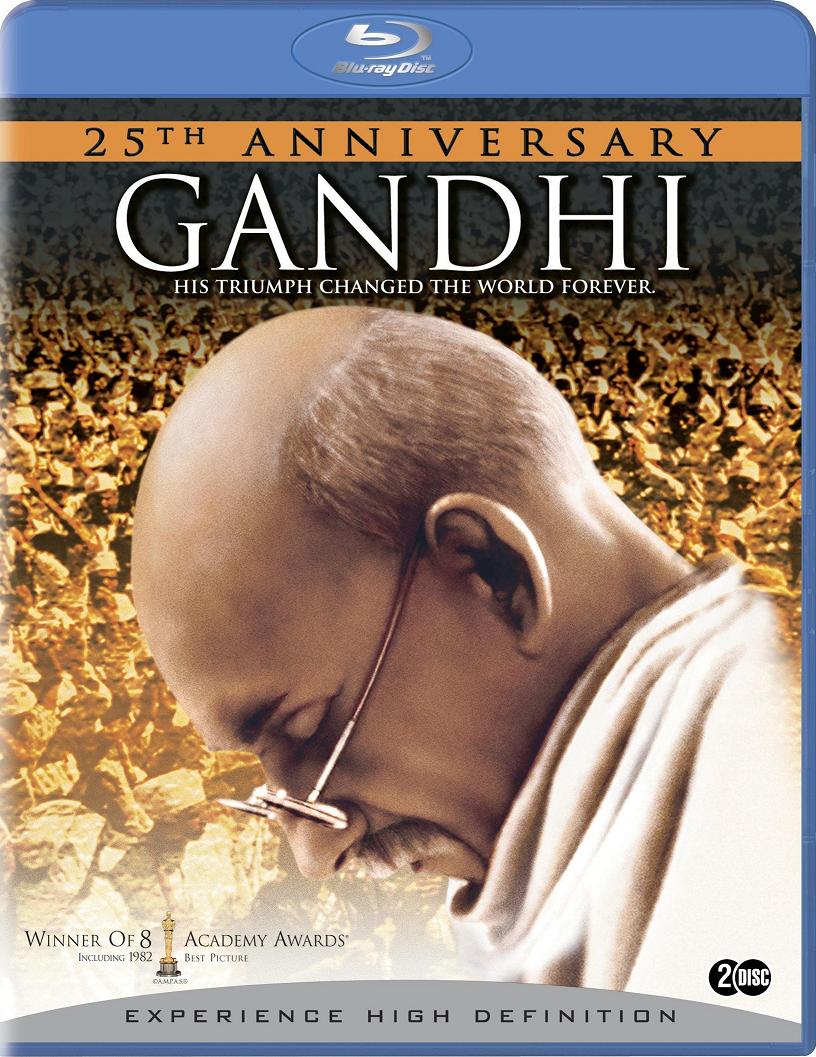
    The miracle of Netflix means that no movie or television show becomes unavailable. And there are so many produced over the last fifty years that are so very good. I recently re-watched the 1982 Gandhi with my family and have to say it is one of those fabulous movies that’s amazing every time I watch it. Not once did the production feel dated. And even though I’d already seen it, I found myself enthralled with the events and the character played so well by Ben Kingsley. No wonder it won eight Academy Awards.

    The movie portrays the last 50 years of Mahatma Gandhi’s life. It starts in 1893, when Gandhi, educated in the UK, is thrown off a South African train for being an Indian and traveling in a first class compartment. Gandhi decides to start a non-violent protest campaign for the rights of all Indians in South Africa. Quite an undertaking in those years. He’s arrested and finds himself in a number of dicey moments, but ultimately brings change.

    Gandhi is then invited back to India, where he is considered a national hero. Leaders there urge him to take up the fight for India’s independence from the British Empire. Gandhi agrees and mounts a non-violent campaign of unprecedented scale. Nothing of this magnitude has ever happened in the recorded history of the world. Which is why it’s a rough road all the way to the end.

    There’s suspense and humor and heartbreak in this movie. But it goes far beyond entertainment. This movie will move you. It has power to change. This movie is what history should be. If you haven’t seen Gandhi, or haven’t seen it in a while, let me recommend you get it this week and sit down with friends or family to enjoy a wonderful experience.

    Education and Teachers Unions

    I find it interesting that teachers in Utah, one of the most conservative states in the union, send almost three million dollars each year to the National Education Association. That’s the $165 in NEA dues for each of the roughly 18,000 union members in Utah. This is interesting because the NEA, the largest labor union in the United States, is one of the biggest supporters of the Democratic party.

    For example, the NEA spends roughly 85-90% of its direct candidate donations on Democrats. The NEA is quick to point out that those direct candidate donations do not come out of the three million Utah teachers send to them, but from additional donations to one of their political action committees. It’s illegal, in fact, to contribute directly to candidates with money received from union dues. However, there are a lot of other ways to support candidates and causes in addition to direct donations. 

    Mike Antonucci, a teacher’s union observer, explains just how that works in his article “How Much Does the NEA Spend on Politics”. The upshot is that the NEA can spend as much as they want on politics with their dues. And the lion’s share of that spending goes toward liberal causes. ACORN, for example, has been a beneficiary of NEA grants.

    Now, I don’t see anything wrong with that. People should be able to donate to whatever cause they think is important. The NEA has just as much right to make their voice heard as anyone else. I just think it’s interesting that so many conservatives have been led to donate their cash to these causes. And it’s not just in Utah. About 60% of NEA members identify themselves as conservative or independent. And yet they donate to these liberal causes via the union. What’s even more ironic is that most of them probably do not personally donate anything close to that to conservative candidates and causes. It’s not like teachers have tons of extra cash.

    It’s a neat trick to get conservatives to donate so much money to liberals. And perhaps some teachers feel it’s the price they have to pay for the services they want from the union. I would think it would be better to start another union, but that’s me. However, this is not the only kink teachers unions have introduced into the education system.

    I’m not going to argue that teachers unions are evil. These unions arose in a time when female teachers were heavily discriminated against. They do some good things. But mixed in with the good is, well, you’ll have decide for yourself if it smells.

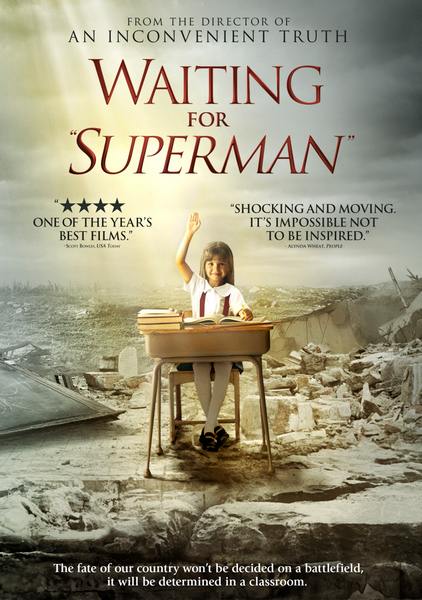
    A great place to begin is with the documentary Waiting for Superman. You should know this movie came out of the gate with a huge strike against it in my mind–it’s produced by Davis Guggenheim, the same guy who did An Inconvenient Truth. Good grief, that’s all I wanted was another two hours of Chicken Little running around saying “sky is falling, the sky is falling!”

    But I didn’t find any of that in the film. For example, the film doesn’t say all American schools are awful. It doesn’t say teachers are terrible. Contrary to what the movie’s critics claim, including the NEA and its many state and local affiliates, the film doesn’t suggest charter schools or standardized testing are the silver bullet answers to our issues. I simply didn’t encounter the sensational propaganda others claimed would be there.

    No. What the film does is examine some of the issues in our current system, which put so many children at a disadvantage, and the role the teacher unions play. It does not, as some critics claim, go on to suggest any solutions. It presents a problem, experienced by real parents and children right now, then poses a question: what can be done?

    I found it eye-opening and thought-provoking. I think it’s a must-see. If you have children or grandchildren in school, if you’re one of our many fine teachers or school administrators, you’ll want to watch this movie and then ask yourself that same question. What can be done? What works? What’s best for the children? And does the current way our unions operate work in any way against those interests? For those who elect not to go into immediate union-attack or union-defense mode, I think this film will introduce some valuable points to the discussion about education.

    Share
  • Good Stuff! Science as Storytelling

    I know the word ‘atheist’ presumes a lot, but it’s just an easier way of describing someone with a rational mind.

    Joe Konrath, a self-avowed atheist, awesome fighter for authors, and leader in the indie author movement, said that almost a year ago in his Konrants post.

    My response then was the same as it is now—right, the rest of us run around eating socks and wondering if there really are gerbils under the hoods of our cars.

    Shoot, wouldn’t it be great if we could get us one of them rational minds?

    In the comments of that post, I had a very interesting conversation with Joe about God, belief, and evidence. Joe brought up a number of valid points about the errors we can make when we formulate beliefs using something other than science.

    However, he didn’t point out the errors we can make when we formulate beliefs based on science. He didn’t want to talk about the limits of science. What he wanted to focus on was the claim that if God existed, we should not only be able to observe things about him, her, or it, but we should also be able to subject those observations to the scientific method.

    If we couldn’t do that, Joe claimed, then there was no rational basis for believing in God. God did not exist until he was proven to exist. And the only way to do that was by using science.

    So here’s the question: is Joe right?

    To answer that, we first have to understand what science is. And what it is not.

    And I’m happy to report that earlier this year I read probably the best article explaining what science is that I’ve ever read. It’s called “Science as Storytelling” and was written by Barry R. Bickmore, a professor of Geological Sciences at BYU, and David A. Grandy, a professor of Philosophy at BYU with a strong interest in the philosophy of science.

    Hold on, John. Is this some anti-science thing?

    Not at all.

    In fact, it’s just the opposite.

    They wrote the first version of this article help students with simplistic views of science and who tended to “dismiss scientific conclusions that challenge their preconceived notions—especially those connected with religious or political views.” They also wrote it to help scientists who are not religious, downplay the supernatural, or “share in certain inaccurate views of the nature of science.”

    What they have fashioned is a way to “help science students (and professors) gain a more productive view of both the nature of science and the science-religion interface.” And, as good scientists, they put their theory to the test and found that their approach was indeed effective at both secular and religious colleges.

    So, is Joe right? Is science the only way to prove or disprove God?

    Let me suggest you read the article. Let me suggest that this is the most productive way of talking about the issue that I’ve found. As you read, you might want to look for the answers to the following questions:

    • What makes science different from things like astrology?
    • Does science have any blind spots?
    • Is science fiction because its stories change?
    • Is it possible for natural phenomena to exist upon which you can do no science?
    • Under what circumstances could science prove the existence of a God?

    If you’re interested in science or religion, I think you will love this article. Not only because it clarifies and reaffirms science, but it also because it helps us understand its limits.

    I would, of course, be interested in your responses to it. And in another post perhaps we can talk about how we’re supposed to proceed about a subject when we can’t do science.

    Share
  • Good Stuff! Crossnet and Bang!

    Today I have some good fun coming your way.

    The first is a game called Crossnet. It’s a mixture of volleyball and the playground game four square, and it’s a blast.

    You can have one person per square or two people. And just like four square, those wanting to play line up by square one, waiting for someone to get out.

    We did it with a huge group.  Our line always had 12-15 people in it, but you never waited long because the games moves fast. We laughed, teased each other, and had a great time.

    The other great thing was that we could play it with folks of all ages. We had folks from 55 all the way down to 8 playing. And they all enjoyed it.

    If you’re wondering what to do for the next family reunion or group activity, I think you’ll love Crossnet.

    *

    The next fun activity is a shootout card game called Bang!

    It’s played with 4-7 people. Each player is delt a unique Wild West character with special abilities and a role card. Some of the roles are on the side of law and order. Some are on the side of the outlaws.

    As you play you shoot it out, try to figure out who the outlaws are, get life points back, acquire guns, steal cards from each other, avoid the dynamite, and more.

    The game moves quickly. You can be done in less than 30 minutes, which is perfect for a family or date night. It’s one of our favorite family games.

    If you’re looking for a new, fun, quick game to play, give Bang! a try.

    I think you’ll be pleased you did.

    Share