Press Release – Utah Author Selected for Best SFF Stories 2008

FOR IMMEDIATE RELEASE

UTAH AUTHOR SELECTED FOR BEST STORIES OF 2008

Will Present Keys to Successful Fiction at BYU Symposium

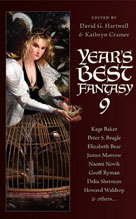
LAKETOWN, UTAH |  February 9, 2009 |  Utah author John Brown’s novelette, “From the Clay of His Heart,” has just been listed as one of the best stories of 2008 by Locus Magazine, the main trade publication for the field of science fiction and fantasy. Locus Magazine selected its list from the hundreds of stories published and reviewed in 2008. Brown’s novelette will also be included in the annual Year’s Best Fantasy anthology edited by Hugo award-winning editor David G. Hartwell.

“I’m thrilled with the recognition,” says Brown. “Still, I suppose you’d have to be a potato head not to squeeze some drama out of a story that’s a mix of religion, thieves, monsters, and love.”

Brown will present his views on the keys to successful fiction in a lecture and workshop titled “The 3 Things You Must Learn To Write Killer Stories” at BYU on Friday evening, February 20, 2009 as part of Life, The Universe, & Everything, a symposium on science fiction & fantasy. Admission is free and open to all.

John Brown is an award-winning Utah author. His epic fantasy, Servant of a Dark God, will be released in September 2009 by Tor, the largest publisher of science fiction and fantasy in the world. For more information on the author visit: http://JohnDBrown.com

MORE INFO

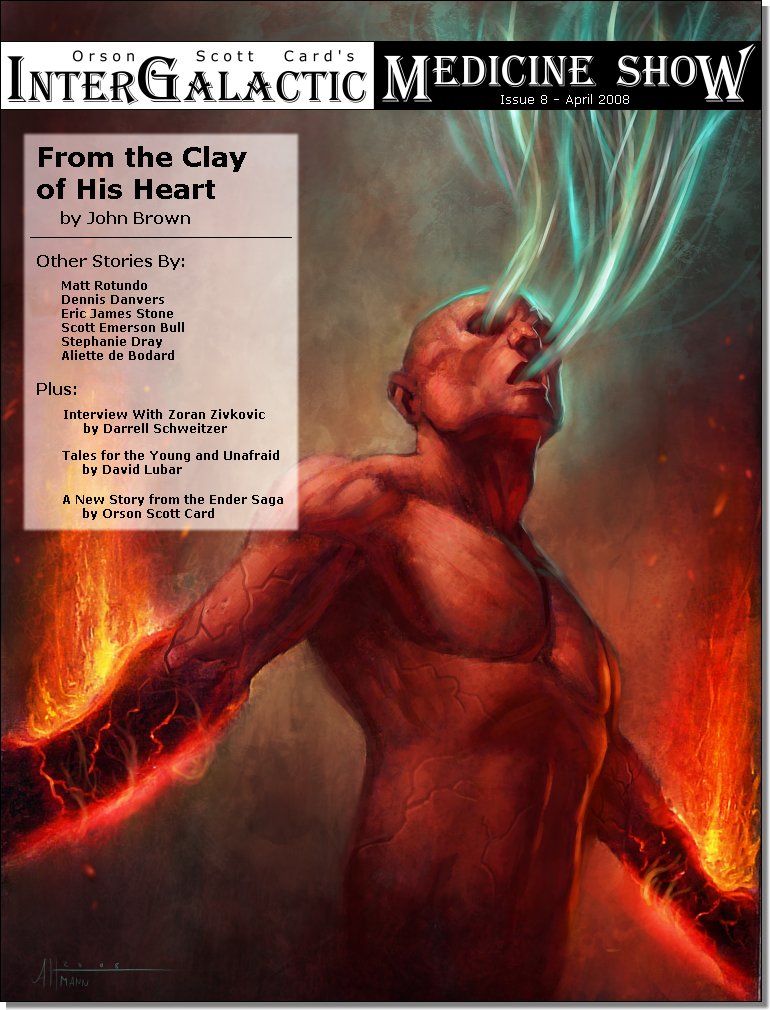
Click on image. Artwork for “From the Clay of His Heart” which will appeared in Locus Magazine’s recommended reading for 2008 and will appear in the Year’s Best Fantasy #9 edited by David Hartwell. 

Share

Similar Posts

  • |

    Writing update: 5/16/11 – outlines & writing vividly

    Finished chapter 5 of CURSE last Saturday. Huzzah!

    The writing is a blast, even though it still requires work. Along those lines, I’ve been meaning for some time to write up the techniques and principles I use when drafting.  So I think I’m going to do a semi-regular post on a weekly basis where I share these tidbits as I run into them. It will be kind of like director commentary, although I’ll have to be careful not to toss out any spoilers.

    This week I’ll talk about using chapter outlines and writing vividly. 

    Bullet Outlines & Chapter Outlines

    Up to this draft, what I’ve done is work from a bullet outline.  Each bullet is a short statement of what needs to occur.  Sometimes it’s very general about the story arc–presentation of the problem, struggle, and resolution.  Sometimes it’s a very specific step.  Sometimes it includes cryptic notes.  For example, here are some bullets for SERVANT:

    1. Talen goes to village, they suspect him
    2. Talen runs, sabin catches him by his hair and pulls him back, field stone size of liver. Plant idea of him catching Hatchlings
    3. Woods back home, freaked
    4. Father is not as concerned, strange, sends him out to field–Talen starts to think about catching the Hatchlings himself

    As you can see, it gives me a roadmap (which often changes) so I’m not starting from nothing when I open up my chapter document.  But it’s very general.  When using this, I often have to use a number of takes to get the scene written because those first takes are me imagining the scene. In fact, my first take is usually a sketch of the scene with me blocking out my goals for the scene and how I expect the events to occur. However, in this last go at CURSE I wrote a chapter outline.  It took me about 25 hours, and the outline for CURSE ran 32 pages. I’ve pasted the first two chapters below.  You can see they’re still mostly in summary, but they represent the initial sketch of what’s going to happen.   

    1.               The Village of Plum – TALEN

    It’s past midnight, behind enemy lines. A thin moon hangs in the sky. Talen, Sugar, River, and five of Shim’s best soldiers crouch in the black shadows of the tree line running along the road to the village of Plum (Sugar’s former village), watching for soldiers or a village guard.

    Talen jokes with Sugar, telling her he wanted a dance tonight, not a sneak behind enemy lines, even if it was in the dark. He’s more than half serious. As they’ve worked together over the last three months since the battle in the cave, he’s become attracted to her.

    Also during those three months, the clans of the New Lands split into two factions. Five clans, led by the Fir-Noy, believed Shim, the leader of the Shoka clan, was being controlled by sleth. The remaining four clans followed Shim. The Fir-Noy faction immediately took up arms, initially to protect themselves, but they soon began talking about ridding the land of the sleth curse. Tensions rose, and in a series of altercations a number of people on both sides were killed. Now both factions have mobilized forces to establish pickets and patrols along a border between them.

    A few days ago, Argoth received word from his spies that something was afoot in the Fir-Noy clan, as if they were preparing for a strike. Futhermore, they’ve decided to excavate the grounds about Sugar’s old house. Argoth knows Purity had her own cache of weaves under the hearth of her old home, the location of which she revealed to Sugar just before she died. Argoth has begun to train up an army of dreadmen for Shim. But he’s stretched thin. He needs all the lore he can get. So he’s sent Sugar and the others to retrieve the items before they’re lost. They’ve come on the evening of the annual apple dance festival, hoping the Fir-Noy would be less vigilant. So far, they’ve been right. In fact, Talen begins to feel like it’s been a little too easy.

    As Talen and the others prepare to move forward, Sugar puts her hand on Talen’s arm. He can feel Sugar’s Fire and soul, and her touch only enflames his desire for both. He’s alarmed by this intensity, and finds it hard to focus, so he moves his arm away.

    “You’re going to give me a boost up,” she says.

    Up ahead in front of the Fir-Noy village stands a thick timber pole probably 11 feet high. Fastened to the top of that pole is what looks to be a skull.

    “You brought us round the wrong side,” Talen says. Their objective was the ash ruins of Sugar’s burned out house, not this pole. 

    “You can’t think we’d come all this way, and I’d leave without it.”

    It’s her father’s skull. The only thing of his that remains. Talen, not wanting contact, motions at one of the taller soldiers with them. “He’d be taller.”

    “Come on,” Sugar says and moves forward in a crouch. They move out of the shadows and into the moonlight, watching the village. Sugar climbs up on Talen’s shoulders and cuts loose the bonds holding her father’s skull. The whole time Talen’s desires make the experience uncomfortable.

    Once Sugar has the skull safely in her sack, the group keeps to the deeper night shadows of the tree line and moves around the edges of the village fields until they come to a ditch. Along the way, one of the soldiers touches Talen, and he feels that same overpowering desire. Something is not right inside of him. He knows it. But there’s nothing to do about it now as they follow the ditch to the ash ruins of Sugar’s house.

    Sugar and Talen sneak over to the hearth of the burned out home. River and the five Shoka soldiers take up watch. Soon Sugar finds the secret cache, but as she’s removing the items, they hear a sound come from one of the surrounding houses. Talen and the others stop and listen. Suddenly Fir-Noy soldiers burst out of the door. They overwhelm one of Shim’s soldiers and rush straight for the others.

    Talen and the others turn to run, but Fir-Noy soldiers begin to pour out of four other houses. Then a Fir-Noy dreadman emerges and shouts it’s the boy that’s wanted. They can slaughter all the rest. It’s clear these soldiers were waiting for them, but there’s no way they could have know Talen and the others were coming, unless they were betrayed. 

    2.               Hue & Cry – SUGAR

    Sugar stuffs the last item in the secret cache into her sack and rises. The Fir-Noy are shouting, but River charges a gap in the quickly forming mob. She fights ferociously. The others race after her, Sugar and another soldier bringing up the rear. Sugar and the others are multiplied, but they’re not fast enough to avoid the soldiers completely, and Sugar is forced to fight and kick to break her way through. When she finally does break past the men, she finds she and the last soldier have been separated from the others and there’s no way to immediately join back up.

    Sugar and the soldier run, but he’s wounded. He tells Sugar to run on without him. She refuses, then a company of Fir-Noy round the corner of a house. The soldier turns to face them and tells her once again to run. In her mind’s eye, Sugar sees the same situation unfolding before her as when the mob came after her mother and da. She ran then and regretted watching her father get butchered. She isn’t going to run now. Besides, she’s multiplied. So instead of running, she rushes over to the soldier and, with lore-given strength, picks him up, puts him over her shoulders, and, despite his protests, speeds away.

    Sugar knows she won’t be able to outdistance her pursuers like this, but she also knows the villager Stout keeps a horse in the barn just ahead. She turns the corner on the barn, puts the soldier down, and tells him to get the horse. Then she darts back out into view of the soldiers following and leads them away. She glances back and sees the soldier slip into the barn. It’s the best she could do for him. If he can get on Stout’s horse, he’ll have a chance to escape.

    Sugar looks to see how she might join back up with Talen and the others, but it’s impossible now. And while most of the Fir-Noy soldiers chased after Talen and the others, a good number are chasing her. Furthermore, others in the village are coming out of their homes. She speeds past them. All over the village dogs begin to bark, but she hears one cluster that sends fear down her spine. The villager Solem keeps a pack of prize-winning sight hounds. He emerges from a barn with his pack on a leash.

    “There!” a man shouts. The barking of Solem’s dogs rises in pitch.

    Sugar increases her speed then hears Solem. “Stu, boys! Take her. Get the wretch!”

    The dogs shoot out after her.

    So how has it worked?

    So far it’s worked very well. Having that initial sketch done means I take a lot less time finishing each chapter.  However, it doesn’t change the general drafting process for me:

    1. The chapters still change as I write. I find cooler ways to accomplish what I need. I also run into things I haven’t imagined yet and have to invent them. For example, on chapter 2 when Sugar is having issues, I realized I didn’t know exactly where the houses lay in the village, so I had to sketch that. It presented opportunities and images.  For example, I thought about the Fir-Noy bowmen being on the roofs. I hadn’t imagined that before, but it was so cool to me, I had to put it in.  Then I felt I wanted Talen and her to huddle together at first. I had to run through a few options about how that played out before I found one that felt right.  
    2. I still find I need to sketch out my goals for the chapters and an initial blocking of what happens. This is much shorter than it’s been on previous drafts, but I still find it helpful. Blocking scenes helps.  This is me just figuring out where everyone is and how they move. Sketching this first helps me write faster.
    3. I still have to do takes, although I move through them more quickly.  

     As you can see, I find the sketch/draft method incredibly helpful.  Just like a painter, I sketch out what I’m thinking of painting. That might require a few sketches where I add in more details.  Then I switch over and begin to paint.


    Writing Vividly

    On another note, I read “Stories are made out of scenes; Scenes are made out of nouns” by author James Maxey again. I really like this essay. Everyone is always talking about verbs, but nouns are such powerhouses.

    Speaking of which, here is the opening to Maxey’s “To The East, A Bright Star” which was published in Asimov’s.  It has one of my favorite beginnings. And part of the reason is what Maxey talks about with nouns.

    TO THE EAST, A BRIGHT STAR

    There was a shark in the kitchen. The shark wasn’t huge, maybe four feet long, gliding across the linoleum toward the refrigerator. Tony stood motionless in the knee-deep water of the dining room. The Wolfman said that the only sharks that came in this far were bull sharks, which were highly aggressive. Tony leaned forward cautiously and shut the door to the kitchen. He’d known the exact time and date of his death for most of his adult life. With only hours to go, he wasn’t about to let the shark do something ironic.  

    Tony waded back to the living room. Here in the coolest part of the house, always shaded, he kept his most valuable possession in an ice-chest stashed beneath the stairs. He pulled away the wooden panel and retrieved the red plastic cooler. Inside was his cigar box, wrapped in plastic bags. He took the box, grabbed one of the jugs of rainwater cooling in the corner, and headed up the stairs to the bathroom. He climbed out the window above the tub onto the low sloping roof over the back porch.

    This all reminds me of Swain’s thoughts on bringing the material to life, which I thought Maxey did so well in those paragraphs.

    Few of us read voluntarily about the primer-level doings of Dick and Jane.  Simplicity is a virtue in writing, true; but never the primary virtue.

    What is?

    Vividness.

    How about brevity?

    It’s important too.  Within reason.

    Within reason?

    Who, just learning this business, knows where or when or how to be brief? In the wrong place, brevity can destroy you.

    So?

    As in the case of simplicity, brevity is never the heart of the issue. Vividness is.

    How do you write vividly?

    You present the story in terms of things that can be verified by sensory perception. Sight, hearing, smell, taste, touch–these are the common denominators of human experience; these are the evidence that men believe.

    Describe them precisely, put them forth in terms of action and of movement, and you’re in business.

    Your two key tools are nouns and verbs.

    (p25 Techniques of the Selling Writer)

    Of course, there’s more–the telling detail, metaphor, working memory overload, details from the point of view. But it all plays into being vivid.

    Share
  • United Authors Association Conference Oct 24th!

    UAACon1.5

    The United Authors Association is holding a fiction writing conference October 24th in Springville, Utah, and it’s free to the public!

    The conference schedule has some great presentation topics on it by authors who are delighting a lot of readers as well as an editor, agent, and a magician.

    I’m going to be presenting on the fundamental core of story–“Scene and Sequel”–expect we’ll be replacing those two terms right off that bat. Hope to see you there.

    Share
  • Boom–And I’m A Dean Koontz Fanboy!

    PIC03011So after finishing The Husband I wrote a letter to Dean Koontz. I never expected a reply. Today I got a package in the mail. I picked it up, thinking it was a book from Amazon. The sender was Mr. Dean Koontz. What? Dean Koontz?!

    I opened it up. There was a form letter folded in half over a book. The part I read said:

    At certain times of the year, I’m able to answer readers’ letters with a line or two, more personally than I am able to do right now. Currently I’m so overwhelmed by book and film deadlines that I’m going to have to resort to this less than satisfying form response.

    I’m all, cool, a form letter and a book! He then talks about how he reads virtually all his letters even though he gets over 10,000 a year. Then he says he’s included a FAQ and his Useless News newsletter which talks about his latest books etc. The last part of the letter I could see was:

    I hope you’ll understand why this less personal reply is necessary for the time being. And I hope

    So I thought, hey. The man sent me a book. Holy cow. Talk about your customer service. Then I actually cut away the plastic wrapping and unfolded the letter and saw, despite his busyness, he had indeed written a note.

    John–thanks for your great letter and kind words. Most of my career, I’ve been told–subtly and less than subtly–that my world view is that of a minority that won’t long–or much longer–sustain a large audience. Worldwide sales now are past 400 million copies. I tremble, wondering when it will all end! Congratulations on the TOR sale! From me to you, a book close to my heart.

    Merry Christmas!

    Dean

    Duuuuude! And it wasn’t some admin either. The last paragraph of the letter says:

    For what it’s worth, the signature below is mine. I don’t use legions of monkeys trained to forge my name, in part because they don’t seem quite smart enough to learn what’s wanted of them; and although dolphins are no doubt smart enough, they don’t have hands.

    The signature is in blue ink. The same hand as the note. By this time I was totally geeking out.

    Dean Koontz. He’s like one of the top 10 most popular novelests in the world. I LOVE his stuff. Then I opened the book. He’d signed it.

    To John–WOOF. Dean Koontz 12-18-09

    At that moment I was in total fanboy heaven. And I don’t do fanboy or any of that other wussy stuff.

    I sent my letter on December 14th. 2 days down. 2 or 3 days back. That means he read it almost the day he got it. What a class act. And I was expecting nothing. I only sent my original letter because I truly appreciated his books and had to let him know.

    So I guess one of the next books I’ll be reading is his A Big Little Life: A Memoir of a Joyful Dog. I expect it will be great.

    BTW, here’s the text of my letter.

    Dear Mr. Koontz,

    I just finished reading The Good Guy. Thank you. Loved the interaction between Tim and Linda. And the reveals of their back stories. Loved Mary and Pete. Loved the situation. Krait was interesting and horrible. But the thing that put me over the top was the ending. [SPOILERS DELETED] I finished and said, “Yes!”

    Thanks for the thousands of hours you’ve put into writing that have allowed you to deliver these kinds of stories and characters who are interesting, funny, and, despite some flaws, deep down good. I appreciate your view of the world, a place where great evil can exist, but also people like Mary, Tim, and Pete.

    Thanks for stories that entice me to be more. The Husband enticed me to be that kind of man for my wife. The Good Guy enticed me to be a man of courage. Odd Thomas, on the other hand, has inspired me to make heavenly light and fluffy pancakes. I know you’re not sermonizing, but that’s probably why the tales move me the way they do.

    I’m a new author; my debut from Tor (an imprint of Macmillan) just came out this October. I’m working like a madman to learn the craft and produce. And it’s wonderful to be able to see someone like you at the top of his game, writing these kinds of stories and sharing these kinds of characters. I hope, when I get to the end of my career (big or small), that I will have been able to deliver suspense, laughs, and goodness as you have.

    Sincerely,

    John Brown

    And now I hope I can not only be the kind of author that delivers stories like Koontz, but also one who isn’t one whit behind in graciousness with my readers.

    A few years ago I was going on and on about a couple of authors whose work I love. It drove Nellie nuts. But she finally got over the eye-rolling stage. At least I thought she’d put it aside. However, on that Christmas she gave me a 4×6 inch piece of material that looks like a Persian rug with votive candles and the names of those favorite authors on little cards that had been folded in half, tent style. She thought that was the best joke ever. Yeah, until she caught me praying in the basement. (Actually, I never prayed, dang it! Why does it take me seven years to think up these comebacks?!)

    Of course, when I rushed back up stairs after having opened today’s package, she sighed. “I guess this means I gotta make a card for Koontz now, doesn’t it.” 

    Oh, yeah. Votives for the man.

    Share
  • |

    The 3 Things You Must Learn to Write Killer Stories: Feb 20 @ BYU

    Mark your calendars!!

    The free, 2009 Life, the Universe, and Everything symposium at BYU will run Thursday – Saturday, February 19 – 21.

    The speical guests are Tracy & Laura Hickman (Dragonlance authors) and James C. Christensen (yes, the amazing fantasy artist). But there will be more than a dozen other authors there, including: L.E. Modesitt, Brandon Mull, James Dashner, Brandon Sanderson, David Farland, Mette Ivie Harrison, Eric James Stone, Howard Tayler, and a number of others.
     
    Here’s what I’ll be doing:

    1. Panel: The Principles of Suspense. Fri, Feb 20, 1:00 PM – 2:00 PM
    2. Workshop: The 3 Things You Must Learn to Write Killer Stories. Fri, Feb 20, 6:00 PM – 8:00 PM
    3. Panel: Myth and Mythology in SF&F. Sat, Feb 21, 1:00 PM – 2:00 PM
    4. Reading: from the forthcoming novel and a few of my other published works, Sat, Feb 21, 3:00 PM – 4:00 PM

    If you want to write fiction, you’ll want to attend the workshop. And if you’ve attended the workshop before, know that I’ve made some significant updates to the workshop content for 2009. I’m always learning, and so each time I teach this I’m able to provide more insight.

    You’ll also want to carefully review the whole schedule. There are tons of panels with professional authors on them that are going to be both useful and interesting to writers.

    My workshop focuses on three incredibly important things.  In the beginning, I didn’t know these key things, and that ignorance stymied all my writing efforts for years. Once I learned them, the way was opened. There was still a lot of work involved. But these principles increased my output of quality material 1000% (literally). The principles allowed me to write the story that got me my current three-book contract from Tor.

    I’ve taught it now more than a dozen times to all sorts of fiction writers and they’re telling me they’re finding it very useful. You’re going to love this stuff, and I always enjoy sharing what I’ve learned with other writers. The three things are:

    1. What a story really is. We’re not talking narrative taxonomy, although that’s included. It’s focused on the story effect upon the reader. And why this is one of the most important things you need to understand when writing fiction.
    2. Parts & principles. Key principles of character, problem, plot, setting, and text as they relate to #1.
    3. The creative process. The simple but powerful principles of how to get ideas. How to develop them into story. Why writer’s block is a gift and how to use it to produce MORE. Plus a number of other creative principles I wished I’d known.

    It’s a highly interactive workshop. Again, the whole symposium, including the workshop, is free. I don’t know another place where you can learn from so many professionals for such a great price.

    Hope to see you there!!

    Share
  • |

    LTUE schedule posted

    ltuelogoLTUE has posted its schedule for the upcoming conference Thursday – Saturady, Feb 12-14. I’m, of course, stoked to present and participate on the panels. But I’m also looking forward to attending some of the sessions.

    Look at this one: How a Military Unit Works in Real Life: Zachary Hill, Brook West, Robert J Defendi, C. R. Asay, Mike Kupari (m)

    Or this one: All about armor: Zachary Hill, J. D. Raisor, Kay Mildenhall, Charles B. Stanford (m)

    Or what about this one: Law Enforcement: James Ganiere, Zach Hill, Robin Ambrose (m), which conflicts with one of mine, dang it!

    Or this: Making Creatures Realistic to their Environment: Keliana Tayler, Brian Hailes, Jessica Douglas, Bryan Beus (m)

    This: Applied Biotechnology: Derrick William Dalton, Mikki Kells, Charlie Pulsipher, Chersti Nieveen, Ali Cross (m)

    This: How to Create a Language: Maxwell Alexander Drake, Dirk Elzinga, Valerie Mechling, Samuel Stubbs, Bryce Moore (m)

    And tons of others.

    Oh, and what about the keynote address on Saturday by Toni Weisskopf?

    It’s going to be a great conference. I’ll be giving these presentations.

    • How to Build an Action Plot. In this one, Larry Correia and I team up to share a model of plotting that should make developing your action story much easier. Attendees will be able to use the methods on a novel idea Larry, Joe (Larry’s son), and I came up with called Mech Runners. Basically, Larry turned to Joe and said, “What’s awesome?” Joe said, “Giant robots, bandits, and murderers.” We took it from there.
    • How to Build a Romance Subplot. In this one, I team up with romance author LL Muir to share a model of plotting that should make developing your romance plot or subplot much easier. Attendees will be able to use the methods on a story idea Lesli and I came up based on The Hobbit. It’s called My Precious.
    • Tapping into the Power of the Story Setup. The story setup is a fabulous tool that’s not only helped me drastically cut down the time it takes me to develop my ideas, but it has also helped me develop better ideas. In this presentation, I will explain what the story setup is and how you can use it to help you nail your novel.

    I’ll also be moderating or participating on these panels:

    • The Hero’s Journey & the Virgin’s Promise: Patterns and Archetypes for Better Characters:Michaelbrent Collings, Tracy Hickman, Blake Cassleman, Renee Collins, John D. Brown (m). Did I tell you I think the hero’s journey is stupid? This ought to be a fun one.
    • Action Sequences: John D. Brown, D. J. Butler, Peter Orullian, Adrienne Monson, M. Todd Gallowglas (m)
    • Self-Publishing Pros And Cons: Jared Abram Barneck, John D. Brown, Mikki Kells, Joe Vasicek (m)

    Hope to see you there!

    Share