food

  • La Brea Bakery Breads Cookbook, Very Young Girls

    Divine Nature
    I became a fan of bread when I lived in Europe. But not just any bread. I’m talking about the kind of bread with a crust that crackles and is chewy. With an inside that’s soft. Bread that doesn’t need anything on it, but makes you sing when you eat it with soup or a thin smear of butter. Alas, I came home and could not find such bread. It was all Wonder Bread nonsense and its many sandwich bread relatives.

    Luckily, I married a gal who had lived in Europe as well. And who, for a few years, actually had some time to bake. It took some time to find a cookbook with recipes that worked. It took some practice. But she was finally able to recreate that crackle, chewy, soft (not the shattering, roof-of-mouth cutting stuff either). And we enjoyed great bread for a few years. Then she took a job outside the home and we’ve been relegated to American sandwich bread again.

    Enter four daughters. Three of whom are working through a church program like the Boy Scouts that’s meant to help them develop key virtues. Each of the virtues requires they complete a number of tasks to educate them about that virtue. When they’ve completed the tasks for a virtue, they are to devise and undertake a ten hour project to help them practice what they’ve learned.

    Recently, I sat down with my oldest to see where she was and found to my surprise that she still had a number of things to complete. As I reviewed the requirements with her, I pointed out that she’d fulfilled the requirements for all of these virtues many times over. But she refused to count her activities that might apply because she didn’t perform them at the time with the intent to fulfill the requirements. She wanted her accomplishment to be purposeful. She’s focused on the intent of the program, not the award for the award’s sake. (Where do such children come from?) I saw her point, applauded it, and went back to work trying to help her brainstorm what she could do.

    We came to the virtue called Divine Nature, which states: “Be partakers of the divine nature. Giving all diligence, add to your faith virtue; and to virtue knowledge; and to knowledge temperance; and to temperance patience; and to patience godliness; and to godliness brotherly kindness; and to brotherly kindness charity.” Many of the activities revolve around womanhood and family. But it was the big project she needed to complete, one that “will help you practice what you have learned. This should be a significant effort that will take at least ten hours to complete.”

    Some of the suggested projects had to do with service in the community, others with talents. Then I read: “Develop a skill you could use in your future home, such as cooking, sewing, making repairs, organizing, or designing.”

    Cooking?

    My bread soul stirred.

    Cooking?! Baking is cooking.

    Memories of crackling crust and soft centers filled the mind of my bread beast. “Bread!” I declared.

    Luckily, Daughter Number 1 had also eaten her mother’s bread and missed it. “Bread,” she agreed. And we pulled the book out that my wife had found so useful, and began.

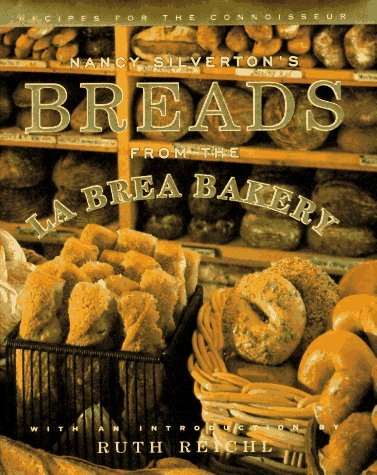
    The book is Nancy Silverton’s Breads From The La Brea Bakery. Silverton is a master chef.  She owns and operates the Campanile restaurant and the La Brea Bakery in Los Angeles. Her bread is sought for all over the nation. Her breads and the breads she shares in this book are all made with a sourdough starter that she teaches you to make from scratch with grapes. Actually, you don’t make it, but feed it. Because it’s a living thing. And after a while it becomes almost like a strange family pet growing on the counter and in the fridge.

    Some might hear “sour” and turn away, but Silverton explains how to keep the starter from becoming too sour. The result is a crackling, chewy, soft bread with a light tang that’s delicious. In fact, Daughter Number 1 just made bagels from the recipe in the book. There’s no tang at all. They’re the best bagels I’ve had. She’s also made the regular loaf, pancakes, and waffles from this same starter. They’re all delicious.

    The book starts off with a lesson in bread making then shares about 60 recipes, everything from baguettes to whole-wheat sandwich bread to sourdough onion rings. The only downside to the book is that I wish it had more pictures. An illustration, for example, in the section on rolling bagels would have been helpful. But we found one on youtube, and it sufficed. And I will confess that I didn’t think once about pictures when eating the bread.

    BTW, we’ve stopped calling this bread. Now, when it’s time, one of us will say, “I think it’s time to make some divine nature.”

    Our Young Girls

    I was recently reading about organized crime and their main activities.  In the section about what ties such groups have to prostitution, the authors reported that it’s estimated that 20% of all prostitutes are street walkers. Another 15% are call girls or escort service workers, and the remaining number, 65%, work in an establishment of some kind—massage parlors, brothers, bars, and hotels.  

    The authors reported that most street walkers have a lover or companion relationship with their pimp. This didn’t make sense to me at the time. But after watching Showtime’s Very Young Girls, I now understand what they’re talking about.

    This film is a documentary about teenage girl prostitutes in New York City and the GEMS (Girls Education and Mentoring Services) that helps them to find a new direction, which is not always easy.

    One of the awful statistics the film reveals is that the average age of entry into street walker prostitution in the United States is just thirteen.

    No, that’s not a typo. It’s thirteen. THIR-TEEN.

    The film introduces us to Rachel Lloyd who dropped out of school and became a teenage stripper and hooker. But she got out. She changed her life and then started the GEMS program to help young girls who found themselves in situations like the one from which she escaped. Lloyd began the program in her apartment and eventually got funding to open a recovery center where girls can seek shelter while they’re trying to redirect their lives.

    The film profiles a number of the girls working through the program. Some of these kids are kidnapped off the street and forced into the “life” as they call it. Some are lured away by pimps who initially act as if they want them to be their girlfriends, flattering them and showing them a good time, and only after they’ve been sleeping together for a while do the pimps then explain that they need to make some money.

    Many of these girls come from broken homes. Many have grown up believing the sexual messages portrayed by the media. The girls are beaten and given drugs.

    Some have been so psychologically manipulated by their pimps that they feel compelled to return. Others have successfully broken with their pasts.

    And all of them are just kids. KIDS!

    This is a movie that’s hard to watch. It’s not graphic in any way. It’s simply the subject matter. It’s also eye-opening and, while the problem is huge, does provide some hope. Thank the Lord for people like Rachel Lloyd. And for people everywhere who live upstanding lives and by kindness and good teaching save their children and others in their communities from this terrible waste. Rent this movie on Netflix. I think you’ll find it’s well worth the time.


  • The MT Sandwich, To A Dying Girl, Bloody Jack

    you-MOM-ee

    I used to move along the salad bars, looking at the mushrooms, and think: they’re vegetable Styrofoam! Who ever thought eating mushrooms was a good idea? My answer, of course, was it must have been some starving dude lost in the woods who found they were easier to chew on than bark.

    Such were the days of my ignorance. Because while raw mushrooms are fairly bland, sautéed or grilled mushrooms are worthy of a passionate, say it slowly, “oh my freaking heck” (hey, I live in Utah).

    I now love mushrooms. And I’ve found they very easily replace tasty meats. Probably because they have loads of the fifth basic taste—umami (you-MOM-ee)—just as meats do. I know some of you are thinking, “hold on, didn’t I learn that the tongue can only taste four things?” That’s indeed what you learned. But you were wrong. In 1985 scientists discovered we have a fifth taste, popularly referred to as savoriness, that’s been sitting on the tongue with the sweet, sour, bitter, and salty all along. In fact, humans get their first experience with it in momma’s milk.

    But cooked mushrooms not only taste good, they are also actually good for you. They help safeguard against cancer, boost the immune system, supply hard to get nutrients, and can help you cut calories and saturated fats by, as I said before, moving some of the meat off the plate.

    With all this goodness it’s hard not to see new opportunities for consumption. And indeed I found one. I love a good BLT (bacon-lettuce-tomato sandwich, for any troglodytes who read this column), especially when the bacon is crispy and the tomatoes have some sass or a little feta cheese to accompany them. But one day while partaking of some of my fungus friends, my mind was expanded, and I thought: why not replace the bacon with some sautéed mushrooms? Why not, indeed?

    I replaced. I partook. And rejoiced. Then I ate my MT (mushroom-tomato) for lunch three more days in a row (I also found if you must have crispiness, two Sun Chips added to the top of the sandwich do the trick nicely).

    Do not disdain the fungus. Cook the little guys up and devour them with some well placed oohs and aahs on an open-faced MT.

    “To A Dying Girl”

    Clinton F. Larson was a poet who taught at BYU. I remember him coming in to read during one of my classes, but he soon retired, and I was never able to take any of his classes. How sad I am that I could not learn from him because he had much to teach, as evidenced by some of his poems. Here’s one of my favorites.

    To a Dying Girl

    How quickly must she go?

    She calls dark swans from mirrors everywhere:

    From halls and porticos, from pools of air.

    How quickly must she know?

    They wander through the fathoms of her eye,

    Waning southerly until their cry

    Is gone where she must go.

    How quickly does the cloudfire streak the sky,

    Tremble on the peaks, then cool and die?

    She moves like evening into night,

    Forgetful as swans forget their flight

    Or spring the fragile snow,

    So quickly she must go.

     -Clinton F. Larson

    The first reading fills the mind with vivid images and a sense of beauty and sorrow. Subsequent readings deepen the feeling. Especially when we reflect a bit on the three images he evokes of passing from life into death. First, the black swans arise to fly south for winter: graceful, beautiful, and dark as death. They’re the girl’s own harbingers, maybe her guides, coming from mirrors, reflecting in the depths of her eye. The second image presents fleeting grandeur and beauty with the stunning cloudfire that often awes us as the sun sets. Isn’t death the time we most value life? The time when, like cloudfire, it burns in glory and beauty and then is gone? The last image presents another image of passing, but not one of loss. It’s not a transition to blackness or cold or bitter loneliness, but of winter passing to spring. Of a fecund beginning.

    Of course, there are other things the lines and images evoke. This isn’t a poem to be wrapped up in a tidy bow. Poetry is meant to be felt, not dissected like a dead animal. In the end, that’s what Larson delivers: sorrow, loss, and hope all wraped in the music of his rhythm and words. Beautiful.

    A Great Read

    Sometimes a book’s beginning is so good you can’t not purchase it. Here’s one that forced my hand.

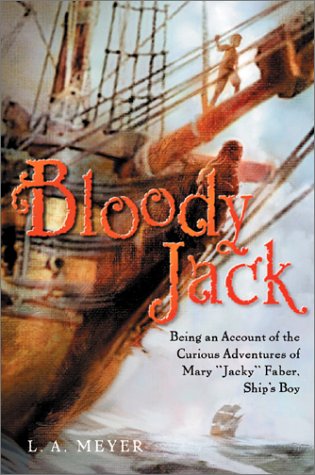
    “My name is Jacky Faber and in London I was born, but, no, I wasn’t born with that name. Well, the faber part, yes, the Jacky part, no, but they call me Jacky now and it’s fine with me. They also call me Jack-0 and Jock and the Jackeroe, too, and, aye, it’s true I’ve been called Bloody Jack a few times, but that wasn’t all my fault. Mostly, though, they just call me Jacky.

    “That wasn’t my name, though, back on That Dark Day when my poor dad died of the pestilence and the men dragged him out of our rooms and down the stairs, his poor head hanging between his shoulders and his poor feet bouncin’ on the stairs, and me all sobbin’ and blubberin’ and mum no help, she bein’ sick, too, and my little sister, as well.

    “Back then my name was Mary.”

    The book is a historical novel by L. A. Meyer called Bloody Jack. It tells the tale of Mary Faber, who is orphaned in London in the early 19th century and survives only by joining a street gang and then, posing as a boy, the crew of a ship. On board, she has to hide who she is and avoid the many perils of ship life.

    The book is delightful, transporting the reader to the time and place with excellent details and a style that evokes the speech and times. There’s humor, danger, adventure, and an interesting cast of characters. I recommend it highly. If you end up loving it as I do, you’ll then be happy to know this is only Jack’s first adventure.

  • The Profiler, Almond Milk, and Uncle Sam

    Real crime 

    It’s 1990. You’re a housewife, homeschooling your children, and renting a room upstairs to a young man to make ends meet. There are a few odd things about the young man, but you overlook them. Then one day a woman is strangled on a jogging path near your home, and your first thought is that the young man living in your house has something to do with it.

    What do you do?

    Pat Brown found herself in this exact situation. She voiced her suspicions to her husband, but it was all too farfetched. However, the nagging thought wouldn’t let her go, and she soon uncovered evidence that made the young man a strong suspect.

    She took the evidence to the police, but they dismissed her as a bored housewife with an overactive imagination. She evicted the young man, but it would be six years before the authorities would finally bring him in for questioning.

    Dismayed and frustrated, Brown started down a path that would lead to her become a professional criminal profiler, assisting police departments and victims’ families by analyzing both physical and behavioral evidence to make the most scientific determination possible about who committed a crime.

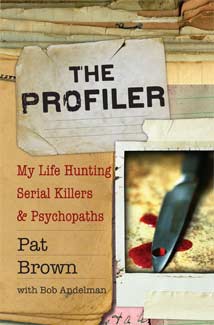
    In The Profiler: My Life Hunting Serial Killers and Psychopaths Brown tells about what happened with that young man and her journey to becoming a profiler, then she opens a number of other cases she’s worked on, giving the reader a behind-the-scenes look at how profilers work, and how their methods bring new investigative avenues to light. She also brings home very clearly just how many murders go unsolved. It’s an absolutely fascinating read.

    Milk that doesn’t moo

    I used to think soy milk was either for the lactose intolerant or hippies. And so I always avoided that milk section of the grocery store. But, having embarked on a new way of eating that I’ll explain in another column, I was induced to approach the alternative milk shelves. I purchased a carton of soy milk, but then I saw cartons of something even more strange: almond milk.

    Puzzling. I knew, of course, that almonds did not have udders. So nobody was out there hooking them up to tiny milking machines. And they were nuts, so it’s not like you can squeeze them to make them release their tasty juices. Instead, I learned that almond milk is made by finely grinding almonds together with water. I thought this was something new, invented perhaps by a Californian who’d had too much weed, but it appears many Medieval European recipes called for almond milk, and it has always been a popular beverage in the Middle East. So almond milk has been around for some time.

    But I didn’t know any of this. I just knew I loved almonds and that they provide all sorts of goodies for the human body. Besides, I have a hard time resisting adventures. So along with the soy, I picked up a carton of Silk’s PureAlmond regular, vanilla, and chocolate milk.

    The soy was okay, but it left a weird zingy taste in my mouth. Furthermore, soy contains estrogen. I’m sure it’s a fine product, but I live with four daughters and don’t need any more estrogen. And I certainly don’t need it mutating me in any, um, feminine ways. So I put the soy aside and gave the almond milk a go.

    It was delicious. I love the vanilla and regular flavors the best. In fact, I like it so much I only drink cow’s milk when the last drop of almond milk is gone, and I try to make sure that never happens. Some might worry that I’ll deplete my calcium stores, but not so. Almond milk actually has MORE calcium than cow’s milk along with vitamin D that allows the body to absorb the mineral. It also has 50% of the RDA of vitamin E, of which cow’s milk has none. But that’s all technical vitaminy stuff. It wouldn’t matter if the milk itself didn’t taste so dang good.

    The American breakfast

    I love cereal. We have our standard favorites as a family, but I also like to get a box of something new when we shop. I recently saw, perched up on the top shelf at Wal-Mart, boxes of  Uncle Sam.

    What the heck? Was this a Tea Party product? I know Utah is conservative, but come on. And what kind of nut sings “The Stars and Stripes” for breakfast?

    Well, I might.

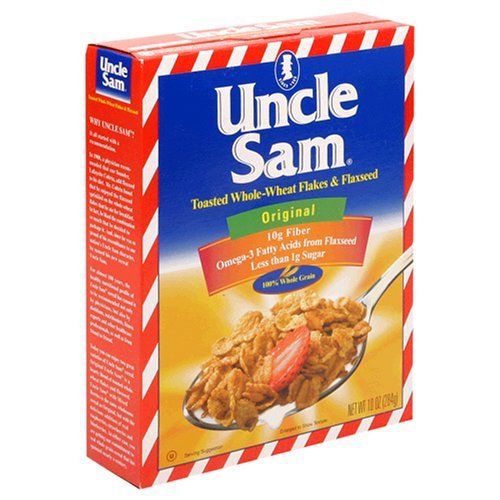
    So I promptly snagged a box and read that it’s been around since 1908, thus making it politically neutral. Then I read the ingredients. It’s a simple cereal made of wheat berries that are steamed, rolled, and toasted to provide killer whole grain nutrition. Those wheat flakes are then mixed with flax seeds (omega 3’s anyone?). That’s it.

    I purchased a box, felt patriotic, and then gave it a try when we got home. I’ve been buying it regularly ever since. It’s slammed with 10 grams of fiber and 7 grams of protein, and goes great with Silk’s vanilla almond milk and a piece of fruit.

  • Which Way Home, Tangled, Cafe Zupas

    Child Migrants

    Each year, thousands of Latin Americans travel hundreds of miles, hoping to enter the United States illegally. About five percent of those attempting to make the journey are children traveling alone, often on the tops of freight trains. Some of these children are in their teens. Some are as young as eight or nine.

    Some of them have had relatives (in their home country or in the U.S.) pay smugglers to bring them in. Others try to make it on their own. Some do make it across. Others are caught and deported in the U.S. or by the Mexican authorities. Others simply vanish or perish along the way.

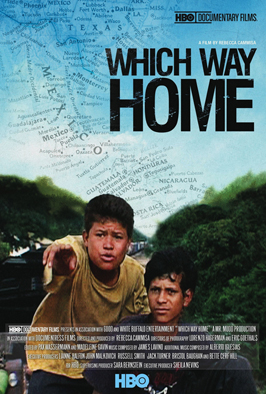
    The eye-opening documentary Which Way Home follows a number of these unaccompanied child migrants on their journey through Mexico as they try to reach the United States.

    There’s Olga and Freddy, nine-year old Hondurans. Olga is trying to reach her mother and sisters in Minnesota. Freddy wants to be reunited with his father.

    There’s fourteen-year old Jairo who was forced to live on the streets of Chiapas after his mother was killed. He wants an education but is too poor. So he thinks if he gets to Laredo, Texas, he can get a job, earn money, and come back to hire a tutor.

    There’s thirteen-year old Fito from Honduras whose mother abandoned him when he was very young. He lives with his impoverished grandmother, who has a job making cigars. He’s traveling to the U.S. to look for work and hopes to be adopted.

    Then there’s the thirteen-year old Eloy and his 16-year old cousin Rosario whose bodies were found in the desert.

    This film doesn’t propose any solutions or argue for or against immigration. It simply documents what’s happening. Anyone who has any interest at all in the issue will find this movie both fascinating and troubling. In fact, I think the whole family could watch this. For those who are concerned about language, there is one brief exchange where the one of the boys uses some high-grade curses. However, I wouldn’t let that hinder you. You can discuss it or easily fast forward those few seconds. These are just people. Don’t let a few foibles prevent you from learning about their plight.

    One of the best movies of 2010

    Maybe you’re one of the few, like me, who didn’t see Tangled when it first came out. If so, you’re in for a treat. This is a great story about a girl whose mother, the queen, almost died giving birth to her. The magic used to save the mother and girl transferred into the child’s hair and gives her power to heal. Or to restore beauty and youth.

    And that’s too tempting for some. The princess is kidnapped by a woman who wants to maintain her youth. But this villainess doesn’t play the role of the bad guy. No, she plays the role of the loving mother, locking Rapunzel away in a tower to “protect her,” duping her into thinking she really is her mother and really cares. 

    It works for a number of years until Flynn Rider, a wanted thief running from the authorities, stumbles across Rapunzel’s tower. When he tries to take refuge, Rapunzel freaks, and then sees that Flynn just might be her ticket out. Of course, when the villainess returns and finds Rapunzel gone, she’s vows to lock Rapunzel up where nobody can find her. Unfortunately, poor Rapunzel has no clue what her “mother” really is—it’s hard to fight a villainess when you think she’s on your side.

    The animation is marvelous. The characters are fun. And the villainess is unlike any we’ve seen in a Disney film before. I recommend this film highly. I know I’ll be seeing it again. 

    Soup Heaven

    There’s nothing like an excellent soup and sandwich. And since my wife and a friend both raved about Cafe Zupas, I decided to give it a try.

    My first problem when I stood looking at the menu was that there were ten soups listed and they all sounded wonderful. There was Tomato Basil with Orzo Pasta, New England Clam Chowder, Thai Lobster Curry, Wild Mushroom Bisque, Yucatan Chicken Tortilla and five others. My second problem was that there were just as many delicious-sounding sandwiches to choose from, all grilled “panini style” on Italian Ciabatta bread. Should I get the Honey Bacon Club, Hawaiian Barbeque Chicken, Milano (ham, tomatoes, and pesto), or one of four others? And then there was a salad menu as well.

    Oye!

    I ended up ordering the turkey cranberry sandwich and a bowl of both the Thai Lobster Curry and the Tuscan White Bean and Vegetable. The staff was friendly. They served up my food quickly, and I sat down at a booth hoping I hadn’t just wasted my money.

    That fear was resolved with the first two sips. It was heaven. I oohed and aahed all the way through the meal until the last bite of the chocolate-dipped strawberry that comes with each sandwich. I cannot wait to go back and try another sandwich and bowl of soup. And the cool thing is that it appears even when I’ve tried all the menu items, I won’t run out of new options because Cafe Zupas rotates new soups into the menu. For example, right now they’re featuring a French Onion soup in addition to their normal menu items and have a Beef and Mushroom Goulash and Irish Stew “coming soon.”

    Cafe Zupas is a new chain that started in Utah. It currently has a total of nine locations from Layton to Provo. Next time you want to eat out, find the location nearest you at their website www.zupas.com and prepare yourself for a gustatory delight.

  • Ninja Master Prep, Bountiful Baskets, and Feeling Good

    Kung Fu Your Food

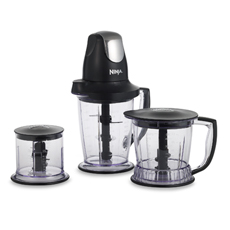
    It sounds like something off of a bad infomercial—black-clad ninjas, blenders, and, if you order now, a zirconium ruby that can withstand the pressure of a full elephant’s weight! But we didn’t get the Ninja Master Prep Professional—a six-cup pitcher and three two-cup prep bowls–from an infomercial. Santa’s up to his old tricks again. The dirty dog one-upped me and gave it to my wife for Christmas.

    Most blenders and food-processors use a single blade at the bottom of the container. When you make thicker smoothies, this means you have to stir and poke the chunks to the bottom. When you chop vegetables, it means that sometimes the stuff on the bottom turns to soup while larger chunks whirl around on top. And when it’s time to serve or remove the contents, you have to deal with the blades.

    But the Ninja Master Prep turns all that on its head. It uses multiple blades–one each at the bottom, middle, and top. You hold the motor in your hand. This configuration processes the food quickly and evenly. For example, we had 48 ounces of thick, perfectly-blended smoothies made from frozen strawberries in thirty seconds. And serving was a breeze because we simply set the motor aside, pulled the blade column out, and were left with a normal pitcher.   

    If you’re looking for a new blender or food processor, give the Ninja Master Prep Professional a try. You can find it at Sam’s Club, Target, Kohl’s, and many places online, including Amazon.com.

    Now, Grasshopper. You must learn respect–Hee-yah!

    Easy Eating

    One of the best changes we can make in our diets is to include more fruits and vegetables. I’ve found one of the easiest ways to do this is to order a weekly boxful from Bountiful Baskets (BountifulBaskets.org), a co-op which has hundreds of pickup locations in ten western states.

    The produce is cheap. And because you don’t choose what you’re going to get, you’re introduced to vegetables and fruits you might not otherwise try. Some might think that leads to eating less produce, but we’ve found it’s actually the reverse.

    One of the biggest headaches of cooking is planning the meals. In fact, I think having a menu is most of the battle. Bountiful Baskets eliminates a good portion of that planning and required shopping. Instead of trying to figure out what to cook, we know what we have to cook. It’s right there in the basket. All we need to do is build a number of the week’s meals around the produce. A few clicks on allrecipes.com and we’re ready to go.

    If you want to eat a more healthy and delicious diet, give Bountiful Baskets a go.  

    Be Happy

    It’s the holiday season and a joyous time for many people. But it’s also the worst time of year for others. We recently had another suicide in our little county. Some people might prefer we sweep such things under the rug. But it breaks my heart. Especially since such tragedy is avoidable. And I’m not talking about removing the problem with medication, although sometimes people do need to treat chemical imbalances. For many, much, if not all, of their depression is fueled by specific types of thoughts.

    These thoughts are not wacky, crazy things. In fact, they may seem innocuous or normal to some. But they are deadly all the same. Identifying and shining the truth on these thoughts takes some work, but the liberation is worth every ounce of effort.

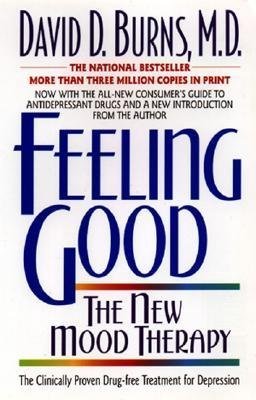
    It’s unrealistic to expect to be full of joy every minute of our lives. But it’s also not necessary, nor is it normal, to live a life dominated by feelings of worthlessness, hopelessness, pain, and self-loathing. If you or someone you know seems to feel these things on a regular basis, please, get a copy of Feeling Good by David Burns. Just read the first hundred pages and perform the techniques found there. And if you need some help being consistent, find a counselor to help you.

    Along with the jolts and pains, life provides an abundance of joys. Don’t let yourself, or those close to you, miss them.