The MT Sandwich, To A Dying Girl, Bloody Jack

you-MOM-ee

I used to move along the salad bars, looking at the mushrooms, and think: they’re vegetable Styrofoam! Who ever thought eating mushrooms was a good idea? My answer, of course, was it must have been some starving dude lost in the woods who found they were easier to chew on than bark.

Such were the days of my ignorance. Because while raw mushrooms are fairly bland, sautéed or grilled mushrooms are worthy of a passionate, say it slowly, “oh my freaking heck” (hey, I live in Utah).

I now love mushrooms. And I’ve found they very easily replace tasty meats. Probably because they have loads of the fifth basic taste—umami (you-MOM-ee)—just as meats do. I know some of you are thinking, “hold on, didn’t I learn that the tongue can only taste four things?” That’s indeed what you learned. But you were wrong. In 1985 scientists discovered we have a fifth taste, popularly referred to as savoriness, that’s been sitting on the tongue with the sweet, sour, bitter, and salty all along. In fact, humans get their first experience with it in momma’s milk.

But cooked mushrooms not only taste good, they are also actually good for you. They help safeguard against cancer, boost the immune system, supply hard to get nutrients, and can help you cut calories and saturated fats by, as I said before, moving some of the meat off the plate.

With all this goodness it’s hard not to see new opportunities for consumption. And indeed I found one. I love a good BLT (bacon-lettuce-tomato sandwich, for any troglodytes who read this column), especially when the bacon is crispy and the tomatoes have some sass or a little feta cheese to accompany them. But one day while partaking of some of my fungus friends, my mind was expanded, and I thought: why not replace the bacon with some sautéed mushrooms? Why not, indeed?

I replaced. I partook. And rejoiced. Then I ate my MT (mushroom-tomato) for lunch three more days in a row (I also found if you must have crispiness, two Sun Chips added to the top of the sandwich do the trick nicely).

Do not disdain the fungus. Cook the little guys up and devour them with some well placed oohs and aahs on an open-faced MT.

“To A Dying Girl”

Clinton F. Larson was a poet who taught at BYU. I remember him coming in to read during one of my classes, but he soon retired, and I was never able to take any of his classes. How sad I am that I could not learn from him because he had much to teach, as evidenced by some of his poems. Here’s one of my favorites.

To a Dying Girl

How quickly must she go?

She calls dark swans from mirrors everywhere:

From halls and porticos, from pools of air.

How quickly must she know?

They wander through the fathoms of her eye,

Waning southerly until their cry

Is gone where she must go.

How quickly does the cloudfire streak the sky,

Tremble on the peaks, then cool and die?

She moves like evening into night,

Forgetful as swans forget their flight

Or spring the fragile snow,

So quickly she must go.

 -Clinton F. Larson

The first reading fills the mind with vivid images and a sense of beauty and sorrow. Subsequent readings deepen the feeling. Especially when we reflect a bit on the three images he evokes of passing from life into death. First, the black swans arise to fly south for winter: graceful, beautiful, and dark as death. They’re the girl’s own harbingers, maybe her guides, coming from mirrors, reflecting in the depths of her eye. The second image presents fleeting grandeur and beauty with the stunning cloudfire that often awes us as the sun sets. Isn’t death the time we most value life? The time when, like cloudfire, it burns in glory and beauty and then is gone? The last image presents another image of passing, but not one of loss. It’s not a transition to blackness or cold or bitter loneliness, but of winter passing to spring. Of a fecund beginning.

Of course, there are other things the lines and images evoke. This isn’t a poem to be wrapped up in a tidy bow. Poetry is meant to be felt, not dissected like a dead animal. In the end, that’s what Larson delivers: sorrow, loss, and hope all wraped in the music of his rhythm and words. Beautiful.

A Great Read
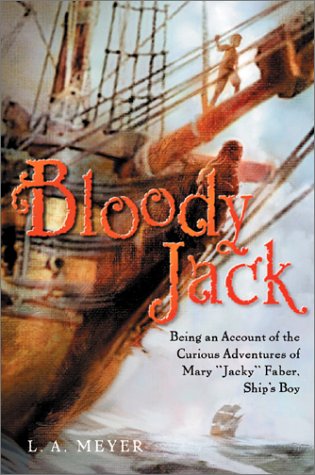
Sometimes a book’s beginning is so good you can’t not purchase it. Here’s one that forced my hand.

“My name is Jacky Faber and in London I was born, but, no, I wasn’t born with that name. Well, the faber part, yes, the Jacky part, no, but they call me Jacky now and it’s fine with me. They also call me Jack-0 and Jock and the Jackeroe, too, and, aye, it’s true I’ve been called Bloody Jack a few times, but that wasn’t all my fault. Mostly, though, they just call me Jacky.

“That wasn’t my name, though, back on That Dark Day when my poor dad died of the pestilence and the men dragged him out of our rooms and down the stairs, his poor head hanging between his shoulders and his poor feet bouncin’ on the stairs, and me all sobbin’ and blubberin’ and mum no help, she bein’ sick, too, and my little sister, as well.

“Back then my name was Mary.”

The book is a historical novel by L. A. Meyer called Bloody Jack. It tells the tale of Mary Faber, who is orphaned in London in the early 19th century and survives only by joining a street gang and then, posing as a boy, the crew of a ship. On board, she has to hide who she is and avoid the many perils of ship life.

The book is delightful, transporting the reader to the time and place with excellent details and a style that evokes the speech and times. There’s humor, danger, adventure, and an interesting cast of characters. I recommend it highly. If you end up loving it as I do, you’ll then be happy to know this is only Jack’s first adventure.

Share

Similar Posts

  • Animals Make Us Human by Temple Grandin

    Which animals do you think have a better life: family dogs or cattle on ranches?

    Think about it. Cattle get branded and tagged and slaughtered. Some live only a year or two. Meanwhile, Fido gets the run of the house, a spot in front of the couch, and chew toys.

    You might be surprised to know that many cattle have it better than pampered family pets. That’s the claim Temple Grandin makes in her fascinating and practical book Animals Make Us Human: Creating the Best Life for Animals.

    Grandin is not a beef industry lobbyist working smoke and mirrors PR to make ranchers look good. She’s a practical, down-to-earth, get-your-hands-dirty animal scientist who has revolutionized the beef industry and had an impact on many others. She isn’t a vegetarian, and has no intention to become one. But she does love animals. And her insight and research has made the lives of millions of animals better.

    When people ask her how she can work in the beef industry instead of being an activist against it, she says that all things die. It’s the cycle of life. She has no problem eating animals. In fact, she believes that our relationship with the animals we use for food is symbiotic–mutually beneficial. But she also believes that if we’re going to raise them, or keep them as pets, we need to give these animals a quality life.

    So what do animals need for a quality life? Should we give our cattle rubdowns? Let our dogs roam through city streets? What do our cats and pigs and horses need? Is it freedom?

    Her answer, surprisingly, is that focusing on freedom really isn’t a good guide for trying to give animals a good life. Not because freedom is a bad thing, but because it’s too confusing. Instead, she believes that we should be basing animal welfare on the core, or what she calls the “blue ribbon,” emotion systems in the brain. The key systems are SEEKING, RAGE, FEAR, PANIC, and PLAY.

    The rule is simple: avoid stimulating the negative emotions; do stimulate the positive ones. In the book she shares what she knows about how to do that for dogs, cats, horses, cows, pigs, chickens and other poultry, wildlife, and animals in zoos.

    Grandin is always fascinating, and with her trademark style of stories and practical insights, she shares what the research and her more than 30 years of practical hands-on experience working with animals has taught her. You’ll learn why your chickens need a place to hide, even if you’ve fenced out every fox and skunk with thirty feet of concrete; what makes pigs happy; why clicker training is so successful with horses; why you might want to consider the color of your cat’s fur; why leaving your dog locked in the house with food and plenty of toys may actually be very stressing. You’ll even learn to look at zoo habitats differently. Each chapter focuses on a different animal and how to avoid the negative and stimulate the positive blue ribbon emotions. This is not touchy-feely fluff. It’s not the ranting and raging of someone who thinks the planet would be better of without humans. It’s the insights of someone who is rigorously scientific, down-to-earth practical, and passionate about animals.  

    In her own words: “Everyone who is responsible for animals needs a set of simple, reliable guidelines for creating good mental welfare that can be applied to any animal in any situation.” Read her book to find out what she suggests these should be. If you own pets or raise animals, I think you’ll love this read. If you’d like to sample the first chapter, you can at Grandin’s website:  http://www.grandin.com/

    Share
  • For those whole love ENDER’S GAME

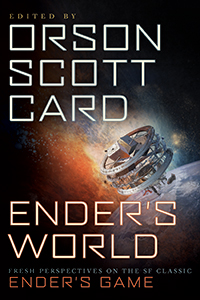
    Enders World Essays SmartPopThere’s a special joy in sharing a wonderful experience with someone else. There’s a delight in reliving the experience afterwards, in recalling key moments and quoting funny or cool lines. This is especially true of books. One of my favorite book experiences is Ender’s Game. Which is why I’m so happy to announce that Smart Pop is about to release a collection of articles written by folks sharing their experience with that book.

    You get to hear from Eric James Stone about how the book should have ended. You get to hear from Matt Nix (creator and producer of Burn Notice) how the book was a guide to his life. You get to hear from Colonel Tom Ruby why he made the book mandatory reading for the Air Force’s Air Command and Staff College.

    There are 11 other articles from Neal Shusterman, Captain John F. Schmitt U.S.M.C., Mary Robinette Kowal, Hilari Bell, Ken Scholes, Mette Ivie Harrison, and many others. There are Q&A sections. And there is Card’s own introduction in which he explains what Ender’s Game is really about for him. All of these articles are wonderful reads.

    If you loved Ender’s Game like I did, you’re going to enjoy this book. You can get a free PDF excerpt from the book that includes a few of the Q&As from Card along with the full version of my essay “The Monster’s Heart.” To download the PDF, just scroll down to where it says “Sign Up for Free Chapters & Book Updates”: http://www.smartpopbooks.com/book/enders-world.


    Share
  • Earth: the biography, Planter’s Nuts at Sam’s, “The Professor of War”

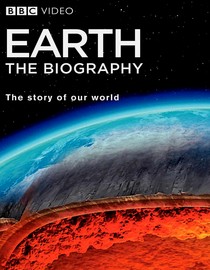
    Earth: The Biography is one of the most interesting documentary series I’ve seen in a long time. It’s produced by National Geographic and the BCC. Dr. Ian Stewart, a Scotsman, hosts the program and tells the life story of our planet, how it works, and what makes it so special.

    There are five parts: “Volcano,” “Atmosphere,” “Ice,” “Oceans,” and “Rare Earth.” And while they were all good, the last two blew me away.

    For example, I always thought the polar ice caps were a big waste of water. What do they do besides torment penguins and Eskimos?

    But the program reveals that the ice caps are critical to all life everywhere on the planet because they power the great ocean conveyer. This conveyer is a slow current that carries surface water away from the equator up to the polar caps then down to the sea floor and back—transporting oxygen, nutrients, and warmth all around the globe.

    We can see how critical the ocean conveyer is when it stops. There was a time when this happened. With no replenishment of oxygen, the water turned to poison. The poison was picked up in the clouds and rained down upon the land. And almost every living thing on the planet died a toxic death.

    Sniff, sniff–we love you, Polar Ice Caps.

    “Oceans” was fascinating, but “Rare Earth” was the kicker. How common is our cozy little situation here on earth?

    Well, for life to exist as we know it, we needed to be a certain narrow distance from the center of the galaxy, orbit a certain, less common type of star, be within a certain range of that star, have a big old fat vacuum like Jupiter hanging out in the wings sucking up asteroids and comets so they don’t hit us instead, have an orbiting moon of a certain size, an earth core with just the right amount of iron, a tilt to the earth that would allow polar ice caps, water, an atmosphere to protect us from all sorts of celestial mayhem. Heck, we even had to have that nasty mass extinction caused by the broken ocean conveyer. And there’s more.

    So many rare events had to line up just right, that it’s bound to make the atheists among us celebrate their good fortune with illegal-Wyoming-firework abandon and the believers to rise up from their chairs and shout, “Hallelujah and Amen!”

    Nellie, the girls, and I all loved this show.

    ***

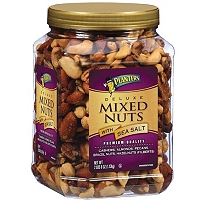
    I’m a nut man. Love nuts. Hazelnuts, walnuts, Brazil nuts, pistachio nuts, cashews, pecans. But nuts are expensive. And while peanuts are lovely, I like some variety and grow weary of the mixes where you get about five thousand peanuts and one burnt almond. So when I saw the forty ounce jars of Planter’s Deluxe Nuts (sea salt, NO peanuts) at Sam’s Club in Logan, Utah selling for a mere $10.98, I just about fainted away and died.

    Eleven bucks?!

    For comparison, please note that a little ten ounce jar of the exact same nuts costs six dollars in the grocery store. Four times the nuts for less than double the price!

    The nuts are good. More importantly, they’re a regular item at Sam’s. So with all the reports coming out about how good nuts are for you, reduce heart disease, reduce diabetes, blah, blah, blah, fight aliens, I can now afford to eat them and hopefully extend my stay as a carbon-based life form.

    ***

    General David Petraeus has revolutionized the way America wages war. It was his strategy that turned the war in Iraq around. It’s his strategy that’s being used in Afghanistan. And it will be his methods that will inform how our soldiers face enemies in years to come.

    The key to his thinking is realizing that there are two different terrains that must be won in the types of war we wage now—the geographic and the human. You know what geography is—take that hill, secure that town, remove the threats from that jungle. The human terrain, on the other hand, is made up of the hearts and minds of the people at the site of the struggle and has proven to be equally important.

    It’s important because the wars we’re most likely to engage in now are not ones where two big armies square off and blast away. Anyone who tries to stand up to the United States using that method is going to very quickly learn what it means to get stomped, shredded, and served to the dogs. So most of the battles are likely to be engagements in unconventional war, where the enemy hides, and where the local populace will make or break the effort.

    In May 2010, Vanity Fair magazine published a fascinating article called “The Professor of War” by Mark Bowden. It summarizes Petraeus’s history, the source of his thinking, and the kind of man he is. With so much at stake, I was grateful to get this well-written glimpse into the general and his approach to war.

    While you’re at the site, you might want to also read another Vanity Fair article titled “General McChrystal’s Three Biggest Strategic Errors in Dealing With Rolling Stone” by Bill Bradley, published June, 2010. McChrystal was Petraeus’s right hand man. The contrast between the two men is enlightening.

    Share
  • |

    American Idol Story Elements

    I don’t have time to watch, but I found myself getting sucked in this week. And here’s something I realized as I watched Simon, Paula, Randy, Ryan, & the contenstants–the show is using story principles.

    Idol

    Duh, I know: of course, it is. But it does it so well. It reminds me of a research article I read about sportscasters and audience enjoyment of sports competitions. They found that if they could inject story elements–suspense, rivalry, etc.–people enjoyed the games more. Next time you watch a college football game, notice what the color commentators say to make it a contest. It’s not just about reporting what #45 did out in the flat.

    Anyway, back to Idol. Look at these elements.

    What draws us to characters?

    Beauty, threats, quirkiness, larger-than-life situation or skills, source of viewer wish-fulfillment.

    Humm, let’s look at the cast of performers. Don’t we see all of that? How many of us wouldn’t love to be able to sing like they do? Have a shot at becoming a recording artist? Or just goggle at someone getting this chance?

    What factors generate suspense?

    Threats to characters we like or marvelous opportunities for them, turns in the situation, a prolonged resolution.

    Humm. Our sympathy is engaged because these folks are normal folks, many of them underdogs. Many viewers identify strongly with one or two because of the contestant’s various social groups and because, heck, the auditions are for people like you and me. It could be us up there in front of the world! You’ve got the threat of peformance fright, but also the overriding opportunity to make a dream real. You’ve got a wonderful career, if not millions of dollars, on the line. You’ve got Simon who is honest, but also plays his part. Isn’t that the moment of most suspense with each performance? You’ve even got a little subplot going on between Simon and Seacrest. There’s no villain here. But there are plenty of obstacles. Weekly threats.

    What does Idol give us that Survivor never could?

    It’s all REAL, even if the producers let their selection of performers be influenced by things other than vocal talent. And because it’s real, we believe it. Which means we can more easily feel sympathy and root for the various performers.

    It’s a simple but brilliant concept. And I just wasted 4 hours watching it. And I’m likely to do it again.

    Zing, Baby. Zing!

    Share
  • Good Stuff! The Man Who Invented Christmas

    If you love funny, feel-good movies, today’s you’re lucky day.

    Because I’m going to tell you about one that will help brighten your Christmas season.

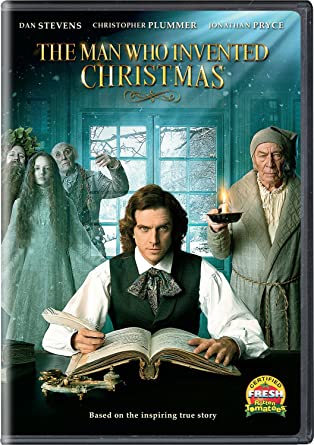
    The movie is The Man Who Invented Christmas.

    It’s about Charles Dickens, the author of A Christmas Carol.

    Now some of you might already be groaning. Please, no, not another story about Scrooge.

    I felt the same way. I haven’t enjoyed a movie about Scrooge for a long time. No, not even the one featuring Scrooge McDuck.

    So I didn’t want to watch this, but I kept hearing so many good reviews, I finally caved and gave it a shot. I’m so happy I did.

    This delightful movie reinvigorates the story with a whole new twist because it’s not about Scrooge. Not directly.

    Instead, it’s about Charles Dickens. It’s 1843 and Dickens is suffering financial hardship because his last three books bombed in the marketplace. He determines to write a new book and publish it himself to restore his finances. That book is A Christmas Carol.

    Dickens needs to finish it in six weeks so it can be ready for Christmas. That’s difficult enough, but will anyone read it? His friends and publishers keep telling him that the book will be a failure because, at the time, many thought Christmas irrelevant and didn’t celebrate it. Furthermore, the story isn’t developing as it should.

    Now the movie does take some dramatic license, but, by the end, I think you’ll agree the message of Scrooge is never more poignant. I watched the final scene with Scrooge multiple times and thought about it for days afterwards.

    If you want to laugh, be inspired, and feel the spirit of Christmas, I think you’ll love this movie.

    Share
  • Thai Crystal, Rothfuss, Daily Life in the Middle Ages, Perot Charts

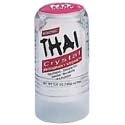
    Thai Crystal Stick - Large, 4.2 ozI don’t like anti-perspirants because they gob up in the underarms of my undershirts. Which means I eventually go walking about with pebbles in my pits. And, yes, we do have a washing machine and use it regularly. There’s something in there that defies anything less than hydro-chloric acid.

    I don’t like deodorants because they wimp out on me. I’ll put on my bracing Speedstick in the morning and be sniffing myself by lunch. And if I put some industrial perfume on it only leads to rashes.

    Someone might be saying that I should just be a real man and smell like a real man smells. But how about I be a real, smart man. See, if you’ve got dog poo in your carpet, you wouldn’t spray it with cologne, hoping to deal with the smell. No, you go to the source. Clean up the stuff and forego all the scents. In fact, if you keep the dog from pooping in the first place, you’re ahead of the game. So why not do the same with underarm odors? Just get rid of the stinkers.

    Well, that’s what I did. Many years ago I found out that natural mineral salts kill underarm bacteria. If the underarm bacteria can’t exist, let alone breed and excrete, then you don’t get underarm odor. What’s more, you can get those mineral salts in “rock” form. Just wet and wipe under your arms and you’re done. It works just like regular anti-perspirant and deodorant, it’s just that you’re delivery bacteria killers instead of perfumes.

    Another good thing about mineral salt deodrant rocks is that they last a LONG time. And I mean looooong. My last rock took about 4 years to use up (heads up all you one-year’s supply people). The problem with them is that you can’t find the rocks in the grocery store next to the big brands. But you CAN find them in health stories. I got my latest from Shangri-lah in Logan. The brand is Thai Crystal (named after the location where the US companies discovered this method of deodorizing).

    Folks, it’s 3:09 PM. I just did the sniff test–aah, the sweet smell of nothing!

    *

    The Name of the Wind (The Kingkiller Chronicle, Day 1)I heard all the hype about Rothfuss and picked up his The Name of the Wind  in a Hastings book shop. The first few pages didn’t grab me and so I put it back. But then I kept hearing the hype. I finally decided, okay, okay, I’ll give it a go.

    By “go” I mean something like five pages. See, I’m impatient with books. If you can’t grab me by the bottom of page one, I’m outta there. I read too many stories in my undergrad program that bored me to the very last page. Sometime after I graduated (why did I wait so long?) I realized that I could increase the odds of reading something interesting me if I only read things that interested me. (You only arrive at this level of brilliance after many years in college.)

    I’m not going to overview the plot here. Just know it’s a fabulous read. For you writers, note that what drives the reader’s suspense is not an overarching plot, but his situation of being alone and destitute. So while there are villains, that really isn’t what keeps the reader going. It’s the wonder of a new place and our hope for this kid.

    *

    Daily Life in the Middle AgesI read more non-fiction than I do fiction each year. I need to so that I have something to say in my writing. And I will tell you that I haven’t found a finer source of cool ideas to huck into stories than Paul Newman’s (no, not the actor cum cookie man) Daily Life in the Middle Ages.

    He breaks up medieval life into topics like Eating and Cooking, Building and Housing, Clothing and Dressing, etc. It’s full of wonderful stuff.

    Did you know that they played football back in old England? Not sissy European style, but hog style, like rugby or American football. Except it was often between two towns and the playing field was miles long.

    Did you know that respectable women wore hats? Those who let their hair go free were young girls and prostitutes. And that if a man knocked a woman’s headdress off it was tantamount to accusing her of prostitution and might result in the woman’s husband or family taking the man to court to exhonorate her. 

    Did you know that the word “curfew” came from the old French “covre feu,” meaning “cover the fire.” Since open flames were such a fire hazard in the old cities, many towns had regulations that required people to douse their lights and carefully bank their fires at a certain time in the evening which was often marked by the tolling of bells.

    I pulled these beauties out just randomly flipping through the pages. The book is full of such delights and you can be sure many of these will be finding their way into my stories.

    *

    I didn’t vote for Ross Perot the first time. I certainly wouldn’t vote for him now. But James Maxey just pointed me to an excellent on-line explanation of the current government budget. It’s worth your time to check this out to be able to understand what folks are talking about when it comes to our money and how Congress spends it. The charts are narrated, compelling, non-partisan, and incredibly easy to follow. Here are more Perot Chart presentations.  

    Share