movies

  • Donald Rumsfeld, The King’s Speech, Aquatic Ancestor Apes & Talking Bacteria

    Donald Rumsfeld
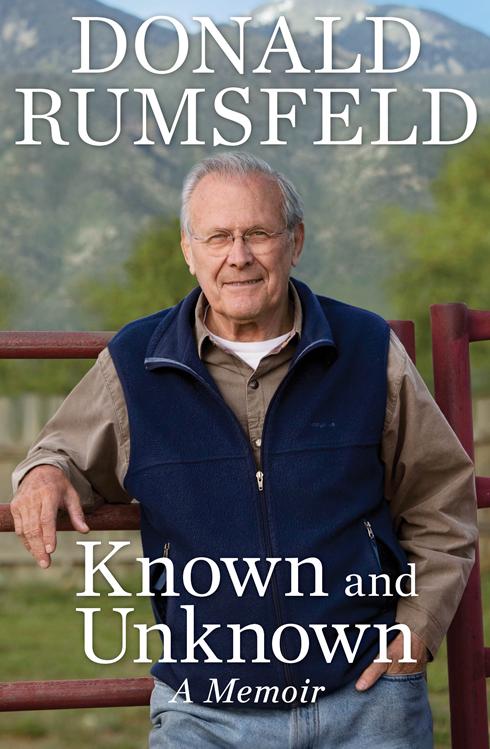
    I just finished Known and Unknown, a fat memoir by Donald Rumsfeld, and enjoyed every page.  Rumsfeld served as the Secretary of Defense under George W. Bush.  But Rumsfeld’s service didn’t start there. He was a Navy pilot, an assistant to a congressman during the Eisenhower days, and, in the early 60’s, a four-term congressman from Illinois.  He held various positions in the Nixon White House in the late 60’s and early 70’s, including ambassador to NATO.  He was Chief of Staff and Secretary of Defense when Ford took over from Nixon.  Reagan tapped him to be a special envoy to both the Middle East after the Beirut bombing and to the Law of the Sea treaty discussions.  He was the president of Searle, a pharmaceutical, as well as General Instrument, the company that pioneered HDTV.  Only after all that, did George W. Bush bring him on as Secretary of Defense.

    When writing novels, I try to create characters worth knowing, either because of their interesting personality or skills or because of the events they take part in. Donald Rumsfeld is just such a character, except he’s no fiction.

    In his memoir he shares insider information on everything from Watergate to 9/11 to the war in Iraq. What emerges is a fascinating look into many of the most important events in the last forty years.  You’ll get insight into some of the issues experienced in various White House administrations and see what really was going on with waterboarding, Guantanamo, Abu Ghraib, hurricane Katrina and many other of the hot button issues in the Bush years. There are some laugh out loud moments where his understated humor shines through. There are also parts where he reveals some of his differences with others that worked with him in the various administrations, including issues with Nelson Rockerfeller, Colin Powell and Andy Card. But in everything he writes he’s fair and restrained and attempts to present the facts accurately. This is no attempt to settle scores.  Just a wonderful read.

    If you are interested in politics at all, I think you’ll enjoy this book. Moreover, I think you’ll come out a little wiser, maybe a little better person, for having spent a few hours with Donald Rumsfeld.  

    The King’s Speech
    I do not watch many r-rated movies.  They are usually too vulgar or pornographic for my prissy tastes. However, I did my research on The King’s Speech, and having heard so many glowing reviews, Nellie and I rented it.

    It was wonderful.

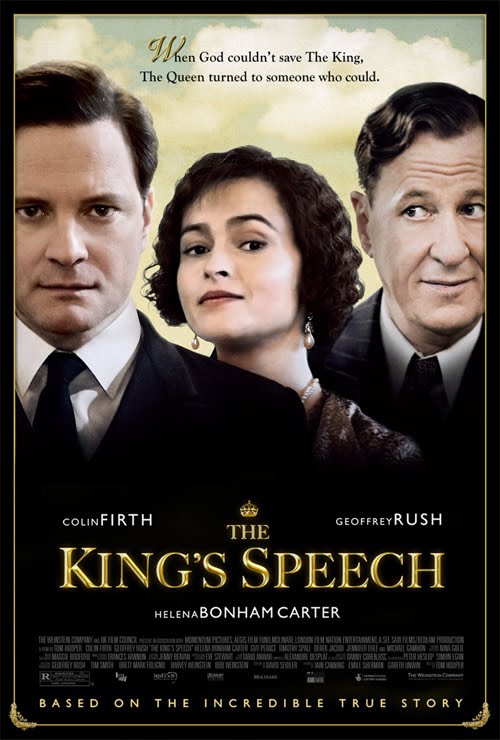
    The movie tells the story of prince Albert Frederick Arthur George of Britain who did not ever expect to inherit the throne and did not want to, in part because of his stammer. Can you imagine having to be a public figure like a king and have to deal with something like that? Most of us dread the thought of public speaking. Can you imagine having to try with a stammer?

    But Albert’s lot was not to live the sheltered life. He became king when his brother abdicated the throne because of improprieties in his personal life. The day before the abdication, Albert went to London to see his mother, Queen Mary. He wrote in his diary, “When I told her what had happened, I broke down and sobbed like a child.” That is not the entry of a power-hungry man.

    He assumed the throne in 1936, when England ruled over almost a quarter of the world’s population. Three years later in 1939 WW2 broke out and Britain’s king needed to be able to address the people.

    In the movie, Colin Firth plays Price Albert. Geoffery Rush (Captain Barbossa in Pirates of the Caribbean) plays Lionel Logue, the unorthodox Australian speech therapist to whom Albert’s wife turns for help. The script is wonderful and the star-studded cast is spot on. There are moments of humor and poignancy and triumph. I was caught up in this movie as much as any I’ve seen.

    If you like English dramas, you’ll enjoy this one. And the profanity, the reason for the r-rating, is not there to depict casual vulgarity. It was part of a technique used by the therapist. In the end, you’ll overlook it and find yourself on pins and needles, rooting for this fine man.

    Aquatic Ancestor Apes & Talking Bacteria

    I’ve written about TED before. The annual TED (technology, entertainment, design) conferences, in Long Beach/Palm Springs and Edinburgh, bring together the world’s most fascinating thinkers and doers, who are challenged to give the talk of their lives (in 18 minutes or less). The folks at TED record these speeches and put them up for free on their site for the rest of us to watch. And I just watched two dandies.

    The first is by Elaine Morgan who says we evolved from aquatic apes (sigh, just when you think you’ve found grandpa Eddy hanging out in the trees, you learn he’s an imposter). Morgan is a Welsh writer for television and also the author of several books on evolutionary anthropology. In the speech she describes the reasons why it makes sense that humans had aquatic ancestors. Along the way, she illustrates key principles of science, including why science by consensus is no science at all. Her manner is so delightful and engaging I think I could listen to her for hours, preferably around the dinner table. Watch her right now. She just might convince you.

    The second speech was given by Bonnie Bassler, an American molecular biologist, who has been part of the team that discovered key insights into how bacteria talk. It appears that bacteria do not invade a host and start doing damage. No, they wait until their numbers are sufficient that they have a chance of surviving. They coordinate defense and mount attacks as a group. Who would have thought? Knowing how this works is not only interesting all by itself, but it has stunning implications for medicine and fighting infection. Bassler is a fascinating and enthusiastic presenter. Among other things, you’ll end up seeing that humans are more bacteria than you could imagine. Watch her.

  • The Meth Epidemic, The Marines

    The Meth Epidemic

    Mamphetamine is the most addictive illegal drug in America. Unlike marijuana, cocaine, or heroin, all of which are synthesized from easy-to-obtain plant material (cannabis, cocoa leaf, opium poppy), meth requires ephedrine or pseudoephedrine, which are very complex to make and require a lot of know-how and high-tech processing. The only folks who have that ability are legitimate chemical factories. In fact, there are less than a dozen such factories around the world that produce these chemicals. Which means it should be easy to stop illegal use at the source.

    “Should” is the key word there.

    When you’re trying to halt drug trafficking, you can work two sides. There’s the demand side and the supply side.

    When you work on the demand side, you try to affect people’s desire and use.  For example, in the 1960’s the Federal Trade Commission, along with other government agencies and private groups, began a campaign against tobacco. Using government policy, public awareness, and education over the last forty years, these groups have significantly altered demand for tobacco in the United States. In 1963 more than half the nation smoked. 4,345 cigarettes were consumed per capita. But as these groups worked to affect demand, those numbers dropped steadily until by 2006 only 1,619 cigarettes were consumed per capita.

    That’s astounding, folks. A whole culture was changed.

    When you work on the supply side, you try to reduce the production and distribution of drugs. This can sometimes be almost impossible to do. For example, almost anyone can grow marijuana. And it takes very little knowledge to harvest and package the parts that are used.  Same with alcohol–home brewing has been practiced for ages. In both examples, the ingredients are easy to obtain and the processing is relatively simple and easy to hide.

    But there are some drugs that are very difficult to produce. The key ingredient for barbiturates is one. In the 1950’s and 1960’s barbiturate abuse was increasing. But the government instituted some regulations on the legitimate businesses that produced these ingredients, and it reduced the amount available on the streets until we very seldom hear of barbiturates being used these days.

    So where does meth fit in? Well, as I stated above, there are less than a dozen factories that create the key ingredients. Meth is a perfect candidate for supply side intervention. Unfortunately, regulation isn’t as easy as it may seem.

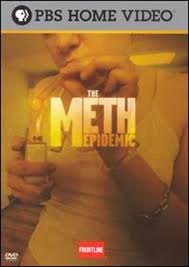
    PBS’s Frontline recently aired “The Meth Epidemic” which explains the history of meth in the United States and the battle raging over its cure. If you’ve ever wondered about what meth is and how it affects our nation, you’ll want to watch this. I think you’ll find it eye-opening and well worth your time. Watch it for free here: http://video.pbs.org/video/1933783731.  

    The Marines

    The US Marine Corps is a fascinating organization with special capabilities. With the exception of the Coast Guard, they are the smallest of the United States’ armed forces, although they’re still bigger than the entire British army. Part of what makes the Marines unique is that they have the ability to rapidly deploy an independent task force (infantry, air support, ships) to almost anywhere in the world within days. Because of this, they are usually the first boots on the ground in any engagement. They pave the way and the Army and other branches follow to provide overwhelming and continuous force.

    But the differences include more than their mission. The Marine Corps emphasizes authority and responsibility downward to a greater degree than the other military services. It members are, on average, younger. And its creed “Every Marine’s a Rifleman” has special implications for its commanders and troops.

    In order to do some research for a novel I’m writing, I’ve been watching a lot of documentaries about special operations forces and the Marines. One of the best introductions to the Marines I’ve come across is the 2007 PBS documentary called The Marines. It examines what it takes to become a Marine and what it truly means to be one, outlining the rigorous training process that each recruit must endure to become a commissioned officer. I found it fascinating.

    If you have ever been curious what makes the Marines different from the other branches of the military and what it takes to become one, you’ll want to watch this film. I couldn’t find it on the PBS site, but you can find it split into 10 parts at YouTube.com. Just go to site and search for “pbs the marines”.

  • La Brea Bakery Breads Cookbook, Very Young Girls

    Divine Nature

    I became a fan of bread when I lived in Europe. But not just any bread. I’m talking about the kind of bread with a crust that crackles and is chewy. With an inside that’s soft. Bread that doesn’t need anything on it, but makes you sing when you eat it with soup or a thin smear of butter. Alas, I came home and could not find such bread. It was all Wonder Bread nonsense and its many sandwich bread relatives.

    Luckily, I married a gal who had lived in Europe as well. And who, for a few years, actually had some time to bake. It took some time to find a cookbook with recipes that worked. It took some practice. But she was finally able to recreate that crackle, chewy, soft (not the shattering, roof-of-mouth cutting stuff either). And we enjoyed great bread for a few years. Then she took a job outside the home and we’ve been relegated to American sandwich bread again.

    Enter four daughters. Three of whom are working through a church program like the Boy Scouts that’s meant to help them develop key virtues. Each of the virtues requires they complete a number of tasks to educate them about that virtue. When they’ve completed the tasks for a virtue, they are to devise and undertake a ten hour project to help them practice what they’ve learned.

    Recently, I sat down with my oldest to see where she was and found to my surprise that she still had a number of things to complete. As I reviewed the requirements with her, I pointed out that she’d fulfilled the requirements for all of these virtues many times over. But she refused to count her activities that might apply because she didn’t perform them at the time with the intent to fulfill the requirements. She wanted her accomplishment to be purposeful. She’s focused on the intent of the program, not the award for the award’s sake. (Where do such children come from?) I saw her point, applauded it, and went back to work trying to help her brainstorm what she could do.

    We came to the virtue called Divine Nature, which states: “Be partakers of the divine nature. Giving all diligence, add to your faith virtue; and to virtue knowledge; and to knowledge temperance; and to temperance patience; and to patience godliness; and to godliness brotherly kindness; and to brotherly kindness charity.” Many of the activities revolve around womanhood and family. But it was the big project she needed to complete, one that “will help you practice what you have learned. This should be a significant effort that will take at least ten hours to complete.”

    Some of the suggested projects had to do with service in the community, others with talents. Then I read: “Develop a skill you could use in your future home, such as cooking, sewing, making repairs, organizing, or designing.”

    Cooking?

    My bread soul stirred.

    Cooking?! Baking is cooking.

    Memories of crackling crust and soft centers filled the mind of my bread beast. “Bread!” I declared.

    Luckily, Daughter Number 1 had also eaten her mother’s bread and missed it. “Bread,” she agreed. And we pulled the book out that my wife had found so useful, and began.

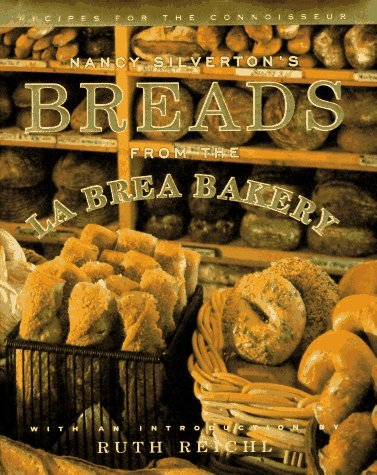
    The book is Nancy Silverton’s Breads From The La Brea Bakery. Silverton is a master chef.  She owns and operates the Campanile restaurant and the La Brea Bakery in Los Angeles. Her bread is sought for all over the nation. Her breads and the breads she shares in this book are all made with a sourdough starter that she teaches you to make from scratch with grapes. Actually, you don’t make it, but feed it. Because it’s a living thing. And after a while it becomes almost like a strange family pet growing on the counter and in the fridge.

    Some might hear “sour” and turn away, but Silverton explains how to keep the starter from becoming too sour. The result is a crackling, chewy, soft bread with a light tang that’s delicious. In fact, Daughter Number 1 just made bagels from the recipe in the book. There’s no tang at all. They’re the best bagels I’ve had. She’s also made the regular loaf, pancakes, and waffles from this same starter. They’re all delicious.

    The book starts off with a lesson in bread making then shares about 60 recipes, everything from baguettes to whole-wheat sandwich bread to sourdough onion rings. The only downside to the book is that I wish it had more pictures. An illustration, for example, in the section on rolling bagels would have been helpful. But we found one on youtube, and it sufficed. And I will confess that I didn’t think once about pictures when eating the bread.

    BTW, we’ve stopped calling this bread. Now, when it’s time, one of us will say, “I think it’s time to make some divine nature.”

    Our Young Girls

    I was recently reading about organized crime and their main activities.  In the section about what ties such groups have to prostitution, the authors reported that it’s estimated that 20% of all prostitutes are street walkers. Another 15% are call girls or escort service workers, and the remaining number, 65%, work in an establishment of some kind—massage parlors, brothers, bars, and hotels.  

    The authors reported that most street walkers have a lover or companion relationship with their pimp. This didn’t make sense to me at the time. But after watching Showtime’s Very Young Girls, I now understand what they’re talking about.

    This film is a documentary about teenage girl prostitutes in New York City and the GEMS (Girls Education and Mentoring Services) that helps them to find a new direction, which is not always easy.

    One of the awful statistics the film reveals is that the average age of entry into street walker prostitution in the United States is just thirteen.

    No, that’s not a typo. It’s thirteen. THIR-TEEN.

    The film introduces us to Rachel Lloyd who dropped out of school and became a teenage stripper and hooker. But she got out. She changed her life and then started the GEMS program to help young girls who found themselves in situations like the one from which she escaped. Lloyd began the program in her apartment and eventually got funding to open a recovery center where girls can seek shelter while they’re trying to redirect their lives.

    The film profiles a number of the girls working through the program. Some of these kids are kidnapped off the street and forced into the “life” as they call it. Some are lured away by pimps who initially act as if they want them to be their girlfriends, flattering them and showing them a good time, and only after they’ve been sleeping together for a while do the pimps then explain that they need to make some money.

    Many of these girls come from broken homes. Many have grown up believing the sexual messages portrayed by the media. The girls are beaten and given drugs.

    Some have been so psychologically manipulated by their pimps that they feel compelled to return. Others have successfully broken with their pasts.

    And all of them are just kids. KIDS!

    This is a movie that’s hard to watch. It’s not graphic in any way. It’s simply the subject matter. It’s also eye-opening and, while the problem is huge, does provide some hope. Thank the Lord for people like Rachel Lloyd. And for people everywhere who live upstanding lives and by kindness and good teaching save their children and others in their communities from this terrible waste. Rent this movie on Netflix. I think you’ll find it’s well worth the time.

  • Gandhi & Waiting for Superman

    Enthralling History

    The miracle of Netflix means that no movie or television show becomes unavailable. And there are so many produced over the last fifty years that are so very good. I recently re-watched the 1982 Gandhi with my family and have to say it is one of those fabulous movies that’s amazing every time I watch it. Not once did the production feel dated. And even though I’d already seen it, I found myself enthralled with the events and the character played so well by Ben Kingsley. No wonder it won eight Academy Awards.

    The movie portrays the last 50 years of Mahatma Gandhi’s life. It starts in 1893, when Gandhi, educated in the UK, is thrown off a South African train for being an Indian and traveling in a first class compartment. Gandhi decides to start a non-violent protest campaign for the rights of all Indians in South Africa. Quite an undertaking in those years. He’s arrested and finds himself in a number of dicey moments, but ultimately brings change.

    Gandhi is then invited back to India, where he is considered a national hero. Leaders there urge him to take up the fight for India’s independence from the British Empire. Gandhi agrees and mounts a non-violent campaign of unprecedented scale. Nothing of this magnitude has ever happened in the recorded history of the world. Which is why it’s a rough road all the way to the end.

    There’s suspense and humor and heartbreak in this movie. But it goes far beyond entertainment. This movie will move you. It has power to change. This movie is what history should be. If you haven’t seen Gandhi, or haven’t seen it in a while, let me recommend you get it this week and sit down with friends or family to enjoy a wonderful experience.

    Education and Teachers Unions

    I find it interesting that teachers in Utah, one of the most conservative states in the union, send almost three million dollars each year to the National Education Association. That’s the $165 in NEA dues for each of the roughly 18,000 union members in Utah. This is interesting because the NEA, the largest labor union in the United States, is one of the biggest supporters of the Democratic party.

    For example, the NEA spends roughly 85-90% of its direct candidate donations on Democrats. The NEA is quick to point out that those direct candidate donations do not come out of the three million Utah teachers send to them, but from additional donations to one of their political action committees. It’s illegal, in fact, to contribute directly to candidates with money received from union dues. However, there are a lot of other ways to support candidates and causes in addition to direct donations. 

    Mike Antonucci, a teacher’s union observer, explains just how that works in his article “How Much Does the NEA Spend on Politics”. The upshot is that the NEA can spend as much as they want on politics with their dues. And the lion’s share of that spending goes toward liberal causes. ACORN, for example, has been a beneficiary of NEA grants.

    Now, I don’t see anything wrong with that. People should be able to donate to whatever cause they think is important. The NEA has just as much right to make their voice heard as anyone else. I just think it’s interesting that so many conservatives have been led to donate their cash to these causes. And it’s not just in Utah. About 60% of NEA members identify themselves as conservative or independent. And yet they donate to these liberal causes via the union. What’s even more ironic is that most of them probably do not personally donate anything close to that to conservative candidates and causes. It’s not like teachers have tons of extra cash.

    It’s a neat trick to get conservatives to donate so much money to liberals. And perhaps some teachers feel it’s the price they have to pay for the services they want from the union. I would think it would be better to start another union, but that’s me. However, this is not the only kink teachers unions have introduced into the education system.

    I’m not going to argue that teachers unions are evil. These unions arose in a time when female teachers were heavily discriminated against. They do some good things. But mixed in with the good is, well, you’ll have decide for yourself if it smells.

    A great place to begin is with the documentary Waiting for Superman. You should know this movie came out of the gate with a huge strike against it in my mind–it’s produced by Davis Guggenheim, the same guy who did An Inconvenient Truth. Good grief, that’s all I wanted was another two hours of Chicken Little running around saying “sky is falling, the sky is falling!”

    But I didn’t find any of that in the film. For example, the film doesn’t say all American schools are awful. It doesn’t say teachers are terrible. Contrary to what the movie’s critics claim, including the NEA and its many state and local affiliates, the film doesn’t suggest charter schools or standardized testing are the silver bullet answers to our issues. I simply didn’t encounter the sensational propaganda others claimed would be there.

    No. What the film does is examine some of the issues in our current system, which put so many children at a disadvantage, and the role the teacher unions play. It does not, as some critics claim, go on to suggest any solutions. It presents a problem, experienced by real parents and children right now, then poses a question: what can be done?

    I found it eye-opening and thought-provoking. I think it’s a must-see. If you have children or grandchildren in school, if you’re one of our many fine teachers or school administrators, you’ll want to watch this movie and then ask yourself that same question. What can be done? What works? What’s best for the children? And does the current way our unions operate work in any way against those interests? For those who elect not to go into immediate union-attack or union-defense mode, I think this film will introduce some valuable points to the discussion about education.

  • Which Way Home, Tangled, Cafe Zupas

    Child Migrants

    Each year, thousands of Latin Americans travel hundreds of miles, hoping to enter the United States illegally. About five percent of those attempting to make the journey are children traveling alone, often on the tops of freight trains. Some of these children are in their teens. Some are as young as eight or nine.

    Some of them have had relatives (in their home country or in the U.S.) pay smugglers to bring them in. Others try to make it on their own. Some do make it across. Others are caught and deported in the U.S. or by the Mexican authorities. Others simply vanish or perish along the way.

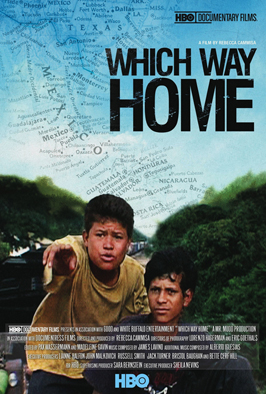
    The eye-opening documentary Which Way Home follows a number of these unaccompanied child migrants on their journey through Mexico as they try to reach the United States.

    There’s Olga and Freddy, nine-year old Hondurans. Olga is trying to reach her mother and sisters in Minnesota. Freddy wants to be reunited with his father.

    There’s fourteen-year old Jairo who was forced to live on the streets of Chiapas after his mother was killed. He wants an education but is too poor. So he thinks if he gets to Laredo, Texas, he can get a job, earn money, and come back to hire a tutor.

    There’s thirteen-year old Fito from Honduras whose mother abandoned him when he was very young. He lives with his impoverished grandmother, who has a job making cigars. He’s traveling to the U.S. to look for work and hopes to be adopted.

    Then there’s the thirteen-year old Eloy and his 16-year old cousin Rosario whose bodies were found in the desert.

    This film doesn’t propose any solutions or argue for or against immigration. It simply documents what’s happening. Anyone who has any interest at all in the issue will find this movie both fascinating and troubling. In fact, I think the whole family could watch this. For those who are concerned about language, there is one brief exchange where the one of the boys uses some high-grade curses. However, I wouldn’t let that hinder you. You can discuss it or easily fast forward those few seconds. These are just people. Don’t let a few foibles prevent you from learning about their plight.

    One of the best movies of 2010

    Maybe you’re one of the few, like me, who didn’t see Tangled when it first came out. If so, you’re in for a treat. This is a great story about a girl whose mother, the queen, almost died giving birth to her. The magic used to save the mother and girl transferred into the child’s hair and gives her power to heal. Or to restore beauty and youth.

    And that’s too tempting for some. The princess is kidnapped by a woman who wants to maintain her youth. But this villainess doesn’t play the role of the bad guy. No, she plays the role of the loving mother, locking Rapunzel away in a tower to “protect her,” duping her into thinking she really is her mother and really cares. 

    It works for a number of years until Flynn Rider, a wanted thief running from the authorities, stumbles across Rapunzel’s tower. When he tries to take refuge, Rapunzel freaks, and then sees that Flynn just might be her ticket out. Of course, when the villainess returns and finds Rapunzel gone, she’s vows to lock Rapunzel up where nobody can find her. Unfortunately, poor Rapunzel has no clue what her “mother” really is—it’s hard to fight a villainess when you think she’s on your side.

    The animation is marvelous. The characters are fun. And the villainess is unlike any we’ve seen in a Disney film before. I recommend this film highly. I know I’ll be seeing it again. 

    Soup Heaven

    There’s nothing like an excellent soup and sandwich. And since my wife and a friend both raved about Cafe Zupas, I decided to give it a try.

    My first problem when I stood looking at the menu was that there were ten soups listed and they all sounded wonderful. There was Tomato Basil with Orzo Pasta, New England Clam Chowder, Thai Lobster Curry, Wild Mushroom Bisque, Yucatan Chicken Tortilla and five others. My second problem was that there were just as many delicious-sounding sandwiches to choose from, all grilled “panini style” on Italian Ciabatta bread. Should I get the Honey Bacon Club, Hawaiian Barbeque Chicken, Milano (ham, tomatoes, and pesto), or one of four others? And then there was a salad menu as well.

    Oye!

    I ended up ordering the turkey cranberry sandwich and a bowl of both the Thai Lobster Curry and the Tuscan White Bean and Vegetable. The staff was friendly. They served up my food quickly, and I sat down at a booth hoping I hadn’t just wasted my money.

    That fear was resolved with the first two sips. It was heaven. I oohed and aahed all the way through the meal until the last bite of the chocolate-dipped strawberry that comes with each sandwich. I cannot wait to go back and try another sandwich and bowl of soup. And the cool thing is that it appears even when I’ve tried all the menu items, I won’t run out of new options because Cafe Zupas rotates new soups into the menu. For example, right now they’re featuring a French Onion soup in addition to their normal menu items and have a Beef and Mushroom Goulash and Irish Stew “coming soon.”

    Cafe Zupas is a new chain that started in Utah. It currently has a total of nine locations from Layton to Provo. Next time you want to eat out, find the location nearest you at their website www.zupas.com and prepare yourself for a gustatory delight.