The Meth Epidemic, The Marines

The Meth Epidemic
Mamphetamine is the most addictive illegal drug in America. Unlike marijuana, cocaine, or heroin, all of which are synthesized from easy-to-obtain plant material (cannabis, cocoa leaf, opium poppy), meth requires ephedrine or pseudoephedrine, which are very complex to make and require a lot of know-how and high-tech processing. The only folks who have that ability are legitimate chemical factories. In fact, there are less than a dozen such factories around the world that produce these chemicals. Which means it should be easy to stop illegal use at the source.

“Should” is the key word there.

When you’re trying to halt drug trafficking, you can work two sides. There’s the demand side and the supply side.

When you work on the demand side, you try to affect people’s desire and use.  For example, in the 1960’s the Federal Trade Commission, along with other government agencies and private groups, began a campaign against tobacco. Using government policy, public awareness, and education over the last forty years, these groups have significantly altered demand for tobacco in the United States. In 1963 more than half the nation smoked. 4,345 cigarettes were consumed per capita. But as these groups worked to affect demand, those numbers dropped steadily until by 2006 only 1,619 cigarettes were consumed per capita.

That’s astounding, folks. A whole culture was changed.

When you work on the supply side, you try to reduce the production and distribution of drugs. This can sometimes be almost impossible to do. For example, almost anyone can grow marijuana. And it takes very little knowledge to harvest and package the parts that are used.  Same with alcohol–home brewing has been practiced for ages. In both examples, the ingredients are easy to obtain and the processing is relatively simple and easy to hide.

But there are some drugs that are very difficult to produce. The key ingredient for barbiturates is one. In the 1950’s and 1960’s barbiturate abuse was increasing. But the government instituted some regulations on the legitimate businesses that produced these ingredients, and it reduced the amount available on the streets until we very seldom hear of barbiturates being used these days.

So where does meth fit in? Well, as I stated above, there are less than a dozen factories that create the key ingredients. Meth is a perfect candidate for supply side intervention. Unfortunately, regulation isn’t as easy as it may seem.

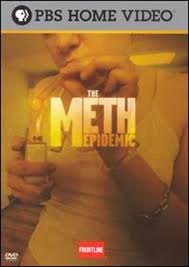
PBS’s Frontline recently aired “The Meth Epidemic” which explains the history of meth in the United States and the battle raging over its cure. If you’ve ever wondered about what meth is and how it affects our nation, you’ll want to watch this. I think you’ll find it eye-opening and well worth your time. Watch it for free here: http://video.pbs.org/video/1933783731.  

The Marines

The US Marine Corps is a fascinating organization with special capabilities. With the exception of the Coast Guard, they are the smallest of the United States’ armed forces, although they’re still bigger than the entire British army. Part of what makes the Marines unique is that they have the ability to rapidly deploy an independent task force (infantry, air support, ships) to almost anywhere in the world within days. Because of this, they are usually the first boots on the ground in any engagement. They pave the way and the Army and other branches follow to provide overwhelming and continuous force.

But the differences include more than their mission. The Marine Corps emphasizes authority and responsibility downward to a greater degree than the other military services. It members are, on average, younger. And its creed “Every Marine’s a Rifleman” has special implications for its commanders and troops.

In order to do some research for a novel I’m writing, I’ve been watching a lot of documentaries about special operations forces and the Marines. One of the best introductions to the Marines I’ve come across is the 2007 PBS documentary called The Marines. It examines what it takes to become a Marine and what it truly means to be one, outlining the rigorous training process that each recruit must endure to become a commissioned officer. I found it fascinating.

If you have ever been curious what makes the Marines different from the other branches of the military and what it takes to become one, you’ll want to watch this film. I couldn’t find it on the PBS site, but you can find it split into 10 parts at YouTube.com. Just go to site and search for “pbs the marines”.

Share

Similar Posts

  • |

    Since when did young adult fiction become the cure for cancer?

    Meghan Cox Gurdon wrote an opinion piece for the Wall Stree Journal called “Darkness Too Visible” in which she complained that it was hard to find young adult fiction these days that isn’t filled with coarse, dark material–profanity, pederasty, mutilation, etc. She claims that “contemporary fiction for teens is rife with explicit abuse, violence and depravity” and wonders “why is this considered a good idea?” She concludes by saying:

    So it may be that the book industry’s ever-more-appalling offerings for adolescent readers spring from a desperate desire to keep books relevant for the young. Still, everyone does not share the same objectives. The book business exists to sell books; parents exist to rear children, and oughtn’t be daunted by cries of censorship. No family is obliged to acquiesce when publishers use the vehicle of fundamental free-expression principles to try to bulldoze coarseness or misery into their children’s lives.

    This, of course, sent hordes of folks into a frenzy of posts sneering at Gurdon’s so-called prissy sensibilities, decrying censorship, and extolling the virtues of young adult literature and dark material in particular. For example, Mary Elizabeth Williams in a Salon piece called “Has young adult fiction become too dark?” rolls her eyes, then deigns to wade into what’s she thinks is an obviously juvenile argument to apparently show Gourdon how “stupid” she really is. Williams concludes:

    One of the terrific side effects of an obviously click-baiting piece of editorial twaddle like Gurdon’s is that it reminds people how many fellow passionate readers there are in the world. That incendiary WSJ piece promptly sparked a tear-jerkingly beautiful twitter #YA saves trend full of heartfelt reactions and links to outstandingly reasoned, article responses from well-read adults and teens on the value within so much of YA literature and its downright lifesaving effects.

    Williams suggests fiction doesn’t have the power to lead people into bad behaviors. After all, she assures us, “an entire generation of women managed to devour the ‘Flowers in the Attic’ series without having sex with their brothers.” No, according to Williams (and all the #YAsaves folks), YA fiction only saves lives. And she provides a link to prove it.

    But Williams misses the mark. Completely. This isn’t about whether fiction has power to influence us in good and bad ways. There’s a huge body of research on media effects which clearly proves fiction’s power for both. Nor is it about the theraputic uses of dark material.

    The heart of the matter revolves around a rather mundane thing–customer service and marketing.

    Gurdon and those parents she describes in her article want a certain type of entertainment. For years, YA fiction has provided that type of entertainment. But things have changed, and the YA label isn’t reliable to them any more. It’s like someone who has purchased steel cut oatmeal for years is now suddenly bringing the bags home to find them filled with sardines or, horrors, Twinkies.

    We can argue the merits of sardines and Twinkies. And a hundred other foods. We can argue the merits of certain types of stories for certain types of readers. And my metaphor above–maybe you think using Twinkies is unfair; maybe you would have wanted me to use something like Triscuts or Wheat Thins. But that’s all beside the point.

    The real problem here is that the publishers have ignored a significant segment of the market who want to buy books but can’t find the types they’re interested in. Either the covers and blurb material don’t help them find what they’re looking for, sometimes misleading them, or the publishers have simply made the mistake of not thinking about this segment of the reading market.

    The fix is easy. (1) Produce more books for these folks. (2) Label your books in a way that makes it easy for the consumer to find what they want. They’re not asking for censorship. They’re asking for a nutrition label that lets them know what they’re getting. Publishers can do what the movie and gaming industries have done with rating systems that prominently display on the cover. Or use some other method. This isn’t a moral issue, it’s simply a matter of helping the right customers find your good or service. It’s a matter of good marketing and branding.

    And I would think, with the upheavals in the book industry today, that publishers and booksellers would want to do whatever they could to boost sales. Surely it doesn’t help to turn customers away because your package is confusing them.

    In the meantime, the battle will rage and this simple practical core of the issue will be lost in the fires and clouds of smoke produced by the arguments extolling and excoriating the virtues and vices of fiction.

    Share
  • Author Janci Patterson Goes Indie

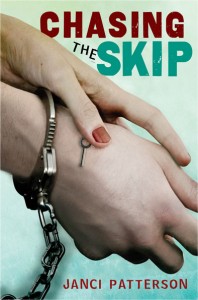
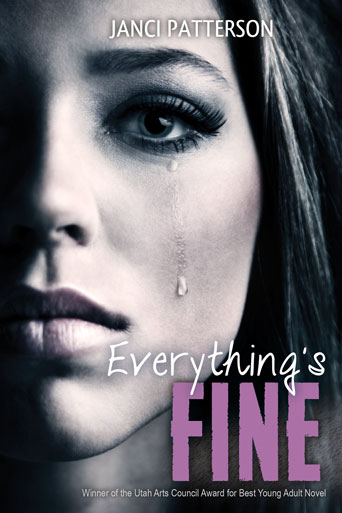
    Everythings Fine by Janci PattersonI met Janci Patterson a few years ago when she was shopping her book Chasing the Skip to NY publishers. It’s about a girl named Ricki. Her mother flakes and runs off,  and so Ricki goes to live with her estranged Dad who happens to be a bounty hunter. I was hooked right there. But it gets better. Ricki gets to ride along and help and, wouldn’t you know it, develops a crush on a guy the dad is chasing.

    I loved the premise. Traditional publisher Henry Holt loved it too and thought Janci had done a great job telling the tale, so they made her an offer that Janci accepted. It was published in 2012.

    Sounds like a match made in heaven, right?

    Well, Janci just released another book called Everything’s Fine, a mystery about a girl named Kira. Her best friend commits suicide immediately after her first date with her longtime crush, Bradley Johansen. Kira’s devastated and wondering why. She’s sure the answers are in her friend’s journal. As she searches for it she quickly learns she’s not the only one who wants that journal. Someone else is trying to keep the secrets the journal contains hidden.

    Another great premise. And this book won the Utah Art’s Council award for Best Young Adult Novel. Clearly, Janci can tell a story. But Janci didn’t take this one to NY.

    She’s publishing it as an indie.

    Here are her own words explaining what helped convince her going indie was doable.

    A Paradigm Shift

    For years I refused to think about self-publishing. This wasn’t because of the stigma, honestly, but because of all the work I watched my self-publisher friends put into creating, shipping, and marketing their books. I couldn’t do that! I told myself. I wanted to be a writer, not a publisher.

    When it became obvious to me that self-publishing was the next logical step in my career, I was terrified. Having published with a big publisher, I wasn’t willing to skip steps in the publishing process–it was my editor’s keen eye and the rounds of revision we did together that transformed CHASING THE SKIP from a messy dJanci Patterson - Chasing-the-Skip-webraft into a product I was proud of. I wanted to be just as proud of my independent work, and for that, I knew I’d need help.
    I knew just enough about book and cover design to know that I couldn’t slap them together on my own and expect them to be instantly good. But when I did the math on what I’d have to pay an editor and a book designer and a cover designer to put out even one book (let alone the several I have waiting), I knew that I couldn’t afford it. Self-publishing felt even more impossible than selling books in New York–I knew how I wanted to do it, but I didn’t have the resources.

    So it was with this trapped feeling that I attended the Precision Editing Group’s workshop on indie publishing last fall. The workshop was packed with great information, but the thing that impacted me the most was a presentation by Heather Horrocks. She was talking about the importance of editors, and as a side comment, said something to the effect of, “yes, all my books have now been edited, but when I first got started, I didn’t have an editor because I couldn’t afford it.”

    It’s not my intention to suggest that editing isn’t important, because it is. But that one sentence blew my mind. I’d been working with the New York publishing paradigm for fourteen years. And in that world, there are very few ways to be published. You query agents. You send books to publishers. You do your very best to follow all of the guidelines and to do everything perfectly right, hoping to minimize the barriers that stand between you and success as a writer.

    But this self-publishing thing was a whole different game. I sat in the audience at the workshop, stunned. That was the moment when I finally realized this truth: there are as many ways to publish as there are people who are publishing. There is no one right way to do it. There are so many things you can do that can help you succeed. It’s better to do something than nothing, because nothing is never the road to success. Even if that means you’re doing it wrong.

    So when I got home, I made a list of my assets. Forget about what I lacked. Forget about what I didn’t know. What did I know how to do? What resources did I have access to? And, most importantly, who could I ask for help?

    If you’re looking to self-publish, I’d suggest that you do the same. Because here’s the thing–your list of assets is going to be uniquely yours. You have a unique set of skills; you know a unique network of people. You don’t need to worry about who and what you don’t know. Instead, focus on what you do have, what you can do. If you’ve been writing for years, you probably have some book-related skills. If you’re part of a community of writers to which you regularly contribute, you probably have some friends who you’ve helped in the past, or can help in the present, who would be motivated to help you out in return. Start from there, and you can pick up the rest as you go along.

    In the end, I did have my book edited (repeatedly!) and my cover designed by a graphic designer. I was able to do that because I had friends who believe in me who were willing to enter into financial agreements that didn’t involve them getting paid in full upfront. I wouldn’t have thought to work out those arrangements when I was focused on doing things right–it was only when I opened my vision to look at what was possible that I began to envision what shape my own unique path might take.

    Each path to publication is different, not only for each writer, but also for each book. With all the options available to us, it’s not enough to focus on our feet, doing only the next “right” step. Opportunity is everywhere. Focus on what you have, and even if you don’t win the jackpot on the first try, at least you’ll be playing the game.


    Share
  • The Last Apprentice, Path Finder

    The Last Apprentice

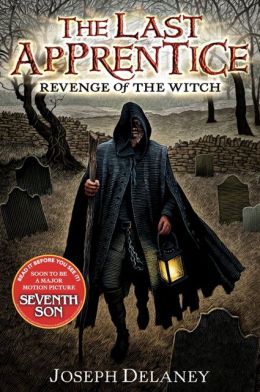
    Revenge of the Witch by Joseph DelaneyMy wife is always telling me I need to write a young adult or middle grade adventure series. One that’s directed at boys.

    Not because we have something against girls. We have four daughters, and my wife is adamantly pro-woman. But she finds very few books for her sixth-, seventh-, and eighth- grade male readers. I haven’t done a count, but I’m pretty sure that most YA is targeted at females. And this isn’t just me. I remember visiting a Barnes & Noble in Arizona with my voracious-reader nieces a few years ago and riding the escalator to the YA section. They told me that they called it the “girl-book section” because they figured that basically 90% of it was indeed for girls.

    Anyway, I think writing such an adventure would be a blast. I can already think of a number of near future or fantasy settings that would rock. But the time constraints I have right now just won’t allow me to start another series. Nevertheless, we sat down the other day and listed out all of the authors and books we knew that had a more male focus.

    For about the twentieth time she told me about Joseph Delaney’s The Last Apprentice series. It’s about a boy who apprenticed to the county Spook who is someone that takes care of witches, ghasts, ghosts, etc.  Her students love the stories. She loves them. She has bought the first ten volumes for her classroom. Why the heck wasn’t I reading them?

    Well, for starters, I just don’t like books about witches. And the first book in the series is called Revenge of the Witch. I don’t know what it is. Witches aren’t as bad a zombies–I am SO bored with zombies; I just don’t get the appeal. But even if they’re better than creatures that make no sense at all to me, I just don’t like spooky horror all that much. I loved to be scared, startled, and filled with dread. But not with witches.

    Witches? The gals with pointy hats?

    No.

    But this was, as I said, like the twentieth time she’d brought it up. We were driving over to Logan (that’s the big city for us), and stopped at the library, and we went over to the YA section. Unfortunately, they didn’t have volume one. But I did see many other volumes on the shelf and figured I needed to see what the competition was doing. So I perused. A few night later we went to her classroom, and there was volume one. The one about the witch.

    I sighed and opened it and began to read. And when I finished chapter one, I realized I kind of liked it. It was like the old Life cereal commercials—hey, Mikey!—and I wanted to read more. And so I took it home, read the whole book, and was delighted with the story. I liked it so much I promptly borrowed volume two, Curse of the Bane, from my wife’s classroom and read it as well. And I liked that one so much I checked out the third.

    The story is about Thomas Ward, the aforementioned apprentice. In book one, he is forced to face down some witches. But it’s Alice, the girl with pointy shoes, who made the story for me. Adding her as a character transformed it from a run-of-the-mill booger man story, into something special. No, I’m not going to give you a peek at the plot. Just know that this is the book where Thomas starts his apprentice, has to deal with that new life (and I thought Delaney captured that so well), and makes some apprentice mistakes that he then has to fix.

    In book two, we get to meet Alice and Thomas again, but this time they have to face down a different creature. And again, while the adventure is all cool, it’s the interactions with Alice that put it over the top.

    Having praised the books, I will say that I think Delaney has something against priests and religion in general because he paints it all with a negative broad brush. It’s too bad. Not only is such a view inaccurate, but showing the good and bad could add so many delicious dimensions to the tale. Maybe we’ll see that in later books. But even if we don’t, book two was still a great read.

    I’m looking forward to book three. If you’re in the mood to try something new, something about a young man and young girl that doesn’t revolve around romantic smoldering, something that a guy would like to read, let me recommend you join me in reading the volumes of The Last Apprentice.

    Pathfinder

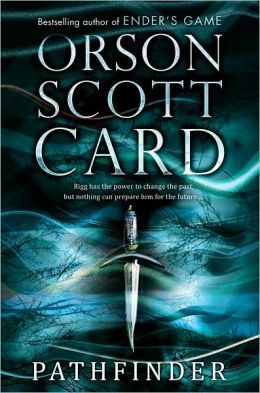
    Pathfinder by Orson Scott CardI was once in a discussion about religion with a friend who happens to be an atheist and fellow science fiction and fantasy writer. He’s a great guy. The blog posts he wrote about the passing of the woman he loved who was lost to cancer were poignant and wonderful–full of beauty. I read them and wanted to be a better man. Still, he and I disagree about God.

    I remember telling him that science fiction is the one genre that makes God more plausible than any other. At least, it makes my view of God more plausible.  Now, I do not want to talk religion in this essay. But it’s just hard for science fiction to leave the idea of creation and Adam and Eve alone. Witness the many stories over the years about these very things.

    Heck, even the recent movie Oblivion has references—are not Jack and Victoria much like Adam and Eve? Just think about it. Their paradise together as a team, the knowledge, the fall. The echoes are simply marvelous.

    Well, I just read another science fiction tale that provided a wonderful opportunity to think about these things. It’s Orson Scott Card’s novel Pathfinder. Now, the story isn’t about God. It’s not a biblical allegory. It’s not dressed-up doctrine. It’s a tale about a boy named Rigg with special abilities on a quest to find his real family and who he is. Along the way we meet some interesting people, especially one character named Loaf who leavened the whole tale. So there’s an interesting adventure and speculations about faster-than-light travel. But one of the chief delights for me was the questions and ideas this story raised in my mind about the creation of our own world—“Garden,” the name of the world, just begged for it.

    For example, a long-time staple of science fiction is the idea of terraforming—changing face of the flora, fauna, atmosphere, and climate of the planet to be hospitable to your species. If you believe in a God that is more a being of advanced technology than one of unknowable fantasy, doesn’t that present a new and interesting way of viewing the creation story? It does for me, and Pathfinder sparked ideas about this.

    The book also led me to think about life. First, Card has these characters called “Expendables.” They’re robots, but not really. They’re artificial intelligence. But not really. The way Card presents the expendables, you don’t think of silicon and steel and gears. You think of biology.

    You think of mosquitoes.

    You think about the fact that if we humans use intelligent machines, surely God must use intelligent machinery. So what kind of intelligent machinery does God employ? (Dude, that idea is just pregnant with stories!)

    Are viruses and bacteria machines? Are mosquitoes and beetles (please, let there be no mosquitoes in heaven)?

    The book prompts me to wonder. It prompts me to look at the life about me on our wonderful world with new eyes. It prompts me to think differently about some of my core definitions. In fact, there are some exchanges between a character and an expendable where they talk about the difference between humans and expendables and the definition of what it means to be human, especially given evolution.

    This is a book about an adventure, but also a book about ideas, which is as it should be. Science fiction is the one genre, more than any other, that marries character and plot with exploration of ideas. If you’re looking for an interesting tale that will make you think about our world differently, give Pathfinder a try.

    Share
  • Audio book is on the way

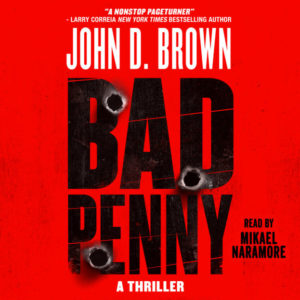
    This last week I listened to the reading of Bad Penny by Mikael Naramore on our trip down and back to Panguitch (and the forest fire from hell) and then later here at the house and was so happy I hooked up with Naramore. He’s done a wonderful job. He nailed the voices of Frank, Sam, Pinto, Carmen, Ed (ye slimy villain), and all the rest and delivered excellent sound. And the process was so easy.

    Right now ACX is doing its quality control on the production. When they clear it, it will be posted for sale on Audible, iTunes, and Amazon.

    I’m very excited to bring Frank to the audio market. I think he and Naramore are going to please a lot of listeners.

    Here’s the final cover for the audio book.


    Share
  • Lone Survivor by Marcus Luttrell

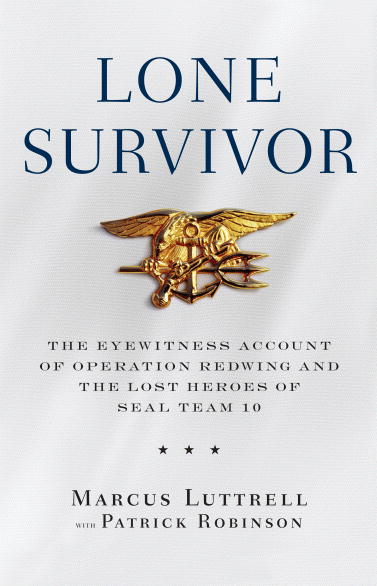
    I’m a sucker for military stories. I wanted to be an ARMY Ranger was I was in my teens. Wanted to go commando. Still regret it to this day that I didn’t. And so when a friend told me about Lone Survivor by Marcus Luttrell with Patrick Robinson, I had to read it.

    In June of 2005 four U.S. Navy SEALs took up a position on a godforsaken mountain in Afghanistan close to the Pakistan border. Their goal was to capture or kill a notorious Taliban/al Qaeda  leader whose small army had been ambushing and killing Marines. The problem was: three goat herders stumbled upon the SEALs not very long after they got into position.

    If the SEALs don’t kill the goat herders, they will almost assuredly alert the Taliban force. SEALs are the best. But four against two hundred doesn’t compute. If they do kill the goat herders, then they’re sure someone will find the bodies. The Taliban will claim US soldiers are killing innocent civilians.  And the US media will pick it up. The SEALs were sure they will end up being tried for murder. It wouldn’t be the first time.

    The SEALs let the goat herders go. Within hours the Taliban show up. Four SEALs. Two hundred plus Taliban armed with rifles and grenade launchers who have the high position on a mountain with plummeting slopes and very little cover.

    Lone Survivor tells the story of Marcus Luttrell, the leader of that SEAL team, his training as a SEAL and then that desperate fight in the mountains. He and the other three SEALs fought ferociously. He was the only one to survive.

    I had to force myself not to read this book in one sitting. Not only do you get a great story, but you also get insights into what makes a SEAL and their system of values. You’ll get to know a man who makes you want to stand up for God and country. And you’ll marvel at the courage of those who fight in our armed services.

    I loved this book. May God bless the men and women who risk life and limb for all the rest of us. For the rest of us, we can see what they face in this excellent first-hand account.

    Share
  • Shadow and Bone

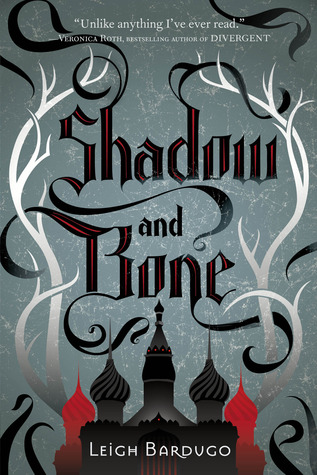
    Last year someone recommended Shadow and Bone by Leigh Bardugo to me. I noted the recommendation and then promptly forgot it because my reading queue is two years long. But this last week my wife brought some books home from the library, and there, sitting on top, was Bardugo’s book.

    I opened it. Page one listed the orders of magic. I was immediately drawn to the names. They were Grisha, “soldiers of the second army, masters of the small science.” They had divisions of corporalki, etheralki, and materialki, who are the order of fabrikators.

    I don’t know what it is, but I love, not steampunk (well, I don’t know if I don’t love steampunk because I really haven’t read any, but I do think dirigibles are vastly overrated), but the mixture of machinists and engineers and magic set in the late 1800’s, the time period when Sherlock Holmes was running about. It’s something I can’t resist.

    And “fabrikators”? Russian? Oh, baby.

    Most epic fantasies are set in some kind of old German or English medieval setting. Nothing wrong with that. We luvs them, Precious. But something different is nice as well. Recently, Peter V. Brett and Saladin Ahmed have given us fantasies with a Middle Eastern flavor. But I haven’t read an epic fantasy with a Russian flair since C. J. Cherryh’s Rusalka series. And here on page one I’ve got magic and machinists and all these Russian sounding terms.

    Awesome.

    I turned the page. The opening paragraph of the prologue pulled me right in, and I was off and running, soaking up this little snippet about an orphaned boy and girl who, fast-forward in the next chapter, are now in the army. Not the second army that’s made up of Grisha, but the first army that’s made up of soldiers with rifles who have to slog through mud and march while a handful of Grisha of the second army roll by in a carriage.

    Alina, the girl who is now working with the army’s cartographers, and Mal, who is a tracker, are heading with the troops toward the Unsea, the Shadow Fold, this darkness that cuts the country in two and is full of these horrors called volcra. They enter the Shadow Fold, are attacked, and Alina unconsciously calls forth a powerful magic.

    Of course, she can’t reproduce it, but it’s a magic that might be used to banish the Fold forever. The rest of the book is about Alina avoiding assassination, trying to learn how to summon her magic, and being pulled into a surprising and terrible plot. It’s also about her and Mal. Yes, there’s a love story here, but this is NOT a romance where everything focuses on her feelings and his feelings and touches and sighs and unbounded quivering.

    This is an epic fantasy, remember? Those books that delight readers with dark lords and magic? Well, there’s plenty of that here, plus secrets and a number of delicious plot twists. There are escapes and chases and battles. And, yes, that love story that isn’t overblown but feels very real indeed.

    Epic fantasies come in lots of different sizes. This isn’t one of those huge doorstop epics with twenty sprawling plotlines. This focuses on one point of view and one storyline, which means you are able to enter the story very quickly, much like the epics by Hambly and McKinley and so many others.

    It’s a terrific read. Give it a go. If you enjoyed Vin in Brandon Sanderson’s Mistborn and Cinna and Katniss in Hunger Games, then I think you’re going to love Shadow and Bone. I’m certainly looking forward to the next volume.

    Share

5 Comments

  1. Loved that you mentioned the marines. I was in for almost three years and while it felt just like any other job when I was in; Now I look back and have some great memories. I was able to go to Europe and Tunisia while I was on deployment and also did a 12 day peace-keeping mission in Kosovo. When you finish your thriller that your doing the research for, I just might have to pick that one up to.

  2. Hey, I’m going to need some folks to vet it for accuracy. Just saying 😉 The Marines rock. And thanks for your service.

  3. Thanks and i’ll keep that in mind. I don’t think i’ve read a thriller in years since Ludlum’s The Tristan Betrayal about 4-5 years ago. I’m going to have to check out those clips on youtube one of these days.

  4. Anthony, try THE GOOD GUY by Dean Koontz. I think you’ll like it a lot.

  5. Ok I’ll check it out. I loved The Taking and finished Breathless, which I thought was interesting.

Comments are closed.