Gandhi & Waiting for Superman

Enthralling History
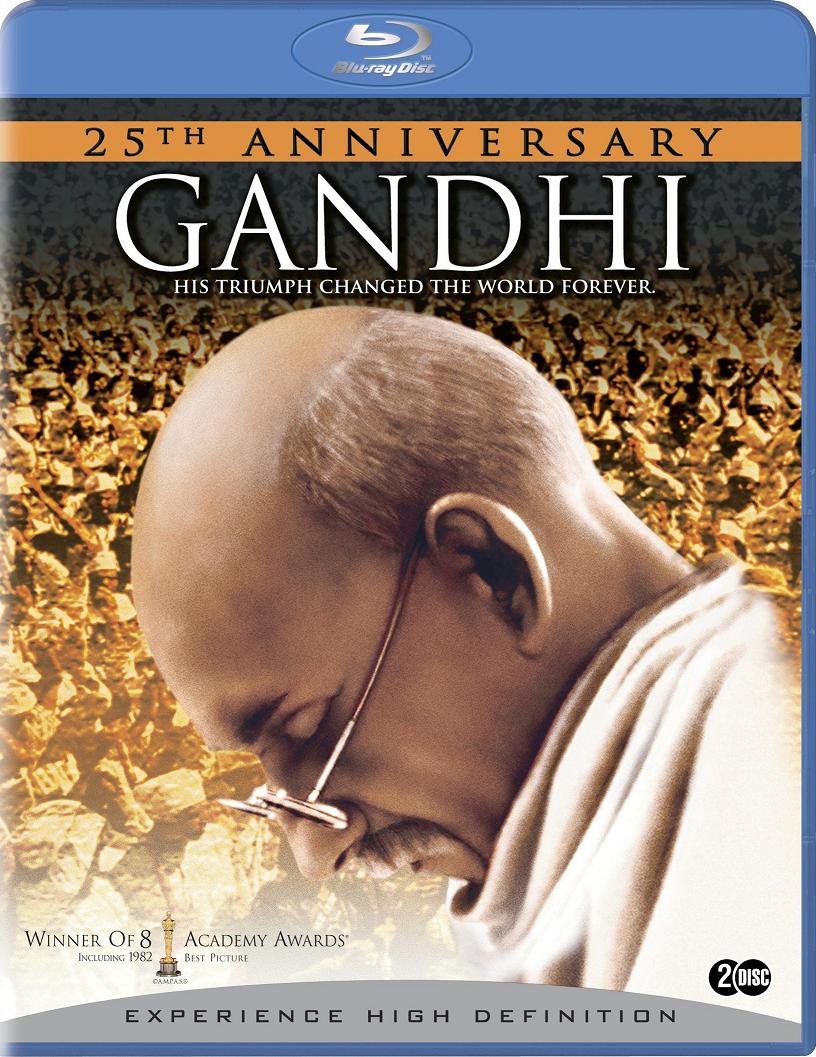
The miracle of Netflix means that no movie or television show becomes unavailable. And there are so many produced over the last fifty years that are so very good. I recently re-watched the 1982 Gandhi with my family and have to say it is one of those fabulous movies that’s amazing every time I watch it. Not once did the production feel dated. And even though I’d already seen it, I found myself enthralled with the events and the character played so well by Ben Kingsley. No wonder it won eight Academy Awards.

The movie portrays the last 50 years of Mahatma Gandhi’s life. It starts in 1893, when Gandhi, educated in the UK, is thrown off a South African train for being an Indian and traveling in a first class compartment. Gandhi decides to start a non-violent protest campaign for the rights of all Indians in South Africa. Quite an undertaking in those years. He’s arrested and finds himself in a number of dicey moments, but ultimately brings change.

Gandhi is then invited back to India, where he is considered a national hero. Leaders there urge him to take up the fight for India’s independence from the British Empire. Gandhi agrees and mounts a non-violent campaign of unprecedented scale. Nothing of this magnitude has ever happened in the recorded history of the world. Which is why it’s a rough road all the way to the end.

There’s suspense and humor and heartbreak in this movie. But it goes far beyond entertainment. This movie will move you. It has power to change. This movie is what history should be. If you haven’t seen Gandhi, or haven’t seen it in a while, let me recommend you get it this week and sit down with friends or family to enjoy a wonderful experience.

Education and Teachers Unions
I find it interesting that teachers in Utah, one of the most conservative states in the union, send almost three million dollars each year to the National Education Association. That’s the $165 in NEA dues for each of the roughly 18,000 union members in Utah. This is interesting because the NEA, the largest labor union in the United States, is one of the biggest supporters of the Democratic party.

For example, the NEA spends roughly 85-90% of its direct candidate donations on Democrats. The NEA is quick to point out that those direct candidate donations do not come out of the three million Utah teachers send to them, but from additional donations to one of their political action committees. It’s illegal, in fact, to contribute directly to candidates with money received from union dues. However, there are a lot of other ways to support candidates and causes in addition to direct donations. 

Mike Antonucci, a teacher’s union observer, explains just how that works in his article “How Much Does the NEA Spend on Politics”. The upshot is that the NEA can spend as much as they want on politics with their dues. And the lion’s share of that spending goes toward liberal causes. ACORN, for example, has been a beneficiary of NEA grants.

Now, I don’t see anything wrong with that. People should be able to donate to whatever cause they think is important. The NEA has just as much right to make their voice heard as anyone else. I just think it’s interesting that so many conservatives have been led to donate their cash to these causes. And it’s not just in Utah. About 60% of NEA members identify themselves as conservative or independent. And yet they donate to these liberal causes via the union. What’s even more ironic is that most of them probably do not personally donate anything close to that to conservative candidates and causes. It’s not like teachers have tons of extra cash.

It’s a neat trick to get conservatives to donate so much money to liberals. And perhaps some teachers feel it’s the price they have to pay for the services they want from the union. I would think it would be better to start another union, but that’s me. However, this is not the only kink teachers unions have introduced into the education system.

I’m not going to argue that teachers unions are evil. These unions arose in a time when female teachers were heavily discriminated against. They do some good things. But mixed in with the good is, well, you’ll have decide for yourself if it smells.

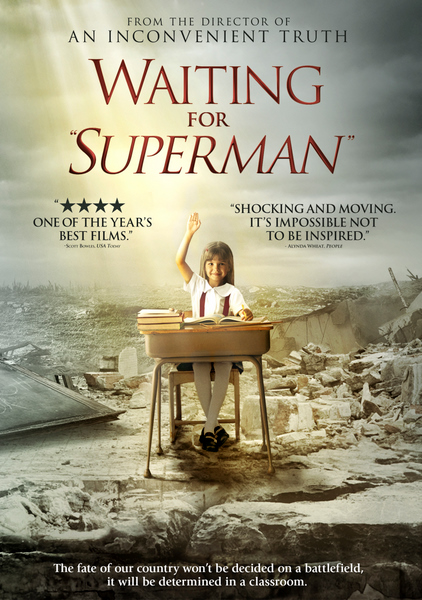
A great place to begin is with the documentary Waiting for Superman. You should know this movie came out of the gate with a huge strike against it in my mind–it’s produced by Davis Guggenheim, the same guy who did An Inconvenient Truth. Good grief, that’s all I wanted was another two hours of Chicken Little running around saying “sky is falling, the sky is falling!”

But I didn’t find any of that in the film. For example, the film doesn’t say all American schools are awful. It doesn’t say teachers are terrible. Contrary to what the movie’s critics claim, including the NEA and its many state and local affiliates, the film doesn’t suggest charter schools or standardized testing are the silver bullet answers to our issues. I simply didn’t encounter the sensational propaganda others claimed would be there.

No. What the film does is examine some of the issues in our current system, which put so many children at a disadvantage, and the role the teacher unions play. It does not, as some critics claim, go on to suggest any solutions. It presents a problem, experienced by real parents and children right now, then poses a question: what can be done?

I found it eye-opening and thought-provoking. I think it’s a must-see. If you have children or grandchildren in school, if you’re one of our many fine teachers or school administrators, you’ll want to watch this movie and then ask yourself that same question. What can be done? What works? What’s best for the children? And does the current way our unions operate work in any way against those interests? For those who elect not to go into immediate union-attack or union-defense mode, I think this film will introduce some valuable points to the discussion about education.

Share

Similar Posts

  • If you want to work with publishers, you need this. Right now.

    thenineworstprovisionsinyourpublishingcontract-by-vandagriffWriters who want to deal with publishers need this book: The Nine Worse Provisions in Your Publishing Contract by David P. Vandagriff. And it’s currently free!

    Vandagriff is a lawyer whose business involves high-stakes intellectual property litigation. He has negotiated major contracts with a wide range of opposing parties, some of which include Apple, Hewlett-Packard, Microsoft, Intel, Morgan Stanley, Merrill Lynch, Fidelity Investments, AOL, Disney, Hallmark, plus other large publishers, agents and etailers.

    He’s also publishes The Passive Voice, a news blog on the publishing business that includes many posts from his lawyer perspective.

    Don’t fall for contract terms that turn you into a slave.

    Share
  • Author Interview: David Farland

    David Farland has been a big influence on me. It was his workshop back in the 90’s that actually made me think I could write professionally and led directly to my first publication as a Writers of the Future winner. Later Dave gave me comments on my first novel which helped me write a second, much better one that attracted Tor Books. And it was Dave who showed me the ropes on my first ever author tour.

    But long before all that, Dave was a writer whose work I loved. I read ON MY WAY TO PARADISE when it first came out and enjoyed the heck out of it. SERPENT CATCH and PATH OF THE HERO were next. I gobbeled them up too. Then came the THE GOLDEN QUEEN. By the way, SERPENT CATCH and THE GOLDEN QUEEN are two of my favorite novels. Now, all of those were written under Dave’s given name–Dave Wolverton. When he switched over to fantasy he used the Farland pseudonym.  His first Farland book was RUNELORDS. Folks, RUNELORDS is, in my opinion, one of the top 10 epic fantasies ever written. Ever.

    Of course, Dave has written many other novels and was involved with some Hollywood producers. Now he’s doing something new. He’s started his own publishing company–East India Press–and is releasing the first of his enhanced books through it.  Enhanced meaning far more than a book in print or electronic form–there’s also a soundtrack and art. NIGHTINGALE is that book. I asked him to share with my readers a bit more about it. Here’s his reply.

    *

    JOHN:  Tell us about how you came up with the idea for Nightingale?

    DAVE: Years ago, in the late 1980s or early 1990s, I read a book by a doctor who had worked for the CIA, experimenting with drugs that would erase both long- and short-term memories.  It was fascinating work, and he eventually won the Nobel Prize for it.  So I became interested in memory transfer.

    Later on, one Christmas, I got to thinking about the three “Wise Men” from the bible.  Normally, a “wise man” is called a wizard.  A “maji” is called a magician.  Why was it that the writers of the bible were using double-speak when discussing these guys?  Weren’t they astrologers?  Doesn’t the Old Testament condemn these folks to death?

    So I went back to the Hebrew and found out that indeed these three gentlemen were in the same class of magicians that the Old Testament condemned to death, the m’khashepah—which originally referred to a class of magicians that hung around royal courts.  Of them the bible says, “Thou shalt not suffer a m’khashepah to live.”

    So the thought occurred to me, “What if they weren’t just coming to give Jesus gifts?  What if they really had come to be . . . advisors.  What if they wanted to give him wisdom?”

    That started a whole train of thought dealing with memory transfer—transfer of memories, the possibility of training reflexes, transfer of memories on a cellular level, and so on—which led to the creation of my magic system. 

    The questions arose, what would people do with such power? 

    And of course from that a novel was born.

    Nightingale tells the story of a young man named Bron Jones, who is abandoned at birth.  Raised in foster care, he’s shuffled from home to home.  At age 16, he’s kind of the ultimate loner, until he’s sent to a new foster home and meets Olivia, a marvelous teacher, who recognizes that Bron is something special, something that her people call a “Nightingale,” a creature that is not quite human. 

    Suddenly epic forces combine to claim Bron, and he must fight to keep from getting ripped away from the only home, family, and girlfriend that he has ever known.  He must risk his life to learn the answers to the mysteries of his birth: “What am I?  Where did I come from?  Who am I?”

    This is a big project, an enhanced novel with illustrations and animations from half a dozen talented illustrators.  It has a sound track by the head of the National Composer’s Guild, James Guymon, with a dozen professional musicians and vocalists.  We’re releasing the novel in several formats, as an enhanced novel, a normal e-book, an audiobook, and as a hardcover.

    But we did one last cool thing.  The enhanced book was designed for the iPad, though you will also be able to read it on just about any other pad or smartphone.  But we had our programmers create a web app so that you can enjoy the book on your computer—read a few chapters, take it for a test drive, or simply buy it for reading online.  You’re free to go check out the results at www.nightingalenovel.com.  If you like it, remember to “Like” us on Facebook.  Better yet, re-post our site info and tell your friends on Facebook.

    Oh, and while you’re there, check out our short-story contest, where you can win $1000.

    *

    John sez: I’m very excited to see where this goes. I’ve loved Dave’s stories for a long time. And the premise of this book sounds great. Samples are available at: www.nightingalenovel.com

    Share
  • |

    Slush I Read by Jim C. Hines

    Laughs are lovely. I just came across this wonderful parody by novelist Jim C. Hines which will give you a few for free. Enjoy!

    Slush I Read
    by Jim C. Hines

    (Apologies to Seuss)

    I read slush.
    Slush I read.

    That slush I read.
    That slush I read!
    I do not like that slush I read.

    Do you like fanfic with vamps?

    I do not like them Mary Sue.
    Why do these vamps all worship you?

    Here’s a tale from D & D!

    I do not want your D & D.
    I do not like your elf PC.
    I can not stand your purple prose.
    I want to punch you in the nose!

    Would you like a hot sex scene?
    I wrote it for my online ‘zine!

    Go to Hines’ site and read the rest right now

    Share
  • Toy Story 3, How to Train Your Dragon, Rumbi Island Grill

    Toy Story 3

    It’s interesting that two of the most enjoyable films this year are both animated. The first is Toy Story 3. We all know how awful sequels can be, and, in fact, I didn’t like Toy Story 2 all that much. But Pixar defied the sequel slump with this one.

    Andy has grown up and is going to college. From a toy’s point of view, that’s tantamount to death because Andy has to clean out his room, and what is he going to do with all that junk anyway? The last few remaining toys barely miss the garbage truck and get sent, by accident, to the local day care instead. Sounds great for a toy, right? They’ll get played with every day forever. But things are not as they seem at the day care, and our crew of toys is put on the fast track to an early death. Will they be able to escape when the other toys there are ruled mob-style by a big pink teddy bear that smells of strawberries?

    I laughed and cried and cheered in this movie. There are hilarious scenes featuring Barbie and a Ken who’s gone over to the dark side. More gut busters with Buzz Lightyear when he’s put into Spanish mode and Mr. Potato Head who has powers we never would have suspected.

    But the movie goes beyond toys and action. It’s not just a cartoon. It’s about loyalty and friendship and heroics and love and family. Because my oldest will be leaving the nest next year, the final scenes carried extra power for me. But I think they will be effective for almost anyone because Pixar does in this movie what all great art does—it reaches into themes we all share. And in that moment, we identify so strongly with the characters that their situation becomes our own.

    How to Train Your Dragon

    Dreamworks’ How to Train Your Dragon, based on the novel by Cressida Cowell, is the movie I should have seen for my birthday. Instead, we went to the mind-numbing Clash of Titans. I still cringe at some of the massive plot holes in that one, even though Medusa rocked. Which only proves, once again, that cool effects can’t save a bad story. How to Train Your Dragon, on the other hand, delivers cool monsters, but never once did the writers make the mistake of thinking that cool monsters is what the story was about.

    The movie is about a young Viking named Hiccup who wants to be accepted, wants to become one of the burly defenders of his city, like his dad, Stoik the Vast. But Hiccup isn’t brawny. However, he is resourceful. And during a dragon attack, he brings down a mysterious Night Fury dragon with his invention. However, when he finds the dragon, he can’t bring himself to kill it. Instead, Hiccup and the dragon begin a friendship. But will Hiccup be able to save the dragon that everyone wants to kill? Will the Vikings be able to see the truth about the dragons before they’re destroyed? Most importantly, will Stoik be able to accept his son?

    I enjoyed the superb animation in this story as well as the dragons. But it was the characters and humor that made this movie so good. There’s Stoik who just can’t relate to his son, but tries to bond with a very interesting use of his dead wife’s brassier, Hiccup, the son, with his dry wit, and Gobber, a peg-leg family friend who has some of the best lines in the movie.

    Go see this show. You’ll laugh, and then you’ll wish you had a dragon of your own.

    Rumbi Island Grill

    The Rumbi Island Grill is a restaurant chain that started in Salt Lake City in 2000. They serve fast, casual tropical food at incredibly good prices. My favorite is their rice bowl. It comes with your choice of sauce, rice, and meat with sautéed vegetables. In the Netherlands I learned to love Indonesian food and the spicy-sweet peanut sauce that often accompanied it, which is why I can’t get enough of the Bali Island bowl with brown rice and shrimp. You might find you love the sauce so much you ask for two servings to pour over your bowl (oh, and add a dash of the hot sauce). The food’s great, but they’ve paid attention to the Hawaiian atmosphere as well. So even though it’s fast food (you order and they bring it out to you), you feel like you’re sitting in a casual dining restaurant.

    I always look for a Rumbi when I travel down to Salt Lake City or Provo. Now I don’t have to go so far–a restaurant has opened up in Logan right across from the Wal-Mart on the south end of town! I took Nellie there recently. The staff was friendly and the food was delicious–just what I’d come to expect.

    Now all we need is a Cheesecake Factory!

    Share
  • |

    JB Speculates: eBooks, Book Contracts, Agents, and Libraries

    I’ve looked in the crystal ball I hide under my desk and caught a glimpse of what ebooks will change in the next few years. Specifically I saw what will happen to:

    • Book Contracts
    • Literary Agents
    • eBook Aggregators and Libraries

    After showing me the vision, the ball thanked me for shopping at Walmart. Weird.

    PRINT ONLY CONTRACTS

    The only reason to have a print publisher is to get distribution you cannot obtain on your own, or to get it more cheaply than it would cost you if you tried to get it on your own. That’s it. Now, it’s true publishers have excellent art departments and story editors. But you can contract out cover art, copy editing, formatting, and even story editing yourself.

    Distribution is the main thing publishers offer that you can’t get anywhere else.

    BTW, when I’m talking about distribution, I’m talking mostly about getting the books out to places people can see and purchase them. For example, publishers can get your book into hundreds or thousands of books stores all at the same time–Barnes & Noble, Hastings, Walmart, Costco, indie book stores, airport book stores, grocery stores, drug stores, etc. Publishers can get you display in those stores so consumers see your book. One form of that are the racks and new book displays. Another is one that Scholastic does so well, i.e. displaying and selling titles in tens of thousands of classrooms with its book catalogs. A single author just can’t do that. 

    It’s also true publishers can convince some platform venues, that would never look at a self-pubbed author, to spotlight your book.  For example, it’s unlikely a self-published author will be able to convince Booklist, Publishers Weekly, and Library Journal, which have huge platform for library book purchasers, to review a book.  But publishers have no problem getting their stuff in there. Likewise, it’s often much easier for publishers to get endorsements from other authors or people with platform than it is for a single author.  Of course, there are so many places that have some kind of platform, that publishers don’t have a lock on them all, e.g. Goodreads and Amazon reader reviews.  But for the sake of simplicity, let’s just look at the distribution end.  

    Because 90% of book sales are still hardcopy, the only way to have HUGE sales numbers, right now, is through a print publisher. I’m talking about the numbers you see in the Publishers Weekly top selling books, where you have to sell at least 100k copies in hard back, 500k copies in mass market, to even make the list.

    Publisher’s lock on this ability will erode. We can see signs of this in the USA Today Top 150 already. I consider this to be the most accurate picture of what truly is selling the most. Here’s why. And ebooks are starting to be the best selling format for a number of books. On that list, they add up sales of a title in all formats and then list the best-selling format. So when you see an (E) at the end of the listing, you know it’s selling more ebooks than any other format. E’s are starting to pop up all over and we’re still in the early adopter stage for ebooks and ereaders.

    So what does this mean?

    If I put on my author business slacks (why does it always have to be hats we change?), I’d be crazy to turn down a publisher that wanted to offer me monster distribution. A bird in the hand is worth two in the bush. You offer me $500k now, I’m taking the money and running all the way to the bank and then the $6.99 Indian all-you-can-eat buffet.

    Of course, I’m not likely to get that kind of an offer. We new writers are more likely to get an offer for, what were Hines’ numbers? $6k – $12k? And for that the publisher will want all our ebook rights and will tie them up for years and years and years. And then they’ll try to give us a fraction of what we could get selling directly. Furthermore, they don’t provide such books the same push to garner platform spotlight. They don’t spend the money to give them the prime display in bookstores. This means the difference between what they bring to the table for us smaller authors and what we can do on our own is much less. And the ebook has narrowed that even further.

    How much further? Well, how many books would you have to sell to make that advance of $6k – $12k? If you’re selling your books for $2.99 for the Kindle, you get about $2.00 a book. That means you’d have to sell 3k-6k copies of an ebook to earn as much as that average advance. 

    Do you think you can sell 3k – 6k copies of an ebook at $2.99?

    Some authors will be able to do this. Some won’t. If you wanted to do that in three years, you’d have to sell about 150-350 books per month. For a more in depth comparison between traditional publishing and self-publshing ebooks, see Dean Smith’s blog on cash flow.  

    Maybe you don’t think you can make those numbers. But maybe you can. The point is that if you think you can, then you can make as much on your own as you can with a publisher. This means there is absolutely no financial reason on earth to take the publisher’s deal. None. Now, if you have non-financial reasons, that’s another thing, but when looking at dollars and cents, it’s fairly clear the publisher’s ability to put you into their distribution channels isn’t worth what it will cost you. Especially since the ebook is forever and may keep selling for years to come AND because the market for ebooks is still in the early adopter phase–it’s only going to grow massively over these next years.

    But this doesn’t mean paper publishing is dead. It’s not. Nor will it be for some time. Just because SOME authors can make as much in the ebook market on their own as they can with a publisher through their distribution channels doesn’t mean all of them can. Furthermore, publishers with distribution have something to offer even those who successfully publish ebooks themselves.

    Let’s say you have an ebook series that starts to sell well for you, 1,000 per month. That’s $2k per month, $24k per year. If a publisher wanted to buy the rights to that from me, they would have to pay me MORE than $70k as an advance. MORE. Because I can make that on my own in three years selling it myself. In fact, since ebooks are forever, I have to look at the present value of all of those years of sales. That income stream is going to be a LOT MORE than $70k, even if we think sales will taper off after five or six years.

    How many big publishers are going to want to pay that?

    Probably none. Or, at least, I suspect those deals will be few and far between. But there is money to be made in paper, even if that market is shrinking. There will be some smaller publishers who, for the right price, will offer paper distribution. And if they can get me distribution that I couldn’t get myself for paper, or do it at a lower cost, then I’d want to sell them paper rights. Why not?

    And so what I see in the crystal ball are some authors, the ones who do well selling ebooks, being able to sign contracts with publishers that sell paper rights only. I know the big publishers probably won’t go for that in the near term, but smaller publishers will see the value and step up to the plate.

    AGENTS

    What about agents? Are they going to die?

    I think if we remember that literary agents are SALES agents, then their future becomes clear. The only reason to get a sales agent is because doing so makes my property worth more (same reason for getting a publisher, btw). If, by letting them focus on sales and letting me focus on getting more product out the door, I make more money than I would if I tried to do BOTH the selling and the producing, then I want an agent.

    I want to sell as many rights as I can to as many people as possible–gaming, film, audio, foreign, merchandise, etc. I’d be a fool to say, well, no, I’ve got this little ebook gig going. I’m not going to sell any of these many other rights to anybody. No, I’m just going to let them sit in my basket and earn me nothing. Let them go to waste.

    !?

    A good agent should be able to sell more than I could on my own because they have a better ability to reach AND close editors AND other people that are in the market for purchasing rights to my property. They’ll also allow me to sell more because all the time I would have spent selling, I can now use to create more product. So not only do I have more books, and therefore rights, to sell, I can hopefully sell them for a better price and terms than I could on my own.

    I’d be a fool not to increase my revenue. I’d be a fool not to have a good agent.

    So as long as there are people who want to purchase these non-ebook rights, and an agent can make a sale I couldn’t or can make it for less than what it would cost me to do it on my own, then agents will be useful. Because of this, because we’ll always have more than ebook rights to sell, I don’t see a role for good agents ever going away.

    EBOOK AGGREGATORS & LIBRARIES

    When more and more people begin reading ebooks what happens to the libraries?

    Ebooks cost less. So a lower price per book would simply allow libraries to purchase more books and expand the collection. But wait, they don’t need rooms and rooms to hold all the paper. You can store the world’s library in one computer room. Shoot, this means that housing the collection on a server instead of on the shelves would cost less. This would allow for an even bigger collection. But why maintain a server and manage your own collection if you can network to the collection down the road?

    In fact, what if there were a mega service with millions of titles you could subscribe to? That would be even cheaper. Then you wouldn’t have to pay book purchasing agents or IT folks to keep your server running.

    Enter the ebook aggregators–the Netflixes of ebooks (I know somebody somewhere is working on this business plan; is it you?)

    I’m betting the whole library system goes national. I’m betting you’ll have some government aggregators, but they’ll probably be dwarfed by the private companies. You’d subscribe to the aggregator’s service just as you do Netflix today and many university libraries currently subscribe to electronic periodical collections.

    The aggregators will probably charge users as Netflix does for a certain number of books checked out at the same time. If a large entity like a library wanted to subscribe, I bet the aggregator would charge access to the collection based on number of users at the library. The library would pass some of that fee onto patrons. The rest of the fee would be paid by the community’s tax dollars, just as those tax dollars pay for the current collections. You might even have device manufacturers coupling subscriptions with purchase of the product as incentives to buy their devices.

    When the aggregators step in, we suddenly end up with a different mix of distribution channels that will coexist:

    1. Author –> ebook retailer (Amazon Kindle, B&N Nook, etc.) –> reader
    2. Author –> subscription aggregator –> reader
    3. Author –> subscription aggregator –> public and school libraries –> reader
    4. Author –> publisher –> subscription aggregator –> then option 2 or 3 above
    5. Author –> publisher –> current distribution channels

    Surprised by #5? Well, the current distribution channels are not going away until every book can be read on an ereader and everyone who reads has and wants to read on such a device. That’s going to take some time, if it happens at all.

    Why would readers buy individual titles ala distribution channel 1 above? Some people just want to own. Other readers will be happy to purchase the books because they don’t want to wait for a checkout slot to open up, e.g. I already have my allotted number of books checked out and I really want this one on hand all the time because it’s Suzie’s favorite. Other readers will want to customize a book with highlights, margin notes, links, etc. just as many of us like to mark up paper texts. We’ll need our own copy for that. Still, I think the bulk of reading will move to the subscriptions. For example, right now I purchase DVDs I love, even though I can get them from Netflix. But the number of DVD’s I own are a fraction of those I watch. Most TV and film I watch once and it goes back to Netflix until I want to see it again. And this checking out becomes even easier where there’s nothing physical to send through the mail.

    Please note: there will probably be some form of gatekeeping with the aggregators. I doubt they will carry every scrap of anything ever written. They’ll carry a lot of stuff, but not every written word. Furthermore, when you have hundreds of thousands of titles, you’ll need mechanisms for helping your subscribers find great content suited to their tastes. A lot of “people who read this read that,” review services, etc.–the next generation of Netflix recommendations, Goodreads reviews, and Pandora like tools. 

    Aggregators won’t be the only gatekeepers, however. The key is in getting notice. And there will be many places with platform that will be able to shine a spotlight on a book. Think about all the places you find out about movies today—radio movie programs, TV movie reviews, Rotten Tomatoes, Newspaper Reviews, Yahoo viewer and critic review summaries, Kids-in-mind, and on and on. Look at all the ways you find music. There will be just as many ways to find books.

    As far as paying authors, I suspect aggregators will pay authors each time a book is checked out, or, if it’s a must-have name author, they will pay to list the title plus a per use payment.

    So that’s the future I saw in my strange little ball. Feel free to comment or add your own thoughts.

    Share
  • The Good Guy by Dean Koontz

    Good_Guy_Dean_KoontzSo let’s say you’re in a bar and a guy shows up, mistakes you for someone he was meeting, and you play along. Just for fun. You’ll let him know his mistake sooner or later. But then he slides a manila envelope to you and says, “Half of it is there. Ten thousand. You’ll get the rest when she’s gone.”

    Would you say, “Sorry, dude. I’m not your hit man”? A woman’s life is on the line.

    In Dean Koontz’s The Good Guy, Tim Carrier is too astonished to react. The man leaves. Carrier opens the envelope. There’s ten thousand in cash and a 5×7 of the woman. She’s Linda Paquette who lives in Laguna Beach.

    A few minutes later the actual killer shows up. Makes the same mistake. What do you do?

    Carrier plays along, tells the man that he’s decided not to go through with it and to take the ten thousand as a “kill fee.” The man leaves. Carrier goes to alert the woman. But very soon the killer and those who hired him realize the mistake. And now they’re after both Carrier and the original target.

    The Good Guy was a wonderful story of action and suspense. It’s also a love story. Koontz portrays a deadly and frightening killer. But he also includes lots of banter between Carrier and Paquette. Both have secrets which are interesting to learn. And then at the end of the book, when you think it’s all about a kill, Koontz twists it. Then he twists it again. I loved this story and enjoyed the characters immensely. But the book went beyond mere entertainment. It’s a book that also makes you think about how you live.  

    I should be working hard on draft 3 of Curse of a Dark God. But every now and again I need a break. I’m glad I took this one with Koontz.

    Share

3 Comments

  1. Precisely why I refused to join UEA. I didn’t want my money (and thereby voice) supporting the majority of NEA’s agenda

  2. This is a big reason why my wife hasn’t joined either. There is another group she’s found that provides legal insurance, but she’s still looking into it.

  3. I am all for looking at the rose and ignoring the thorns, however you may wish to consider that you were sold a fake rose and a bucket of thorns.

    Cf. The Gandhi Nobody Knows by Richard Grenier (possible to find full txt file)

    There is also an excellent writeup in Wall Street Journal by Andrew Roberts
    “MARCH 26, 2011 Among the Hagiographers Early on Gandhi was dubbed a ‘mortal demi-god’—and he has been regarded that way ever since”

    Mahavi

Comments are closed.