The Avengers & The Paris Grill

Edit: I wrote this like a month ago and thought I posted it. But there is was in my drafts. Somebody give me some Ginko extract.

The Avengers

The Avengers is Marvel’s latest installment of the films in the Avenger world—Iron Man (2008), The Incredible Hulk (2008), Iron Man 2 (2010), Thor (2011), and Captain America: The First Avenger (2011). 

Iron Man is, by far, the BEST of all of them.  I thought Captain America might be just as good, but the movie lost its way about half way through.  The others are okay, not anything to jump up and down on the couch about. So while I was looking forward to seeing The Avengers, I wasn’t expecting anything special. I’m happy to tell you that The Avengers is good. Not as good as Iron Man, but much better than all the others.  And certainly well-worth the price of admission.

The earth is in possession of an artifact of immense power called the Tesseract, which isn’t a made-up name. In geometry a tesseract is a cubic prism—some four-dimensional thing which boggles the mind. But in this movie and Captain America, the tesseract is a blue cube that can open portals to different parts of the universe or run Nazi war machines.  The problem is that there are other beings in the universe.  Some of these would like to be able to run their own Nazi machines and subjugate all species on every planet.  So they get Loki, Thor’s adopted brother, to lead an army to raze the earth and retrieve the artifact.   

Of course, earth’s forces aren’t strong enough to repel this alien force. That is, unless you call upon the Avengers—Iron Man, Thor, Hulk, and Captain America. As well as Avengers who haven’t had their own movies yet like Black Widow, Hawk, and Nick Fury.

It all sounds a bit much, and in the hands of a lesser writer it might have been. But Joss Whedon (Serenity, Firefly, Buffy the Vampire Slayer) wrote the script and directed the movie. And he did a fantastic job. Instead of thinking we came for a barrage of special effects, he takes time to build the characters and relationships so we care about the action when it arrives. He does use the idiot chaos cinema technique for some of the action, but not nearly as much as was in Hunger Games. More importantly, he makes up for the error of his ways with a number of laugh-out-loud moments. Hilarious moments.  In fact, the humor is one of the main reasons why this movie was so good.

If you like super hero movies, you’ll love The Avengers. Maybe not as much as you like Iron Man or Spider Man 2 or the Nolan Batman series. But close enough to have a great night out.

The Paris Grill

The Paris (Idaho) Grill has opened another restaurant in what used to be the Bear Lake Motor Lodge Cafe.  The cafe was okay. Nothing to write home about.  So I didn’t know what to expect with the new grill.  However, I took two of my daughters out last night for dinner.

The Paris Grill has four menus. I don’t know why they keep them separate, but they do. One for breakfast, lunch, dinner, and another for their pizzas.  We opted for the “Burgers n Pastas n Salads” menu which I guess is the lunch menu, but was what we ordered our dinner off of.

Confused yet?

Luckily, the food’s good enough that the menu business doesn’t matter. The lunch menu features a number of regular sandwiches—BLT, chicken cordon bleu, French dip.  But it also offers some signature sandwiches like a kielbasa and pepper sandwich, something called the Hobo Deli (which is tasty sounding combo of sour dough bread with pepper cheese, roasted turkey, bacon, grilled tomatoes, and cilantro dressing), as well as the Monster Grill—roast beef topped with caramelized onions and peppers, mushrooms, and provolone cheese.  I opted for the Monster Grill. My girls skipped the salads and ordered a hamburger and the chicken cordon bleu with mashed potatoes.

The first words out of my daughters’ mouth when eating the mashed potatoes were “ooh” and “yum.”  That was followed by another “ooh” and “yum.”  The potatoes were good.  And they were made from scratch.  The sandwiches were tasty as well.  Good enough that I’m going to go back to the grill to try their dinner menu with my wife.  

We topped the dinner off by splitting one of the grill’s big, hot cinnamon rolls.  The prices for the lunch items were reasonable—around seven or eight bucks—and they were big enough that the girls took half their meal home.  

If you’re in Garden City, Utah and looking for something besides burgers and shakes, try the grill.  I think you’ll be quite satisfied when you walk out the door.

Share

Similar Posts

  • “26 Monkeys, Also The Abyss” by Kij Johnson

    Why is Kij smiling?

    Because she knows how the blasted monkeys do it!

    And she’s not telling, neither. Neener-neener.

    I just read Johnson’s story and enjoyed it. I enjoyed the inexplicable trick, the narrator, the transport to this odd and wonderful traveling troupe, and dang it, even the ending. Furthermore, there are moments in the story that capture the wonderousness of these fellow animals so well that they shine like jewels.

    I always wanted a monkey friend. You can read about someone who has 26 of them.

     It’s on her website, free, just waiting to be enjoyed. Kind of like a delicous mango or bananna.
    .
    .
    .
    .

    Share
  • You want your kids to succeed in school? There’s one thing you can do…

    Did you know that there is one thing that kids can do outside of school that’s been proven, over and over, to lead to them doing significantly better in all other subjects?

    And I mean all subjects. Math, history, science, criminology, psychology—you name it.

    There’s one thing, and numerous research studies have proven it, that kids do that leads to them getting better jobs later in life.

    This one thing, proven by research, leads them to grow up to make more money.

    And it doesn’t matter if they start in a rich or poor family. This one thing leads them to greater opportunity. Over and over again.

    It’s a thing that kids actually can learn to love. For some it becomes as delicious as eating ice cream.

    The kids are back in school. Parents want them to do well. They want them to succeed. How wonderful that there’s one thing that parents can focus on that will so dramatically change their child’s life.

    And it doesn’t take long. Even just twenty minutes per day of this activity can change everything.

    Twenty minutes.

    Is there a parent anywhere that can’t find twenty minutes?

    So what is this one thing?

    Reading for pleasure.

    Notice I didn’t say reading for academic purposes. I didn’t say reading to finish homework. I said reading for pleasure. For the enjoyment it brings.

    And it doesn’t matter what the subject matter is. It can be fiction—fantasy, love stories, horror, action. It can be non-fiction—like material on bugs, robots, horses, motocross. It can be fairy stories or funny anecdotes. It can be short or long. The key is that they’re reading for pleasure.

    I know some of you might be saying, “But John, my kid doesn’t like to read.”

    That’s okay. You can change that.

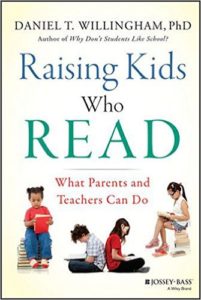
    If you want to find out how to help your child learn to enjoy reading, let me recommend Raising Kids Who Read: What Parents and Teachers Can Do by Daniel T. Willingham, a professor at the University of Virginia whose research has focused on the brain and learning. In the book, Willingham debunks the myths about literary instruction and provides practical, engaging, research-based tips for sharing the joy of reading with kids of all ages.

    You can get a used copy for $13 bucks on Amazon.

    RaisingKidsWhoReadByWillingham

    While you’re waiting for the book to come, here are some things you can do start doing right now to help your child read for pleasure.

    First, start reading something fun or interesting with or to them every day. For little kids, this can be picture books. For older kids, this can be anything–an article from a magazine, funny stories online, or books large and small. If you want to start with a joke book, that’s okay. If you want to start by listening to a book on tape, that’s great too.

    Wait a minute? A book on tape? Isn’t that cheating?

    No.

    There are four keys to helping your child read for pleasure. They need to learn to:

    1. Decode the sounds letters make.
    2. Comprehend what’s meant, which is driven by their general knowledge of the subject they’re reading about.
    3. Enjoy reading.
    4. Identify themselves as a person who likes to read books

    When you listen to a book on tape, you’re doing numbers 2-4.

    Remember: the goal is not to improve the child. It’s not to get them a better job ten years from now. It’s not to make them wealthy. It’s to simply help them enjoy reading. Because once they enjoy reading, once reading for pleasure is something they see as one of the things they do, they will begin to read more and more. And as they read, they become better at reading, which leads to more enjoyment, which leads to more reading. Which leads to all of those other awesome benefits. It’s a virtuous cycle.

    So the first thing you need to do is simply start having a good time reading with them. You can read to them at bedtime, after dinner, on weekends. You can have them read articles to you while you’re making dinner or washing the dishes. You can have them read to your or themselves while you’re on the road driving somewhere.

    You can make a rule that they have to read with you for twenty minutes before they go play with friends or watch TV or play video games.

    And above all, you need to let your child’s interests drive most of the topics you read about. If they want to read about spiders and dinosaurs, then read about spiders and dinosaurs. If they want to read horror stories, then read horror. If they’re into skiing or horses or guns, then help them find interesting stuff on the topics they’re already interested in. And if they don’t like a book, teach them they can abandon it and go find another.

    And if you yourself are not someone who reads for pleasure, well, now’s the time to start. You can make reading for pleasure something your family does, just like families make enjoying boating or hunting or riding horses or eating Mexican food part of what they do.

    It’s never too late to start.

    And seeing that this is the one thing that has such an impact on your child’s success, is there really anything else that would be a better use of those twenty minutes per day?

    Reading for pleasure—who knew that having a great time could have so many wonderful effects? Start today. Don’t wait.

    It might take a little work. You and your child might run into a few unpleasant spots. But that’s true of anything. How many times do kids fall when learning to water ski or snow ski? How many times do they experience something unpleasant when practicing football or basketball or volleyball?

    So start right now. Figure out a time with your child. And begin learning to read for pleasure.

    Share
  • I Am Not A Serial Killer by Dan Wells

    IAmNotASerialKillerYou can scare the crap out of me (Aracnaphobia), and I will love you forever. You can make me bite my nails in terrible suspense (Wait Until Dark, The Village) or throw supernatural at me (Poltergeist) and I will sing with praise. But the moment you do gruesome, the moment you start showing me entrails and organs, my discomfort level shoots through the roof.

    And this is why I would not have finished  I Am Not A Serial Killer by Dan Well’s if I had just picked it up off a shelf–because the main character is the son of a woman who owns a mortuary. We get to see him help process a mutilated body very early in the book, pumping fluids in etc., and Wells knows his craft so I was THERE. I’m sure it’s not too gruesome for some, but I just have issues with organs. I don’t know why. I also have an issue with clowns.

    Clowns are, by far, the scariest things around. And this is not because I read the book IT by Stephen King as a wee lad because I didn’t. It’s because they’re painted vessels of evil. End of story. They’re perfect examples of the freakazoids that lurk in the uncanny valley.

    Anyway, I’d heard Wells read a portion of this book that had all of us in the room crying because we were laughing so hard. So I read on, telling myself I had to at least get to that part. And I am so very happy I did. 

    I Am Not A Serial Killer is young adult story about a good-hearted teen named John Cleaver who is a sociopath with all the traits shared by serial killers. John’s in counseling, but more importantly, he is convinced he can prevent himself from becoming a serial killer by keeping rules he’s made for himself like not watching people for too long and complimenting someone when they make him angry. Such rules, he hopes, will keep him from feeding compulsions he won’t be able to resist.  The problem is a real serial killer has come to town (but unlike any you’ve seen before). And John may be the only one who can stop him. Will he let go of his rules to save the town? Or will he keep his monster asleep while others die around him?

    It’s a fascinating situation (without a clown in sight, may the writing gods be praised). And Wells takes the reader on a journey through it that includes mystery, dread, and humor. In the hands of some other author, that would be enough. But Wells does more than entertain us. He gives us things to think about. He gives us great characters to boot–come on, when was the last time you read a book where the hero was a likeable sociopath? And most of the gruesome is up front anyway.

    Read this book. Skim the body processing if you must. But you simply don’t want to miss the rest. It was a fabulous read and I recommend it highly.

    The US version comes out in March of 2010. But you can get the UK version now on Amazon UK, Borders UK, etc. The links are all here on Well’s site.

    Share
  • Author Janci Patterson Goes Indie

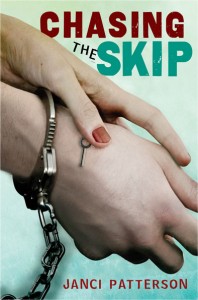
    Everythings Fine by Janci PattersonI met Janci Patterson a few years ago when she was shopping her book Chasing the Skip to NY publishers. It’s about a girl named Ricki. Her mother flakes and runs off,  and so Ricki goes to live with her estranged Dad who happens to be a bounty hunter. I was hooked right there. But it gets better. Ricki gets to ride along and help and, wouldn’t you know it, develops a crush on a guy the dad is chasing.

    I loved the premise. Traditional publisher Henry Holt loved it too and thought Janci had done a great job telling the tale, so they made her an offer that Janci accepted. It was published in 2012.

    Sounds like a match made in heaven, right?

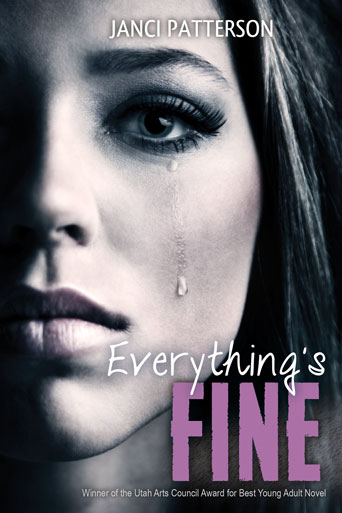
    Well, Janci just released another book called Everything’s Fine, a mystery about a girl named Kira. Her best friend commits suicide immediately after her first date with her longtime crush, Bradley Johansen. Kira’s devastated and wondering why. She’s sure the answers are in her friend’s journal. As she searches for it she quickly learns she’s not the only one who wants that journal. Someone else is trying to keep the secrets the journal contains hidden.

    Another great premise. And this book won the Utah Art’s Council award for Best Young Adult Novel. Clearly, Janci can tell a story. But Janci didn’t take this one to NY.

    She’s publishing it as an indie.

    Here are her own words explaining what helped convince her going indie was doable.

    A Paradigm Shift

    For years I refused to think about self-publishing. This wasn’t because of the stigma, honestly, but because of all the work I watched my self-publisher friends put into creating, shipping, and marketing their books. I couldn’t do that! I told myself. I wanted to be a writer, not a publisher.

    When it became obvious to me that self-publishing was the next logical step in my career, I was terrified. Having published with a big publisher, I wasn’t willing to skip steps in the publishing process–it was my editor’s keen eye and the rounds of revision we did together that transformed CHASING THE SKIP from a messy dJanci Patterson - Chasing-the-Skip-webraft into a product I was proud of. I wanted to be just as proud of my independent work, and for that, I knew I’d need help.
    I knew just enough about book and cover design to know that I couldn’t slap them together on my own and expect them to be instantly good. But when I did the math on what I’d have to pay an editor and a book designer and a cover designer to put out even one book (let alone the several I have waiting), I knew that I couldn’t afford it. Self-publishing felt even more impossible than selling books in New York–I knew how I wanted to do it, but I didn’t have the resources.

    So it was with this trapped feeling that I attended the Precision Editing Group’s workshop on indie publishing last fall. The workshop was packed with great information, but the thing that impacted me the most was a presentation by Heather Horrocks. She was talking about the importance of editors, and as a side comment, said something to the effect of, “yes, all my books have now been edited, but when I first got started, I didn’t have an editor because I couldn’t afford it.”

    It’s not my intention to suggest that editing isn’t important, because it is. But that one sentence blew my mind. I’d been working with the New York publishing paradigm for fourteen years. And in that world, there are very few ways to be published. You query agents. You send books to publishers. You do your very best to follow all of the guidelines and to do everything perfectly right, hoping to minimize the barriers that stand between you and success as a writer.

    But this self-publishing thing was a whole different game. I sat in the audience at the workshop, stunned. That was the moment when I finally realized this truth: there are as many ways to publish as there are people who are publishing. There is no one right way to do it. There are so many things you can do that can help you succeed. It’s better to do something than nothing, because nothing is never the road to success. Even if that means you’re doing it wrong.

    So when I got home, I made a list of my assets. Forget about what I lacked. Forget about what I didn’t know. What did I know how to do? What resources did I have access to? And, most importantly, who could I ask for help?

    If you’re looking to self-publish, I’d suggest that you do the same. Because here’s the thing–your list of assets is going to be uniquely yours. You have a unique set of skills; you know a unique network of people. You don’t need to worry about who and what you don’t know. Instead, focus on what you do have, what you can do. If you’ve been writing for years, you probably have some book-related skills. If you’re part of a community of writers to which you regularly contribute, you probably have some friends who you’ve helped in the past, or can help in the present, who would be motivated to help you out in return. Start from there, and you can pick up the rest as you go along.

    In the end, I did have my book edited (repeatedly!) and my cover designed by a graphic designer. I was able to do that because I had friends who believe in me who were willing to enter into financial agreements that didn’t involve them getting paid in full upfront. I wouldn’t have thought to work out those arrangements when I was focused on doing things right–it was only when I opened my vision to look at what was possible that I began to envision what shape my own unique path might take.

    Each path to publication is different, not only for each writer, but also for each book. With all the options available to us, it’s not enough to focus on our feet, doing only the next “right” step. Opportunity is everywhere. Focus on what you have, and even if you don’t win the jackpot on the first try, at least you’ll be playing the game.


    Share
  • If you want to work with publishers, you need this. Right now.

    thenineworstprovisionsinyourpublishingcontract-by-vandagriffWriters who want to deal with publishers need this book: The Nine Worse Provisions in Your Publishing Contract by David P. Vandagriff. And it’s currently free!
    Vandagriff is a lawyer whose business involves high-stakes intellectual property litigation. He has negotiated major contracts with a wide range of opposing parties, some of which include Apple, Hewlett-Packard, Microsoft, Intel, Morgan Stanley, Merrill Lynch, Fidelity Investments, AOL, Disney, Hallmark, plus other large publishers, agents and etailers.

    He’s also publishes The Passive Voice, a news blog on the publishing business that includes many posts from his lawyer perspective.

    Don’t fall for contract terms that turn you into a slave.

    Share
  • |

    Good Stuff! The actual Christmas story

    It’s interesting how many things we’ve added to the accounts we have in the Bible.

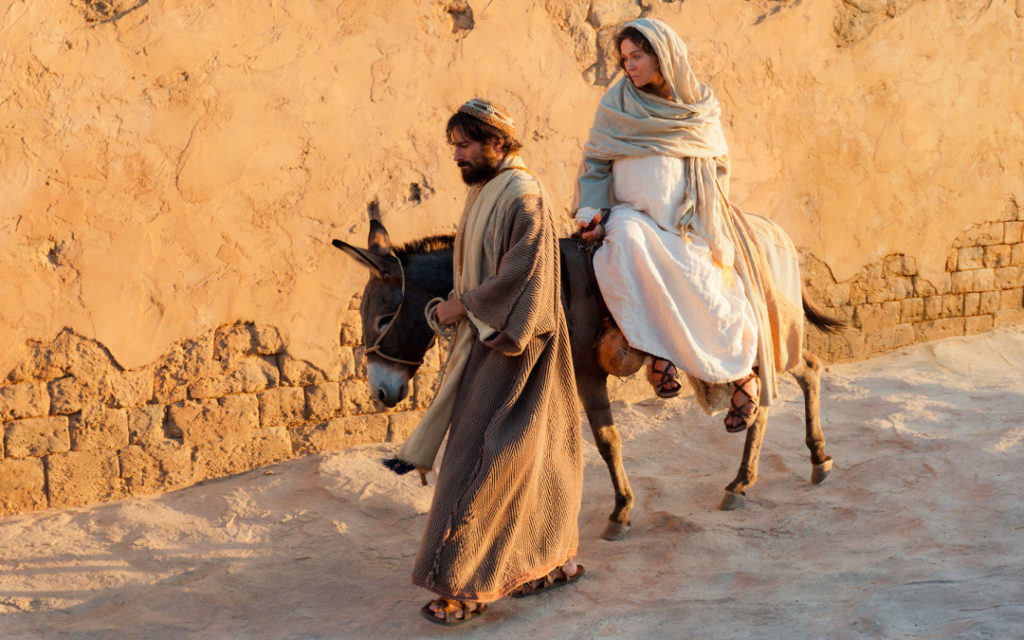
    For example, nowhere does the Bible say that Mary rode a donkey. Mary might have walked. Or rode in a cart. Or gotten piggy back rides. We don’t know. We do know that there is no donkey mentioned in the record.

    It also doesn’t say she had the child the night they arrived.

    It only says she was “great with child” when they made the roughly 80-mile journey from Nazareth to Bethlehem. And that “while they were there” in Bethlehem “the days were accomplished that she should be delivered.”

    So she had the baby sometime while they were there. That could have been during the first hour. But it could have also been a week or month later. We just don’t know.

    It doesn’t mention anywhere the word stable.

    Christ might have been born in a stable, or he might have been born in a cave, or inside the house, or out on the porch, or on the roof (lots of those places had flat roofs where they hung out). We just don’t know. What we do know is that he wasn’t born in a palace. And that they laid him in a manger because there wasn’t any room in the inn. An odd circumstance for a king.  

    Notice as well that there weren’t multiple inns.

    It just says “the inn.” And if you look up that word in the Greek, it’s translated as “guest chamber” in the other spots where it’s used in Luke. So they could have been talking about the one guest room in the house where they were staying. Either way, we don’t have anything that says there was a mean innkeeper who later regretted turning the couple away or that Joseph went door-to-door looking for a place.

    We have no record in the account of three wisemen.

    It just says “wisemen.” So there might have been two of them. Or twelve. We don’t know. And it appears they came sometime after Jesus had been born because they first saw the star of his birth in the east and only then set out to find him. They might have been coming from Persia, hundreds of miles away. Or they could have been living in Bethphage, a mile to the east of Jerusalem. Either way, they didn’t know they should travel to Bethlehem because it says they went and talked to Herod first, in Jerusalem, and asked “where is he that is born King of the Jews?”

    The question freaked Herod out (if you’re the current king, you kind of want to know who else is claiming your throne), and so he gathered all the chief priests and scribes to discuss it, and those guys said the prophecies said it would be Bethlehem. And so Herod met with the wisemen again and told them to go there. And only then did they go down to Bethlehem. So it doesn’t appear the wisemen were there the night of the birth.  

    There’s no record of camels hanging out with the baby either. Or sheep. Or goats. There’s not a lot there. But what is there is interesting.

    Now, I want to go on record stating I have no problem speculating about the event and imagining what it might have been like. I love to do it. Good grief, I write fiction.

    In fact, for many years I figured I needed to get in on the Christmas noun gig. You know what I mean. Every year we get heart-warming books about new Christmas nouns. We’ve had Christmas sweaters, Christmas jars, Christmas boxes, Christmas candles, Christmas carols. This year I see there’s one about Christmas fudge and other about a Christmas train. So I figured I’d do one. Mine would be about the Christmas rat. A little fellow who decided to snuggle up with the babe instead of giving him a nibble. One of these days I will get that hungry rat story written.  

    In the meantime, while there’s a lot of good stuff we’ve added to make the event special, it’s also nice to know what the record actually does say. Whether you’re Christian or not, it’s helpful when dealing with others to know what was recorded about this event that is so significant to the largest religion in the world.

    And so the last bit of good stuff I recommend this month are the two brief accounts we have. The first one is in Matthew 2:1-16 and tells the story of the wisemen. The other is in Luke 2:1-20 and features some shepherds.

    Merry Christmas!

    Share