What’s the first step to becoming an entertaining storyteller?
In a recent ZOE Nutrition podcast, James Clear, author of Atomic Habits, suggests the key to starting a new behavior, like telling entertaining stories, is doing four things:
Make the cue to the behavior OBVIOUS.
Make the behavior more ATTRACTIVE.
Make the behavior EASY.
Make the behavior SATISFYING.
But what’s the FIRST step?
It’s mastering the art of showing up.
That’s it.
What does that look like?
He shared an interesting story in the section where they were talking about making the behavior easy.
START
Let me give you two examples that’ll probably help clarify. So the first one this is just a really simple tactic, a very actionable thing, that you can use for building better habits. I call it the two-minute rule, and it just says take whatever habit you’re trying to build and you scale it down to something that takes 2 minutes or less to do.
So read 30 books a year becomes read one page. Do yoga four days a week becomes take out my yoga mat.
Now sometimes people resist that a little bit because they’re like, okay buddy, you know I know the real goal is not to just take my yoga mat out. I know I’m actually trying to do the workout, so this is some kind of trick, and if I know it’s a trick, then why would I fall for it?
I have this reader his name is Mitch. I mentioned him in Atomic Habits. He lost over 100 pounds. So what is that? 40 or 50 kilos? And he kept it off for more than a decade. And he had this strange little rule for himself where he first started going to the gym, and for the first like 6 weeks he wasn’t allowed to stay for longer than 5 minutes.
So he would get in the car, drive to the gym, get out, do half an exercise, get back in the car, and drive home, and it sounds ridiculous. You know? It sounds silly. It’s obviously not going to get the guy the results that he wants, but what you realize is that he was mastering the art of showing up.
He was becoming the type of person that went to the gym four days a week even if it was only for 5 minutes, and this is a pretty deep truth about habits. Which is that a habit must be established before it can be improved. It has to become the standard in your life before you can scale it up and turn it into something more. You need to standardize before you optimize.
And so the two-minute rule kind of helps push back against that perfectionist tendency that we have sometimes, or against that tendency to try to do too much, and encourages you to master the art of just showing up.
END
That’s the answer!
If we want to be entertaining storytellers, the first, most powerful identity we can adopt is being the creative who shows up every day to work on his or her entertainment. Or maybe it’s five days a week. Or six days, four days, whatever your number is.
The first identity is that I’m the kind of creative that shows up to work. This awesome work of entertainment.
So what’s a two-minute behavior that might go along with that?
Here’s mine. After I come back from weighing myself in the morning, I set my writing session timer, open my writing document, read a bit of what I wrote in the previous session, and identify the task for this session.
That’s it. Nothing more.
That’s showing up.
If I show up and do that, I’ve shown up.
If, for some reason, I miss showing up. I identify the next slot in that day to get it done.
I can master all the other parts of writing entertainment later. But I must master the art of SHOWING UP first.
So tell yourself you’re the kind of creative who shows up to write entertainment every day.
Make that your identity. You can expand that identity later. But let’s start here.
Write your two-minute behavior. Get specific on the time and action.
Then be like Mitch. Show up and celebrate showing up.
And if, like Mitch, it takes you six weeks to master the art of showing up, then it takes six weeks. Big whoop.
Writing fiction is a long-haul game. That means the name of this game is playing the game until you win the game. And to do that you first have to master the art of showing up.
This is the key. When you master this, everything else is possible.
“I am the kind of creative who shows up every day to create.”
Tell yourself that. Repeat it when brushing your teeth. Make that your identity. Be that guy.
If you have a two-minute action for showing up, share it.
If you don’t have one yet, identify one and share it. And if your action doesn’t work? No biggie. Act like a scientist and tweak it until it does.
I’m happy to report that GUN RUNNER, the science fiction, action adventure novel that Larry Correia and I wrote, is a finalist for this year’s Dragon Award for Best Military Science Fiction or Fantasy Novel.
The award is part of Dragon Con, the massive multimedia convention held annually in Atlanta, Georgia. The winners will be announced at the con which takes place over Labor Day weekend.
I always enjoy presenting at the Life, the Universe and Everything writers conference. This year they asked me to present the following.
The 3 Little Secrets that Make Plotting So Much Easier
No, the secrets don’t have anything to do with the hero’s journey; 3, 7, 8, or 9 acts; Lester Dent; or cat-saving beats. An average novel has around 40 to 70 scenes. If you’re like me, those abstract plot structures spark an idea or three, then dump you in front of a blank wall. So where in the heck do all the other scenes come from? Well, a whole heap of them stand up and present themselves when you use these 3 little secrets. If you struggle with plotting, this is your chance to put that behind you for good and start generating fun and exciting plots with ease. Come learn the 3 little secrets that make plotting so much easier.
Despite the oft-repeated 11th commandment for writers—show, don’t tell—writers never show. They can’t. It’s all tell, tell, tell. The trick is to tell in a way that helps your readers imagine with such vividness and clarity that your story triggers an emotional response. In this session learn the five critical prose techniques that help you do just that.
An avid reader friend of mine began reading through the books in a list called “100 books you must read before you die.”
She got to Jack Kerouac’s On The Road and went to Facebook and posted the following: “I don’t get the appeal. It’s about a group of boys/men who are irresponsible, drunks, whoring around taking advantage of others and being enabled by their women. Why is this a classic and why should I have wasted my time on it? Can some of my literary friends explain? I hated a brave new world and the handmaid’s tale too.”
Is the book a classic?
Should she read it before she dies?
Is it really that important?
Let me share an edited version of my response and then provide my list of 30 books you should read before you die.
*
Annette, the unfortunate truth is that these lists of “classics” are a sham because there is no objective criteria for determining literary excellence.
Or maybe I should say that measuring quality in the arts isn’t like measuring the unambiguous, objective score of a baseball game. After books exhibit a certain level of proficiency, it becomes increasingly difficult to distinguish the quality of one book from another, especially because much of this depends on a reader’s interests and subjective experience of the story.
When it becomes hard to rank performances, people rely on other measures. One of the most powerful is social networks.
So if two readers find two different books that blow them away, one of the books might get all the attention because the one book gets picked up by a news service (The New York Times) or a platform (the Oprah Book Club effect) or some other social network of influence. A lot of the so-called literary classics only appear on various lists because they tapped into the academic network, which kept them alive far longer than they would have lasted otherwise.
On The Road is simply a book that made a stir among some circles in the 1950s. That’s it.
Was it more important or of higher quality than Exodus? The Chronicles of Narnia? Lord of the Rings? A Town Like Alice? All published in the 1950s as well.
It depends.
If you’re wanting to understand the 1950s beat culture, it would be an important book.
But if you’re wanting to understand fantasy writing of the time, it wouldn’t.
If you’re wanting to read a book that’s had a huge impact on popular culture, well, LOTR beats On The Road like a dog.
Some people have the feeling that the so-called classics have some inherent medicinal value because someone put them on a list and called them classics.
Nope. They’re just stories. Some of which can shed light on the issues and interests of a part of the culture in a given period. But if you’re not interested in that specific sub-culture, who cares?
And if you’re reading to be entertained, moved, uplifted, or educated—which ones do that best for Annette is for you to decide.
So all that to say I wouldn’t devalue your reaction to the book
*
I’m now going to give you my list.
But it’s not going to be a list of titles. Nor will it focus on a book’s impact on some sub-culture of a given period.
It’s going to be a real list. One that focuses on what so many of us go to stories for.
The one that makes you weep.
The one that makes you giggle and snort.
The one that reminds you of what it’s like to fall in love.
The one that gives you hope.
The one that you begin to read more and more slowly because you don’t want it to end.
The one that scares the soup out of you.
The one that you can’t put down, even though you need to wake up early in the morning.
The one that makes you wish you lived there.
The one that’s so good that when you close it, you immediately start to read it a second time.
The one that gives you and your child hours of pleasure together.
The one that gives you a sacred, spiritual experience.
The one that makes you reread some of the lines because the turns of phrase are just so delicious.
The one that gives you courage.
The one that takes you on an awesome adventure.
The one that makes you want to be a better person.
The one that bores you to tears (just so know you how good the others are).
The one that introduces you to a different culture that delights you.
The one that makes you think.
The one that lingers with you for days.
The one that gives you lovely insights.
The one that inspires you to love your spouse more.
The one that introduces you to the sorts of people you normally don’t like and makes you actually like them.
The one that delights you with its characters.
The one that whisks you away to a different historical period.
The one that inspires you to give your children a hug.
The one that gets your adrenaline pumping.
The one that sparks all sorts of ideas in your head.
The one that makes you wonder and start imagining what it would be like to be there.
The one that blows your freaking mind.
The one that makes you stand up in your living room and cheer.
We could do more than 30, couldn’t we?
Like the one that makes you think people from a different time period are just like us. And the one that makes you think people from that same period are completely alien.
But I think we’ll stop. That there above is a list.
Those are 30 books I think everyone will want to read before they die.
Well, from what people have been posting, he seemed like the devil. But I know how the internet can be. Mitt Romney at one time was the devil. Now, I think he’s been degraded in those quarters to janitor of the hot place. Yeah, that one Romney who is out raising tons of money to help fix blindness among the poorest of the poor, that evil son-of-a-gun.
So when I saw there was a new head honcho in town, I decided to see what he was all about.
I did try reading various posts on the internet, but after a dozen or so of those, I realized it would just be easier to go to the source. And so I went to Vox Day’s website and clicked the contact link, which popped up an email.
I asked Day if he’d mind answering a few questions.
He agreed.
What you will read below is our conversation, arranged for easy reading.
Why am I doing this?
Well, who doesn’t want to scoop the devil? But beyond that, I agree with George R. R. Martin: internet conversations that are not moderated to maintain a tone of respectful disagreement are a bane upon us all. Actually, Martin said they were part of the devil’s alimentary canal, but I didn’t want to confuse the topic.
So I’d read a number of posts that Day had made and others folks had made about Day and saw all the bad juju going back and forth. And I wanted to know what this guy actually believed. Once I understood that, if I disagreed, then I could disagree in a way that I think is actually productive.
We talked about some of his views on two subjects—race and women. Are his ideas provocative? Well, you need to know what they are before you decide.
Conversation
Brown
Vox,
I’m following the conversation about the Hugos. Many of the conversations claim you are a racist and misogynist. Knowing how labels and slurs can magically become fact, I wanted to go to the source and understand what it is you truly believe. I’ve done some reading on your site. I’ve seen attack pieces such as this http://rationalwiki.org/wiki/Theodore_Beale#cite_note-real-ass-13.
But it’s all so scattershot and snippets out of context. I’m wondering if you might answer some questions. If so, my first questions are about your views on race.
Do you believe Black Africans have, in general, less genetic potential for intelligence than White Europeans?
Do you believe the same for the darker Asians like those from India or Indonesia?
Which genetic group has the highest genetic potential for intelligence at this time?
My response to those who claim I am racist or misogynist is simple: why do you reject science, history, and logic? It is not hateful to be scientifically literate, historically aware, and logically correct.
Pure Homo sapiens sapiens lack Homo neanderthalus and Homo denisova genes which appear to have modestly increased the base genetic potential for intelligence. These genetic differences may explain the observed IQ gap between various human population groups as well as various differences in average brain weights and skull sizes.
Yes, East Asians have been observed to have considerably higher IQs than Southeast Asians.
The Chinese. Their average IQ is higher than the Ashkenazi Jews, who are genetically a refined group of Semitic-Italian crosses. To be more specific, the highest average IQ is found in Singapore.
No, the genetic groups are the Homo sapiens sapiens/Homo neanderthalus crosses, the Homo sapiens sapiens/Homo neanderthalus/Homo denisova crosses, and the pure Homo sapiens sapiens. These broadly align with Europe, Asia, and Africa, but not exactly.
Let me see if I’ve captured your overall approach. You feel it’s important to examine and conduct science without regard to political correctness. For example, if Vanhanen and Lynn say IQ is genetic, you feel the most appropriate thing to do is not attack them for being racists, but simply examine their data and conclusions dispassionately. It’s important to question it. Argue with it. Try to falsify, as we do with any other scientific claim. But not dismiss it simply on the basis that it doesn’t agree with our what we feel is morally right. Correct?
Day
Yes. Science and history and logic exist regardless of whether we are happy about them or not. We have to take them into account.
Brown
It appears the Lynn & Vanhanen book suggests the genetic IQ differences were caused, not by Homo crosses, but by natural selection operating in colder climates over long periods of time. Can you provide another reference that discusses the DNA tracing and IQ correlation of the various crosses?
Day
There are many articles on the Internet about DNA and IQ, I suggest you simply search them out and read a few. The data is conclusive, the rationale explaining the data is not.
Brown
I’m not sure I understand what you mean when you said the rationale explaining the data is not conclusive. What do you mean by that?
Day
Regarding rationale, the data is beyond dispute. But we cannot explain why the data is the way that it is, we can only construct various explanatory hypotheses. Historical explanations are, for the most part, scientific fairy tales, literal science fiction.
Brown
I read your comment to Jemisin about African exposure to Greco-Roman culture. It seems you’re suggesting societies can’t make large change their culture (values and beliefs) over a few generations, or within one generation. Is that what you’re claiming? It doesn’t seem like you’re making a genetic-intelligence argument since 1,000-2,000 years seems too short for any type of significant evolution. Of course, if it’s a cultural argument, then I don’t see how it’s possible to say it’s impossible for a bunch of Jemisons to accomplish this since she was raised with the Western culture. Confused on your base point here.
Day
Yes, I am claiming that societies are incapable of moving from full primitivism to full civilization within the time frame that primitive African societies have been in contact with what we consider to be civilization. It is a genetic argument. It takes that long to kill off or otherwise suppress the breeding of the excessively violent and short-time preferenced. African-American men are 500 times more likely to possess a gene variant that is linked to violence and aggression than white American men.
Brown
Two more questions. It doesn’t sound like you’re against immigration per se. You just think that if a society wants to continue, they need to breed. Right?
Day
I am against large-scale immigration, particularly population-replacement immigration. Limited immigration, no problem.
Brown
I suspect someone is going to wonder if your ideas on race and IQ and violence mean you favor some type of eugenics program. So let me ask you: do you believe in selective breeding or sterilization? If so, would that be to promote the Homo crosses you think are better? Or just any trait from any group you think is superior?
Day
No, I am not a eugenicist. I oppose forced selective breeding and sterilization. However, I also oppose dysgenic and dyscivic social policies, which is presently what we have across most of the West.
Brown
As much as I want to ask more about what you consider dysgenic and dyscivic policies, I think it would just lead to another topic, which would lead to another. Let’s talk about your views on women. Here are my initial questions.
Do you believe a country is better off when women cannot vote?
Do you believe a country is better off when women are not afforded equal education opportunities as men?
What are the top topics of education do you think would be beneficial for women?
I’ve read this post http://voxday.blogspot.ca/2012/06/scientist-beats-up-pz.html. It sounds like you think the main objective of a country or culture with regards to women should be to reduce female promiscuity (not necessarily male promiscuity) and increase the number of children each female bears. Is that correct?
Referring to that same post, are you saying that genital mutilation and acid burnings are legitimate ways to treat women? Or are you saying that they are bad things, but that the societies that do such things have lower female promiscuity rates and higher fertility rates, and so it’s a small price to pay?
Day
Yes, in a representative democracy. However, note that I favor universal direct democracy and the jury is out there.
It depends. It increasingly appears that a society is improved by widespread female education through high school, and harmed by it beyond that level. If you look at the demographics, a society that sends its women to college stops breeding. How this is supposed to benefit a society, I do not understand.
Again, it depends. If a society is demographically dying, then yes, it had better do something to get its birth rate up or it will cease to exist. This isn’t rocket science. If a society is stable or growing demographically, it has no need to concern itself with such policies.
You appear to have misread the post. PZ Myers claimed that there was no rational case to be made for the Taliban’s activities. I responded by demonstrating that the Taliban’s behavior is entirely rational, it is merely the consequence of different objectives and ruthlessness in pursuing them. But the mere fact that I am capable of observing a logical syllogism does not mean I share the assumptions involved or advocate the conclusion. Considering that the Taliban defeated the Soviets and appear to have outlasted NATO, I think it is remarkably stupid to dismiss them as irrational simply because they are willing to defend their way of life.
Brown
Even though it appears I misread the exchange with PZ Myers, your answers to 2 and 3 suggest you prioritize fertility rates as the main goal a society should have towards women. As long as the population is stable or growing, you feel a society can examine other goals or objectives. But only if those goals or policies do not negatively impact the population rate. Correct?
Day
Yes. The NATIVE population rate. Immigration is used to cover up demographic decline, but it changes the nation.
Brown
Okay, what’s the reason you feel women shouldn’t vote in a representative democracy? And do you think only certain types of males should vote?
Day
The reason women shouldn’t vote in a representative democracy is they are significantly inclined to vote for whomever they would rather f***. Hence the studies about height and hair being relevant to US presidential politics. That’s why women’s suffrage was pushed by the Communists and why it is the first plank of the Fascist Manifesto.
In a representative system, yes, only certain types of males should vote. And before you leap to any silly conclusions, please keep in mind that I have lived most of my life in political systems where I am not allowed to vote. Voting does not equal maximizing freedom and liberty.
Brown
First, what types of males do you think should vote in a representative government and what’s the main reason why?
Second, do you believe large numbers of males will vote based on sexual attractiveness as well when females are running for office?
Day
Men who demonstrate sufficient long-term orientation and a willingness to put the national interest above self-interest.
No, men aren’t wired the same way.
Brown
How would you identify the types of men you mention? Military or law enforcement service? How would you determine who had a long-term view of things?
Day
I have never given any thought to how such men would be identified. Every method is bound to fail in time.
Personally, I’d like to see direct democracy tried. We now have the technology, and it would be MUCH harder to corrupt than representative democracy. At least we don’t know exactly HOW it would fail.
Brown
Vox,
This has been really helpful to me. I think it would be helpful to others wanting to understand you. Agreeing, of course, is a different matter. But that’s a different subject. Would you be okay with me posting this conversation on my site?
Day
Sure, do as you see fit. The usual suspects will have their own hissy fits, but that’s of no concern to me. I find it amusing when people tell me they disagree with some of these things. Do they not understand that it is not me with whom they are disagreeing, but reality? Why people can understand that if pandas don’t breed, they will go extinct, but fail to grasp the same thing is true of nations is beyond me.
Comments
You will notice I wasn’t trying to challenge his ideas. Does that mean I agree with them lock, stock, and barrel?
No. I’m very skeptical about a lot of them.
But as I stated above, before I agree or disagree with someone, I need to understand them. And the best way to understand someone is to ask questions, listen, and verify I’ve understood accurately. The worst way to understand is to start with an attack.
In this stage, the goal is not to trick someone. It’s not to convince them that they’ve contradicted themselves. It’s not to prove any point.
It’s to hear them out. And if there are things that don’t make sense, to ask questions of clarification.
But what do I think about his ideas?
Well, let’s look at them.
Scientific Inquiry
I have to agree with his idea that we should try to look at science dispassionately. I think it’s dumb to reject someone’s science simply because the results offend our sensibilities.
We reject science because there are issues with the data, or the experiments, or conclusions. We reject it because it doesn’t fit with the observations. Or because we can’t replicate the results, or because it fails to predict as it claimed it could. But we only hurt ourselves when we reject it because it doesn’t fit our current political beliefs.
Okay, fine. But what about his views on race and women?
The Rhetoric of Offense
Well, they’re bound to rile feathers. And Day sometimes seems to go out of his way to state them in a way he knows is offensive. I didn’t feel he did that with me. But if you read the links above, you can see he does employ it with others.
Here’s my take on this. The rhetoric of offense is different than the rhetoric of explication. The latter is meant to explain. The former’s goal is to cause injury. It has no interest in sharing ideas. It only has interest in injuring someone, either to try to gain relief from an attack or to beat someone into submission, or because seeing folks get all riled up provides amusement.
A good portion of Day’s posts that I’ve read, admitting it’s nowhere near exhaustive, seem to contain a lot of the rhetoric of offense. And I think this dramatically undermines his ability to get others to consider his ideas, let alone believe them.
Sure, the attacks might bring like-minded folks to his side. But, for the most part, it does not provide the ground in which insight grows. Offense closes both parties off to challenges, biases, and ideas. It closes them off to new information. And new information is such an integral part of learning.
Some people say that tone shouldn’t matter. For example, you may lace the fact that the earth revolves around the sun with expletives, or say it to me sweetly, but the fact remains that the earth revolves around the sun. So asking for a more respectful tone is an ad hominine attack, a logical fallacy. It has nothing to do with the argument.
But here’s where I believe the anti-tone folks go wrong. Offense changes the message. When you call me a jackass, you’ve selected to promote one message over another. It doesn’t matter if you’ve couched your attack in a well-reasoned point because you have decided to no longer communicate your point. You’ve decided to communicate the offense instead.
Can’t we do both?
Not really. It’s like playing a country western tune of reason softly in the background while shoving a 110 decibel speaker blasting an annoying alarm in my face.
It’s like taking the statement “the cow jumped over the moon” and saying “the the the the the the the the the the the the the the” followed by a barely audible statement of the rest. All the receiver hears is “the”. And that’s what they respond to.
This means there’s no fallacy at play because there is no argument being communicated. Instead, you’ve communicated an attack. And invited a response to precisely the same.
If the speaker wants someone to consider his ideas, then he needs to speak in a way that invites consideration. I know, you can do that, and the receiver may still go into what sometimes feels like “a hissy fit.” We see this all the time, don’t we? Communication is indeed a two-way street. However, if the guy who was trying to explain decides to switch and respond with an attack, that’s his choice. But don’t call it explication or reason or conversation.
Day was perfectly polite to me. And I know it’s incredibly difficult sometimes to not attack when being attacked. I know his ideas, even when stated reasonably, will rile some folks. But it’s also true that he sometimes loads his communications with things he knows will offend. Things meant to injure and ridicule. Things which show little regard for others. I find it counterproductive. I think it’s wrong. But I also condemn the same tactic from the other side. And, yes, there is probably a time to use the rhetoric of offense, but that’s for another post.
Okay, but what about his beliefs, John?
Votes for Women
Do you agree it would be better for our nation if women didn’t vote?
No.
I’m not convinced men aren’t affected by charisma. What? When males get in a group, all are equally popular? Or popular only because of their ideas, not their looks, money, power, physical prowess, etc? Nor am I convinced that women can’t be long-term thinkers. I haven’t seen any science that supports that idea. And my personal experience has been just the opposite. The women I know think a lot about the future. Furthermore, when I include women in councils, we usually come up with much better ideas.
Now Day might suggest there’s science to look at. That’s his prerogative. I’m incredibly skeptical. But I think the most productive thing to do in reaction to his claim is to gauge whether you think it merits serious consideration. If it does, or if you’re curious, examine the evidence and report your results. If it doesn’t, just say you haven’t seen anything to suggest its worth looking into further.
Education for Women
What about his idea that the most important thing for a society is to maintain the population, which means the most important thing for a woman is to have babies, and that education undermines this and therefore should be avoided?
In one way, he’s right. If you want to maintain a certain population, you do indeed have to breed.
But if that’s your goal, I don’t see education in general as the determining factor. Mormon women have, as a group, much more education than the average female in the United States AND they have more babies. Lots more. I don’t think it’s education per se. I think it’s the values and beliefs some education fosters.
There are some groups that are taller on average than others, some that are shorter. On the face of it, I don’t see why some groups might not have a genetic disposition to more of one kind of intelligence and other groups less. I haven’t looked into this much. I don’t know anything about Homo sapiens sapiens, Homo neanderthalus, Homo denisova, and the various crosses.
However, I do question if IQ isn’t more about nutrition and early learning. I wonder if IQ tests really measure intelligence or just one type of problem solving. And I’m skeptical that it’s really that big of a difference. Maybe it is. I admit my ignorance and curiosity on this topic openly.
Race and National Success
What about his claim that Homo sapiens sapiens, which he claims are what we find in Sub-Saharan Africa ancestry, have more genes for violence than we do up north and so can’t at the present time build as successful a society?
This one makes no sense to me. I don’t see a difference in violence levels. Like the Romans weren’t violent? Or the Germanic tribes? Hitler and all those that followed him didn’t do violence? Napoleon and his armies? I don’t see how we selected against violence and short-term thinking. I’m incredibly skeptical of these claims.
Now, it could be he needed more space to lay them out. After all, I wasn’t asking for evidence or a full treatise. Only what he believed. But as it stands right now, I’m betting the types of violence he’s looking at are driven more by culture than anything else. And I don’t believe people are genetically predisposed against democracy.
Frankly, the ideas laid out in Guns, Germs, and Steel seem more predictive to me about what makes peoples successful than Homo crosses. But of course I’m always open to new information. However, even if this claim is true, it’s a fallacy to peg each member of a group to the average. People lie along a bell curve for all sorts of things, and it might be that any one person or community or even nation might actually have less of this than another from a different group.
Bottom line
Vox Day wasn’t the devil, dang it.
He is someone who espouses a couple of ideas that I agree with and a number that seem flat out wrong to me. He appears to be someone who enjoys the rhetoric of offense. I may investigate some of his claims. I may not. I am new to the topic of genetics, and am curious. Whatever I do, I found it useful to try to see for myself what the man believes. One thing that he and I agree on is how we should react to claims made with the purpose, not to offend and injure, but to expand our knowledge.
Now, I have no idea what types of comments this post will bring. Please note that I did not ask Day for his sources, or to lay out all the evidence he feels backs up these beliefs. That’s much too big for this post. You can certainly share your ideas and the science you find compelling. But this is my site, and by golly I request that if you post and want to express disagreement, that you disagree respectfully. Name calling, high-octane expletives, etc. will not fly here. Any post that fails to avoid this will be deleted. You can certainly try again, but if any prove unwilling to abide by this rule, I’ll simply block you to save myself some time.
I am much more interested in a discussion here than attack and offense.
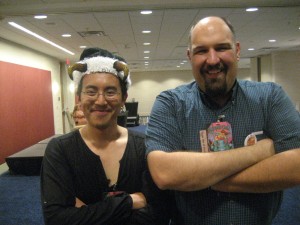
I think this was taken when someone stole the ILOH’s Cheetoes
Seven days.
San Diego, Phoenix, and a wild trip through Wyoming, around Denver, and back to Utah.
Seven days.
Five nights.
In Arizona, I was told by a wild-eyed denizen of the Barnes & Noble we were signing at that my epic fantasy book was true–we are ruled by lizard people!
Imagine how shocking it was to learn that. I mean it doesn’t have anything to do with my book, but lizard people? A hollow earth? Is the CIA in on it? I don’t think I’ve recovered yet.
In San Diego, we rode around with Dave Farland in his old four-door sedan. A Lincoln? All I remember is that it was big and floated like a dream. After some narrow misses, Dave asked me to drive. Two big guys up front. One older, rough-looking guy being chauffeured in the back. At one point we walked to a restaurant during the day like some made man and his two goons. The restaurant was empty except for three rough characters sitting around a table on the far side. They looked at us, sized us up, then looked away. We sat at a table on our side.
In Wyoming we drove in high winds that sent streams of snow across the highway like multitudes of slithering snakes. At one point we passed one semi that was on fire, winds howling about. About an hour later, we passed a truck driver out in the median, thigh-deep in snow, a huge knife in his hand. He was trying to saw off the frozen antlers of an elk that had been hit. I looked up at his rig as we passed and did not see anyone behind the wheel. I swear the thing was rolling slowly down the highway, unmanned.
On the way back from Denver, we rode along a wintery, icy highway with trucks and cars littering the sides. Larry white-knuckled the steering wheel, but we made it. Two big guys, one 6’4″ the other 6’2″, in a tiny Ford Focus.
Did the very road fear the Lord of Hate? I cannot tell.
On this trip, Larry, that man of hate, brought a bag of Walmart beef jerky that smelled like, well, a particular kind of flatulence. What kind of person does that to beef? But we ate it. Because you do such things on epic journeys.
Now, here’s the thing. If you spend any amount of time with me, you will eventually tell me your life story.
You will.
Not because I’m a prier. But because I’m simply and sincerely interested. In people. If you work for the sanitation department, I’m going to want to know about garbage trucks. If you bowl, I’m going to want to know about bowling. If you’re some kind of wackadoo, I’m going to want to hear your wackadooness. Sooner or later, you’re going to talk. And, yes, there will be things along the way that I just might put in my zing file. That’s not why I’m talking to you. But sometimes the slices of life are too good not to capture.
So you put Larry Correia, International Lord of Hate, into a car with me, and he’s going to spill his guts.
Let me tell you what I found. Oh yeah, wait until you hear this.
Larry loves Bridget, his wife. No, do not turn away in horror. You must hear the rest of the tale.
He doesn’t like taxes, which is outrageous. Simply beyond the pale.
He’s a strong advocate of the right to bear arms. He figures people are safer with guns than without. And he was loaded. I remember getting to the hotel in Denver and seeing he draw his guns and put them on the table. A Kimber/Bul Poly .45 from his waist and a little Kahr MK9 on the ankle. Frightening. Of course, I never worried about going anywhere with him, but the guns had nothing to do with that.
He doesn’t like the idea of a small group of people in Washington telling folks what they need to do. He’s not anti-government. He just likes a minimal amount of government. This too is outrageous. Government is the source of all good in the world.
He doesn’t like a lot of what Franklin Delano Roosevelt did. One of those things he doesn’t like is the rounding up of Japanese Americans and putting them in war camps. Another was Roosevelt’s attempt to pack the Supreme Court with justices who would rule his way, essentially eliminating that branch’s check on the presidency. Nor does he like Roosevelt for being the first president to explicitly embrace deficit spending. The list with Roosevelt could go on. Of course, we all know that wise people everywhere thought Roosevelt made the right choice on these things.
Larry honors the folks who serve in our military and law enforcement. Big time. Guys and gals who put their lives on the line or support those who do. I roll my eyes.
Larry’s a big believer in pulling yourself up by your boot straps and getting to work. He worked on his father’s dairy farm milking cows early in life. Busted his chops in school. Busted his chops at work. Busted his chops writing novel after novel. And now he lives on Yard Moose Mountain. A supposed example of can-do economic mobility, which all smart people know is a farce.
I mean, work? Come on. Do you see how unreasonable the man is?
He’s an accountant and pretty good with numbers. Ergo he doesn’t like a lot of bureaucratic waste. It stinks to his accountant soul. And he saw a lot of that as a military contractor. I’m really for a lot of waste of taxpayer dollars, but I let him have his say.
Larry was once a bouncer.
He’s a big guy, but got his trash kicked in some early amateur MMA. But he still loved it.
The International Lord of Hate in multiple colors
In a friendly wrestling match, he broke his roommate’s toe, and said roommate responded by breaking the International Lord of Hate’s nose. Yes, the nose, Ladies and Gentlemen.
Larry is funny.
Larry has a lot of friends because, shocker, he’s a friendly guy.
There’s more. But let me tell you what I never heard. I never heard him make a racist remark. Not even when he told me about growing up in California’s Central Valley, or when some idiot kids who had been tasked with beating someone up to to join a Hispanic gang targeted him. Never heard him make a misogynistic remark.
I did hear how he loved to argue with folks on the internets. And then saw that later when I started reading his blog. It’s clear Larry likes a good fight. He’s a barbarian with big boots. But, in truth, he’s a friendly barbarian.
That’s the expose. I know. Shocking, isn’t it.
Now he’s gone and done this Hugo thing and calls people names and uses four-letter words on his blog posts.
I’ve found that Larry in person is not quite the same as Larry online when you disagree with him. In person he’s usually very conversational when you disagree.
Some might say he needs to be more polite online. Use more class.
They might have a point. Sometimes I think he steps over the line. Then again, they might not. He does get people to listen. And some of the things he has to say are insightful and worthwhile. Others are just plain funny.
Whatever your opinion, all I know is that if you’re wanting Abraham Lincoln, you’re going to have to look elsewhere. If you come out swinging, he’s not going to regale you with Kumbaya.
The International Lord of Hate radiating fearsome hate
And because he fights the way he does as Internet Larry, his posts seem to push some folks buttons to the point that they actually miss his intent.
For example, when Larry responded to Alex MacFarlane’s call for “an end to the default of binary gender in science fiction stories,” he never once suggested that we should discriminate against the folks MacFarlane wants to read stories about. He never suggested there shouldn’t be any such stories. Nor did he ever suggest folks who are discriminated against never have a case. His point was that the best way to write an entertaining story was to put the entertainment first, not some political agenda. His point was also that he’s sick of folks trying to foist their interests on him and everyone else. If you want to write about certain types of characters, do it. But don’t tell everyone else they must.
That was lost on some people. All they saw was someone who disagreed “rudely,” and they saw red. I’d be seeing red too if I felt ruded upon. At the same time, they still missed his point. A lot have missed his point about the Hugos as well.
But whatever happens with this latest kerfluffle, I had to tell my tale. Because I spent seven days with Larry Correia, International Lord of Hate. It was nip and tuck the whole time, but I survived his horrible onslaught. And then we enjoyed some ice creams and tropical trail mix, which I can happily report smelled a lot better than the beef jerky.