
Similar Posts
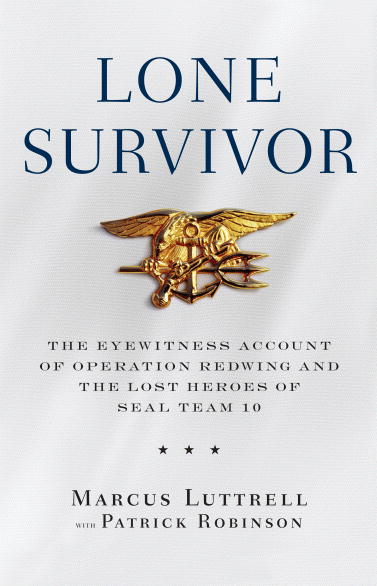
Lone Survivor by Marcus Luttrell
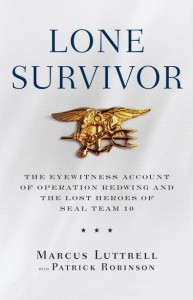 I’m a sucker for military stories. I wanted to be an ARMY Ranger was I was in my teens. Wanted to go commando. Still regret it to this day that I didn’t. And so when a friend told me about Lone Survivor by Marcus Luttrell with Patrick Robinson, I had to read it.
In June of 2005 four U.S. Navy SEALs took up a position on a godforsaken mountain in Afghanistan close to the Pakistan border. Their goal was to capture or kill a notorious Taliban/al Qaeda leader whose small army had been ambushing and killing Marines. The problem was: three goat herders stumbled upon the SEALs not very long after they got into position.
If the SEALs don’t kill the goat herders, they will almost assuredly alert the Taliban force. SEALs are the best. But four against two hundred doesn’t compute. If they do kill the goat herders, then they’re sure someone will find the bodies. The Taliban will claim US soldiers are killing innocent civilians. And the US media will pick it up. The SEALs were sure they will end up being tried for murder. It wouldn’t be the first time.
The SEALs let the goat herders go. Within hours the Taliban show up. Four SEALs. Two hundred plus Taliban armed with rifles and grenade launchers who have the high position on a mountain with plummeting slopes and very little cover.
Lone Survivor tells the story of Marcus Luttrell, the leader of that SEAL team, his training as a SEAL and then that desperate fight in the mountains. He and the other three SEALs fought ferociously. He was the only one to survive.
I had to force myself not to read this book in one sitting. Not only do you get a great story, but you also get insights into what makes a SEAL and their system of values. You’ll get to know a man who makes you want to stand up for God and country. And you’ll marvel at the courage of those who fight in our armed services.
I loved this book. May God bless the men and women who risk life and limb for all the rest of us. For the rest of us, we can see what they face in this excellent first-hand account.
I need your insight!
 Last year I posted about a service I’m working on to get ratings on books for sex, violence, and language. I posted similar thought about YA books in “Since When Did Young Adult Become The Cure For Cancer?“.
I’m back.
I did lots of customer discovery last August in an effort to see if book ratings is a problem worth solving, i.e., are there lots of avid readers who would love content ratings and sign up? All my interviews were very positive, but I didn’t finish validating our ideas because I had to stop to get books out and because we discovered some things that made us change some of our assumptions. I started up again a few weeks ago, this time with a team.
To continue the project, we need to interview 20-40 avid cleaner romance readers. Folks who probably read just such a book last month.
Why?
The biggest problem startups like this have is assuming they know what the customer values, being wrong, and building something nobody wants. So before we build anything, we need to first understand exactly what readers are doing today to solve this problem and where (and if) they are struggling. If we can validate the need, I think a lot of folks will be very happy having popular clean reads delivered to their email every week.
If you know someone who fits the bill, please send this post to them. They can shoot me an email by clicking the contact link in the menu bar.
If you fit the bill, please contact me.
It would be incredibly helpful to me to hear about how you approach this and ask you a few questions. It won’t take more than 20 minutes, and there’s no need to prepare in advance.
Hope you had a great 4th!
Good Stuff! Grandpa O’s Stories
There are a boatload of characters that live in Rich County, Utah.
One of them is Gary Ogilvie.

If you were to see him at church or waiting in line for a raspberry shake at one of the fast food joints by Bear Lake, you’d just see a pleasant, mild-mannered gentleman.
But Gary has quite the past.
He’s been a police officer down on the Wasatch Front, a sheriff in Rich County, a Utah highway patrol officer, an internal affairs investigator for the Utah Department of Corrections, and an adult probation and parole supervisor. And a miner and many other things.
And, boy, does he have some stories.
Most with him wearing the badge, but others when he wasn’t wearing the badge. For example, Gary was himself hauled in by the cops when he was a teen.
Gary wrote many of his stories down in a journal, and I had the privilege of reading them one day a year or two ago. They were fabulous. Some were funny, some shocking, some poignant.
The good news for you is that Gary has recorded a number of them on YouTube. He did this for his grandkids, but you and I get to benefit.
If you enjoy real life cop stories, many with a humorous twist, and good-humored narrators, then you’re going to love listening to Grandpa O’s Stories over on YouTube.
In fact, I don’t think you’ll be able to listen to just one.
My bet is you’ll want to hear the next and the next.
Earth: the biography, Planter’s Nuts at Sam’s, “The Professor of War”
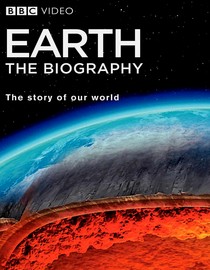 Earth: The Biography is one of the most interesting documentary series I’ve seen in a long time. It’s produced by National Geographic and the BCC. Dr. Ian Stewart, a Scotsman, hosts the program and tells the life story of our planet, how it works, and what makes it so special.
There are five parts: “Volcano,” “Atmosphere,” “Ice,” “Oceans,” and “Rare Earth.” And while they were all good, the last two blew me away.
For example, I always thought the polar ice caps were a big waste of water. What do they do besides torment penguins and Eskimos?
But the program reveals that the ice caps are critical to all life everywhere on the planet because they power the great ocean conveyer. This conveyer is a slow current that carries surface water away from the equator up to the polar caps then down to the sea floor and back—transporting oxygen, nutrients, and warmth all around the globe.
We can see how critical the ocean conveyer is when it stops. There was a time when this happened. With no replenishment of oxygen, the water turned to poison. The poison was picked up in the clouds and rained down upon the land. And almost every living thing on the planet died a toxic death.
Sniff, sniff–we love you, Polar Ice Caps.
“Oceans” was fascinating, but “Rare Earth” was the kicker. How common is our cozy little situation here on earth?
Well, for life to exist as we know it, we needed to be a certain narrow distance from the center of the galaxy, orbit a certain, less common type of star, be within a certain range of that star, have a big old fat vacuum like Jupiter hanging out in the wings sucking up asteroids and comets so they don’t hit us instead, have an orbiting moon of a certain size, an earth core with just the right amount of iron, a tilt to the earth that would allow polar ice caps, water, an atmosphere to protect us from all sorts of celestial mayhem. Heck, we even had to have that nasty mass extinction caused by the broken ocean conveyer. And there’s more.
So many rare events had to line up just right, that it’s bound to make the atheists among us celebrate their good fortune with illegal-Wyoming-firework abandon and the believers to rise up from their chairs and shout, “Hallelujah and Amen!”
Nellie, the girls, and I all loved this show.
***
 I’m a nut man. Love nuts. Hazelnuts, walnuts, Brazil nuts, pistachio nuts, cashews, pecans. But nuts are expensive. And while peanuts are lovely, I like some variety and grow weary of the mixes where you get about five thousand peanuts and one burnt almond. So when I saw the forty ounce jars of Planter’s Deluxe Nuts (sea salt, NO peanuts) at Sam’s Club in Logan, Utah selling for a mere $10.98, I just about fainted away and died.
Eleven bucks?!
For comparison, please note that a little ten ounce jar of the exact same nuts costs six dollars in the grocery store. Four times the nuts for less than double the price!
The nuts are good. More importantly, they’re a regular item at Sam’s. So with all the reports coming out about how good nuts are for you, reduce heart disease, reduce diabetes, blah, blah, blah, fight aliens, I can now afford to eat them and hopefully extend my stay as a carbon-based life form.
***
 General David Petraeus has revolutionized the way America wages war. It was his strategy that turned the war in Iraq around. It’s his strategy that’s being used in Afghanistan. And it will be his methods that will inform how our soldiers face enemies in years to come.
The key to his thinking is realizing that there are two different terrains that must be won in the types of war we wage now—the geographic and the human. You know what geography is—take that hill, secure that town, remove the threats from that jungle. The human terrain, on the other hand, is made up of the hearts and minds of the people at the site of the struggle and has proven to be equally important.
It’s important because the wars we’re most likely to engage in now are not ones where two big armies square off and blast away. Anyone who tries to stand up to the United States using that method is going to very quickly learn what it means to get stomped, shredded, and served to the dogs. So most of the battles are likely to be engagements in unconventional war, where the enemy hides, and where the local populace will make or break the effort.
In May 2010, Vanity Fair magazine published a fascinating article called “The Professor of War” by Mark Bowden. It summarizes Petraeus’s history, the source of his thinking, and the kind of man he is. With so much at stake, I was grateful to get this well-written glimpse into the general and his approach to war.
While you’re at the site, you might want to also read another Vanity Fair article titled “General McChrystal’s Three Biggest Strategic Errors in Dealing With Rolling Stone” by Bill Bradley, published June, 2010. McChrystal was Petraeus’s right hand man. The contrast between the two men is enlightening.
Good Stuff: 8 Awesome Movies
Summer is a great time to catch up on great movies you haven’t seen because sometimes the movies that are released to the theaters during this time are contenders for the dud award.
I shall leave films such as Transformers: The Franchise Could Have Been So Cool or Pirates of the Caribbean: Johnny Depp Is Now Acting Really Weird nameless.
Instead of watching duds, try a couple of these fantastic movies, all of which are based on true stories.
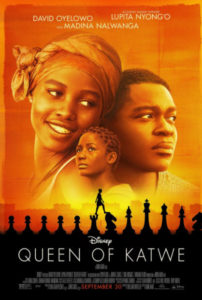
Queen of Katwe. A tremendous film based on the true story of depicts Phiona Mutesi, a girl growing up in the slums of Katwe, a city in Uganda, who gets a chance to break out of that life with chess. You will come away having laughed and cheered and been touched in a poignant way. Highly recommended.
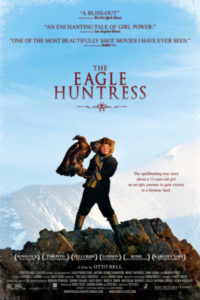
The Eagle Huntress. A fascinating documentary about the first girl in Mongolia to compete as an eagle hunter—these are folks who capture and train golden eagles to hunt game like fox or rabbit. You’ll be introduced into a new and interesting culture that triggers you to think about your own.
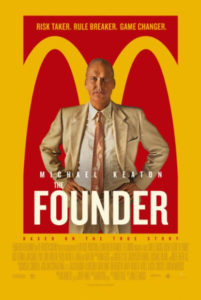
The Founder. Ever wonder how McDonald’s got started? No, neither had I. Who cares, as long as the food is good, right? Well, if you’re like me, you’re in for an eye-opener. This tells the story of how Ray Kroc started McDonald’s, except, hint, he didn’t. Kroc is played by Michael Keaton. He’s one of my favorite actors, and I loved his performance. This story will fascinate you, and then make you think, and then make you really appreciate folks like Dave Thomas of Wendy’s.
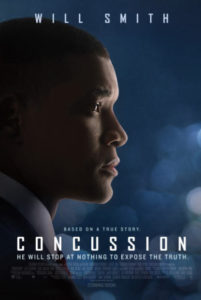
Concussion. An engrossing, suspenseful film about the true story of Dr. Bennet Omalu and the tie between football and brain degeneration. Omalu was working as a forensic pathologist (one who figures out the cause of death) in Pittsburg, Pennsylvania. In 2002, Omalu performed an autopsy on Mike Webster, a former NFL star who played for the Pittsburg Steelers and is considered by some to be one of the best centers in NFL history. And his worked opened up a can of worms the NFL wanted to quash. I loved this film.
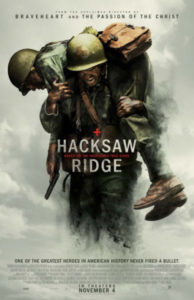
Hacksaw Ridge. This one is based on the true story of Desmond Doss, a Seventh-day Adventist who did not believe in killing, but wanted to support his country and all those going to war. So he goes into World War 2 as a medic and is sent to the Pacific theater. His first engagement is the Battle of Okinawa. And, oh my holy heck, what he did during that battle is nothing short of amazing. There’s one part of the film in boot camp that seemed out of place. Really, some dude back in the 1940s was going to do pull ups in the barracks naked (nothing but a bum is shown in the film)? But then I recall that growing up in the 70s and 80s that we guys showered in communal showers. And that wasn’t a big deal. And earlier than that, swimming at the swimming hole often meant shucking your clothes and jumping in. So who knows? We have a similar funny scene in Mulan, but for some reason that one felt more organic. This one felt tacked on. It was a gag for humor and then, thankfully, Mel Gibson, who directed this, got on with the awesome story of Doss.
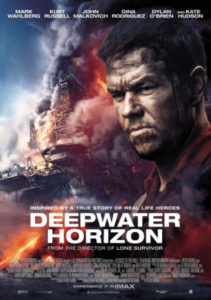
Deepwater Horizon. This one is based on the true story of the Deepwater Horizon, an oil rig in the Gulf of Mexico that encounters a catastrophe. The details of how such rigs work and the issues involved are fascinating. But what will really get you is the heroism of the captain and crew.
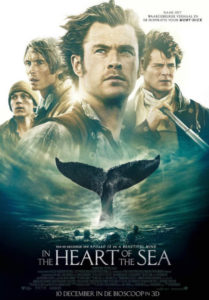
In the Heart of the Sea. This is based on the true story of the whaleship Essex that was sunk in the Pacific in 1820 by a sperm whale and what the few that survived did to remain alive. Back in the 1700s and early 1800s, sperm whale oil, which was contained in the whale’s large head, was highly prized for lamps because it burned bright and odorless. It was also a great lubricant. Later the oil was replaced with kerosene and other and petroleum-based lubricants, but in those days there was a whole industry dedicated to harvesting it. I watched this with my teenage daughter, and we both found it a powerful tale.
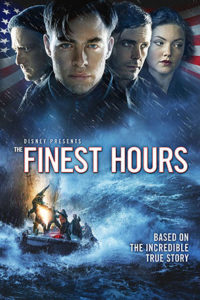
The Finest Hours. This last one is based the book The Finest Hours: The True Story of the U.S. Coast Guard’s Most Daring Sea Rescue by Michael J. Tougias and Casey Sherman. It chronicles the 1952 United States Coast Guard rescue, in a dinky boat, of the crew of the SS Pendleton, a big tanker, after the ship split apart during a nor’easter off the New England coast. The movie was thrilling and heroic.
And after you watch all of those, if you want some more great films based on true stories, well, you won’t go wrong with Tom Hanks in Sully or Captain Phillips or Bridge of Spies.
Good Stuff! The Greatest Showman
I saw the previews of The Greatest Showman, the movie about the circus guy. I rolled my eyes. The circus? Come on.

But my daughters, one by one, went to see it and came home raving.
And then my wife went to see it and came home raving.
And then my youngest was playing some music the other night, and I said, “Ooh, that’s nice. Good beat. Wow. What is that?”
She said with much affection, “The Greatest Showman, loser.”
I said to myself, maybe the previews simply stank. I said, I’ve seen movies where the previews were better than the full-length film. Maybe this was the reverse.
I said, to my fine daughter and wife, “How about a movie night?”
They were more than game to see it a second time. So we went and saw The Greatest Showman this week.
Here’s the report.
Oh. My. Holy. Freaking. Heck!
This movie is one of the best movies I’ve seen in the last few years. And get this: it was released more than eleven weeks ago, back in December of last year. How many movies do you know that stay in the theaters for eleven weeks straight? When a movie keeps attracting crowds week after week, long after the release night hype has faded, they say it “has legs.”
Let me tell you, this one has some legs. The music is awesome. The visuals are wonderful. And the story—the story is everything a story should be. I came out of the theater having wept and cheered and bitten my nails and been thrilled with a number of the scenes. I came out of the theater happy, positive, thinking about life, thinking about what really matters.
Look, if you enjoy musicals, if you enjoy dramas, if you enjoy Hugh Jackman of Wolverine fame, you must drop everything you’re doing right now and run to see this before it leaves the theaters. You’ll be so happy you did.
And now, I’m going to figure out how I can go see it again.


2 Comments
Comments are closed.
Where did you find this? It looks pretty darned funny.
So quicktime site. I can’t wait to watch it.